There was a season a couple of years back when my sewing machine sat in the corner of the bedroom collecting a very light layer of dust. Not for long – but there was a stretch of days where I’d walk past it and think, I should sit down and sew something. I just didn’t know what felt worth threading the needle for.
What pulled me back was something small. Cloth napkins. A stack of cream linen I’d had folded in a drawer. I cut and hemmed them during one baby nap and set them on the kitchen table. And sweet friend, I have reached for that stack every single day since.
12 everyday sewing machine projects you’ll reach for again and again
If I had to pick the sewing projects that actually earn their keep in my home, it would be these. Simple makes that I reach for without even thinking about it.
1. cloth dinner napkins
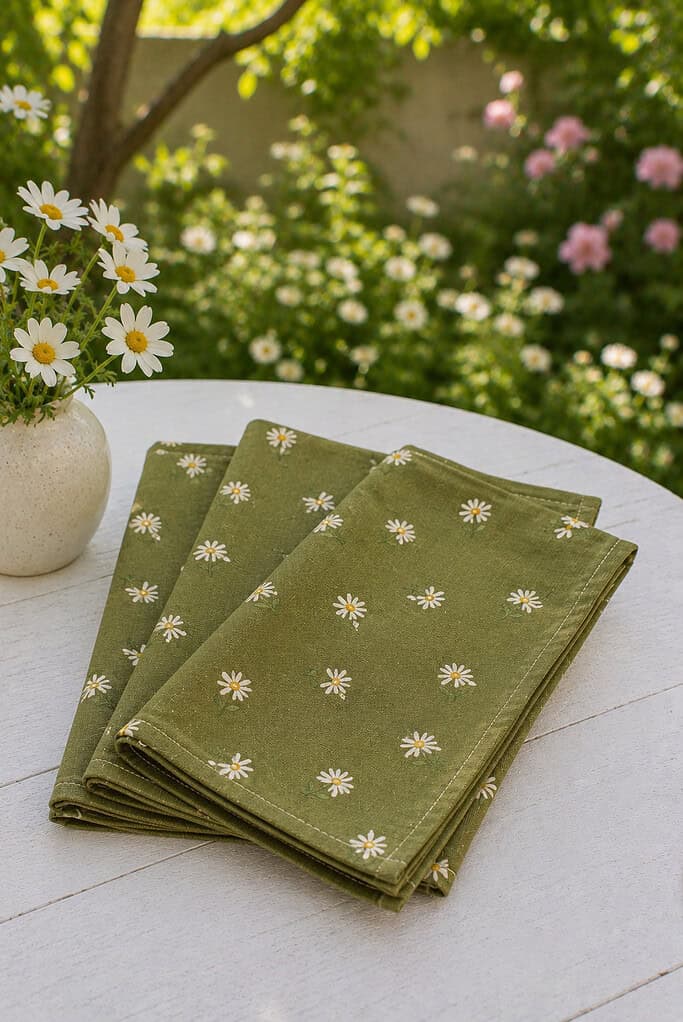
Cut from linen or cotton muslin, hemmed with a simple double fold — that’s really all there is to it. Make them in a neutral you love and you’ll use them at every meal. They soften with each use and replace a paper towel habit faster than you’d think.
2. linen apron
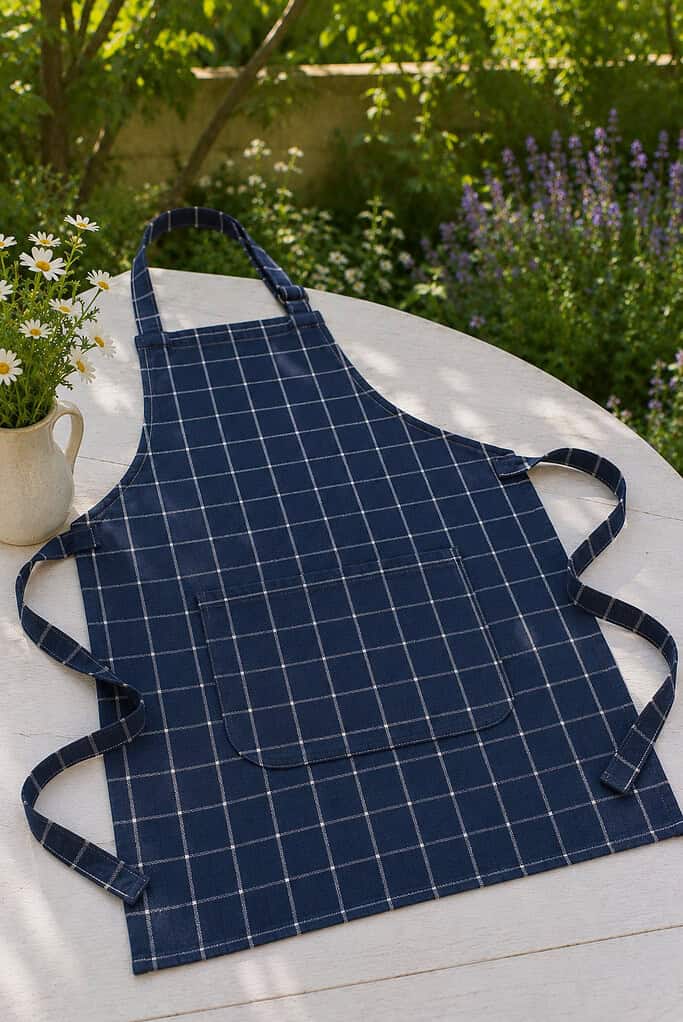
A good apron changes how you move through the kitchen. I cut mine from mid-weight linen and added two patch pockets. Start with a simple half apron if you want something quick — the sewing is mostly rectangles, a waistband, and ties.
And for caring for your linen pieces, a homemade fresh linen spray is a lovely addition to your laundry routine.
3. reusable produce bags
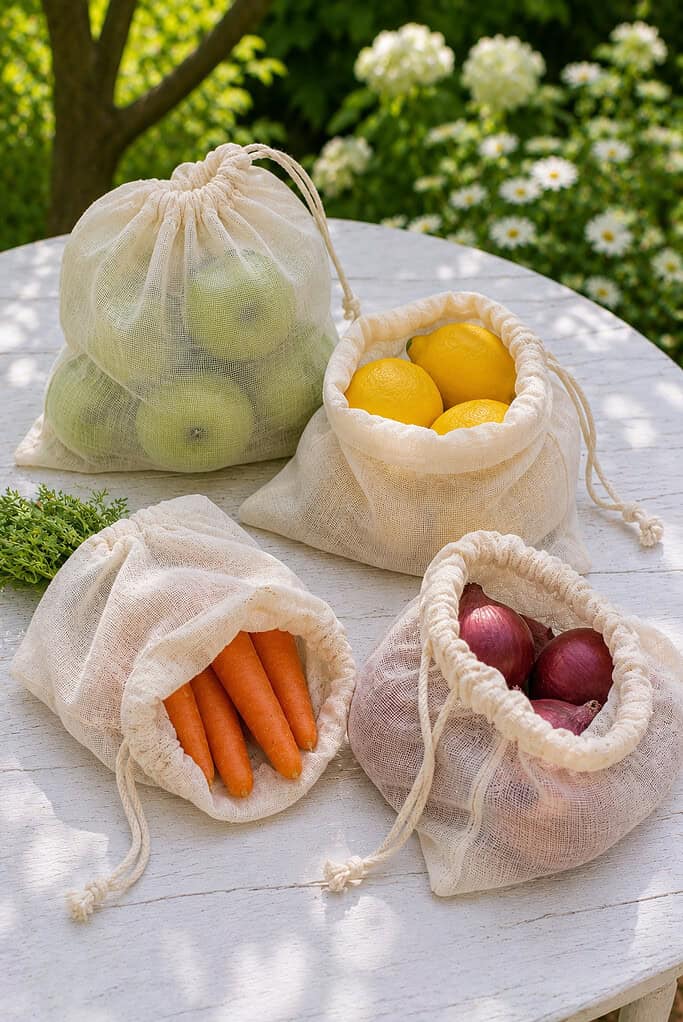
Cut from lightweight muslin, sewn into a simple drawstring bag. They take about fifteen minutes each and replace plastic grocery bags beautifully. I keep mine folded in a basket by the front door, ready to grab on the way out.
4. simple tote bag
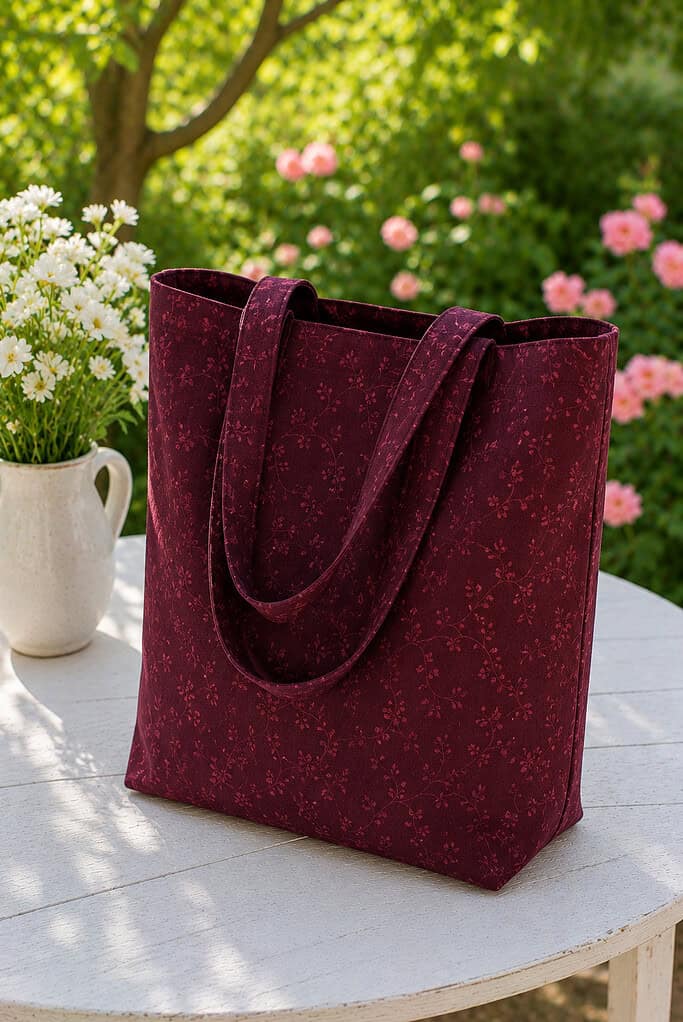
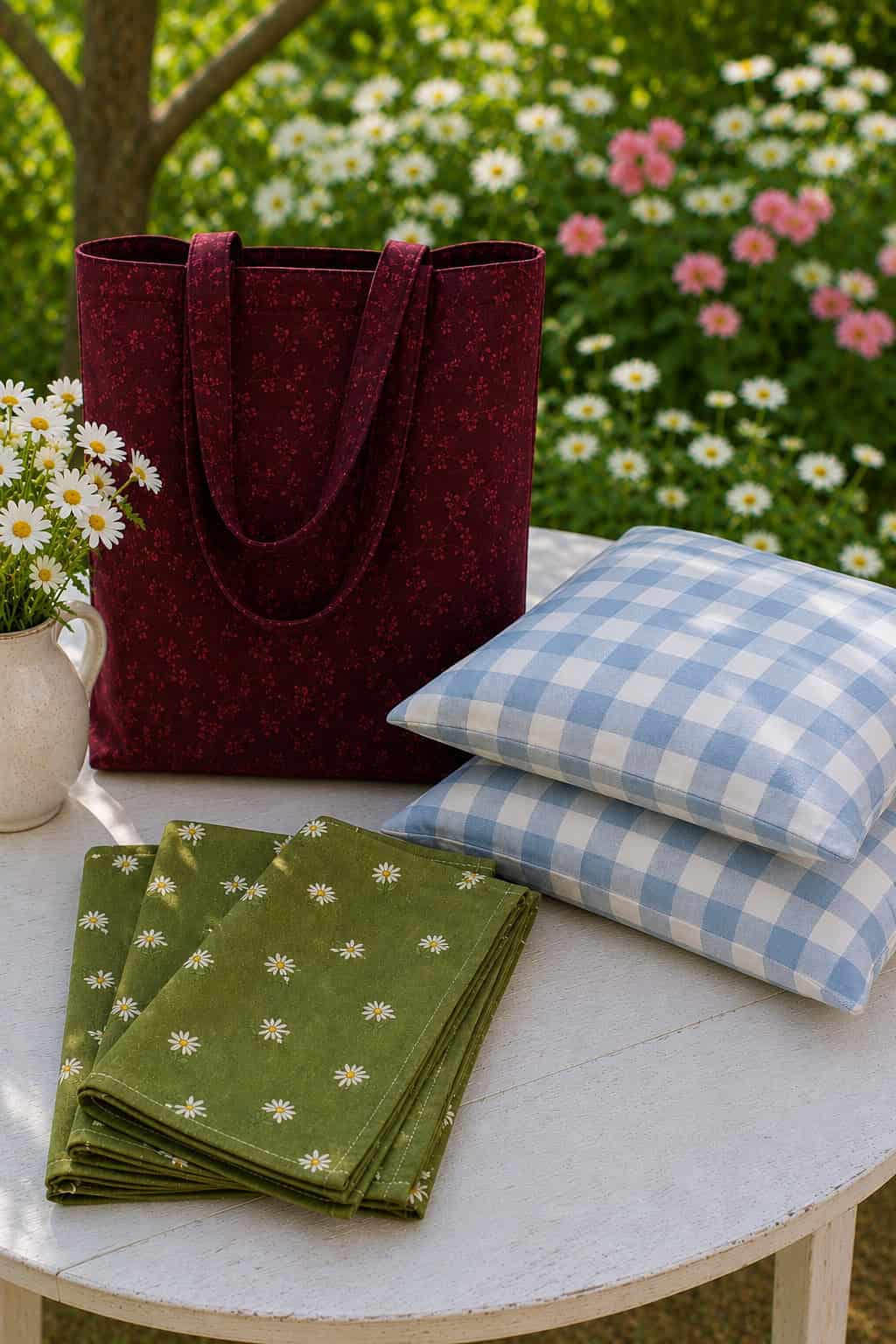
Four seams and two handles and you have something genuinely useful for market trips, library runs, and beach mornings. And if you want to take it a step further with patchwork, there’s a full walkthrough of a patchwork tote bag tutorial right here on the blog.
5. drawstring bags
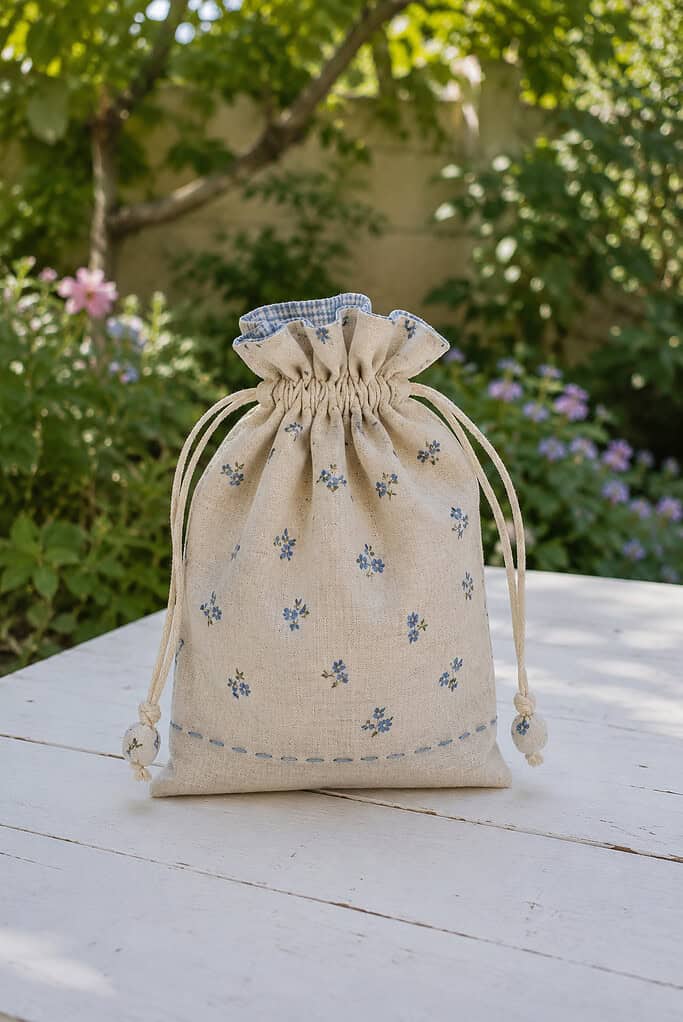
The workhorses of my home — bread bags, toy bags, the little pouch that holds my youngest’s soothers. A rectangle of fabric, two side seams, a casing, and a cord. Twenty minutes. Make a dozen in an afternoon and you’ll find uses for all of them.
6. pillowcases
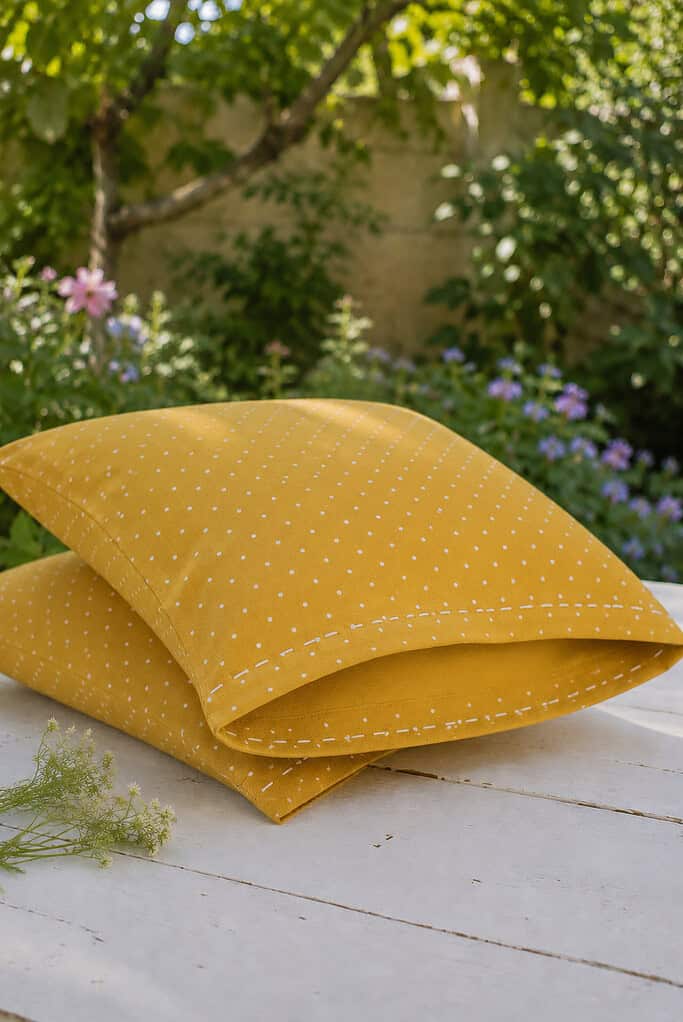
A pillowcase with a French seam and a simple envelope closure takes under an hour. Use natural linen or soft washed cotton. There is something about sleeping on a pillowcase you made yourself that is quiet and good in a way that is hard to explain.
7. baby burp cloths
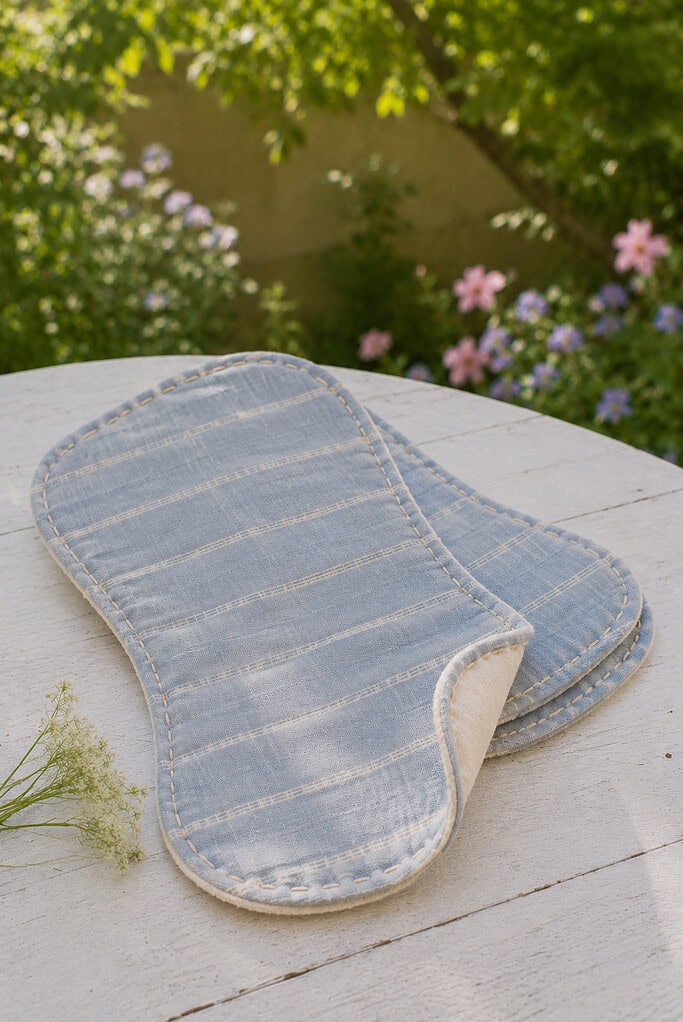
Two rectangles sewn right sides together and turned — that is really all there is to a burp cloth. Use soft cotton on one side and terry on the other for extra absorbency. Make them in batches and gift them too. New mamas are always grateful for a handmade stack.
8. pot holders and trivets
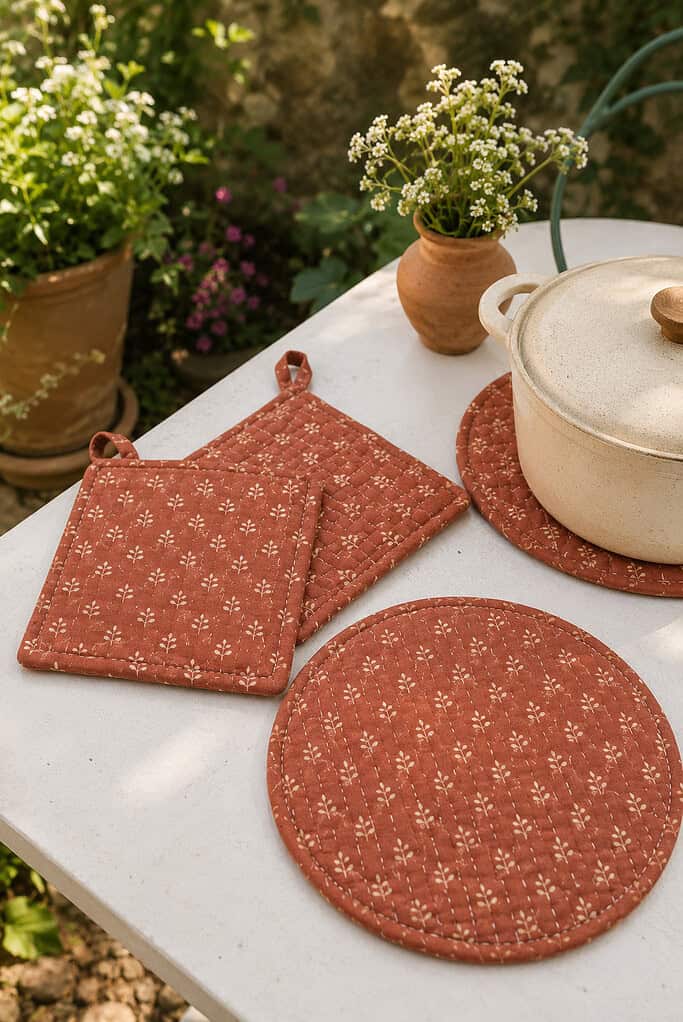
A beautiful way to use up fabric scraps. Layer your fabric with heat-resistant batting, quilt the layers together with a simple grid stitch, and bind the edges. Mine live next to the cast iron and have faded into the most perfect patina — the kind that only comes from real use.
9. fabric bowl covers
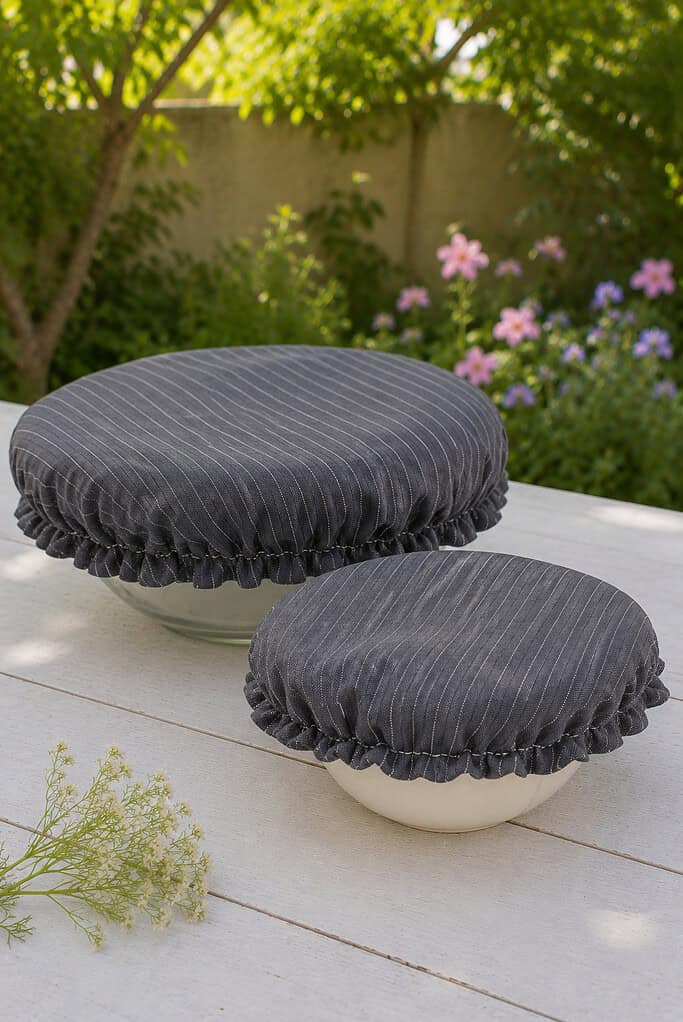
My non-toxic answer to plastic wrap. Cut circles of cotton, add elastic to the edge, and you have a flexible reusable cover for your bowls and jars. Charming stacked near the fridge and genuinely useful every single day.
10. linen dish towels
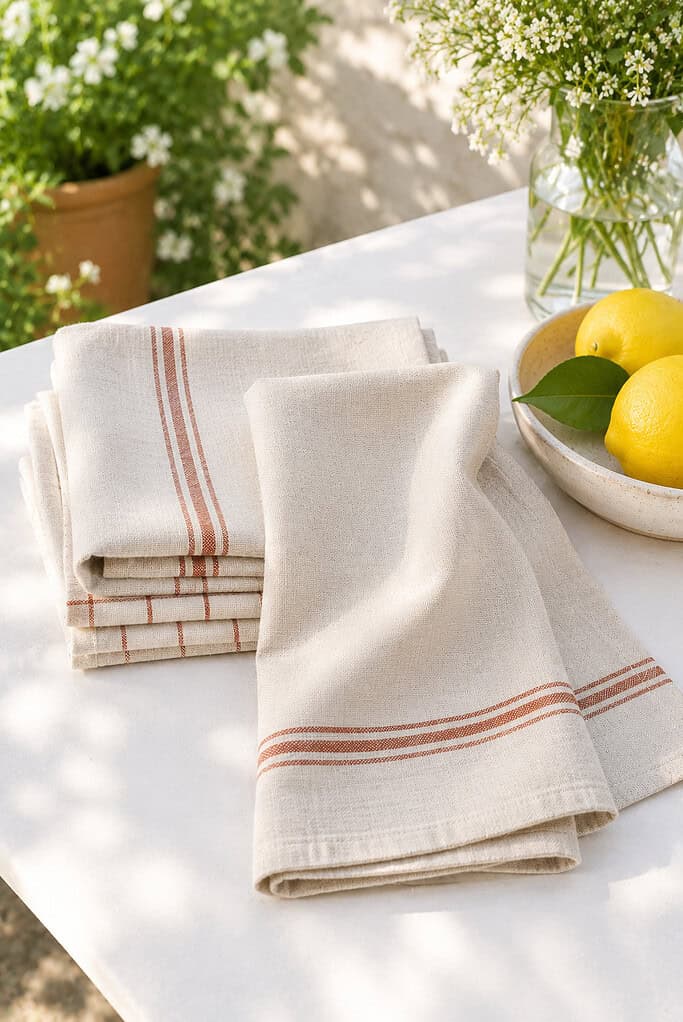
A stack of linen dish towels changes a kitchen. They dry faster than cotton, soften with every wash, and last for years. Cut a rectangle of mid-weight linen, hem the edges with a double fold, add a hanging loop. That is the whole project.
If you’ve been curious about building more with linen, there are some lovely boutique-style sewing ideas for clothes using the same beautiful fabric.
11. fabric gift bags
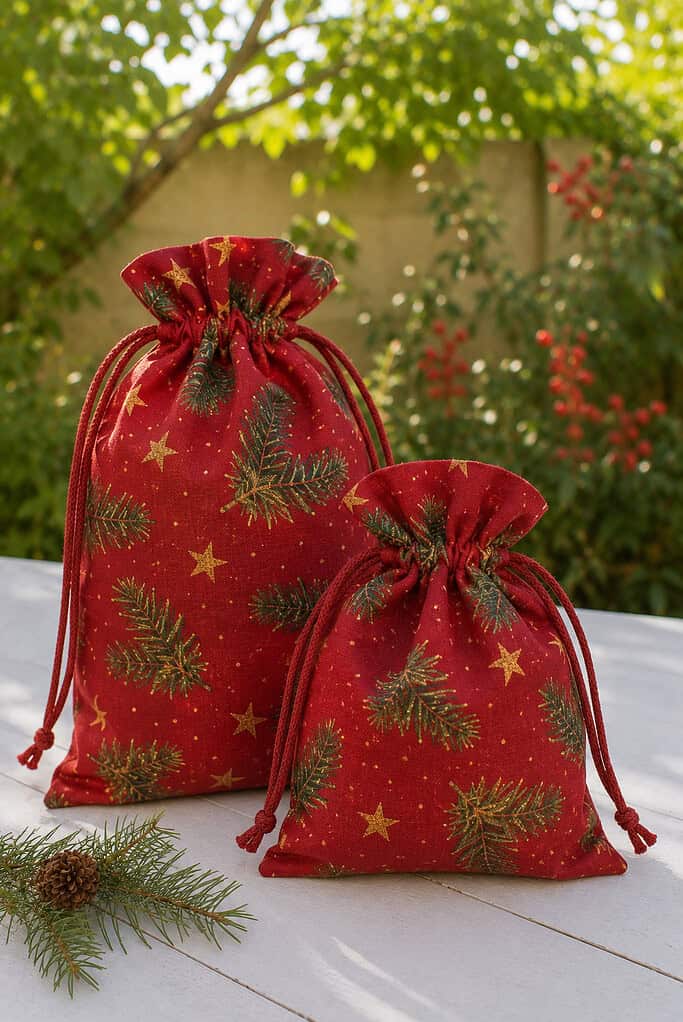
Small cotton bags cinched with a ribbon or a bit of twine have replaced almost all of my gift wrapping. I sew them in batches before the holidays and stack them in a basket in the closet.
They get used and reused and eventually become part of someone’s home — which is the best possible thing a handmade gift can do.
12. hair scrunchies
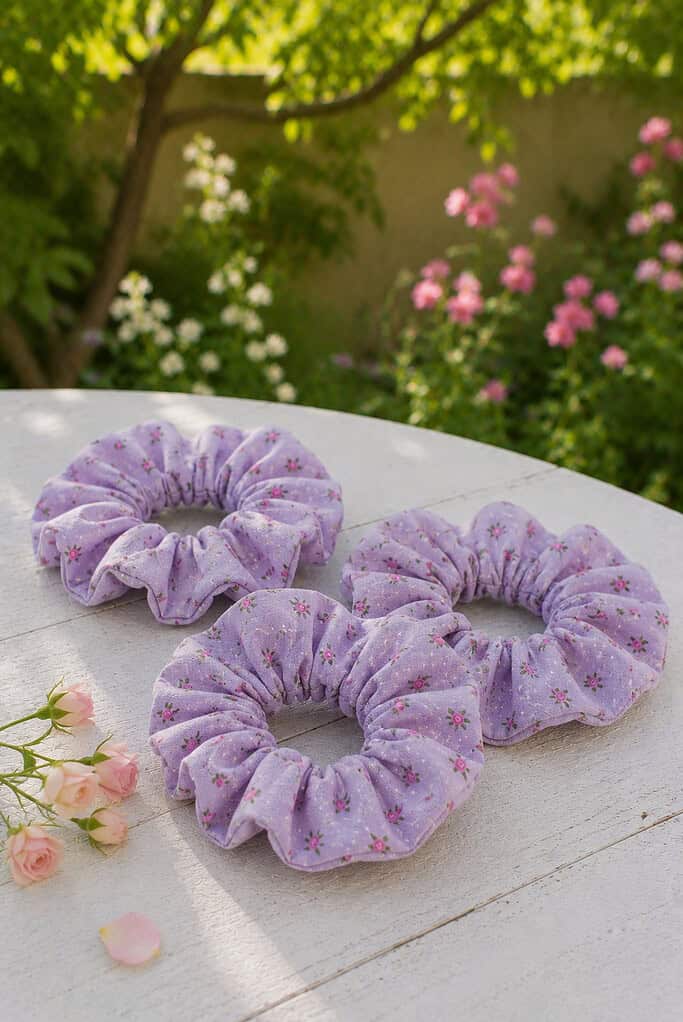
A handmade scrunchie from beautiful fabric is a tiny everyday luxury that costs almost nothing. A long rectangle sewn into a tube, turned, and threaded with elastic — a genuine ten-minute project. I make mine from linen scraps, leftover wool, and remnants of other projects.
The best way to use up every last beautiful scrap.
what fabric works best for everyday sewing machine projects
For all of these projects, I am a strong advocate for natural fibers — linen, cotton, and wool wherever it makes sense.
Linen is my first love. It holds up to repeated washing, softens beautifully over time, and has a weight and drape that synthetics simply can’t replicate. For napkins, dish towels, aprons, and bread bags, linen is ideal.
Cotton muslin is your best friend for beginners — affordable, forgiving, and it washes well. A mid-weight canvas or twill is perfect for totes and pot holders where you need structure.
And if you have a jar of spare buttons sitting in your sewing corner, there are some sweet button crafts to do with your littles that use up every last one.
a few gentle notes for getting comfortable at your machine
The best way to get comfortable at a sewing machine is to make something simple and genuinely useful. Don’t start with a garment. Start with a napkin, a drawstring bag, or a pillowcase — projects with straight lines and forgiving seams.
Let your machine become familiar in your hands before you ask it to do harder things. If the needle and thread aren’t calling you today, you might also love these small crochet projects that are perfect for slow nap-time making.
why everyday handmade things are worth making
She selects wool and flax and works with eager hands. — Proverbs 31:13
The Proverbs 31 woman wasn’t making things for display. She was making things for her household — useful, practical, beautiful in the way that real things are beautiful. The cloth napkins on your table. The apron over your dress. The burp cloth over your shoulder at three in the morning.
Handmade everyday objects carry something with them that store-bought ones don’t. They carry intention. The time you sat down to make something for your home and your family — that is woven into the fabric as surely as the thread is.
And on the long afternoons when the machine needs to rest, there are always unhurried summer activities to do with your littles that cost almost nothing and create the sweetest kind of memories.
pick one project and sit down at your machine this week
The best sewing project is the one you actually make. Not the most impressive one. Not the one that’s been saved three thousand times. The one that’s sitting at your machine right now, waiting.
Pull out a fat quarter of linen and cut it into napkins. Thread up the machine that’s been waiting in the corner. Whatever it is — start small, start useful, and let it become a rhythm in your home.
Drop a comment below and tell me which of these twelve you’re planning to make first — I’d genuinely love to hear what’s calling to you, sweet friend.
With love,
Betty
Grab Your FREE Sewing Pattern Labels Today
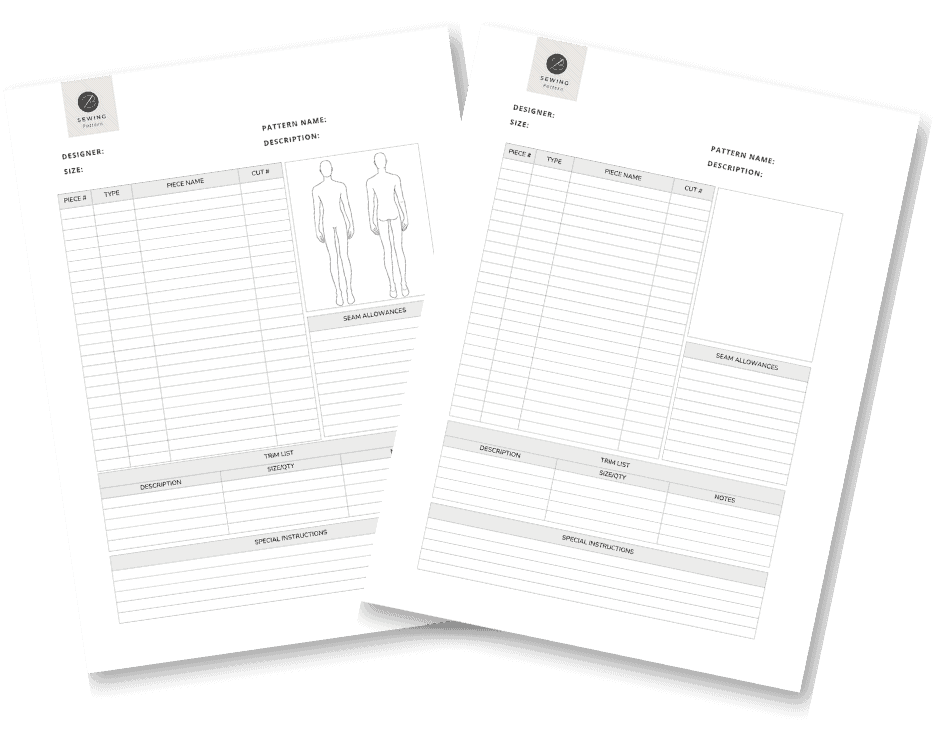
As the seasons pass and projects add up, those little paper patterns have a way of piling into drawers and baskets. And when you go to remake something, you end up searching instead of sewing.
That’s exactly why I created these Free Sewing Pattern Labels.
They make it simple to keep every pattern neat, easy to find, and ready whenever inspiration strikes. Just print the labels, fill them out, and attach them to your pattern envelopes.
In a few minutes, your patterns go from scattered to beautifully organized.
A small change that makes your sewing space feel calmer, clearer, and ready for your next project.
frequently asked questions
what is the easiest sewing machine project for a complete beginner?
Cloth napkins are consistently the best first project. They involve only straight seams and a basic double-fold hem. Cut four squares of linen or cotton, hem the edges, and you’ll have a usable, beautiful set in under an hour.
do I need a special sewing machine for these everyday projects?
Not at all. A basic entry-level machine handles every project on this list. You need a straight stitch, a zigzag stitch, and the ability to adjust your stitch length. Some of the most beloved machines are simple older models passed down through families.
what’s the best fabric for everyday sewing projects?
Natural fibers are your best choice. Linen is durable and grows softer over time — ideal for napkins, dish towels, and aprons. Cotton muslin is excellent for beginners. Heavier cotton canvas is perfect for totes and pot holders. Avoid synthetics where you can — they don’t breathe as well and don’t age with the same grace.
how do I find time to sew with small children at home?
Nap time is sacred — even twenty minutes can finish a set of napkins. Many of these projects can be done in pieces across multiple nap times. Don’t wait for a long uninterrupted stretch. Sew in small windows. Let it be imperfect. Let the children circle the machine and watch. That is part of it too.
how much fabric do I need to get started?
For most projects on this list, a yard or two is more than enough. Napkins take about half a yard for a set of four. A tote bag needs about three quarters of a yard. Scrunchies and drawstring bags can be made entirely from scraps. If you have even a few fabric remnants, you likely have everything you need to start today.