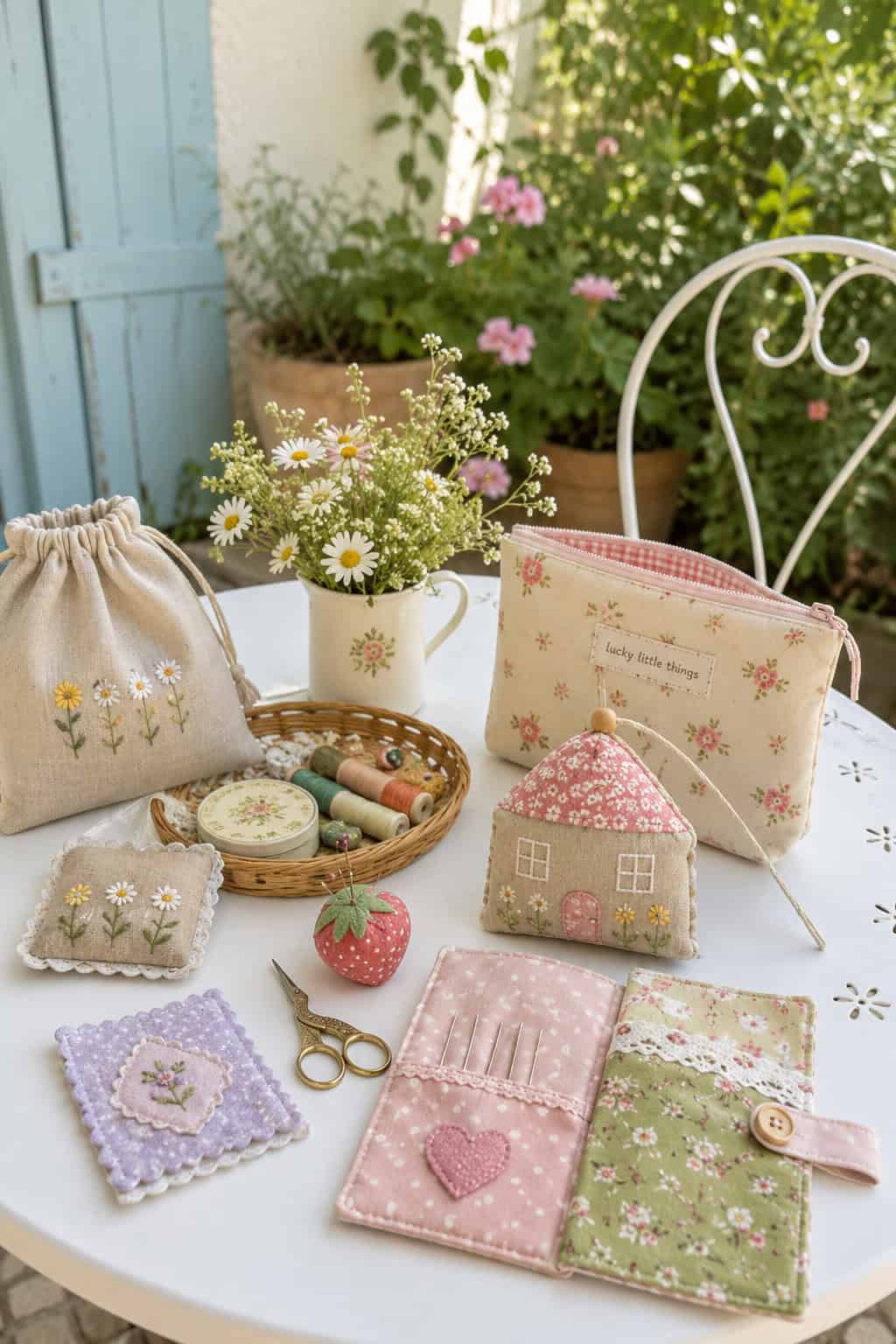
There’s a little basket beside my armchair that always seems to hold a half-finished something. Right now it’s a sachet waiting on its lavender, a hem I started during the baby’s nap, and a square of linen I haven’t quite decided on yet.
I love my sewing machine, I really do. But there’s a quieter kind of making that happens with just a needle and thread in my lap — the lamp turned low, one of the little wild ones finally asleep down the hall.
Hand sewing asks for almost nothing. No setup, no whirring, no corner of the house surrendered to a machine. Just your two hands and a few small minutes — the kind that hide in the cracks of an ordinary day.
So if you’ve been longing to make something but pulling out the machine feels like one more thing to carry, this little list is for you, sweet friend. Every project here is a gentle make you can finish from the couch — the sort of small sewing projects you can finish in a quiet evening, no machine required.
why i reach for a needle instead of the machine
The machine is faster, of course. But hand sewing gives me something speed never could — a few unhurried minutes that feel more like rest than work.
I can do it on the porch while the children play. I can do it in the evening without waking anyone. I can pick it up and set it down a dozen times, and the work waits patiently for me to come back.
There’s an old verse I find myself chewing on often: She seeketh wool, and flax, and worketh willingly with her hands. (Proverbs 31:13) Working willingly — gladly, peacefully — with our hands is a quiet kind of faithfulness.
Hand sewing is one of the simplest ways I know to practice it, and it sits naturally inside a life of slow, sustainable handmade goods.
10 cute hand sewing projects you can finish without a machine
I’ve kept this list to the projects I actually reach for — the ones that don’t need a pattern, don’t need much fabric, and forgive a slightly crooked stitch. Pour your tea. Here they are.
1. lavender sachets for quiet drawers
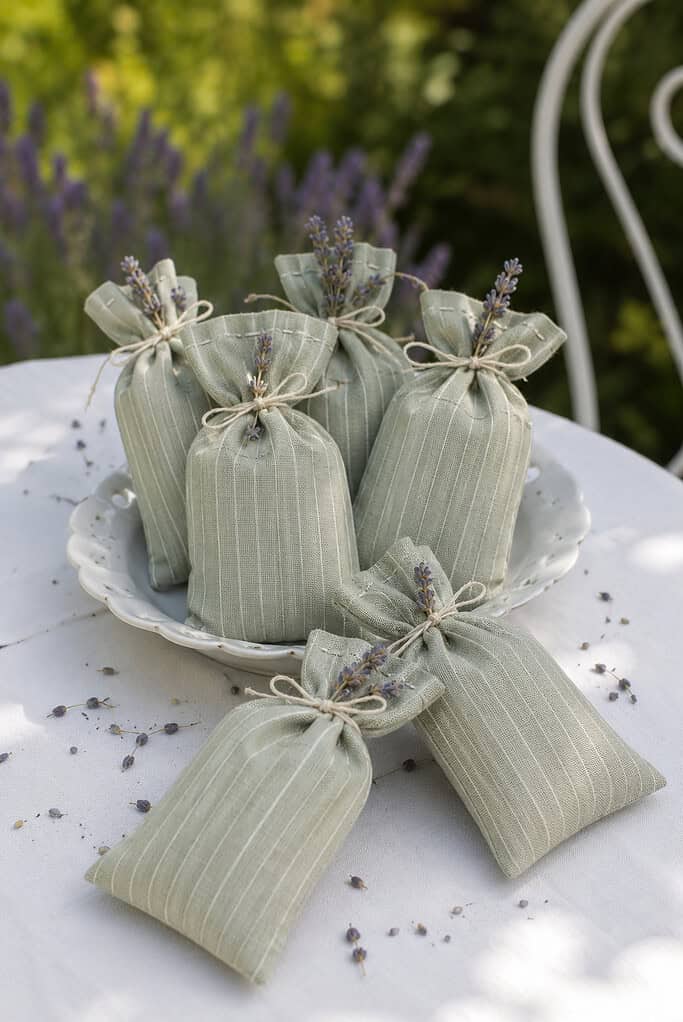
This is the project I send every new sewer to first. A little square of cotton or linen, a few spoonfuls of dried lavender, and a simple running stitch around the edges — that’s the whole thing.
I tuck mine into the dresser drawers and the linen closet, and every time I open them there’s that soft, settled smell. They make tender little gifts too, slipped into a card or tied with a bit of twine. If your stitches wander a little, no one will ever know. The lavender doesn’t mind.
2. a felt heart garland
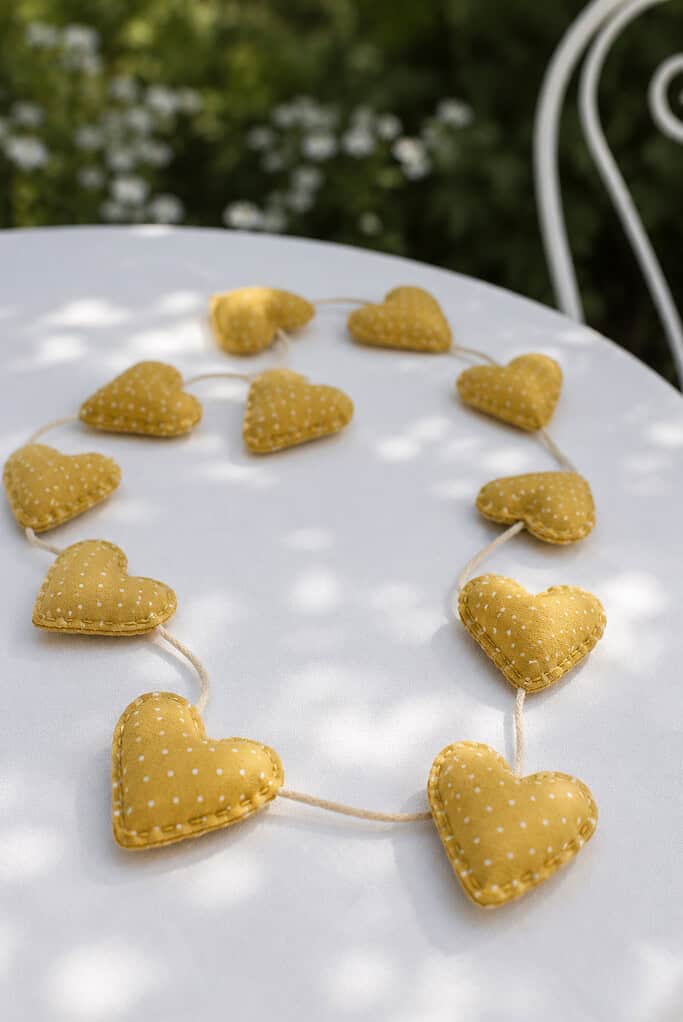
Wool felt is a gift to hand sewers — it doesn’t fray, so there’s no hemming and no fuss. Cut a handful of hearts (or stars, or little leaves), and stitch them together along a length of thread or thin ribbon.
I draped one along our mantel last winter and never quite got around to taking it down. It still makes me smile. This is a lovely one to make alongside an older child, two pairs of hands working at the kitchen table.
3. cloth napkins with a hand-rolled hem
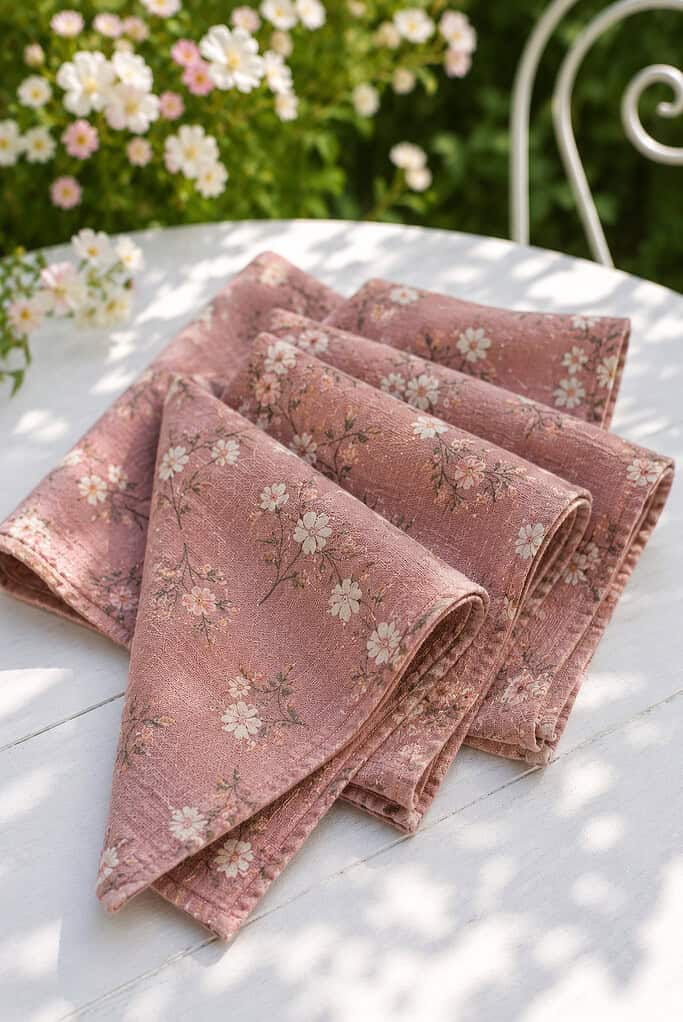
There’s something quietly satisfying about setting the table with napkins you made yourself. Cut squares from soft cotton or linen, then roll the raw edge over twice and secure it with a small, even hem stitch.
It takes a bit of patience the first time. But by the second napkin your hands will have found the rhythm, and by the fourth you’ll wonder why you ever bought paper.
4. a little drawstring pouch
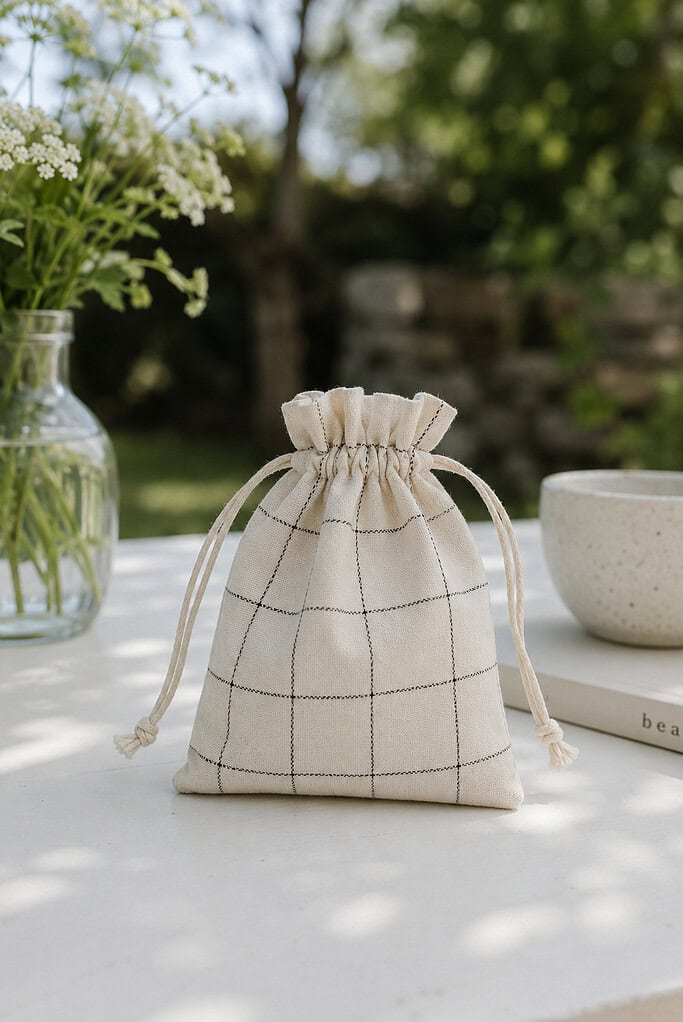
A drawstring pouch is endlessly useful — for marbles, for hair clips, for the small treasures my toddler gathers on our walks and presents to me like jewels.
Fold a rectangle of fabric, stitch up the two sides by hand, fold down a little channel at the top, and thread a length of cord or ribbon through. That’s it. Make one and you’ll want to make ten.
5. embroidery hoop wall art
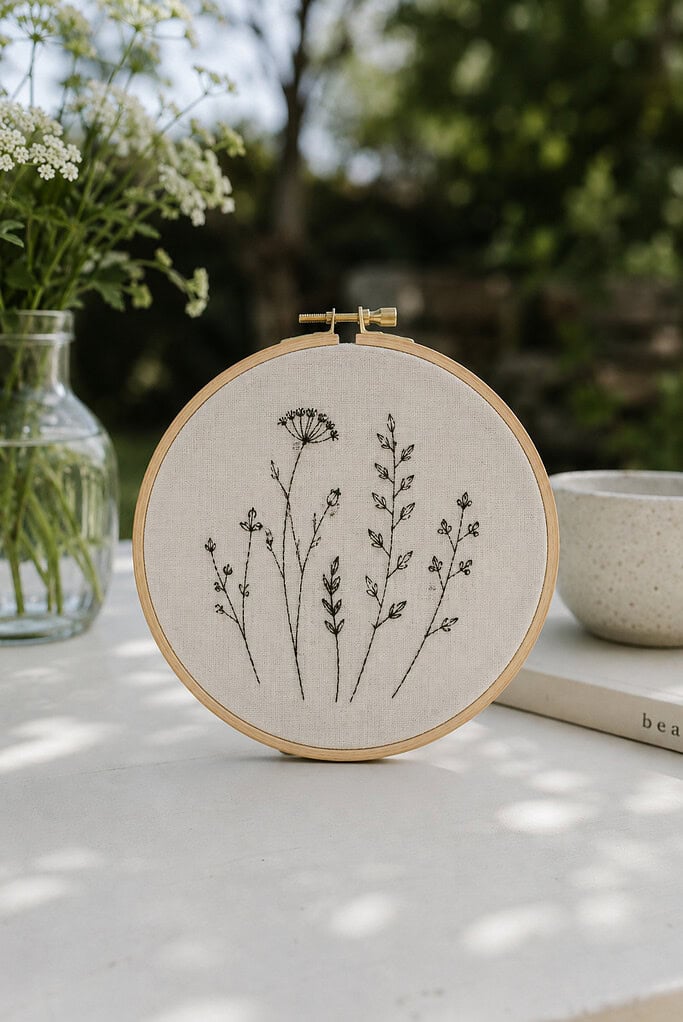
This one feels a little like magic. Stretch a piece of fabric in a wooden embroidery hoop, stitch a simple design — a sprig of wildflowers, a short verse, your family name — and the hoop itself becomes the frame.
If you’ve never embroidered before, don’t let it scare you off. A few basic stitches will carry you a long way, and getting started with embroidery is far gentler than it looks. I have a small hoop by our front door that simply says home. It was the first thing I ever embroidered, crooked letters and all.
6. felt finger puppets for little hands
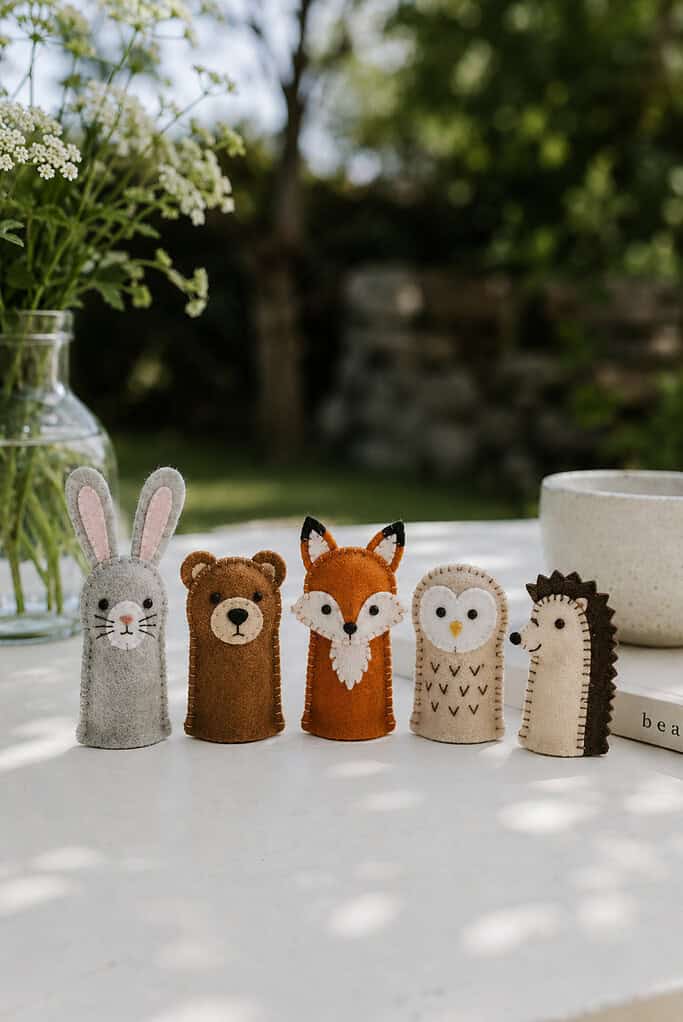
My children would tell you these are the best thing on this list. Cut two small puppet shapes from felt, stitch around the edges with a simple whip stitch, and add a face with a few stitches or a tiny scrap or two.
We’ve made a whole little flock — a lamb, a lion, a couple of sheep that look suspiciously alike. They live in a basket by the bookshelf and come out for stories.
7. a sweet pincushion
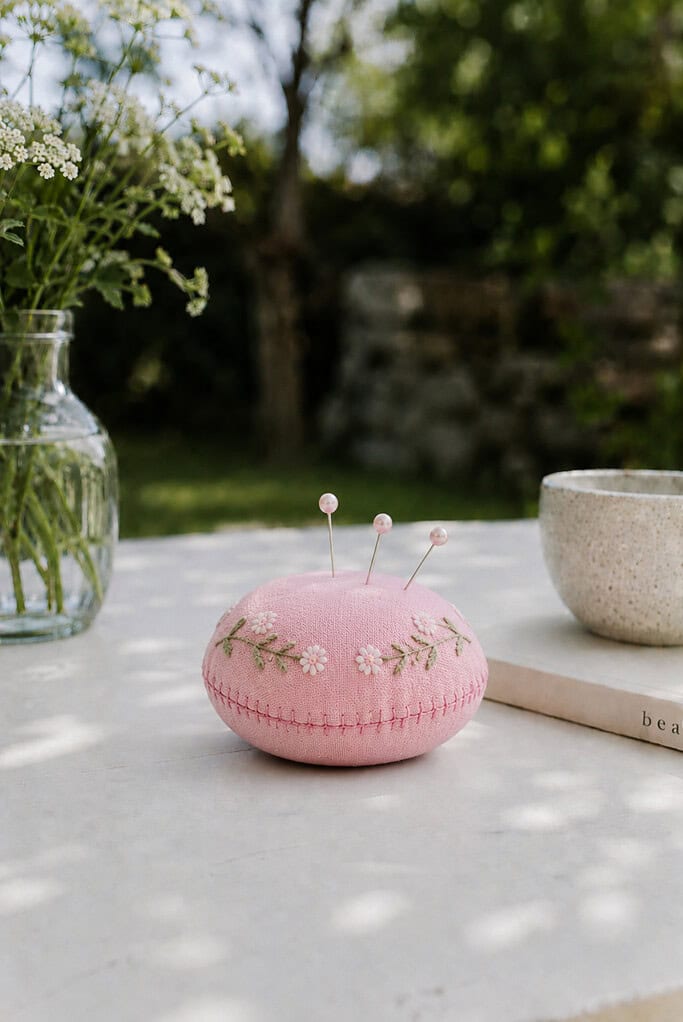
There’s a gentle irony in hand sewing your own pincushion, and I love it for that. Stitch two small squares or circles together, leave a little gap, fill it with wool stuffing or even dried rice, and close it up.
Mine sits right in my sewing basket — a small tomato-red thing that’s faithfully held my pins for years.
8. patchwork coasters
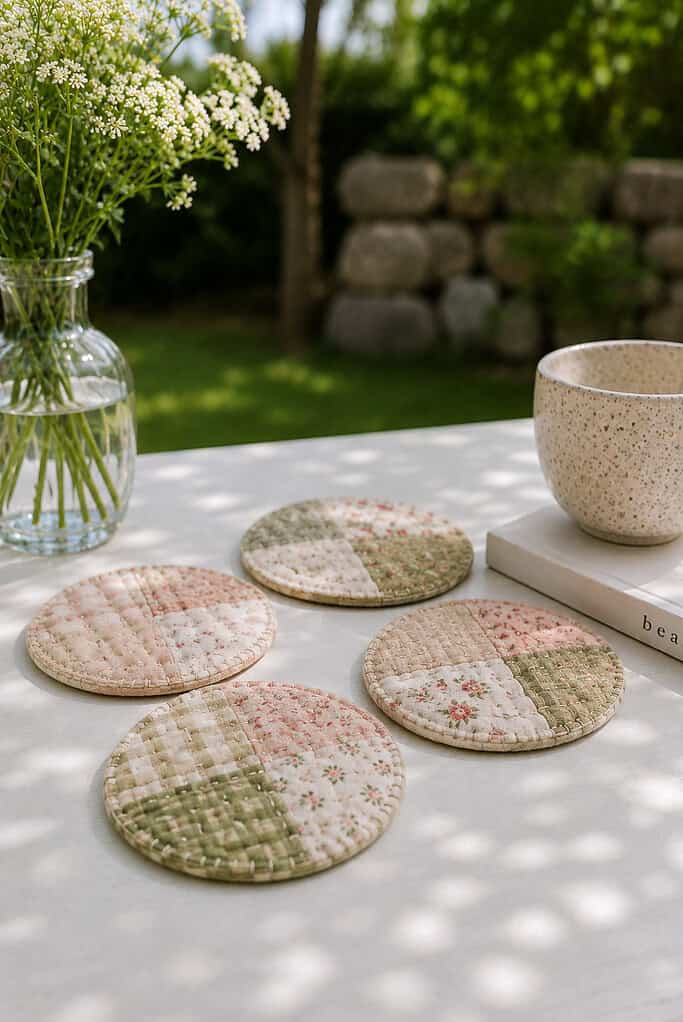
If you’ve been sewing for a while, you already have a basket of fabric scraps you can’t quite bear to throw away. Coasters are a beautiful way to use them.
Stitch a few small squares together by hand, back them with another piece of fabric, and you’ve made something useful out of almost nothing. There are so many other clever ways to use up fabric scraps, but coasters are where I’d start.
9. a soft felt heart softie
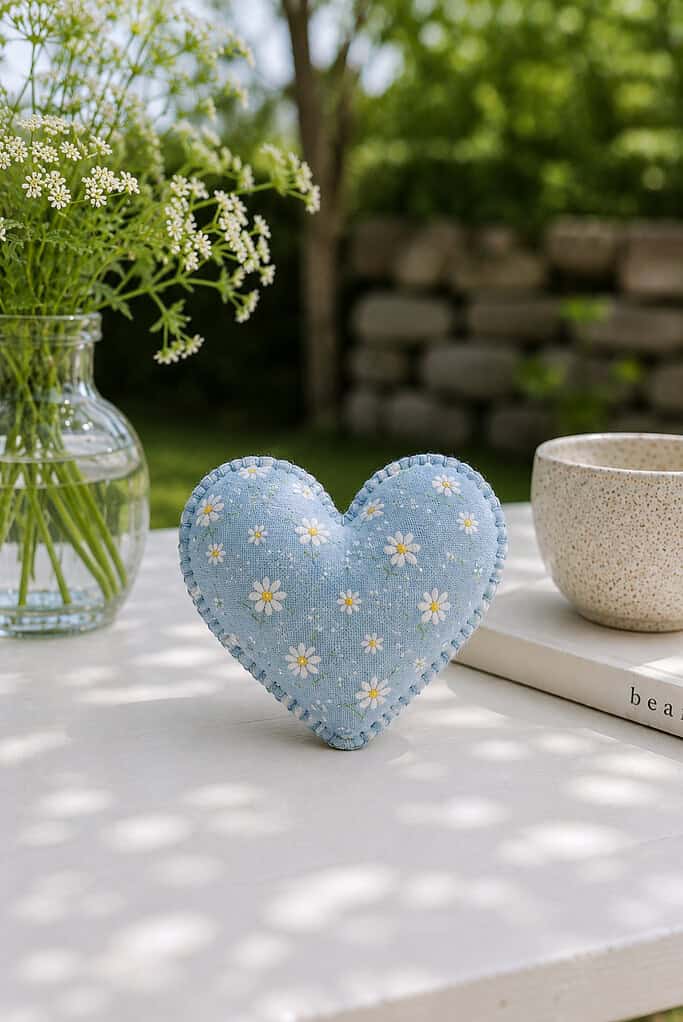
A small stuffed heart is one of the most tender little things you can make. Cut two heart shapes from felt or soft cotton, stitch around the edge, leave a gap to fill with stuffing, then close it with a few neat stitches.
For a softie with a face, a pair of buttons makes the sweetest eyes — and if you’ve got a jar of spare buttons on the shelf like I do, you’ll have everything you need already.
10. reusable fabric gift bags
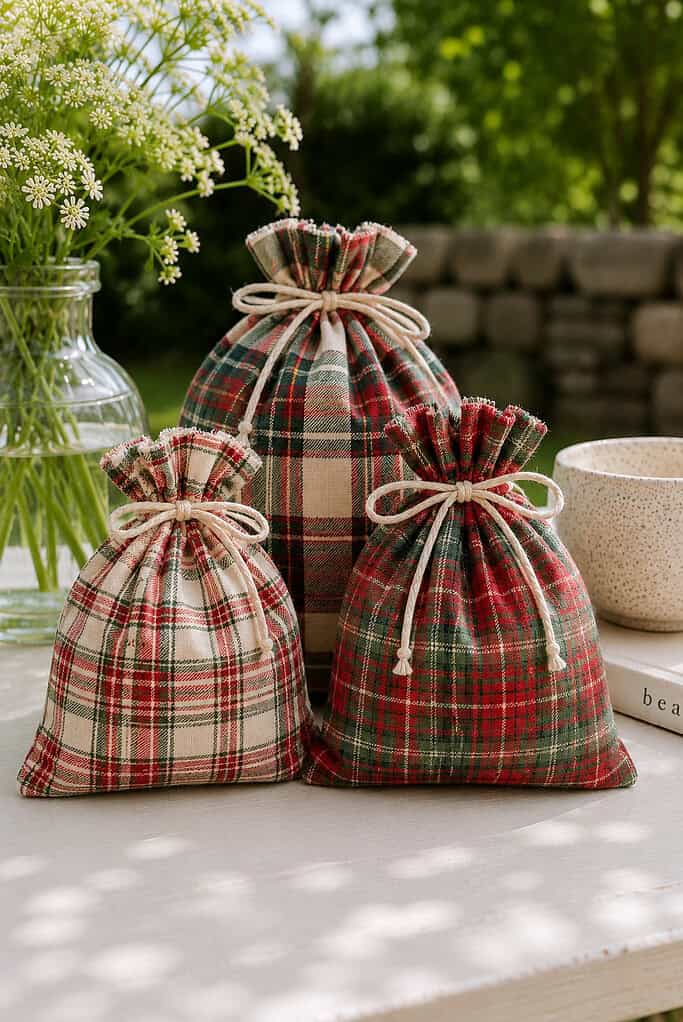
I stopped buying wrapping paper a few years ago, and fabric gift bags are a big part of why. They’re simple — a rectangle folded and stitched up the sides, with a ribbon or drawstring at the top — and they get used again and again.
There’s something lovely about a gift that’s wrapped in something the receiver gets to keep.
what to keep in your little sewing basket
You don’t need much to begin — that’s the beauty of it. A small basket or an old tin will hold everything.
Gather a few hand sewing needles (sharps are a good all-purpose choice), some all-purpose thread, a small pair of sharp scissors, and a handful of pins. A thimble is worth having once you start working with thicker fabrics — it saves your fingertips more than you’d think.
If you’re not sure where to start, picking the right needle and thread is much simpler than the wall of options at the fabric shop makes it seem.
And fabric? Begin with what you already have. Scraps, an outgrown pillowcase, a worn-soft shirt — all of it can become something.
gentle tips for sewing by hand
A few small things I’ve learned, mostly the slow way:
- Keep your thread on the shorter side — about the length of your forearm. Long thread tangles and frays, and tangled thread tries everyone’s patience.
- A knot at the end keeps your stitches anchored, and a few tiny stitches in the same spot will hold everything secure when you finish.
- Even stitches matter more than tiny ones. Aim for steady and consistent before you ever worry about small.
- Press your work with a warm iron when you can. It makes hand sewing look far more finished than the effort suggests.
And if you’d like to feel surer of your hands before you begin, spend a little time with a few essential beginner stitches. A running stitch, a backstitch, and a whip stitch will carry you through every project on this list.
pick one project and start it tonight
So here’s my gentle nudge, sweet friend — choose the one project on this list that made you smile, and start it tonight. Even ten quiet stitches before bed count as a real beginning. And when you’re ready for more, there are plenty of simple sewing projects anyone can make waiting for you here.
I’d truly love to know which project you’re starting with. Leave a comment down below and tell me — I read every single one, and there’s little that makes me happier than knowing you’re making something with your hands.
With love, and a basket full of half-finished projects of my own,
Betty
Grab Your FREE Sewing Pattern Labels Today
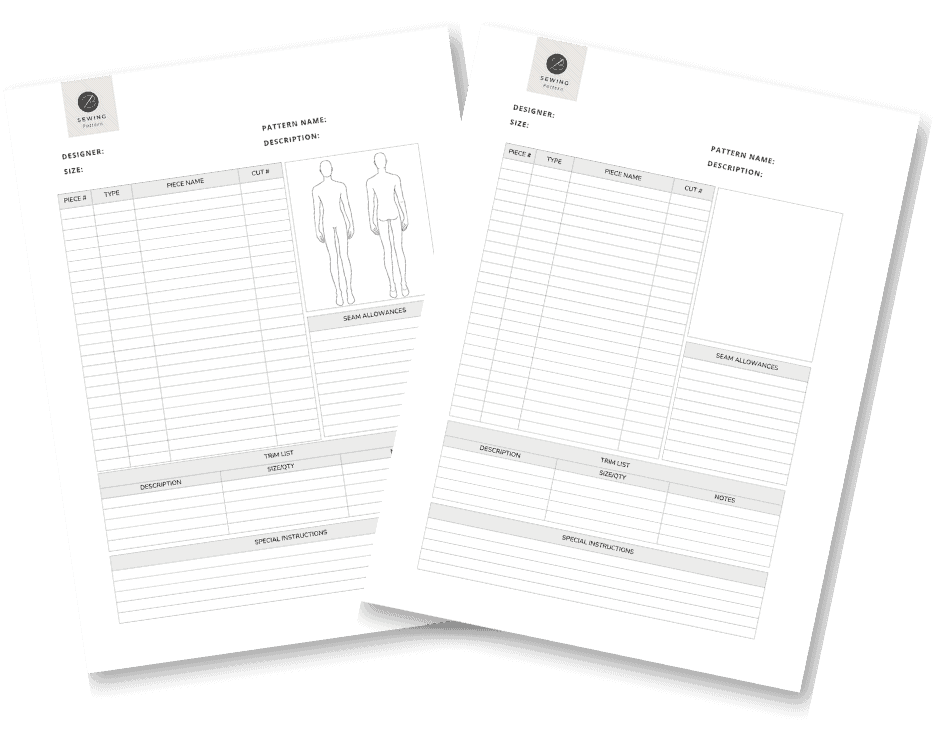
As the seasons pass and projects add up, those little paper patterns have a way of piling into drawers and baskets. And when you go to remake something, you end up searching instead of sewing.
That’s exactly why I created these Free Sewing Pattern Labels.
They make it simple to keep every pattern neat, easy to find, and ready whenever inspiration strikes. Just print the labels, fill them out, and attach them to your pattern envelopes.
In a few minutes, your patterns go from scattered to beautifully organized.
A small change that makes your sewing space feel calmer, clearer, and ready for your next project.
frequently asked questions
do i need to know how to sew to try these projects?
Not at all. If you can thread a needle and make a simple running stitch, you can do every project on this list. Hand sewing is one of the most beginner-friendly skills there is — it forgives mistakes and asks only for a little patience.
what is the easiest hand sewing project for a complete beginner?
I’d start with lavender sachets or a felt garland. Both use just one simple stitch, neither needs a pattern, and felt doesn’t fray, so there’s no hemming to worry about. They’re gentle, satisfying first projects.
what needle and thread should i use for hand sewing?
For most projects, a sharps needle and all-purpose cotton or polyester thread will serve you beautifully. Heavier fabrics like felt or wool may call for a slightly thicker needle. When in doubt, choose a needle that slides through your fabric without forcing it.
how long do these hand sewing projects take?
Most of them fit inside a single nap time or one quiet evening — somewhere between twenty minutes and an hour or two. That’s part of what I love about them. They’re small enough to actually finish, even in a busy season of life.
can my children help with hand sewing?
Yes, and it’s such a sweet thing to do together. Older children can manage a blunt needle and felt projects with a little supervision. For little ones, plastic needles and loosely woven fabric or felt make a wonderful, low-pressure introduction. Always keep needles and pins counted and tucked away when you’re finished.