There was a Tuesday morning last spring when the baby finally went down for her nap, my two-year-old was settled in with a pile of wooden blocks, and I had exactly forty-five minutes to myself.
I sat down at my sewing machine with a length of pale sage linen and a paper pattern I’d been eyeing for weeks — and I didn’t move until I heard tiny feet padding down the hallway.
That dress cost me about twelve dollars in fabric and a handful of unhurried hours. When I wore it to church the following Sunday, three different women asked me where I bought it. I got to smile and say, I made it. There is something quietly wonderful about that.
Sweet friend, if you’ve been wanting to sew your own clothes but don’t quite know where to start — or if you’ve been sewing for a while and are looking for new ideas to stretch your skills — you’re in the right little corner of the internet.
11 stylish sewing ideas for clothes you can make yourself
Here are eleven creative sewing ideas for clothes that will have people asking the same question.
1. linen wrap dress with a self-tie waist
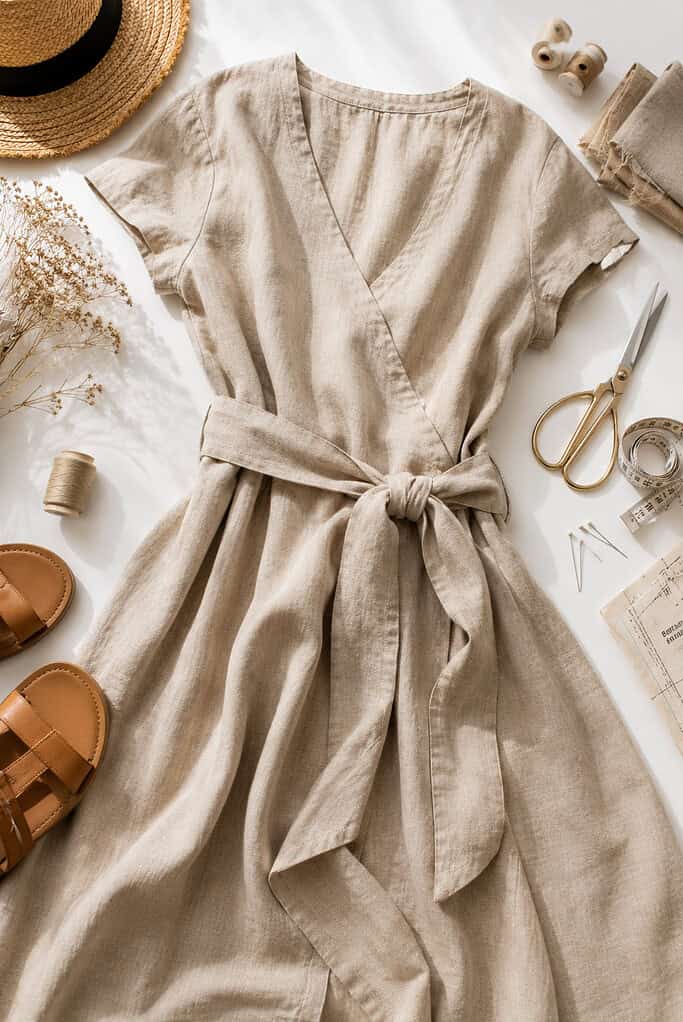
A wrap dress is one of the most forgiving and flattering things you can sew — and in linen, it becomes something that feels genuinely elevated.
The self-tie waist means one size works across body changes (hello, post-baby mornings), and you can dress it up with leather sandals or down with bare feet in the grass. Choose a medium-weight linen in a soft natural tone or a gentle botanical print, and you’ll reach for this one all summer long.
2. smocked cotton sundress
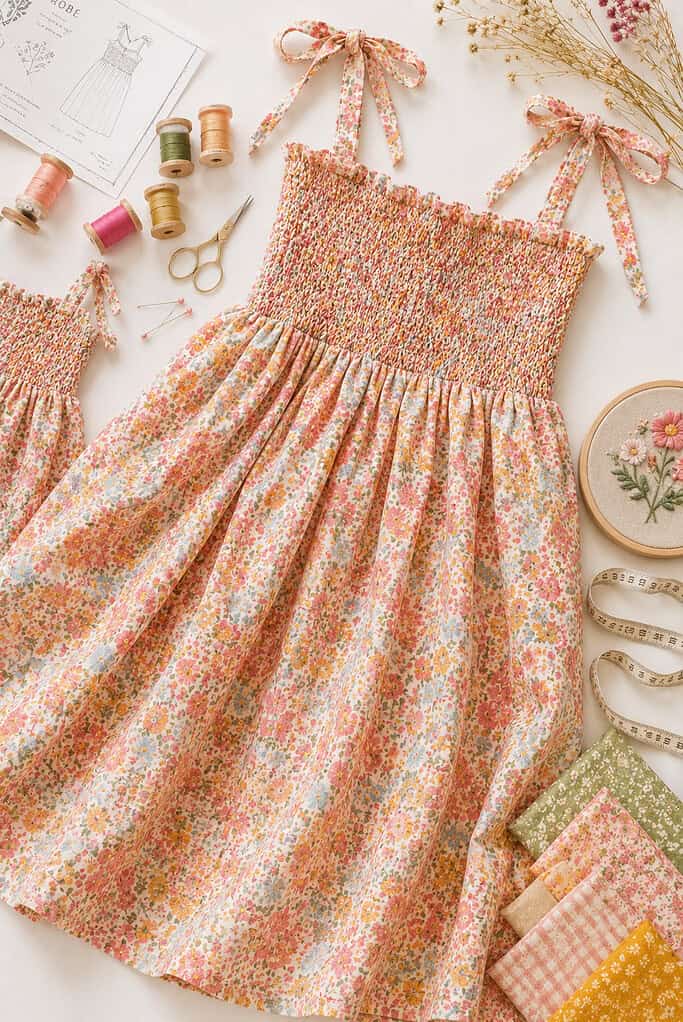
Hand smocking is one of those skills that looks incredibly complex but is genuinely meditative once you get the rhythm of it. A smocked bodice on a simple cotton sundress gives you that heirloom, boutique-made feeling without a boutique price tag.
Work it in a soft white or cream cotton, add a gathered skirt below, and you have something your daughter might wear someday — that’s the kind of making I love most.
3. tiered ruffle midi skirt
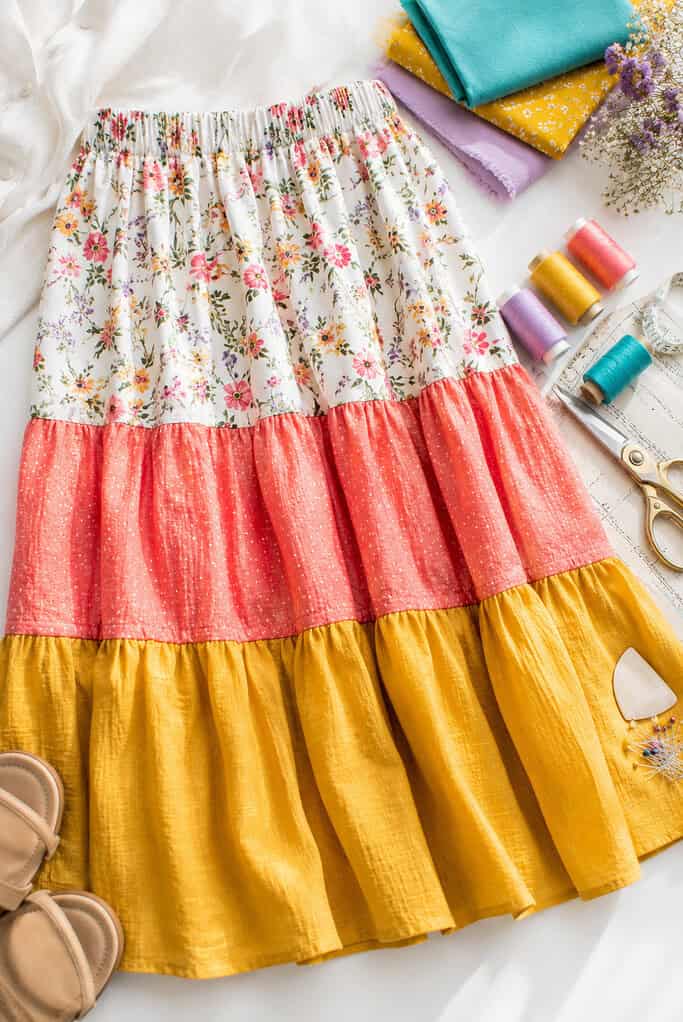
Three tiers of gathered fabric, a simple waistband with an elastic back, and you have one of the most versatile pieces in a handmade wardrobe. Use a lightweight cotton lawn or double gauze for something soft and flowy, or a medium-weight linen for something with a little more structure.
Pair it with a tucked-in blouse or a simple fitted tee and it genuinely looks like something out of a slow-fashion boutique.
4. wide-leg linen trousers
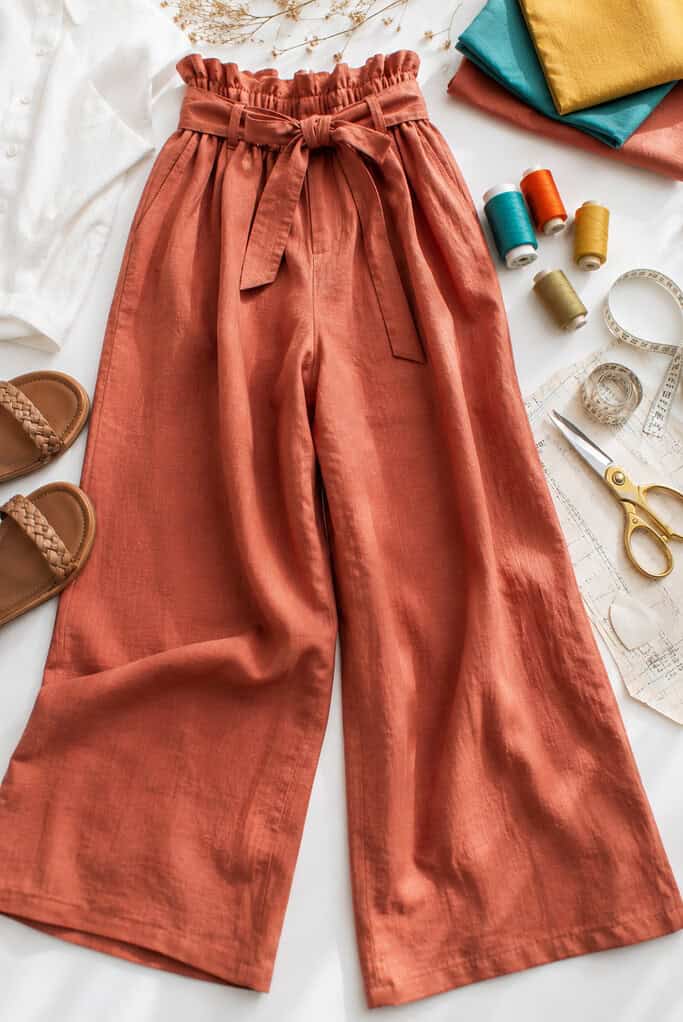
If you’ve never sewn trousers before, a wide-leg relaxed pant is actually one of the more forgiving places to start — because the ease in the leg means small fit adjustments are less noticeable.
Cut these in natural or oatmeal linen, add wide belt loops and a paper bag-style waist, and you have something that looks effortlessly put-together. I’ve sewn three pairs and they are genuinely in my regular rotation.
5. bishop sleeve blouse
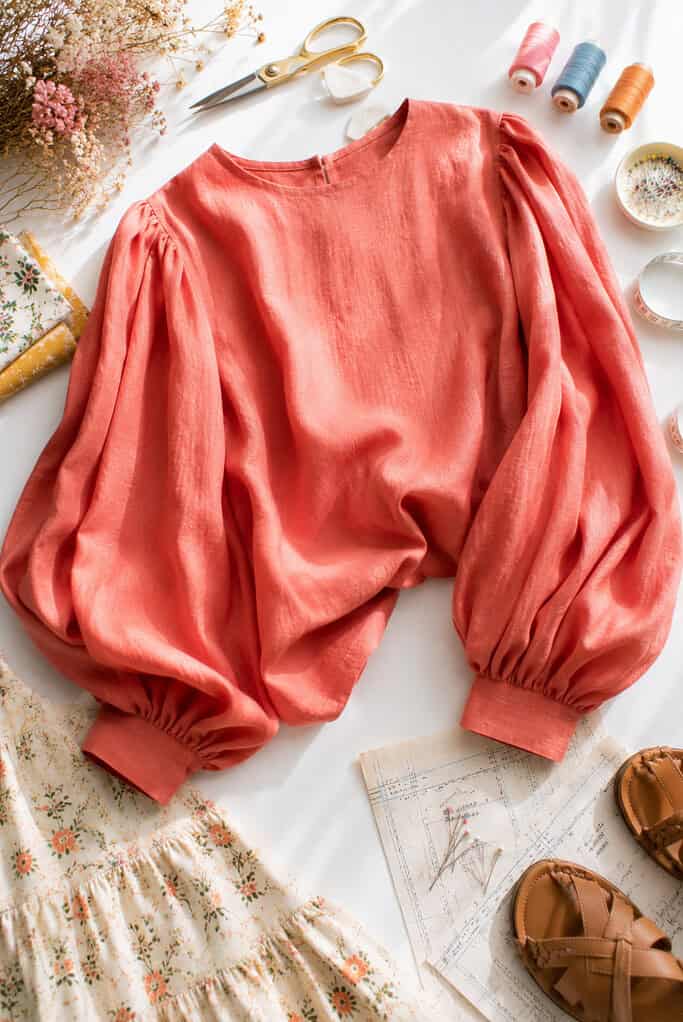
That full, gathered sleeve that cinches at the wrist — the bishop sleeve — is having a beautiful moment in slow-fashion circles, and it couldn’t be more suited to natural fibers. A loosely woven cotton or lightweight linen gives those sleeves the volume and movement they deserve.
Pair this blouse with a tiered skirt or your wide-leg trousers and you have a complete handmade look that feels both romantic and completely wearable.
6. peter pan collar dress
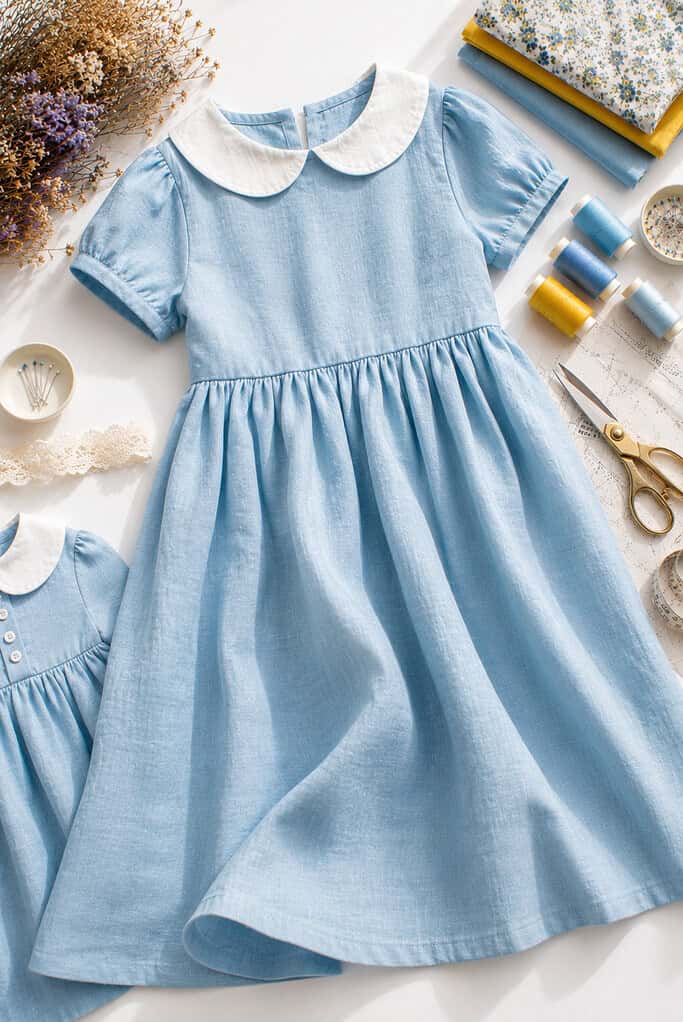
There’s something so sweet and timeless about a Peter Pan collar. It transforms even the simplest dress shape into something that looks carefully crafted. Cut the dress in a solid-colored linen and the collar in a contrasting white or cream cotton, and the result is charming without being precious.
This is a lovely project to sew for yourself and then repeat in miniature for a daughter — they photograph beautifully together.
7. patchwork skirt from fabric scraps
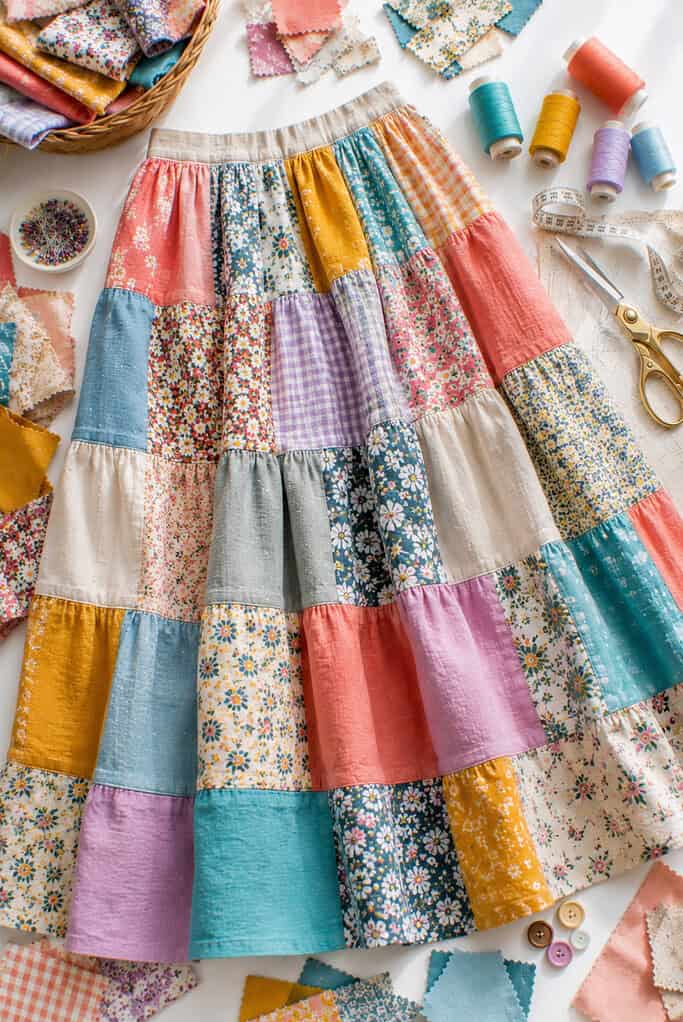
I keep a basket of fabric remnants by my machine — strips of linen, cotton, and the occasional bit of wool — and a patchwork skirt is one of the very best ways to put them to use. Cut your scraps into strips or squares, stitch them together into a patchwork panel, then gather and attach to a waistband.
Every single one will be one of a kind. If you love working with scraps, you might also enjoy this tutorial for a hand-sewn patchwork tote bag — it uses the same approach in a slightly smaller project that’s a lovely place to practice before cutting into a garment.
8. french seam button-front shirt
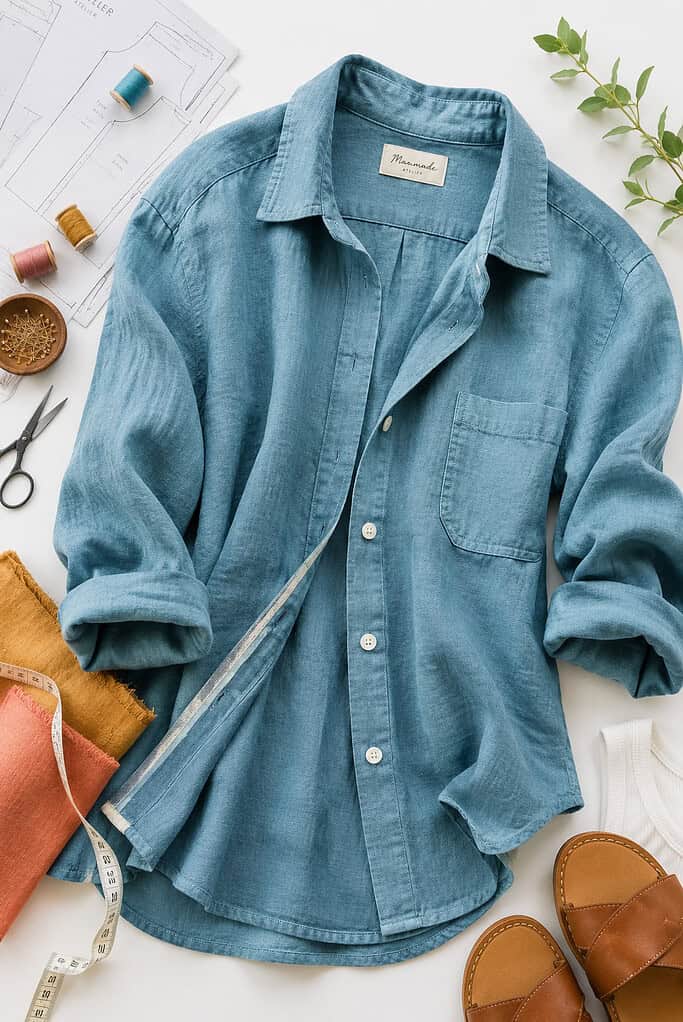
French seams are one of those finishing details that genuinely separate a handmade garment from something that just looks homemade. When you fold the fabric back on itself and enclose the raw edge inside the seam, the inside of your shirt looks as neat as the outside — and that’s exactly what boutiques charge for.
A relaxed button-front shirt with French seams in a soft chambray or washed linen is a wardrobe workhorse. Wear it open over a tank or buttoned all the way up — it works either way.
9. pintuck detail blouse
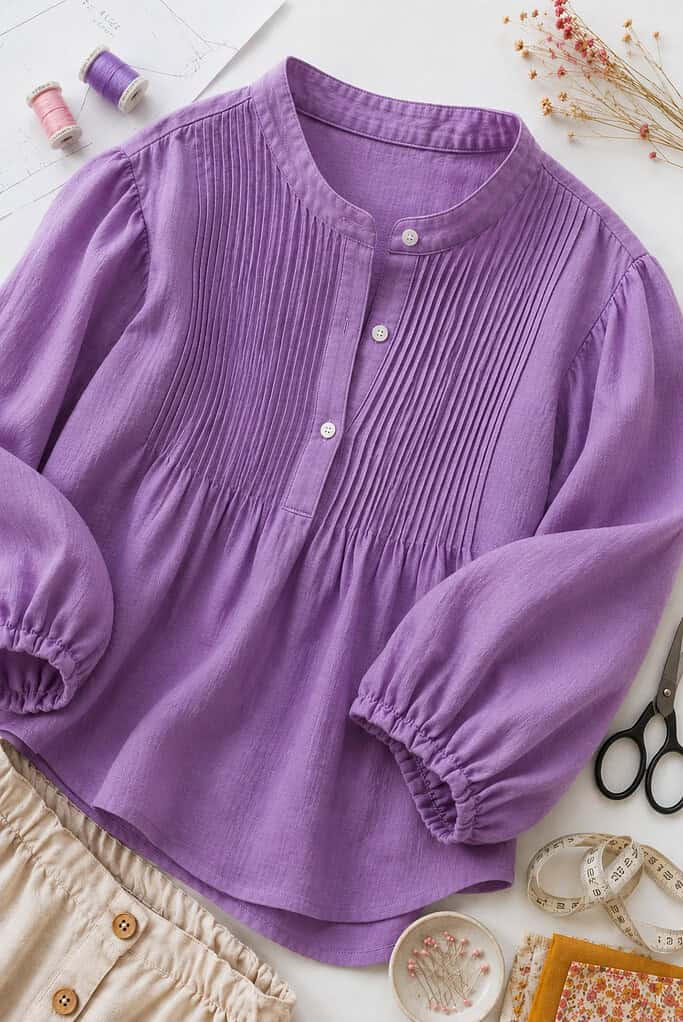
Pintucks are tiny folded pleats stitched into the fabric before you cut — and they add such beautiful texture and dimension to an otherwise plain blouse.
A row of pintucks down the front of a simple pull-on top, or across the shoulder yoke of a gathered blouse, makes the whole thing feel hand-crafted in the very best way. Use a crisp white cotton for something fresh and bright, or a soft natural linen for something earthier and more lived-in.
10. gathered yoke dress
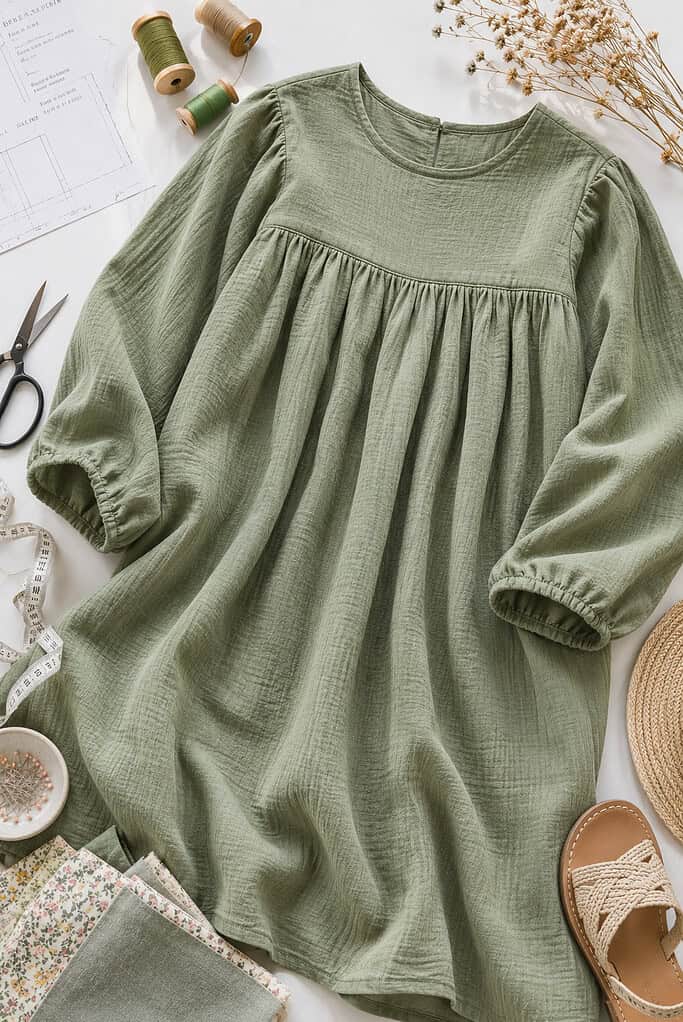
A yoke dress — where a fitted upper panel releases into a full, gathered skirt — is one of those silhouettes that looks both effortless and intentional. It’s also very kind to the body through all kinds of seasons, which I appreciate deeply as a mama who has been through three pregnancies in three years.
Make it in a double gauze cotton for something soft and breathable, or a medium linen for a little more structure. Either way, it photographs beautifully and wears even better.
11. embroidered linen overshirt
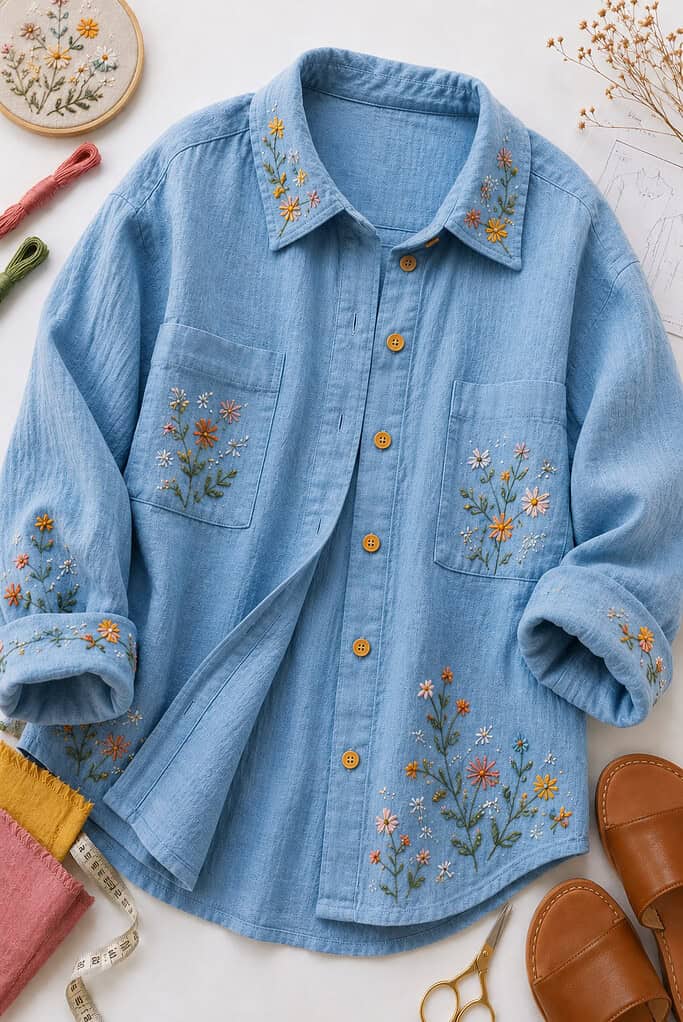
Take a simple boxy linen shirt pattern and add hand embroidery along the collar, cuffs, or pocket — and you have something genuinely one-of-a-kind.
A few lazy daisy stitches, some simple chain stitch botanicals, or even a small cross-stitch motif near the hem can transform a plain overshirt into something you’d find in a boutique for four times the price.
This is a beautiful way to bring your love of embroidery into a wearable piece — both skills living in the same garment.
why making your own clothes changes everything
I didn’t start sewing my own clothes because I had time to spare. I started because I was spending money on fast fashion that fell apart after six months and left me feeling vaguely unsettled every time I thought about where it came from.
I wanted a closet full of things made with care — from fibers that weren’t putting anything synthetic against my skin or my children’s skin, in shapes that would last more than a single season.
That same desire for a simpler, more intentional life runs through everything we do around here — from the way I made the switch to a homemade tallow sunscreen to stay away from synthetic ingredients, to baking from scratch, to choosing what goes against my skin every single morning. Sewing fits right into that rhythm. It’s slow. It’s intentional. And it produces something genuinely beautiful.
“She makes coverings for herself; her clothing is fine linen and purple.” — Proverbs 31:22
I love that the Proverbs 31 woman made things with her hands — not out of obligation, but because she saw the value in it. That’s the spirit I try to carry into my sewing nook. Not perfectionism, but faithfulness. One seam at a time.
the fabrics worth falling in love with
Most of what I sew is linen, cotton, or wool — and I feel very strongly that those three fibers will take you almost anywhere you want to go in a handmade wardrobe.
- Linen is my everyday favorite: breathable, gets softer with every wash, and has that beautiful relaxed texture that photographs so well.
- Cotton is endlessly versatile — from crisp quilting cotton to floaty double gauze to soft jersey.
- And wool, when you get into it, is genuinely magical — warm, resilient, and naturally self-cleaning in a way that feels like a small miracle on laundry day.
Once I really fell in love with sewing linen, I also started caring more about how I treated the finished pieces. I keep a bottle of my homemade linen spray right next to my iron — it makes pressing linen a genuine pleasure and leaves everything smelling like something good. If you haven’t tried making your own, the recipe is beautifully simple.
Avoid polyester and synthetic blends as much as you can. They don’t breathe, they don’t age well, and they don’t hold the same quiet dignity that a well-worn piece of linen does. When you’re putting real time and care into a handmade garment, give it the fabric it deserves.
the small details that make all the difference
You know what separates a garment that looks homemade from one that looks boutique-made?
It’s almost never the pattern. It’s the finishing. French seams instead of serged edges. A hand-stitched hem instead of a machine-rolled one. A real button sewn on with a thread shank so it holds beautifully for years. Those details are what people notice — even when they can’t name exactly why something looks so good.
I keep a little jar of vintage and mismatched buttons on my sewing table — collected from thrift stores and old garments — and reaching for one of those instead of a plastic button from a packet genuinely changes the finished look of a piece.
Buttons have a way of becoming a small treasure in their own right. If you’re looking for a sweet way to use your extra buttons alongside your little ones, I have a whole collection of simple button craft ideas for kids that are lovely to do together at the kitchen table.
Other finishing details worth learning slowly: flat-felled seams, a hand-sewn buttonhole (they look beautiful on linen — truly), a properly pressed seam allowance at each step, and a slip-stitched hem. None of these take long to learn. All of them are deeply satisfying to get right.
a note from the messy middle
Can I be honest with you for a moment? My sewing space is a corner of our bedroom. There are thread ends on the floor, a cutting mat that’s seen better days, and a basket of half-finished projects that has developed what I can only describe as its own personality.
My sewing hours are carved out of nap times and early mornings — the kind of slow mornings that start with a quiet cup of tea and sometimes, if I’m feeling especially indulgent, a batch of fresh milled flour pancakes on the cast iron before anyone else wakes up.
I don’t have a perfect studio or an elaborate setup. I make plenty of mistakes — seams I have to rip out, hems that aren’t quite even, sleeves I’ve eased three times before they’d lie flat. None of that matters in the end. The dress still gets finished. The blouse still gets worn. And every time I make something instead of buying it, I feel a little more rooted in the life I’m trying to build.
And if your hands find their way to other fiber crafts in the quieter in-between seasons, I’ll tell you that small crochet projects are another one of those gentle, unhurried makers’ joys — perfect for evenings when sewing feels like a lot and you just want to sit with something soft and simple in your lap.
pick up your needle, sweet friend — and tell me where you’re starting
If even one of these ideas has you itching to cut into that fabric you’ve had folded on the shelf, let that be your sign to go ahead and do it.
The right time to start sewing your own clothes is simply whenever you decide to begin — even if it’s forty-five minutes during nap time with a cup of tea going cold beside you.
Choose one project. Find a pattern (or sketch a simple one). Cut your fabric. Sew slowly. Press as you go. And when you finish — even if the hem is slightly uneven and the buttons took three tries — wear it with joy. Because you made it with your own hands, and that means something real.
I’d love to hear from you in the comments below — which of these creative sewing ideas speaks to you most? Are you a linen lover? A smocking beginner? Have you been eyeing wide-leg trousers for ages? Drop a comment and tell me where you’re starting.
This little community is one of my favorite places to talk about making things slowly and on purpose.
Warmly,
Betty
Grab Your FREE Sewing Pattern Labels Today
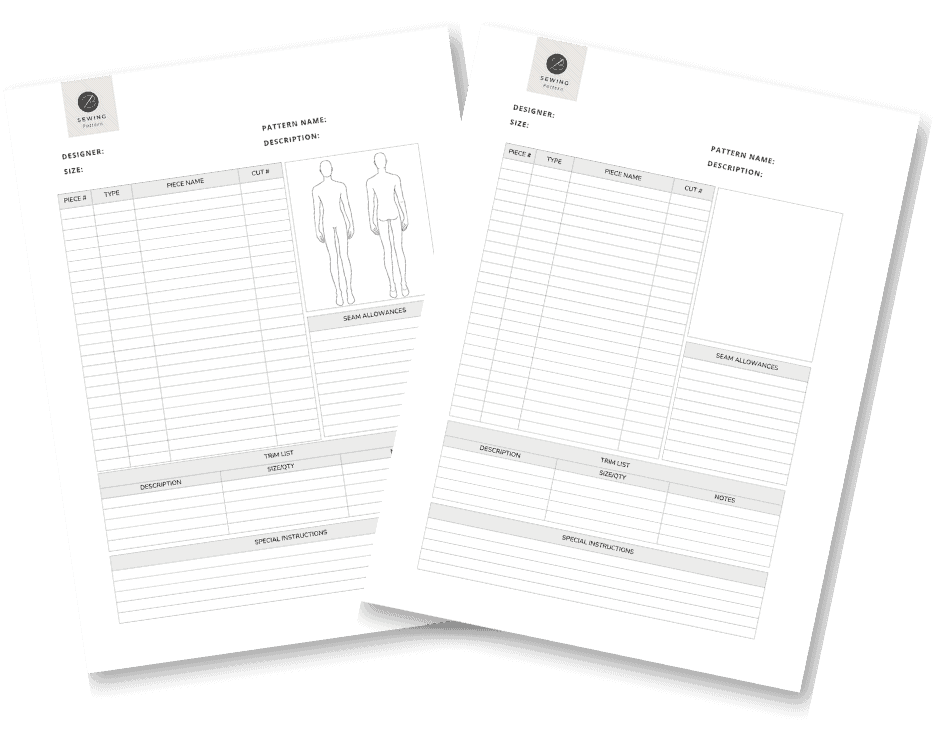
As the seasons pass and projects add up, those little paper patterns have a way of piling into drawers and baskets. And when you go to remake something, you end up searching instead of sewing.
That’s exactly why I created these Free Sewing Pattern Labels.
They make it simple to keep every pattern neat, easy to find, and ready whenever inspiration strikes. Just print the labels, fill them out, and attach them to your pattern envelopes.
In a few minutes, your patterns go from scattered to beautifully organized.
A small change that makes your sewing space feel calmer, clearer, and ready for your next project.
frequently asked questions
what’s the best fabric for a beginner sewing clothes?
For absolute beginners, a medium-weight quilting cotton is a wonderful place to start. It doesn’t shift around on the cutting mat, it presses beautifully, and it’s straightforward to sew through without a lot of machine adjustments.
Once you’re comfortable, move toward cotton lawn or a lightweight washed linen — both are forgiving and genuinely lovely to work with. Hold off on stretch fabrics like jersey or spandex until you have a bit more confidence, as they require different techniques and a stretch-specific needle.
how long does it take to sew a garment from scratch?
It really depends on the pattern and your experience level. A realistic estimate for a beginner working on a simple skirt or blouse is two to four hours spread across a few sessions. Something like wide-leg trousers or a wrap dress might take four to six hours the first time through.
As you get more familiar with a pattern, that time usually cuts in half on a second version. Don’t rush — slow sewing with pressed seams almost always looks better than fast sewing without them.
do i need an expensive sewing machine to make clothes that look professional?
Truly, no. I’ve made garments on a very basic entry-level machine that look just as polished as anything I’ve made on a more advanced one. What matters far more than the machine is your technique — pressing your seams, finishing your edges neatly, and taking your time with the details.
A reliable mid-range mechanical machine from a reputable brand is all you genuinely need. The boutique-made look comes from your hands, not your hardware.
what sewing techniques make clothes look most professional?
The three things that will immediately elevate your handmade garments are pressing (iron every seam before you cross it with another), finishing (enclose your raw edges with French seams, Hong Kong seams, or a serger so the inside of the garment is as neat as the outside), and hand sewing (a hand-stitched hem and hand-sewn buttons make a visible difference in the final result). These are all learnable skills at any level, and the improvement they bring is genuinely remarkable.
where can i find good sewing patterns for a handmade wardrobe?
There are so many wonderful independent pattern designers making patterns specifically for the slow-fashion, natural-fiber wardrobe. Some favorites in the handmade-clothing community include Merchant & Mills, Tessuti, Friday Pattern Company, and Wiksten.
PDF patterns are available for instant download and are often beautifully detailed. Etsy and independent fabric shops are also lovely places to look. Search for patterns described as “relaxed,” “oversized,” or “boxy” if you’re after that effortless boutique aesthetic — that language is usually a good sign.