
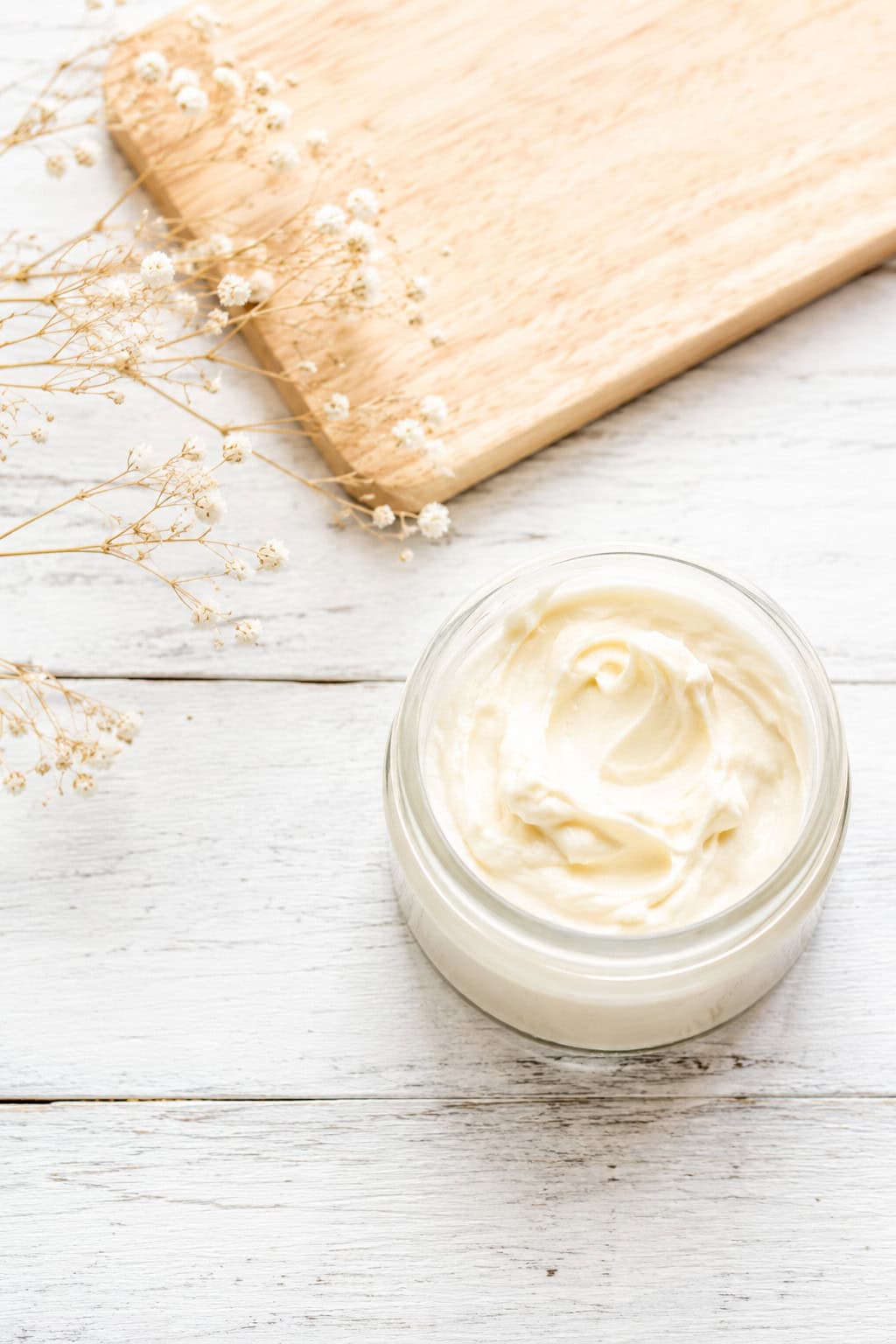
Most store bought formulas come in pretty packaging and promise a lot, but the ingredient lists tell a different story. Long names, synthetic additives, and fragrances that do not always feel as clean as they sound. For many people, that is the moment they start looking for something simpler.
For those looking to simplify their skincare routine and move toward more natural options, tallow-based sunscreen has become a popular alternative.
This homemade tallow sunscreen recipe is simple, effective, and made with ingredients that are easy to recognize. It’s simple, it’s made from ingredients I trust, and it has earned its permanent place in our summer routine.
the real reason i make my own sunscreen
There’s a certain kind of peace that comes from knowing exactly what you’re putting on your children’s skin. Not the peace of outsourcing it to a label or a brand — but the quiet, hands-on peace of having made it yourself, at your own kitchen counter, with ingredients you chose.
I’m not going to tell you what to do in your home. But I will tell you that when I started paying attention to what goes into conventional sunscreens — the synthetic UV filters, the hormone disruptors, the stabilizers and fragrances — I couldn’t keep reaching for them in good conscience.
I know every single ingredient that goes onto our skin, and that is a quiet, grounding peace I wouldn’t trade for any fancy bottle on a pharmacy shelf.
If you’re just beginning to look at the ingredients in your everyday products, my non-toxic living guide for beginners is a gentle place to start.
She opens her mouth with wisdom, and the teaching of kindness is on her tongue. — Proverbs 31:26. I think about that verse often when I’m making things for my family. Wise provision — for their bodies, not just their bellies.
what makes tallow so good for your skin
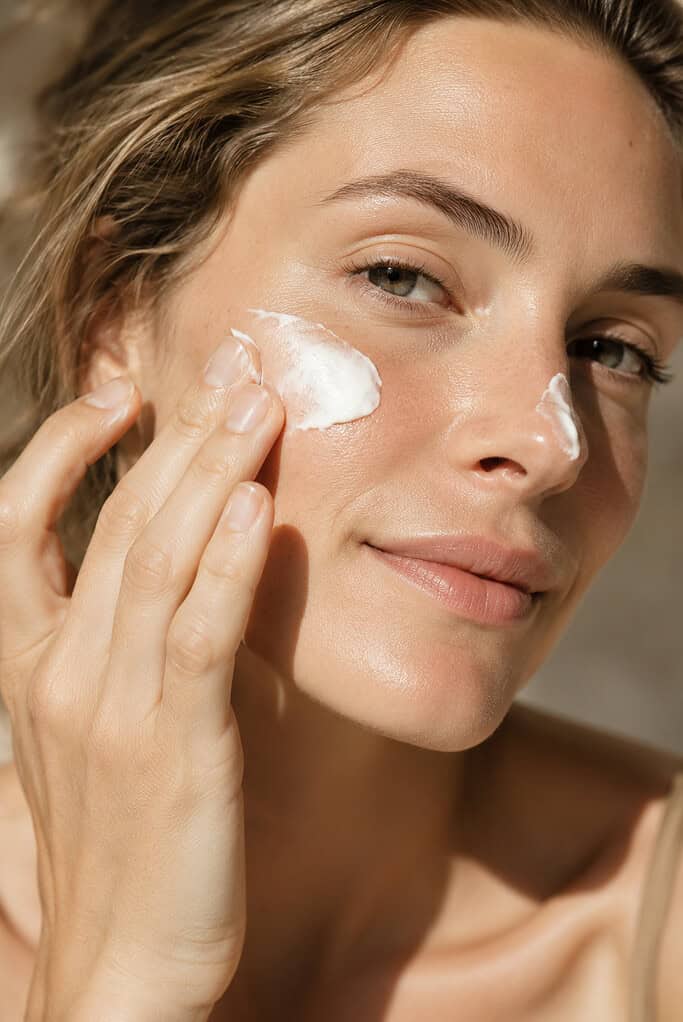
Tallow — rendered fat from grass-fed, grass-finished cattle — is one of the oldest skincare ingredients in the world. It fell out of fashion when synthetic creams took over, but it belongs back in your apron pocket. If you want to know everything it can do, I wrote a whole post on the best benefits of beef tallow that goes deep on the why.
Grass-fed tallow is naturally rich in fat-soluble vitamins A, D, E, and K, along with antioxidants and conjugated linoleic acid. These are nutrients our skin genuinely recognizes, because they’re structurally similar to the fats our own skin cells are made of.
When I smooth tallow into my hands after a morning of kneading sourdough and hauling laundry baskets, I can feel the difference. It absorbs without that heavy, greasy feeling most commercial moisturizers leave behind.
Adding it to a sunscreen recipe just made sense.
what you’ll need: diy tallow sunscreen ingredients
Everything in this recipe is measured by weight, not by volume — so pull out your kitchen scale before you begin. It actually makes the process easier, because you won’t need to melt anything just to get an accurate measure.
A quick note before you start: wear a mask when measuring and handling your zinc oxide powder. It’s very fine and you don’t want to breathe it in. Once it’s fully blended into the finished recipe, it’s safe and gentle to handle.
ingredients
- ¾ oz. beeswax — slightly less than some recipes use, which gives this sunscreen a softer, more skin-friendly finish that doesn’t feel heavy or waxy on warm skin
- 2 oz. grass-fed tallow or tallow balm — the nourishing heart of this recipe; grass-fed and grass-finished is ideal for the richest nutrient content. If you’d like to render your own, I walk through how to make tallow from beef fat step by step.
- 1 oz. unrefined shea butter — adds a creamy, skin-softening quality and blends beautifully with the tallow
- 1½ oz. virgin coconut oil — helps the whole mixture come together smoothly and adds a gentle, natural moisture
- 2¾ oz. liquid oil of choice — jojoba, carrot seed oil, argan, or rosehip all work well
- 2 oz. non-nano zinc oxide — the active sun-protective ingredient; non-nano means the particles are large enough not to be absorbed into the bloodstream, which is exactly what we want
- optional: 10–12 drops lavender essential oil — added after removing from heat, for a light and lovely scent
how to make your diy tallow sunscreen
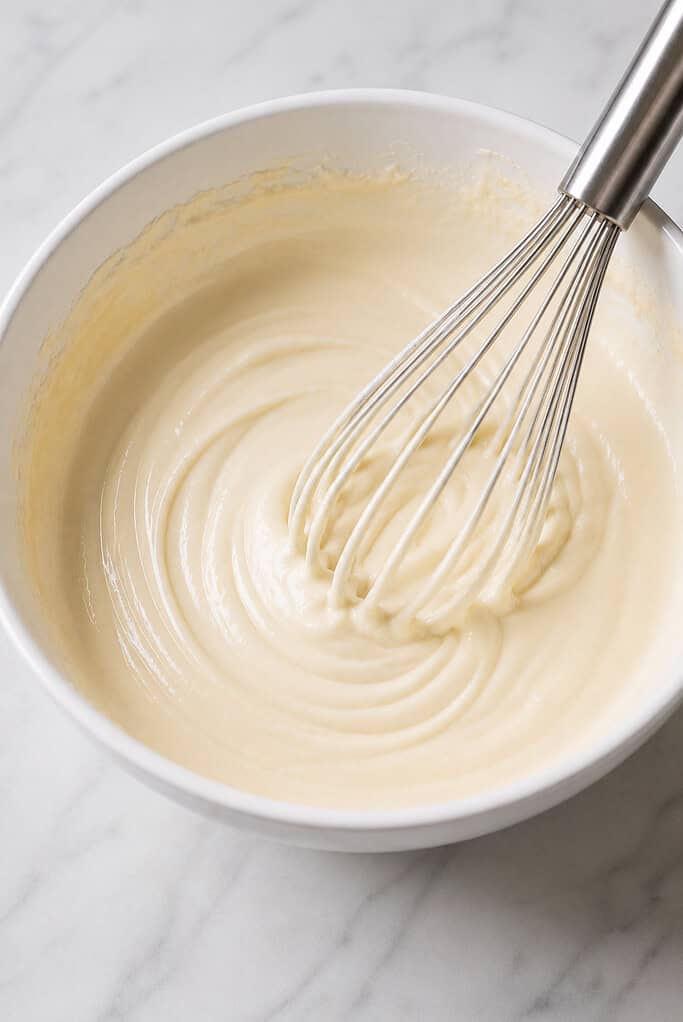
This comes together in about 25 minutes — and most of that is simply waiting for things to melt and cool.
- Set up your double boiler — a glass or stainless bowl set over a saucepan of gently simmering water works perfectly. You want low, steady heat, not a rapid boil.
- Add your beeswax first, since it needs the most time to melt. Once it’s mostly melted, add in the shea butter, then the tallow, then the coconut oil. Stir gently as everything comes together — it should be fully liquid and smooth within ten minutes or so.
- Pull it off the heat and let it cool for a few minutes. You’re watching for the moment when it just starts to thicken around the edges but is still pourable — that’s your window. Sift in the zinc oxide a little at a time and whisk it through thoroughly until there are no white streaks left. Take your time here; adding it gradually and whisking continuously is what prevents clumping and gives you an even, smooth finish. If you’re using lavender essential oil, stir it in at this point as well.
- Pour into your containers. Small glass jars work wonderfully, and so do silicone squeeze tubes if you prefer something easier to use on the go. Let it set up at room temperature until solid, then cap, label, and store.
That’s really it, sweet friend.
how to store and use your tallow sunscreen
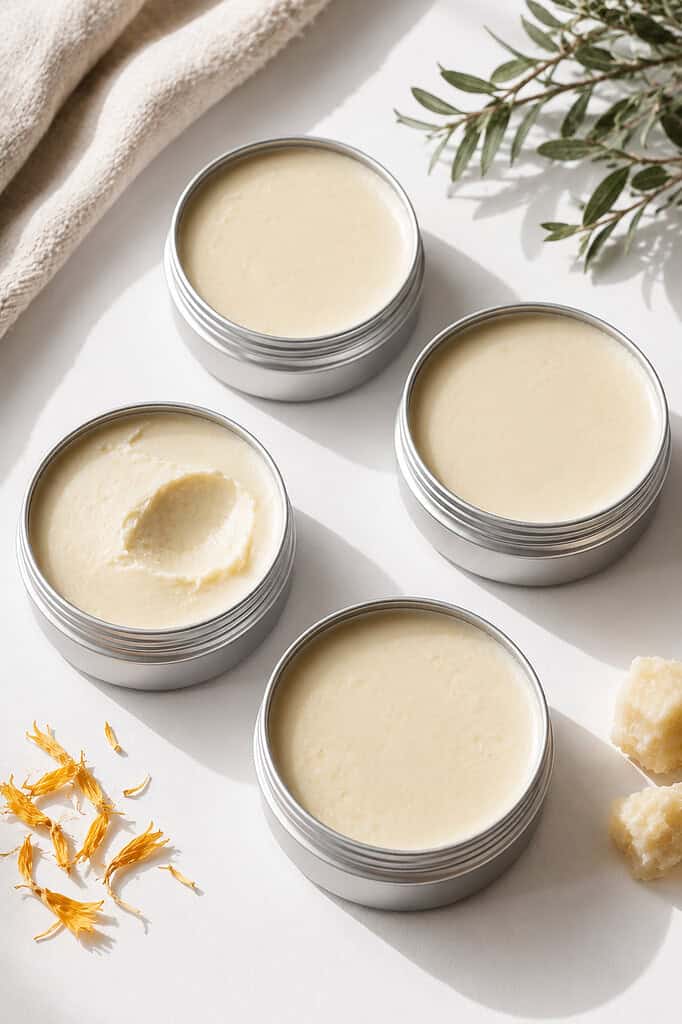
Keep your finished sunscreen in a cool spot away from direct heat — a cabinet or the refrigerator works well through the summer months.
The beeswax keeps it solid at room temperature, but on a very hot day it may soften a little. It’ll still work just fine — scoop a small amount and warm it between your palms before applying.
Apply it a few minutes before heading outdoors, the same way you’d use any sunscreen. Reapply after swimming, sweating heavily, or toweling off. Because tallow melts naturally against warm skin, this goes on smoother and blends more easily than most zinc oxide formulas — without the thick white cast most people are trying to avoid.
If you’re building a full natural skincare routine, this sunscreen pairs beautifully with a daily homemade tallow lotion or the tallow lotion bars I love for dry spots — the same nourishing base, just a different form.
protecting your skin from the inside out
Here’s something I’ve been thinking about more and more: skin health isn’t only about what we put on it. What we eat matters just as much — sometimes more.
A diet built on industrial seed oils — your canola, soybean, corn oils — introduces unstable, inflammatory fats that can build up in your cell membranes and make skin more vulnerable over time. A diet rich in fat-soluble vitamins from animal fats, pastured eggs, grass-fed butter, and liver does something different — it gives your skin a quiet resilience that no topical product can fully replicate.
I’ve also become more intentional about responsible sun exposure — building a gradual, gentle tan rather than burning and hiding. Our bodies were made to be outside in the sunshine. We just want to be wise with it.
The sunscreen is one tool. The kitchen table is another.
make a batch and tell me how it goes
If you’ve been on the fence about making your own sunscreen, I’d gently say — this is a good place to start. It’s forgiving, it’s quick, and it uses ingredients you can actually name. One batch will carry your family through all season long.
Once you’ve made this recipe, I’d love for you to explore the rest of what tallow can do around the home. The beef tallow face cream is one of my most-reached-for things, and the tallow lip balm and tallow soap make a lovely addition to a natural bathroom shelf.
Drop a comment below and tell me which liquid oils you used. Did you stick with just one, or blend a couple together? And if this is your first time making a DIY sunscreen, come back and let me know how it went.
I hope this recipe finds a soft and useful place in your summer rhythms, sweet friend. There’s something quietly satisfying about a row of little glass jars you filled yourself — knowing exactly what went in and exactly why.
Warmly,
Betty
Don’t Let Postpartum Prep Overwhelm You
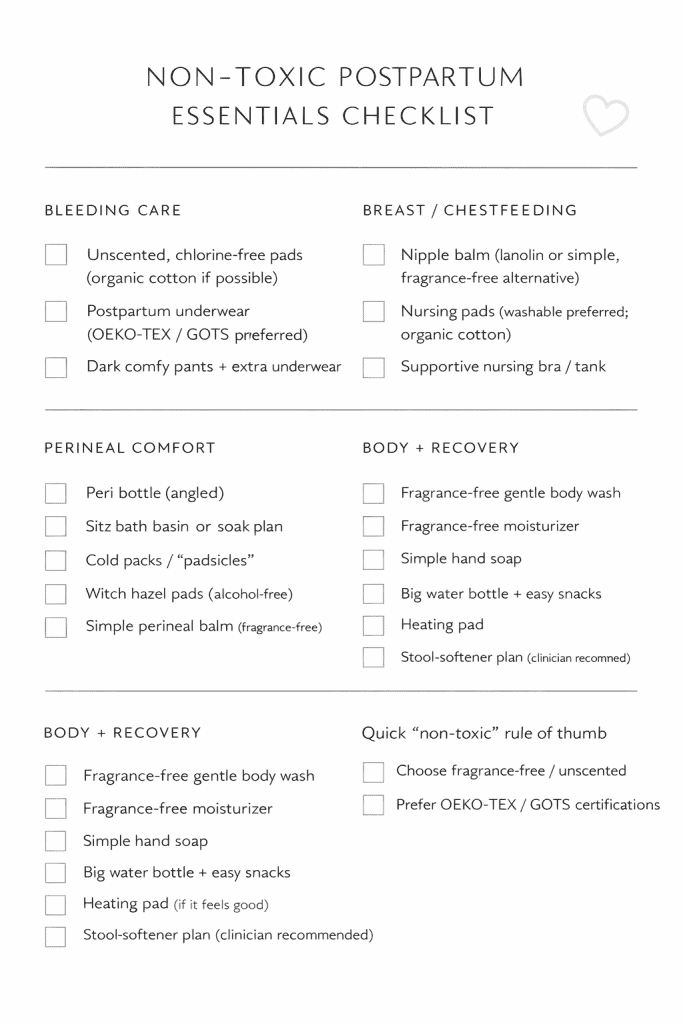
Between sleepless nights, recovery, and caring for your newborn, the last thing you need is to stress about what products to buy—or whether they’re even safe.
That’s why I’ve done the research for you.
My free Non-Toxic Postpartum Essentials Checklist gives you everything in one simple, printable guide—organized by need, focused on safety, and ready to take the guesswork out of prep.
Print it. Check it off. Feel confident you’re choosing products that care for your body the way it deserves.
frequently asked questions
does homemade tallow sunscreen actually work?
Yes — non-nano zinc oxide is a well-established physical sunscreen ingredient that works by sitting on top of the skin and reflecting UV rays. When it’s properly whisked into a recipe like this one, it provides real, broad-spectrum protection. Many families have been using homemade zinc oxide sunscreens for years with consistently good results.
how do i know what spf this recipe has?
The honest answer is that SPF can only be accurately determined through lab testing, and I won’t give you a number I can’t stand behind. What I can tell you is that non-nano zinc oxide is a broad-spectrum UV blocker used in commercial sunscreens at similar concentrations to what’s in this recipe. If you’re heading into a long day of intense sun exposure, pair this with shade, protective clothing, and reapplication throughout the day.
is this tallow sunscreen safe for babies and young children?
All of the ingredients in this recipe are gentle and non-toxic, and many mamas — myself included — use it on their little ones regularly. That said, do a small patch test on tender baby skin first, and trust your instincts as the mama who knows your child best. If you have any specific concerns, a quick conversation with your pediatrician is always a good idea.
what kind of tallow should i use?
The richest choice is tallow from 100% grass-fed, grass-finished cattle. If you’d like to make your own rather than buying it, I have a full tutorial on how to render tallow from beef fat that walks you through it from start to finish. You can also use tallow balm in place of plain tallow — it gives you a slightly softer finished texture.
can i use this on my face?
Yes — tallow and shea butter are both well-tolerated by most skin types, including facial skin. If you’re prone to breakouts, you may want to swap the coconut oil for jojoba, which is non-comedogenic. For a moisturizer specifically made for daily facial use, my all-natural beef tallow face cream is a beautiful base to layer underneath this sunscreen. As always, patch test first.