Preschoolers are already little scientists. They press their hands into everything, sniff whatever is cooking, and want to know why the bird outside sounds different from the one on the shelf. So the five senses are one of those lessons that’s half taught and half already happening.
And that’s what makes it such a good thing to craft about. A paper plate face or a little flip book gives them something to hold while the words sight, hearing, smell, taste, and touch settle in.
Whether you’re a parent at your own kitchen table, a grandparent with the little ones over, a homeschool mama, or a preschool teacher planning a unit, these twelve ideas are easy to set up and easy to clean up.
12 sweet and simple 5 senses crafts for preschool
Here are twelve simple crafts to make together, sorted loosely from the easiest little-hand projects to the ones that take a few more steps. So pick one for a quiet morning, or work through several over a week and cover a sense at a time.
1. Five senses paper plate face
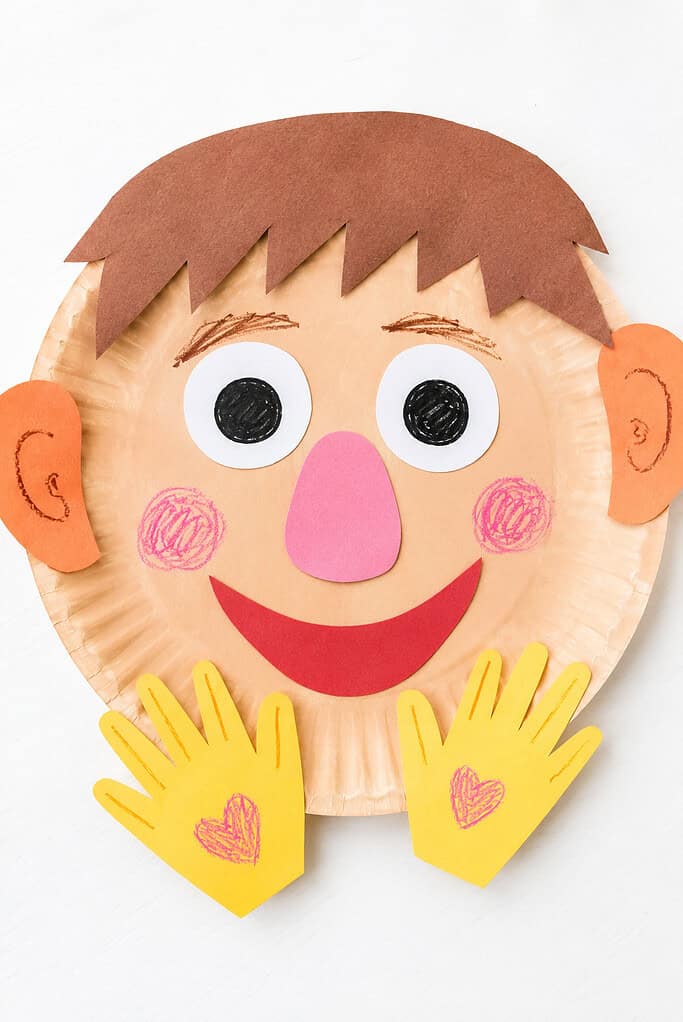
Start with a paper plate for the face. First, have the little ones color it in, then glue on two eyes cut from paper, a nose, and a mouth. Next, add two ears on the sides and a pair of paper hands down at the bottom. Once the face is together, point to each part and name the sense that goes with it.
It’s a simple one, but it puts all five senses in one place where they can see them. And paper plates are one of those craft staples that never run out of uses, so our easy paper plate crafts for kids has plenty more to reach for.
2. Mr potato head 5 senses
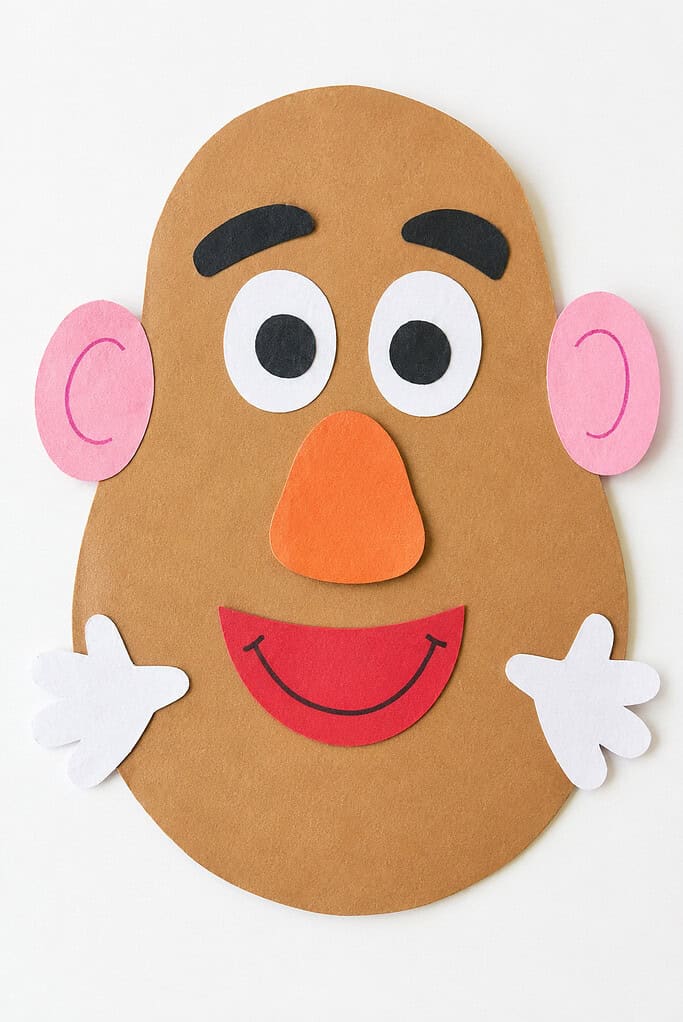
This one borrows a familiar friend. First, draw or print a big potato shape, then cut out eyes, ears, a nose, a mouth, and two hands from paper. Then let the children place the pieces on however they like, and talk through what each part does as they go.
Little ones love that the pieces can move around, so let them make a silly face or two before they settle on the right one.
3. Five senses wheel
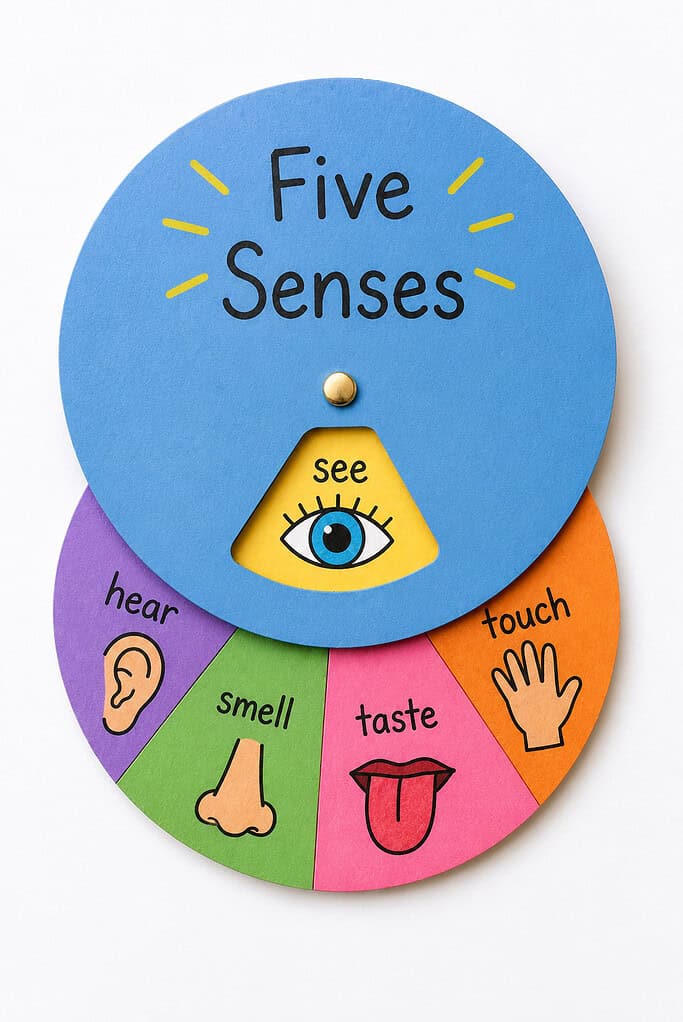
Cut two paper circles, one for the base and one for the top. Then divide the base into five sections and draw or glue a picture in each one, like an eye, an ear, a nose, a tongue, and a hand. Next, cut a small window in the top circle, and fasten the two together in the middle with a brad so it spins.
Once it’s built, they can turn the wheel and name each sense as it comes around. It’s a craft and a little quiz all in one.
4. My five senses craft
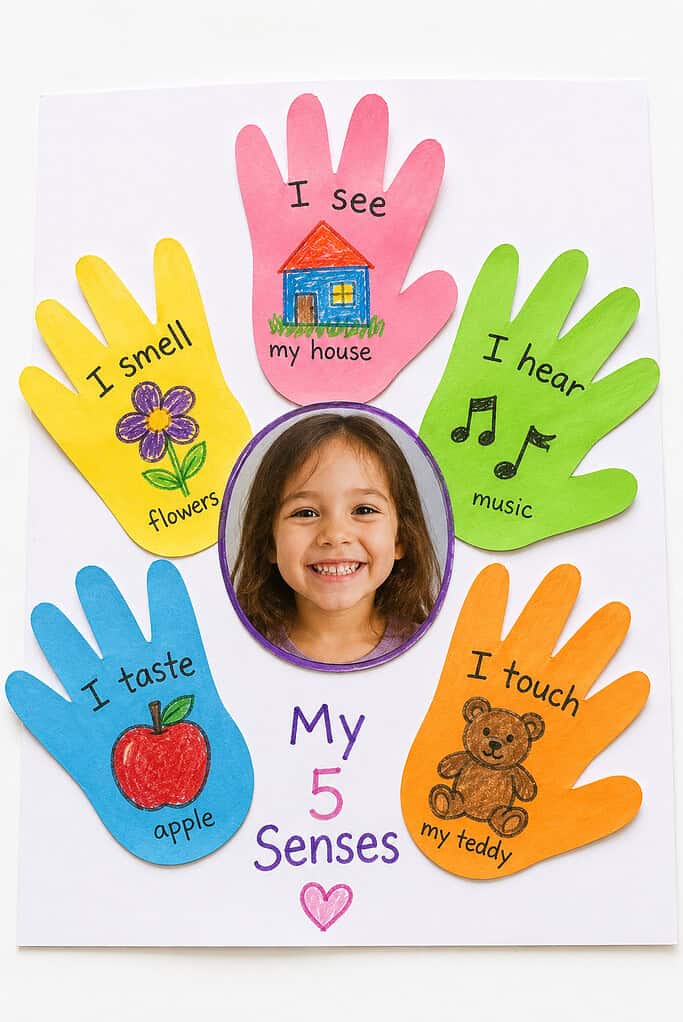
This one gets personal. Start by tracing your child’s hand, or take a photo of their face and glue it in the middle of a page. Then have them draw or write one thing they love to see, hear, smell, taste, and touch around the edges.
It’s sweet to hear what they pick, and the answers are often nothing you’d expect. These are worth tucking away, and you’ll find more keepsake ideas in our cute handprint crafts for kids.
5. Sense of sight craft
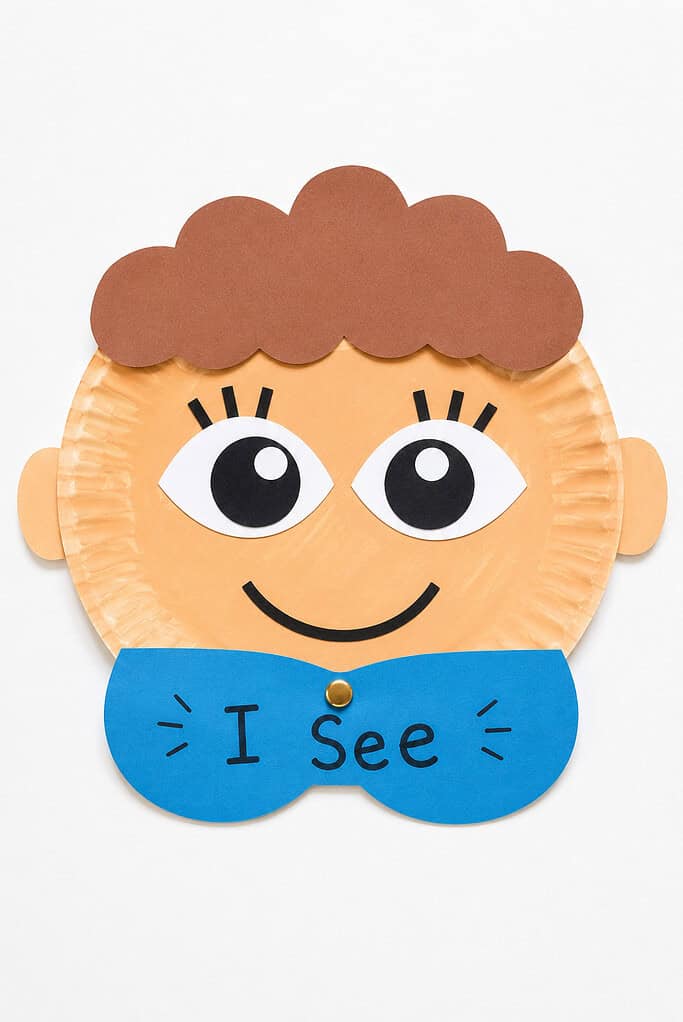
Make a pair of paper eyeglasses for this one. First, cut two circles and a frame from cardstock, then let the children decorate them however they like. Finally, tape on two side arms so they sit on little ears.
Then send them off on a hunt around the room to find five things they can see. It turns the lesson into a game, which is usually when it sticks.
6. Sense of hearing craft
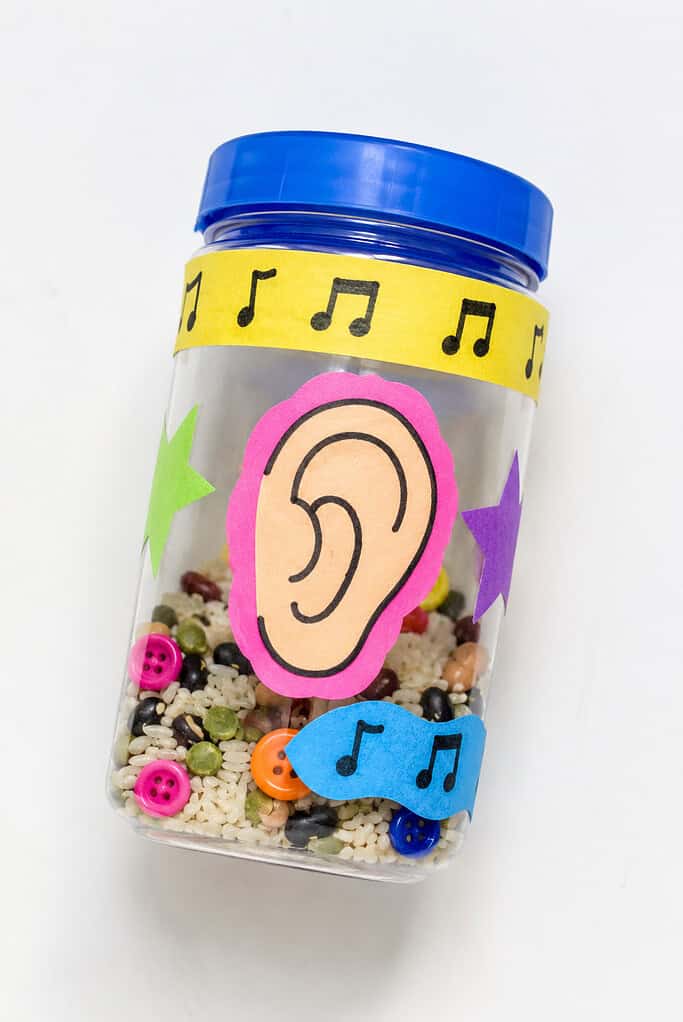
Start with an empty jar or a small container with a lid. Then let the little ones fill it with dry rice, beans, or a few buttons, and seal it up tight. Once it’s closed, give it a shake and listen together.
Make two or three with different fillings, and see if they can tell them apart with their eyes closed. It’s a lot of fun, and it makes the idea of listening carefully feel real.
7. Sense of smell craft
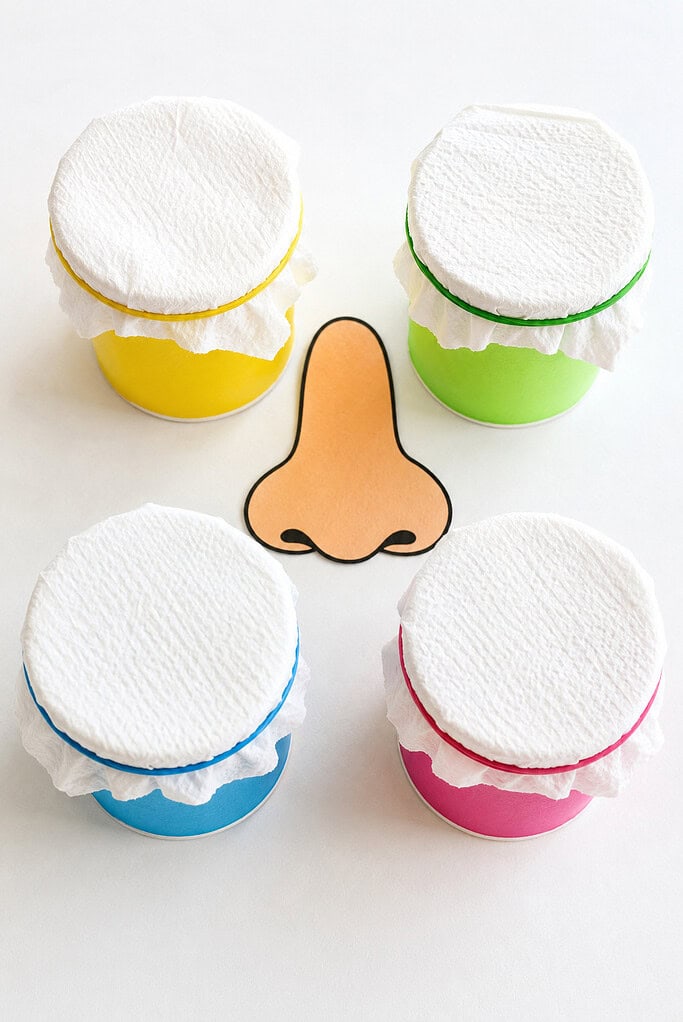
Take a few small paper cups and put something with a good scent in each one, like a cotton ball with vanilla, a slice of orange, or a pinch of cinnamon. Then cover each cup with a square of paper towel and a rubber band, so they can smell but not peek.
From there, let them sniff each one and guess. Younger children may need a hint or two, and that’s part of the fun.
8. Sense of taste craft
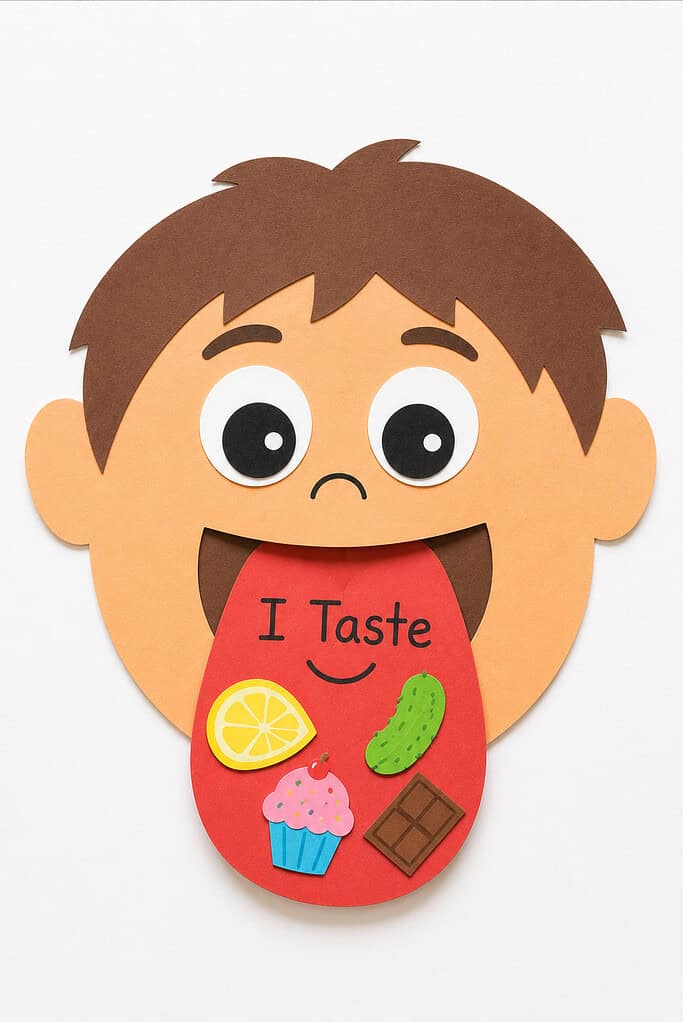
Draw a big tongue shape on paper and cut it out. Then talk about sweet, salty, sour, and bitter, and let the children glue on a small picture or a word for each one.
If you’d like to make it a taste test, set out a few little samples to try as you go. A lemon slice usually gets the biggest reaction at the table.
9. Sense of touch craft
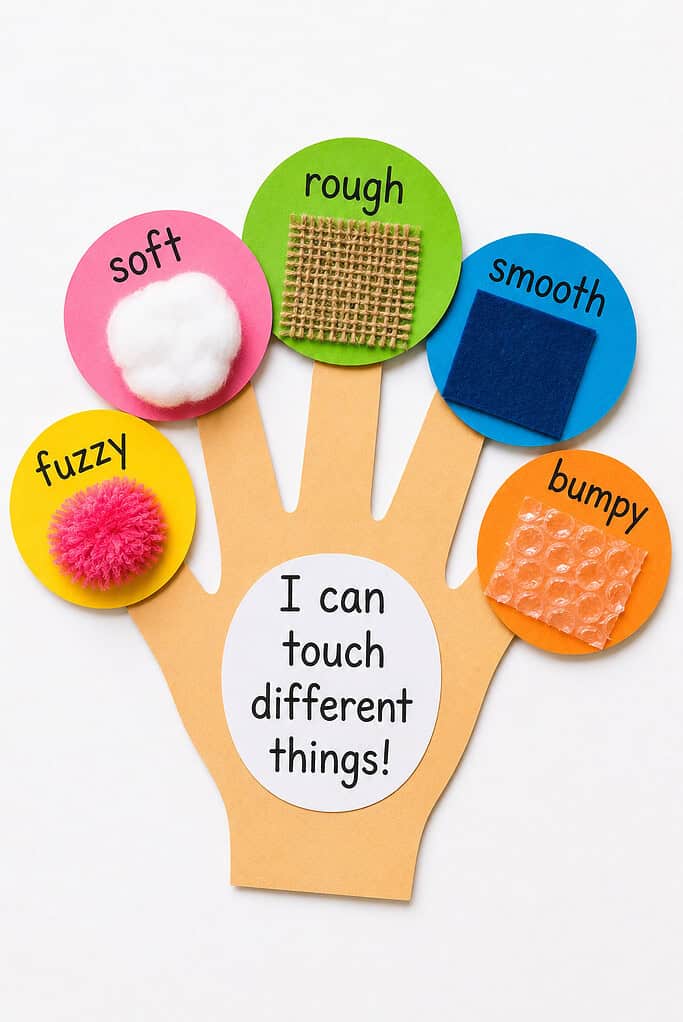
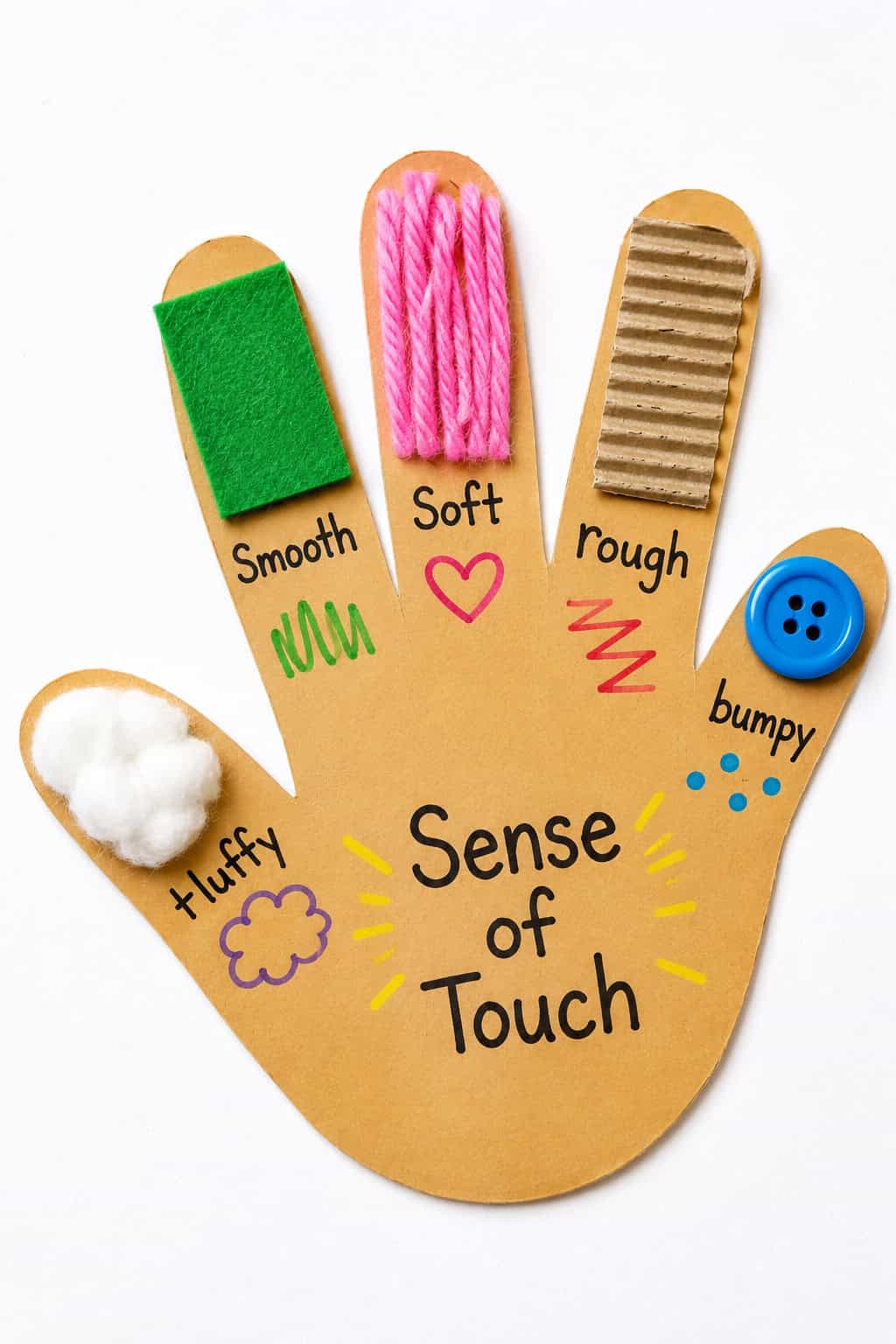
This is the one they’ll want to keep touching. First, draw a hand shape on paper or cardstock. Then glue something with a different texture onto each finger, like a bit of cotton, a square of sandpaper, some yarn, a scrap of felt, and a smooth button.
Once the glue is dry, let them run their fingers over each one and find the words for it. Rough, soft, bumpy, smooth. And if you’d like to gather your textures outside, our nature crafts for kids has good ideas for what to look for on a walk.
10. Five senses spinner
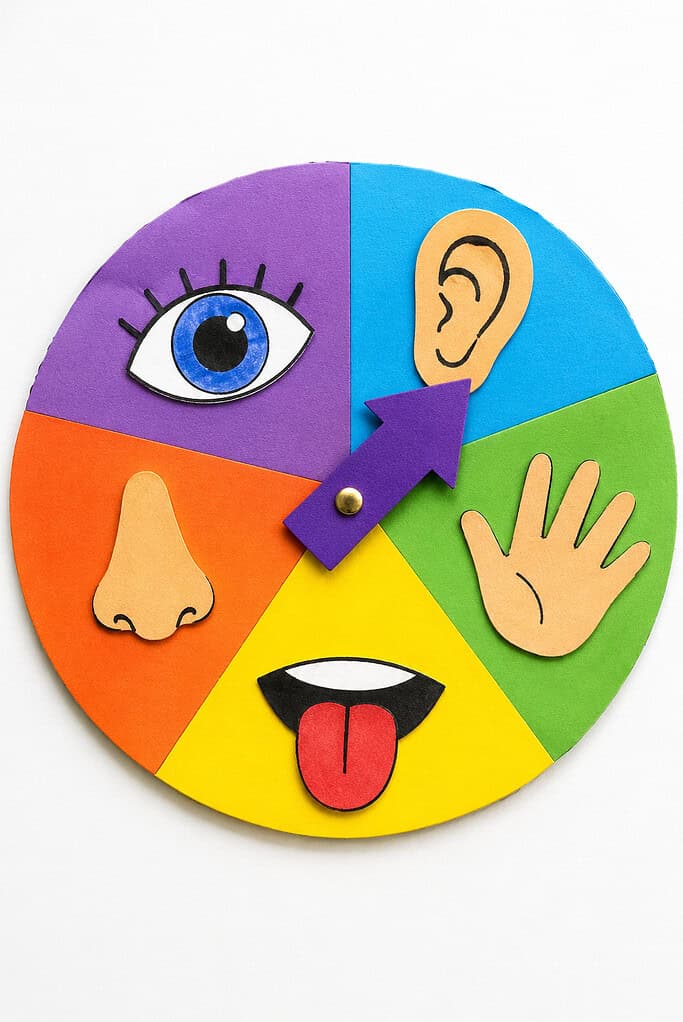
Cut a circle from cardstock and divide it into five wedges, one for each sense. Then draw or glue a little picture in each wedge, and push a brad through the center with a paper arrow on top.
When it’s done, they can spin the arrow and act out whatever sense it lands on. Spin, name it, do it. Simple as that.
11. Five senses flip book
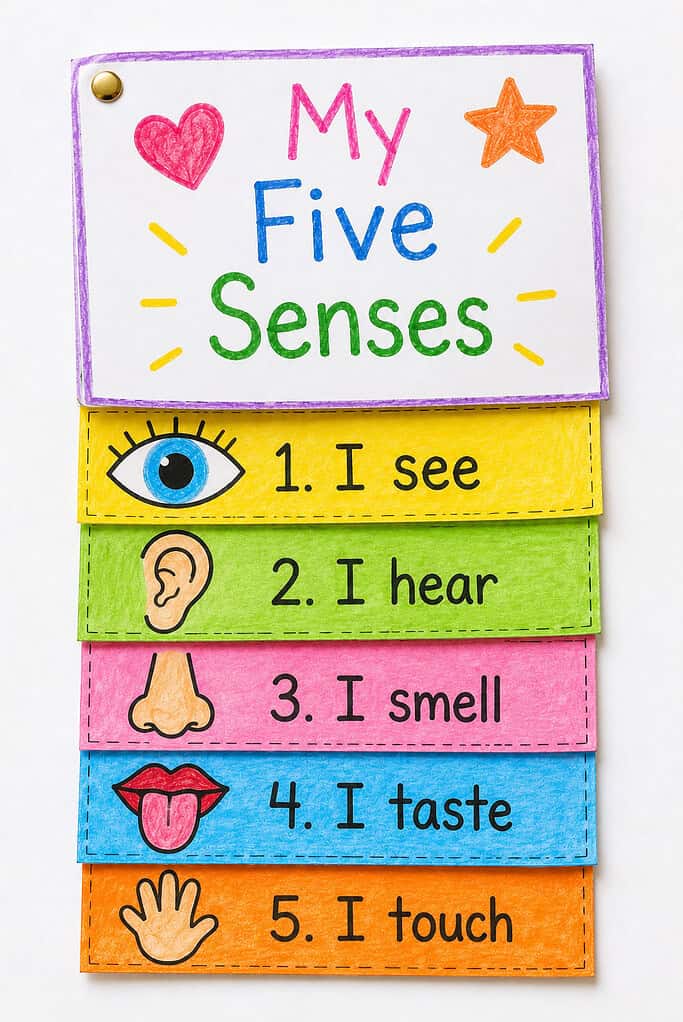
Stack five small pieces of paper and staple them along the top. Then let the children draw a sense on each page, one at a time, and label it if they’re ready for letters.
Flipping through their own little book is satisfying for a preschooler, and it’s a nice one to send home from a classroom. Our fun paper crafts for kids has more ideas if paper projects are a favorite around your table.
12. My five senses mini book
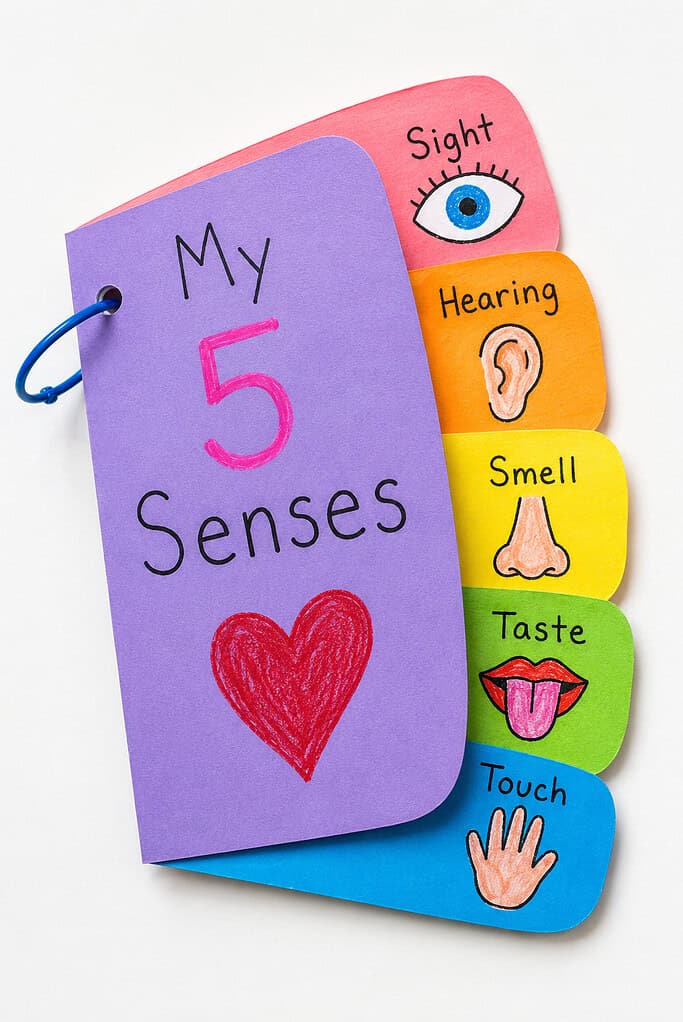
This one is the flip book’s bigger cousin. First, fold a few sheets of paper in half and staple along the fold. Then give each page a heading like I can see, I can hear, I can smell, I can taste, and I can touch. From there, let the little ones fill each page with drawings, stickers, or magazine cutouts.
It takes a bit longer, so it works well spread across a few days. And since they’re already sounding out words, our sweet alphabet crafts pair nicely with it.
why preschoolers love a good five senses craft
Five senses crafts are easy to love. They’re simple to make, they use very little, and they turn out cute almost every time, even when the pieces end up glued on a little crooked.
They’re also a nice way to talk while you work. So as they color and cut, you can ask what they hear outside, what supper smells like, or which finger likes the sandpaper least. That back and forth is where the learning really happens.
And this one fits right in with the rest of the preschool year, too. So if you’re planning a unit or filling a slow morning, our easy back to school crafts for kids is another good one to keep going with.
simple supplies to keep on hand
Most of these crafts pull from the same short list, so once you’ve gathered a few things, you’re set for the whole week. Paper plates, cardstock, and plain paper cover most of them, along with glue, child-safe scissors, crayons or markers, and a handful of brads for the wheel and the spinner.
Beyond that, the fun comes from the odds and ends. For touch, keep a bit of cotton, some yarn, a scrap of felt, a square of sandpaper, and a smooth button close by. For hearing, save a couple of small jars or containers and fill them with dry rice or beans.
Then, for smell and taste, you’ll want a few small paper cups and whatever is already in the kitchen, like cinnamon, a bit of vanilla, or a slice of orange or lemon. Most of the rest is probably already sitting in your craft drawer.
tips for crafting with little ones
A little prep ahead of time goes a long way. So before you sit down, cut out the trickier shapes and set your textures and scents in their cups, and then the children can get right to the gluing and coloring.
From there, keep it simple and let the fun lead. The point isn’t a perfect paper face. It’s the time together, the guessing and the giggling, the way they hold a cup up to their nose and squeeze their eyes shut.
And a bit of mess is just part of it, so don’t fuss over keeping things tidy. If you’d like to use up what’s already in the recycling bin, our easy recycled crafts for kids has good ideas for jars, tubes, and cups.
pick one five senses craft to try this week
So pick the one that fits your supplies and the ages around your table, set it out, and let the little ones explore a sense or two. You don’t need to do all twelve. Just one good idea and a little glue is plenty.
The craft is fun on its own, but the talking you do while their hands are busy is the part that tends to stay with them.
sew and tell
If your preschoolers make one of these, I’d love to hear how it went. Drop a photo in the comments whenever you have a spare minute, or send one along to us.
Half the joy is in what they come up with, the smell cup they guessed right away, the texture finger they wouldn’t stop rubbing. And if you’re comfortable with it, we might share yours here on the site so other families can see it too. No pressure either way. Just an open door if you feel like joining in.
Get the FREE Jesus Feeds the 5000 Craft
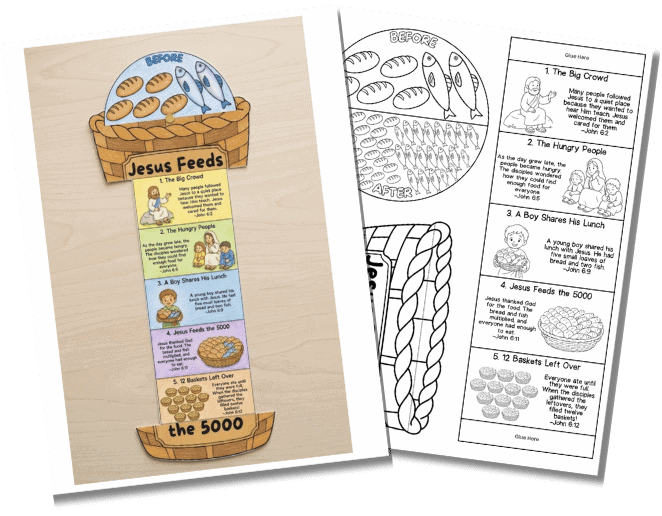
Don’t let your kids just hear the miracle—help them watch it unfold.
With this free Jesus Feeds the 5000 craft, kids color and build a little basket, then turn the wheel to watch five loaves and two fish become baskets overflowing. A pull-through story strip walks them through all five steps, each with a verse from John 6.
frequently asked questions
what age are five senses crafts best for?
They suit preschoolers best, roughly three to five, though younger toddlers enjoy the paper plate face and the texture hand with a little help. The wheel, spinner, and mini book are a better fit for older preschoolers and early kindergarteners who can manage a few more steps.
what supplies do I need for five senses crafts?
Mostly basics you likely already have, like paper plates, cardstock, glue, markers, and child-safe scissors. A few brads help for the wheel and spinner, and the rest comes from odds and ends, like cotton, yarn, sandpaper, dry rice, and whatever smells good in your kitchen.
how long do these crafts take?
Most take about fifteen to twenty minutes once your supplies are out. The mini book takes longer, so it works well spread across a few days, a page or two at a time.
how do I teach the five senses to preschoolers?
Keep it simple and let them do the noticing. Name one sense at a time, make the craft that goes with it, then go find that sense around the house. Preschoolers learn it best by smelling the cinnamon and touching the sandpaper, not by being told.
can I use these crafts in a preschool classroom?
Yes, they work well for a whole group. The paper plate face, texture hand, and flip book are easy to prep in batches ahead of time, and the smell and taste stations are nice for small groups if you check for food allergies first.