If you’re looking for easy kids crafts that get children outdoors (without turning your kitchen into a glitter zone), this post is for you.
You’ll find ten outdoor crafts designed for ages 3–10, each with simple supplies, outdoor-friendly steps and learning benefits.
Why Nature Crafts Are So Good for Kids
Nature crafts are incredibly beneficial for child development.
When kids gather materials, they practice observation and curiosity. They notice textures, shapes, and colors in ways they might otherwise overlook.
Crafting also builds fine motor skills as children arrange, glue, weave, and decorate.
Beyond that, these activities nurture creativity and problem-solving. A stick becomes a frame. A stone becomes a character in a story.
Most importantly, nature crafts encourage children to spend more time outdoors – something many families are eager to prioritize.
If you’re hoping to spend more intentional time outside with your kids, check out my forest school for beginners guide, which explains simple ways families can start learning outdoors together.
The combination of fresh air, creativity, and exploration creates experiences that children remember long after the craft is finished.
11 Easy Nature Crafts for Kids
These nature crafts for kids are designed to be doable right where you are: backyard, park, trail, or even a shady sidewalk with a basket of “found” treasures.
1. Leaf Rubbing Texture Prints
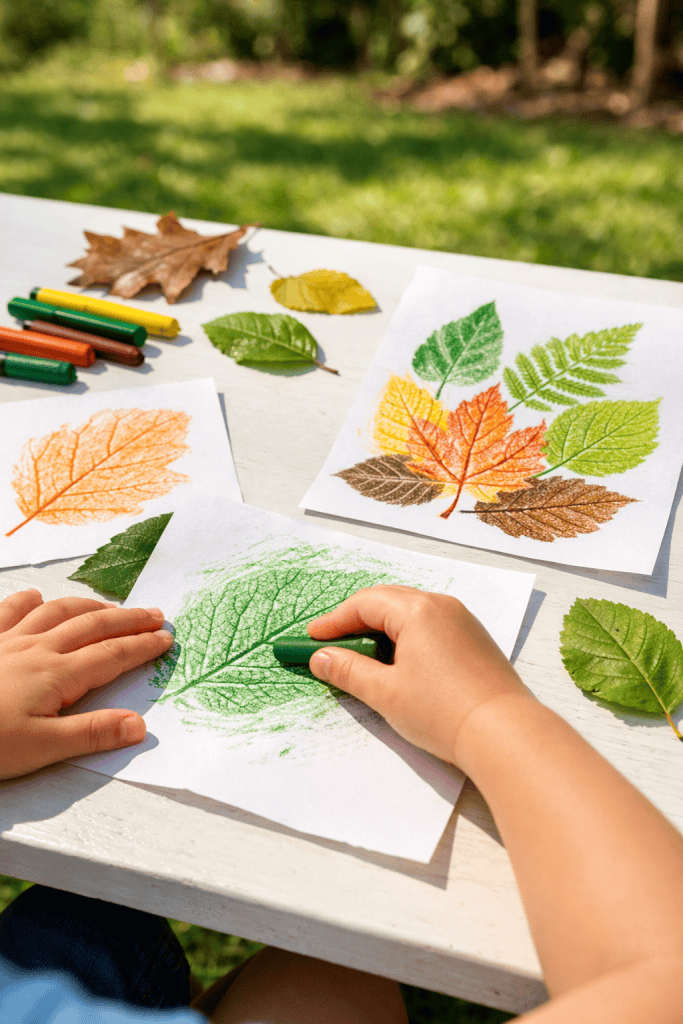
Leaf rubbings are a classic nature craft that never gets old. Children love the surprise of seeing delicate leaf veins appear on paper.
Simply place a leaf underneath a sheet of paper and gently rub the side of a crayon across the surface. The leaf’s intricate patterns magically appear.
Kids can experiment with different leaf shapes and colors to create layered artwork or even design a full “nature collage” page.
This activity is wonderful for younger children because it’s quick, simple, and produces beautiful results with minimal effort.
You might also enjoy these nature-inspired forest school activities perfect for spring, which build on the same idea of observing nature closely.
2. Sticky Nature Bracelets
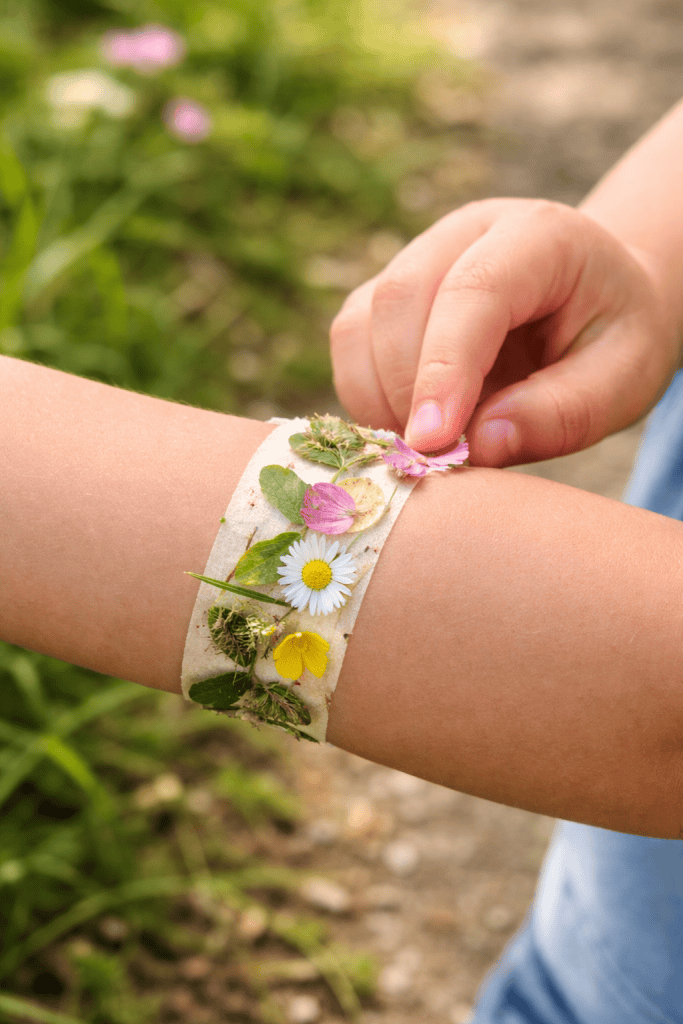
Sticky nature bracelets combine crafting with exploration.
Wrap a strip of masking tape around your child’s wrist with the sticky side facing outward. As you walk outdoors, children can decorate their bracelet by sticking tiny treasures onto it – petals, leaves, grasses, and seeds.
This turns a simple walk into a scavenger hunt and encourages children to notice the small details in nature.
It’s especially great for preschoolers who enjoy collecting and arranging little finds.
3. Pinecone Bird Feeders
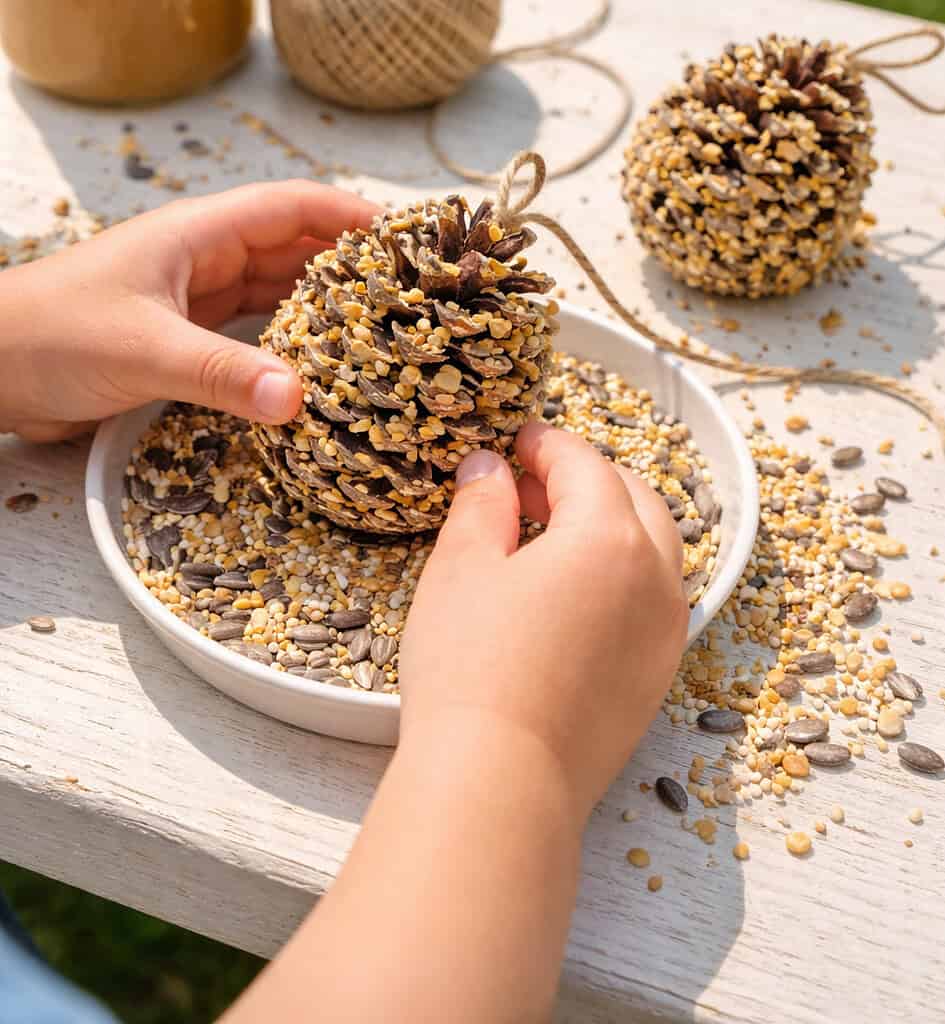
A pinecone bird feeder is one of the most beloved nature crafts for kids, and it doubles as a backyard wildlife activity.
Start by tying a piece of string around a pinecone. Spread peanut butter or sunflower seed butter between the pinecone scales, then roll the pinecone in birdseed.
Hang it from a tree branch and watch as birds stop by for a snack.
Kids love checking back later to see which birds visit, turning the craft into a mini nature observation project.
4. Twig Picture Frames
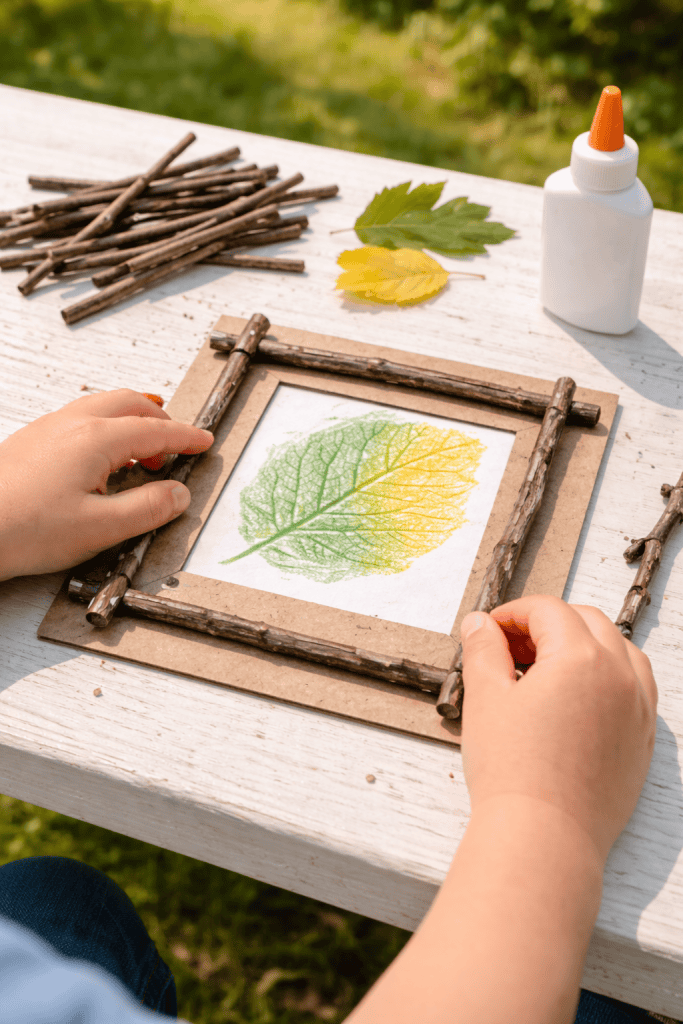
Twigs can become charming rustic picture frames.
Begin with a piece of cardboard cut into a square or rectangle. Gather straight twigs and glue them along the edges to create a natural border.
Once dry, the frame can hold a photo, a drawing, or a leaf rubbing created earlier.
This craft is wonderful for older kids because it encourages patience, creativity, and design choices.
If you’re looking for more outdoor activities like this, my low-prep forest school activities for beginners shares several easy nature-based projects kids love.
5. Pebble Story Stones
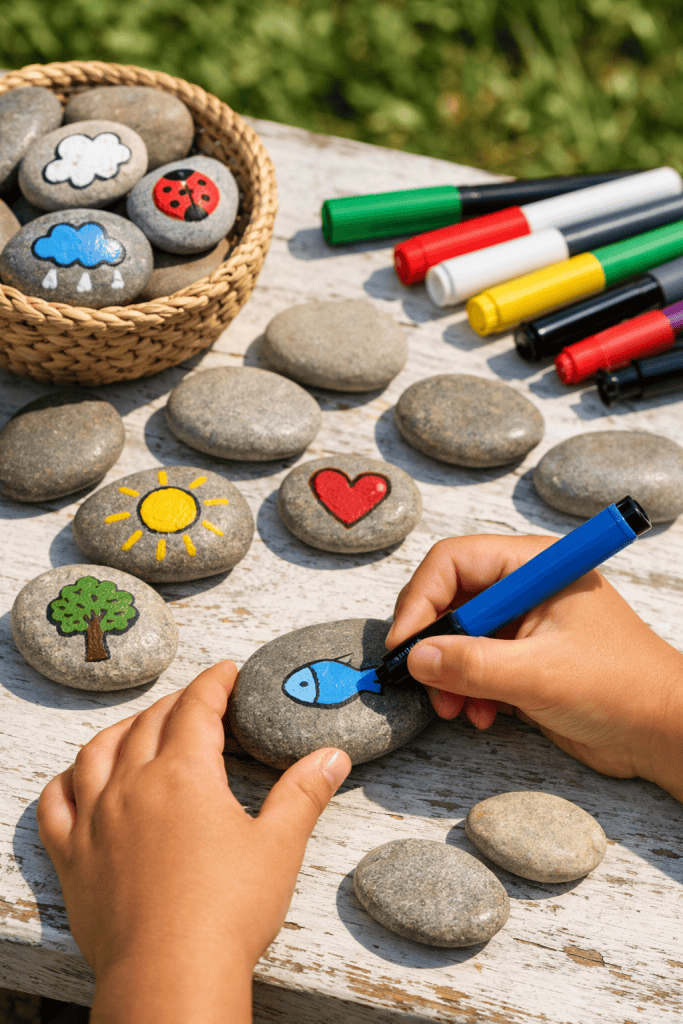
Pebble story stones combine art with storytelling.
Collect smooth rocks and decorate each one with simple images – like a sun, tree, heart, animal, or raindrop. Use paint pens or markers to draw the pictures.
Once the stones are dry, place them in a small bag or basket. Kids can pull out a few stones at random and create a story based on the images they see.
It’s a creative way to encourage imagination and early storytelling skills.
6. Pressed Flower Bookmarks
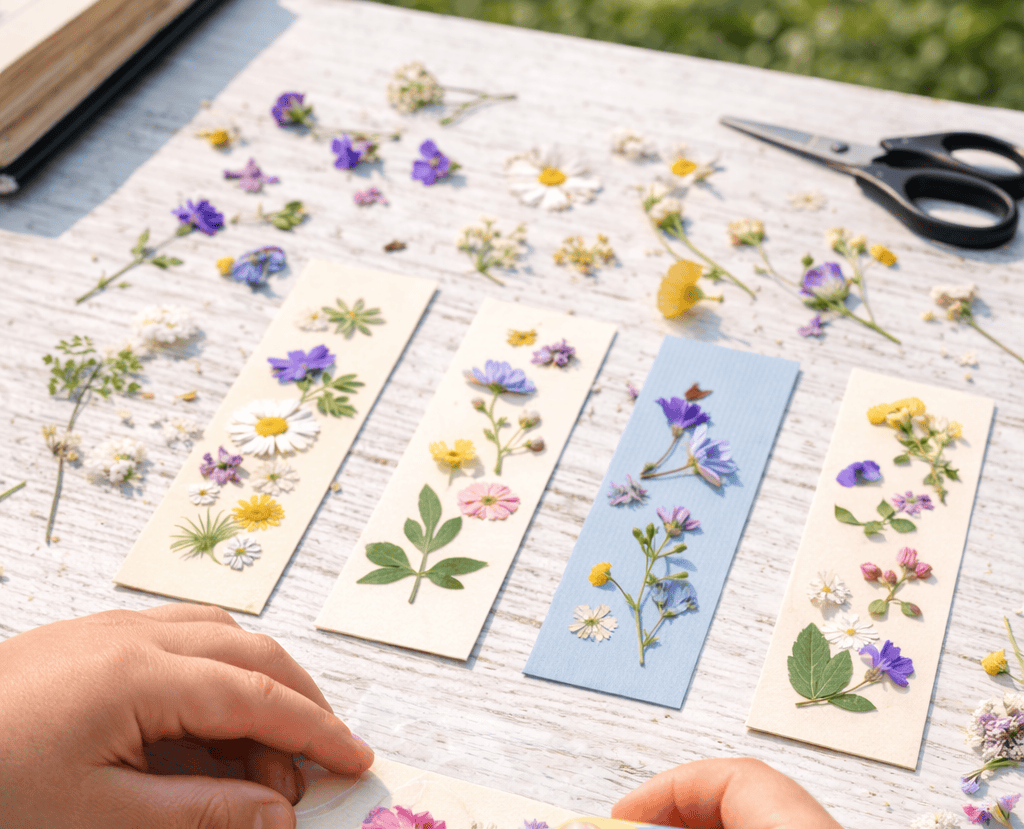
Pressed flower bookmarks are a beautiful keepsake craft.
Have children gather small flowers or leaves that have already fallen. Place them between sheets of paper inside a heavy book for a week or two.
Once pressed and dried, tape or laminate the flowers onto a strip of cardstock to create a bookmark.
These delicate crafts make wonderful gifts and remind children of the day they collected the flowers.
7. Nature Crowns
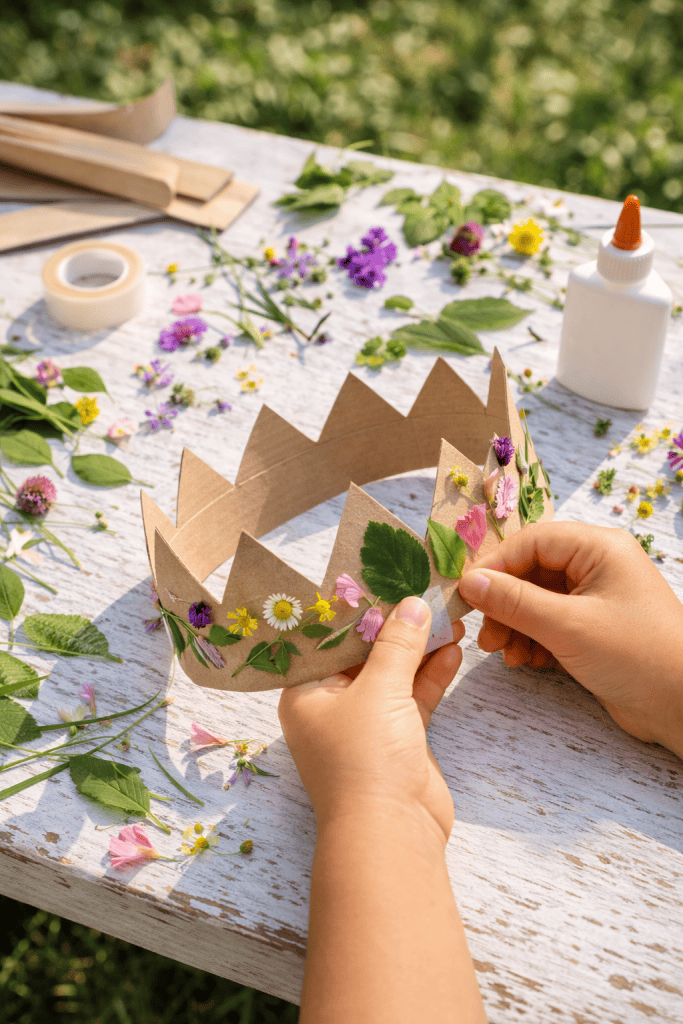
Nature crowns transform kids into woodland royalty.
Create a headband using a strip of paper or cardboard, then decorate it with leaves, petals, grasses, or small twigs using tape or glue.
Children can arrange their decorations however they like, creating a crown that reflects their personality and creativity.
It’s a fun craft for playdates or birthday parties and instantly sparks imaginative play.
8. Twig Weaving Loom
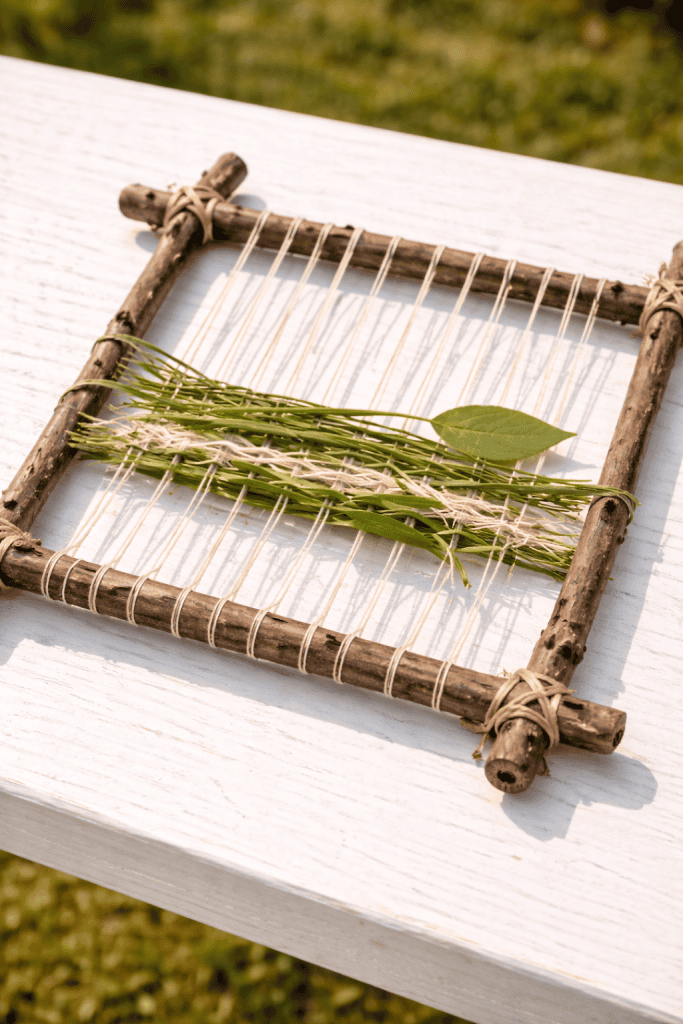
This craft introduces kids to the basics of weaving.
Create a simple square frame using four sticks tied together with string. Stretch yarn across the frame to create the loom.
Kids can then weave grasses, pine needles, flowers, and bits of yarn through the strings.
The result is a beautiful nature weaving that can be hung on a wall or displayed outside.
9. Nature Mandala Art
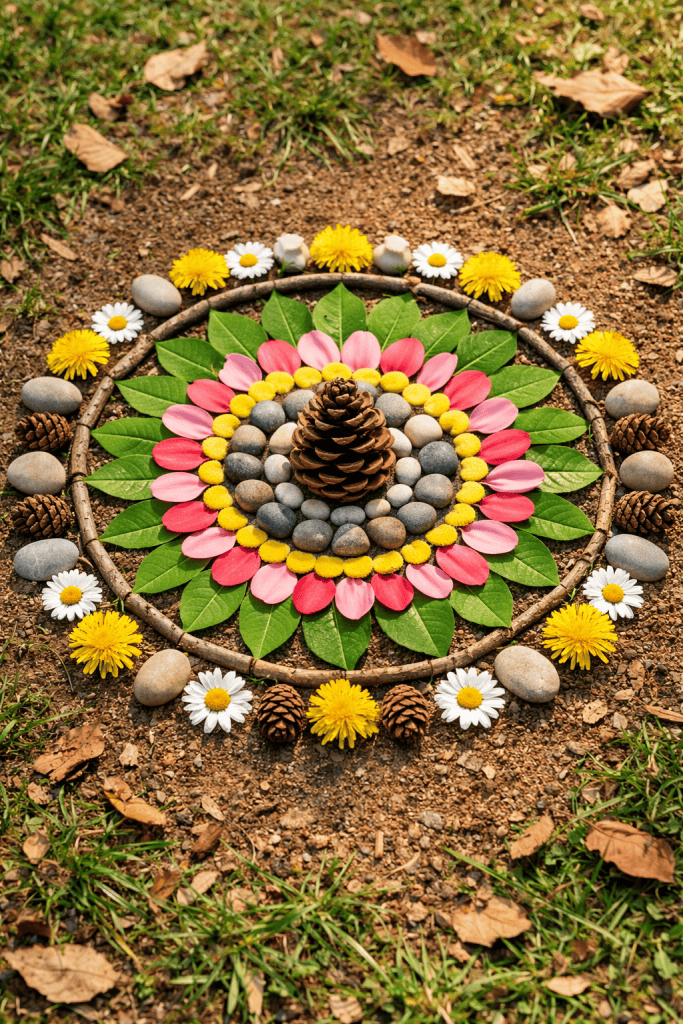
Nature mandalas are peaceful, creative, and require no supplies.
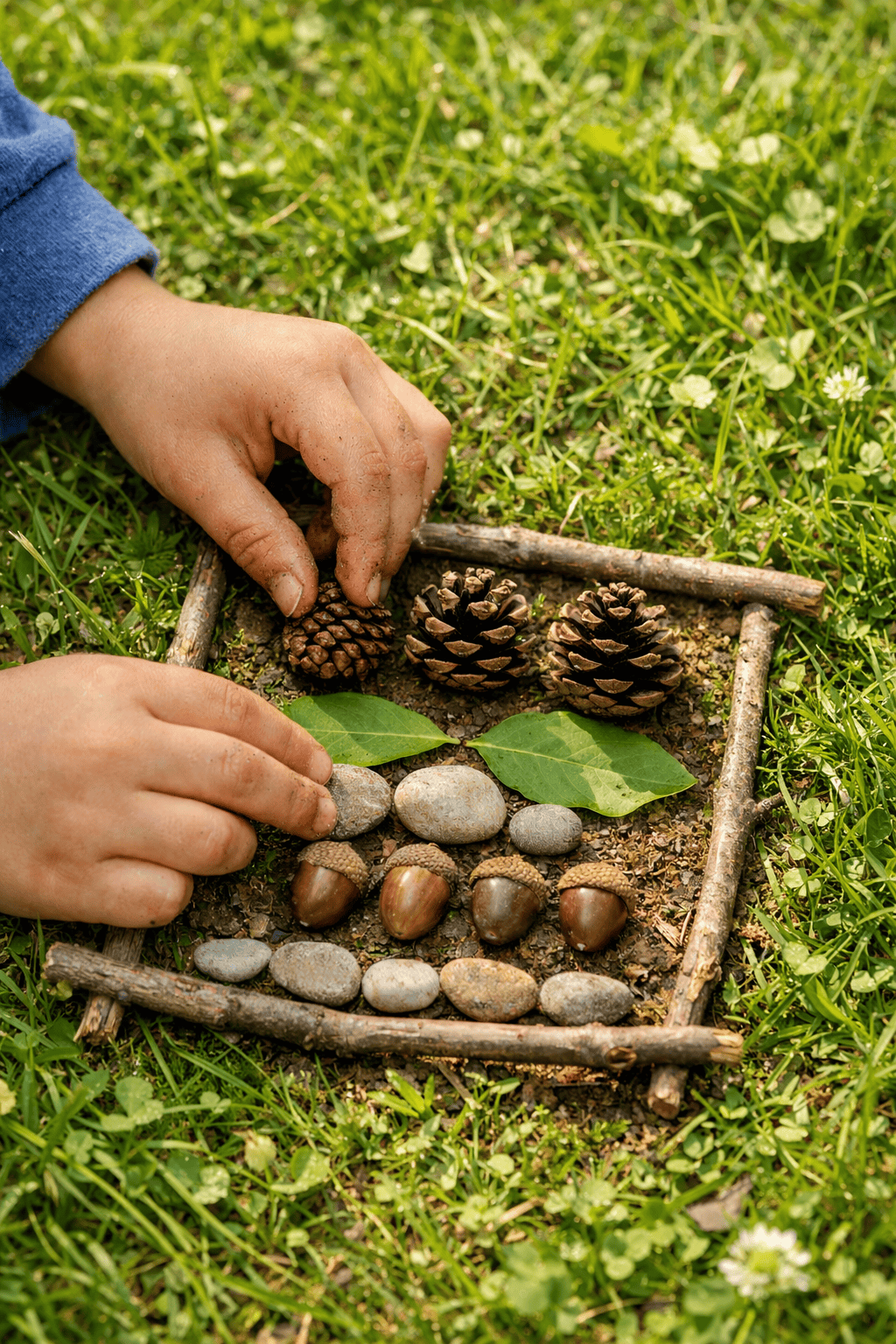
Children simply arrange natural items in circular patterns on the ground—leaves, stones, petals, pinecones, and sticks.
Start with a central object and build outward, forming symmetrical patterns.
Take a photo when finished, then return the items to nature. It’s a wonderful lesson in creativity and mindfulness.
10. Twig Rafts and Leaf Boats
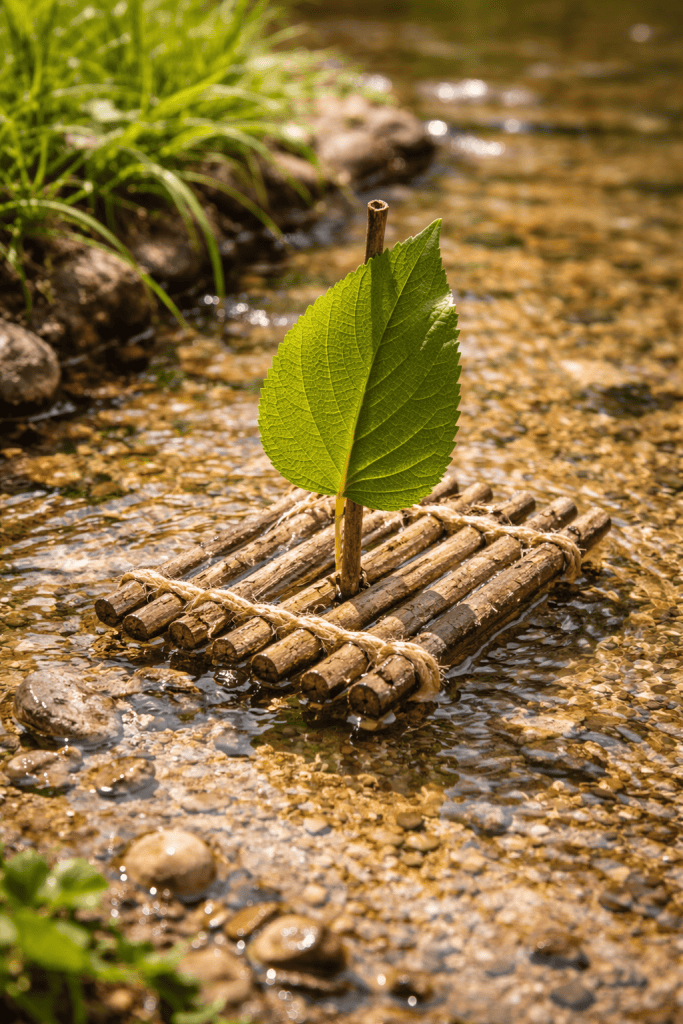
Twig boats are part craft, part engineering experiment.
Gather small sticks and tie them together with string to form a simple raft. Add a large leaf or piece of bark as a sail.
Children can float their boats in a shallow container of water, a puddle, or a calm stream edge.
Kids naturally begin experimenting with design, testing which boats float best and how different shapes behave in the water.
Tips for Collecting Nature Craft Materials
Before kids begin crafting, it helps to talk about respectful nature collecting.
Encourage children to gather items that have already fallen rather than picking from living plants. This protects the environment while still providing plenty of crafting materials.
You can also turn collecting into a game by asking kids to find:
- Three different leaf shapes
- Two types of twigs
- One smooth stone
- Something colorful
This makes the preparation step feel like part of the adventure.
Another helpful tip is to bring a small basket or cloth bag during nature walks so kids can store their discoveries safely until craft time.
You might also like my outdoor winter nature play activities for kids, which share fun ways to keep nature play going even in colder months.
How to Set Up a Simple Outdoor Craft Station
Creating a small outdoor crafting area makes these activities even more enjoyable.
Choose a shaded spot such as a patio table, picnic blanket, or porch. Bring along a small tote with basic supplies like scissors, tape, glue, paper, and crayons.
A clipboard can also be helpful for drawing or leaf rubbings outdoors.
Having a dedicated outdoor craft space keeps everything organized and allows kids to focus on the creative process without constant interruptions.
It also makes cleanup easier – nature crafts tend to stay outside where they belong.
And if your kids love being outside for long stretches, comfortable footwear makes a difference. If you’re looking for good outdoor options, these best grounding shoes you can buy are worth checking out.
Take It Outside This Week
Choose one craft – just one – and do it slowly. Let your child lead the collecting. Let the “perfect” result go.
The goal isn’t a masterpiece; it’s a shared moment where fresh air, busy hands, and gentle learning meet.
If you try any of these nature crafts for kids, I’d love to hear which one your children enjoyed most.
Leave a comment with your favorite craft (or your own outdoor craft tradition!) so we can all gather a little more inspiration.
FREE Fruit of the Spirit Playdough Tree and Card
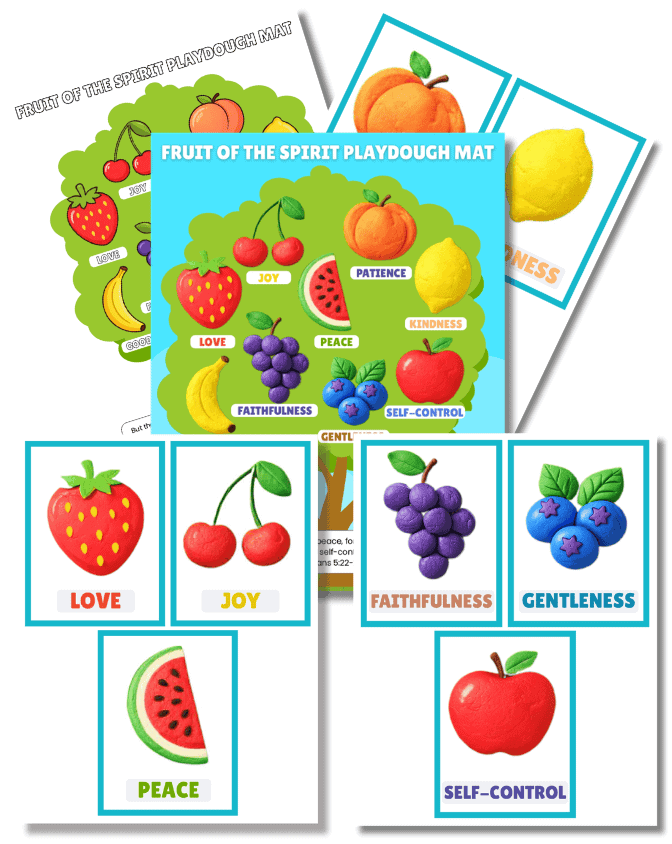
If your kids learn best by doing, you’re going to love this simple activity. It turns the Fruit of the Spirit into something they can touch and create.
This free Fruit of the Spirit Playdough Tree and Card gives you two activities in one—a playdough mat (laminate once, use forever) plus 9 individual fruit cards.
Both feature all nine fruits from Galatians 5:22-23, helping kids learn about love, joy, peace, patience, kindness, goodness, faithfulness, gentleness, and self-control through hands-on fun.
FAQs
What age are nature crafts best for?
Most nature crafts work well for children between ages 3 and 10, but many can easily be adapted for older kids too. Younger children may need help with cutting or tying, while older kids can add more creativity and detail.
What if we don’t have access to forests or parks?
Nature crafts can still be done in small outdoor spaces. Backyards, gardens, sidewalks, or even neighborhood walks provide plenty of materials like leaves, flowers, and small stones.
Even a simple patch of grass can inspire creative projects.
How do you keep kids engaged during nature crafts?
Let kids take the lead. Allow them to choose the materials, colors, and designs rather than following strict instructions.
Turning the activity into a mini scavenger hunt also helps keep children curious and excited.
Can nature crafts be done in different seasons?
Absolutely. Each season offers unique materials:
- Spring: flowers, petals, fresh leaves
- Summer: grasses, seed pods, shells
- Fall: colorful leaves, acorns, pinecones
- Winter: twigs, evergreen branches, pine needles
Seasonal materials make the crafts feel fresh and exciting all year long.
How do you display or store nature crafts?
Some crafts, like pressed flower bookmarks or painted stones, can be stored indoors as keepsakes.
Others – like mandalas or leaf bracelets – are meant to be temporary. Taking photos is a great way to preserve the memory without keeping every craft.
Many families also create a small “nature art shelf” where kids can proudly display their favorite creations.