If you’re gearing up for Vacation Bible School, you already know the magic that happens when kids get to do something with their hands.
VBS crafts are one of the most powerful tools you have for helping Bible stories sink deep into young hearts. A well-made craft becomes a conversation piece at the dinner table, a reminder on the bedroom shelf, and sometimes, the thing a child remembers decades later.
Whether you’re planning for a small Sunday school classroom or a big community VBS program, this list of 12 exciting VBS crafts for kids covers a wide range of stories, age groups, and skill levels.
Each one is designed to be hands-on, meaningful, and (most importantly) fun. You’ll find everything from sensory play to paper plate crafts to simple take-home keepsakes that tie directly back to the lesson.
If you love incorporating creative crafts into your faith-based teaching, be sure to also explore these Bible crafts for kids for even more inspiration to pair with your lessons year-round.
12 VBS Crafts That Bring Bible Stories to Life
Here are 12 fun and meaningful VBS crafts that help bring Bible stories to life for kids:
1. Moses Parts the Red Sea Sensory Craft
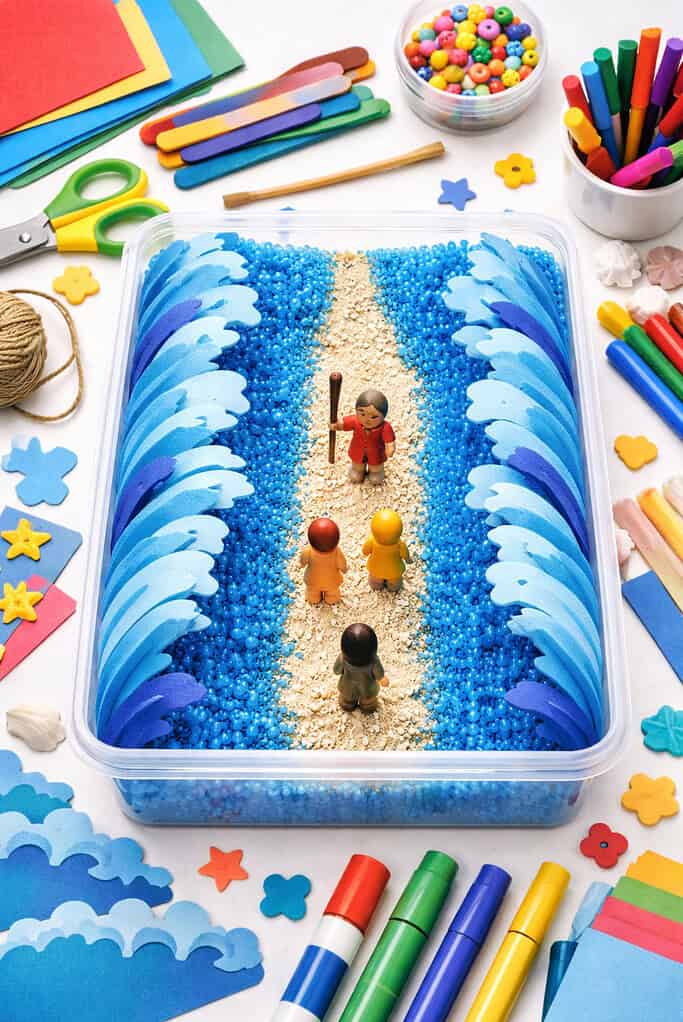
This one is an absolute crowd-pleaser, especially for younger kids who love getting their hands involved. Set up a shallow sensory bin filled with blue-dyed water beads or blue kinetic sand. Kids can use craft sticks (representing Moses’ staff) to “part” the sea and place small figurines on the path in the middle.
Add foam wave cutouts or blue crepe paper streamers on either side for a dramatic effect. It’s a tactile, immersive way to walk through Exodus 14 and feel the wonder of the miracle firsthand. You can pair this with a simple retelling of the story and let kids narrate as they play.
For more sensory-based faith activities, take a look at these sensory activities for preschoolers that blend play with purposeful learning.
2. Daniel in the Lion’s Den Paper Plate Craft
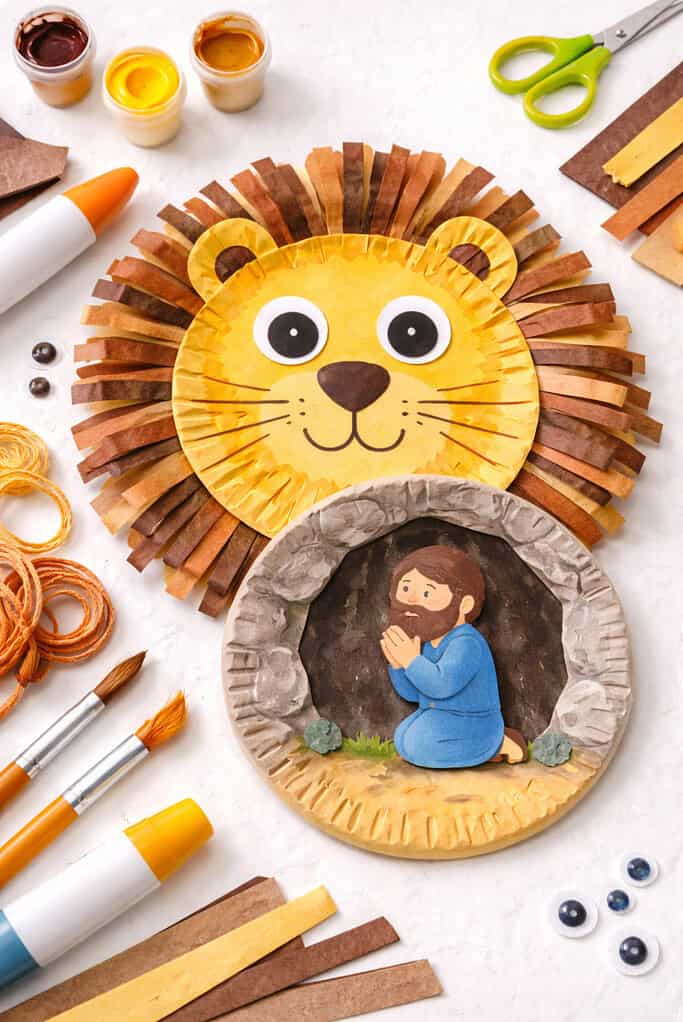
Paper plates are one of those endlessly versatile craft supplies, and they shine in this Daniel craft. Kids create a lion’s face using a paper plate as the base — painting it golden yellow, cutting a mane from brown paper strips or yarn, and adding googly eyes for personality.
A second, smaller plate can be used to create Daniel kneeling in prayer inside the den. This craft opens up a beautiful conversation about courage, faithfulness, and trust in God even when circumstances look scary.
It’s simple enough for preschoolers but engaging enough that older kids enjoy putting their own creative spin on it.
Looking for more creative Sunday school ideas? This roundup of Sunday school crafts for toddlers has sweet, age-appropriate options that complement any Bible lesson.
3. David and Goliath Slingshot
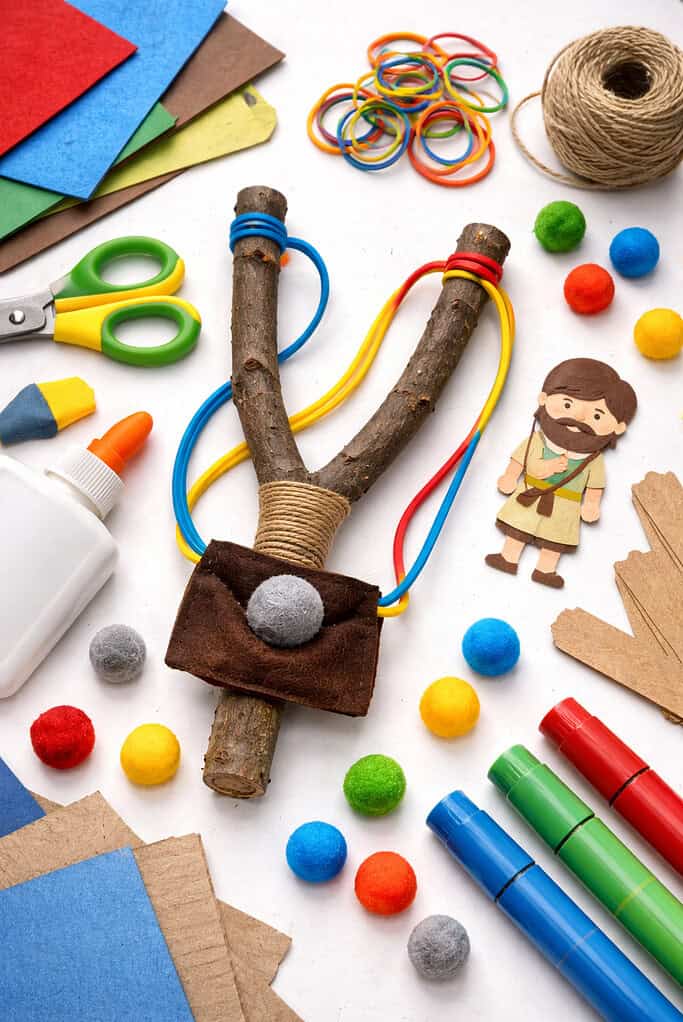
Kids go absolutely wild for this one — and honestly, so do the adults helping them. Using a Y-shaped twig or a Y-cut cardboard piece, some rubber bands, and a small fabric pouch, children can assemble their very own slingshot (safely designed with soft pompom “stones” to launch).
Pair the craft with the story of David and Goliath from 1 Samuel 17 and talk about what it means to face your giants with faith instead of fear.
This is a great craft for boys who sometimes need something a little more active and hands-on to stay engaged. For a deeper dive into David and Goliath crafts with more variations, check out these David and Goliath crafts that kids will talk about all week.
4. Jonah and the Whale Clothespin Craft
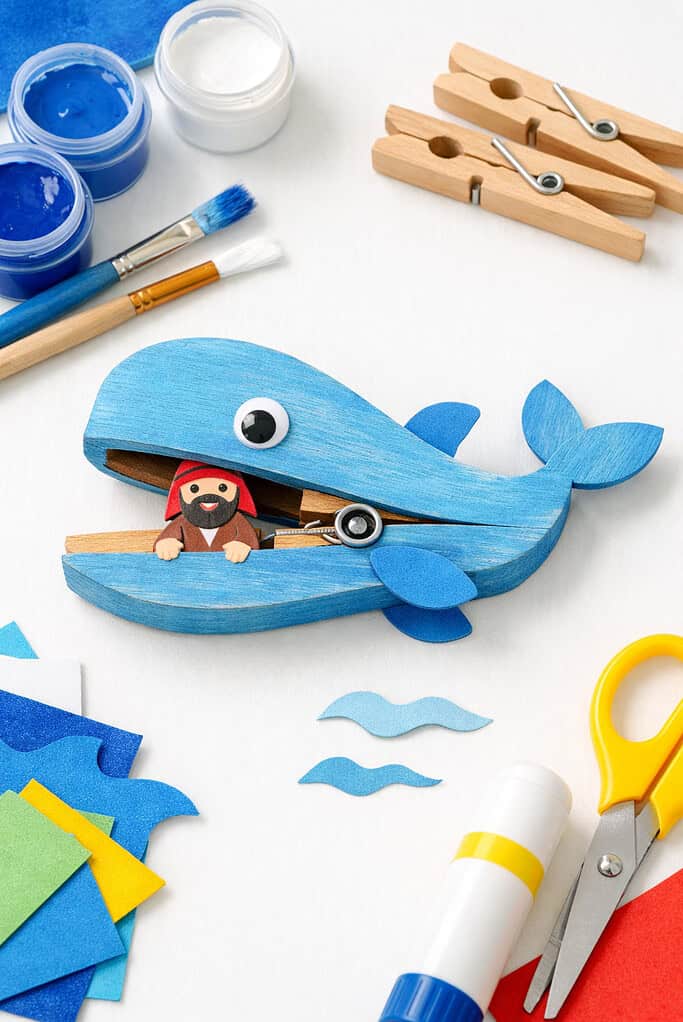
This sweet little craft uses a standard wooden clothespin as the body of the whale — painted blue or grey, with a fin cut from craft foam and a tail added at the back. A tiny paper Jonah figure tucks right inside the clothespin’s grip, representing Jonah sitting inside the belly of the whale.
It’s an adorable keepsake that doubles as a bookmark or refrigerator clip. The story of Jonah is rich with themes of obedience, second chances, and God’s relentless pursuit of us — all of which make for wonderful discussion while little hands are busy crafting.
You can find even more inspiration in this collection of Jonah and the whale crafts that make Bible stories come alive.
5. Noah’s Ark Craft with Animals
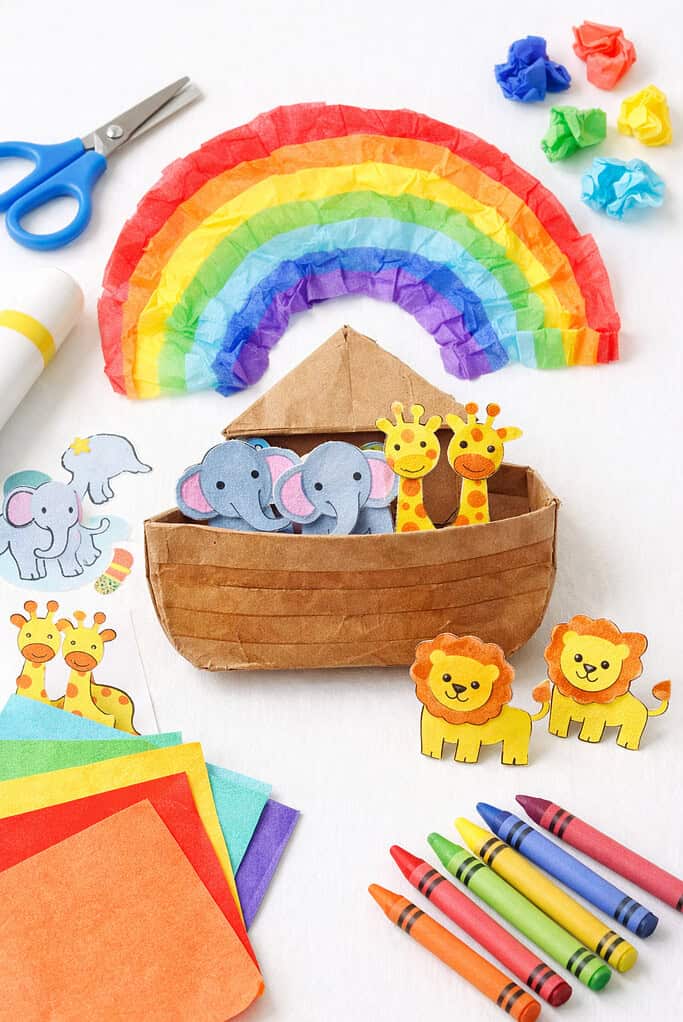
Build the ark together! Kids can construct a simple ark shape from a brown paper bag or cardboard box, then cut and color animal pairs to place inside.
You can provide pre-printed animal templates or let kids draw their own. Adding a rainbow made from tissue paper or watercolor paints ties in God’s covenant with Noah beautifully. This craft works especially well as a group project where each child is responsible for a different animal pair.
It brings in teamwork, creativity, and a tangible reminder that God keeps His promises. If you want more ideas, this full collection of Noah’s Ark crafts is packed with fun variations.
6. Fishers of Men Fishing Craft
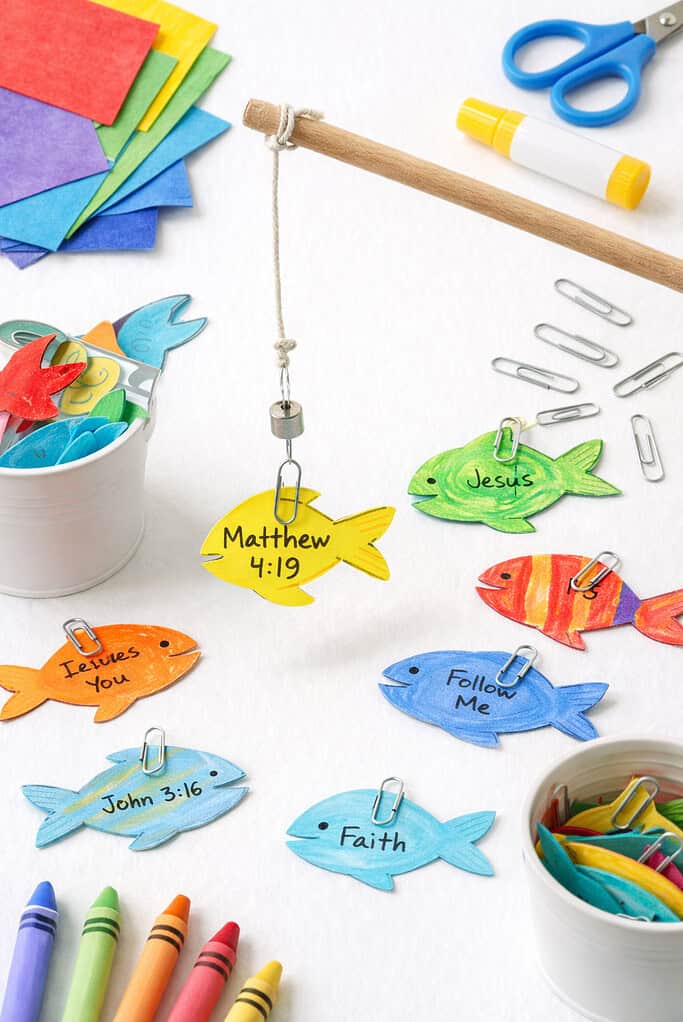
Based on Matthew 4:19 where Jesus calls His disciples to be “fishers of men,” this craft is as interactive as it is meaningful.
Kids decorate fish cutouts with Bible verses or names of people they want to pray for, then use a simple magnetic fishing pole (a stick with a string and a small magnet) to “catch” the fish from a pile on the floor or a bucket. It’s a wonderful way to bring the concept of sharing faith to life.
You can also extend the activity by having kids write one thing they can do this week to be a “fisher of men” on the back of their fish. Pair this with a look at Jesus disciples crafts for kids to build on the theme of following Jesus.
7. Armor of God Craft Station
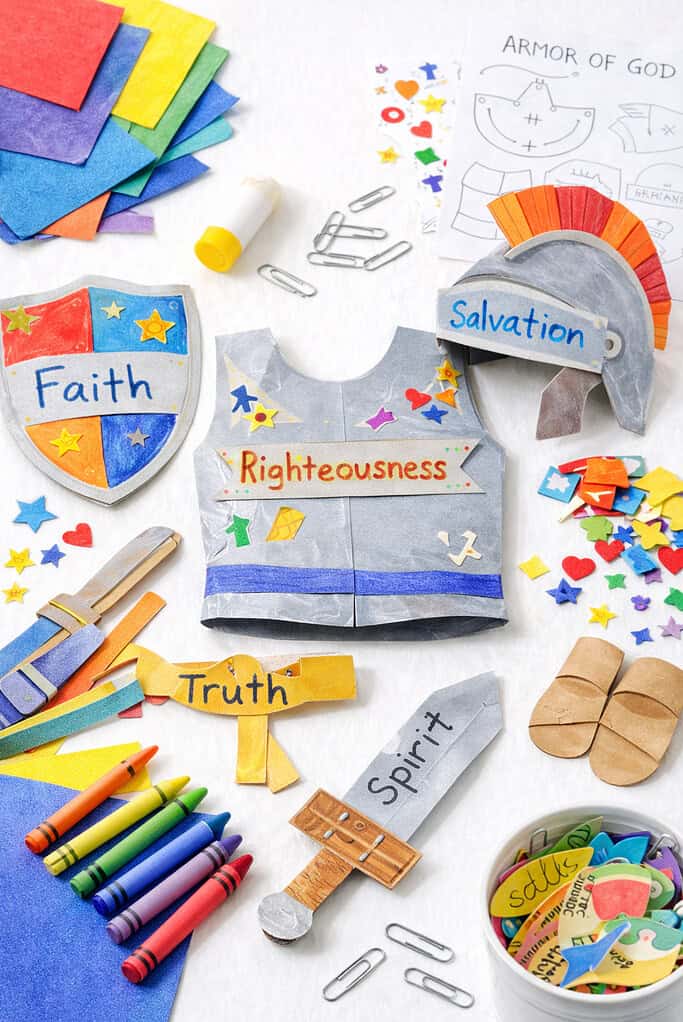
Ephesians 6:10-18 is one of those passages that practically begs to become a hands-on activity. Set up a craft station where kids assemble their own paper armor — a breastplate of righteousness, a shield of faith, a helmet of salvation, a sword of the Spirit, and more.
Each piece can be decorated and labeled with the corresponding scripture. By the time they’re done, kids have a wearable reminder of God’s protection and power. This is particularly impactful when paired with a story or skit that illustrates each piece of armor in action.
Dive deeper into this theme with this full guide on Armor of God crafts for kids.
8. Lost Sheep Cotton Ball Craft
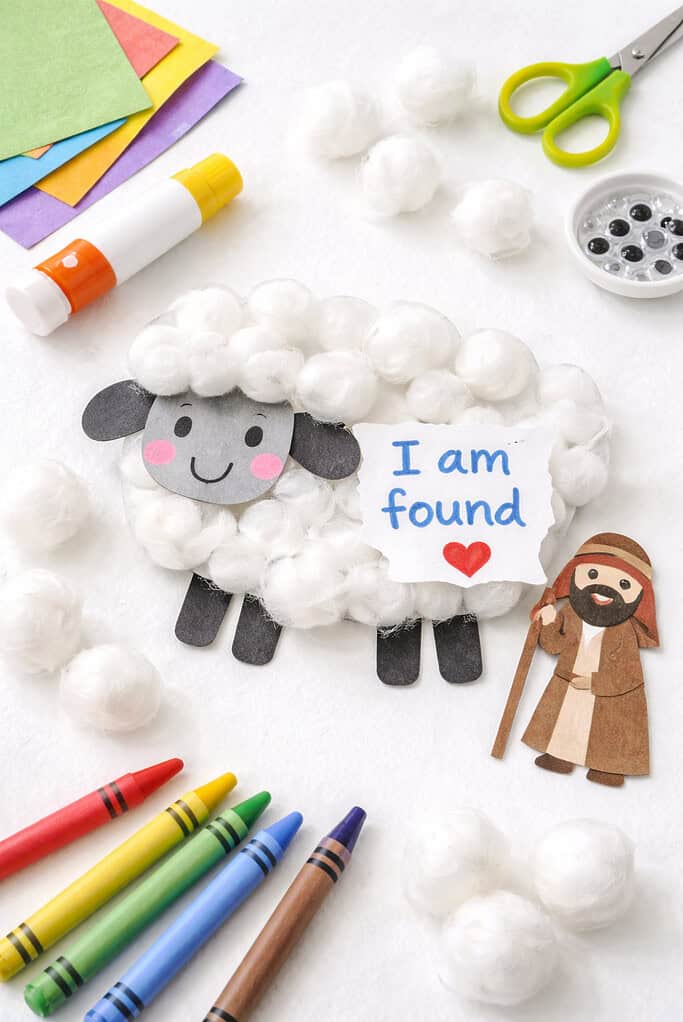
Inspired by the parable in Luke 15, this fluffy little craft is one of the sweetest on the list.
Kids cut out a sheep shape from white cardstock and glue cotton balls all over it for a wonderfully textured fleece effect. A tiny shepherd figure (drawn or printed) can be added alongside, and kids can write “I am found” or “God seeks me” on the back as a personal reminder of the parable’s message.
The tactile nature of gluing all those cotton balls keeps kids engaged long enough to really talk through what it means that the shepherd leaves the 99 to find the one. You can also pair this with the sheep craft for kids for extra fluffy fun.
9. Burning Bush Tissue Paper Craft
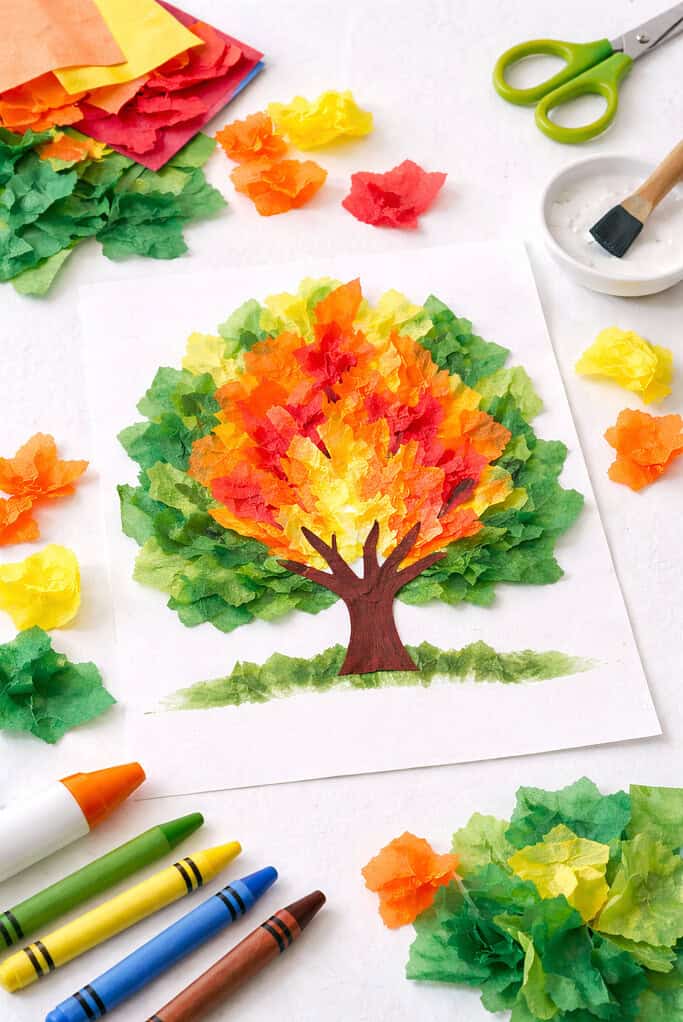
The story of Moses at the burning bush (Exodus 3) is visually striking and deeply moving, and this tissue paper craft captures that energy beautifully. Kids tear red, orange, and yellow tissue paper into small pieces and layer them onto a bush outline (drawn on cardstock or pre-printed).
Green tissue paper fills in the leaves, with the warm tones of the “fire” glowing at the center. It’s a gorgeous craft that also works well as a display piece. While kids create, talk about the moment God calls Moses by name and what it means that God is present even in unexpected places.
For more cross-curriculum ideas, browse these Christian crafts that bring Bible stories to life in simple, beautiful ways.
10. Jesus Feeds the 5,000 Basket Craft
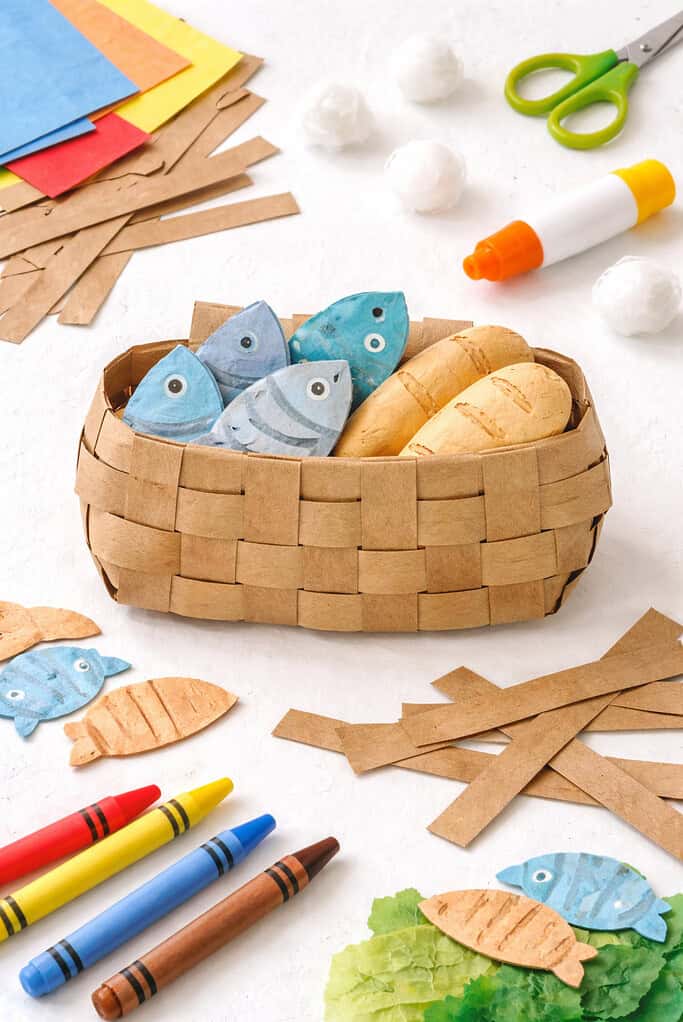
This craft focuses on the miracle of John 6:1-14 and is a wonderful way to teach kids about generosity and trusting God with what little we have.
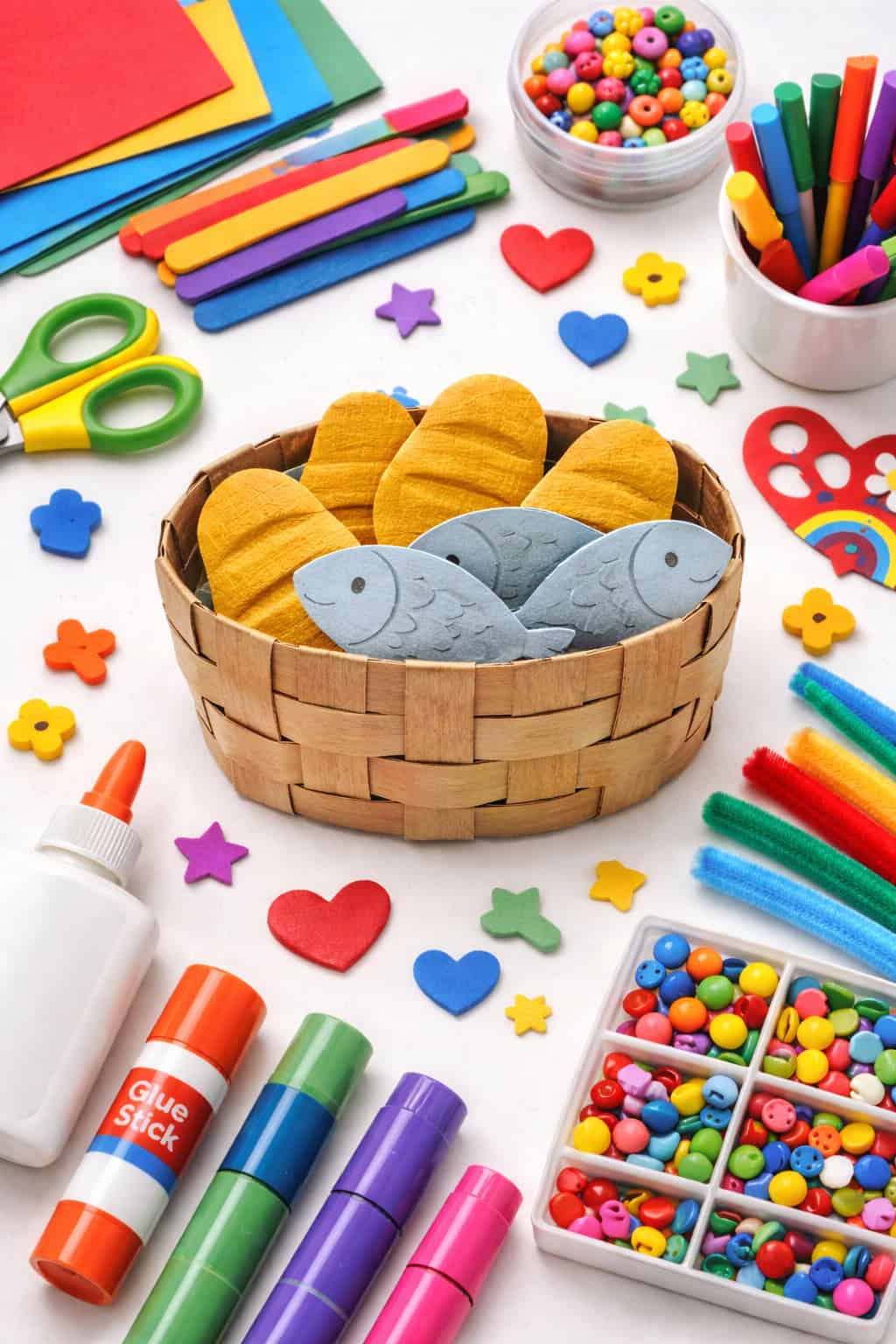
Children weave a small paper basket using pre-cut paper strips (woven over and under in alternating patterns), then fill it with five small fish shapes and two “loaves” cut from tan felt or paper. The weaving element adds a fine motor skill component that’s great for slightly older kids.
The takeaway? When we offer what we have to Jesus, He multiplies it beyond what we can imagine. Pair this with the Fruit of the Spirit basket craft for a double dose of craft-based Bible learning.
11. Fruit of the Spirit Tree Craft
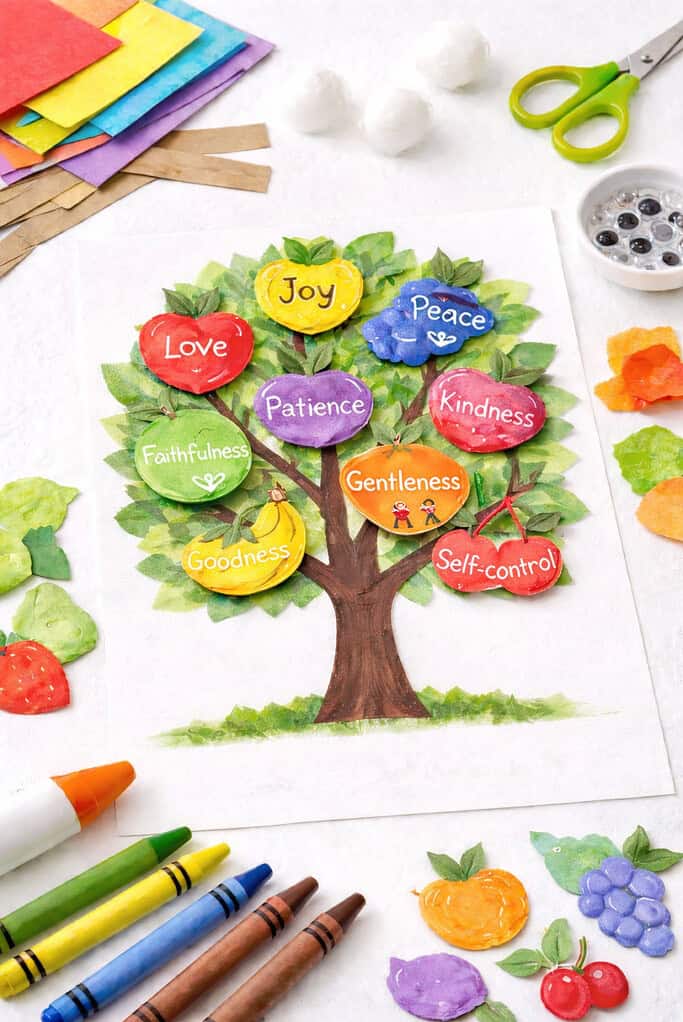
Galatians 5:22-23 lists the nine fruits of the Spirit — love, joy, peace, patience, kindness, goodness, faithfulness, gentleness, and self-control — and this tree craft turns each one into something kids can see, hold, and remember.
Children draw or print a tree trunk and branches, then create fruit shapes in different colors, labeling each one with a fruit of the Spirit. They can also draw a small picture of what each fruit looks like in real life (e.g., a picture of themselves sharing for kindness).
The result is a vibrant, meaningful piece of art.
12. Abraham and Sarah Bible Craft
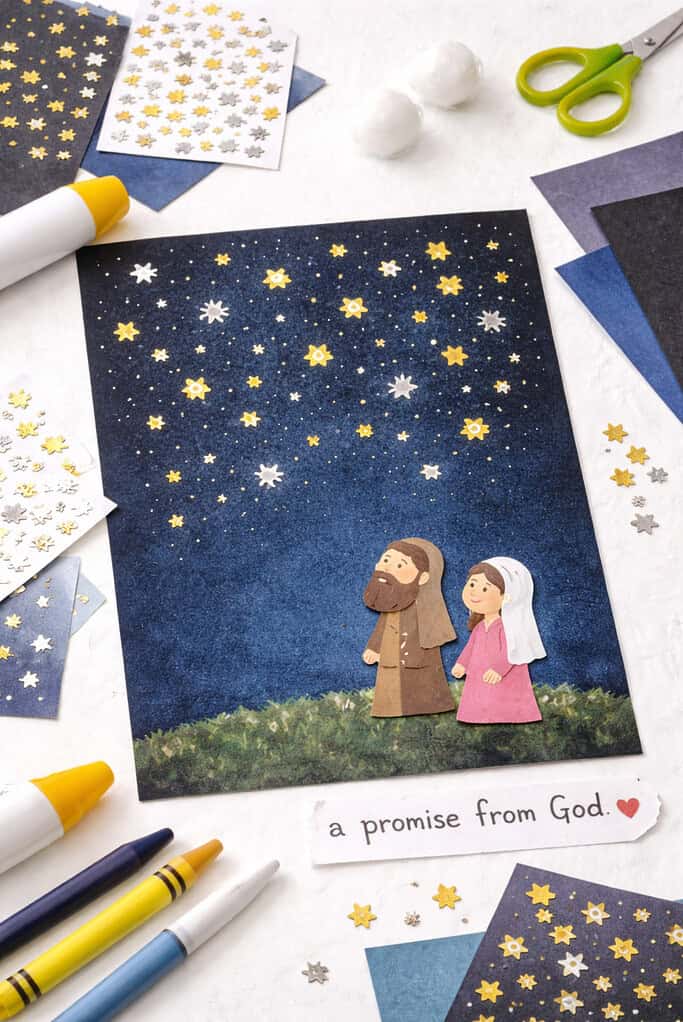
The story of Abraham and Sarah is one of extraordinary faith and the fulfillment of God’s promises — and it resonates with kids in a surprising way.
For this craft, children create a night sky scene by pressing star stickers onto dark blue or black cardstock, representing God’s promise that Abraham’s descendants would be as numerous as the stars. Small paper figures of Abraham and Sarah can be added looking up at the sky.
On the back, kids can write or draw their own “promise from God” — a verse or truth they’re holding onto. It’s quiet, reflective, and a beautiful way to end a VBS session on a note of wonder. For more promise-themed crafts, explore these God’s promises crafts for kids.
Simple Tips for Running a Smooth VBS Craft Station
Even the most beautiful craft plan can fall apart without a little logistical preparation.
Before VBS week arrives, it’s worth taking time to set up your craft stations with care.
- Pre-cut materials wherever possible — especially for younger children — so that the focus stays on the story and the experience rather than scissors and waiting.
- Label each supply with the craft step it belongs to so volunteers can guide kids without confusion.
- Having a finished sample of each craft at the station helps enormously. Kids (and helpers!) feel more confident when they can see where they’re headed.
- Keep wet wipes or paper towels nearby for paint and glue messes, and consider using a drop cloth under sensory stations.
- Most importantly, build in discussion time — the craft is the vehicle, but the conversation is the destination.
If you’re crafting on a limited budget, this collection of Sunday school crafts on a budget is full of smart, frugal ideas that don’t sacrifice quality or meaning.
How to Choose the Right VBS Craft for Your Age Group
Matching the craft to the developmental stage of your kids makes the whole experience more enjoyable for everyone involved.
Preschoolers thrive with simple, tactile crafts that have fewer steps and lots of sensory elements — think cotton balls, tissue paper, and sticker decorating. They love feeling the materials more than perfecting the outcome.
Elementary-aged kids (roughly 6-10) are ready for crafts with more steps, fine motor challenges like weaving or cutting, and the satisfaction of a more complex finished product. They also love crafts that “do something” — like the slingshot or the fishing craft — where there’s a playful element built in.
Tweens can handle even more nuance, and they often appreciate when you treat them like the capable creators they are by offering options to personalize and customize their work.
For even more age-specific ideas, the roundup of Sunday school crafts for girls and Sunday school crafts for boys offers tailored inspiration for different interests and stages.
Making Your VBS Crafts Budget-Friendly and Low-Waste
One thing that can hold VBS coordinators back is the cost of craft supplies for large groups of children. The good news is that most of these crafts can be made primarily from items you likely already have on hand or can source affordably.
Dollar stores are your best friend for basics like foam sheets, googly eyes, pom poms, and paint. Upcycling materials — like saving egg cartons, cardboard tubes, and paper bags — adds a lovely sustainable dimension to your crafting philosophy.
You can also ask families to contribute supplies in the weeks leading up to VBS. A simple list posted in the church bulletin or sent in a newsletter can yield a surprising amount of donated materials. Think creatively about substitutions — tissue paper works just as well as foam for many projects, and homemade paint (flour + water + food coloring) can replace store-bought for certain activities.
For inspiration on crafting with repurposed materials, this post on recycled crafts for kids is a goldmine of eco-friendly ideas that pair beautifully with a creation-care theme at VBS.
Start Crafting Your Way Through the Bible This VBS Season
These 12 VBS crafts are more than just a way to fill time between songs and skits — they’re invitations for kids to enter into Bible stories in a personal, memorable way.
Whether you’re leading a small classroom or coordinating a churchwide event, you have everything you need to make this VBS season one that kids carry with them long after the week is done.
Pick one craft or pick all twelve — either way, you’re planting seeds. And that’s the most beautiful work there is.
If you’re looking for even more year-round Sunday school inspiration, don’t miss this collection of engaging Sunday school crafts that work beautifully beyond VBS week, too.
Which VBS craft on this list are you most excited to try? Drop a comment below and let me know — I’d love to hear which Bible stories your kids are connecting with this season!
Get the FREE Easter Egg Story & Easter Tomb Craft Printables!
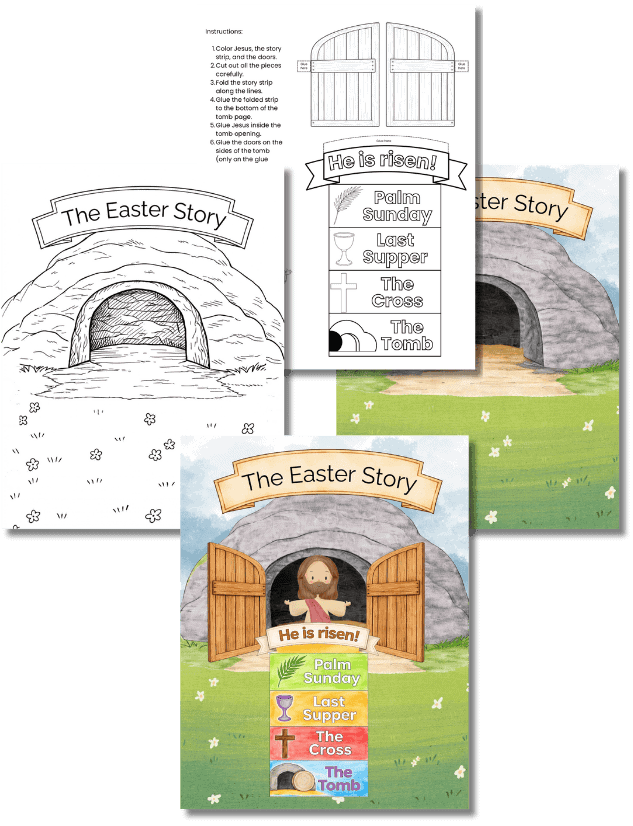
When you sign up, you get both the Easter Egg Story Craft and the Easter Tomb Craft — no need to sign up twice!
The Easter Egg Craft has kids color four eggs and fold them into a 3D keepsake, walking through the story from the Last Supper to Jesus rising again. The Easter Tomb Craft features a colorable tomb with doors that open and close to reveal the risen Savior inside.
Together, these printables turn the Easter story into something children can see, color, and come back to—making it easier for them to understand and remember what Easter is really about.
Click below to grab both printables and start crafting together.
Frequently Asked Questions
How far in advance should I prepare VBS crafts?
Ideally, you’ll want to begin prepping VBS crafts at least two to three weeks before your program starts. This gives you time to gather supplies, do a test run of each craft yourself, pre-cut materials, and troubleshoot any steps that might be tricky for the age group you’re working with.
If you’re coordinating a large event, consider hosting a volunteer prep night one week before VBS so your team can assemble kits together and everyone feels confident going in.
Can these VBS crafts be adapted for kids with special needs?
Absolutely, and it’s wonderful that you’re thinking about this. Most of the crafts on this list can be adapted with simple modifications. For kids with limited fine motor skills, pre-cut materials and larger pieces make participation more accessible.
Sensory-sensitive children may prefer painting with brushes over finger painting, or working with dry materials instead of wet ones. The cotton ball craft and tissue paper craft are particularly gentle sensory experiences.
Always check in with parents or caregivers ahead of time about specific needs, and have an alternate version of each craft ready if possible.
What are the best ways to keep kids focused during a craft?
The key is to keep the hands busy while the heart is engaged — and that means weaving storytelling naturally into the craft time rather than stopping the activity to give a lesson.
Play soft background music related to the Bible story, ask open-ended questions as kids work (“What do you think it felt like to be Daniel?”), and give kids meaningful choices within the craft (pick your color, add your own design) to keep them invested.
Shorter craft windows — around 15 to 20 minutes — tend to work better than longer ones for most elementary-age children, so design your crafts with that pacing in mind.
How do I handle a large group of kids at one craft station?
Rotation systems are your best friend for large VBS programs. Set up multiple identical craft stations around the room so that smaller groups of 5 to 8 kids are working at each one simultaneously, then rotate every 15 to 20 minutes.
This dramatically reduces wait times, keeps energy levels manageable, and allows each volunteer to develop a rapport with a small group rather than trying to manage a crowd.
Prep kits for each child ahead of time — a labeled bag with all the materials they’ll need — so there’s no jostling for supplies when the rotation begins.
Is it okay to send unfinished crafts home, or should kids always finish at VBS?
Sending an unfinished craft home is absolutely fine — and sometimes even a gift! It gives parents a natural conversation starter (“Tell me what you were making today”) and invites families to continue the VBS experience at home.
If you know time will be tight for a particular craft, design it so that the most meaningful or story-connected step happens at VBS and the decorating or finishing touches can be completed at home. Include a small note with the craft that recaps the Bible story and a question for families to discuss, turning an incomplete project into an intentional take-home devotional moment.