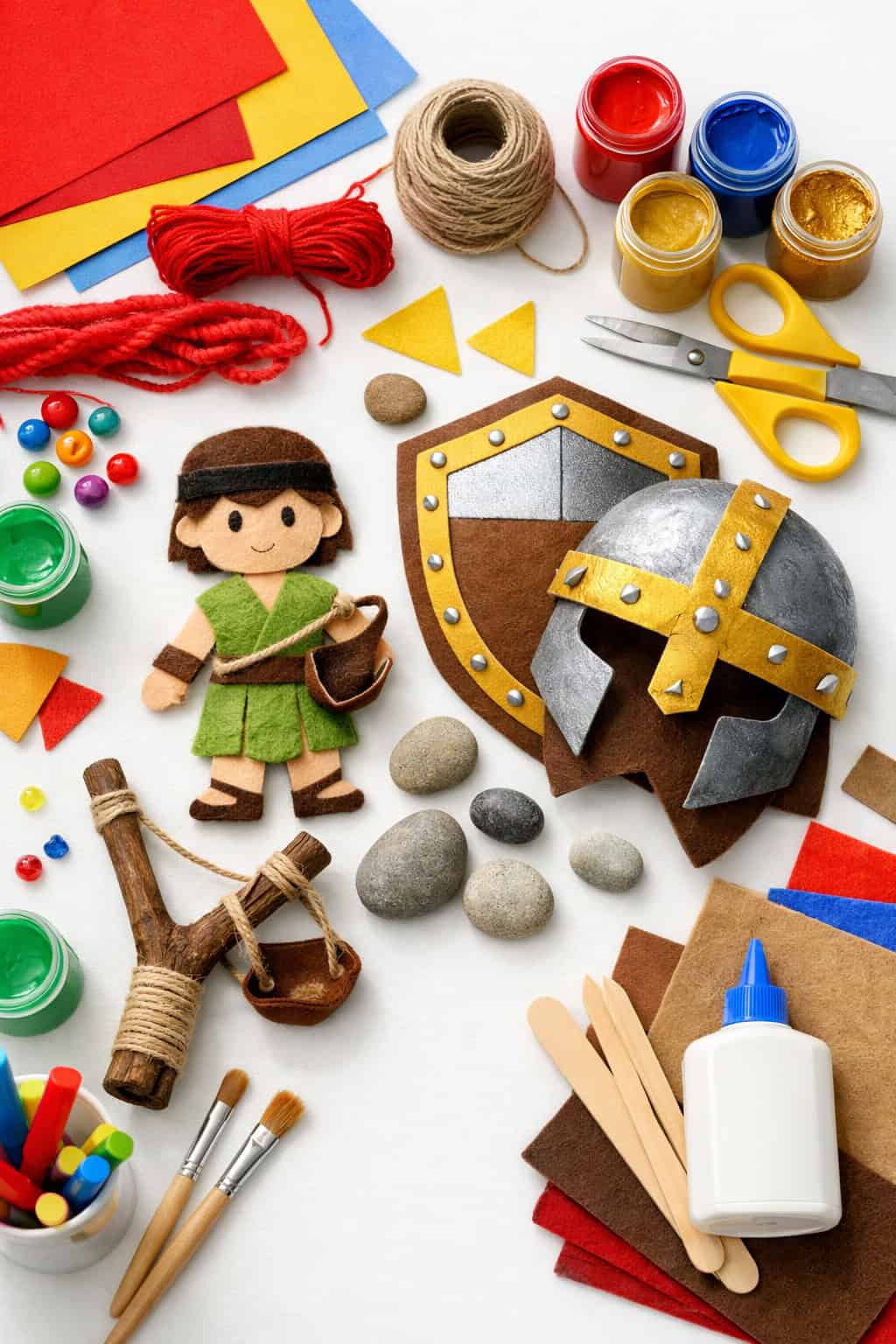
Some Bible stories have a way of grabbing kids right from the very first sentence – and the story of David and Goliath is definitely one of them.
A young shepherd boy, a towering giant, five smooth stones, and a whole lot of faith. It’s the kind of story that makes little eyes go wide and little hearts feel brave. And the beautiful thing? You can bring it to life right at your kitchen table.
Whether you’re gearing up for Sunday school, a VBS craft station, a homeschool Bible lesson, or just a cozy afternoon at home, these David and Goliath crafts are the perfect way to help kids connect with God’s Word in a tangible, hands-on way.
If you love weaving Bible stories into creative time with your kids, you’ll also want to peek at our roundup of easy Bible crafts for kids – it’s packed with projects that make God’s Word feel alive and accessible for every age.
What Makes David and Goliath Crafts So Powerful for Kids
There’s a reason this story has been told for thousands of years – it speaks directly to something every child understands: feeling small in the face of something big and scary.
Whether it’s the first day of school, a hard friendship situation, or just the fear of the dark, kids know what it feels like to face their own “giants.”
That’s why David and Goliath crafts do more than keep little hands busy. They create a moment – a pause in the day – where a child can hold something they made with their own hands and be reminded that the same God who helped David is with them too.
Hands-on crafts also tend to anchor stories in memory far longer than reading or listening alone. When a child paints a rock or assembles a puppet, they’re encoding the story in multiple ways at once – visually, kinesthetically, and emotionally. That’s the kind of learning that sticks.
And as parents, teachers, and caregivers, that’s exactly what we’re hoping for. For more ideas on how to make Bible stories come alive through creative activities, our post on simple Christian crafts that bring Bible stories to life is a wonderful place to start.
10 Easy David and Goliath Crafts for Kids
Here’s your go-to list of David and Goliath craft ideas – from simple paper plate projects to hands-on sensory activities. Each one is beginner-friendly, budget-conscious, and full of storytelling potential.
1. David’s Slingshot Craft
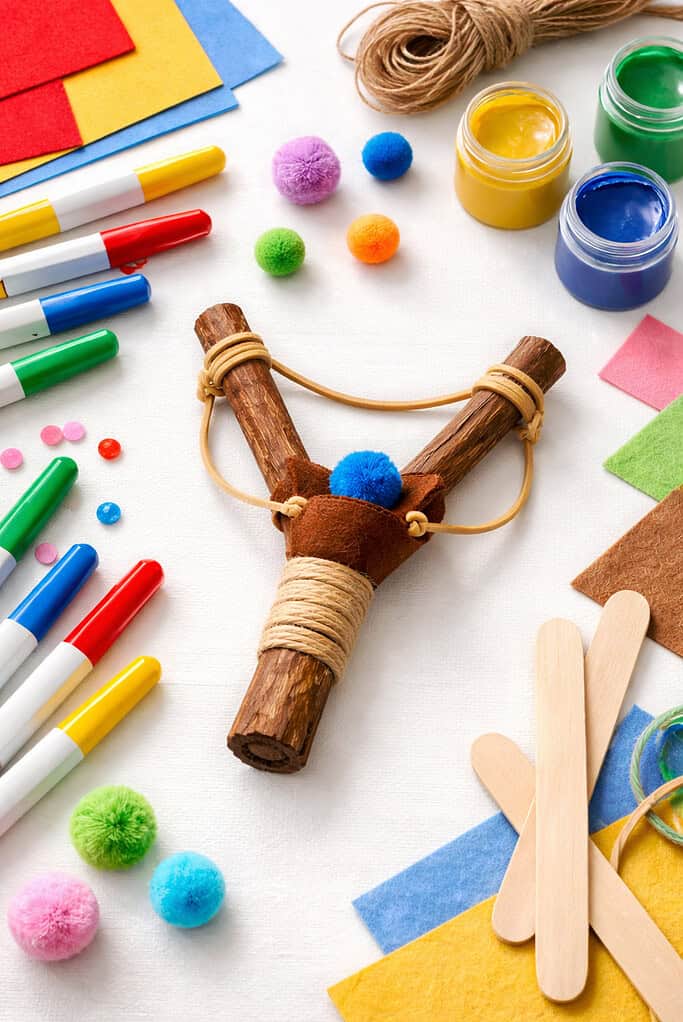
This one is always a crowd-pleaser. Kids can make their very own mini slingshot using craft sticks, rubber bands, and a small piece of felt or fabric for the pouch.
It’s a wonderfully tactile way to talk about how David trusted God as he approached Goliath – not with armor or a sword, but with simple tools and a whole lot of courage.
You can have kids decorate their slingshot with paint or markers and use soft pom-poms as the “stones” for safe indoor use. It sparks great conversation about how God equips us even when we feel small.
2. Paper Plate Goliath + Popsicle Stick David
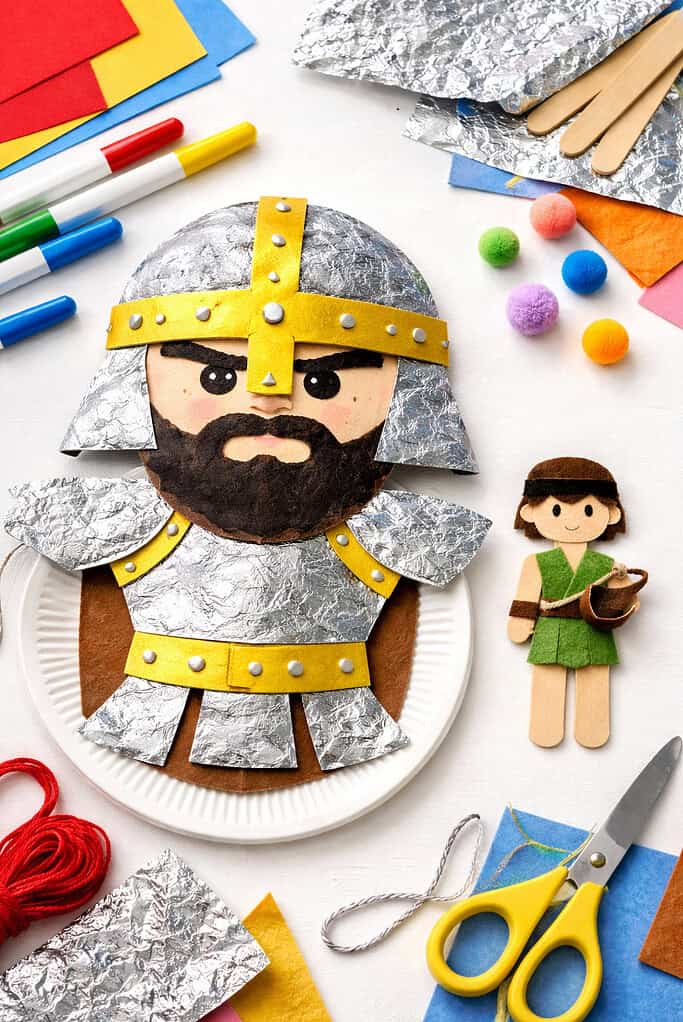
This classic craft brings the size contrast between David and Goliath to life in the most visual way. Kids use a large paper plate to create Goliath’s face and armor (think aluminum foil for a shiny helmet and metallic details), and a small popsicle stick figure for David holding his slingshot.
When they hold both up side by side, the size difference really hits home – and it becomes a beautiful illustration of how God doesn’t look at size the way we do. Simple, effective, and wildly engaging for preschoolers and early elementary kids.
3. David and Goliath Puppets
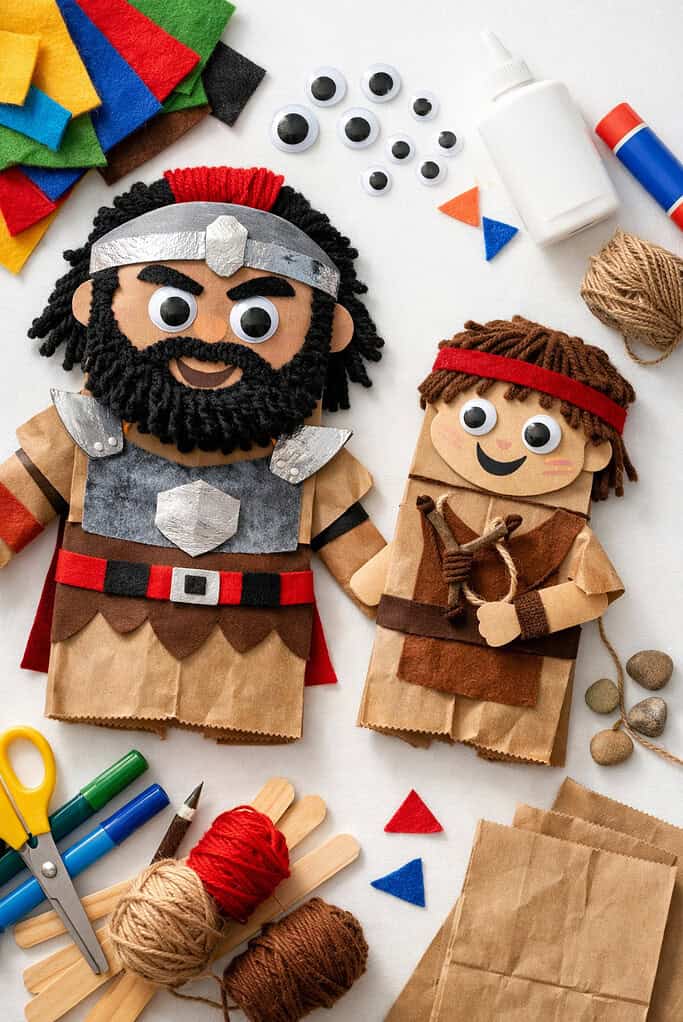
Paper bag puppets or stick puppets let kids become the storytellers themselves – and there’s something truly magical about watching a child retell a Bible story in their own words. Make a David puppet and a Goliath puppet, then let the kids act out the scene.
You can use brown paper bags, felt scraps, googly eyes, and bits of yarn for hair. This is a wonderful activity for small groups or siblings, and it reinforces comprehension in the most natural, playful way. It pairs beautifully with our list of Sunday school crafts for toddlers if you’re planning a full lesson.
4. Five Smooth Stones Craft
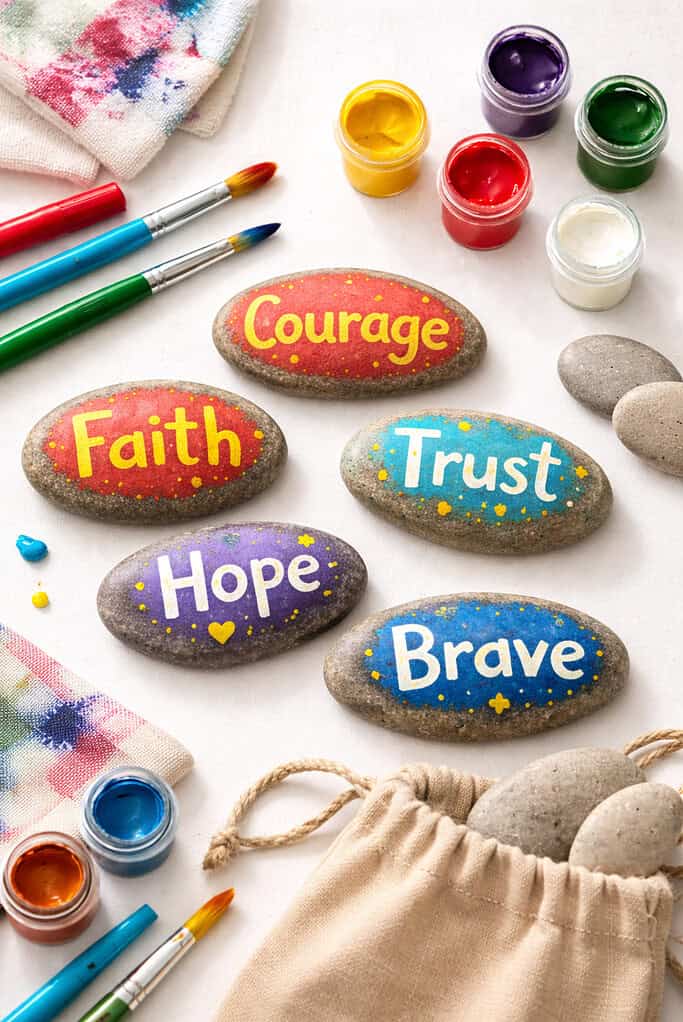
There’s something so grounding about holding actual stones in your hands while talking about this story. Have kids collect five smooth stones from outside (or grab some from a craft store), then paint or write a word on each one – things like Faith, Courage, Trust, Hope, or Brave.
These become beautiful keepsakes that kids can keep in a little pouch or on their nightstand as a reminder that God is with them, no matter what giants they face. It’s a simple craft with a surprisingly deep takeaway.
5. David and Goliath Coloring Activity
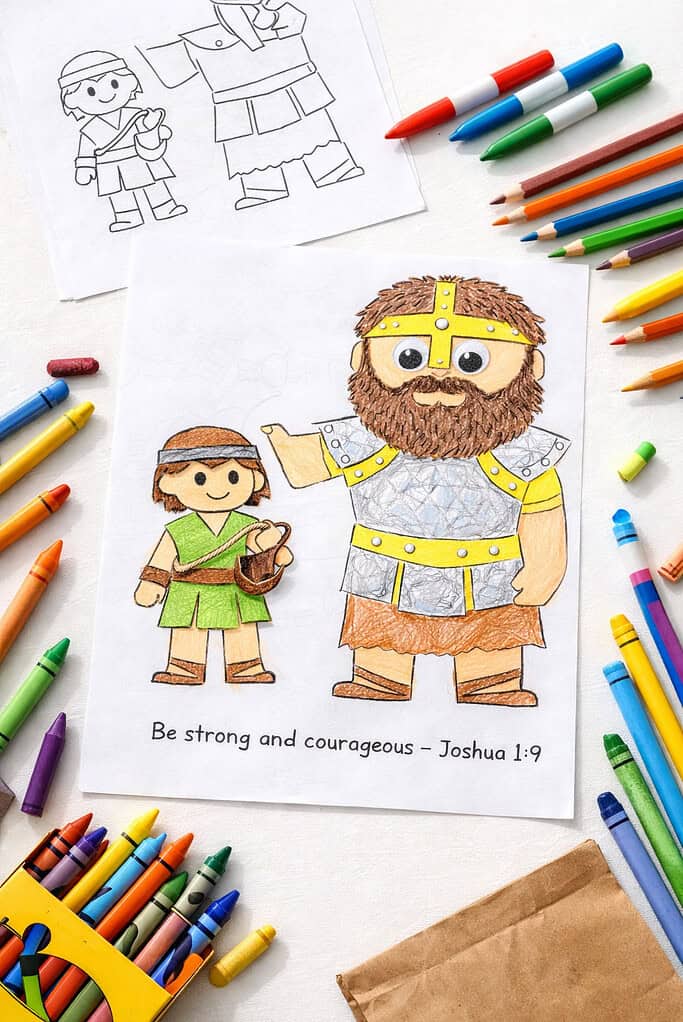
Sometimes the most meaningful moments happen quietly, crayons in hand. A David and Goliath coloring page gives kids time to process the story at their own pace while keeping their hands busy. You can print free coloring pages from Christian resource sites, or draw a simple outline yourself.
Add a Bible verse at the bottom – “Be strong and courageous” (Joshua 1:9) works beautifully – and encourage kids to color it in a way that tells the story they heard. This is a wonderful quiet-time or cool-down activity after a more energetic craft.
6. VBS David and Goliath Station Craft
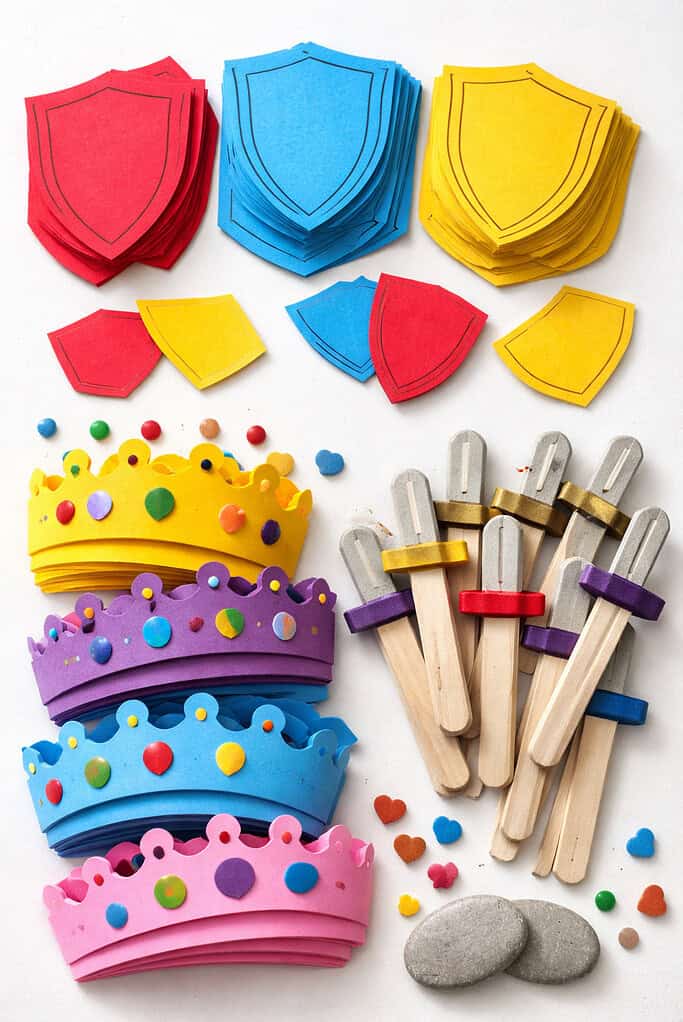
If you’re running a VBS or Sunday school class, you need a craft that can be completed quickly, is easy to set up in bulk, and still feels special.
This station craft fits the bill perfectly. Set up a simple assembly line with pre-cut pieces (paper shields, foam crowns, popsicle stick swords) and let kids assemble their own “David and Goliath scene” with minimal adult help.
It keeps large groups moving efficiently while still giving every child a take-home reminder of the lesson. For more VBS-friendly ideas, browse our collection of engaging Sunday school crafts.
7. Pebble Bag “Victory Pack”
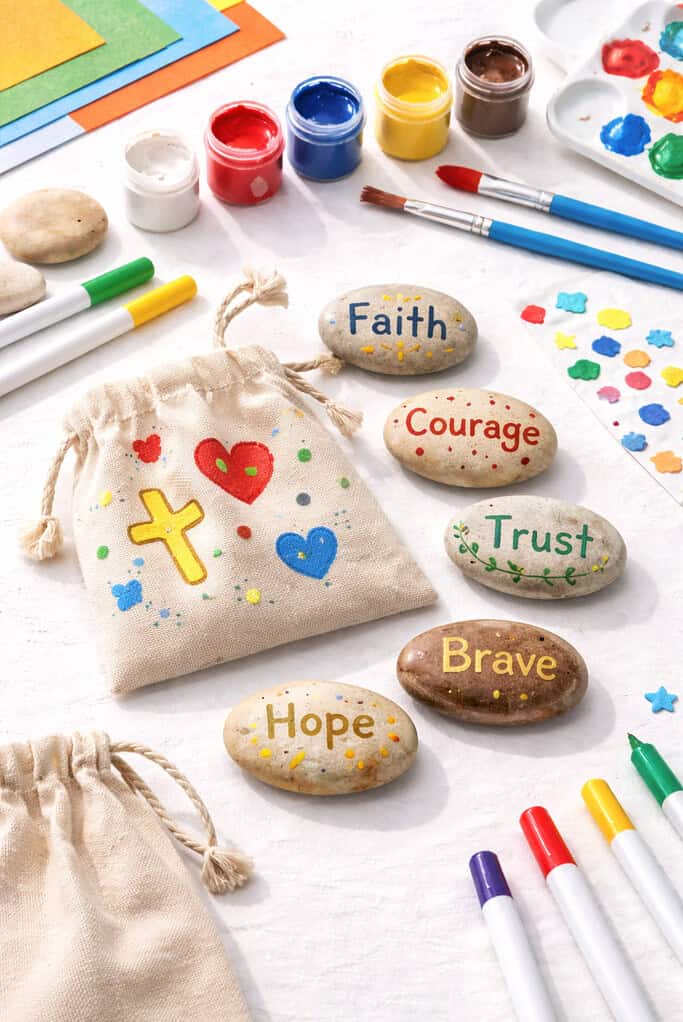
This one feels extra special because kids get to create something they can actually keep and carry. Decorate a small pouch or drawstring bag, then place five painted stones inside.
Each stone can represent something like faith, courage, trust, hope, or bravery. Kids can think of it as their little “bravery kit” they can take home and keep nearby as a reminder that God helps them face their own giants.
It’s simple, meaningful, and often becomes one of those crafts kids hold onto long after craft day is over.
8. David’s Shield of Faith Craft
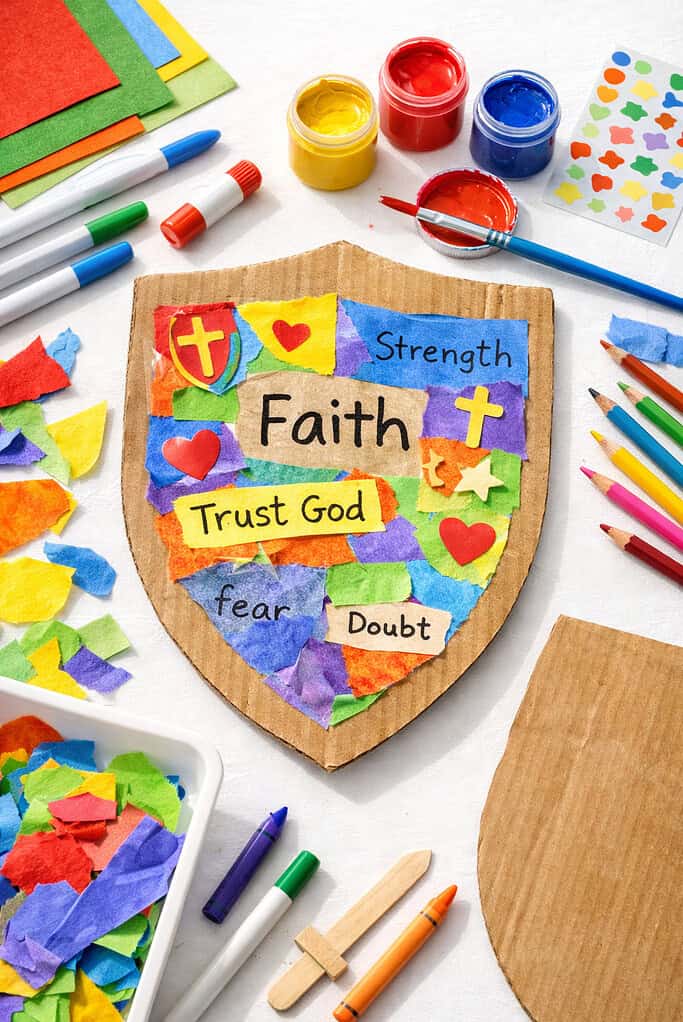
Tie this David and Goliath lesson into a broader conversation about the Armor of God with a shield-making craft. Kids can cut a shield shape from cardboard, then decorate it with paint, markers, stickers, or torn paper collage.
Encourage them to write or draw what their “shield of faith” protects them from – fear, doubt, unkindness – and what Bible truths they hold onto.
It’s a beautifully layered craft that bridges two powerful Bible stories. If you love this concept, our post on Armor of God crafts for kids has even more ideas to complement this lesson perfectly.
9. Toilet Paper Roll Goliath
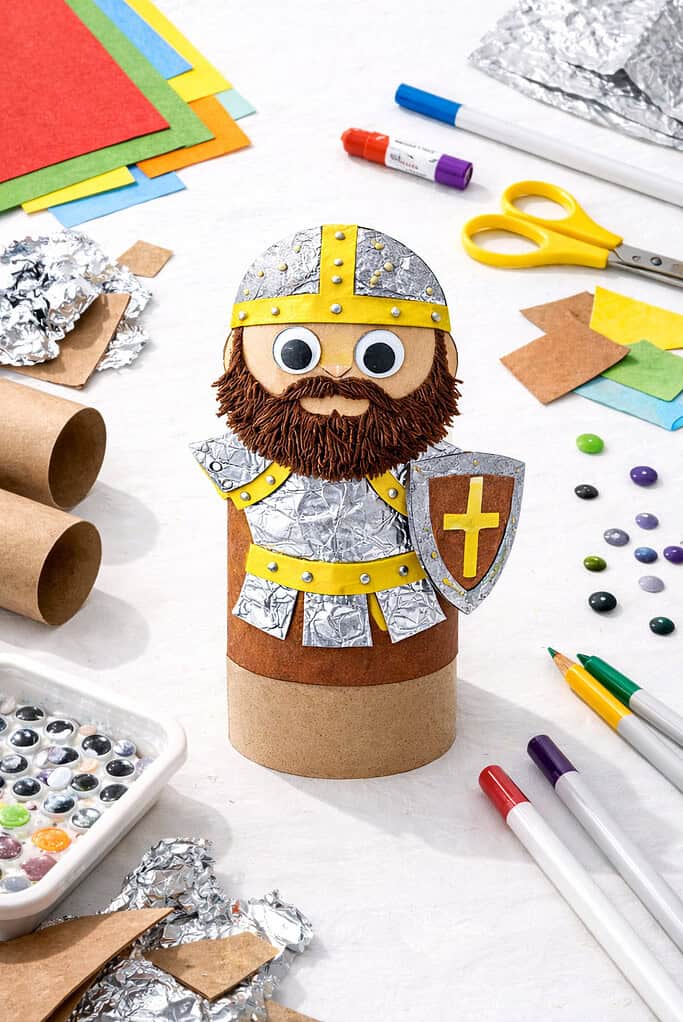
This is a simple but super fun way for kids to bring Goliath to life in 3D form. Use a cardboard tube (like a toilet paper roll) as the base, then build him up with construction paper armor, a big helmet, and bold facial features.
Kids can decorate him however they like (think shields, patterns, and even “battle gear”). The bigger and bolder, the better. It really helps them picture just how giant Goliath seemed in the story, and it makes retelling the Bible lesson so much more interactive and memorable.
10. David and Goliath Paper Crown and Warrior Headband
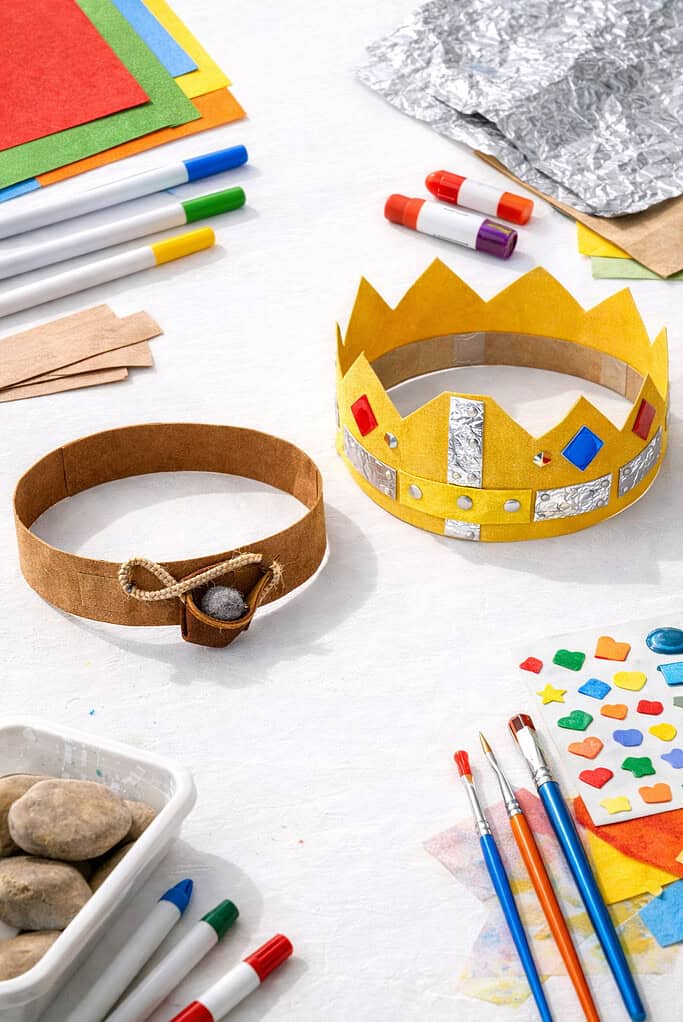
Let kids choose their character – are they David or Goliath? – and make a matching accessory to wear while you read or act out the story. David’s headband can be simple brown or tan paper with a small sling attached, while Goliath’s crown can be gold paper with foil details and pretend jewels.
Dress-up crafts like these are incredibly effective for kinesthetic learners who need to move and play their way through a lesson. They also make for adorable photos and an unforgettable story time memory.
Helpful Tips for Making Bible Crafts Feel Special
One thing that can make or break a craft session is intention. It’s so easy for craft time to become just “something to do,” but with a little bit of thought, it can become one of the most meaningful parts of your lesson or day.
Here are a few simple ways to elevate the experience.
- Start by reading the story aloud together before you begin any crafting – even just a few key verses from 1 Samuel 17 is enough to set the scene.
- Then, as kids are creating, ask gentle questions: “How do you think David felt when everyone told him he was too small?” or “What would you have done?” Let the conversation happen naturally, without pressure. The craft gives their hands something to do so their minds can wander and wonder freely.
Also, don’t underestimate the power of display. When a child’s craft goes up on the wall or sits on a shelf, it signals that their work (and their faith) matters. It becomes a visual anchor they return to.
If you’re homeschooling, this is especially powerful as part of a living learning environment. Our guide on days of creation crafts for kids has some wonderful display ideas that work beautifully for Bible story projects too.
Best Ages for David and Goliath Crafts
The wonderful thing about this story (and these crafts) is that they scale beautifully across ages. Toddlers and preschoolers (ages 2–4) will love the sensory-rich, hands-on options like the smooth stones craft and the coloring activity.
Keep it simple, let them explore freely, and focus more on telling the story than on the finished product. For this age group, our collection of Sunday school crafts for toddlers is a great companion resource.
Early elementary kids (ages 5–8) can handle more complex projects like the puppet theater, the slingshot craft, or the shield of faith. They’re at a wonderful stage where they can both make something beautiful and engage deeply with the meaning behind it.
Older kids and tweens (ages 9–12) might enjoy the Goliath height chart as a research-based art project or the rock painting storytelling kit as a more open-ended creative challenge. There’s truly something here for every age and stage.
Share Your David and Goliath Crafts with Me!
There’s nothing quite like seeing a child hold up something they made with their own hands and say, “I made that.”
Whether you try one of these David and Goliath crafts this weekend or incorporate a few into your next Sunday school lesson or VBS rotation, I hope they spark something beautiful – a conversation, a memory, a moment of quiet faith.
I’d absolutely love to hear how it goes! Drop a comment below and tell me which craft your kids loved most, any creative twists you made to the ideas, or how the conversations went.
And if you’re looking for even more Bible-based craft inspiration, don’t miss my full list of God’s promises crafts for kids – another wonderful way to anchor big faith truths in little hands and hearts.
Get the FREE Easter Egg Story & Easter Tomb Craft Printables!
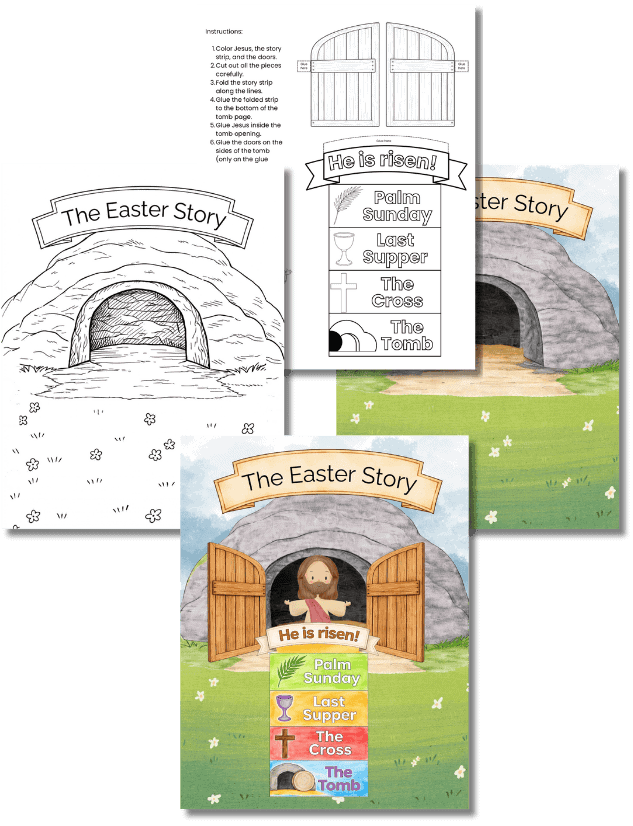
When you sign up, you get both the Easter Egg Story Craft and the Easter Tomb Craft — no need to sign up twice!
The Easter Egg Craft has kids color four eggs and fold them into a 3D keepsake, walking through the story from the Last Supper to Jesus rising again. The Easter Tomb Craft features a colorable tomb with doors that open and close to reveal the risen Savior inside.
Together, these printables turn the Easter story into something children can see, color, and come back to—making it easier for them to understand and remember what Easter is really about.
Click below to grab both printables and start crafting together.
Frequently Asked Questions
What age group are David and Goliath crafts best suited for?
David and Goliath crafts work beautifully across a wide age range. Toddlers and preschoolers (ages 2–4) do well with sensory crafts like painting smooth stones or simple coloring pages. Early elementary children (ages 5–8) can take on puppet-making, slingshot crafts, and paper plate projects.
Older kids (ages 9–12) will enjoy more involved projects like the Goliath height chart banner or the rock painting storytelling kit. The key is to match the complexity of the craft to the child’s fine motor abilities and attention span.
How long do these David and Goliath crafts typically take to complete?
Most of the crafts on this list can be completed in 20 to 45 minutes, which makes them ideal for a Sunday school class period or a homeschool afternoon session. Simpler options like the coloring activity or the smooth stones craft can be done in as little as 15 minutes.
More involved projects like the Goliath height chart banner or the rock painting storytelling kit may take a bit longer, especially if paint needs to dry between steps. Planning a drying break in the middle can be a great time to revisit the Bible story or answer questions.
Can these crafts be done without any special craft store supplies?
Absolutely — most of these crafts are designed to use materials you likely already have at home or can find easily. Paper plates, popsicle sticks, rubber bands, old newspaper, aluminum foil, cardboard from cereal boxes, markers, and basic paint are the backbone of the majority of these projects.
The smooth stones can be collected from your backyard or a local park. If you’re working with a tighter budget, the coloring activity and the paper crown and warrior headband are your most supply-light options.
How can I use these crafts in a group setting like Sunday school or VBS without it getting chaotic?
The key to smooth group crafting is preparation. Pre-cut as many pieces as possible before the kids arrive, organize supplies into individual bags or trays for each child, and choose crafts with clear, simple steps that can be explained in two minutes or less.
For VBS station rotations, the paper plate Goliath and popsicle stick David or the VBS craft station project are ideal because they can be assembled quickly. Having a simple visual step-by-step guide posted at the station also helps older kids work more independently while you assist younger ones.
Are there ways to extend the David and Goliath lesson beyond just the craft?
So many great ways! After the craft, you can use the finished projects as props for storytelling or a puppet show retelling of the story. The smooth stones make a wonderful journaling prompt — have older kids write what “giant” they’re facing in their own life and how faith helps them face it.
You could also pair the craft session with a simple snack themed around the story (shepherd’s bread, anyone?) or a short game like a safe indoor “slingshot” target toss using pom-poms. Weaving crafts into a fuller experience always deepens the impact of the lesson.