Hello, sweet friend.
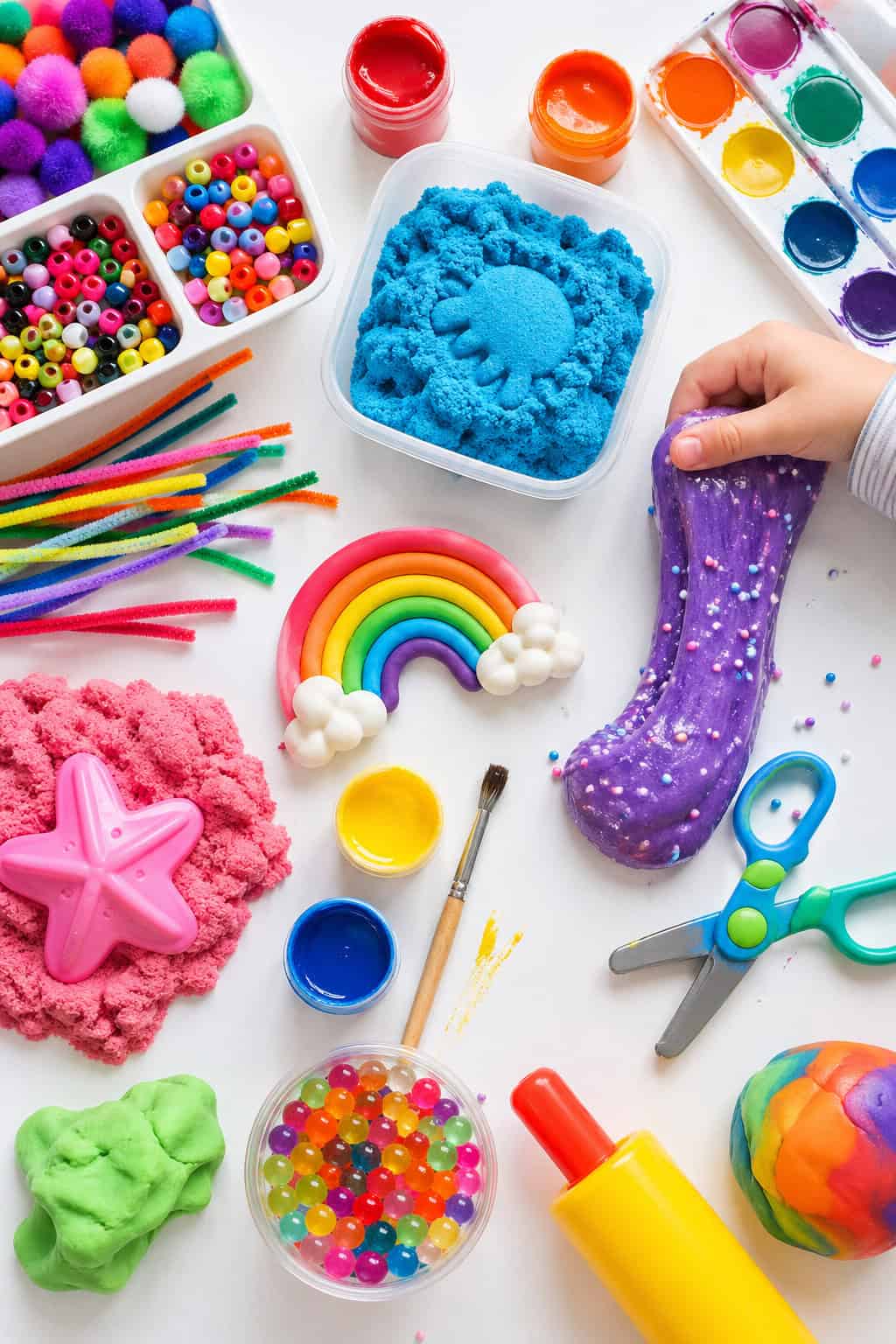
Some afternoons just need a project. Not a perfect one. Not a Pinterest-worthy one. Just something with a little texture and a little magic that lets your tiny humans plunge their hands in and get gloriously, completely lost.
Sensory crafts are that sort of gift. The slow-afternoon kind of thing that pulls little ones down to the kitchen table and keeps them there long enough for you to sip your tea while it’s still warm.
Around our farmhouse, sensory crafts have become our rainy-day rescue and our “Mama, I’m bored” antidote. They’re simple, mostly mess-friendly (mostly), and somehow always the ones my littles ask for again and again.
Pour your coffee. I’m sharing fifteen of our most-loved sensory crafts below — the ones I keep coming back to for the kind of slow, hands-on afternoons our kids will remember.
why sensory crafts feel like magic to little hands
Sensory play goes beyond fun – it’s how small hands learn the world. When my toddler squishes a handful of cool, smooth dough between her fingers or watches paint puff up under warm air, something quiet in her little mind is making sense of textures and colors and how things move.
It’s gentle, important work disguised as play. And honestly, it slows me down too. There’s nothing like sitting beside a two-year-old as she carefully presses an apple half into red paint to remind you that the kitchen table is one of the sweetest places in the whole house.
If you love this kind of slow, hands-on afternoon, you’ll feel right at home with our spring crafts for toddlers roundup too.
a few simple supplies to keep on hand
Most of these you’ll find tucked in a kitchen drawer or hiding in your craft basket already. The pretty thing about sensory crafts is they ask for very little.
A few things I always like to have stocked:
- Flour, salt, and warm water — the holy trinity of homemade dough
- Liquid school glue and a can of shaving cream
- Contact paper — the clear sticky kind
- Tissue paper in soft, pretty colors
- Washable paint, foam soap, and a few drops of food coloring
- Old apples that are past snacking but still good for stamping
- Pipe cleaners, pom poms, and dot markers
- Paper plates, popsicle sticks, and a brown paper bag or two
- A baking sheet with a rim — the unsung hero of sensory play
- A few clean kitchen towels you don’t mind getting paint on
If you’ve been collecting odds and ends from around the house, you’ve already got nearly everything you need. We use lots of saved-from-the-trash bits for our recycled crafts for kids projects too. And for more eco-friendly ideas using what nature gives, our earth day crafts for kids roundup is one I keep coming back to.
15 brilliant sensory crafts kids get obsessed with
Here’s the heart of it — fifteen sensory crafts that have earned a permanent spot in our rotation. Each one is simple to set up, easy to clean up (mostly), and just the right amount of magical for little hands.
1. salt dough ornaments
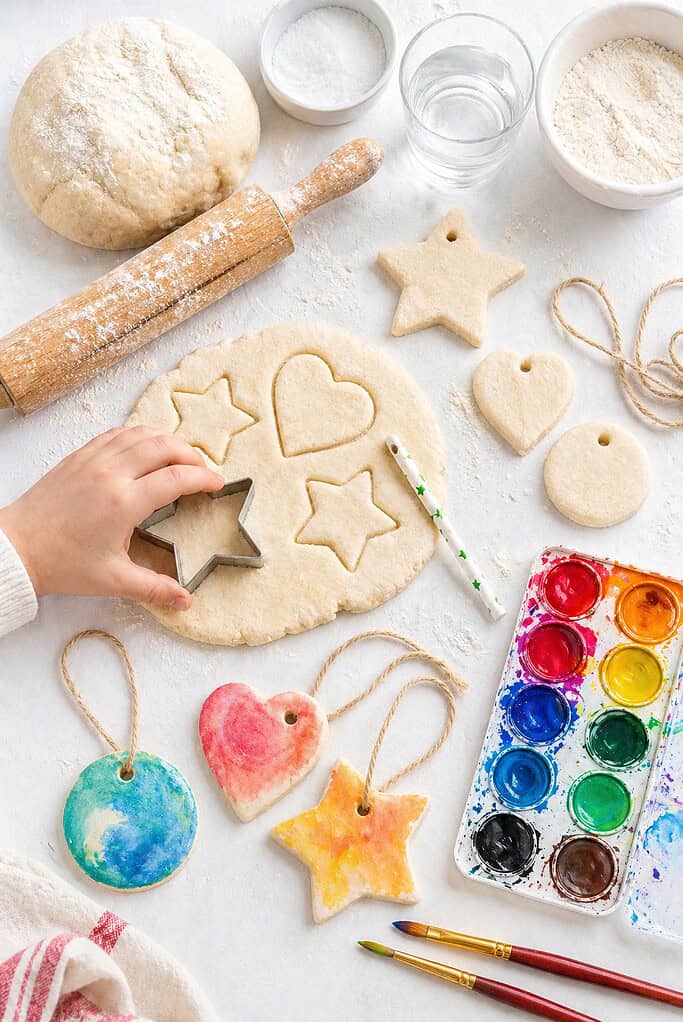
Two cups of flour, one cup of salt, and just enough warm water to bring it together into a soft, smooth dough. My oldest still calls this “kitchen play dough,” and she’s not wrong.
We roll it flat, press cookie cutters into it, poke a hole at the top with a straw, and bake them low and slow until they harden. Once they cool, we paint them with watercolors and string twine through to hang on the porch.
The kneading alone keeps small hands busy for ages. There’s something so satisfying about working dough — even my littlest plops down in her highchair and joins in.
2. puffy paint art
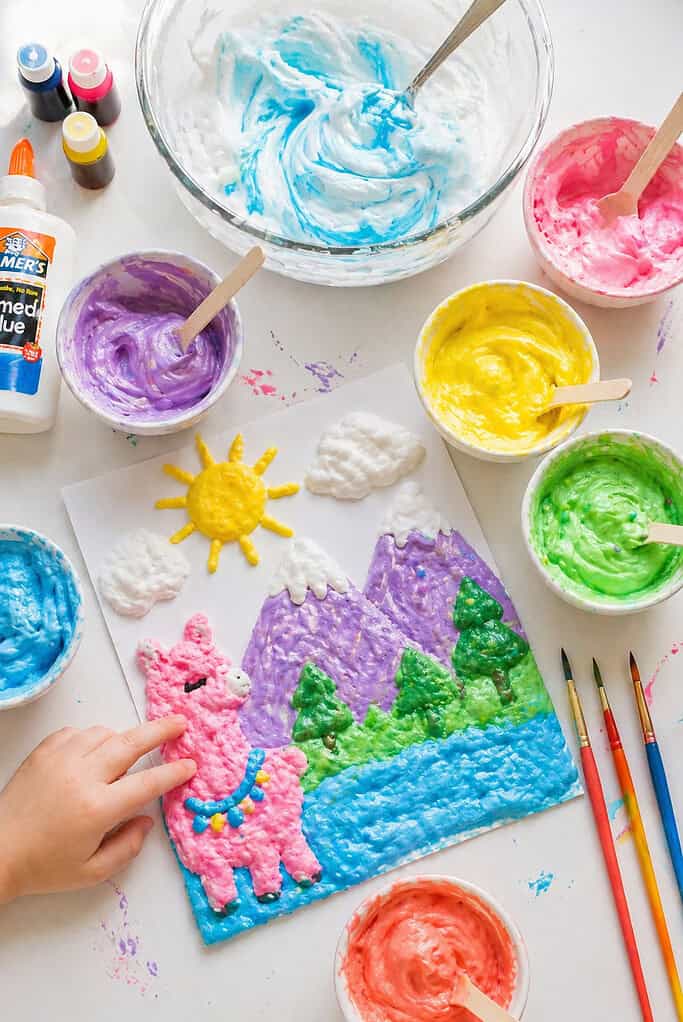
Equal parts shaving cream, white school glue, and a few drops of food coloring whisked together until thick and fluffy. Spoon it onto cardstock and let your kids paint clouds, mountains, little woolly lambs — whatever their imagination wants.
When it dries, the paint stays puffy and soft to the touch. My toddlers cannot keep their fingers off the finished pieces. It’s like a little keepsake you can pet.
3. shaving cream marbled art
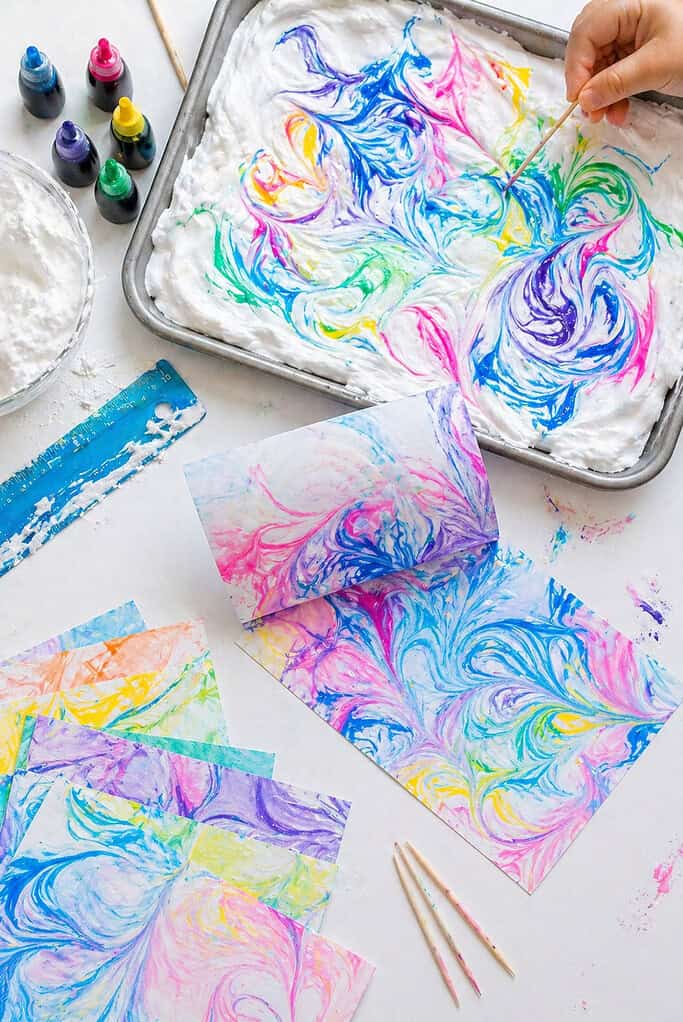
Squirt a layer of shaving cream onto a baking sheet, drop different food coloring on top, swirl gently with a toothpick, and lay a sheet of cardstock face-down right onto it.
Lift it, scrape the excess shaving cream off with the edge of a ruler, and you’ll have the most beautiful marbled paper. We use ours for handmade greeting cards and the inside of homemade journals.
4. contact paper collage
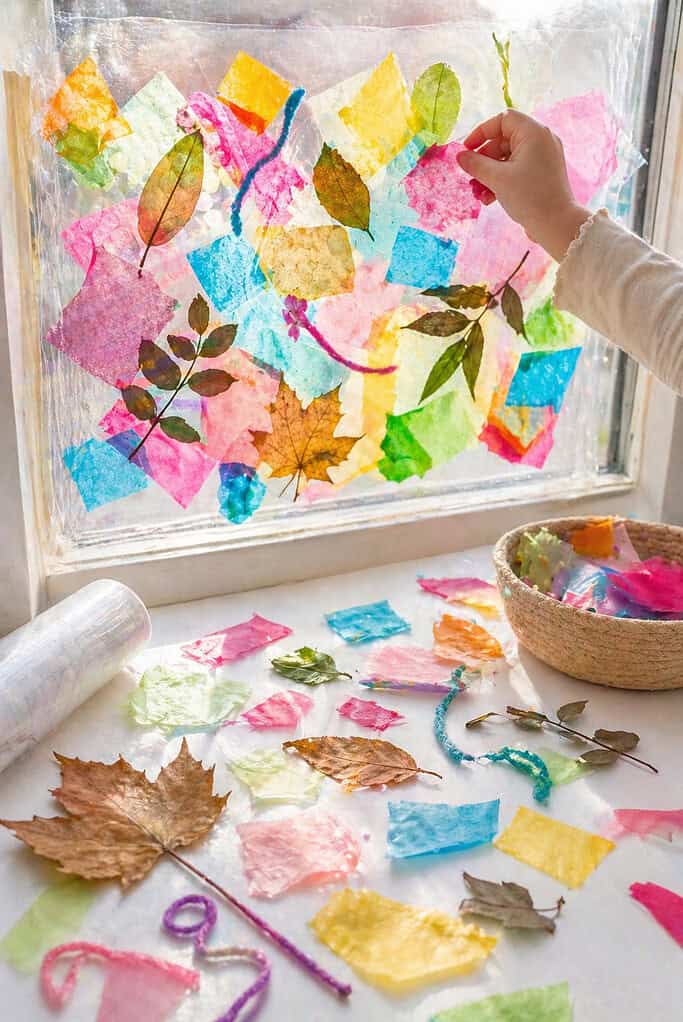
Tape a sheet of clear contact paper sticky-side-out at toddler height — on a window, on the side of a cabinet, on the back of a chair. Then set out scraps of tissue paper, dried leaves, snippets of yarn, and let them go.
It keeps my two-year-old happily occupied for the longest stretches. And the finished collage catches the light beautifully when stuck to a sunny window.
You’ll find more of these gentle, low-prep ideas tucked inside our paper crafts for kids post.
5. tissue paper suncatcher
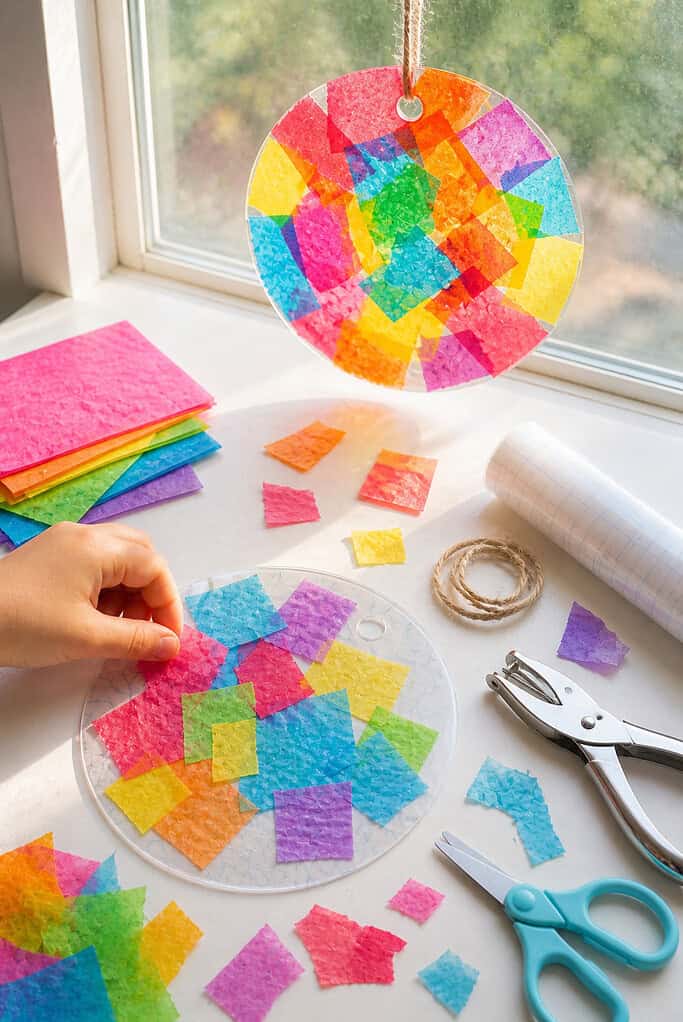
Cut a circle from contact paper, peel the backing, and let your child press torn pieces of tissue paper all over the sticky side. When they’re done, sandwich a second piece of contact paper on top to seal it in.
Punch a hole, tie a length of twine, and hang it in the kitchen window where the morning light pours in. Ours catches the sun every breakfast and we never get tired of it.
6. sand art craft
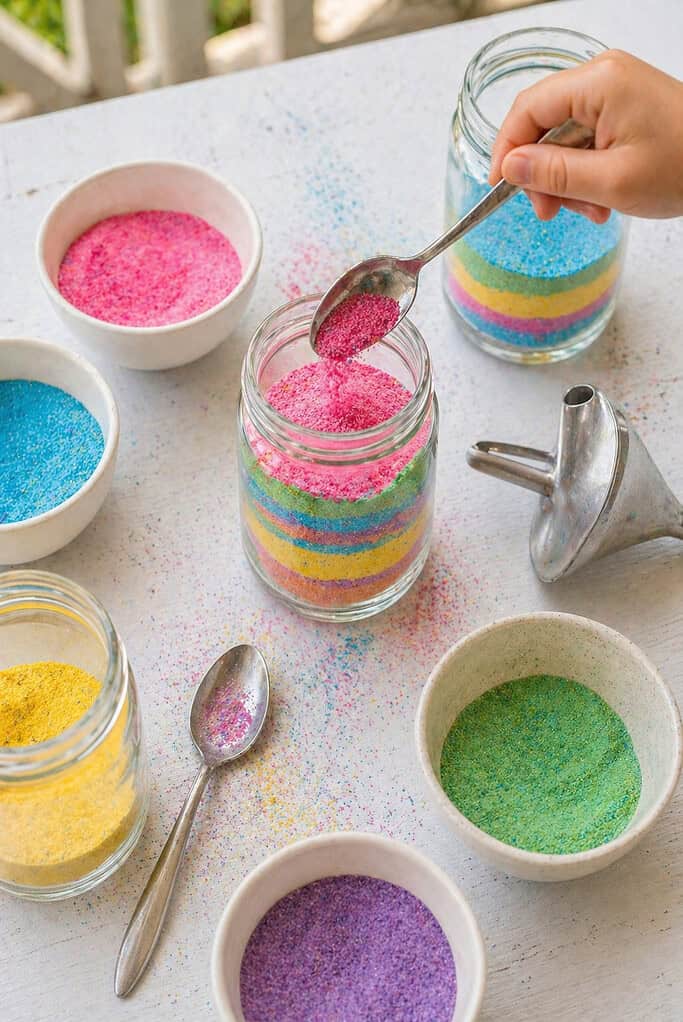
A small jar, colored sand (or salt mixed with food coloring), and a teaspoon are all you need. We do this one on the porch most days because, well — sand. It travels.
But the slow, layered scooping is so soothing for little hands and so absorbing to watch. My toddler sits with her tongue tucked between her teeth in concentration, and I can’t think of a sweeter sound than her quiet little hum while she works.
7. slime craft
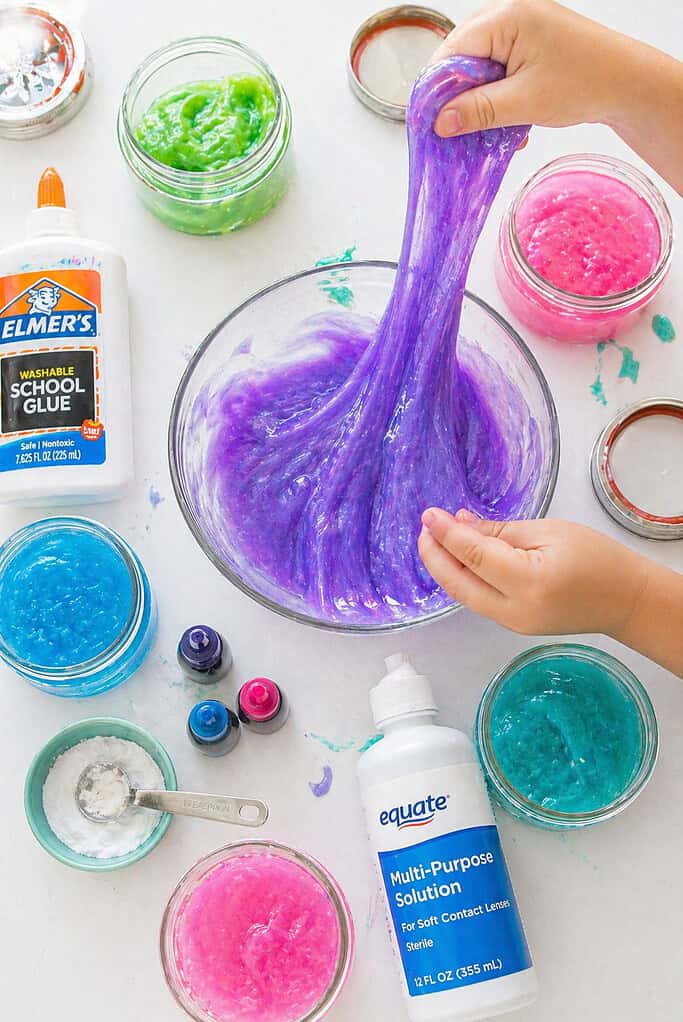
The grand sensory experience of childhood. We make ours with white school glue, a splash of contact lens solution, a teaspoon of baking soda, and a few drops of food coloring stirred together until it pulls away from the sides of the bowl.
It’s stretchy, squishy, and the kind of thing that magically turns thirty minutes into ten. We store ours in mason jars on a shelf above the craft cabinet — every couple of days, the kids pull a jar down and play.
8. bubble art painting
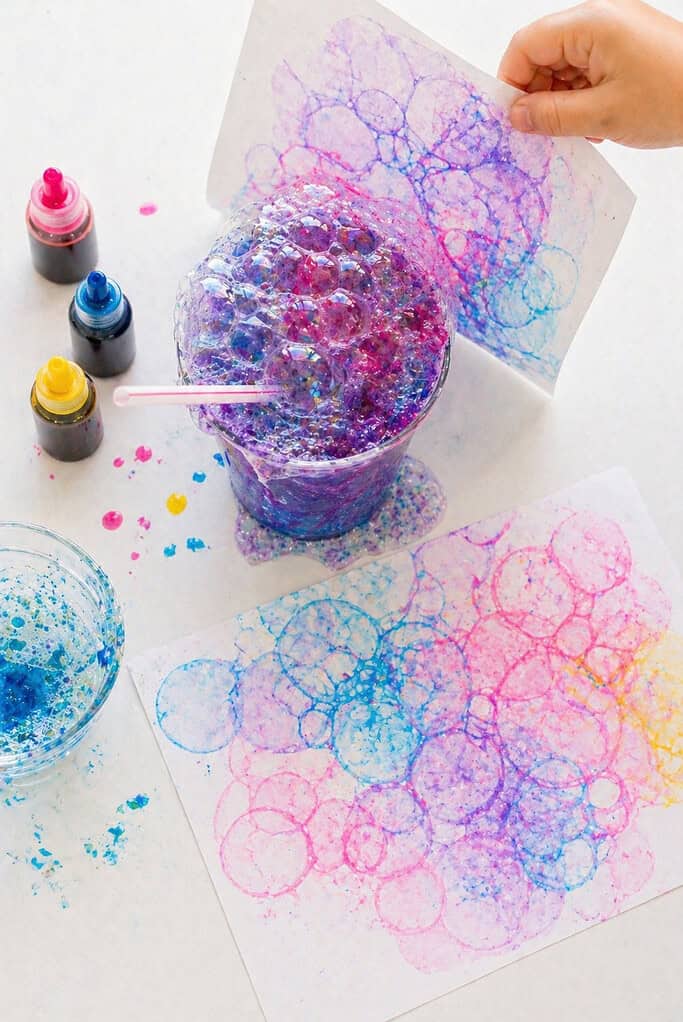
Mix a few drops of food coloring with a spoonful of dish soap and a little water in a cup. Stick a straw in. Let your child blow gently until the cup is foaming with bubbles, then press a sheet of cardstock right over the top.
When you lift it, the bubble prints stay behind in delicate, swirling rings. We’ve made entire galaxies this way. (A reminder to give a quick “blow, don’t sip” lesson before you start — ask me how I know.)
9. fidget toy craft
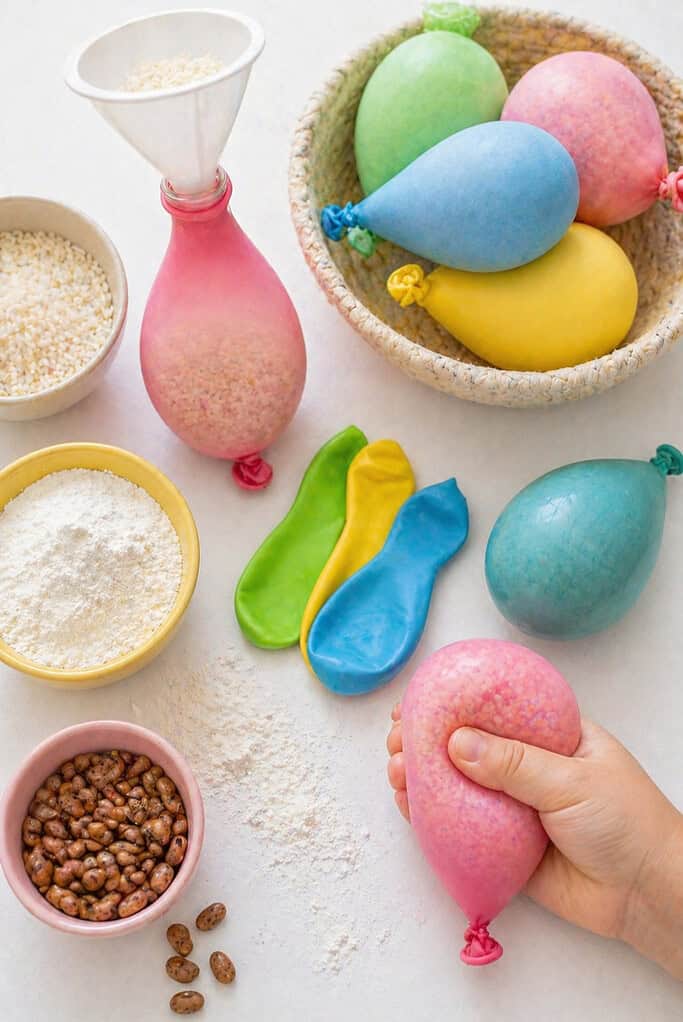
Take a balloon, stretch the opening over the top of a funnel, and slowly fill it with flour, rice, or tiny dried beans. Tie it off, and you’ve got a little squeezable fidget that travels well in a diaper bag.
We made a whole basket of these for the children to use during long sermons or quiet time at home. It keeps fidgety fingers happily busy in the pew.
10. squishy crafts
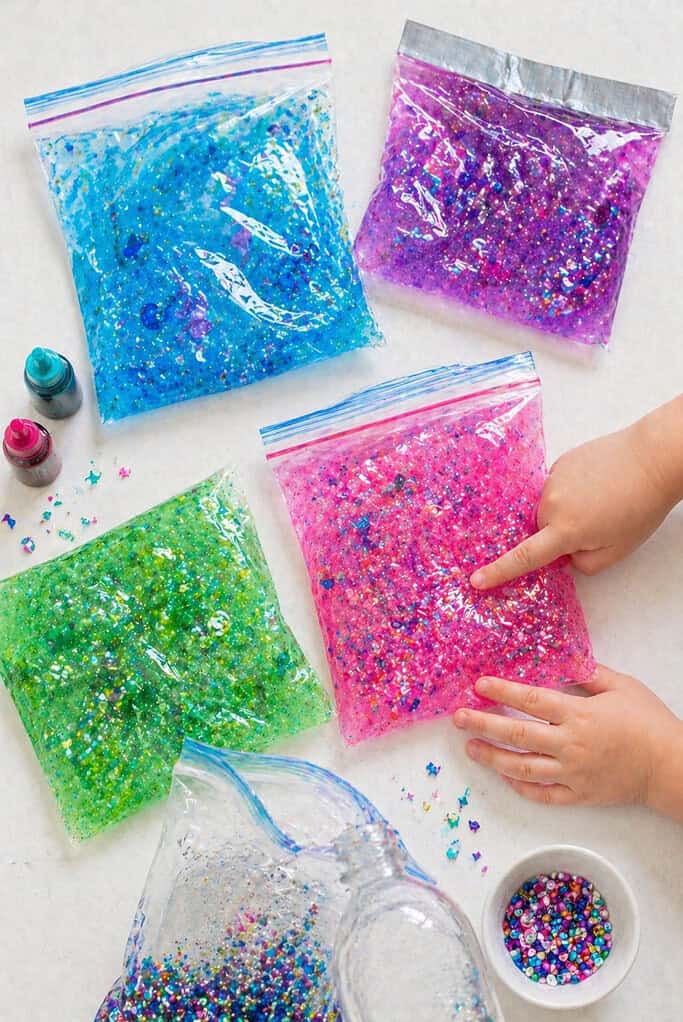
Fill a heavy-duty zip-top bag with hair gel, a few drops of food coloring, a pinch of glitter, and a handful of small beads or sequins. Squeeze the air out and seal it tight (a strip of duct tape across the top is wise).
The whole bag becomes a soft, weighted squish that little hands can’t put down. We use ours to practice tracing letters on top with a finger — tactile learning at its loveliest.
11. texture collage craft
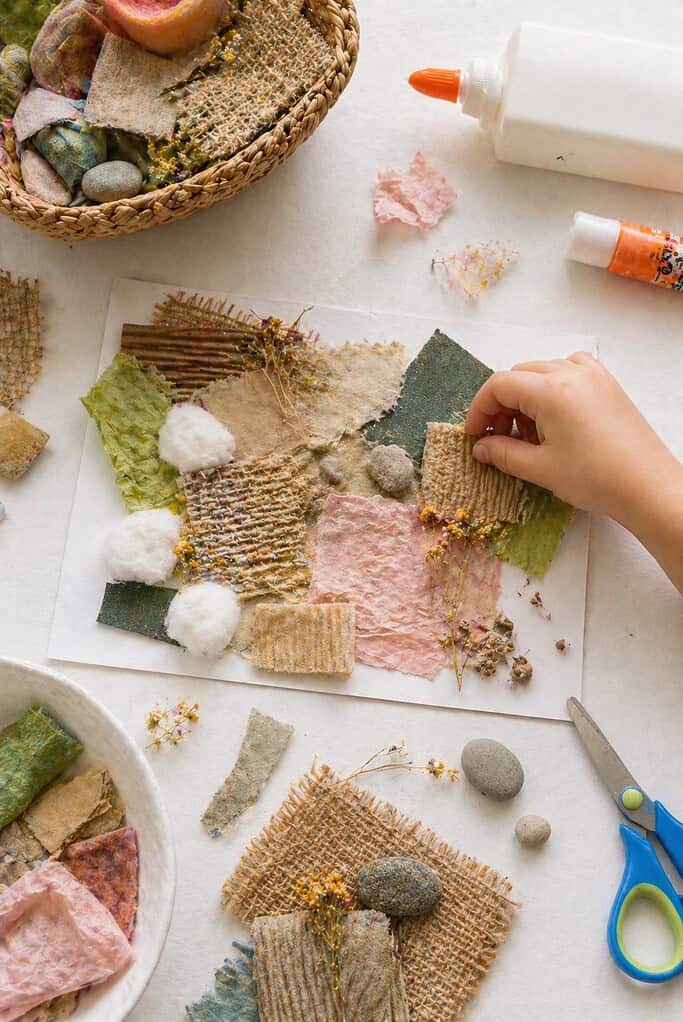
Set out a piece of cardstock and a basket full of textured bits — burlap squares, cotton balls, sandpaper, twigs, scraps of corduroy, dried flowers, crinkled tissue, smooth pebbles, soft fabric. Let your child glue whatever they like wherever they like.
This one always quiets my house. Something about choosing what to touch and where to place it pulls them deep into their own little world.
If your little ones love working with bits from the outdoors, you’ll find more of those gentle ideas in our bug crafts for kids roundup.
12. foam crafts
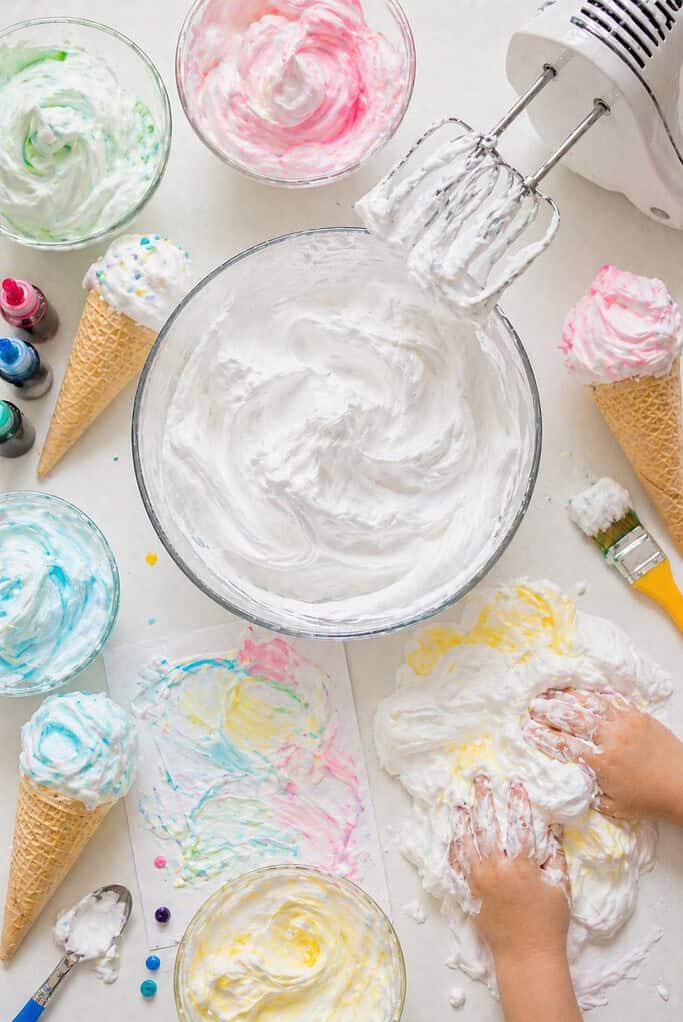
Fluff up a bowl of dish soap and water with a hand mixer until you have stiff, shaving-cream-style foam. Add a drop or two of food coloring and let your kids scoop it into ice cream cones, paint with brushes, or just plunge their hands in for the joy of it.
It’s clean play (it’s literally soap), it smells lovely, and it rinses right off the kitchen table.
13. dot marker art
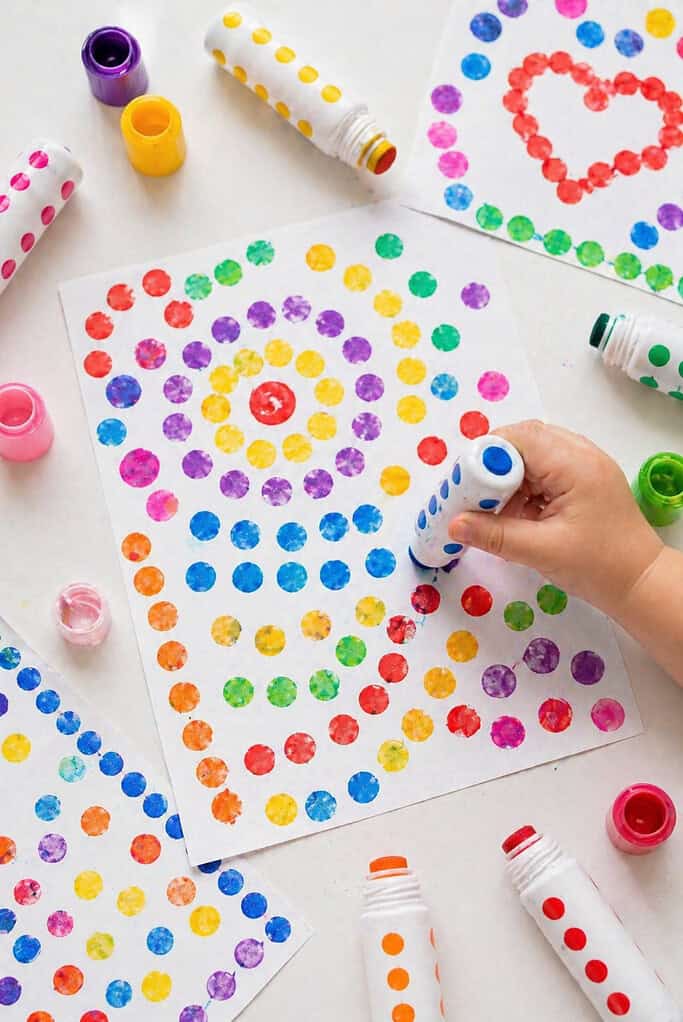
Sometimes the simplest setup is the one that lasts the longest. A blank sheet of paper, a few dot markers, and a quiet morning.
My toddler will sit and dot for ages — making patterns, filling in shapes, polka-dotting whole pages. The bright squish of the marker felt against the paper is so satisfying for little fingers still learning their own grip.
14. stamp crafts
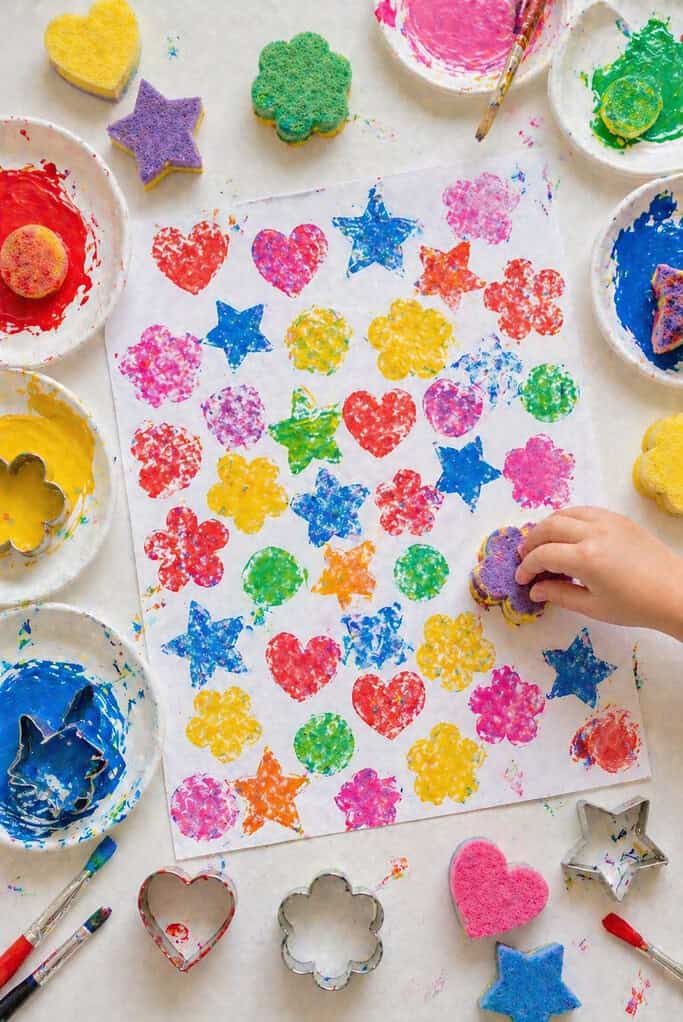
Cut sponges into shapes — stars, hearts, simple flowers — and let your kids press them onto stamp pads or shallow plates of paint, then onto paper. Cookie cutters work wonderfully too.
We’ve made hand-stamped wrapping paper for birthday gifts this way. The lumpy, slightly imperfect prints are part of the charm.
15. apple stamping craft
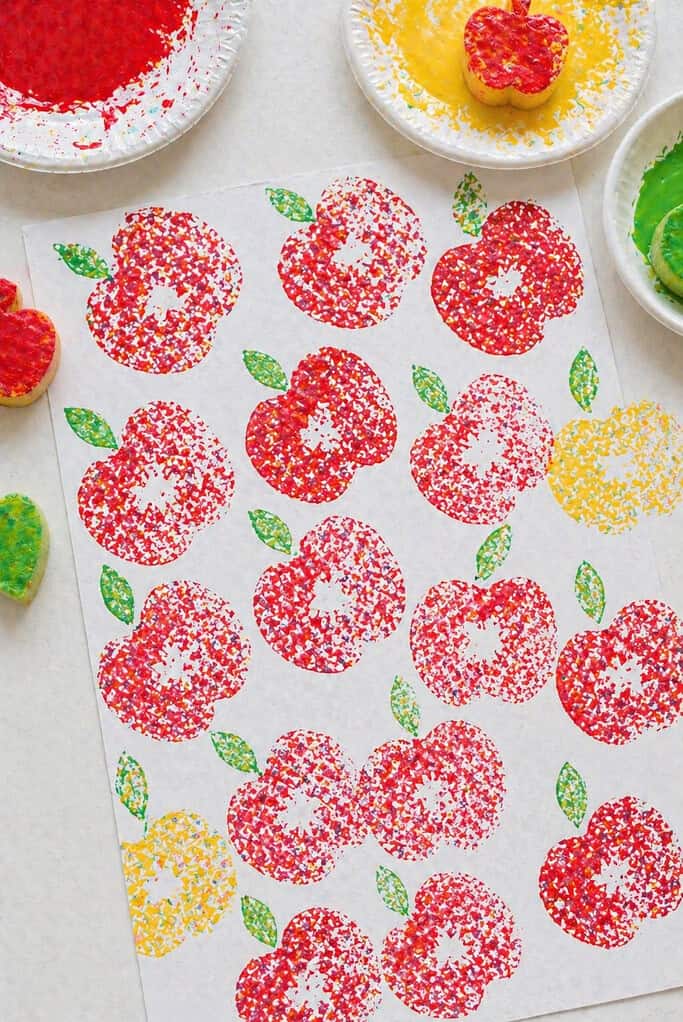
Slice an apple in half horizontally so the little star shape inside shows. Press the cut side into a plate of red paint, then onto cardstock. Repeat across the page like a little orchard.
It’s the perfect autumn afternoon craft and somehow always ends up smelling faintly of apples for hours afterward. My oldest always whispers, “Look, Mama — the seeds are a star!” Every. Single. Time.
If your littles love stamping with what’s already on the kitchen counter, they’ll adore our handprint crafts for kids roundup too.
making it work without the meltdown
A few things I’ve learned the slightly-messy-way after a few years of crafting with three under three:
- Lay an old sheet under the table or do it outside whenever the weather allows. Paint and dough will end up in places you didn’t expect.
- Prep ahead during nap time. I cut, measure, and pre-mix when the house is quiet so when little eyes open, we can dive right in.
- Lower your idea of “finished.” A blob with three sequins is still a beautiful piece of art, sweet friend.
- Keep just two or three favorite crafts in rotation at a time. We don’t try to do them all in one week — that’s a fast way to a tired mama.
If you want more ideas you can pull together with what’s already on hand, our egg carton crafts for kids post is full of slow, simple favorites.
the gentle wonder of small hands at work
There’s something tender about watching little fingers explore. The way my daughter pauses, considers, then carefully presses one cotton ball onto her collage. The way my son closes his eyes and squishes the dough between his palms like he’s discovering joy for the first time.
I think God built our hands to make things. To shape and smooth and create — even when what we’re making is a lumpy little salt-dough heart that looks more like a potato.
“She seeks wool and flax, and works with willing hands.” — Proverbs 31:13
That verse sits with me on the long afternoons. Willing hands. Not perfect ones. Not productive ones. Just willing. There’s a quiet faithfulness in showing up at the kitchen table, paintbrush in hand, beside the people God gave us.
pick one craft and start small today
Choose just one craft from the list above. Just one. Set the supplies on the counter tonight after the dishes are done so it’s all ready when little eyes open in the morning. Pour your coffee, take a deep breath, and let it be a little messy and very lovely.
I’d love to know which sensory craft you’re trying first — scroll on down and tell me in the comments. And if your family has a favorite sensory craft I missed, please share it there too. I read every single one and tuck the best ideas into my own apron pocket for next week’s slow afternoon.
Warmly,
Betty
Get the FREE Printable Mother’s Day Crafts
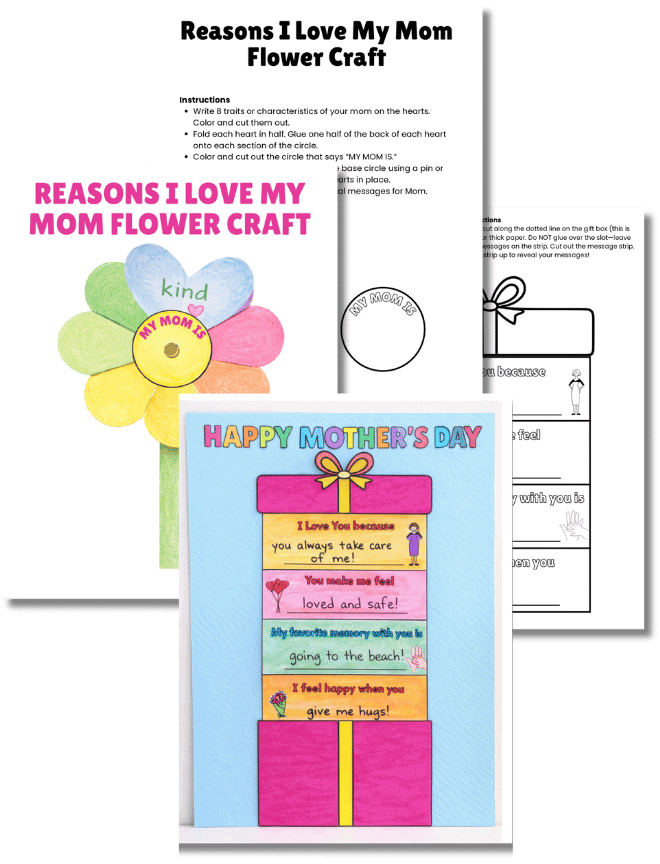
Want to see Mom’s face light up? These free Mother’s Day Crafts help your kids say what’s really in their hearts—through two personalized keepsakes she’ll treasure forever.
They’ll fill in prompts like “I love you because…” and “My favorite memory with you is…”, then create interactive gifts with pull tabs and opening petals. Kids use their own words, making each craft completely one-of-a-kind.
Print it once, watch them create, and give Mom something she’ll never want to throw away.
frequently asked questions
what age are sensory crafts best for?
Most of these work beautifully for ages eighteen months through about eight. Tinier littles will need close supervision (especially with anything edible-looking like dough or slime), and older kids tend to bring more complexity and creativity to the same simple supplies.
For very young toddlers, I’d start with puffy paint, contact paper collage, or dot marker art. Soft, low-prep, and very forgiving for first hands.
are sensory crafts safe for kids who put things in their mouths?
For mouthy little ones, stick with edible-safe options — salt dough, foam soap, fruit-based stamping, and homemade play dough. Skip slime, glitter bags, and anything with small beads until they’re past the taste-everything stage. When in doubt, go with the kitchen ingredients you’d let them eat.
how do i clean up the mess from sensory crafts?
Honestly, the easiest trick is prevention. We work on a tray, a baking sheet, or a wipeable tablecloth. For paint and dough, a damp towel cleans most surfaces. For the foam and soap-based crafts, a quick spray and wipe and you’re done. Most of our sensory crafts double as a kitchen-table cleaning round when they’re finished.
can sensory crafts be used for sunday school or homeschool lessons?
Beautifully, yes. Salt dough ornaments pair lovely with the creation story. Apple stamping opens up gentle conversation about Genesis 3 with the youngest ones. The texture collage is a sweet way to talk through Psalm 139 and the wonder of how God made our senses to receive His world. Just one small thread of scripture is usually enough.
how do i store homemade sensory craft supplies?
Salt dough creations last for years if baked dry and kept in a cool, dry spot. Slime stays fresh in a tightly sealed mason jar for several weeks. Squishy bags should be checked weekly for leaks (and tossed if any appear). Most paint-based crafts are best dried thoroughly before stacking. I keep a small “sensory shelf” in our craft cupboard for the projects we use again and again.
Wishing you a slow morning, paint on your shirt, and a kitchen table full of tiny humans utterly absorbed in something they made themselves.