
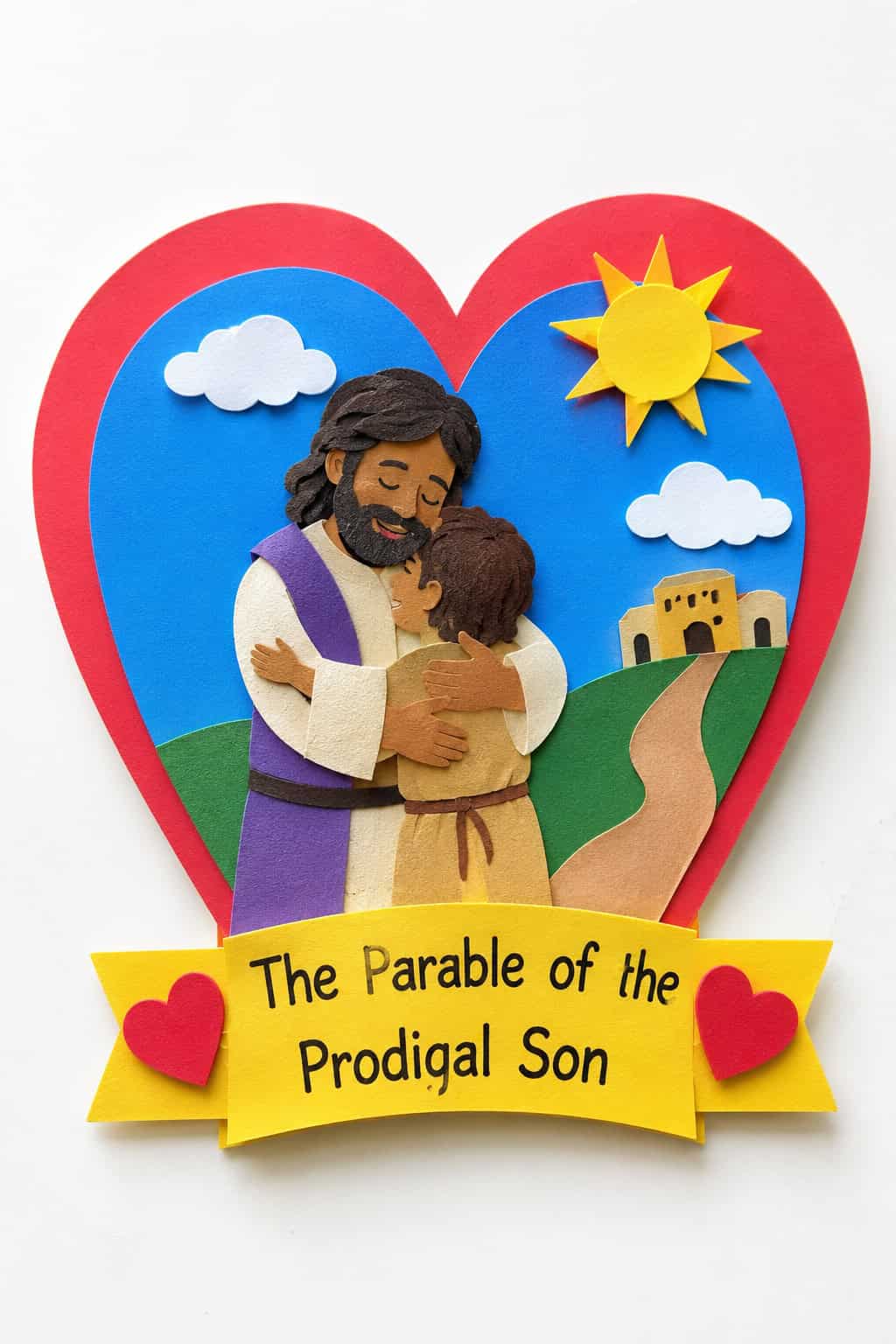
The story of the prodigal son is one of the most tender pictures of God’s love in all of scripture. A son who wanders far from home, and a father who runs to meet him on the road — little ones feel the weight of that story even before they have the words for it.
It comes from Luke 15, and it’s one our family returns to again and again. When a story settles into our home like that, I usually reach for the craft basket. Hands stay busy, hearts stay open, and the conversation has room to wander where it needs to go.
These prodigal son crafts are simple, low on supplies, and made for little hands. They work well for Sunday school, a slow homeschool morning, or an ordinary afternoon at the kitchen table.
the heart of the prodigal son story
The parable is short and plain. A younger son asks his father for his share of the inheritance, leaves home, and spends every bit of it. When he has nothing left, he ends up feeding pigs, so hungry he would have eaten their food.
Then comes the part children love most. He decides to go home, and while he is still a long way off, his father sees him and runs to meet him. “But while he was still a long way off, his father saw him and was filled with compassion for him; he ran to his son, threw his arms around him and kissed him.” — Luke 15:20
It’s the third of three lost-and-found stories Jesus tells in Luke 15. If you’re walking through the whole chapter with your little ones, the gentle Good Shepherd sheep craft opens that same chapter and is a lovely place to begin.
what you’ll need for these prodigal son crafts
Nothing fancy, I promise. Most of these come together with paper plates, construction paper, crayons, glue, and a few odds and ends from the craft drawer. A cotton ball or two and a little brown paint cover most of the pigs.
If you’d rather start with something ready to go, you’ll find simple templates in our free printables and crafts. Hand-drawn works just as well, though — ours always come out a little wobbly, and the children love them anyway.
10 creative prodigal son crafts for hands-on bible learning
You don’t need to make all ten. Work through them in order as you read the story, or pick whichever one fits the part you’re talking about.
1. paper plate prodigal son craft
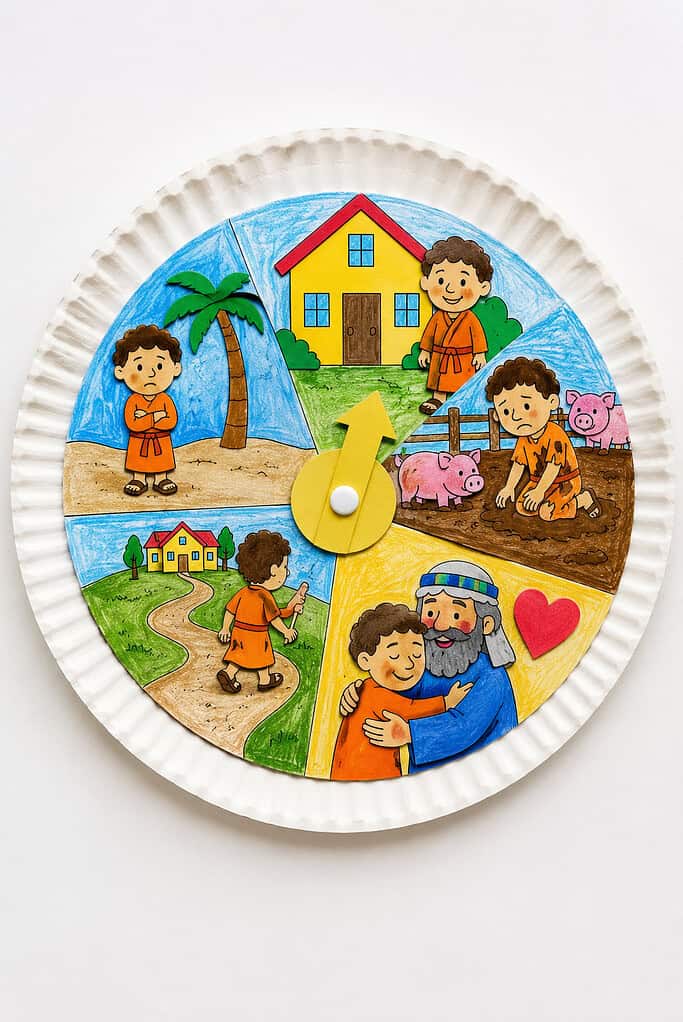
Divide a paper plate into sections and let your children draw or glue each part of the story around the circle — home, the far country, the pigs, the road back, and the father’s welcome. It turns into a simple little storytelling wheel you can point to as you retell the parable together.
What you need: a paper plate, crayons or markers, glue, scrap paper. If paper plates are a staple in your craft drawer like they are in mine, you’ll find plenty more ideas in our easy paper plate crafts for kids.
2. prodigal son craft wheel
Make a spinning wheel from two circles of cardstock joined with a brass fastener in the center. Cut a small window in the top circle, then draw the stages of the journey on the bottom one so a new scene appears with each turn. Children love moving the story along with their own hands.
What you need: two cardstock circles, a brass paper fastener, crayons, scissors.
3. luke 15:11-32 prodigal son craft
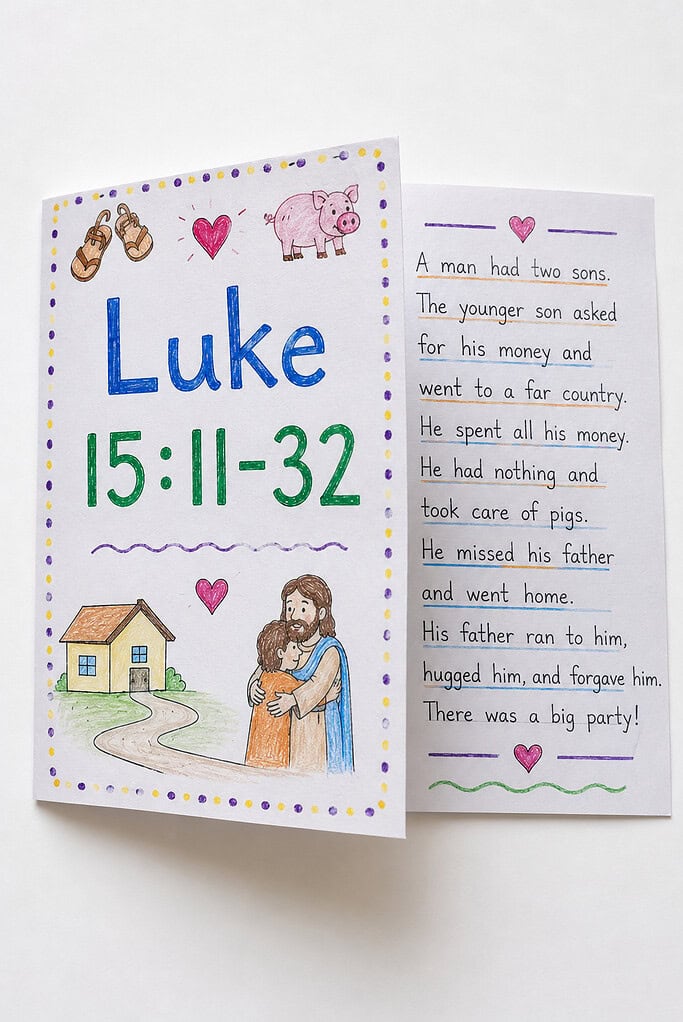
For older children ready to sit with the scripture, write out the reference Luke 15:11-32 on a decorated card or scroll. Add small drawings or symbols along the border, then tuck a short, kid-friendly retelling inside. It ties the craft straight back to the passage in their Bible.
What you need: cardstock or paper, crayons or colored pencils, a Bible to read from. To keep building that habit of anchoring a craft in scripture, pair it with our quick Bible verse crafts.
4. handprint embracing arms (prodigal son father’s hug craft)
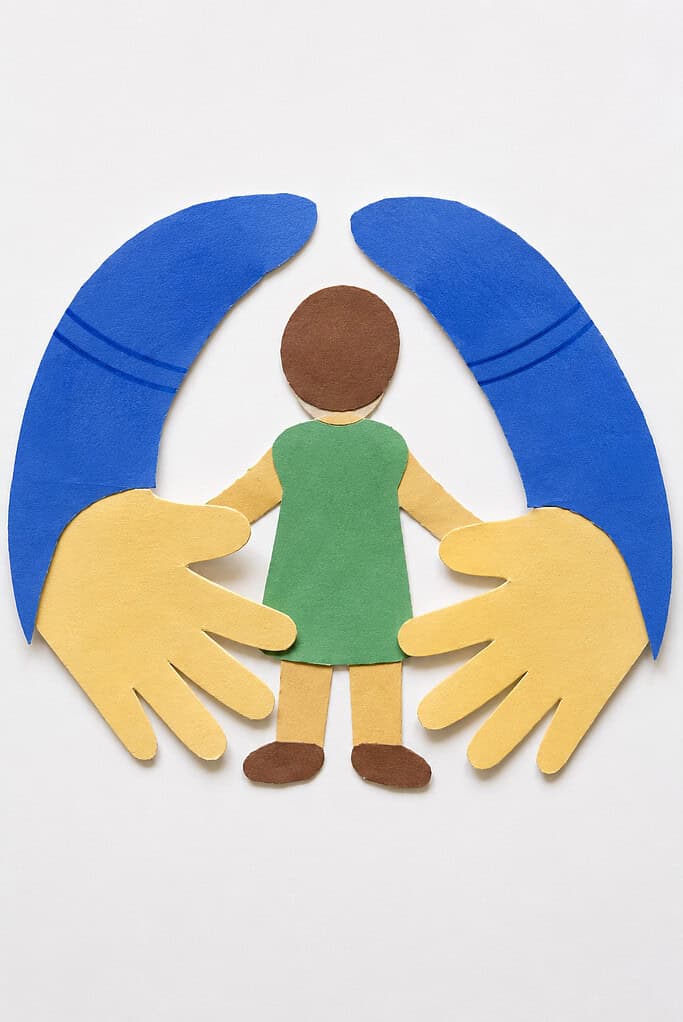
Trace and cut out your little one’s hands and arms from paper, then glue them open wide around a small figure of the returning son — the father’s arms reaching out to gather him in. It’s a sweet, simple way to show that the father didn’t wait. He ran, and he welcomed his boy home.
What you need: construction paper, pencil, scissors, glue.
5. paper plate pig in a basket
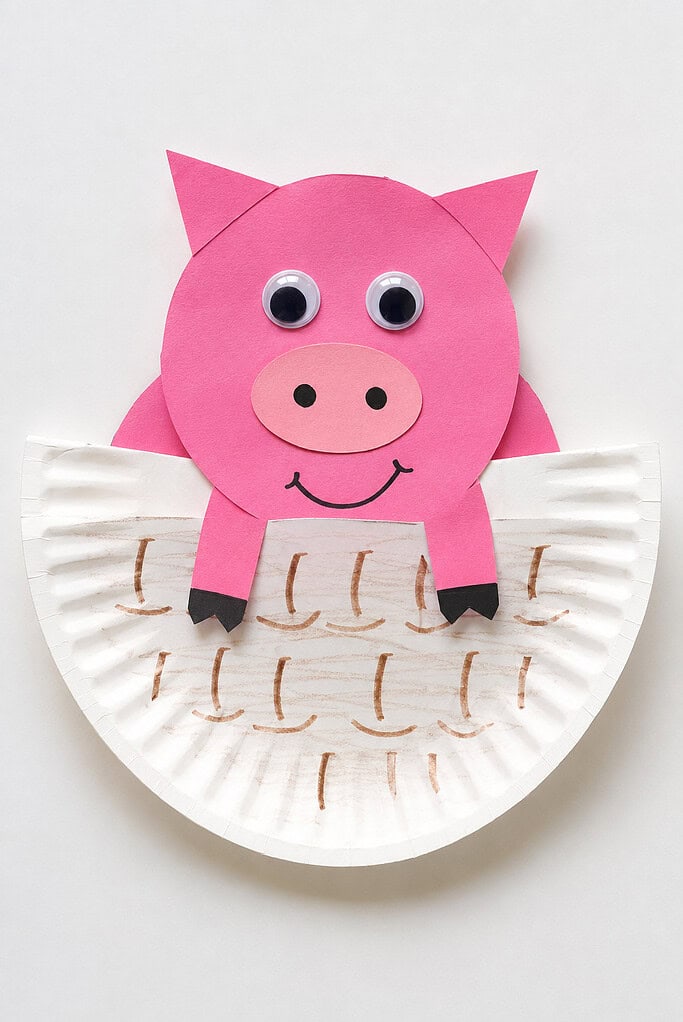
Fold a paper plate in half to make a little basket, then nestle a simple pink pig inside. It’s a gentle way to talk about how far the son had wandered — all the way down to the pigpen — while keeping the craft cheerful for the very littlest hands.
What you need: a paper plate, pink paper or paint, googly eyes, glue.
6. prodigal son road home craft
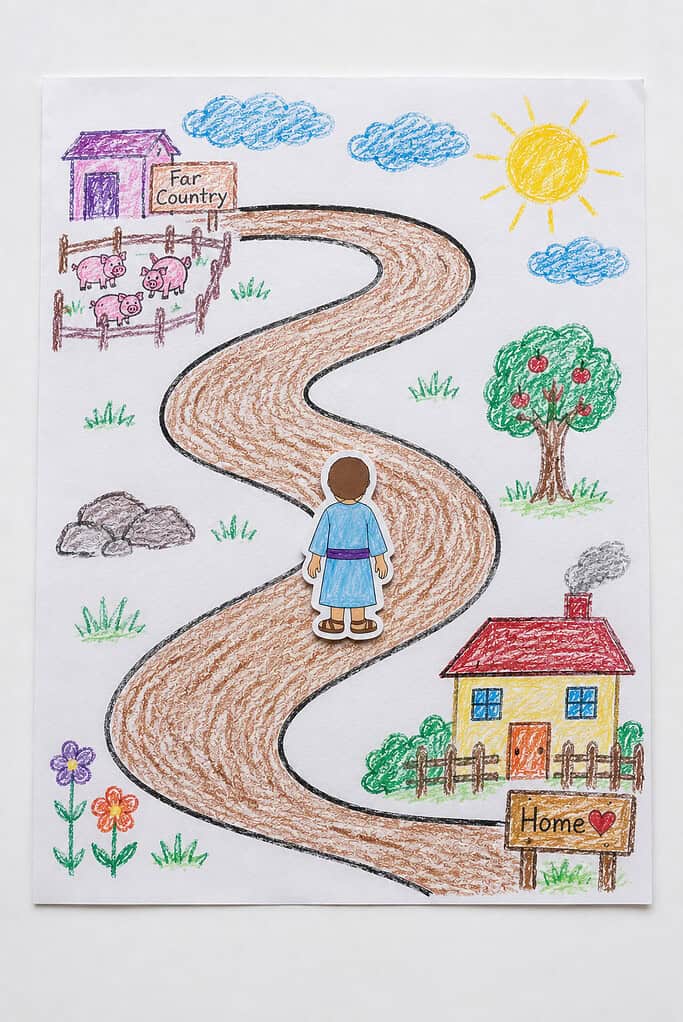
Draw a long winding road across a sheet of paper, from the far country on one side to home on the other. Let your children walk a little paper son figure back along the path as you tell the story, stopping at each part of his journey. The road gives them something to follow with their fingers and their hearts.
What you need: a large sheet of paper, crayons, a small cut-out figure.
7. prodigal son stick puppet
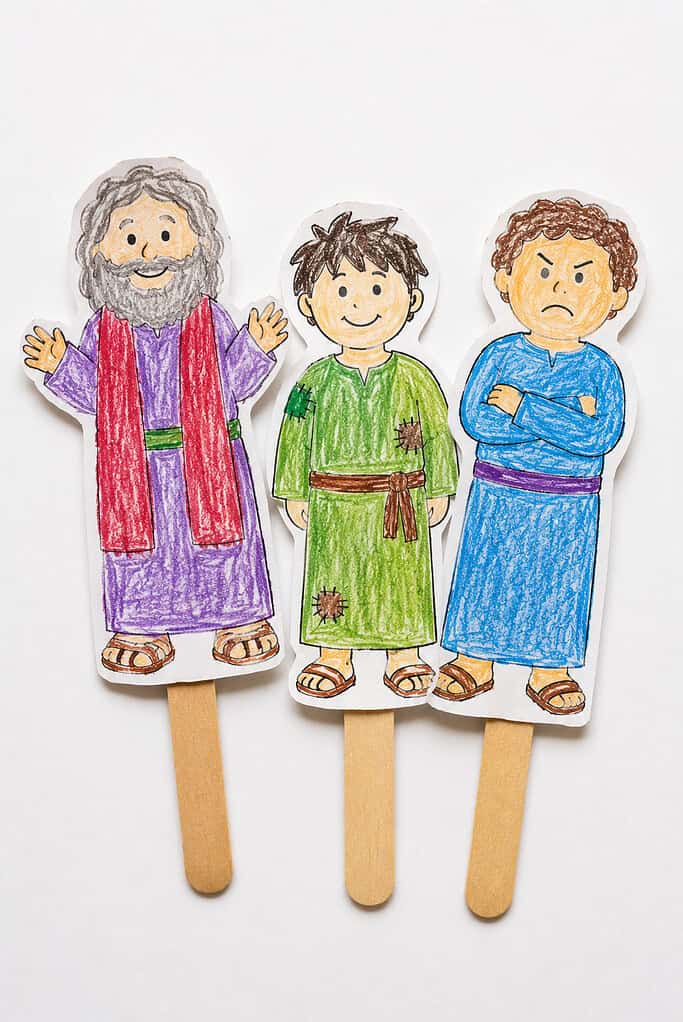
Make a craft stick puppet for each person in the story — the father, the younger son, and the older brother. Let your littles act out the whole parable in their own words. The retelling is usually where the lesson truly lands, and it works beautifully in a group.
What you need: craft sticks, paper, crayons, glue or tape.
8. pig in the mud craft
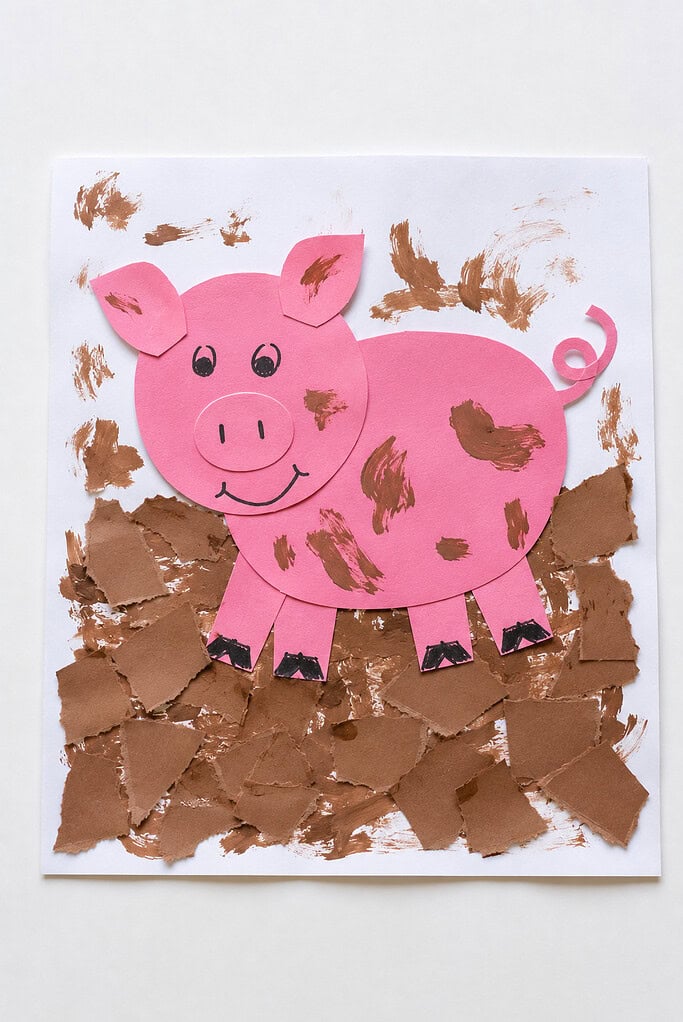
This one is happily messy. Glue a little pink pig onto paper, then let your children add “mud” with brown paint or torn brown paper. As they work, you can talk about how low things got for the son, and how that’s often the very moment we turn back toward home.
What you need: pink and brown paper or paint, glue, a paintbrush. If your little ones love a good animal craft, they’ll get lost in our easy animal crafts for kids.
9. toilet paper roll pig craft
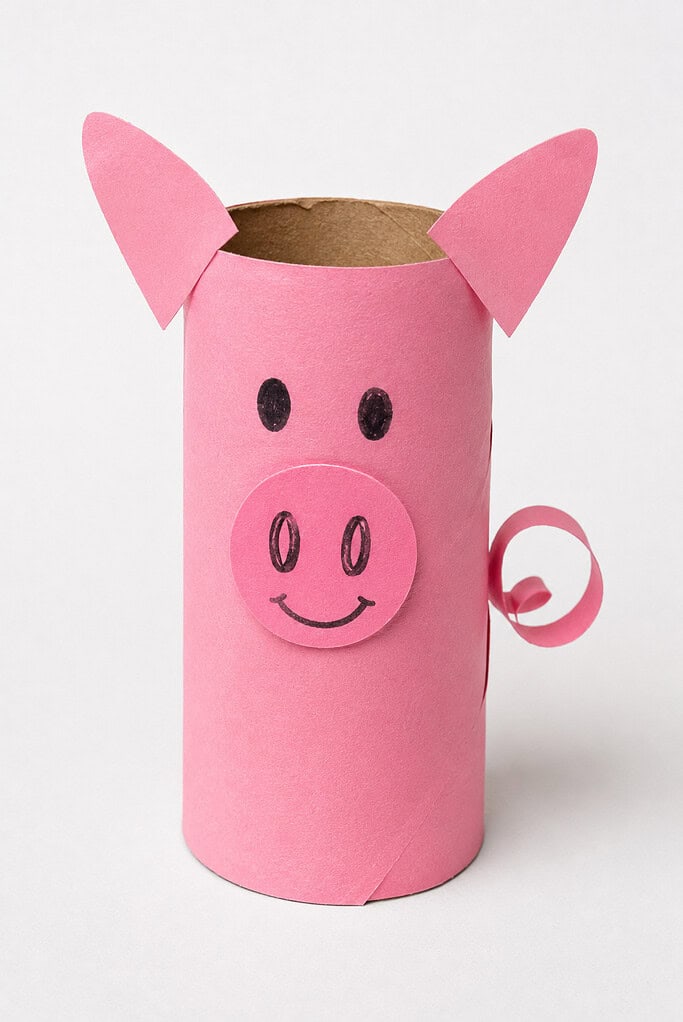
Wrap an empty toilet paper roll in pink paper and add ears, a curly tail, and a little snout to make a stand-up pig. It’s a thrifty craft made from something you’d otherwise toss, and it gives children a small keepsake to hold as they remember where the son ended up before he came home.
What you need: an empty cardboard roll, pink paper, glue, a marker.
10. celebration party plate craft
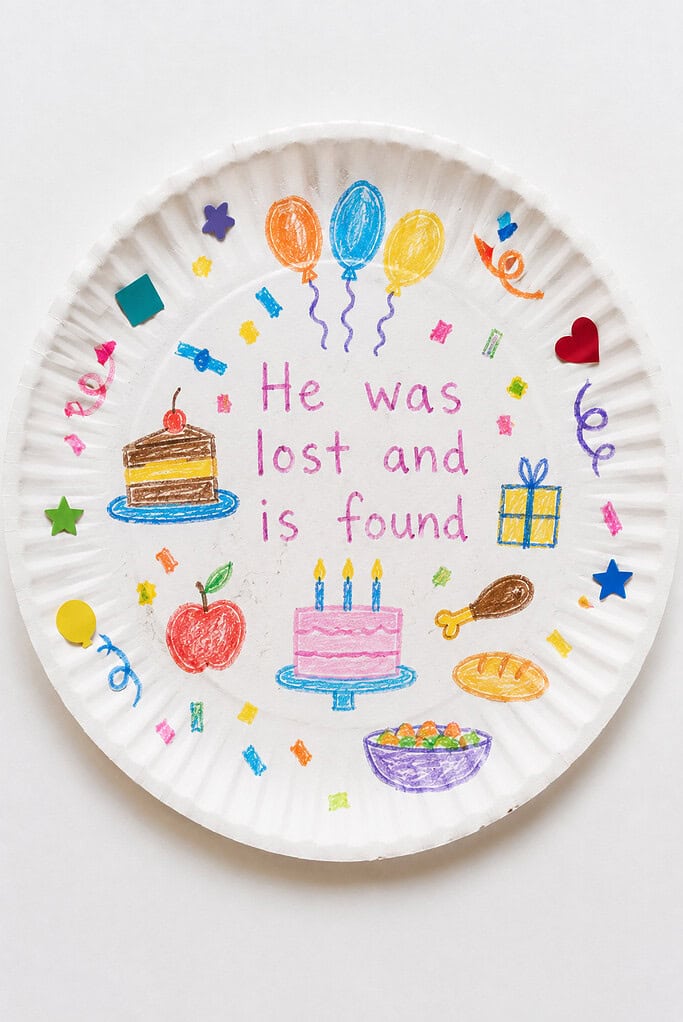
End where the story ends — with a feast. Decorate a paper plate as the welcome-home party the father threw, with drawings of food, streamers, or anything joyful. It’s a happy reminder that there is rejoicing in heaven when even one wanderer comes home. “For this son of mine was dead and is alive again; he was lost and is found.” — Luke 15:24
What you need: a paper plate, crayons or markers, stickers or scrap paper.
a few simple tips before you start
Let the conversation lead, not the craft. The glue and paper are just the doorway — the real work happens in the questions your little ones ask while their hands are busy, so leave plenty of room for those.
Keep your supplies simple and forgiving, and don’t aim for anything picture-perfect. If you’re making these with a whole roomful of children, our VBS crafts that bring Bible stories to life hold up well for a group.
And if you’d like to set this parable alongside another tender one, our simple Good Samaritan crafts teach kindness in the same gentle way.
keeping the story going after the craft is done
The craft is lovely, but it’s really just the beginning. In the days after, I try to point out the small ways grace shows up in our home — the quick forgiveness between siblings, the warm welcome at the door when someone’s been gone all day. The father’s open arms become something they recognize in real life.
If you’re building out a whole rhythm of Bible story crafts, this one fits right alongside our 12 disciples crafts kids can make and remember — another simple way to help the people and stories of scripture stay with your little ones.
pick one craft and start at your kitchen table today
Choose the one craft that makes you smile, gather your little ones close, and let the story do its quiet work while their hands stay busy. Start with one craft and one small conversation today — that’s all it takes to plant something good.
I’d love to hear which one you try first. Scroll down and leave me a comment below — tell me which craft your family is reaching for, or share how the prodigal son story has landed in your home. There’s nothing I love more than swapping stories across the kitchen table with you.
With love,
Betty
Get the FREE Fruit of the Spirit Basket Craft
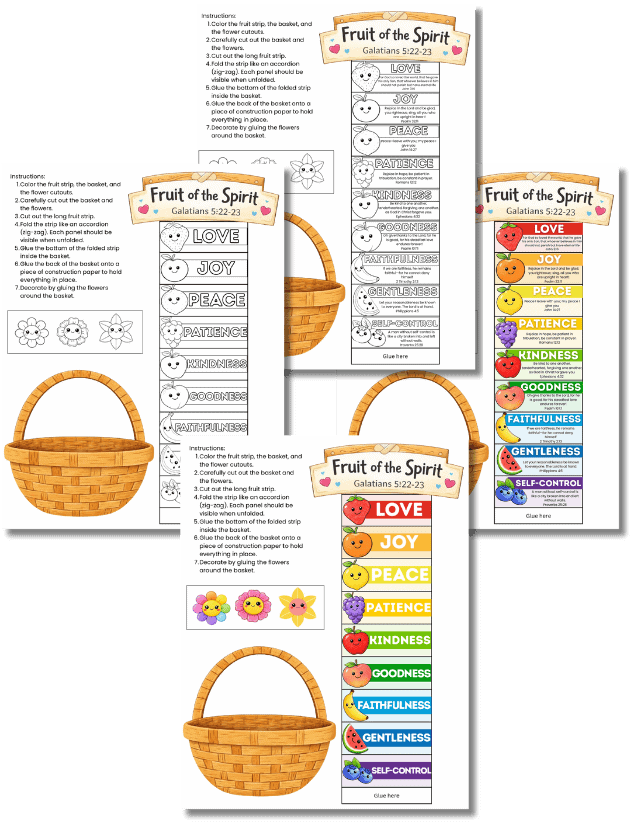
If you’re looking for a meaningful way to teach the Fruit of the Spirit at home, you’re going to love how this free Fruit of the Spirit Basket Craft makes all nine fruits come to life—through color, Scripture, and something kids can actually build.
Using an accordion-fold design, this printable comes in two versions: one packed with Bible verses for each fruit from Galatians 5:22-23, and one simplified for younger children.
Both help kids learn love, joy, peace, patience, kindness, goodness, faithfulness, gentleness, and self-control through hands-on creativity they can work on at their own pace.
Click below to grab the free tree craft and start creating together.
frequently asked questions
what age are these prodigal son crafts best for?
Most work well for ages two through ten with a little adjusting. The paper plate pig and handprint hug craft are gentle enough for the very littlest, while the craft wheel and Luke 15:11-32 scroll give older children more to work with.
what’s the simplest craft to start with?
The toilet paper roll pig is about as simple as it gets — a cardboard roll, a bit of pink paper, and a curly tail. It comes together in minutes and still opens the door to talk about how far the son wandered before he came home.
how do i explain the prodigal son to a toddler?
Keep it small and warm. I tell mine that a boy left home and made some sad choices, but when he came back, his daddy ran to hug him and was so happy to see him. Toddlers understand “going away” and “coming home” better than we expect, and that’s the whole heart of it.
can i use these for a sunday school class or co-op?
Yes, and they shine in a group. The stick puppets and craft wheel are especially good for a roomful of children, since every child ends up with something to act out or retell. Just prep your supplies ahead of time.
where is the prodigal son story found in the bible?
You’ll find the parable in Luke 15:11-32. It’s worth opening your Bible and reading it aloud together before you craft — there’s something special about little ones seeing the story come straight from the pages they’re holding.