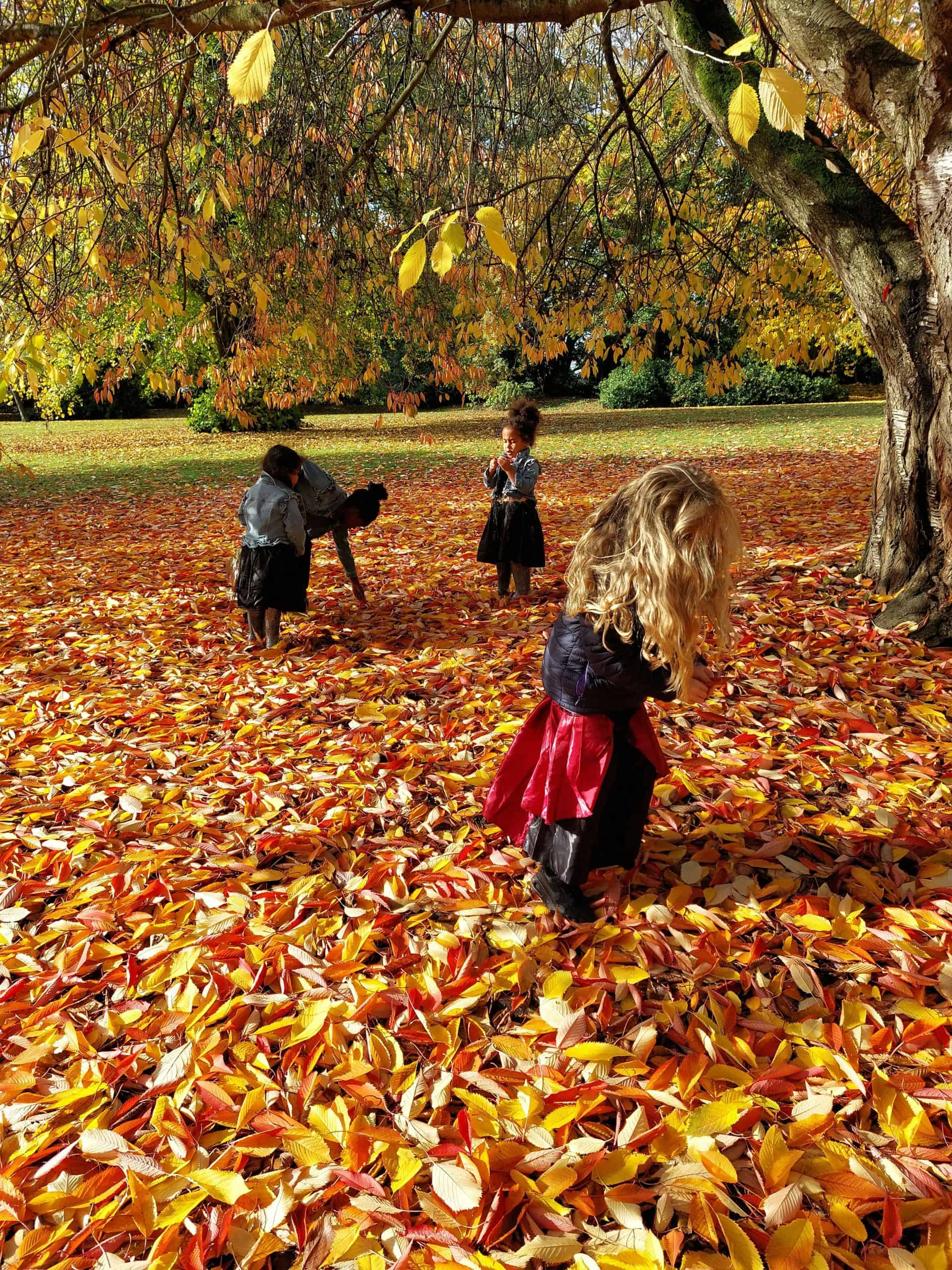
Forest school invites children to step outside and learn through the natural world around them.
Instead of desks and worksheets, kids explore the woods, gather natural treasures, and discover creativity in the simplest things around them.
Nature crafts fit beautifully into this kind of learning.
A fallen leaf becomes art. A few sticks turn into tiny sculptures. Smooth stones, pinecones, feathers, and bark suddenly feel full of possibility.
The beauty of these activities is their simplicity.
They invite children to observe closely, use their imagination, and work with materials the forest already provides.
Nature Crafts Are Perfect for Forest School Learning
Nature crafts do more than keep children busy.
They invite kids to slow down and truly notice the world around them.
Instead of rushing past leaves, stones, and sticks, children begin to see them as materials for creativity.
Every walk becomes a treasure hunt for interesting shapes, textures, and colors.
Nature crafts also nurture important skills:
- Observation: Kids learn to recognize patterns, textures, and natural details.
- Problem-solving: Children figure out how to assemble materials creatively.
- Fine motor skills: Weaving, arranging, and decorating strengthen small hand movements.
- Confidence: Completing a handmade project builds pride and independence.
Perhaps most importantly, nature crafts foster a sense of connection with the outdoors.
Children begin to see the forest not just as a place to visit, but as a living environment full of inspiration and possibility.
If you’re just getting started with outdoor education, I recommend reading my essential guide to forest school for beginners, where I walk through the core ideas behind this approach and how to introduce it to kids.
8 Fun Nature Crafts for Forest School Kids Will Love
Below you’ll find 8 fun nature crafts for forest school that are easy to set up, encourage creativity, and help children connect with the outdoors in a hands-on way.
1. Bark Texture Clay Imprints
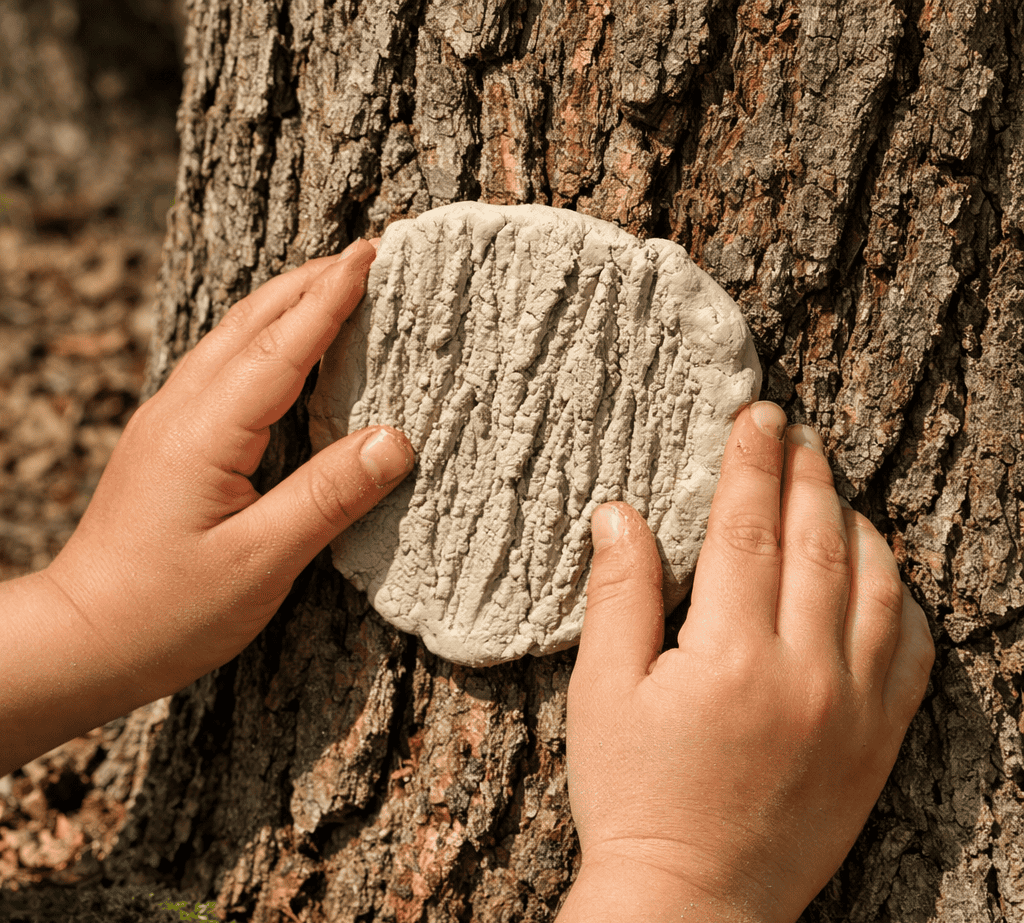
Tree bark is full of fascinating patterns – ridges, grooves, and textures that children often overlook until they stop to look closely.
For this craft, bring along small pieces of air-dry clay or homemade salt dough.
Have kids press the clay gently against different tree trunks to capture the bark’s texture. When they peel the clay away, the natural pattern is preserved in the surface like a tiny fossil.
Kids can collect several imprints and compare them later. Which tree has the roughest bark? Which is smoothest?
Once the clay dries, children can decorate the pieces with natural pigments like crushed berries or charcoal. The finished imprints make wonderful keepsakes or nature study tools.
This craft encourages observation while giving kids a hands-on way to explore the diversity of trees around them.
2. Moss Garden Trays
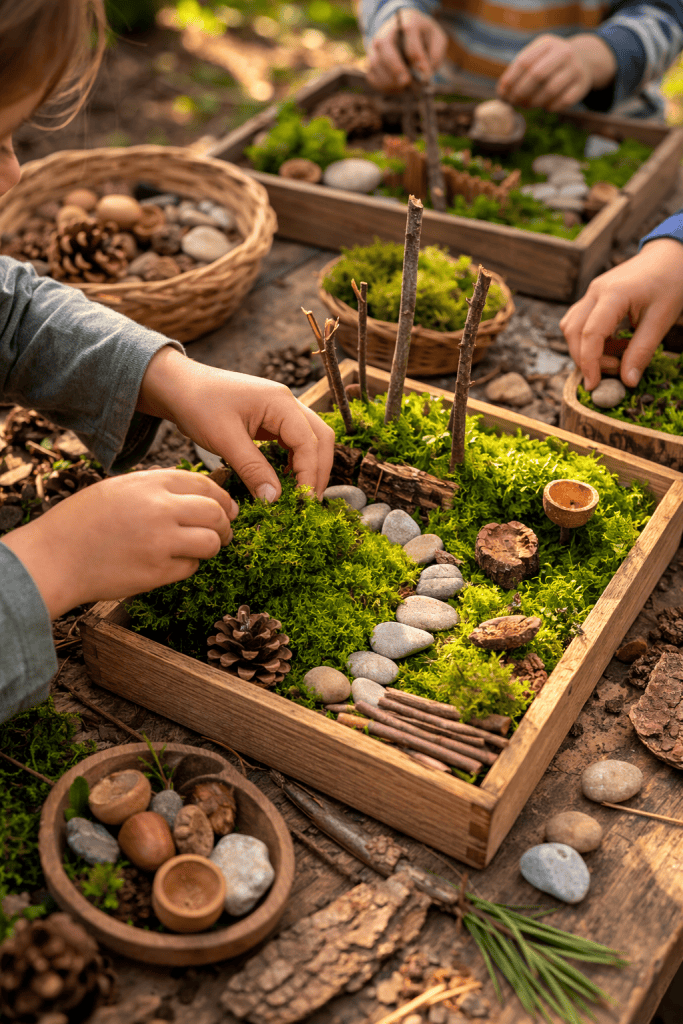
Few materials spark children’s imagination like moss.
Soft, springy, and vibrant green, it feels almost like a miniature forest carpet.
Have kids gather small patches of fallen moss (never pulling it from living trees or rocks). Then place it in shallow trays, bark pieces, or recycled containers to create mini moss gardens.
Children can add:
- Tiny sticks as trees
- Pebbles for pathways
- Acorn caps as bowls
- Pine needles as fences
The result is a whimsical miniature world.
Some kids build fairy villages, while others create wildlife habitats or peaceful woodland scenes.
These gardens change naturally over time, reminding children that nature is always growing and evolving.
This kind of open-ended activity fits beautifully with many nature-inspired forest school activities, where imagination and exploration lead the learning.
3. Recycled Leaf Bug Collage
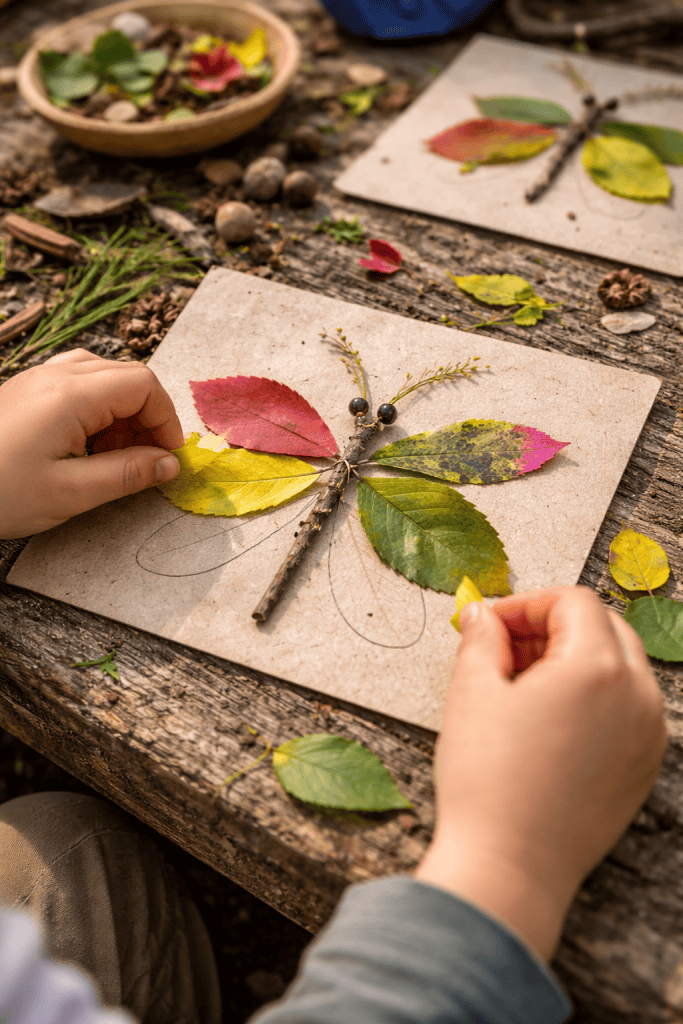
This nature craft is a wonderful way to combine outdoor creativity with recycling.
Start by bringing along a small piece of thin cardboard from an old cereal box or packaging. Before heading out on your nature walk, lightly sketch the outline of an insect – butterflies, bees, dragonflies, or ladybugs all work beautifully.
Once the outline is ready, kids can head out on a mini nature hunt to gather materials for decorating their bug.
Encourage them to look for:
- Colorful leaves for wings
- Thin twigs for antennae or body segments
- Small seeds or pebbles for eyes
- Flower petals for extra color
Children place the leaves inside the wings and arrange twigs to create lines, shapes, and patterns that bring their bug to life.
Each creation turns out completely different depending on what children discover during their walk.
Besides being fun, this activity gently teaches kids about reusing materials and appreciating the beauty of natural objects that might otherwise go unnoticed.
When finished, the leaf bugs can be displayed on a nature table or hung up as cheerful reminders of a day spent exploring outdoors.cused activity.
4. Forest Potion Bottles
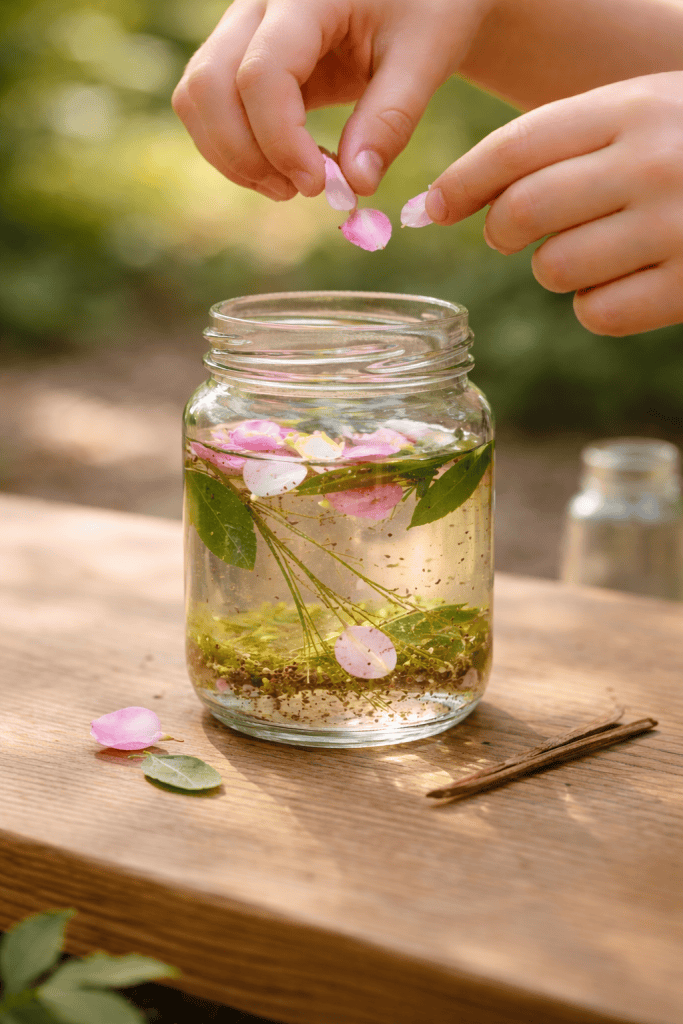
If you’ve ever watched kids play in the woods, you’ve probably noticed their love for mixing mysterious “potions.”
This craft embraces that imaginative instinct.
Provide small glass jars or recycled bottles and let children gather natural ingredients such as:
- Petals
- Leaves
- Pine needles
- Seeds
- Colored sand or soil
Add water from a stream or a thermos and watch their potion-making creativity unfold.
Kids invent magical recipes, experiment with colors, and tell stories about what their potion might do.
Some become “healing forest elixirs.” Others turn into invisible potions or fairy drinks.
It’s simple, messy, and wonderfully imaginative.
5. Sun-Bleached Leaf Prints
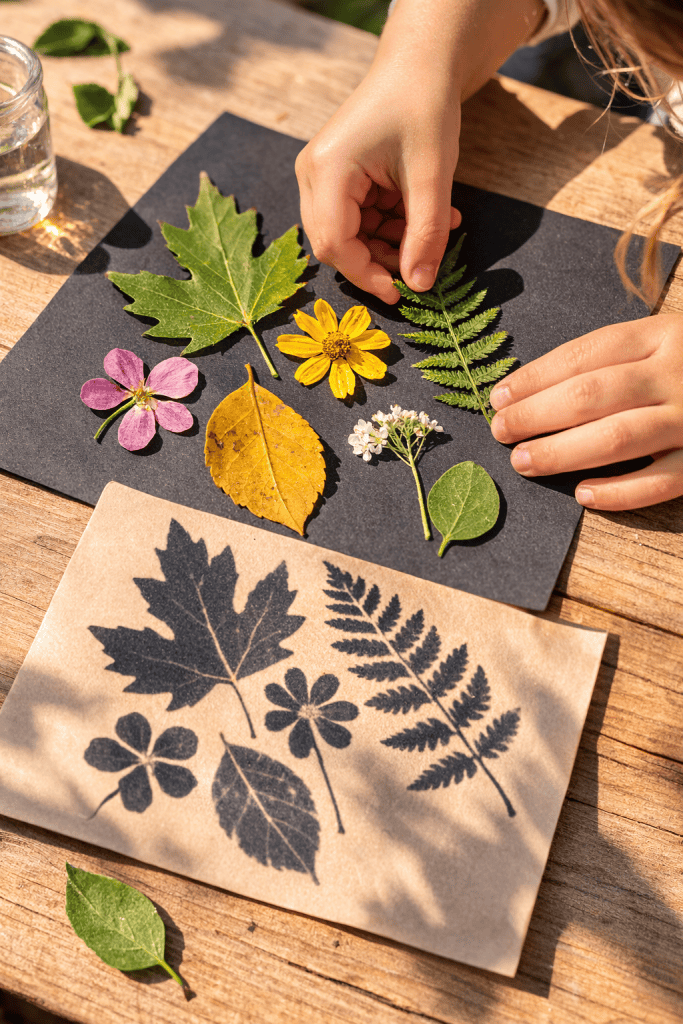
This quiet nature craft combines art and science.
Start by placing interesting leaves or flowers on dark construction paper. Leave the paper in direct sunlight for several hours.
Over time, the sun fades the exposed areas of the paper while the covered sections remain dark.
When the leaves are removed, a beautiful silhouette remains.
Kids are always fascinated by this simple transformation.
It’s a gentle way to introduce ideas about sunlight, exposure, and natural patterns – all while creating beautiful artwork.
If you’re curious how this style of learning differs from traditional outdoor education, I break down the real difference between outdoor learning and forest school.
6. Stick Story Characters
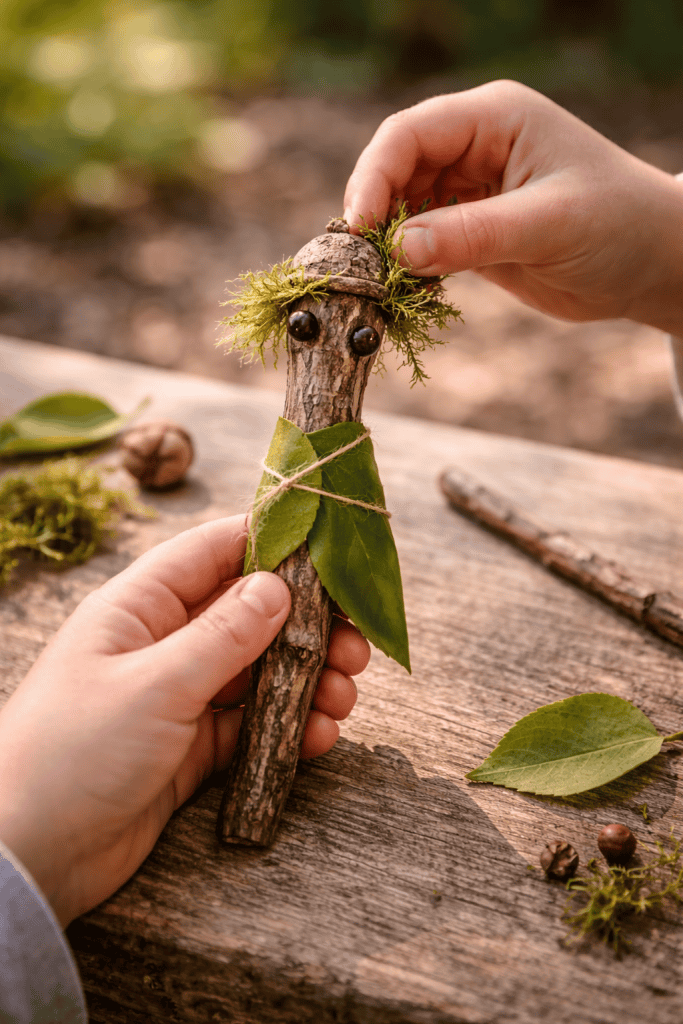
Sticks have endless creative potential in a forest setting.
Encourage kids to select a stick that “feels like a character.” Some might look like animals, while others resemble people or magical creatures.
Children can decorate their sticks using natural materials:
- Moss hair
- Acorn hats
- Berry eyes
- Leaf clothing
Once finished, the characters can be used for storytelling games.
Kids might act out woodland adventures, create puppet shows, or invent imaginative forest tales.
It’s a simple craft that blends creativity, storytelling, and play – a perfect fit for forest school learning.
7. Forest Color Match Art
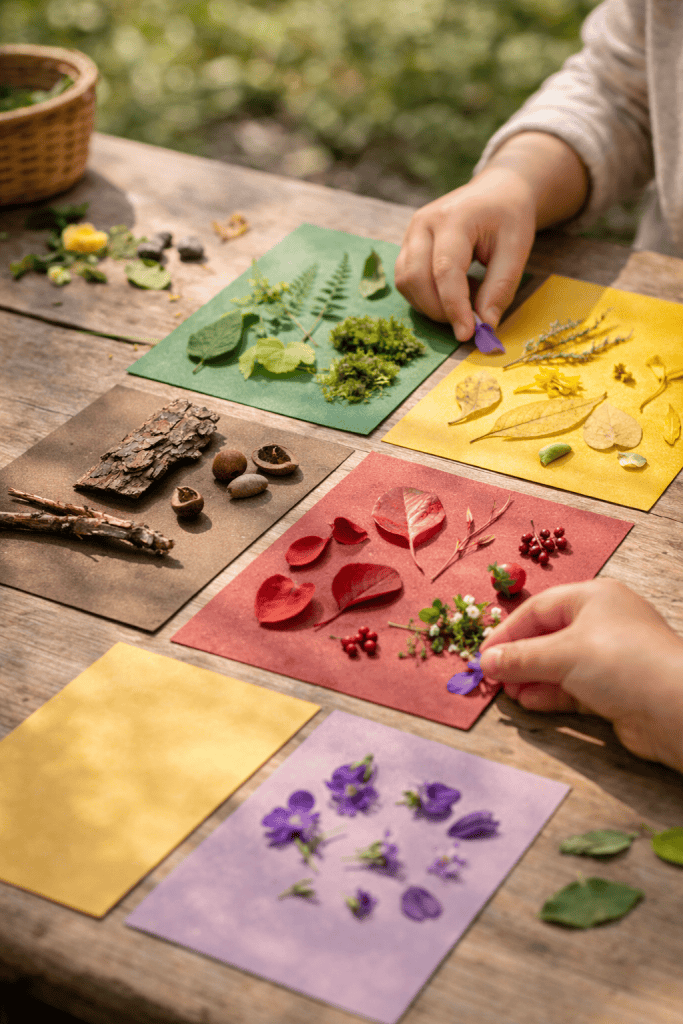
This nature craft turns a simple walk in the woods into a colorful scavenger hunt.
Start by laying out several sheets of colored cardstock in shades like green, yellow, red, brown, and purple. Each color will act as a base for a nature collage.
Invite the children to explore the surrounding area and collect small natural treasures that catch their attention – fallen petals, leaves, seeds, grasses, bits of bark, or tiny stones.
When they return, encourage them to place each item on the sheet that best matches its color. A pale yellow leaf might belong on the yellow page, while deep red petals could land on the red one.
As the collage grows, take time to talk about the many shades found in nature. Kids often notice subtle differences – like how one leaf might be bright green while another leans toward olive or lime.
This activity gently builds observation skills while helping children recognize the rich variety of colors in the natural world.
By the end, the colored sheets become beautiful nature collages that reflect the forest’s own palette.d respect for nature.
8. Pebble Story Stones
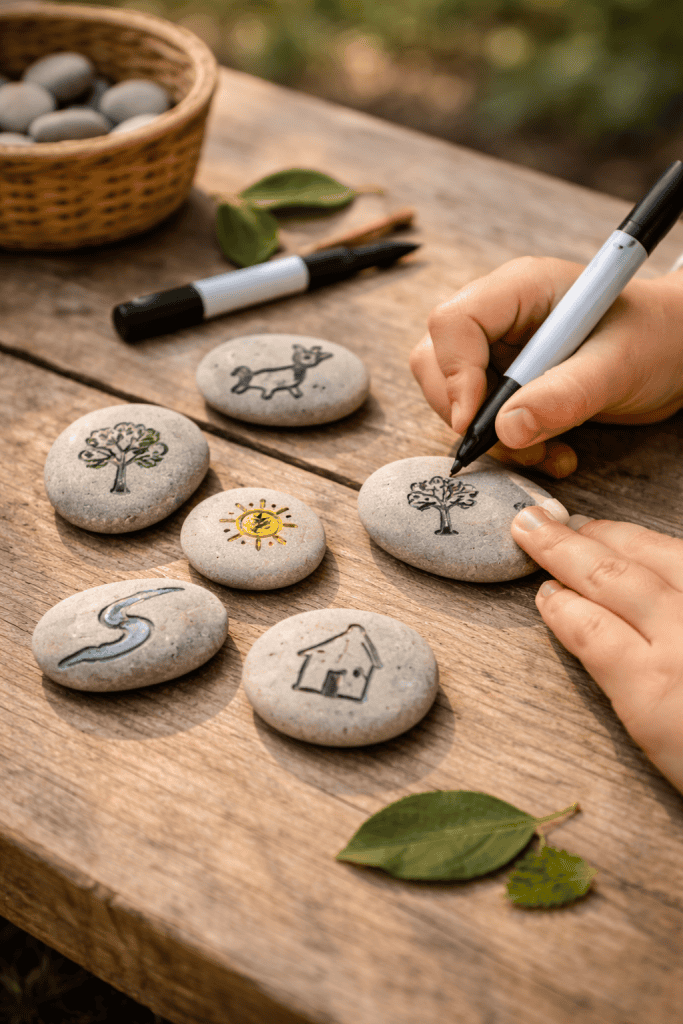
Smooth stones make wonderful storytelling tools.
Let kids collect a few flat pebbles and decorate them using paint pens, charcoal, or natural dyes.
Each stone becomes a symbol:
- A tree
- An animal
- A sun
- A river
- A house
Later, children draw stones from a basket and use them to create spontaneous stories.
The results are often hilarious, surprising, and incredibly creative.
Story stones also encourage language development, imagination, and cooperative play – especially when kids build stories together.
If you’re looking for even more ideas, you might also enjoy my collection of adorable nature crafts for kids, which includes simple projects you can try in a backyard, park, or nature trail.
5 Simple Tips for Successful Forest School Crafting
Nature crafts work best when they stay simple and flexible.
Here are a few helpful tips to keep things enjoyable for everyone:
- Bring only a few supplies. A small bag with string, scissors, jars, and paper is usually enough.
- Encourage collecting responsibly. Teach children to gather fallen materials instead of picking living plants whenever possible.
- Let kids lead the creativity. Nature crafts don’t need to look perfect. The process matters far more than the result.
- Dress for the outdoors. Mud, dirt, and exploration are all part of the experience.
- Embrace open-ended play. Some crafts may evolve into games, stories, or imaginative adventures 0 and that’s perfectly okay.
Forest school learning thrives when children feel free to explore.
If you’re planning your first sessions outdoors, my guide to low-prep forest school activities for beginners can also help you keep things simple and manageable.
Try These Nature Crafts on Your Next Forest Adventure
The next time you head outdoors with your kids, try bringing along just a few simple supplies and an open mind.
You may be surprised at what children create when given the freedom to work with nature.
A pile of moss becomes a fairy garden. Pebbles turn into story prompts. Sticks transform into characters with entire personalities.
These small creative moments often become the memories kids carry with them long after childhood.
So head outside, explore the woods, and let nature become the craft table.
And if you try any of these ideas, I’d love to hear about it – share your experience in the comments below!
FAQs
What age group are nature crafts best suited for?
Nature crafts can work for a wide range of ages. Preschoolers enjoy simple sensory activities like moss gardens or potion bottles, while older children often enjoy more structured projects like weaving frames or story stones.
With small adjustments, most crafts can easily be adapted for ages 3–12.
Do I need special supplies for forest school crafts?
Not at all. One of the beauties of nature crafting is that most materials come directly from the environment.
A few helpful items to bring include:
- String or twine
- Child-safe scissors
- Small jars or containers
- Paper or clay
Everything else can usually be found outdoors.
What if we don’t have access to a forest?
Forest school activities don’t actually require a forest.
Local parks, beaches, fields, or even backyards can work beautifully. Any outdoor space with natural materials provides opportunities for creative exploration.
How do I keep kids safe while collecting natural materials?
Teach children a few simple guidelines:
- Avoid plants they cannot identify
- Leave mushrooms and unfamiliar berries untouched
- Watch for sharp sticks or insects
Supervision and basic awareness go a long way toward keeping outdoor crafting safe.
How can I store or display nature crafts at home?
Many nature crafts are temporary, which is part of their charm.
However, some projects – like clay bark imprints or story stones – can be brought home and displayed on shelves, nature tables, or windowsills.
They make lovely reminders of time spent outdoors.