There was a morning last fall when my eldest sat down right in the middle of the kitchen floor and started crying without really knowing why.
Nothing terrible had happened. Just something big rising up inside her little chest — and no words to put to it yet. I knelt down in my apron, probably with oatmeal somewhere on the front of it, and we just sat together for a while.
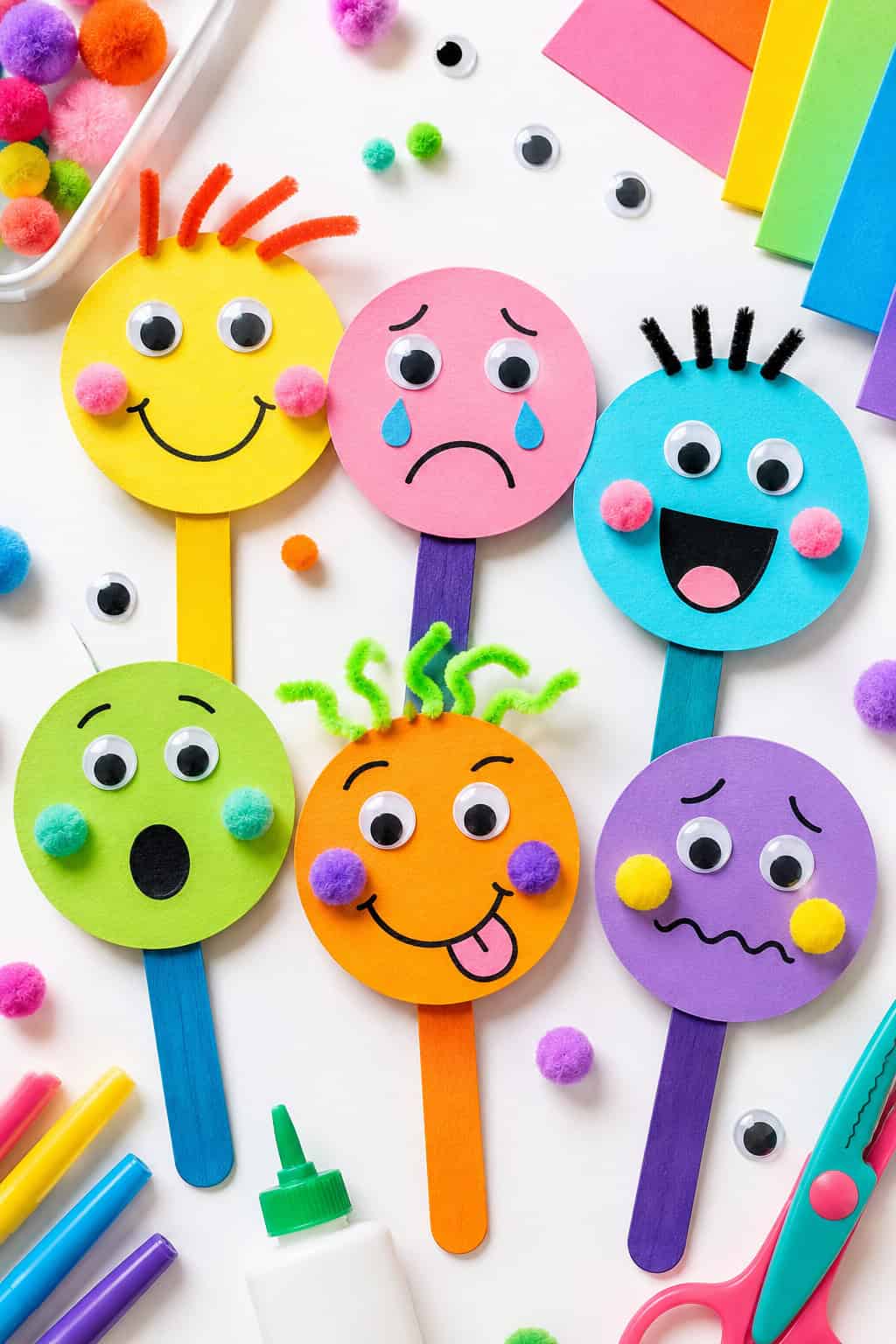
Later, after the storm had passed, we made a paper plate face that looked exactly like what she’d been feeling. Big frowny brows, a wobbly little mouth, watercolor tears running down the sides. She named it her “sad-mad face” and we hung it on the wall by the door.
It stayed there for weeks. And something about making it — pressing her fingers into the paint, choosing the right color — seemed to give her a handhold on something that had felt unnameable.
That’s what emotions crafts can do, sweet friend. Not fix everything — nothing does — but open a little door. Give small hands something to do while big feelings find their way out. If you’ve got tiny humans in your home who feel things deeply (and which ones don’t?), this list is for you.
And if you love hands-on learning with your littles, you might also enjoy our collection of garden crafts for kids — another beautiful way to learn through making.
12 cute emotions crafts for kids to explore big feelings
Below are some cute emotions crafts for kids that make it easier to talk about big feelings in a hands on, creative way.
1. paper plate emotions faces
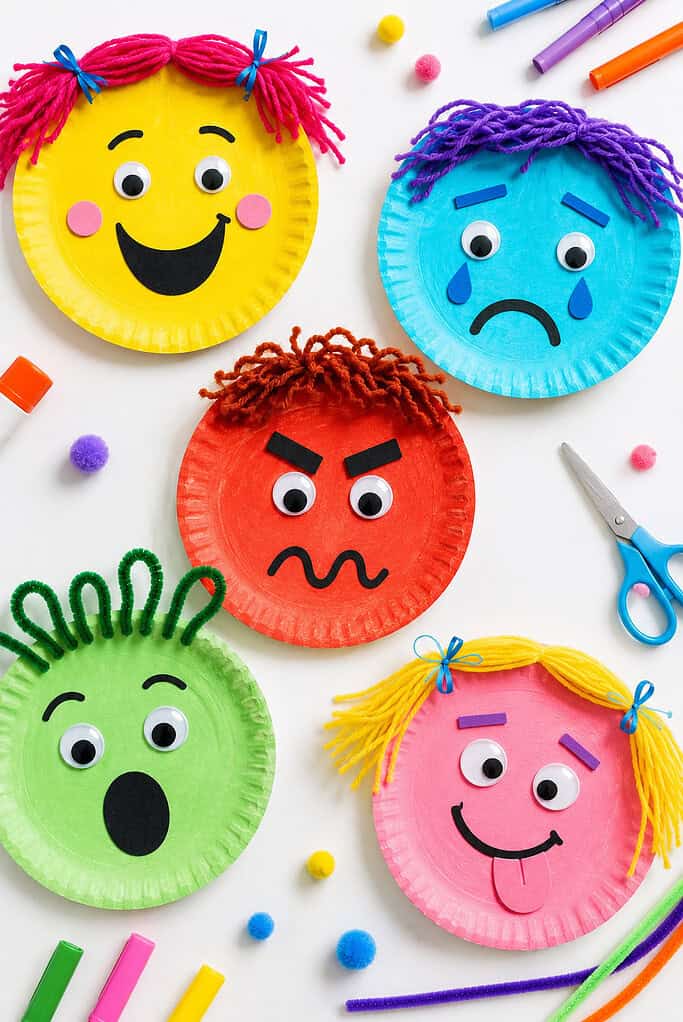
Paper plates are one of those supplies I’m always finding at the back of the pantry, and they’re just about perfect for emotions work.
Give your little one a plate, some paint or markers, and maybe a bit of yarn or craft foam, and let them build a face that shows how they feel right now — or how they felt earlier, when things were hard.
The act of making the face externalizes the feeling, which makes it so much easier for a child to talk about.
2. emotion wheel
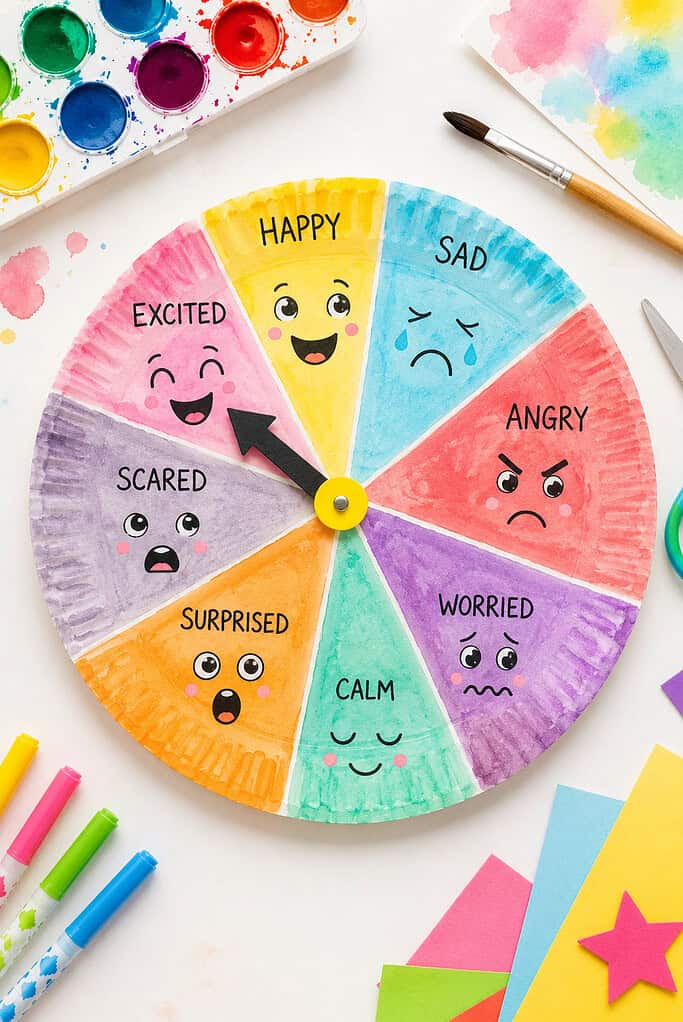
An emotion wheel is a beautiful thing to make together — a paper circle divided into sections, each one colored and labeled with a different feeling. You can start with the basics (happy, sad, angry, scared, surprised, calm) and add more as your child grows.
Keep it on the fridge or in a calm-down corner. When your little one can’t find words, they can just point to a color. We made ours from a paper plate and watercolor paints one slow afternoon, and it has become one of the most-used things in our home.
3. emoji faces craft
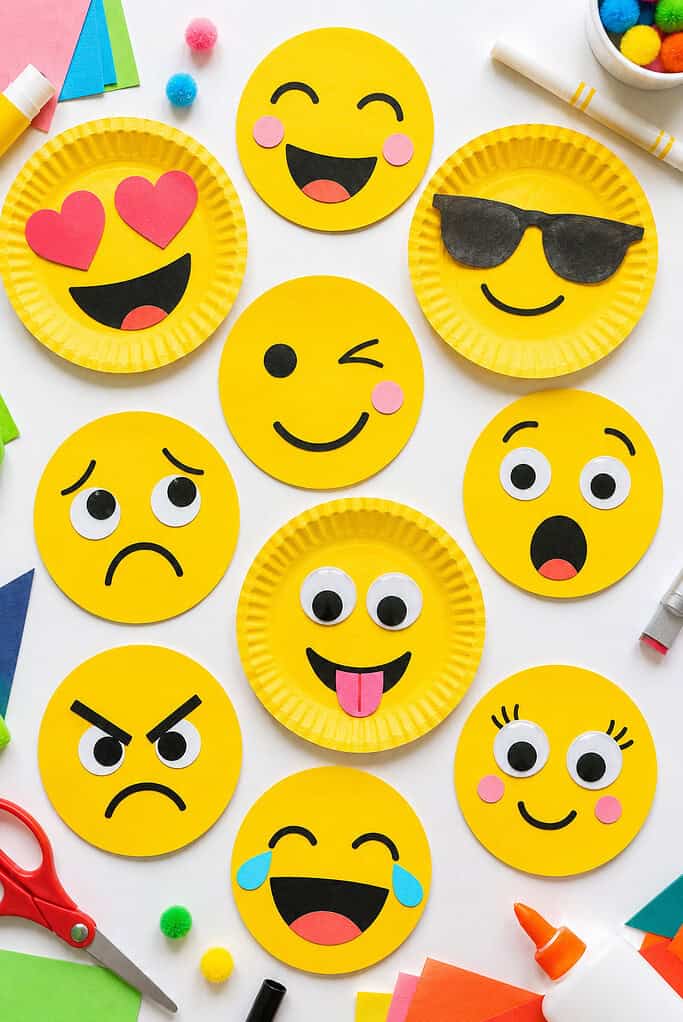
Most children already know emoji faces from somewhere — even in our low-screen home, they’ve spotted them on packages and in books. Use that familiarity as a bridge. Cut yellow circles from cardstock or use paper plates, draw on the faces together, and talk about what each one means.
What makes your face look like this one? When did you feel like that today? My littles love arranging them on the floor like a little feelings gallery and acting out the expressions with their own faces — which always ends in the best kind of laughter.
4. emotion matching game
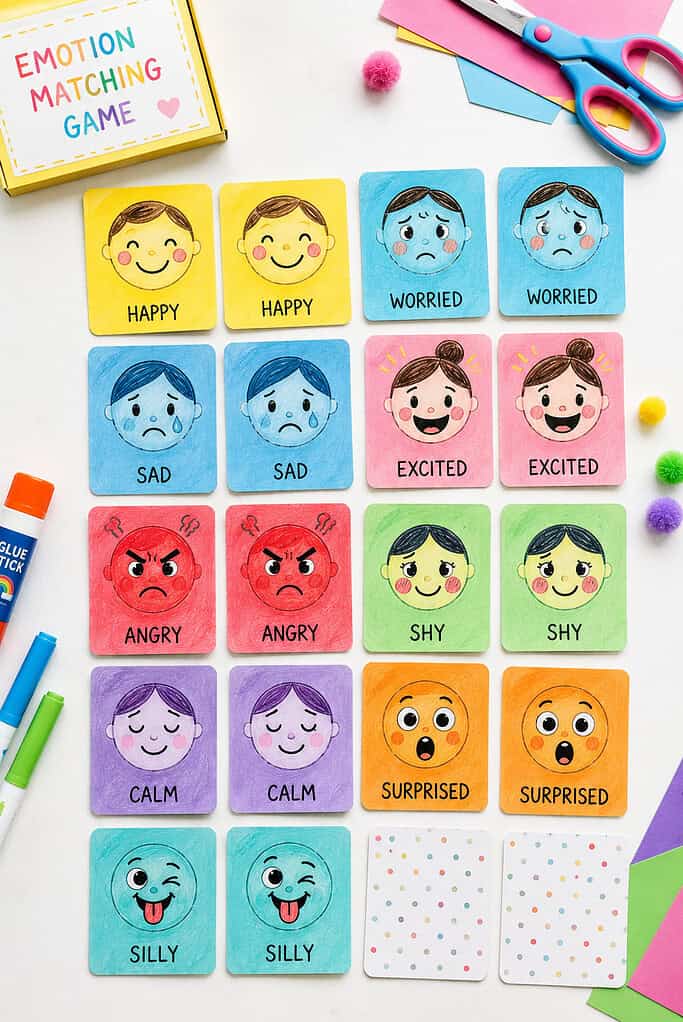
This one becomes a quiet activity and a gentle learning game all at once. Draw or print emotion faces on small cards, make pairs, and let your child play a simple matching game — finding each feeling’s twin. You can narrate as you go: “Oh, those two look worried. What do you think made them feel worried?”
It builds emotional vocabulary in such a natural, unforced way. For children who love sorting and games, this gives them a structure that feels safe — and you’ll find yourself learning something too, watching which cards they reach for first.
5. color emotions
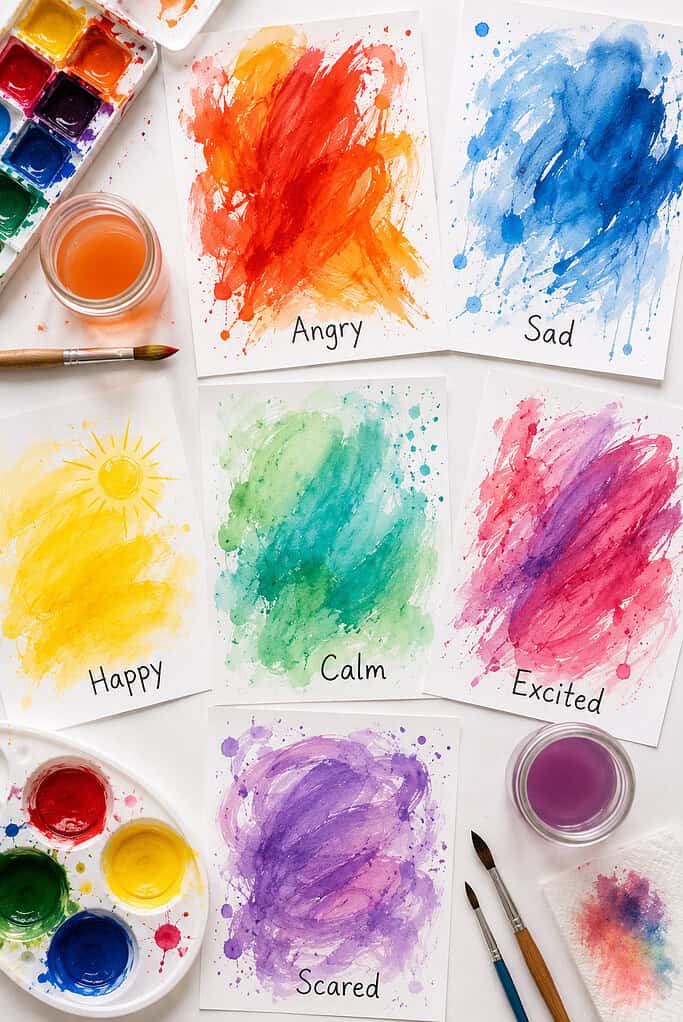
There’s real beauty in the idea that color and emotion are connected — and children understand this intuitively.
Set out watercolors or tempera paint and ask your little one: what color is angry? What color is happy? What does peaceful look like? Then let them paint freely, just in those colors. No faces needed. No right answers. Just color on paper and a conversation about what it feels like inside.
This kind of open-ended art is some of my favorite we do — similar in spirit to the creative freedom in our collection of pipe cleaner crafts for kids, where the making itself is the point.
6. emotions flip book
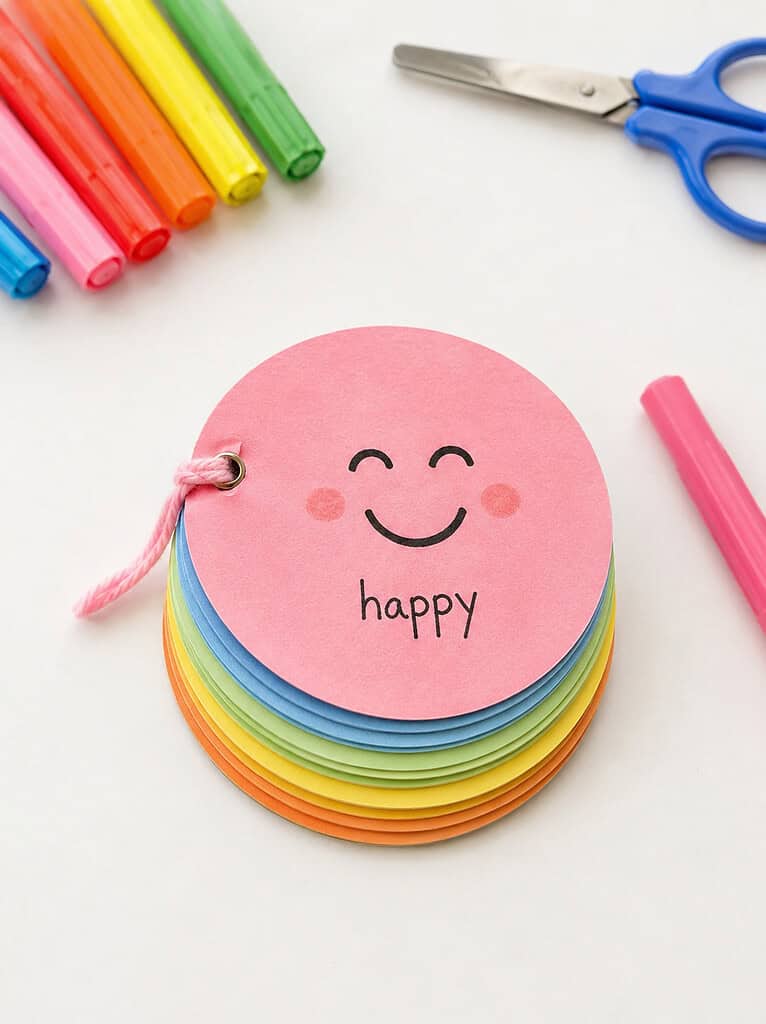
A flip book is a wonderful thing for a child who loves books, which around here is all three of them. Stack several small pieces of paper, staple or bind them on one side, and let your little one draw a different emotion on each page. They can flip through and find their feeling when words aren’t coming easily.
We keep ours tucked in the basket by the reading chair, right where it can be reached on the hard days.
7. handprint emotions craft
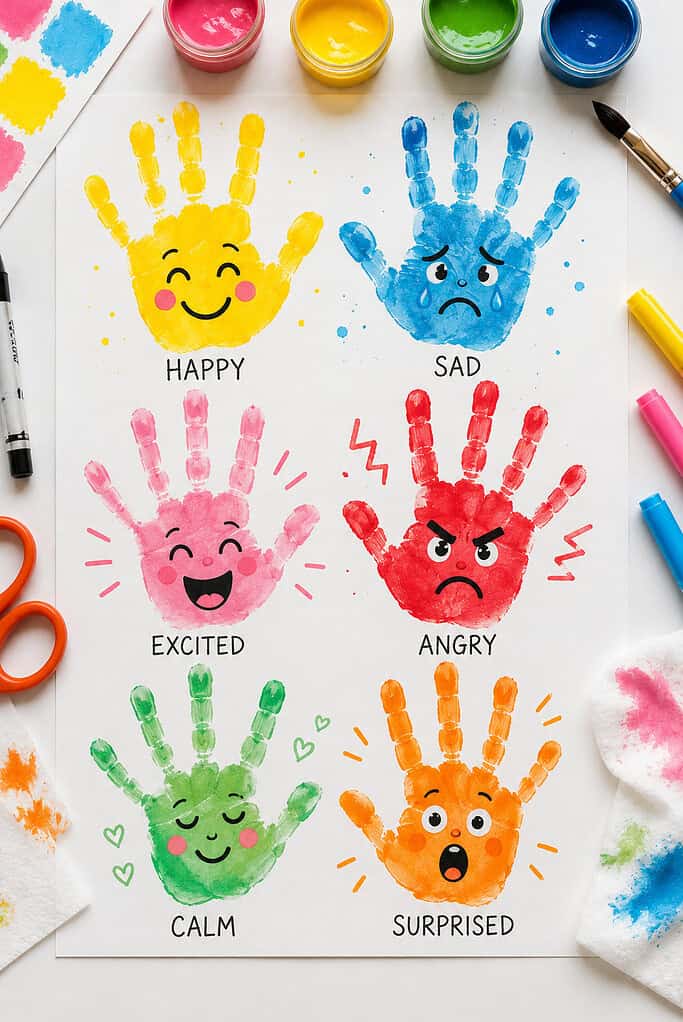
Handprints are one of those forever-sweet crafts that I can’t get enough of. Press little hands into paint, stamp them on paper, and then add faces to the handprints to show different emotions. You’ll end up with a whole little crowd of feelings, each one wearing a different expression.
Frame it, hang it on the wall, or fold it up and tuck it in the baby book — either way, it’s a keeper. And the conversation that happens while you’re pressing those little palms into the paint? That’s the real gift — the one no frame can hold.
8. emotion jar
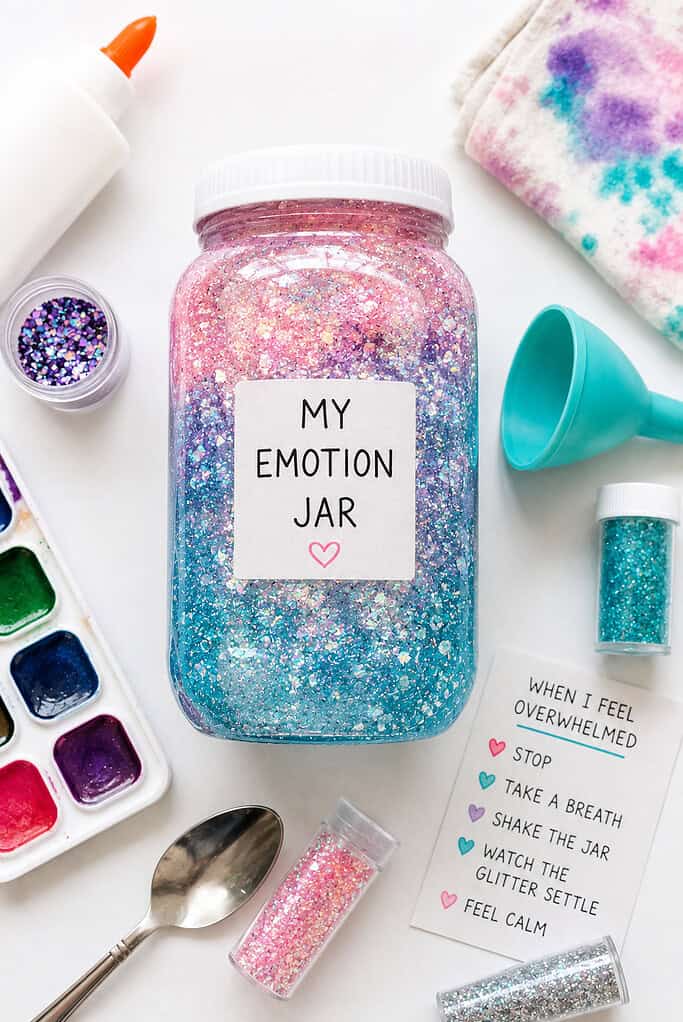
An emotion jar is part craft, part calming tool.
Fill a clear jar with water, a bit of glitter glue, and some fine glitter — the kind that swirls and settles slowly when you shake it. Use it as a feelings metaphor with your child: when we shake the jar, everything inside gets stirred up, just like our feelings do when we’re upset. As the glitter settles, so can we.
It’s become a quiet anchor in our afternoons, and if you love the idea of sensory tools that double as crafts, you’ll also want to look through our post on DIY sensory bottles — so many of those same concepts translate beautifully here.
9. emotion dice
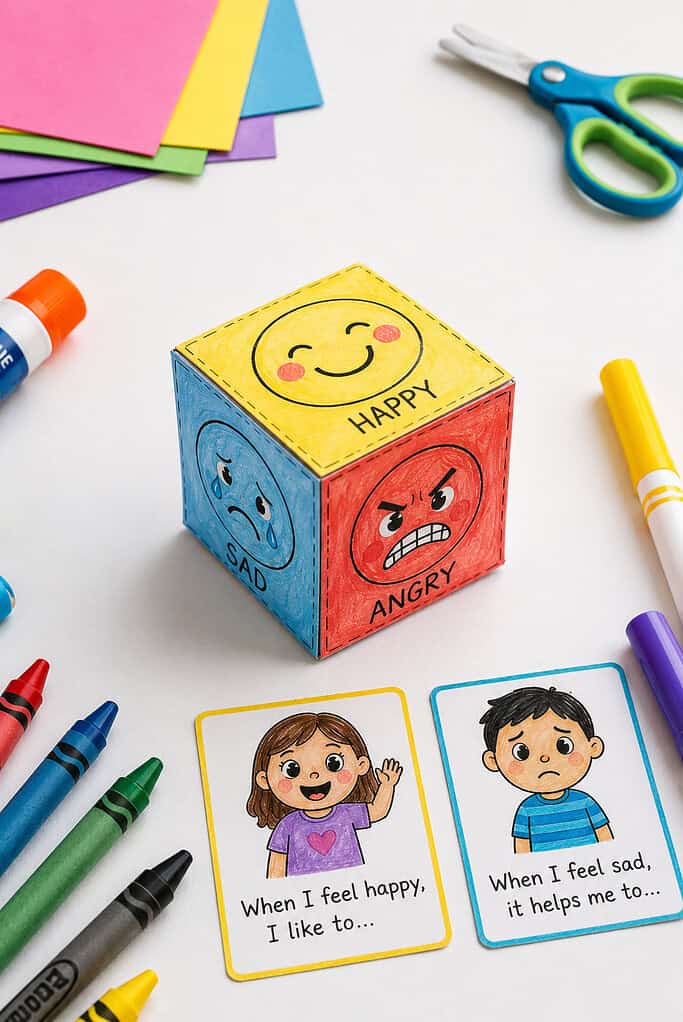
A wooden block or a cube made from cardstock, each face labeled or illustrated with a different emotion. Roll it and act out whatever feeling comes up, draw it, or share a story about a time you felt that way.
It turns what might feel like heavy emotional territory into something playful — which is, honestly, how most of the best learning happens with little ones. We’ve also used ours as a dinner table conversation starter: roll it, sweet one — which feeling showed up in your day today?
10. emotion thermometer craft
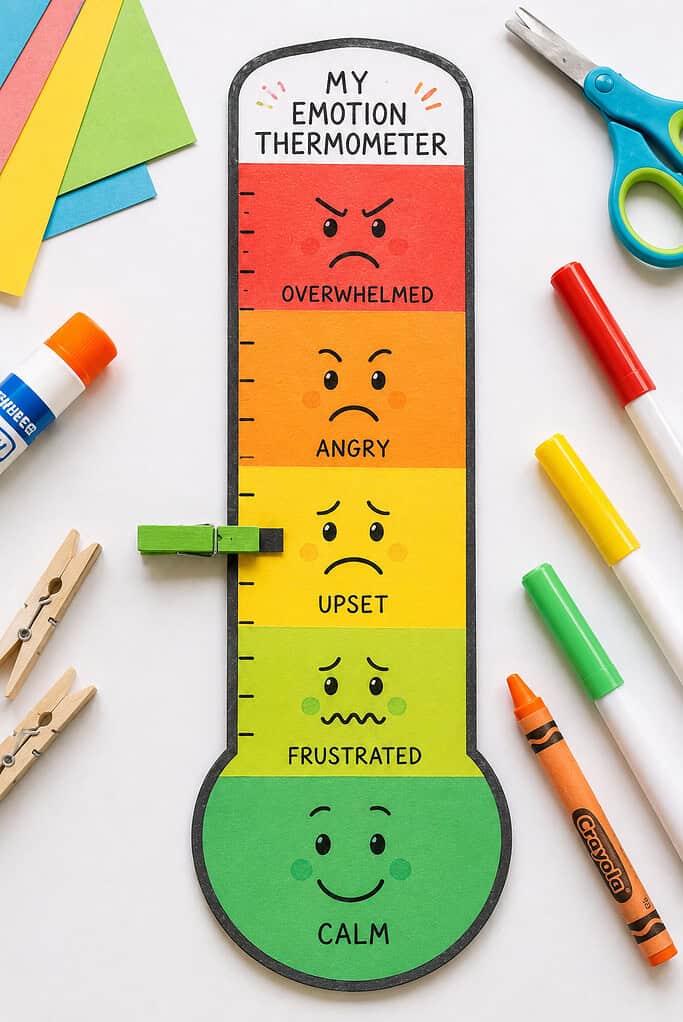
An emotion thermometer helps children understand the intensity of what they’re feeling — not just “I’m angry,” but “I’m a little bit annoyed” versus “I feel like I might burst.” Make it from strips of red, orange, yellow, and green paper layered together, or draw a thermometer on cardstock with a moveable marker.
Hang it somewhere visible in the playroom or kitchen. It builds what some call emotional granularity — the ability to name not just the feeling but how much of it. Watching your child move the marker down from red to yellow on their own is one of the quieter, sweeter parenting victories.
11. feelings chart craft board
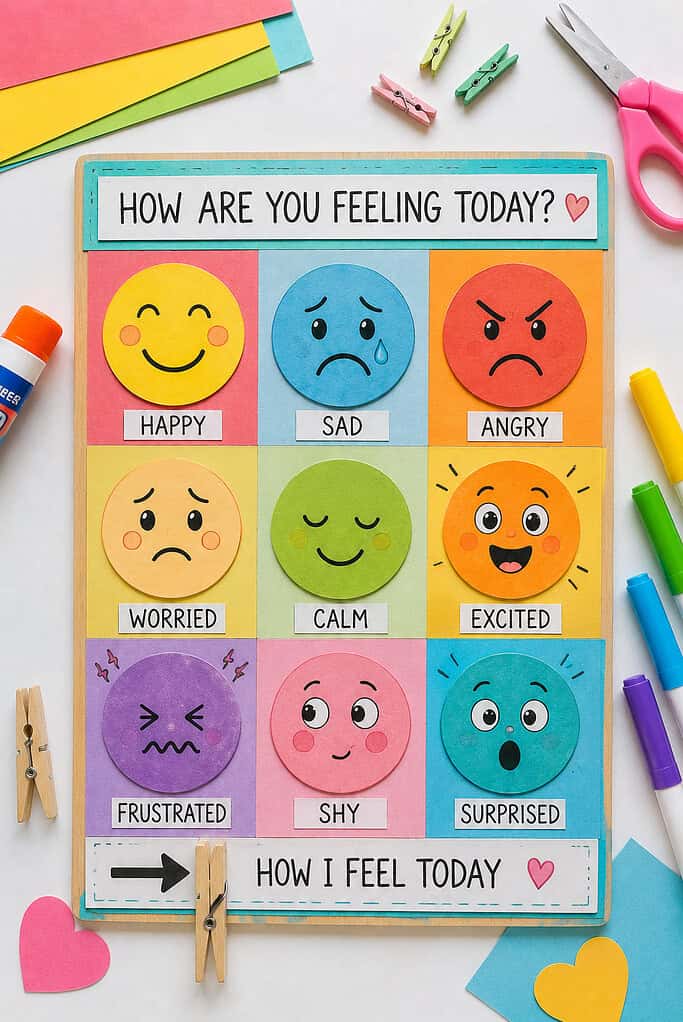
A feelings chart is something you make together and then live with over time. Cut out faces from magazines, draw your own, or use small printed photos of your child’s actual expressions.
Mount them on a piece of cardstock or a small wood board, label each one, and let your child move a clothespin or sticky note to the face that matches how they’re feeling right now. Simple enough for toddlers, meaningful enough for older children. And having it up in the home sends a quiet, steady message: feelings are welcome here.
12. rainbow feelings craft
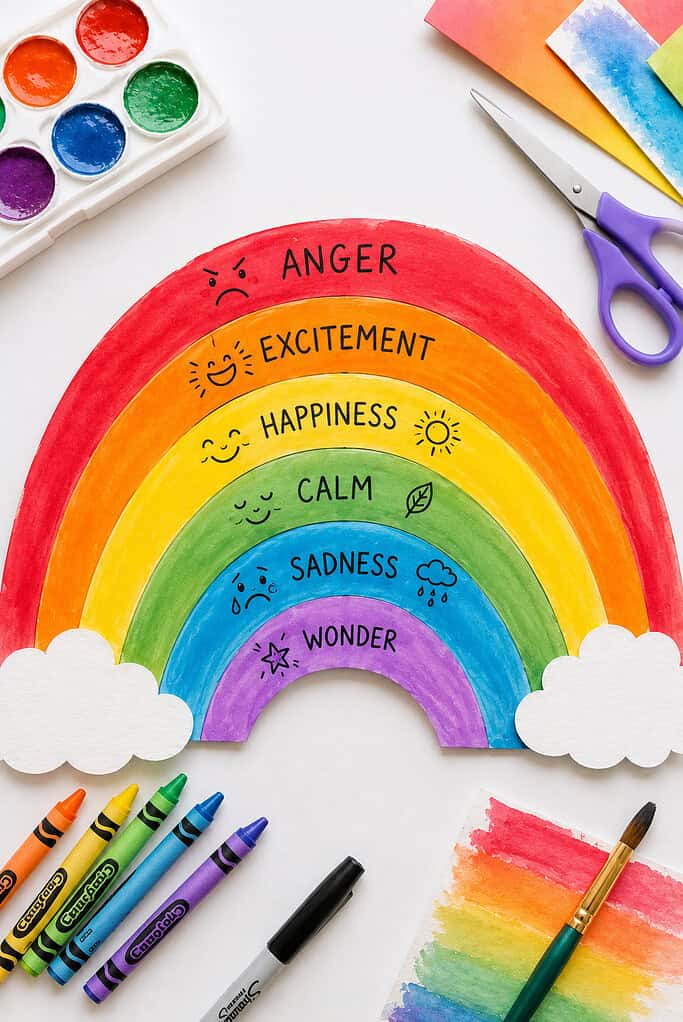
A rainbow is just about the perfect metaphor for the full range of emotions — all the colors, all at once, and every one of them necessary.
Let your child paint or color a rainbow and assign a feeling to each color: red for passion or anger, orange for excitement, yellow for happiness, green for calm, blue for sadness, purple for wonder. Hang it where they can see it and come back to it often.
We made ours during a slow afternoon when we were doing other colorful projects — if you want more rainbow inspiration, our roundup of rainbow crafts for kids is full of beautiful ideas that pair perfectly with this one.
why making space for big feelings changes everything
Before emotions crafts, I responded to meltdowns with the best intentions and the wrong tools. I’d rush to fix, redirect, soothe too quickly. And the feelings didn’t go away — they just went underground for a while and surfaced again at the most inconvenient moment. Always right before dinner, in my experience.
What I’ve learned — slowly, imperfectly, often with paint still on my hands — is that feelings need to be witnessed before they can move through. A child who knows their feelings have a name, a shape, a color, a face — that child has an easier time coming back to calm. Not because we’ve engineered the perfect emotional regulation system, but because they feel seen.
She opens her mouth with wisdom, and the teaching of kindness is on her tongue. — Proverbs 31:26
That verse has sat with me a long time. Teaching kindness includes teaching our children to be kind to themselves — to hold their own feelings with gentleness instead of shame. Emotions crafts are one of the quietest ways I know to do that.
And if you’re building a home where faith and feeling go hand in hand, you might love our collection of prayer crafts for kids — beautiful for little hearts learning both to feel and to bring those feelings to Jesus.
the supplies you probably already have
One of the things I love most about emotions crafts is that they don’t require a special trip to the craft store. The supplies already tucked away in your home are almost always more than enough. Around here, we reach for:
- Paper plates — the humble workhorse of our craft cabinet
- Construction paper or cardstock
- Watercolor or tempera paint
- Washable markers (always washable)
- Old magazines for cutting and collaging
- Yarn, googly eyes, and felt scraps
- A clear jar and some glitter glue for the emotion jar
- Popsicle sticks or craft sticks
Most of these crafts can be pulled together from the recycling bin and the back of the art drawer. And the simplest versions are almost always the sweetest. Our little wild ones don’t need perfect supplies — they need a present parent and a little unhurried space.
If you’re building out your family’s craft basket and want ideas that use many of these same materials, our toilet paper roll crafts for kids roundup has a lot of creative overlap with what we’re doing here.
choose one craft this week and just begin
You don’t need a lesson plan. You don’t need the perfect afternoon or a Pinterest-ready setup. You just need one small craft, a little paint or some markers, and a few unhurried minutes with your child.
Start where it feels natural — maybe the paper plate faces, because you’ve already got the plates. Or the emotion jar, because your little one has been having a hard week and you’re looking for a soft place to land. Pick one, pull up a chair, and let the conversation happen as it happens. It doesn’t have to be deep to be meaningful.
These are the ordinary moments that build the extraordinary relationship. And that, sweet friend, is more than enough.
I’d love to know — which of these emotions crafts is calling your name first? Drop it in the comments below and tell me how it goes with your littles. I read every single one.
Grab Your FREE Jesus Loves Me Craft for Kids
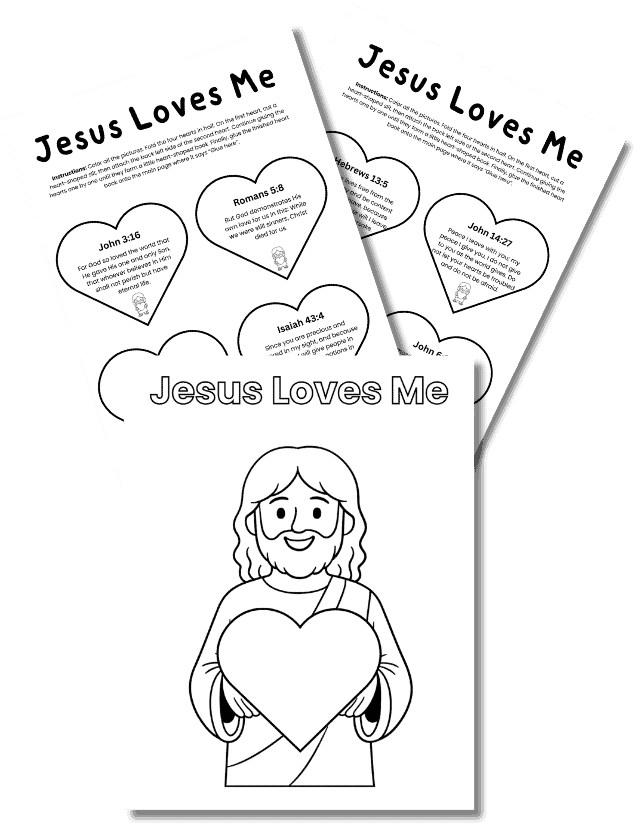
If you’re looking for an easy, meaningful way to talk about Jesus’ love with toddlers and young children, this free Jesus Loves Me Craft is for you.
This hands-on activity includes a simple Jesus illustration and a heart-themed Bible verse activity kids can color, trace, and interact with.
The craft features a “Jesus Loves Me” theme with Bible verses such as John 3:16, Romans 5:8, John 15:13, and Isaiah 43:4. Children can color the pages and connect with the message in a simple, visual way.
You can use it as a coloring activity, a cut-and-paste craft, or a paper display project.
This printable helps turn Scripture into something children can see, color, and revisit, making it easier for them to begin understanding how deeply they are loved.
frequently asked questions
what age are emotions crafts appropriate for?
Emotions crafts work beautifully from around age two all the way through elementary school and beyond. Toddlers can engage with simpler activities like handprint crafts and paper plate faces, while older children tend to love more detailed projects like the emotion wheel or the flip book. The key is always meeting your child where they are — not where you think they should be.
do I need special supplies to do emotions crafts with my kids?
Not at all. Most of these crafts call for things you probably already have: paper plates, construction paper, washable markers, watercolors, yarn, and a few craft sticks. The emotion jar just needs a clear jar and some glitter glue. There’s no need to spend money or make a special trip — simplicity is your friend here, and the crafts your children remember are almost never the expensive ones.
how do I introduce emotions crafts without it feeling like a forced lesson?
Just start making and let the conversation come naturally. Put out the supplies without announcing a feelings lesson, and follow your child’s lead. Most of the best emotional conversations happen sideways — while hands are busy, when no one is looking anyone in the eye. Keep it cozy, not clinical, and you’ll be surprised what surfaces.
can emotions crafts help with tantrums and meltdowns?
Emotions crafts won’t prevent every meltdown — let’s be honest about that — but they can build the vocabulary and self-awareness that help children navigate big feelings more gracefully over time. When a child has a picture on the wall of what “frustrated” looks like, they’re more likely to find that word in the heat of the moment instead of just melting into the floor. Which, as we all know, is relatable at any age.
how often should we do emotions crafts?
There’s no rule here. Some of these crafts — like the feelings chart or the emotion wheel — you make once and live with for a long time. Others, like the color emotions painting, can become a regular quiet-time activity whenever the afternoon calls for it. Let it be light and flexible, never another thing on the list. Whenever it comes from a genuine place, it will be enough.