Outdoor learning has become an increasingly popular part of education, early years provision, and community practice. However, with that popularity has come a fair amount of confusion – particularly around where Forest School fits in.
It is common to hear any learning that happens outside described as Forest School. While this usually comes from a place of enthusiasm and good intent, it can blur important distinctions. Forest School is not the same as outdoor learning as a whole.
In reality, outdoor learning is a broad umbrella term, encompassing many different approaches, philosophies, and traditions. Forest School is one specific approach within that wider landscape.
Understanding these differences helps practitioners choose the right approach for their aims, communicate clearly with parents and stakeholders, and provide richer experiences for learners.
What is Outdoor Learning?

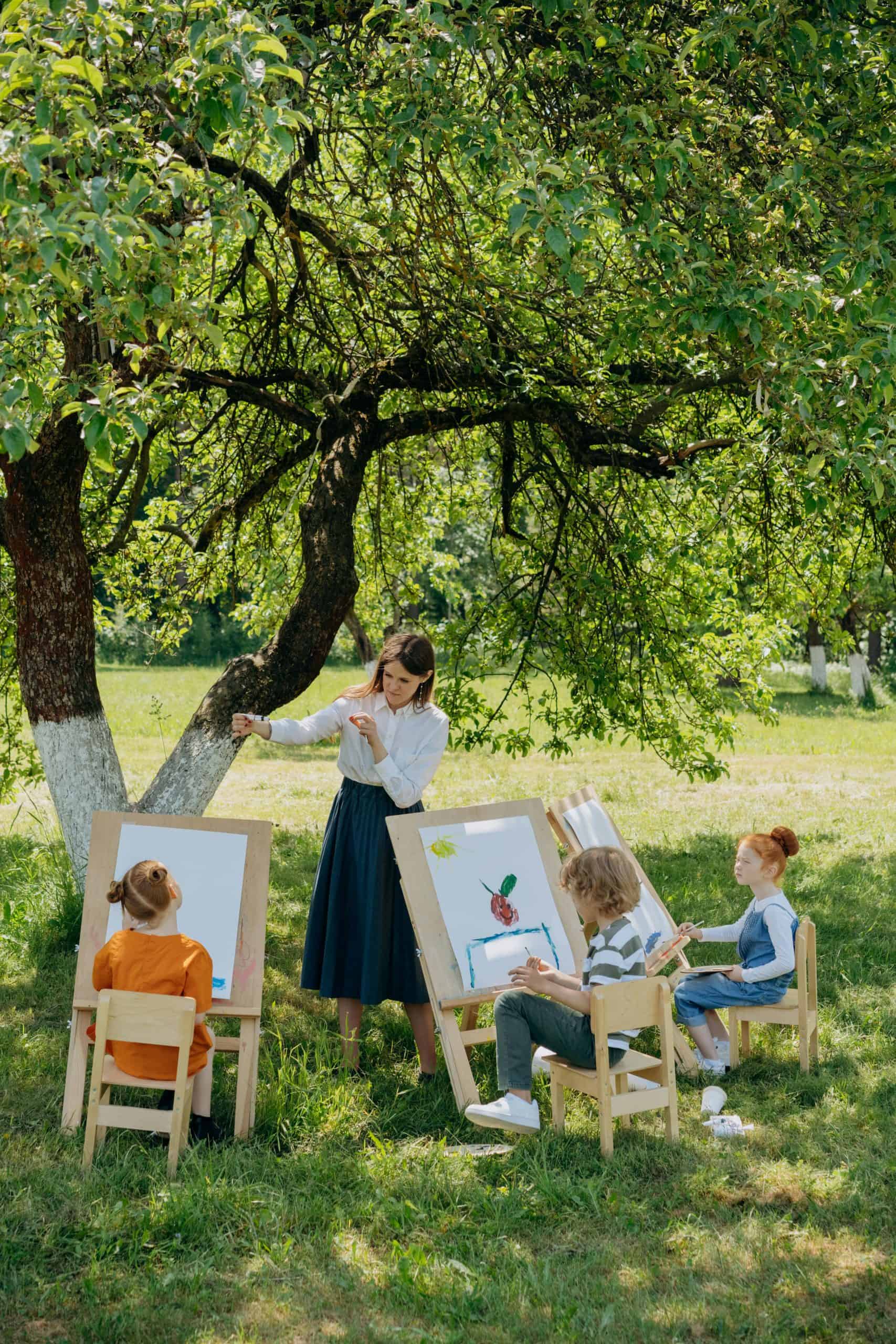
Outdoor learning is an approach to education that uses outdoor spaces as meaningful contexts for learning, development, and well-being. It includes any planned or purposeful learning experience that takes place outside, whether in natural, semi-natural, or built environments.
Outdoor learning can happen in a wide range of settings, including school grounds, parks, gardens, woodlands, coastal areas, and urban spaces.
What unites these experiences is not the location itself, but the intention to use the outdoors to support learning in ways that are often difficult to achieve indoors.
A Long-Standing Educational Tradition
Outdoor learning is not a recent trend. It has been promoted for hundreds of years by educators, philosophers, and health professionals who recognised the value of fresh air, movement, and direct experience.
Historically, outdoor learning has been linked to physical health, moral development, practical skills, and emotional well-being, as well as academic understanding.
Over time, outdoor learning has continued to evolve, responding to changes in education, society, and our relationship with the natural world. Today, it is recognized as a powerful way to support both learning and well-being across all ages.
A Broad and Flexible Concept
Outdoor learning is best understood as a broad and flexible umbrella term, rather than a single program or methodology. It encompasses a wide range of practices, philosophies, and traditions, each shaped by different aims and contexts.
This flexibility allows outdoor learning to be adapted to:
- Different age groups and developmental stages
- Diverse educational settings and communities
- A wide range of learning goals, from well-being to subject knowledge
Because of this, outdoor learning looks very different from one setting to another, while still sharing common values around engagement, experience, and connection.
Learning Beyond the Classroom
A key strength of outdoor learning is its ability to extend learning beyond the classroom. Outdoor environments offer real-world contexts that encourage curiosity, movement, sensory engagement, and exploration.
These experiences can deepen understanding, increase motivation, and support learners who may struggle with more traditional indoor learning environments.
Outdoor learning also supports the development of transferable skills such as problem-solving, communication, adaptability, and collaboration, which are valuable across all areas of life.
Supporting Health and Well-Being
In addition to educational benefits, outdoor learning plays an important role in supporting physical and emotional well-being. Time spent outdoors is linked to improved mental health, reduced stress, increased physical activity, and stronger social connections.
By offering regular opportunities to be outside, outdoor learning helps create balanced learning experiences that support the whole person, not just academic outcomes.
For inspiration, check out our unforgettable outdoor winter nature play activities to see how kids can explore, play, and learn in the colder months.
12 Different Outdoor Learning Approaches

Outdoor learning includes many overlapping but distinct approaches.
Below are some of the key “leaves” on the outdoor learning tree, each offering different benefits depending on purpose, age group, and context.
1. Environmental Education
Established since the 1970s, environmental education aims to develop learners’ understanding of ecosystems, biodiversity, and sustainability.
It encourages people to explore how natural systems function, how humans impact the environment, and what responsible stewardship looks like in practice.
Learning often involves hands-on investigation, discussion, and reflection, helping learners develop informed attitudes toward conservation, climate issues, and environmental responsibility.
2. Field Studies
Field studies are closely linked to science and geography, focusing on observation, data collection, and analysis of real environments.
Learners may study habitats, species distribution, weather patterns, or physical landscapes, using fieldwork techniques to gather evidence.
While commonly associated with secondary and higher education, field studies can be adapted for all ages, supporting curiosity, critical thinking, and an understanding of how knowledge is constructed through enquiry.
3. Adventurous Education
Adventurous education uses physical challenge and managed risk to support personal and social development.
Activities may include rock climbing, kayaking, canoeing, mountain walking, or orienteering.
The emphasis is not on performance or technical skill alone, but on emotional growth – building resilience, confidence, trust, and problem-solving skills.
Learners are encouraged to step beyond their comfort zones in supportive, well-managed environments.
4. Team Building and Leadership
This approach focuses on group problem-solving and cooperative challenges in outdoor settings.
Activities are designed to develop communication, trust, leadership, and collaboration, often requiring teams to plan, negotiate, and reflect together.
Team building and leadership learning is widely used in youth work, alternative provision, and professional development, helping participants understand group dynamics and their own roles within a team.
5. Bushcraft
Bushcraft is a skill-based approach centred on sustainable living in outdoor environments.
Learners develop practical competencies such as shelter building, fire making, tool use, cordage, and foraging, alongside an understanding of safety and environmental responsibility.
Bushcraft supports confidence, independence, and respect for natural resources, often emphasizing a “leave no trace” ethos and a deep connection to place.
Looking for fun, budget-friendly craft ideas for kids? Check out our easy Sunday school crafts on a budget.
6. Earth Education
Earth Education is a global movement that emerged in the 1970s, focusing on building strong emotional and ecological connections with the Earth.
It often uses immersive, creative, and sometimes theatrical experiences to engage learners’ imaginations and emotions.
Rather than simply teaching facts, Earth Education seeks to inspire care, empathy, and long-term commitment to environmental stewardship.
7. Flow Learning
Developed by Joseph Cornell, Flow Learning is a structured yet flexible approach designed to deepen nature connection by engaging the whole person.
It follows a four-stage cycle:
- Awakening enthusiasm – building curiosity and energy
- Focusing attention – calming and sharpening awareness
- Direct experience – meaningful, hands-on encounters with nature
- Sharing and reflection – expressing insights and emotions
This approach is widely used across age groups to foster sensory awareness, emotional connection, and reflective learning.
8. Coyote Mentoring
Coyote Mentoring draws inspiration from indigenous mentoring traditions, using subtle guidance rather than direct instruction.
Practitioners observe closely, ask thoughtful questions, and use storytelling to nurture curiosity, awareness, and deep nature connection.
Learning unfolds gradually, supporting independence, community awareness, and a sense of belonging within the natural world.
9. Horticulture

Horticultural learning involves growing plants and food, offering hands-on experience with life cycles, soil health, seasons, and ecosystems.
Learners take responsibility for nurturing living things, which supports patience, perseverance, and care.
Horticulture is widely used in schools, community projects, and therapeutic settings, linking well-being, sustainability, and practical learning.
10. Scouts and Guides
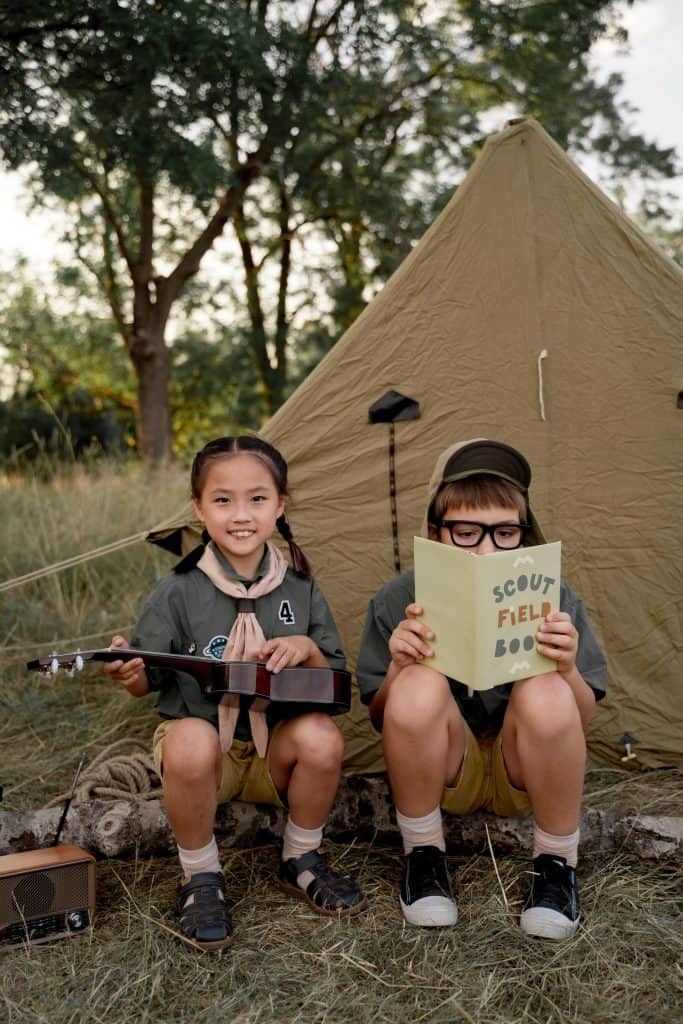
Scouts and Guides are long-established outdoor organizations offering structured programs that include camps, outdoor skills, teamwork, leadership, and community service.
Learning is often organized through progressive challenges and badge systems, supporting personal development, resilience, and social responsibility within a strong community framework.
11. Early Years Free Flow Provision
Early Years Free Flow Provision is a UK-based approach that gives equal value to indoor and outdoor environments.
Children are free to move between spaces, following their own interests and rhythms through play.
This approach supports autonomy, physical development, creativity, and emotional well-being, recognizing the outdoor environment as a vital part of early learning rather than an add-on.
For ideas to extend hands-on learning, check out our must-try sensory activities for preschoolers that engage curiosity and encourage playful exploration.
12. Curriculum-Based Outdoor Learning
Curriculum-based outdoor learning involves taking formal lessons outside to enhance engagement, relevance, and real-world understanding.
Subjects such as math, literacy, science, and history are taught outdoors while maintaining the same learning objectives and assessment requirements.
The environment acts as a context and stimulus for learning, rather than changing the curriculum itself.
What is Forest School?
Forest School is one distinct approach within the wider outdoor learning umbrella, grounded in a clear philosophy about how children and young people learn and develop best.
Originating in the UK in the early 1990s, Forest School evolved as a long-term, learner-centred practice that places emotional development and well-being at its core.
Although it is commonly associated with woodland environments, Forest School is not defined by a particular setting. Instead, it is shaped by its values, principles, and way of working with learners over time.
At the heart of Forest School is a commitment to supporting the whole person. The approach prioritizes emotional growth, confidence, and self-esteem, recognizing that these foundations underpin learning in all areas of life.
Sessions are designed to offer repeated opportunities for learners to explore, take risks, make choices, and reflect, gradually building a strong sense of self and belonging.
The Core Aims of Forest School
Forest School focuses on:
- Building confidence and self-belief, allowing learners to recognise their own capabilities
- Supporting emotional resilience, including coping with challenge, uncertainty, and change
- Encouraging independence and autonomy, through meaningful choice and self-directed activity
- Developing social skills and self-regulation, such as cooperation, empathy, and emotional awareness
These aims are supported through regular, long-term engagement rather than one-off experiences. Progress is understood as individual and non-linear, with each learner developing at their own pace.
A Child-Led, Observational Approach
Forest School is fundamentally child-led. Rather than delivering pre-planned lessons or outcomes, practitioners observe closely and respond to learners’ interests, needs, and motivations. This responsive approach allows learning to emerge organically through play, exploration, experimentation, and reflection.
There are no preset academic goals within Forest School. Success is not measured through attainment or performance, but through changes in confidence, engagement, communication, and emotional well-being.
Practitioners use observation and reflection to understand learners’ development, supporting growth without directing or controlling it.
Emotional and Social Development at the Centre
Rather than focusing on curriculum targets or subject knowledge, Forest School places emotional and social development at the centre of practice. Experiences are designed to be meaningful, authentic, and rooted in real-world interactions with the environment, materials, and other people.
Over time, learners develop a stronger sense of self, improved emotional regulation, and greater confidence in their own abilities. For examples of how these principles come to life, you can explore our wonder-filled Forest School activities for winter to see child-led learning and exploration in action.
These outcomes are valued in their own right, forming a secure foundation that supports learning and development far beyond the Forest School setting.
How Forest School Differs from Other Outdoor Learning Approaches

One of the most important distinctions to understand is that Forest School is not defined by specific activities.
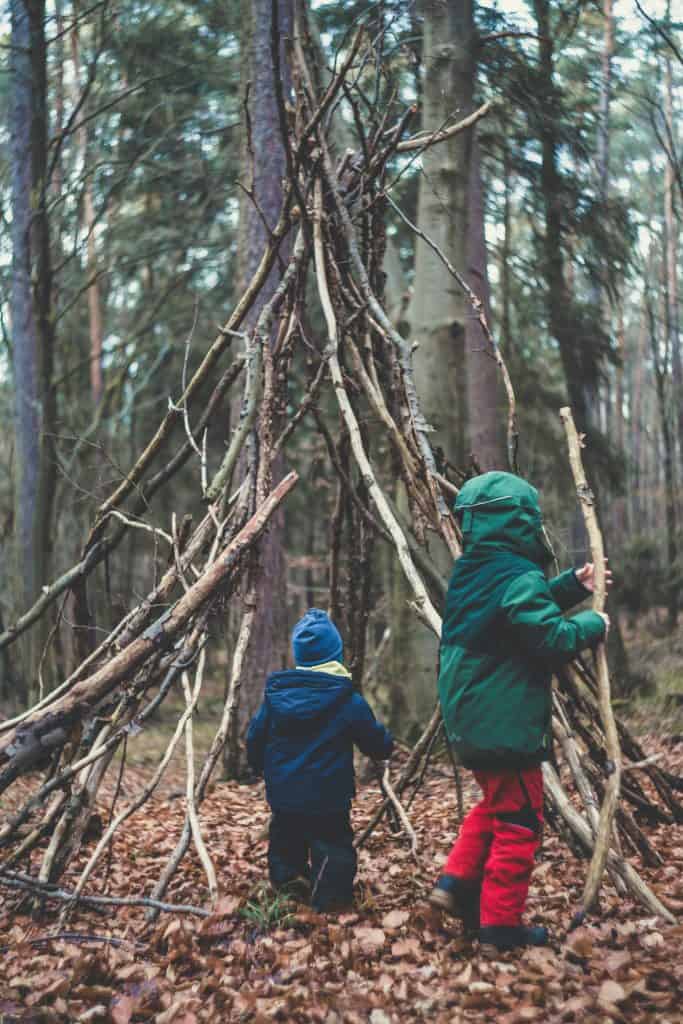
Fire lighting, den building, tool use, games, and nature crafts can all appear in many outdoor learning approaches. In Forest School, these activities may be present – but they are not what makes it Forest School.
The difference lies in the how, not the what.
Forest School:
- Focuses on process over product
- Avoids rigid learning objectives
- Values learner choice and autonomy
- Uses observation rather than instruction to guide development
Many Forest School activities are borrowed from other approaches, such as bushcraft, flow learning, and earth education. What makes them Forest School is the way they are offered – without pressure, assessment, or predetermined outcomes.
A common misconception arises when all outdoor learning is labelled as Forest School, particularly in schools where curriculum-based lessons are taken outside. While these lessons may be valuable outdoor learning, they are not Forest School if curriculum outcomes remain the driving force.
Need indoor activities to keep kids engaged this winter? Explore our cozy winter indoor sensory play ideas your kids will love.
The Value of Using Multiple Outdoor Learning Approaches
Outdoor learning approaches are not mutually exclusive. In fact, they often work best when combined thoughtfully.
The key is to be clear about your educational aims:
- Are you supporting emotional resilience?
- Teaching specific knowledge or skills?
- Building teamwork and leadership?
- Encouraging ecological awareness?
Different approaches serve different purposes. A setting might use:
- Forest School to support emotional well-being
- Curriculum-based outdoor learning to reinforce academic content
- Horticulture to build responsibility and connection
- Field studies to develop scientific understanding
When used together, these approaches enrich learners’ experiences and meet a wider range of needs.
Practical Advice for Educators and Practitioners

Understanding the differences between outdoor learning approaches helps practitioners:
- Communicate clearly with parents, managers, and governors
- Avoid mislabelling all outdoor activities as Forest School
- Choose the right “leaf” on the outdoor learning tree for their goals
Being clear and honest about what approach you are using – and why – builds trust and professional integrity.
Every outdoor learning approach has value, and none needs to replace the others.
Looking for hands-on learning for little ones? Try our DIY sensory activities for toddlers.
Your Next Steps for Blending Outdoor Learning and Forest School
Outdoor learning is a rich and diverse landscape, encompassing many approaches that support learning, health, and well-being in different ways.
Forest School is one distinct and valuable approach within this landscape, with a clear focus on emotional development, self-esteem, and learner autonomy rather than academic outcomes.
By understanding these differences and embracing a range of outdoor learning methods, practitioners can offer deeper, more meaningful experiences for learners.
Take time to reflect on which approaches you already use, which you might explore next, and how they can work together. The outdoor learning tree has many leaves – and all of them have something valuable to offer.
If you have questions or want to share your experiences, feel free to comment below. I’d love to hear how outdoor learning looks in your setting!
FAQs
1. Is Forest School the same as outdoor learning?
No. Outdoor learning is a broad umbrella term that includes many different approaches, such as environmental education, field studies, curriculum-based outdoor learning, and Forest School. Forest School is one specific approach within outdoor learning, with a distinct focus on emotional development, confidence, and learner autonomy.
2. If children light fires or build dens, does that mean it’s Forest School?
Not necessarily. Activities like fire lighting, den building, and tool use appear in many outdoor learning approaches, including bushcraft and adventurous education. What makes something Forest School is not the activity itself, but how it is delivered — child-led, without preset outcomes, and focused on emotional growth rather than achievement.
3. Can Forest School be used alongside the school curriculum?
Forest School does not aim to meet curriculum objectives directly. However, it can sit alongside curriculum-based outdoor learning, where lessons such as maths or literacy are taken outdoors. Using both approaches together can provide a more balanced and enriched learning experience.
4. Why is it a problem to label all outdoor learning as Forest School?
Mislabeling can create confusion for parents, inspectors, and stakeholders, and it risks diluting the purpose of Forest School. Clear language helps everyone understand what children are experiencing and ensures the right approach is being used for the right goals.
5. Do I need to choose just one outdoor learning approach?
No. Outdoor learning approaches are complementary, not competing. Many settings successfully combine Forest School, horticulture, curriculum-based outdoor learning, and environmental education. The key is to be clear about your aims and choose the approach – or combination of approaches – that best supports your learners.