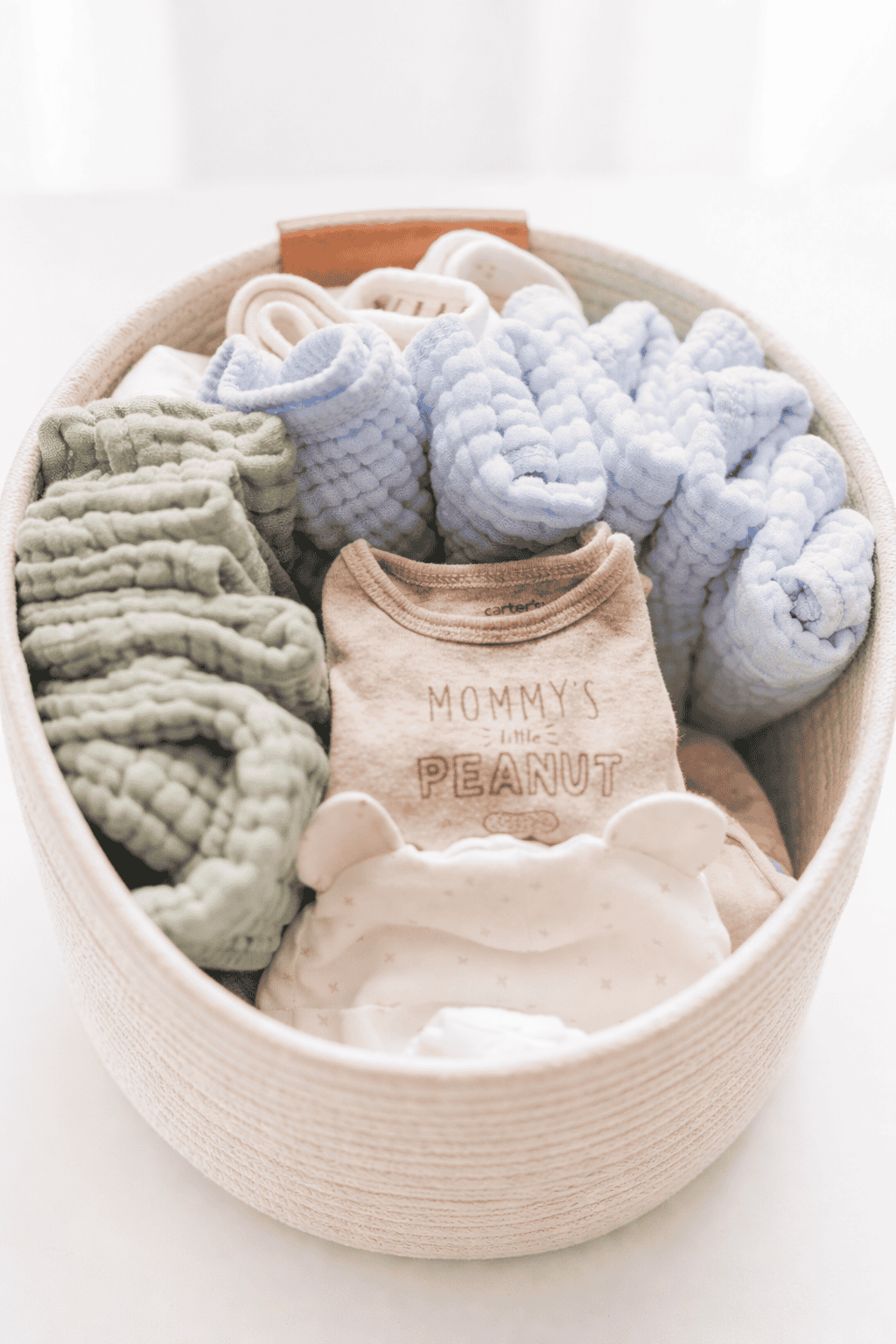
Welcoming a new baby into your home is a sacred and joy-filled season.
It’s a time of preparation, nesting, and thoughtfully choosing what will surround your little one in those first tender months.
As you begin gathering newborn essentials, it’s natural to want products that feel safe, simple, and aligned with your values.
This is where a non-toxic and organic approach becomes so meaningful.
Instead of filling your space with excess, you can focus on a few well-chosen items made from cleaner, safer materials.
This non-toxic newborn essentials checklist focuses on what you actually need, made with safer materials whenever possible.
Think organic cotton, fragrance-free products, and low-tox alternatives that support your baby’s developing system.
Let’s walk through it together.
Why Choose Non-Toxic & Organic Baby Products?
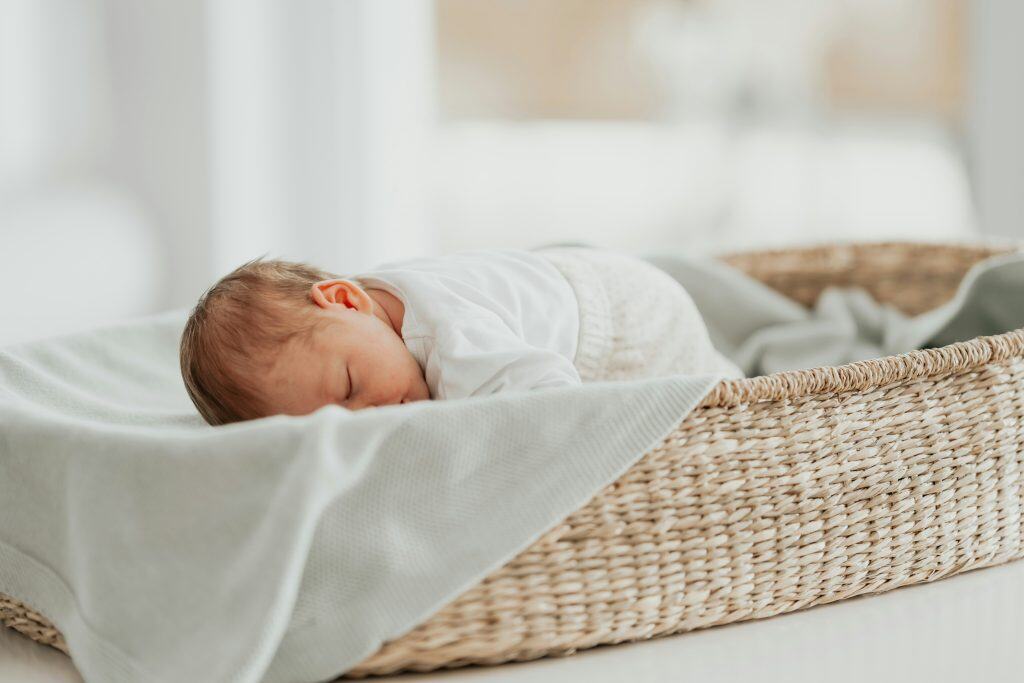
As a mom of three, I’ve had the chance to learn and adjust along the way.
Over the years, I’ve leaned more and more into organic, non-toxic, and sustainable living.
I’ve become more aware of the materials we bring into our home and how often they’re used, washed, and handled.
When it comes to newborns, it becomes even clearer.
Their clothes sit against their skin all day. Their bedding wraps around them while they sleep. Bottles, burp cloths, diapers – these aren’t occasional items. They’re constant.
So I focus on simple materials that feel good and hold up well.
- Organic cotton for softness and breathability.
- Fragrance-free products that keep things uncomplicated.
- Glass or stainless steel when it makes sense.
Fewer items, but better quality.
And that’s really what this checklist is about.
If you’re also thinking ahead to your own recovery needs (because postpartum matters too), you might like my guide on low-toxic postpartum essentials.
Newborn Essentials Checklist (Non-Toxic + Organic)
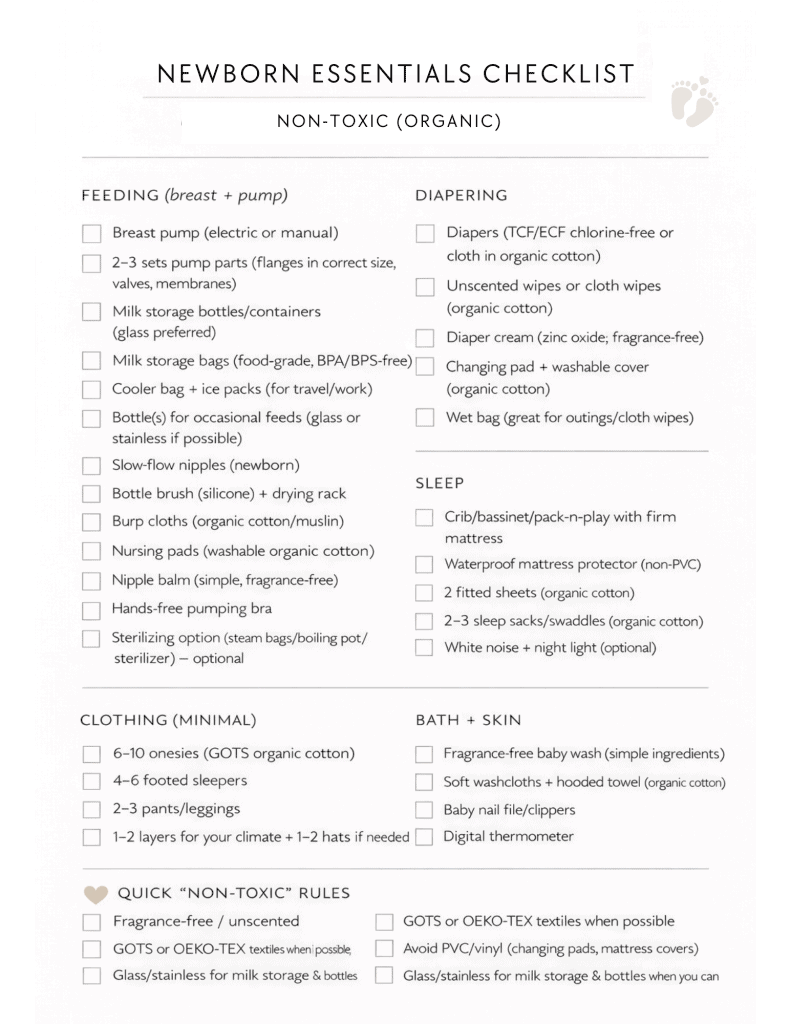
Below is a complete checklist organized by category. This keeps things simple and helps you build your baby registry intentionally.
Feeding (Breast + Pump)
If you plan to breastfeed, pump, or do a combination, these essentials will support you without unnecessary extras.
- Breast pump (electric or manual)
- 2–3 sets pump parts (flanges in correct size, valves, membranes)
- Milk storage bottles/containers (glass preferred)
- Milk storage bags (food-grade, BPA/BPS-free)
- Cooler bag + ice packs (for travel or work)
- Bottle(s) for occasional feeds (glass or stainless steel if possible)
- Slow-flow nipples (newborn size)
- Bottle brush (silicone) + drying rack
- Burp cloths (organic cotton or muslin)
- Nursing pads (washable organic cotton)
- Nipple balm (simple ingredients, fragrance-free)
- Hands-free pumping bra
- Sterilizing option (steam bags, boiling pot, or sterilizer) – optional
Diapering
Your baby’s skin is delicate and highly absorbent. This is one area where low-tox choices matter.
- Diapers (TCF/ECF chlorine-free or cloth in organic cotton)
- Unscented wipes or cloth wipes (organic cotton)
- Diaper cream (zinc oxide, fragrance-free)
- Changing pad + washable organic cotton cover
- Wet bag (especially helpful for outings or cloth wipes)
If you want to keep your setup simple but actually functional, I also have a full guide on changing table essentials that breaks down what’s truly worth having.
Sleep
Sleep products should be simple, breathable, and safe.
- Crib, bassinet, or pack-n-play with firm mattress
- Waterproof mattress protector (non-PVC)
- 2 fitted sheets (organic cotton)
- 2–3 sleep sacks or swaddles (organic cotton)
- White noise machine + night light (optional)
Clothing (Minimum)
Babies grow quickly. Start small and build as needed.
- 6–10 onesies (GOTS organic cotton)
- 4–6 footed sleepers
- 2–3 pants or leggings
- 1–2 extra layers for your climate + 1–2 hats if needed
If you’re in that nesting stage where you just want something sweet and productive to do, you might also enjoy my list of adorable baby projects before birth.
Bath + Skin
Less is more when it comes to baby skincare.
- Fragrance-free baby wash (simple ingredients)
- Soft washcloths + hooded towel (organic cotton)
- Baby nail file or clippers
- Digital thermometer
- Saline drops or spray + bulb syringe or aspirator
- Soft brush or comb
Playtime & Learning
Newborn play is simple and sensory-based.
- Play mat
- Activity gym
- Tummy time pillow
Health + Safety
These are foundational items you’ll use often.
- Baby first aid kit
- Car seat
- Baby carrier (low-tox fabric preferred)
Quick “Non-Toxic” Rules
When in doubt, use these guidelines:
- Choose fragrance-free or unscented
- Look for GOTS or OEKO-TEX certified textiles
- Avoid PVC or vinyl (changing pads, mattress covers)
- Use glass or stainless steel for milk storage and bottles when possible
How to Build a Minimalist Baby Registry
It’s easy to overbuy.
New parents are often told they need swings, loungers, wipe warmers, bottle sterilizers, specialty gadgets, and backups for everything.
But in reality, babies need very little in the early weeks.
Start with:
- Safe sleep space
- Feeding supplies
- Diapering essentials
- A few clothing basics
- Health and safety items
Everything else can wait.
Over time, you’ll learn what your baby actually prefers. Some love carriers. Some prefer floor time. Some outgrow swaddles quickly.
Keep your space calm and uncluttered. It makes postpartum life easier.
If you’re a first-time mom and you’re trying to sort through all the advice coming at you from every direction, I wrote top pregnancy tips for first-time mom to keep things practical and steady.
Understanding Organic Certifications (GOTS & OEKO-TEX)
When shopping for organic newborn essentials, you’ll often see labels like:
- GOTS (Global Organic Textile Standard)
- OEKO-TEX
Here’s what they mean in simple terms:
GOTS ensures the fabric is made from organic fibers and processed without harmful chemicals. It also includes environmental and labor standards.
OEKO-TEX certifies that textiles are tested for harmful substances.
If a product carries one of these certifications, it’s a helpful indicator of safer materials.
It doesn’t have to be every item. Focus on what touches baby’s skin most:
- Clothing
- Bedding
- Burp cloths
- Washcloths
Safer Feeding Choices (Glass vs. Plastic)
If you’re pumping or occasionally bottle feeding, you’ll have to choose storage containers.
Glass and stainless steel are preferred because they do not leach chemicals when heated or washed repeatedly.
If you use plastic:
- Choose BPA and BPS free
- Avoid microwaving
- Replace scratched or cloudy bottles
You can mix and match. Many parents use glass at home and lighter options for travel.
Balance practicality with safety.
Creating a Low-Tox Sleep Environment

Sleep is where babies spend most of their time.
Here’s how to simplify it:
- Use a firm mattress
- Avoid loose blankets or bumpers
- Choose organic cotton sheets
- Skip heavily scented detergents
Also check mattress protectors carefully. Many waterproof layers are made from PVC or vinyl. Look for non-PVC alternatives.
Keep the space breathable and simple.
Gentle Baby Skin Care (Less Is More)
Newborn skin does not need complicated routines.
In fact, overusing products can cause irritation.
Stick with:
- Fragrance-free wash
- Warm water
- Zinc oxide diaper cream when needed
Avoid essential oils, heavy fragrance, and multi-step skincare systems.
Sometimes plain water is enough.
Playtime Without Plastic Overload
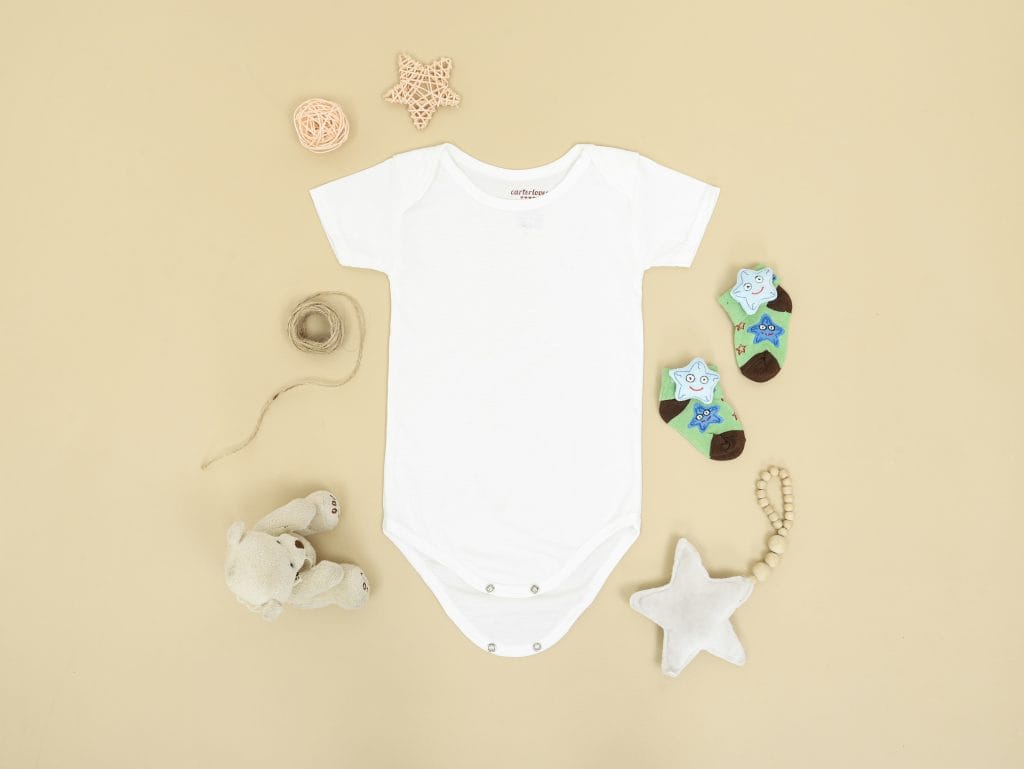
Newborns are drawn to contrast, movement, and your voice.
A simple play mat and activity gym encourage:
- Tummy time
- Neck strength
- Sensory exploration
Look for:
- Wooden toys
- Organic cotton fabrics
- Non-toxic finishes
Rotate items instead of buying more.
Making Non-Toxic Affordable
Here are ways to stay budget-friendly:
- Ask for specific items on your registry
- Buy secondhand for non-fabric items (like bassinets)
- Prioritize what touches baby’s skin
- Start minimal and add later
You can upgrade gradually.
And if you’re planning a homebirth (or even just exploring it), my homebirth supplies checklist can help you feel more organized and less overwhelmed.
Start Simple, Stay Intentional
This non-toxic newborn essentials checklist is meant to simplify your preparation.
If you’re currently building your registry or nesting at hint-level intensity, I’d love to hear from you.
What’s one item you’re prioritizing?
Comment below and let’s talk through it together.
Don’t Let Postpartum Prep Overwhelm You
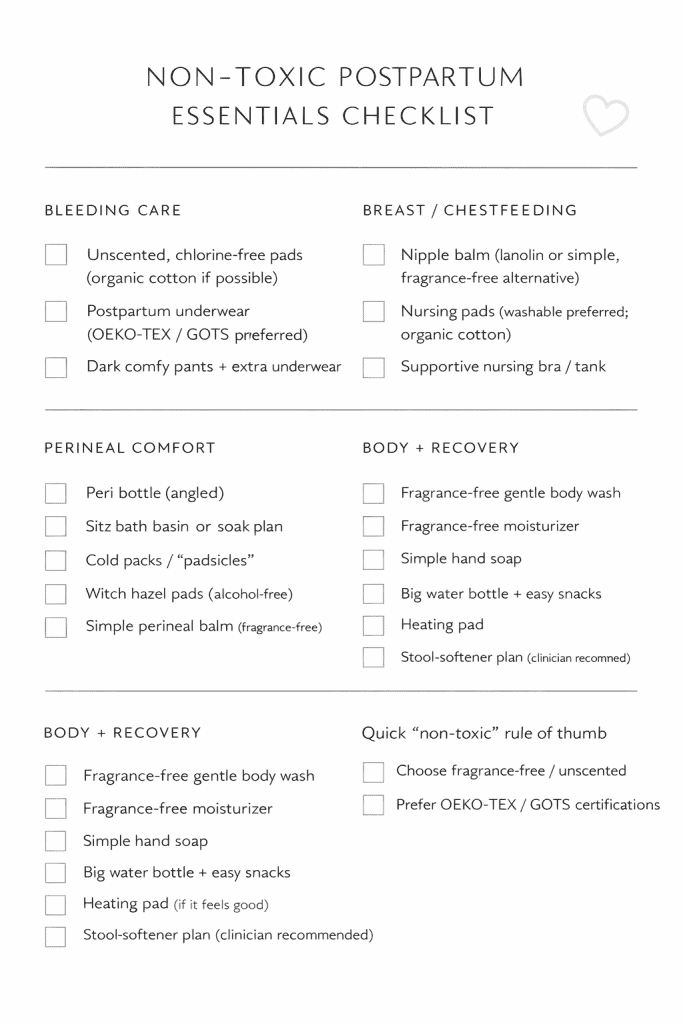
Between sleepless nights, recovery, and caring for your newborn, the last thing you need is to stress about what products to buy—or whether they’re even safe.
That’s why I’ve done the research for you.
My free Non-Toxic Postpartum Essentials Checklist gives you everything in one simple, printable guide—organized by need, focused on safety, and ready to take the guesswork out of prep.
Print it. Check it off. Feel confident you’re choosing products that care for your body the way it deserves.
FAQs
Do I need organic everything for my newborn?
No.
Start with what touches baby’s skin the most – clothing, bedding, burp cloths, and diapers. Upgrade gradually if it fits your budget.
Small changes add up.
Are cloth diapers really safer than disposable?
Cloth diapers made from organic cotton reduce exposure to certain bleaching processes and synthetic materials.
However, chlorine-free disposables are also a reasonable option. Choose what works for your lifestyle.
Consistency matters more than perfection.
Is a sterilizer necessary for bottles and pump parts?
Not always.
For healthy full-term babies, washing with hot soapy water and occasional boiling is typically sufficient. A sterilizer is convenient but optional.
Always follow your pediatrician’s guidance.
What fabrics should I avoid for baby clothing?
Avoid synthetic fabrics with strong chemical smells, flame retardants, or heavy finishes.
Look for:
- Organic cotton
- Linen
- Certified textiles
Breathable, simple fabrics are best.
How can I tell if something contains PVC or vinyl?
Check product descriptions carefully.
Words like “vinyl,” “PVC,” or “phthalate-containing” are red flags. When in doubt, contact the manufacturer or look for clearly labeled “PVC-free” products.