
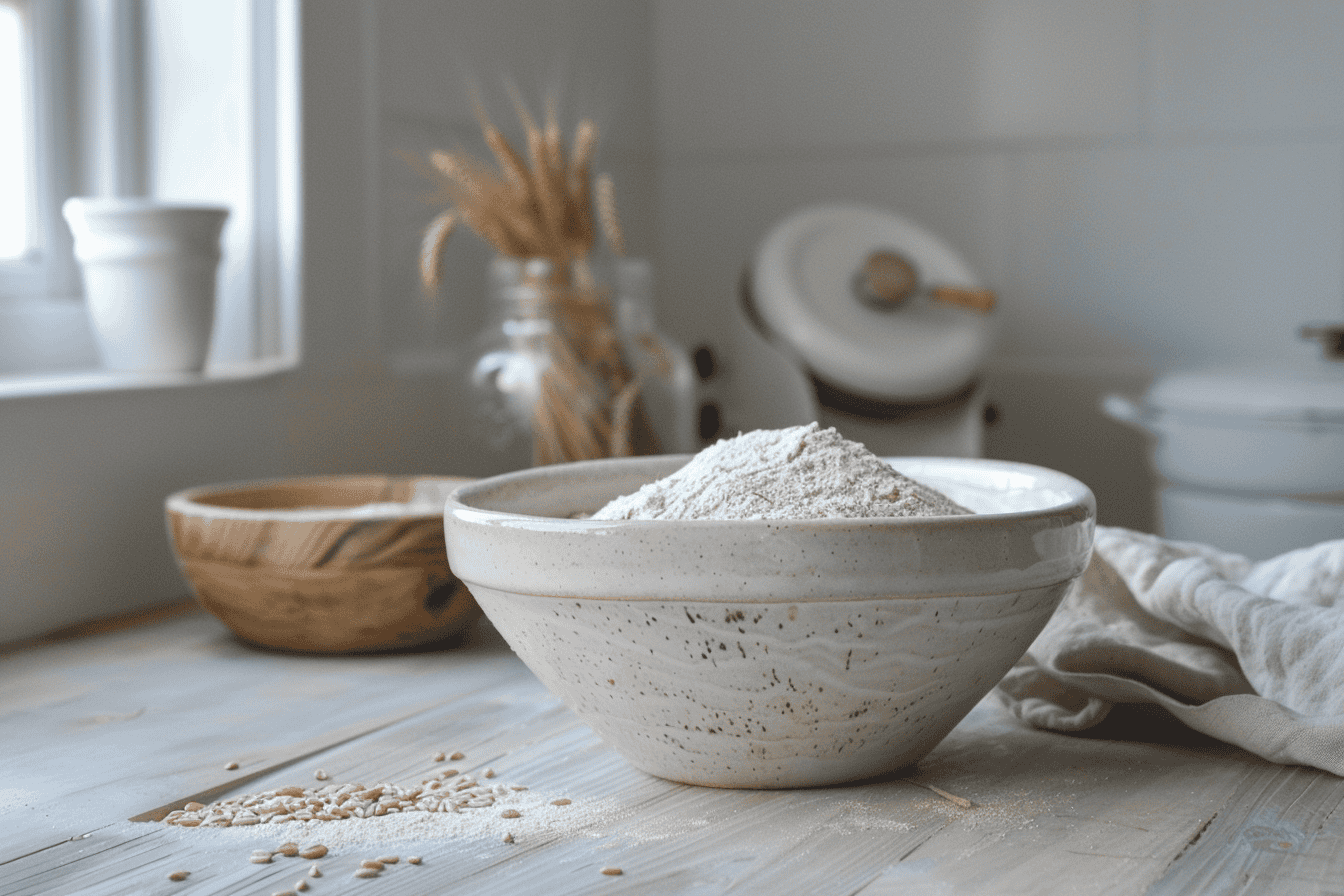
If you’re looking to make one simple swap in your kitchen that brings big rewards, consider milling your own flour. Freshly milled flour isn’t just a trend – it’s a return to the way flour was meant to nourish us.
Packed with natural nutrients and flavor, fresh flour supports better health, tastier homemade goods, and a more mindful way of living.
Whether you’re baking sourdough, learning to sew your own apron, or just taking small steps toward a simpler home life, understanding the benefits of freshly milled flour is a worthy place to begin.
In this article, I’ll walk through exactly why fresh flour stands out, how it compares to store-bought options, and how to get started using it in your own kitchen.
What Is Freshly Milled Flour?
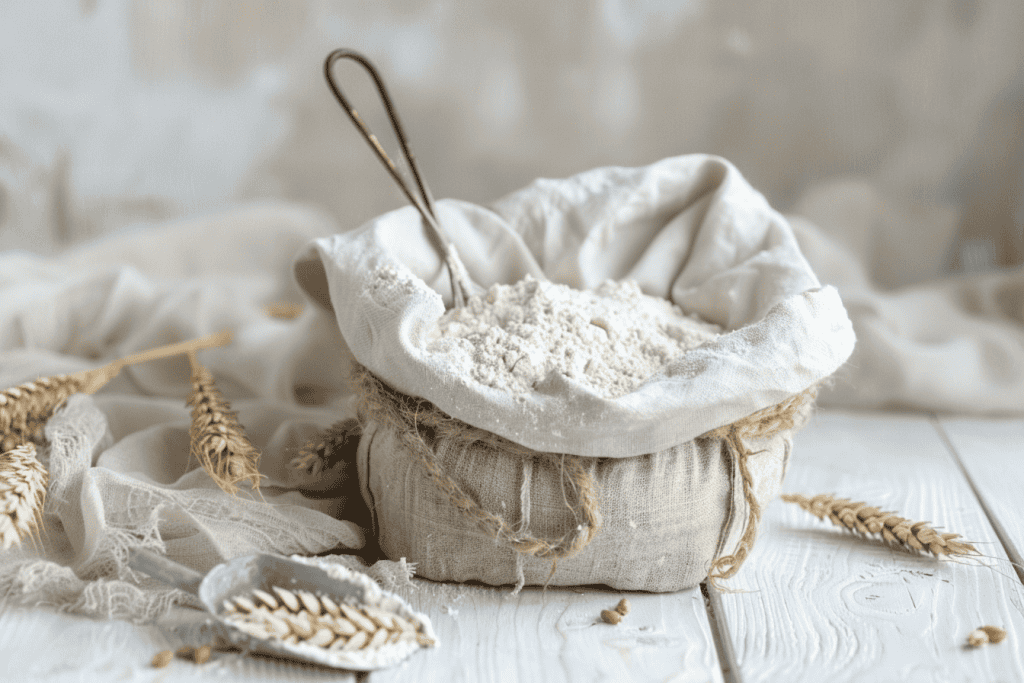
Freshly milled flour is a whole grains ground at home or in small batches just before baking.
Unlike commercial flours that are processed and stored for long periods, fresh flour includes all parts of the grain: the bran, germ, and endosperm. This means you get the full spectrum of natural nutrients, fiber, and oils that are often lost in store-bought versions.
When grains are milled and immediately used, you’re working with a living food. It hasn’t been stripped, bleached, or blended with preservatives. Instead, it brings a richness and depth to your baking that’s both wholesome and deeply satisfying.
Using a grain mill at home (or purchasing fresh flour from a small-batch producer) ensures your flour is nutrient-rich and full of flavor – qualities that begin to fade quickly once the grain is ground.
Fresh Milled Flour vs. Store Bought Flour
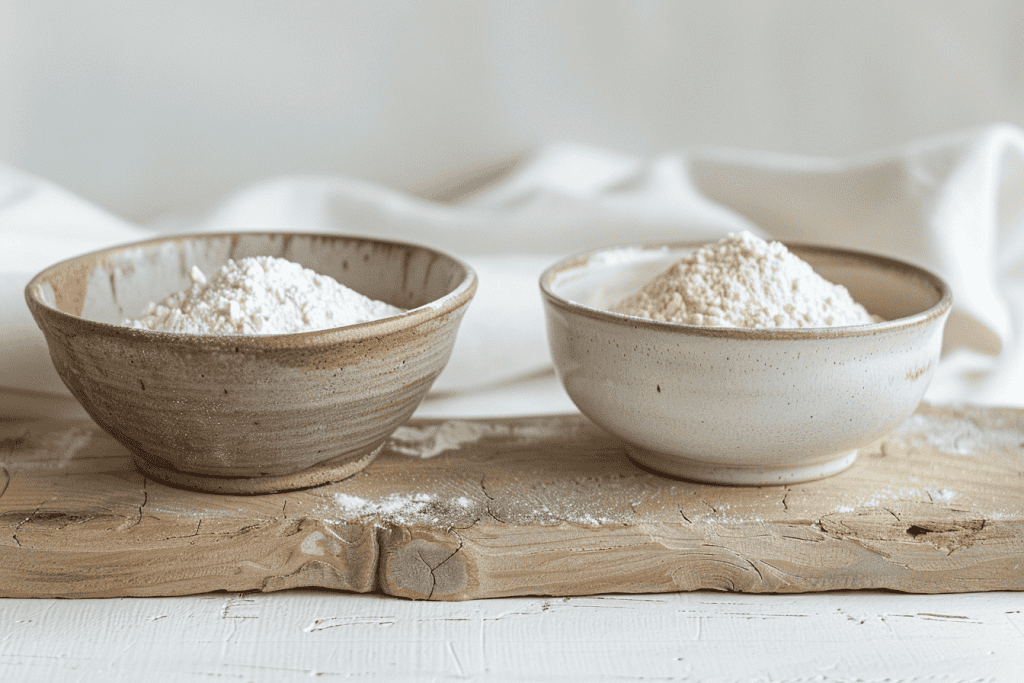
There’s a big difference between fresh milled flour and the bagged stuff from the store – and once you understand it, it’s hard to go back.
Store-bought flour might be convenient, but it’s usually missing the best parts of the grain. During commercial processing, the bran and germ get stripped out to make the flour shelf-stable. That’s where most of the fiber, vitamins, and healthy fats are found.
What you’re left with is mostly just starch. And while it still “works” for baking, it doesn’t bring much to the table nutritionally.
Fresh milled flour, on the other hand, gives you the whole grain. You’re using every part – nothing tossed out, nothing wasted. That means more flavor, more nutrition, and more satisfaction in every loaf, pancake, or muffin. It smells better, tastes better, and honestly, just feels more real.
Another thing to think about: store-bought flour can sit in warehouses and on grocery shelves for months (sometimes longer).
During that time, even if it started out with some nutrition, it’s slowly losing quality. Fresh flour starts to oxidize once it’s milled, which is why milling it yourself (or buying it from a local miller who grinds to order) gives you a huge edge.
It’s about getting back to basics – real food, the way it was always meant to be.
Nutritional Benefits of Freshly Milled Flour
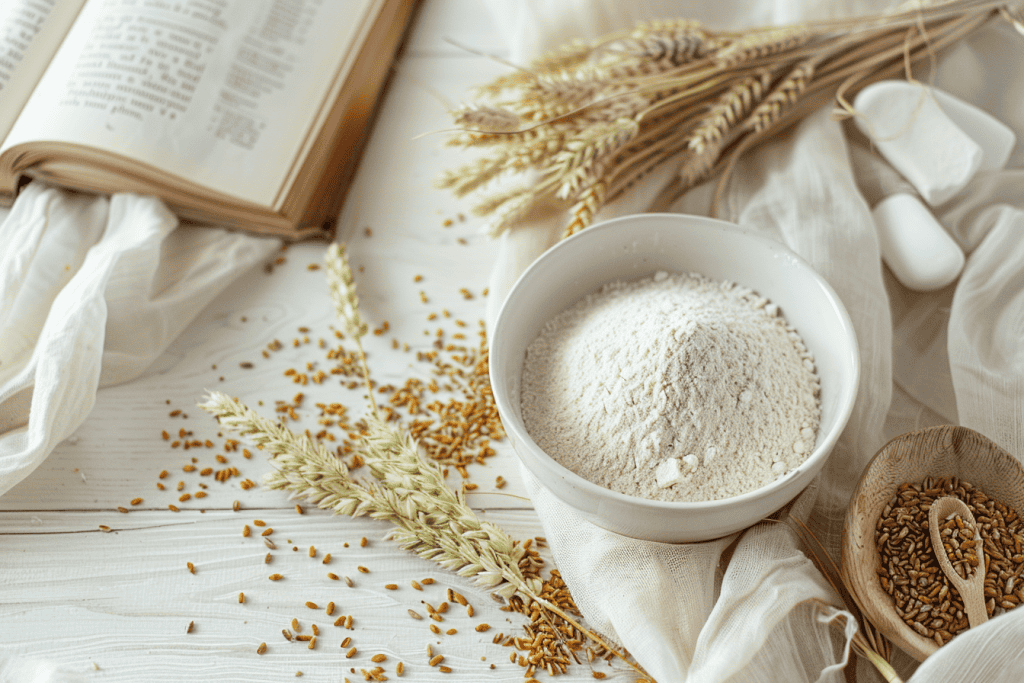
Fresh flour is giving your body real, whole nourishment.
When you mill your own grain (or buy it fresh), you hang on to all the parts that usually get removed in factory processing. And that means more fiber, more vitamins, more minerals – just more goodness all around.
Here’s why that makes a real difference:
You Keep the Fiber
Most store-bought flours are missing the bran, which is where the fiber lives. That fiber helps your digestion, keeps things moving, and helps you feel full longer. When you use fresh flour, the fiber stays right where it should be – in your food.
You Get the Healthy Fats
The germ – the heart of the grain – has natural oils that are full of healthy fats.
These fats help your body absorb nutrients better, and they give baked goods that rich, satisfying flavor. Store-bought flour removes the germ to prevent spoilage, but you lose all those benefits in the process.
You Hold Onto the Vitamins
Freshly milled flour is loaded with vitamins that your body actually needs, like vitamin E and the B vitamins. These help with everything from energy levels to brain health. Trouble is, they break down over time. Milling your own flour means they’re still there when you bake.
You Keep the Minerals Too
Grains naturally contain minerals like magnesium, iron, and zinc. These are good for your immune system, bones, and blood. When flour is processed and stored for months, you lose a lot of that. With fresh flour, you get the full package.
It’s Real Food, Just as It Should Be
Nothing added, nothing taken away. That’s the beauty of fresh milled flour. You’re working with a food that hasn’t been messed with – just whole grains turned into flour in your own kitchen. And that’s something your body can truly recognize and use.
How Freshly Milled Flour Improves Baking Results

When you switch to fresh flour, the first thing you’ll probably notice is the smell. It’s warm, nutty, and full – kind of like freshly cracked grain or warm cereal. That rich aroma carries over into your baking, too.
Whether you’re making bread, muffins, pancakes, or cookies, everything just tastes better. More real. More satisfying.
You Can Taste the Grain
Store-bought flour is often bland, which makes sense – it’s been sitting on a shelf for who knows how long.
Freshly milled flour still has the oils, the bran, and all the natural flavor that comes with them. It adds depth and warmth to baked goods without needing extra ingredients.
Your Dough Acts Differently – in a Good Way
Fresh flour behaves differently from refined white flour. It’s more active, more alive. Bread made with fresh flour tends to ferment better and rise more evenly, especially when paired with sourdough.
You might need to adjust your recipes a little at first, but once you get the hang of it, you’ll see how much better your bakes can be.
It’s More Filling and Satisfying
Because it still has the fiber and healthy fats, fresh flour keeps you full longer. You’re not just eating empty carbs – you’re eating something that sticks with you. That’s a big plus, especially for growing kids or anyone trying to cut down on snacks between meals.
What to Expect When You Start Baking with Fresh Flour
When you first start baking with freshly milled flour, things might feel a little different – and that’s completely normal. The flour behaves differently from store-bought, mostly because it still has all its natural parts intact.
Doughs may feel a bit stickier or firmer, and you might notice your bread or muffins look more rustic or hearty. That’s not a mistake – it’s just what real food looks like.
Fermentation, especially with sourdough, can move faster since fresh flour is full of life-giving nutrients that haven’t been sitting on a shelf for months. And the flavor? You’ll notice it right away. Everything you bake will taste richer, warmer, and more satisfying – even simple pancakes or a loaf of sandwich bread.
The key is to go slow, start with something easy, and know that it doesn’t have to be perfect. Each bake is part of the learning, and every time you use fresh flour, you’re feeding your home with something real and nourishing.
It’s a shift that might take a little getting used to – but one that quickly starts to feel like second nature.
Common Myths About Freshly Milled Flour
When people first hear about milling their own flour, it can sound a bit intimidating. Maybe even old-fashioned or too involved. But the truth is, freshly milled flour is more approachable than most folks think. Let’s clear up a few common myths that tend to float around:
“It’s too complicated to do at home.”
This is one of the most common assumptions – and it’s simply not true.
Once you have a grain mill (many of which are compact and user-friendly), milling flour is quick and straightforward. You just pour in the grain, turn it on, and you’re done in minutes. It doesn’t add much time to your baking routine, and you only mill what you need.
“Fresh flour goes bad too fast.”
Yes, freshly milled flour is more delicate than the ultra-processed kind, but that’s also what makes it healthier. The trick is to mill in small batches and use it soon after grinding. You’re not storing it for months – you’re baking with it fresh, the way flour used to be used.
Whole grains, on the other hand, have a long shelf life and are easy to store in bulk.
“It’s too hard to bake with.”
Fresh flour does behave a little differently – it might absorb liquid a bit faster, and the texture of your baked goods may be a bit more rustic. But it’s nothing to be afraid of. With a little patience and practice, most people adjust quickly. Starting with something simple like muffins or pancakes is a great way to ease in.
“It’s only for serious bakers or homesteaders.”
Not at all. Freshly milled flour is for anyone who wants to make better, more nourishing food at home. You don’t need a big kitchen, a rural lifestyle, or a ton of experience. If you’re already baking from scratch now and then, switching to fresh flour is just a natural next step.
If you’ve been curious about freshly milled flour but held back because it seemed too hard or too unfamiliar, take heart – it’s probably more doable than you realized. Like many good things in a slow, intentional home, it doesn’t have to be perfect or complicated to be worth it.
Start small, learn as you go, and don’t be afraid to give it a try. You might just find that fresh flour fits right into your rhythm – and makes your kitchen feel even more like home.
Freshly Milled Flour Supports a More Self-Sufficient Home

One of the best things about using freshly milled flour is how it helps you take more control over your food.
When you’re grinding your own grains, you’re not relying on big companies or wondering what’s been added (or taken out) along the way. You know exactly what’s in your flour because you made it yourself.
Fewer Trips to the Store
With whole grains on hand, you don’t need to run out every time you’re low on flour. You just mill what you need, when you need it. It’s one less thing to keep stocked – and one more step toward a more sustainable kitchen.
Longer Shelf Life for Whole Grains
Whole grains store much longer than flour – sometimes up to a year or more if kept cool and dry. That makes bulk buying easier and more affordable. You can stock up once and grind small amounts as you go, keeping your flour fresh and your pantry practical.
Less Waste, Fewer Additives
When you mill your own flour, you skip the packaging, the preservatives, and the factory processing. It’s just you, your grain, and your mill. That simple process helps reduce waste, cut down on hidden ingredients, and keep your kitchen aligned with your values.
Ready to Try Freshly Milled Flour?
At the end of the day, using freshly milled flour is one of those simple changes that adds up.
You get more nutrition, better flavor, and the peace of mind that comes from knowing exactly what’s in your food. It supports your health, your kitchen routines, and your bigger goal of living a slower, more intentional life.
You don’t have to overhaul everything overnight. Even just starting with one loaf of bread or one batch of muffins using fresh flour can make a difference. It’s a step toward more self-sufficiency, better food, and a home that feels just a little more rooted.
