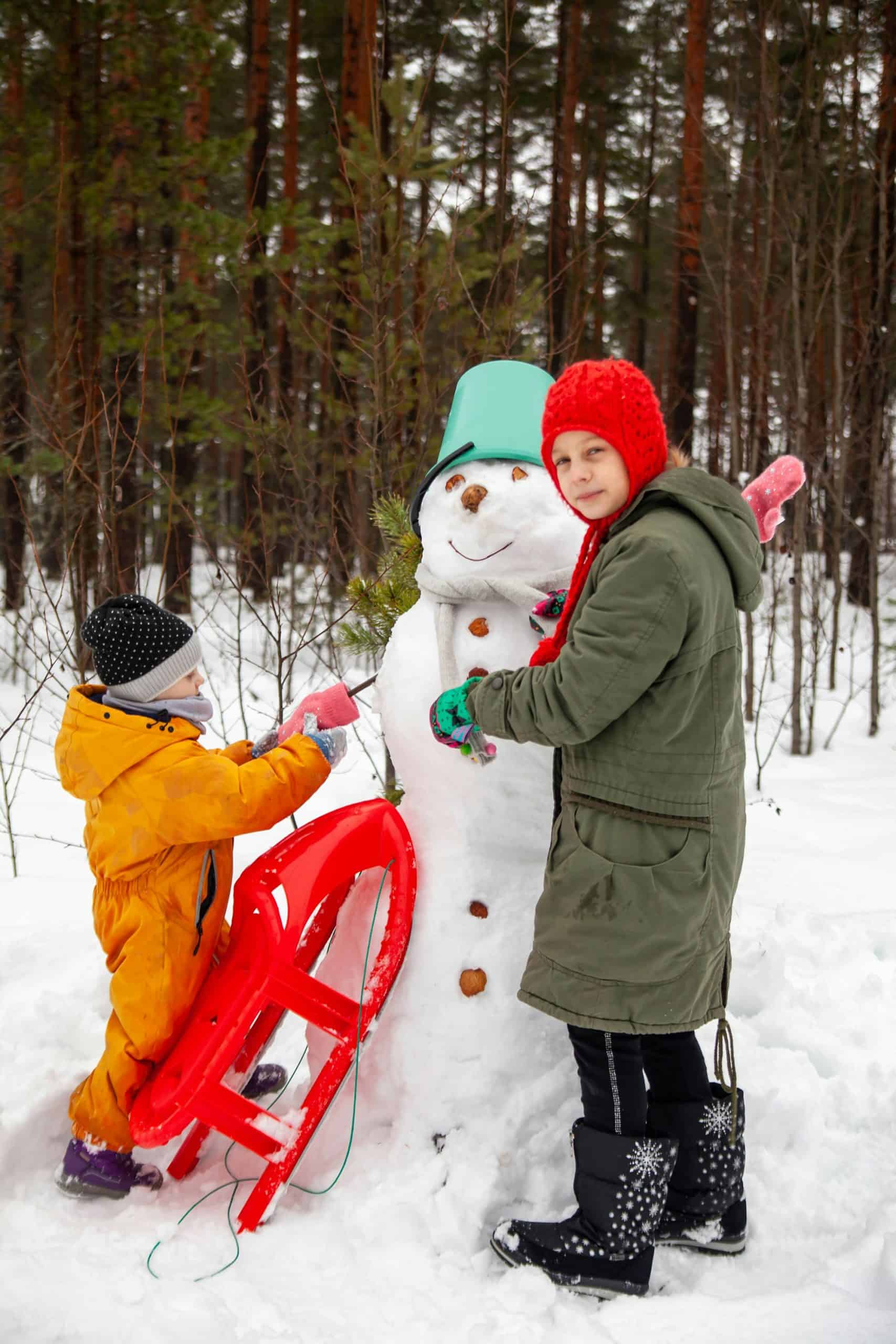
Winter is a magical season to explore the outdoors with children.
Bare branches reveal hidden bird nests, frosty mornings sparkle with discovery, and even mud puddles or fresh snow become opportunities for play and problem-solving.
Forest School – an outdoor education approach where kids learn through play in nature – doesn’t stop for winter weather.
In fact, with the right preparation, children can thrive outside in the cold. These 10 wonder-filled winter activities are designed for mixed ages (preschool to early elementary), blending playful fun with a touch of nature observation and learning.
Most require little to no prep, so busy parents and teachers can enjoy them too.
Bundle up, embrace the cozy homestead spirit, and let’s spark some winter wonder!
How to Use This List
Before heading out, make sure everyone is dressed warmly and safely. Remember the saying: “There’s no such thing as bad weather, only bad clothing.” Layers are key to keeping kids comfortable – check out our guide on how to layer clothes for winter for full details.
- Base layer: Thermal underwear or long johns to hold in body heat.
- Mid layer: Fleece or sweater for insulation.
- Outer layer: Waterproof coat and pants to block wind and wetness.
- Feet & hands: Insulated boots with thick socks, plus waterproof gloves or mittens, and a warm hat and scarf.
Choose a play area you’re comfortable with – it could be a forest, a local park, or your own backyard (you can do “forest school” anywhere outdoors). Plan for winter conditions: on very cold days, have a warm-up plan like a thermos of hot cocoa or indoor break.
Supervise closely (especially around any campfires or icy areas), but also allow kids the freedom to explore. Each of these activities can be scaled up or down: let younger children dive into simple sensory play, while giving older kids roles as leaders or problem-solvers.
Most of all, follow the children’s curiosity. A little flexibility and enthusiasm from you will set the tone for a fun, safe winter adventure!
7 Winter Forest School Activities Kids Will Love
The following activities celebrate the unique joys of winter. They’ll get kids moving, observing, creating, and imagining – all while enjoying the fresh air. Whether you have toddlers or early elementary students, these ideas offer something for everyone with simple tweaks for different ages.
Let’s jump in!
1. Mini Shelter Building for Woodland Creatures
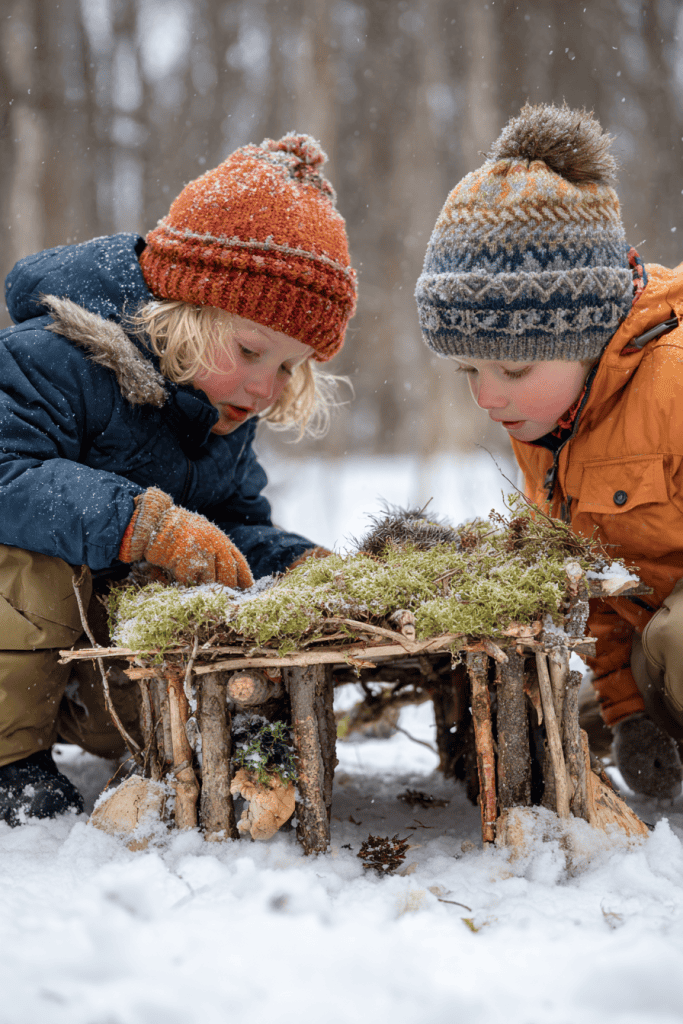
Building a mini den or shelter is a fantastic hands-on activity to keep kids warm and busy on a chilly day. Pretend that a little woodland creature (like a hedgehog, squirrel, or even a friendly forest fairy) needs a warm home for the winter.
Challenge the children to build a shelter for this “friend” using only natural materials they find on the forest floor. They can collect sticks, branches, dry leaves, moss, and pine needles to construct a tiny hut or lean-to. Encourage them to think: how can we make it cozy and dry?
This activity naturally introduces how animals hibernate or find shelter from harsh weather. You can talk about how a real hedgehog might burrow under leaves or how a fox might have a den.
Safety tip: remind kids to use only dead branches on the ground (do not break off live branches), and supervise so that any larger stick structures won’t topple on someone. For mixed ages, make it a group effort – big kids can handle the larger sticks while little ones gather leaves or play-test with the toy animal.
Try This: If you have time and space, older children can upscale this activity and build a life-size shelter that they can sit in. Once it’s built, let them cuddle inside with a blanket and imagine they’re winter animals themselves.
2. Puddle Stomping and Ice Play
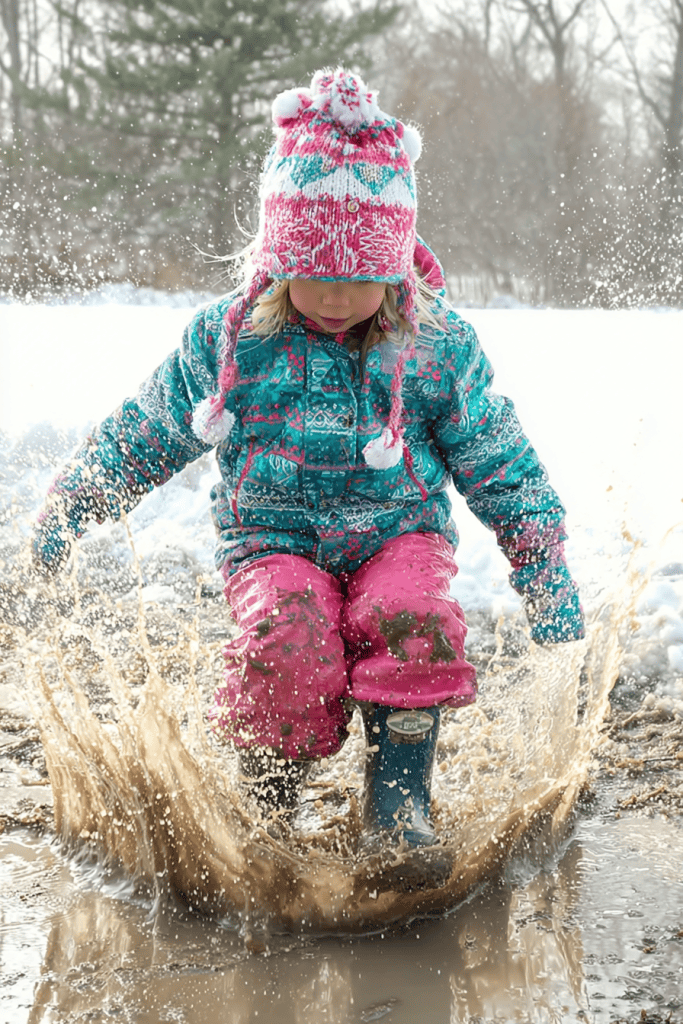
Kids love puddles – it’s almost a fact of nature. If your winter is more wet than snowy (or during a mid-winter thaw), take advantage of those muddy puddles for some joyous play and sneaky learning.
Suit up in rain boots and waterproof pants because things are about to get splashy. Let the little ones jump and stomp to their heart’s content. For an added twist, bring a bottle of eco-friendly dish soap and squirt a little into a big puddle.
Give it a swish with a stick and then have the kids jump – they’ll create an explosion of bubbles and foam. You can also sprinkle a bit of food coloring in the puddle and stir to watch colors swirl and mix.
If the weather is cold enough to form a thin sheet of ice, invite children to skate a toy across it, crack it with a stomp, or lift a piece to examine up close. Talk about how water turns to ice when it’s freezing and back to water when it warms.
Try This: Make tiny nature boats and have a puddle regatta. Use bark or leaves as little boats and let kids create waves by tapping or blowing on the water to see whose boat moves fastest.
For a cozy follow-up indoors, pair this with fun winter Sunday school crafts to keep the creativity going on chilly days.
3. Winter Listening Walk
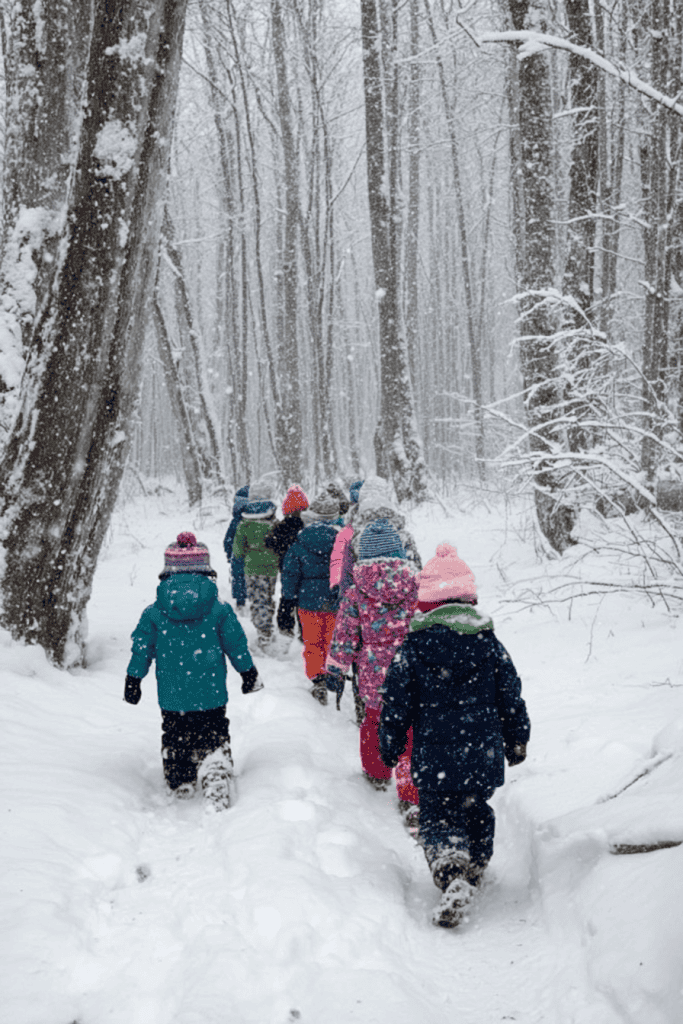
Winter’s quieter soundscape can be quite wondrous if you listen closely. A listening walk is a calming activity that helps children tune into the sounds of nature and practice mindfulness.
Find a safe spot in the woods or yard, and tell the kids you’re all going to use your “deer ears” (cup your hands behind your ears to amplify sound). You might give each child a simple “listening jewel” like a smooth pebble to hold as a reminder to stay quiet and focused.
Walk slowly or find a place to sit or stand still. Then hush… listen together. What can they hear? Maybe the wind whispering through bare branches, the crunch of snow, or the distant caw of a crow. After a minute or two, invite everyone to share what they noticed.
You’ll be amazed at the small details kids pick up when given the chance. This activity naturally builds concentration and an appreciation for nature’s sounds.
For older children, you could introduce terms like “soundscape” or have them draw a simple sound map indoors later.
Try This: Create a little ritual to make the listening walk feel special. Keep the “listening jewels” in a small pouch and hand them out quietly before you begin. After the walk, end with a gentle song or humming together to close the activity.
4. Embrace the Winter Wonders (Free Play and Exploration)
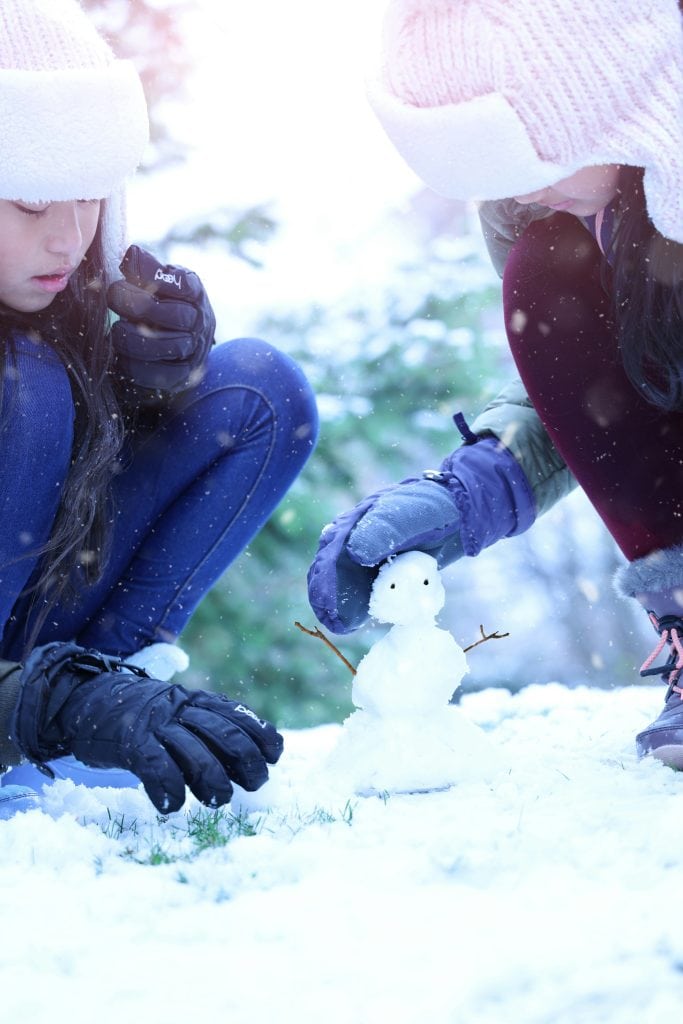
Sometimes the best forest school “activity” is to let the kids lead the way. Winter offers so many spontaneous moments for free play and discovery, so leave room for unstructured adventure.
Maybe the children discover a perfect sledding hill, or they start piling up snow for a fort or snowman. If a fresh snowfall begins, pause and catch snowflakes on your tongues. Show them how to make snow angels by lying down and moving their arms and legs.
If the sun peeks out after a storm, take a moment to admire how the world sparkles. Children have a natural sense of wonder, and winter can really amplify it. By embracing these unscripted moments, you teach kids to appreciate nature’s surprises.
You might even ask them what they want to do and follow their excitement. As an adult facilitator, your role can sometimes be just to observe and encourage rather than direct.
Of course, keep safety in mind, but otherwise let them romp. These free-play experiences often become the most cherished memories.
Try This: At the end of your outdoor day, gather everyone and invite them to share their favorite discovery or moment. This simple reflection helps kids internalize what they found meaningful and rounds out the day with gratitude for winter’s wonders.
For indoor days, extend the cozy vibes with cozy winter indoor sensory play ideas to keep little hands and minds engaged.
5. Campfire Warm-Up (Safe Fire + Snack)
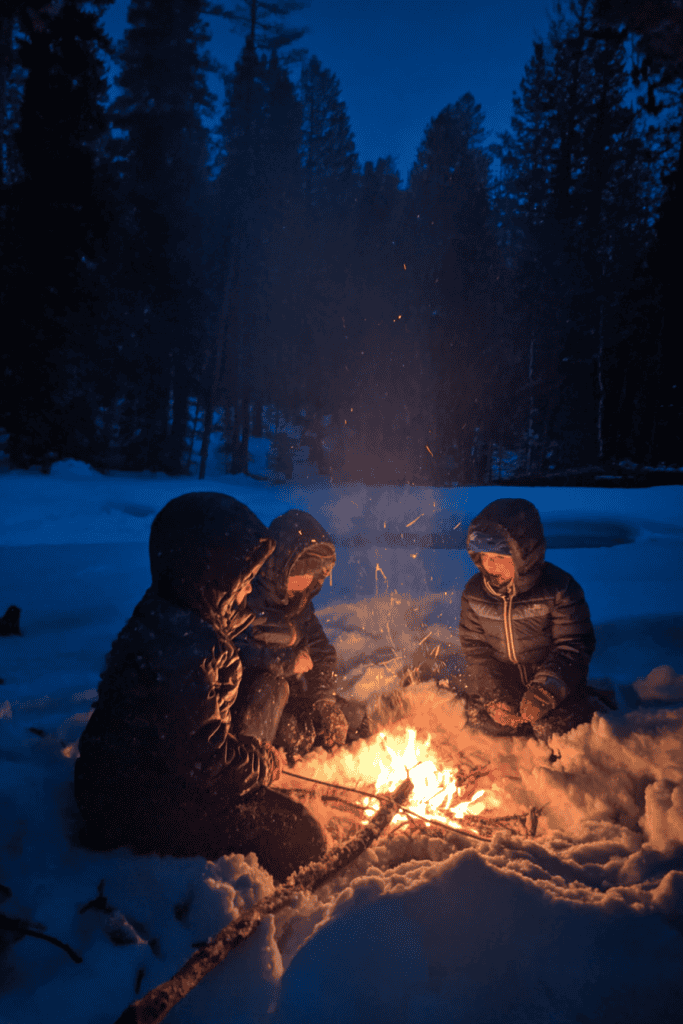
A small campfire brings warm cheer to a cold day and creates a natural gathering spot for winter forest fun. With careful supervision, kids can learn fire safety, simple science, and even enjoy a bit of cooking. Plus, nothing beats warming cold fingers by a crackling fire while enjoying a tasty treat!
Choose a safe spot (fire pit or cleared patch) and build a small fire using tinder, kindling, and logs. Involve kids in collecting dry twigs and laying the fire (one child at a time, others watch safely).
Once lit, make a simple snack: toast marshmallows, or warm apple slices with cinnamon. Older kids can help with fire-starting or cooking, while younger ones enjoy the flames, sing songs, or stir hot cocoa nearby.
A campfire appeals to all the senses – warmth, crackle, and dancing flames – and is perfect for discussing fire safety and respect. Making a snack outdoors adds cozy, homestead-inspired fun to your forest school day.
Modification: If an open fire isn’t possible, use a portable stove or gather around a lantern with warm drinks. Always have water nearby and keep the fire small. Emphasize adult supervision to make this a special and safe experience for the kids.
For winter outings, consider pairing this activity with our minimalist toddler capsule wardrobe for fall & winter to ensure children stay warm, comfortable, and ready for outdoor adventure.
6. Meet the Winter Trees (Bark & Buds)
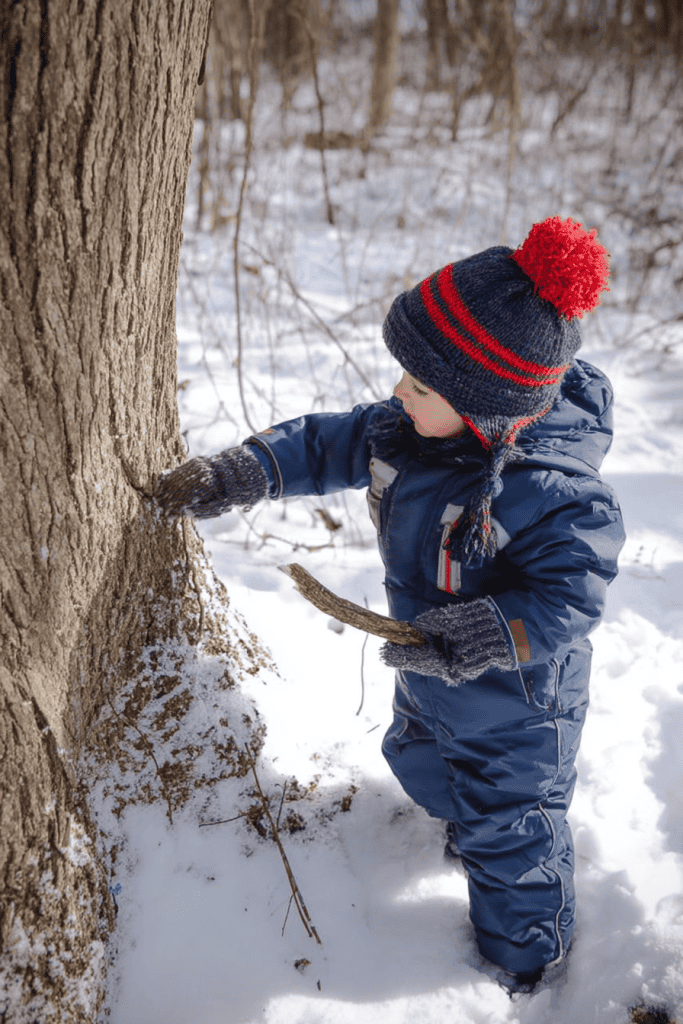
When the leaves are gone, trees show a different side of themselves. Winter is a great time for kids to explore trees by their bark, buds, and shapes. This activity turns young explorers into little botanists as they examine trunks and branches up close.
Bundle up and head to a yard, park, or woods. Take a close look at one tree at a time. Notice the bark – smooth, rough, peeling, or spotted. Do a bark rubbing with paper and crayon to capture patterns. Check the branches and buds – some are tiny and pointy, others plump.
Look at the tree’s silhouette: tall and narrow or wide and spreading? Give the tree a fun name or character if you like.
For younger children, keep it sensory: bark rubbing, hugging the tree, or finding little treasures like moss or lichen. Older kids can compare two trees, find an evergreen, or estimate a conifer’s age by counting branch whorls.
This activity helps kids slow down and notice details in nature. They practice observation and comparison, form a connection with trees, and learn simple botany basics in a hands-on way. Multi-age groups can all participate at their own level, from sketching to collecting small natural treasures.
7. Nature Art Creations

Winter offers a beautiful palette of natural materials for creative play. Kids can collect twigs, leaves, pinecones, seeds, and even ice or snow to make art right on the forest floor.
Head outdoors with a basket or bag for collecting treasures. Encourage children to create mandalas, fairy houses, stick sculptures, or patterns with the materials they find.
They can press leaves into the snow, arrange pinecones into shapes, or combine different textures to make a winter nature collage. For older children, challenge them to make symmetrical designs or patterns inspired by their surroundings.
This activity encourages creativity and fine motor skills while deepening observation of seasonal changes. Children learn to notice textures, colors, and shapes in nature, and it gives them a sense of accomplishment seeing their designs come to life outdoors.
Multi-age groups can participate at their own level – a preschooler might simply stack pinecones, while older kids can make detailed mandalas or nature sculptures.
Try This: Take a photo of each creation before leaving it outdoors so the children can remember their designs. You can also leave the art for wildlife to explore, connecting the activity to the natural environment.
Try These 10 Wonder-Filled Winter Activities Today!
Each of these activities offers children a chance to play, learn, and fall in love with nature’s winter charm.
With just a bit of warmth and goodwill, you’ll see rosy cheeks and excited eyes in no time.
So pick an activity (or a few), bundle up the kids, and head outside – adventure awaits in your own backyard or nearest woods.
By embracing the season instead of dreading it, you’ll help your little ones build happy memories and even some resilience and confidence along the way.
Winter forest days can be cozy, playful, and educational all at once.
Choose one idea today and let the wonder of winter unfold for your family or class. Happy exploring!
FAQs
How do I keep my child warm and safe during winter forest school activities?
Dress them in layers (base, middle, waterproof outer), add warm socks, insulated boots, waterproof mittens, and a hat. Take warm-up breaks, bring a hot drink, and pack extra dry gloves and socks. Keep sessions shorter in very cold weather and watch for discomfort.
What if my area doesn’t get snow – can we still do these activities?
Yes. Most activities adapt easily. Use mud, puddles, leaves, or simple cold-weather observations. You can also freeze ice crafts in the freezer. Winter fun doesn’t require snow.
Can I do these forest school activities if I don’t have a real forest nearby?
Absolutely. A park, backyard, playground, or any small green space works. Forest School is about outdoor play and nature connection, not having a dense forest.
How do I manage activities with both preschoolers and older kids together?
Offer simple tasks for younger kids and optional challenges for older ones. Use buddy teams and let older children help lead. Keep instructions simple but allow extensions.
What is a “forest school,” and why do it in winter?
Forest School is outdoor, play-based learning that builds confidence, curiosity, and resilience. Winter adds unique sensory experiences and teaches kids to enjoy nature year-round with proper clothing and pacing.