Spring is a season of mud and magic – the perfect time to take learning outdoors. As the days grow warmer and nature reawakens, homeschooling parents, forest school educators, and outdoor-loving families have a golden opportunity to spark curiosity outside.
Forest School – a child-centered, outdoor education approach where kids learn through play and exploration in a natural setting – fits hand-in-glove with spring’s energy. After a winter indoors, children are eager to run free among budding trees and blooming wildflowers.
These outdoor learning activities blend play and discovery, helping kids burn off energy while engaging in nature-based learning. Best of all, they require minimal materials (mostly just what you can find in nature) and can be adapted for ages 3–8 (and beyond).
So, grab your rain boots and sense of adventure – let’s explore spring forest school activities that will get your little ones outside, learning, and having fun like happy little homesteaders in the making.
Before diving into the list, remember that spring weather can be unpredictable. One day might bring warm sunshine, and the next a drizzle or chill. That’s part of the adventure! As the saying goes, “There’s no bad weather, only bad clothing” – so suit up appropriately and head out.
In the following sections, you’ll find 10 nature-inspired forest school activities perfect for spring. From scavenger hunts to mud kitchen creations, each idea is designed to connect children with nature in a playful, meaningful way.
How to Use This List (Spring Prep Tips)
Before you set off on your springtime forest school adventures, here are a few tips to make the experience enjoyable and safe for everyone:
- Dress for Mess and Weather: Spring can be muddy, wet, and cool. Dress children in layers (light jacket or hoodie for cool mornings, t-shirt underneath for warmer afternoons) and use waterproof gear on wet days. Rain boots are a must for puddle jumping, and a raincoat or poncho will keep kids comfy during drizzles. Don’t forget a sun hat for those bright midday hours. Embrace dirt and mud – play clothes or old clothes are ideal because they will get dirty (and that’s okay!). Keep a towel and a bag in the car for muddy boots and wet clothes after play.
- Plan for Puddles and Critters: Spring showers bring puddles (and incredible fun), so be prepared for water play. Also, spring brings out bugs and new plant growth. Do a quick check of your play area for any hazards – mark off spots with poison ivy or thorny brambles (teach kids to avoid them). After outdoor play, do a tick check and wash hands (especially if kids were digging in soil or handling critters). If your child has spring pollen allergies, choose times or days when pollen counts are lower, or have an allergy plan in place.
- Choose Your “Forest”: You don’t need a literal forest for forest school activities. Any natural space works – a local park, a field, the beach, or your own backyard can become an outdoor classroom. Pick a spot where you feel comfortable letting the kids explore. It could be a corner of a garden or a nearby nature trail. The key is a place with some natural elements (trees, rocks, dirt, plants) where kids can safely roam.
- Safety and Supervision: In spring, streams and ponds might be fuller from rain – supervise closely around water. If you incorporate light tool use (like digging with a small trowel or whittling soft sticks with a child-safe peeler), demonstrate how to use them safely and always supervise. Establish simple boundaries (“stay where you can see me and I can see you”) and consider using a whistle or special call to regroup if needed. Also encourage respect for living things: be gentle with insects you find and return them where you found them, and try not to trample new plants or pick every flower. This way, kids learn to care for nature as they play.
- Adapt and Follow Their Lead: Each of these spring nature activities for children can be scaled up or down. Let younger kids revel in sensory experiences – squishing mud or collecting dandelions – while giving older kids roles as leaders, list-checkers, or problem solvers. Feel free to tweak the activities to suit your child’s interests. If they become fascinated by a worm on your scavenger hunt, you might spend 20 minutes watching it wiggle – and that’s okay! Follow the children’s curiosity; those unplanned moments are often where the magic happens. The goal is outdoor play and nature connection, not perfection.
If this is your first time exploring forest school-style learning, you may want to check out forest school for beginners, which walks through the basics in a simple, approachable way.
10 Spring Forest School Activities Kids Will Love
Now that you’re prepared, it’s time to dive into some hands-on fun.
Below is a list of 10 spring-themed forest school activities to inspire your next outdoor day. Pick one or try them all – and watch your kids light up with springtime wonder!
1. Spring Scavenger Hunt for “Signs of Spring”
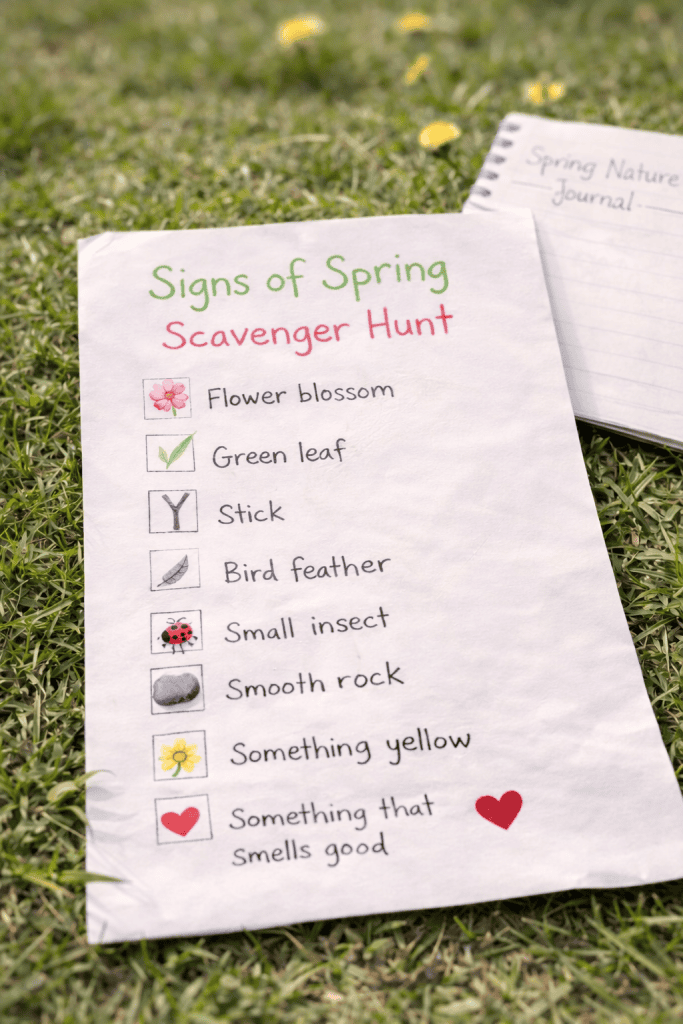
There’s no better way to kick off the season than a spring scavenger hunt. Create a simple list of “signs of spring” for children to find.
This can include things like: a flower bud or blossom, a green leaf, a stick shaped like a Y, a bird feather, an insect, a smooth rock, something yellow, something that smells good – use your imagination. Hand-draw little icons on a piece of paper for younger kids, or make a checklist for older ones. Then head outside and start hunting for nature’s treasures!
As kids search, encourage them to use all their senses. They might hear birds chirping or frogs croaking, smell fresh grass or rain on soil, and feel new leaves or tree bark.
Every found item is a conversation starter: “That’s a daisy! Spring is when daisies bloom. What else can we find?” The hunt can be cooperative (everyone finds items for one list) or competitive (who finds all items first). Either way, children will practice observing details and celebrate each little discovery.
Try This: Turn the scavenger hunt into a keepsake craft. Bring along some tape or a glue stick and a notebook. As kids find small items (petals, tiny pine cones, feathers), help them tape the finds into the notebook to create a “spring nature journal” page. Older kids can add labels or stories about each item. This extends the fun and makes a sweet memory of your day.
If you enjoy scavenger-style exploration, you might also like wonder-filled activities for winter, which use the same curiosity-driven approach during colder months.
2. Meet the Spring Trees (Buds & Bark Exploration)
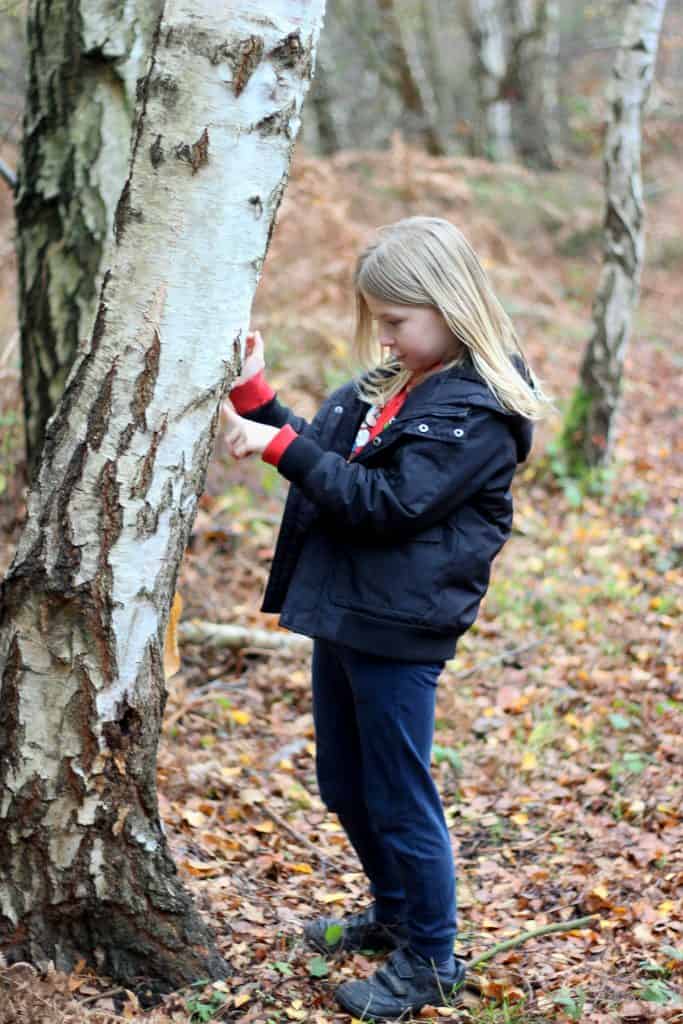
After a long winter, the trees themselves are waking up. Budding trees are a fantastic learning opportunity for kids. Take a closer look at a few trees in your yard or park.
What do the buds on the branches look like? Some might be velvety and soft (like pussy willows), others small and pointy. Can you spot tiny new leaves or blossoms emerging? Encourage children to gently touch and observe – this is nature’s classroom up close.
Have the kids feel the tree’s bark too. Is it rough, smooth, or peeling? Spring is a great time to compare an evergreen tree (with year-round needles or leaves) to a deciduous tree that is just sprouting new growth.
Kids can do bark rubbings by holding paper against the trunk and coloring with a crayon – revealing the patterns of the bark. They can also “adopt” a particular tree to visit each week and notice changes as spring progresses (buds opening, leaves growing, maybe even fruit or seeds forming later on).
This activity helps children slow down and notice details. They practice observation and learn some simple botany in a hands-on way. Even preschoolers will enjoy just feeling the knobbly buds or giving the tree a gentle hug.
Older children might sketch the buds or look up the tree species to learn its name. By forming a personal connection with trees, kids gain appreciation for how nature changes daily in spring.
Try This: Bring along a camera or smartphone and take a “tree selfie” with your chosen tree each visit. Over a few weeks, you’ll capture how your tree friend transforms with more leaves or blossoms each time. It’s like a living science project! Compile the photos into a mini slideshow or flip-book for your kids to see the progression of spring.
If you’re new to this approach and wondering how it compares to general outdoor education, you might enjoy reading about the real difference between outdoor learning and forest school to better understand what sets it apart.
3. Mini Beast Safari (Insect Hunt Adventure)
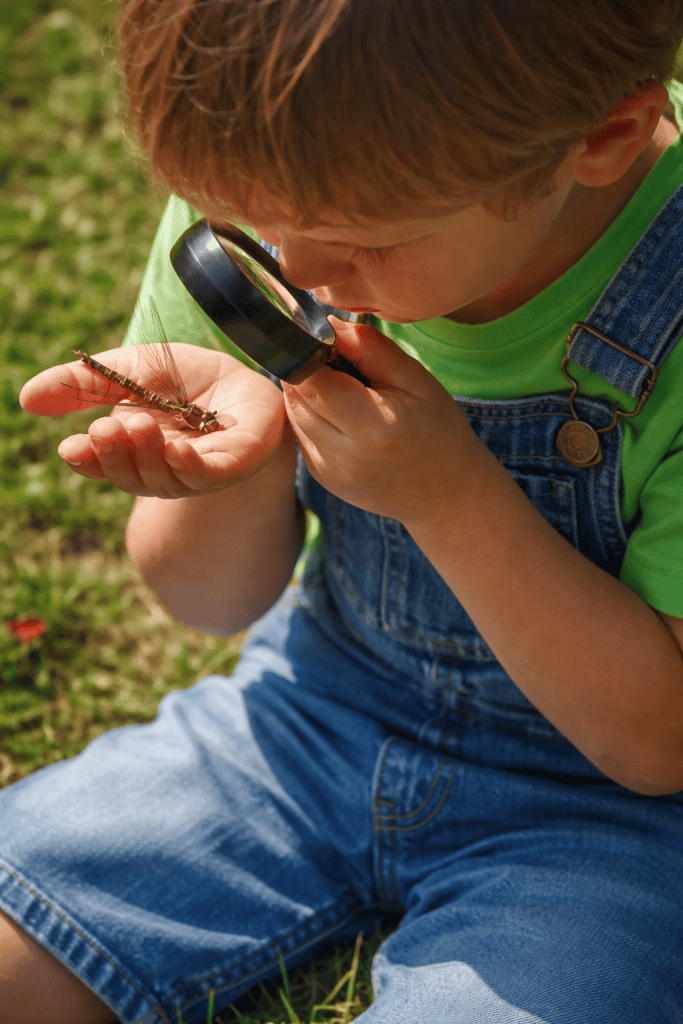
Spring is when the “mini beasts” come out to play! After the dormant winter, you’ll notice insects and other critters crawling and buzzing about. Take the kids on a mini beast safari in your garden or a wooded area.
Arm them with a magnifying glass or just their sharp eyes and go searching for tiny creatures: ladybugs on a leaf, ants marching along a log, beetles under a rock, worms in the damp soil, maybe even a butterfly or bumblebee in the flowers.
Encourage gentle exploration: look under logs, rocks, or leaf litter (carefully placing them back as you found them to respect the critters’ homes). Peek into tall grass for hopping grasshoppers or crickets.
Check near water for tadpoles or water striders. Each discovery can spark questions – “How many legs does it have? Can it fly? Why does this roly-poly bug curl up?” Kids learn empathy and science together as they observe these tiny beings.
Safety note: Teach children to be kind and safe with insects. No grabbing bees or wasps – just watch from a distance if you see them. And always wash hands after handling soil and bugs. You might mention that bugs are friends to our garden and environment. For example, bees help pollinate flowers, and worms help make healthy soil.
Try This: Create an insect hotel or “bug hotel” as part of your safari. Pile up some sticks, bark, pinecones, and dry leaves in a quiet corner to make a little shelter. This gives bugs a nice habitat. Kids can check back on their insect hotel in the following weeks to see if any creatures have moved in. It’s a fun little engineering project that also teaches about caring for wildlife.
4. Nature Color Hunt (Finding a Rainbow Outdoors)
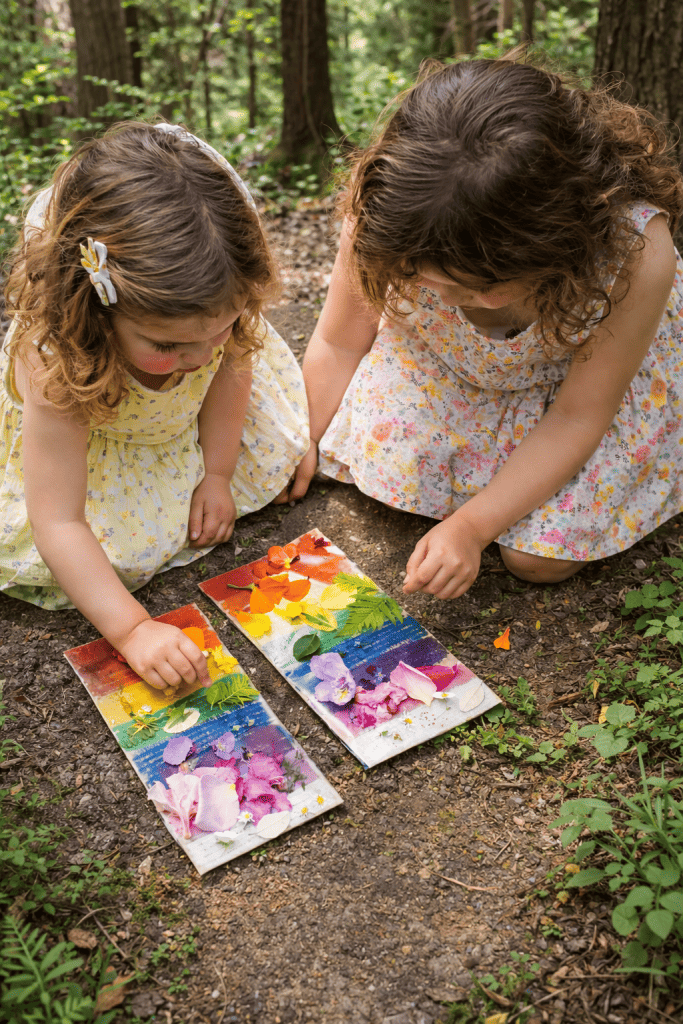
Spring is bursting with colors – a perfect excuse for a nature color hunt. Before heading out, talk about how many new colors appear in spring: bright green leaves, yellow dandelions, purple violets, blue sky, etc.
You can make simple color cards or paint swatches for the kids (for example, a card with basic colors: red, yellow, pink, white, green, blue, purple). The challenge: find something in nature that matches each color!
As you explore, kids will start spotting hues all around: a green leaf, a yellow buttercup flower, a piece of blue sky reflected in a puddle, maybe a red ladybug or a purple wildflower. Even shades of brown and gray (tree bark, stones) count – spring has it all.
This activity builds sensory vocabulary (“Look at this vibrant green moss!”) and sharpens observation skills in a playful way.
For older children, you can add complexity: find light and dark versions of each color, or arrange found items into a natural rainbow order on the ground. For little ones, even just finding and naming colors is fantastic learning. Celebrate each find with enthusiasm – you’re effectively playing “I spy” with nature.
Try This: When you get home, turn your color hunt into art. Press some of the colorful flowers and leaves in a heavy book for a few days. Then, help your child glue or tape the dried pieces onto paper to create a spring rainbow collage.
Alternatively, if you have a printer, you could print a photo you took of a colorful scene (like a field of flowers) and have the child paint or color match it with crayons. These extensions make the learning last longer and give your child a proud artwork to display.
Color-based exploration works beautifully year-round. If you’re planning ahead or curious about seasonal shifts, take a look at unforgettable outdoor winter nature play for ideas that carry this same magic into winter.
5. Birdsong and Nesting (Listen & Observe our Feathered Friends)
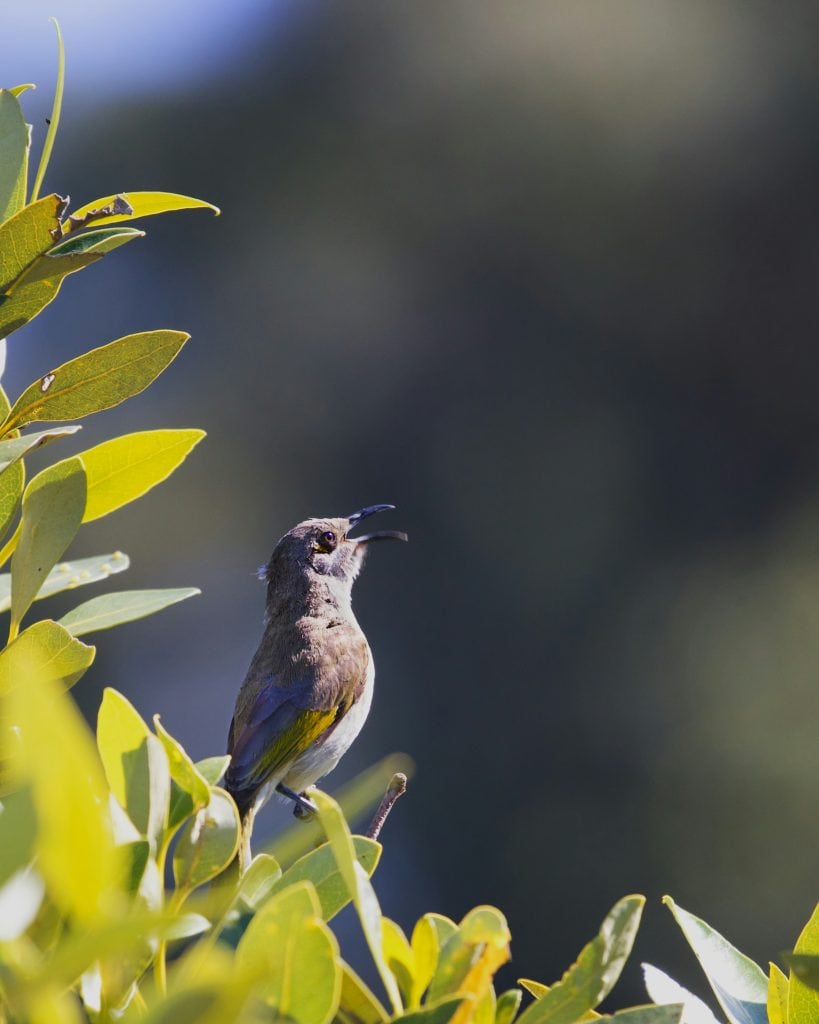
The birds are as excited about spring as we are! You’ll likely hear a chorus of birdsong on any spring morning. This activity combines a listening walk with a bit of bird observation. Find a comfy spot outdoors (or take a slow walk) early in the day or late afternoon when birds are active.
Have everyone pause, stay quiet for a moment, and just listen. Can you hear different bird calls and songs? Maybe the cheerful chirp of a robin, the chattering of sparrows, or the croak of a crow. Kids can cup their hands behind their ears – “deer ears” – to amplify the sound and tune in closely (this classic trick makes listening extra fun).
Ask the children if they can mimic the bird calls they hear. Turn it into a playful game of call-and-response with the birds (they tweet, you try to tweet back!). Not only is this amusing, but it also sharpens their listening discrimination. If you spot any birds, watch what they’re doing.
Spring is nesting time, so you might see a bird carrying a twig or straw in its beak, or hear peeping chicks in a hidden nest. Talk about nests: How do birds build them? Where might a nest be in that tree?
If you find a safe, low nest (or an old one from last year), you can gently peek at it – but otherwise, respect that most nests are high and birds like their privacy. Instead of finding a real one, kids can try building their own nest on the ground.
Gather twigs, dried grass, leaves, and moss, and see if you can weave them into a little bowl shape like a bird’s nest. Can it hold a pretend egg (try a pebble or small rock as your “egg”)? This hands-on challenge develops empathy for our feathered friends – children realize nest-building is hard work!
Try This: Make a simple bird journal during the week. Each day, have your child draw or note one bird they saw or heard. It could be as simple as “Saw a red bird today that said ‘cardinal’ sound!” (if you know it was a cardinal), or sketch a small brown bird (sparrow).
Over spring, they’ll collect these observations. You can even put up a DIY bird feeder or a shallow dish of water to attract birds to your yard for easier viewing. Over time, kids may learn to identify a few common species – a proud moment for a young naturalist.
6. Flower Petal Potions and Spring Mud Kitchen

Time to get messy and creative! A mud kitchen is a classic forest school setup – basically an outdoor play kitchen using mud, water, and natural “ingredients” – and spring is the perfect time for it because you have both mud and new plant materials to mix in.
Encourage your little chefs to create flower petal potions or “spring soup.” Provide some old pots, bowls, wooden spoons, or even just a dug-out hole in the ground as their mixing bowl. Add water (rain puddles can supply this, or bring a bucket of water). Then let them gather “ingredients”: colorful flower petals, handfuls of grass, herbs or weeds, dandelion fluff, tiny pebbles, leaves – whatever they fancy.
Kids will mix, stir, pour, and concoct pretend soups, magical potions, or fairy teas. This open-ended sensory play is fantastic for imagination and fine motor skills. They’ll love the textures and colors swirling together. You can even give it a storytelling spin: “Are you witches brewing a spring potion? What does it do – make the flowers grow faster? Turn ants purple?” Silly prompts can spark their creativity even more.
Make sure the kids know these potions are just pretend – not for drinking! It’s about the process, not a finished product you keep. When they’re done, they can safely dump out their mixtures back into the garden (bonus: watering some plants in the process). Clean-up is simple: a rinse of hands with the garden hose or in a bucket of clean water. Embrace the mud – it washes off, but the memories will stick.
Try This: Extend the play by adding some “cooking tools”: a child-safe knife to chop soft weeds or banana peels, a strainer to sift chunky bits, or cookie cutters to make mud pies.
You could also incorporate a nature tea party element: after potion-making, serve real herbal tea (like mint or chamomile) in tiny cups outdoors, so kids feel like their pretend play came to life in a yummy, warm way. Just remember to supervise any tool use and stick to edible plants if they’ll taste a sample (for example, mint leaves in water are safe to drink).
If you’re looking for simple seasonal crafts to pair with outdoor play, you might also enjoy easy Easter crafts for toddlers, which keep the same hands-on, nature-inspired spirit.
7. Spring Puddle Jumping and Rain Play
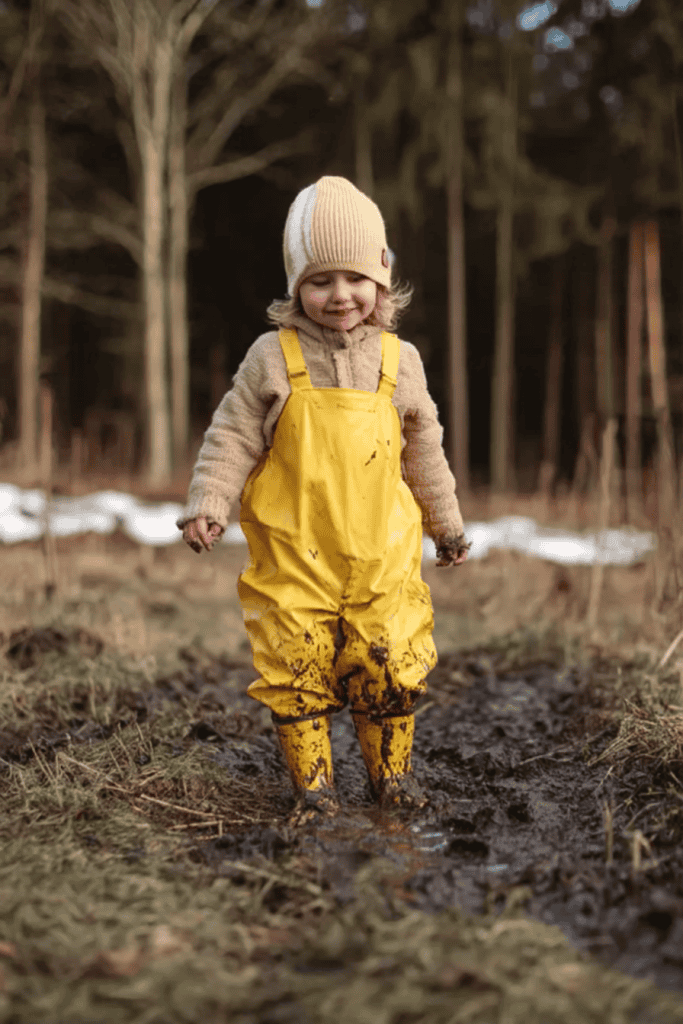
Don’t let rainy days keep you cooped up – spring showers actually provide one of the most joyful outdoor activities for kids: puddle jumping! There’s something irresistible about stomping in puddles, feeling the splash, and giggling as mud flies.
So suit up in rain boots and old clothes, and head out after (or during) a gentle rain. Find some good puddles and let the kids hop, skip, and splash to their heart’s content. Yes, they’ll get wet – that’s the point! This simple activity releases energy and delights the senses (the cool water, the sound of the splash, the sight of ripples).
To add a bit of sneaky science: challenge the kids to jump in different ways and observe what happens. What kind of splash do you get from a big jump vs. a small stomp? If you drag a stick through the puddle, can you make a wave?
You can even mix a bit of eco-friendly dish soap into a particularly big puddle, swish it around, and then jump – surprise, you’ve made a puddle full of bubbles! Or toss a small pebble in and watch the concentric circles form and spread. Each puddle is a mini laboratory for physics and fun.
Spring rain play isn’t just about puddles either. Kids might enjoy dancing in the rain, catching raindrops on their tongue, or opening their arms wide and feeling rain on their face. It’s pure, silly joy – and something they’ll remember (who among us doesn’t recall a time we played in the rain as a child?).
Just be mindful of temperature; a mild rain on a warm day is playtime, but if it’s chilly, keep it short and have warm towels and dry clothes ready for the post-play warm-up.
Try This: Make a rain gauge together to turn rain play into a learning moment. Take an empty jar or plastic bottle and set it outside before the rain.
After the shower, check how much water collected – you can mark the inches or centimeters. Keep a chart of rainfall over a week or month. Your kids will feel like weather scientists! Also, if a sunny moment follows the rain, look for rainbows together – another great spring nature lesson.
8. Build a Fairy House or Gnome Home

Here’s a chance to blend imagination with natural building skills. In a cozy spot at the base of a tree or beside a log, invite the children to build a fairy house (or gnome home, or tiny animal house – whatever theme they love).
Using only natural, found materials, they can construct a miniature dwelling fit for a fairy folk. Collect some small sticks for walls and roof beams, large leaves or bark pieces for a roof, pebbles to line a path, acorn caps as bowls, pinecones as trees – the possibilities are endless. This is like the spring version of a snow fort, just pint-sized and full of whimsy.
As they build, kids engage engineering and creativity: how can we make the walls stand up? Which leaves will make a good roof that doesn’t blow away? There’s a lot of problem-solving in miniature construction.
They might dig a tiny “fire pit” and fill it with red leaves or berries for embers, or fashion a little bed of moss. There’s no right or wrong – the magic is in the making. Storytelling naturally weaves in; you may hear them talking about the little fairy family that will move in or the adventures of a gnome who finds this home.
This activity can easily occupy a wide age range. Little ones might mostly gather materials and plop them in a pile (which is fine), while older kids will get quite detailed in their design.
When the house is done, take a moment to admire it and imagine the creatures that might come live there. You can leave it there for the “fairies” (and also for other children or hikers to discover – a delightful surprise in the woods), or carefully take it apart at the end, returning items to nature.
Try This: If building one tiny house is a hit, consider making a whole fairy village over time. Each visit to the woods or park, add a new little structure: a fairy playground, a gnome library, a tiny bridge over an imaginary stream.
You could even make a map of the fairy village with your child, drawing where each structure lies under certain landmark trees. This can turn into an ongoing project that makes every trip outdoors a chance to check on and expand the magical world they’ve created.
For kids who love imaginative, hands-on projects, irresistible felt craft ideas for kids can be a cozy indoor companion to outdoor building days.
9. Nature Art Creations (Mandalas and Wild Art)
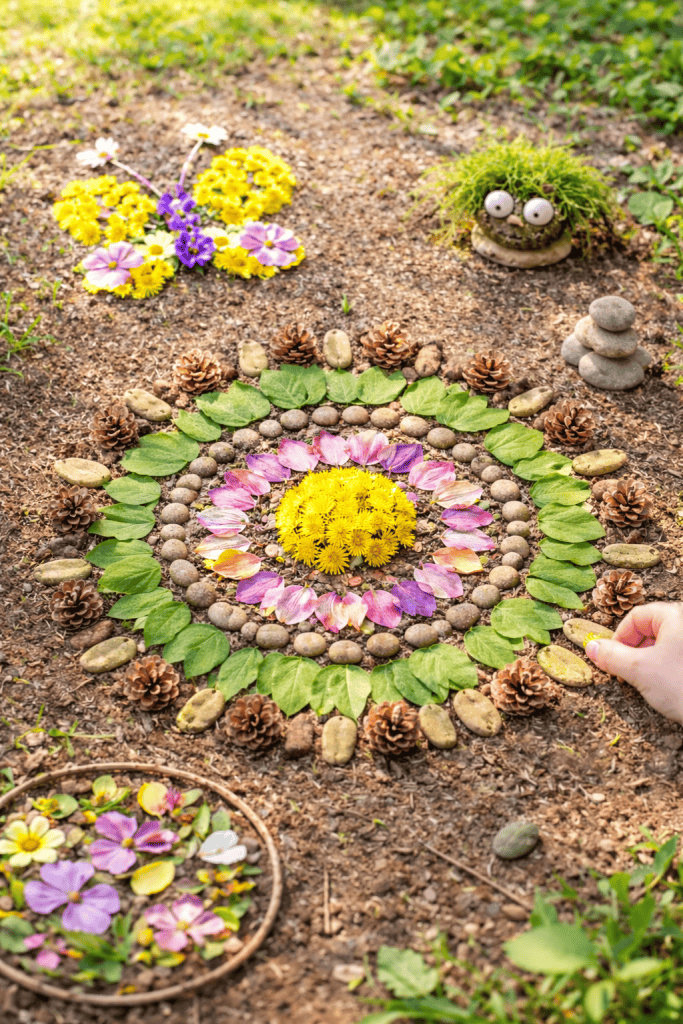
Spring provides a beautiful palette of colors and textures for nature art. Encourage your kids to collect an assortment of interesting natural items as they explore: vibrant flower petals, pretty leaves, sticks, stones, seeds, pinecones, bits of moss.
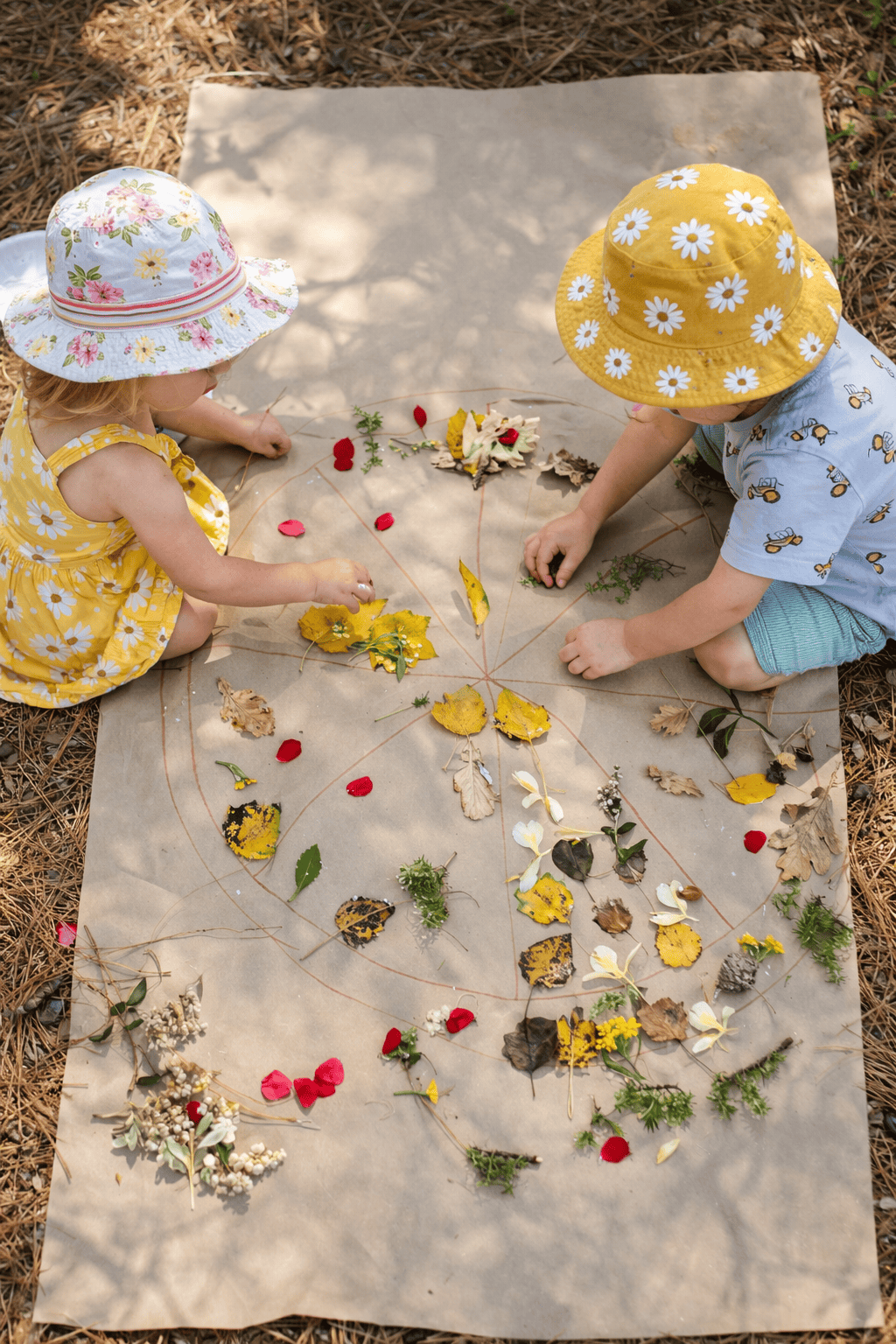
With these treasures, they can create ephemeral art right on the ground. One popular idea is to make a nature mandala – a circular pattern radiating out from the center.
Kids can start with a larger object in the middle (like a big rock or flower) and then make rings around it by arranging petals, then a ring of pebbles, then a ring of leaves, and so on. The act of arranging these pieces is calming and focuses their attention on patterns and symmetry.
If mandalas aren’t their thing, they could form a picture or design: perhaps a butterfly shape made out of yellow dandelions and purple violets, or a funny face using mud for hair and stick for a mouth.
For more free-form creation, suggest making forest portraits: trace a big circle or square on the dirt as a “canvas” and fill it with a collage of found items. Or build a small sculpture by stacking stones and balancing twigs (like a mini forest cairn or teepee).
Through nature art, children exercise creativity and fine motor skills while deepening their observation of seasonal materials. They’ll notice the variety in leaf shapes, the different shades of green, the delicate structure of petals, etc. Remind them that it’s about the process, not permanence – these art pieces will stay outside and eventually return to the earth. Taking a photo can help preserve the memory of their beautiful creation.
Try This: Take photos of each art piece your children make. Later, print them or view them together and have the kids give each piece a title like “Spring Flower Mandala” or “Fairy House Garden.”
You could even create a little family “art gallery” wall or scrapbook page with these photos. It shows children that their work is valued and also underscores the idea that art doesn’t have to last forever to be meaningful – even art made of sticks and petals can be celebrated.
10. Planting Seeds and Garden Explorations
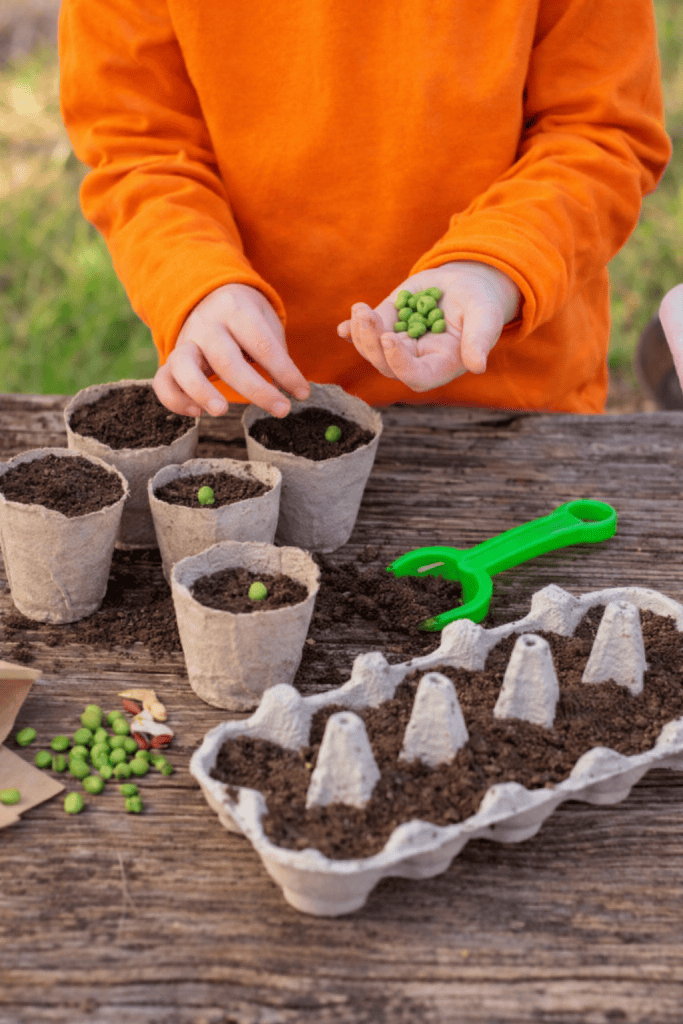
Spring is planting season! Getting kids involved in gardening or seed planting is a wonderful, hands-on way to teach about life cycles and patience.
You can plant in a raised bed, pots, or even egg cartons indoors to sprout seeds. Choose some easy, fast-growing seeds to start with: sunflower seeds, beans, peas, or salad greens are all child-friendly and sprout quickly.
Let the kids help with every step: fill containers with soil (yes, little hands will get dirty), poke holes for the seeds, drop them in, cover with soil, and water gently. Mark the spot with a craft stick label or a little flag with the seed’s name.
Over the coming days and weeks, make it a routine to check on their “baby plants.” Children will be thrilled at the first sign of a green sprout peeking up.
This is a lesson in responsibility too – remembering to water the seeds and care for them. As plants grow, involve the kids in transplanting them outdoors (if you started inside) or clearing weeds around them.
No garden at all? No problem. Try a nature experiment like sprouting a bean seed in a clear jar with a wet paper towel – kids can observe the roots and shoots forming (a mini science project). Or simply adopt a patch of ground in a community garden or a big pot on a balcony. The act of nurturing a plant from seed to seedling connects children to nature’s cycles and gives them a sense of accomplishment.
Try This: Turn the planting project into a growth observation chart. Help your child make a simple chart on paper with columns for “date,” “what I see,” and maybe a space for a little drawing. Every few days, have them note any changes – “May 5: nothing yet,” “May 10: tiny sprout about 1 cm,” “May 15: two leaves now!” Not only does this build scientific observation skills, it also heightens their excitement and patience.
You could even compare different seeds (e.g., a bean vs. a flower seed) to see which sprouts first or grows tallest. It’s incredible how a tiny seed can spark such wonder in a child – and that’s the heart of forest school learning.
Try These 10 Nature-Inspired Spring Activities Today!
Each of these spring forest school activities offers children a chance to play, learn, and fall in love with nature’s springtime charm. With just a bit of preparation and a spirit of play, you’ll soon see muddy boots, happy smiles, and curious little explorers blooming with confidence.
So pick an activity (or a few), gather your kids, and head outside – an adventure awaits just beyond your doorstep, whether it’s in your own backyard or the nearest park.
Remember, outdoor play and nature-based learning help children grow into confident, curious, and resilient learners – it’s learning with heart, hands, and a whole lot of fun.
So why not choose one idea and try it out this week? Whether it’s jumping in puddles or crafting a fairy house, you’re sure to enjoy the warm, rustic joy of spring together. Get outside, enjoy the fresh air, and let the wonders of spring captivate your family or class. Happy exploring!
Which of these spring activities will you try first? Let us know in the comments below – we’d love to hear about your outdoor adventures and any creative twists you add!
Get the FREE Fruit of the Spirit Playdough Mats + Coloring Pages
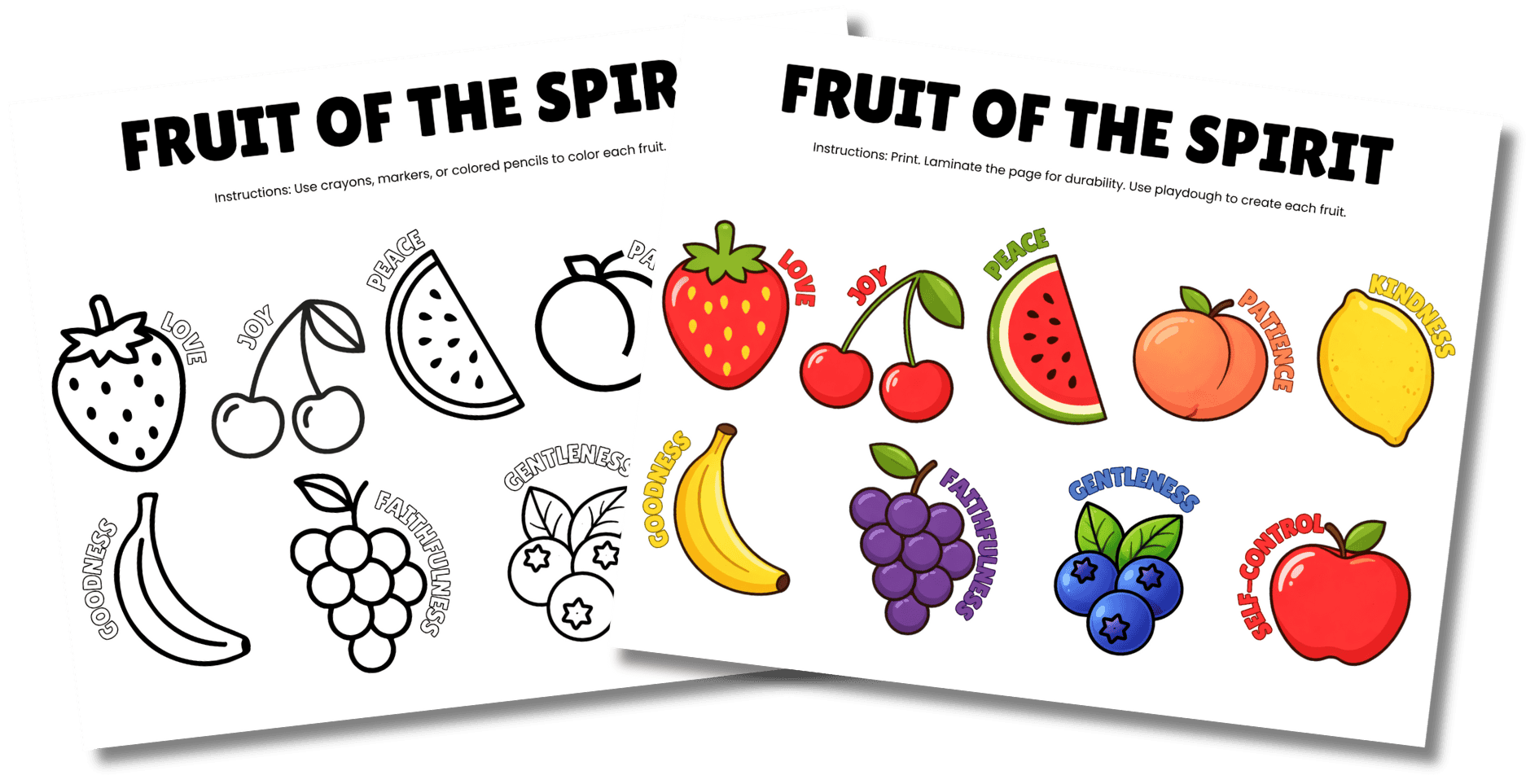
Make your Fruit of the Spirit lesson hands-on with this FREE printable set that includes a playdough mat and a bonus coloring page—two activities in one.
Kids can build and color their way through love, joy, peace, patience, kindness, goodness, faithfulness, gentleness, and self-control from Galatians 5:22–23. For easy re-use, laminate the mat (or slide it into a page protector) and pull it out anytime for Bible time, Sunday School, or quiet time at home.
Click below to grab both printables.
FAQs
What if it rains on our forest school day?
Embrace it! Light rain can actually make outdoor play more fun (hello, puddles and worms!). Dress everyone in waterproof gear and enjoy some wet weather exploration.
However, avoid severe weather (high winds, thunderstorms). Keep an eye on the forecast – for gentle spring showers, you can proceed with rain-friendly activities (like puddle jumping). Have dry clothes and a warm drink ready for afterwards, and you’re all set.
Can I do these spring activities without a “real” forest or big yard?
Absolutely. You can do forest school activities in a small backyard, local park, or any green space. Even a walk around your neighborhood can yield signs of spring (flowers poking through, birds singing).
If you don’t have trees, use potted plants or look for insects in the grass. The key is to engage with whatever nature is available. Urban families might visit a community garden or a city park. Forest school is a mindset – it’s about exploration and curiosity outdoors, not the size of the space.
How do I handle the mess (muddy clothes and all)?
Embrace the mess as part of the fun! Dress kids in old or play clothes that can get dirty. Bring towels or garbage bags for the car seats, and have a fresh change of clothes ready for when you come back inside. You can keep a “mud play kit” with spare clothes, wipes, and plastic bags for dirty boots.
Yes, there will be laundry – but the joy and learning that happen outside are well worth a bit of mud. As one might say, kids are washable! A quick bath and rinse of clothes, and everything (including the children) will be clean again.
How can I keep my child safe from bugs or allergies during spring activities?
Spring does bring bugs and pollen, but a few precautions can help. Do a tick check on everyone after playing in grassy or wooded areas (ticks like warm areas like behind knees, under arms, in hair).
You can use kid-safe insect repellent if ticks or mosquitoes are a concern. Teach kids to observe bees and wasps without touching – most won’t bother you if you don’t bother them. If your child has seasonal allergies (pollen), try scheduling outdoor play for times when pollen counts are lower (often mornings or after rain), and consider giving allergy medicine if recommended by your pediatrician.
Also, be aware of any local poisonous plants (like poison ivy) and teach kids what they look like so they can avoid them. With a little awareness, you can enjoy nature and stay safe and comfortable.
Can toddlers and older kids do these activities together?
Yes, these activities are easily adaptable for mixed-age groups. For toddlers (ages 2–3), keep things simple and sensory – they might just splash in one puddle or collect rocks, and that’s fine. Preschoolers (3–4) will start to get the ideas and can follow simple instructions, like finding a color in nature.
Older kids (5–8 or even above) can take on leadership roles: they can read the scavenger hunt list to the little ones, demonstrate building a fairy house, or keep track of the seed growth chart.
You can also set up parallel tasks (e.g., older kids attempt a more complex nature craft while younger ones do a simpler version). Forest school activities encourage cooperation and peer learning – often you’ll find the big kids helping the younger ones, which builds confidence for both.
Just be ready to offer an extra hand to the littlest participants and let the bigger kids stretch their independence. Everyone can share the joy of outdoor play at their own level. Enjoy the family teamwork!