Forest School is all about letting kids learn through play and exploration in nature.
Some of the best forest school activities are super simple, low-prep ideas that any parent or teacher can do with minimal fuss.
These are outdoor learning activities for kids that blend fun and discovery, helping your little ones burn off energy while engaging in nature-based learning.
And yes – they’re adaptable for ages 3–8 (so siblings of different ages can join in too).
In this post, I’ll cover 10 low-prep forest school activities for beginners that allow you to start slow and build confidence in outdoor play.
Think of these as gentle introductions to forest school – forest school ideas that focus on basic, joyful experiences in a forest or wooded area (if you want a deep dive, see the essential guide to forest school).
Best of all, they require little to no planning (mostly using what nature provides).
So grab your boots, dress for the weather, and get ready to see your kids light up with curiosity and adventure!
10 Low-Prep Forest School Activities to Start Slow and Simple (Perfect for Beginners)
Now that you’re ready to begin, here’s a list of 10 low-prep forest school activities to try.
Pick one for your next outing, or do a few in one day – there’s no pressure and no strict schedule. The goal is to have fun and let your kids connect with nature at their own pace.
Let’s get started!
1. Meet-a-Tree Blindfold Game (Sensory Exploration)
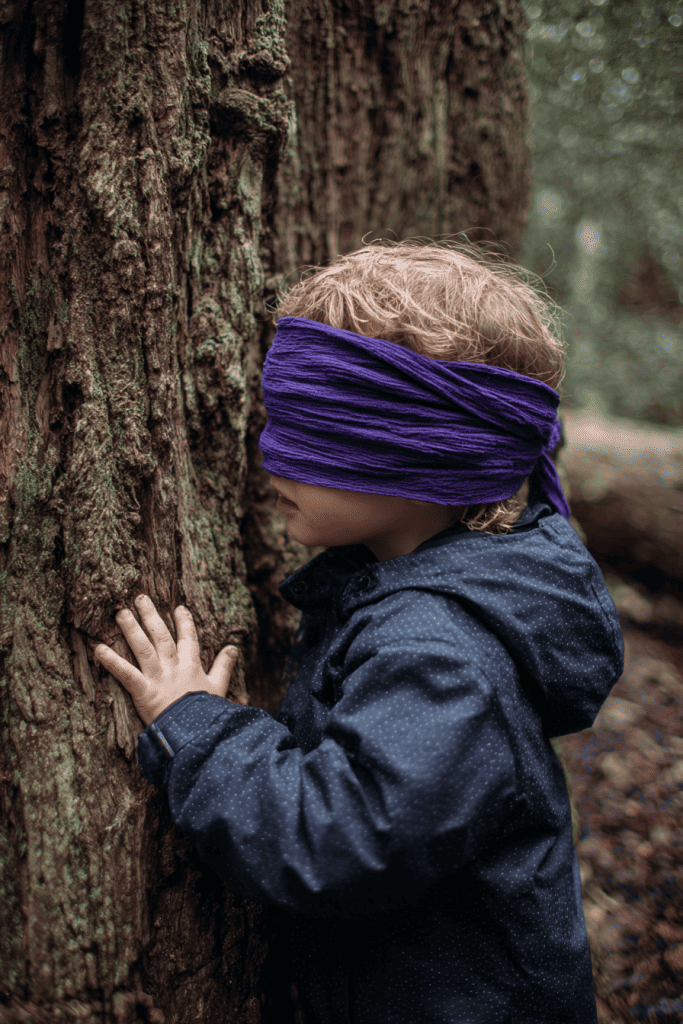
One of the simplest ways to introduce kids to the wonders of the forest is through a “meet-a-tree” game. It’s a sensory adventure that needs virtually no supplies – just a scarf or bandana for a blindfold (or a willing child who can keep their eyes closed!).
Here’s how it works: Lead your blindfolded child (carefully!) to a nearby tree. Encourage them to touch and “meet” the tree – feel the bark’s texture, wrap their arms around it to gauge its size, maybe even smell the woodsy scent.
After a minute or two, guide them back to the starting point, then remove the blindfold. Now ask: Can you find your tree with your eyes open?
Kids will giggle as they walk around examining the trees to locate “their” special one. This activity hones observation and memory skills, and it’s amazing to see how keen their senses become when sight is taken away.
Preschoolers might simply enjoy feeling the rough vs. smooth bark, while older kids get really into the challenge of identifying the exact tree they hugged. It’s a gentle way to help children slow down and notice nature’s details.
Try This: Swap roles and let your child lead you to a tree when you’re blindfolded. Not only will they find it hilarious to guide a grown-up, but it also boosts their confidence and empathy.
After the game, talk about what clues helped them recognize their tree – was it the thickness of the trunk, the mossy patches, or something else? This reinforces their observation skills in a fun, warm-hearted way.
2. Nature Bracelets & Crowns (Wearable Forest Crafts)
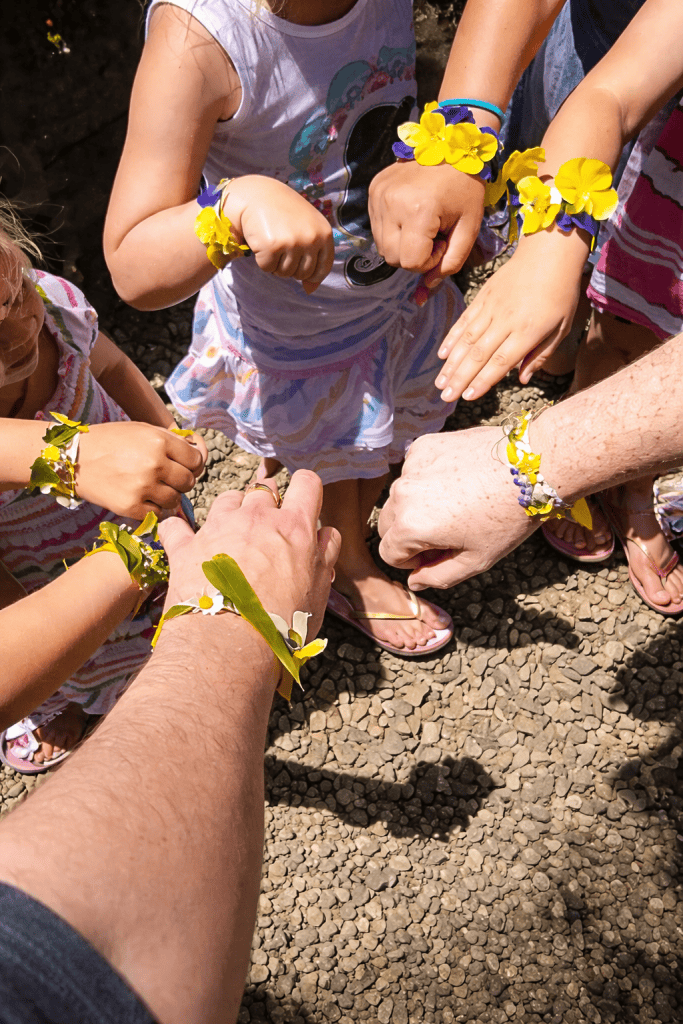
Who needs fancy craft kits when the forest provides all the bling you could want? Nature bracelets and crowns are a lovely low-prep craft that kids adore – and all you might need to bring is a bit of tape. To make a nature bracelet, wrap a strip of masking tape (sticky side out) loosely around your child’s wrist.
As you wander through the woods, let them pick up tiny treasures to decorate their bracelet: think colorful leaves, little wildflowers, soft feathers, pine needles, or interesting seeds. They’ll stick these finds onto the tape, creating a one-of-a-kind bracelet made of forest treasures.
For a nature crown, you can do something similar with a longer strip of tape or a paper strip fitted to their head. Another option is to simply weave long grasses or flexible twigs into a circle. Then, decorate the crown by tucking in leaves and flowers.
Kids feel like forest royalty wearing something they created from the environment around them!
This activity is quick to set up and keeps children engaged as they focus on hunting for pretty materials. It also encourages creativity and fine motor skills – they’ll be carefully picking small items and deciding how to arrange them. Plus, there’s no right or wrong way to do it.
Each child’s jewelry will be unique, and they’ll be proud to wear their “I made this in nature!” creation.
Try This: If you don’t have tape, you can improvise by using large, wide leaves as the base for a bracelet. For example, wrap a long strip of pliable bark or a wide grass around the wrist and tuck it into itself.
Then, slide small flowers or feathers between the layers. It’s a bit tricky, but older kids enjoy the challenge of engineering their own forest-fashion accessory!
(For more seasonal ideas, check out wonder-filled forest school activities for winter.)
3. Hide-and-Seek in the Woods (Camouflage Game)
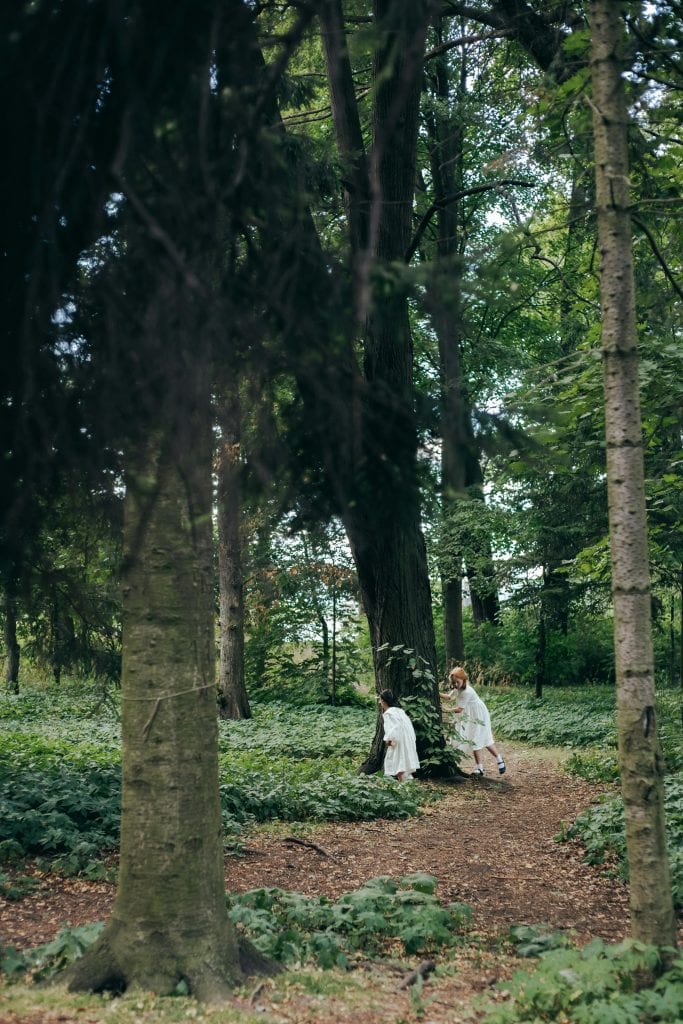
Good old hide-and-seek gets a forest school twist when you play it out in the woods. This is probably one of the lowest-prep activities imaginable – it’s just the classic game, but among the trees! One person is the seeker while the others hide.
Count to ten (or more, to give hiders a chance to find a good spot) and then let the search begin. The magic of doing this in a wooded area is that kids can learn a bit about camouflage and stealth: they might hide behind tree trunks, crouch behind bushes, or even lie low against the forest floor.
For young children, set clear boundaries (e.g., “only hide between this big oak and that fallen log, where I can see you”). The goal is fun, not actually losing anybody! As they play, children naturally start noticing how colors and shapes blend into the environment – a great talking point about how animals use camouflage in nature.
This game helps burn off energy and builds confidence outdoors. A child who might be shy in a wide-open field could feel more “hidden” and daring in a forest hide-and-seek. After a few rounds, switch up roles so everyone gets a turn to be the seeker.
You’ll often find the kids come up with their own variations, like a rule that the hiders have to hold a pinecone or wear a green leaf to make it trickier. It’s pure, simple fun.
Safety Tip: In a new or larger forest area, consider having hiders hide in pairs (especially with younger kids) so no one is alone. You can also give each child a specific bird call or whistle to use if they want to be found.
For example, teach them to do a simple owl “hoo” or a whistled tune to signal the seeker if needed. It adds to the forest atmosphere and keeps everyone safe and within earshot.
(If you want more insight into how outdoor learning differs from forest school, check out the real difference between outdoor learning vs forest school.)
4. Stone Stacking Towers (Balancing Challenge)
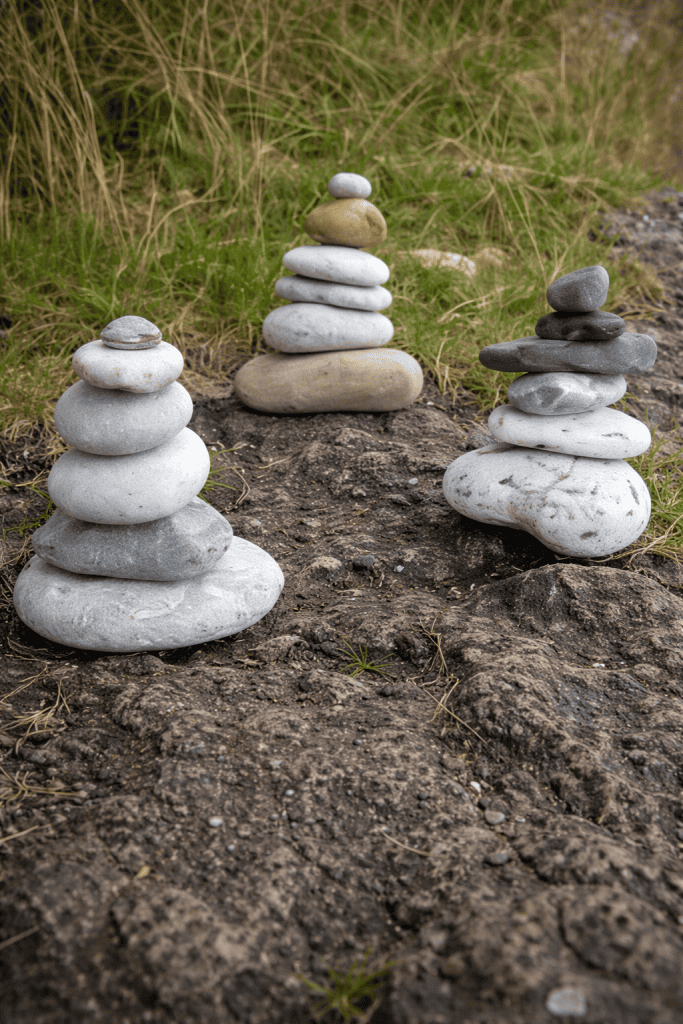
Kids are natural engineers, and stacking stones is a calming yet captivating challenge for them. Whenever you come across a patch of pebbles or river rocks in the woods (even a handful of stones will do), invite your child to build a stone tower.
How high can they balance the rocks before the tower tumbles? This simple activity can keep children engrossed as they test different combinations and learn a bit of physics through play. It’s like nature’s version of building blocks!
Younger kids might start with just two or three stones and be delighted by even a tiny tower. Older kids often turn it into a competition or an experiment – finding the flattest rocks, figuring out how to lay a solid foundation, and gently adding pieces to reach new heights.
Stacking stones practices hand-eye coordination and fine motor control, and it also teaches a life lesson in patience and persistence (towers will fall, and that’s okay – just build again!).
As a bonus, these little rock towers make for great photo ops and forest art. Some families like to leave particularly nice stacks as a friendly marker on the trail (just ensure you’re not disturbing a habitat when you gather stones). It’s rewarding for kids to step back and admire the mini cairn they created.
Try This: Turn it into a balancing game. Challenge your child to include one “unexpected” item in their stone tower – maybe a pinecone, a stick, or a bottlecap if you find one on the trail. Can they integrate a non-stone object and still keep the tower standing?
This twist sparks creativity and problem-solving. Plus, if you happen to pick up a piece of litter (like that bottlecap) to use in the game, you’re also subtly teaching about caring for the environment. Win-win!
5. Mud Play (Mud Pies & Tree Face Art)
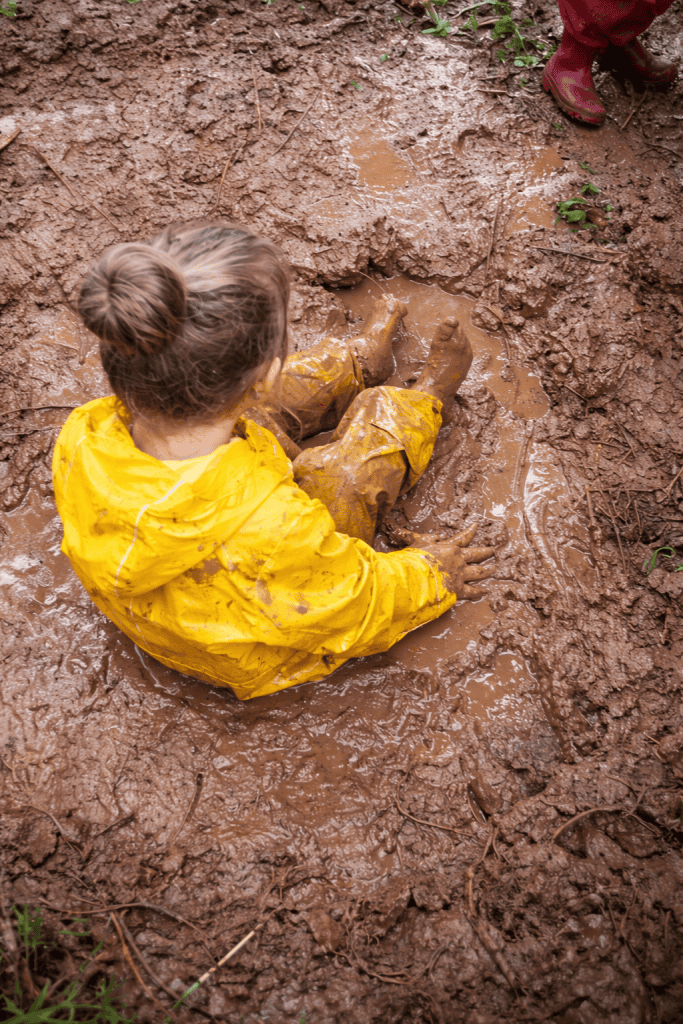
Get ready to embrace the mess – because mud play is a hallmark of forest school fun! The idea here is as low-prep as it gets: find a patch of dirt or mud (after a rain is perfect, but a water bottle to moisten soil works too) and let the kids go wild with their imagination.
They can squish it, pat it, draw in it, or “cook” with it. Making mud pies is a classic: kids can gather some mud in a shallow hole or old bucket and decorate their “pie” with leaf sprinkles, acorn toppings, and stick candles. It’s like a mud kitchen without any fancy setup – pure imaginative play.
Another favorite is creating mud faces on trees. Pick a tree with a decent patch of smooth-ish bark. Help your child slap a handful of mud onto the trunk like clay, and then decorate the blob to make a funny face! They might use acorns for eyes, a curved stick for a smile, and leaves or pine needles for hair.
The tree won’t mind wearing a little mud mask for a while – and eventually the rain will wash it clean. Kids find this absolutely hilarious (parents do too). It’s a great mix of art and sensory play: they’re sculpting with natural “clay” and using natural materials as art supplies.
Mud play lets children explore different textures and get comfortable with nature in a very hands-on way. Yes, they will get muddy – but that’s half the fun and a chance for them to learn that it’s okay to get dirty outside.
Just dress them in old clothes or rain gear and let it happen. You’ll be rewarded with huge smiles and very engaged little learners.
Cleanup Tip: Before you head home, do a quick “mud check.” Use a water bottle or wipes to rinse the worst of the mud off hands and boots. Keep a plastic bag handy for really mucky shoes or clothing.
That way, you can contain the mess until you get to a proper wash. But do make sure to praise your kids for diving into nature – “Wow, look at those muddy hands! That means you really explored things today!” A positive attitude about mess goes a long way in encouraging outdoor play.
6. Nature Orchestra (Making Music with Sticks & Stones)
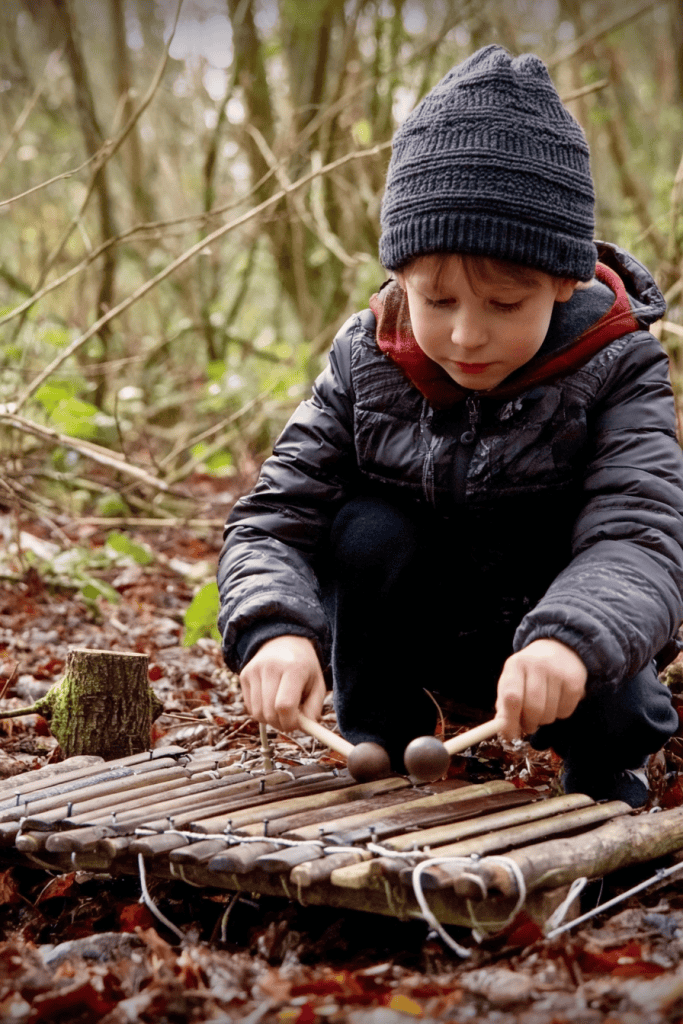
The forest isn’t just a visual wonderland – it’s an auditory playground too! In this activity, you’ll help your kids create a nature orchestra using whatever sounds they can find. No instruments? No problem. Sticks, stones, and even your own bodies can make music.
Encourage your child to gather a few sticks of different sizes – when tapped together, do they make a clack or a thud? Thinner sticks might even sound a bit like a drumstick on a log.
Two rocks banged gently can serve as simple cymbals (flat stones make a nice “clink” sound). Dry leaves can be crunched rhythmically, or shaken in a closed fist like maracas. And of course, there’s always clapping hands and stamping feet, which echo in fun ways in the woods.
Start by experimenting with sounds: “What sound does this make?” – hit the stick on a hollow log, scrape it against bark, or swish it through tall grass. Let your child be the sound explorer. After discovering various noises, challenge them to put it together.
Can you tap out a simple rhythm or have each person make a different sound to create a “song”?
Maybe one child knocks two rocks together while another taps a stump and a third shakes a bunch of acorns in a cup-like leaf. It might sound cacophonous or surprisingly cool – either way, they’re learning cause and effect, rhythm, and cooperation.
This activity is fantastic for mixed-age groups. Little ones might just like making noise (so maybe send them a few paces away to bang on that log), while older kids can actually coordinate a beat or even try familiar tunes (“let’s see if we can tap out the rhythm to Twinkle, Twinkle Little Star”).
It turns a forest into both a classroom and a concert hall, all with zero equipment from home.
Try This: Go on a “sound hunt” first. Challenge your kids to find: something that rings, something that rattles, something that squishes, and something that snaps.
They might discover, for example, that a particular rock when smacked against another has a bell-like ring, or a dried seed pod filled with little seeds will rattle.
Once they’ve collected their sound-making items, perform a mini outdoor concert. You could even sing a favorite song while the kids accompany you with their new nature instruments. It’s silly, it’s joyful, and it builds a beautiful memory of laughing together in the woods.
7. Animal Movement Games (Move Like a Forest Creature)
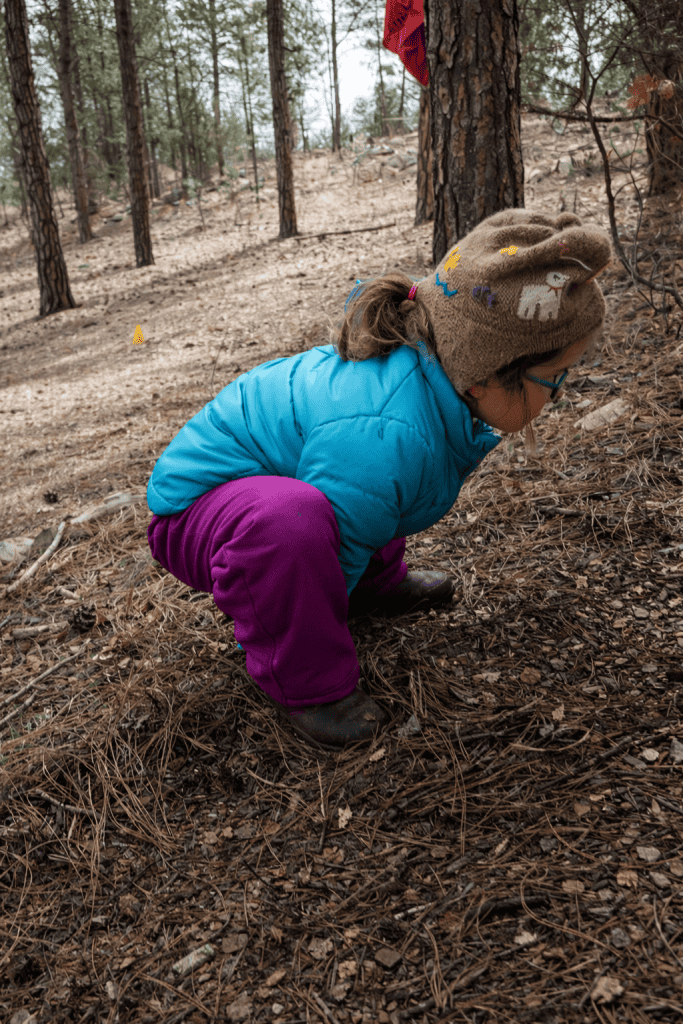
Children have boundless energy and big imaginations – this activity puts both to use by channeling their inner animals. Animal movement games are all about pretending to be forest creatures and moving the way they do.
It’s low-prep (no props needed at all) and can be done anywhere in the woods. To start, you (or your child) can call out an animal and demonstrate how that animal might move. “Let’s hop like bunnies!” – everyone hops around.
“Now stretch tall and lumber like a bear,” – get down on all fours or stomp heavily on two legs with paws up. How about slithering like a snake on the forest floor, or flapping your arms and running like a big, goofy bird?
Kids will usually jump in with their own ideas: maybe they’ll tiptoe and chatter like a squirrel, or crouch and walk slowly like a fox sneaking.
Follow their lead and encourage the creativity. This game is not only fun and active (hello gross motor development!), but it also quietly teaches kids about animal behaviors and traits.
You can throw in little facts in a casual way: “You’re slithering like a snake – did you know snakes stick out their tongue to smell the air?” or “Wow, you’re a hopping frog! Frogs use those strong legs to jump far.” Often, though, the kids are too busy giggling to want a biology lesson, and that’s okay – the experience itself is the teacher.
What’s wonderful is how this game helps children burn off energy while also encouraging empathy and observation. By pretending to be another creature, they’re considering how that creature moves and lives.
Don’t be surprised if after this game, your child starts noticing real animals more: the flutter of a bird’s wings or the bounce of a rabbit might remind them of the time they pretended to do the same.
Try This: Turn it into an animal adventure story. For example, announce: “We’re going on a journey through the forest. First, we have to fly like eagles to the big oak tree. Now, oh no – a big log in our path! Quick, crawl like a sneaky fox under it. Uh-oh, it’s starting to rain – let’s hop like frogs to the shelter of those bushes!”
String together a mini story where each segment involves moving like a different animal. The kids will be eager to hear what comes next, and you’ll effectively guide them on a playful nature obstacle course disguised as a tale.
Check out our guide on forest school activities perfect for spring for seasonal inspiration!
8. “I Spy” Nature Game (Easy Observation Practice)
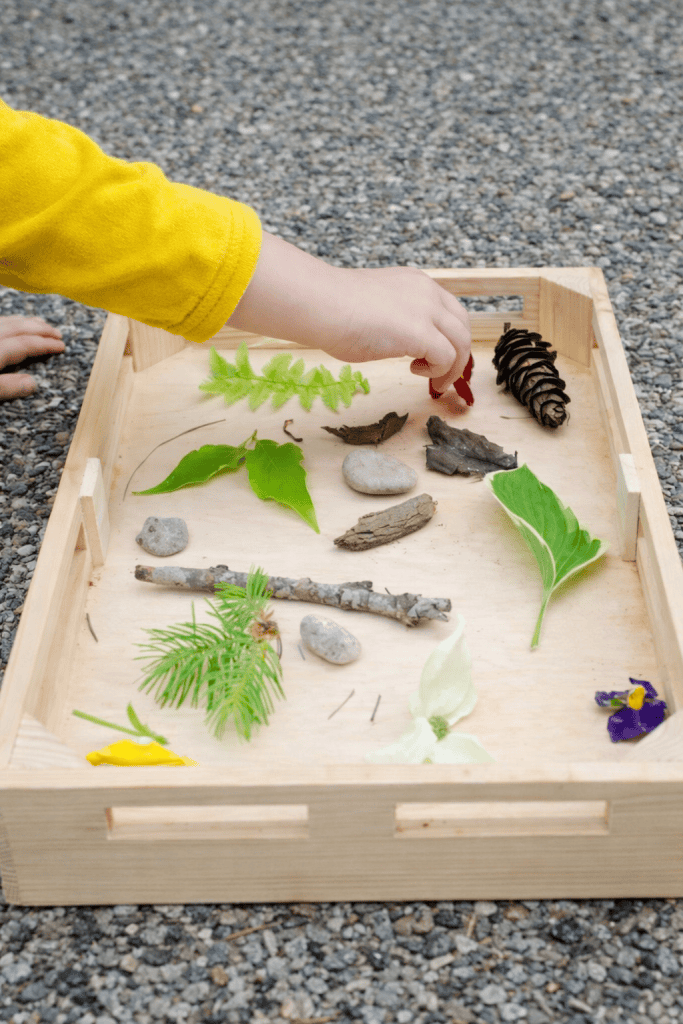
Sometimes the simplest games are the most engaging – and the classic “I spy” game gets a delightful twist when you play it outdoors in a forest. This is a fantastic anywhere, anytime activity to pull out whenever you need a little calm focus or to direct kids’ attention to their surroundings.
To play I Spy in nature, one person picks something they see (for young kids, it’s easiest to choose an obvious object like a rock, flower, or tree) and says, “I spy with my little eye… something [green]!” (or give another clue like shape or first letter for older kids). The others then look around and try to guess what it is.
In a forest setting, clues might be colors or textures: “something rough,” “something that is brown and small,” “something that moves” (that one’s tricky but fun if there are birds or bugs about!). This game encourages children to really observe the environment.
They’ll start noticing details – the various shades of green on leaves, the difference between a smooth stone and a rough pinecone, the movement of a butterfly that they might have otherwise missed.
For beginners, you as the adult might start off as the clue-giver to model how to play. But kids catch on quick and will want a turn being the spy. It’s perfectly okay (even beneficial) if you make the clues a tad easy at first.
The goal is for the child to succeed in finding things – that little victory of “I found it!” fuels their confidence and interest in looking closely at nature. As they get the hang of it, you can ramp up the challenge gently, or let older siblings come up with trickier clues for each other.
This simple game is great for mixed-age groups and can be as short or long as you want. Use it as a five-minute calm-down activity sitting on a log, or extend it into a full nature scavenger hunt style session by letting it evolve from one clue to the next. There are no pieces to prepare, nothing to clean up – just good old observation and a bit of riddle-like fun.
Variation: Instead of just visual clues, try an “I spy” with other senses. “I spy with my little ear… something that chirps,” or “I spy with my little nose… something sweet-smelling.”
The others then have to listen carefully or sniff the air and guess (e.g., chirping could be a bird, sweet smell could be a wildflower or tree sap). This turns the game into a multi-sensory experience and highlights that there’s more to observe in nature than what meets the eye!
9. Nature Obstacle Course (Follow the Leader Adventure)
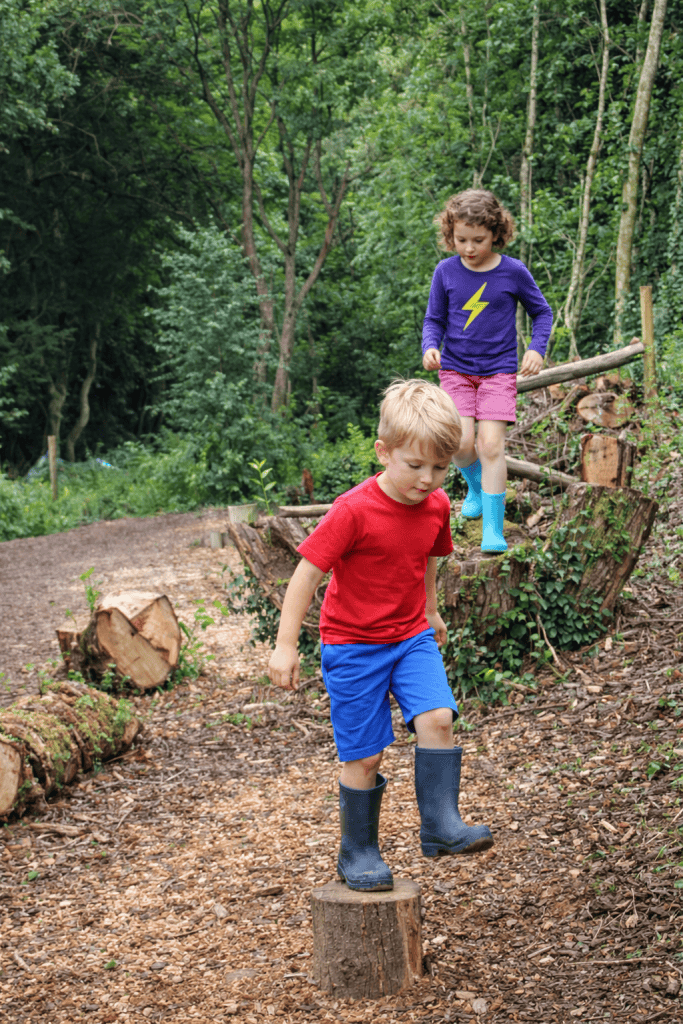
Turn your forest walk into a playful challenge by creating a nature obstacle course on the fly. This is a follow-the-leader game where the leader (you can start, then rotate kids as leaders) finds simple “obstacles” or actions to do along the trail.
For example, as you walk you might announce: “Follow me! First, we’re going to balance on this fallen log.” Everyone carefully walks the length of a sturdy log on the ground (with a helping hand for little ones). “Next, we have to duck under this low branch – watch your head!”
Then maybe, “Let’s tiptoe over these stepping stones (or patches of dirt) without falling off.” Essentially, use what the forest gives you: fallen trees, rocks, puddles, tree stumps can all become part of the course.
Kids absolutely love this because it feels like a real adventure playground, but it’s just the natural environment.
You’re teaching them to navigate and respect the terrain – step over that stick, weave between those trees, jump off that small rock (“like a superhero!”). It builds gross motor skills, balance, and coordination, all under the guise of pure fun.
Plus, when it’s their turn to be the leader, you’ll be amazed at the obstacles they invent: “Now everyone has to spin around three times on this patch of grass, then crawl like a baby bear to that pine tree.” Their creativity and confidence soar when they’re in charge.
Because this activity is so flexible, you can adjust it to any age. Toddlers might just enjoy the up and down motion of stepping over a log or the excitement of hiding behind a tree (“Obstacle: we all hide and count to three, then pop out!”).
Older kids might turn it into a full-on ninja warrior course, racing and timing themselves. You can make it cooperative (stick together as a group) or give each child a turn to shine as leader.
Try This: Add a story element to the obstacle course to ignite imagination. “We’re explorers on a mission. That fallen log is a river we must cross (balance, balance!). Those stones are stepping stones through quicksand – don’t step in the mud! Now we’ve entered a fairy grove, so we must tiptoe quietly past so we don’t wake the fairies.”
By blending storytelling with physical challenges, you engage both their minds and bodies. It makes the activity memorable and can be adapted infinitely – today you’re explorers, tomorrow you’re astronauts on an alien planet forest… the sky’s the limit!
10. Nature Tic-Tac-Toe (Games with Sticks & Stones)
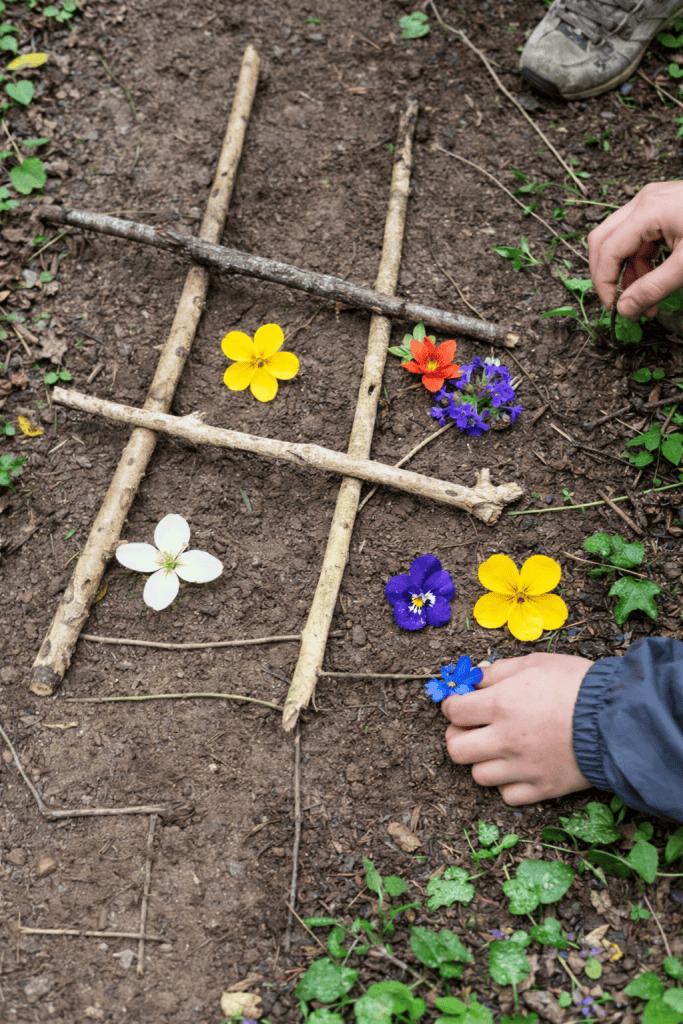
Here’s a clever way to repurpose a favorite game using only natural materials: tic-tac-toe (also known as noughts and crosses). This low-prep activity combines a bit of strategy with outdoor play. To set up, you just need to draw a # (hash) grid on the ground.
In a forest, you can scratch the lines in dirt with a stick, arrange thin twigs to form the grid, or even use a line of pebbles or pine needles to outline it. Now gather two types of markers from nature – for example, acorns vs. small rocks, or pinecones vs. leaves. One type will represent X, the other O (you can decide which is which).
Now play tic-tac-toe as you normally would: take turns placing your nature markers in the grid’s squares, trying to get three in a row. It’s a quick game, but it can be played over and over. Each round is a chance for kids to think ahead (Where should I put my pinecone next?) and also to practice good sportsmanship (since someone will get three in a row first and win, most of the time!).
The nice thing about doing it outdoors is that if a piece doesn’t stay put (say, the wind rolls a round acorn off its spot), it just adds to the challenge and silliness – you can use a heavier rock or scratch a little divot to keep it in place.
Even if your kids have never played tic-tac-toe on paper, they’ll pick it up quickly with the tactile version. Preschoolers might need some help understanding the rules, but they often love just placing the objects and making patterns, even if they’re not strategizing yet.
That’s totally fine – let them “win” or call a draw and play again. Older kids will get into the competitive aspect and might start planning their moves more thoughtfully with each round.
This game shows that outdoor fun can include twists on classic outdoor learning activities – it’s educational (logic and planning) but feels like pure play because of the natural twist.
And since everything is from the forest, cleanup is a breeze: just scatter the pieces back into the woods when you’re done, or better yet, challenge the kids to find all the pieces and put them back where they found them as a mini cleanup mission.
Extend the Fun: Try other paper-and-pencil games in nature. For instance, play a simple game of hangman or draw letters in the dirt with a stick. Or use a stick to draw a hopscotch grid on a flat dirt patch and use a rock as the marker – instant forest hopscotch!
These little games require no preparation and show kids that you can always make your own fun, wherever you are. It’s a great mindset for them to develop as budding adventurers and problem-solvers.
(You can extend this idea with outdoor winter nature play activities for kids like forest hopscotch or leaf letter games.)
Start Your Forest School Adventure with These Low-Prep Activities
Each of these activities is a stepping stone into the world of forest school – proof that outdoor learning and play doesn’t need to be complicated or intimidating.
By starting slow with these low-prep ideas, you’re building your confidence (and your kids’ confidence) in exploring the natural world together. The key is to keep it fun, follow your child’s lead, and celebrate the little moments of wonder – a balanced stone tower, a spirited pretend bear roar, or a muddy high-five.
So next time you’re feeling a bit cooped up or the kids are buzzing with energy, pick one of these forest school ideas and head outside. You don’t need to trek deep into wilderness – a small wooded area or park with trees will do just fine.
The magic comes from your enthusiasm and willingness to play alongside your kids. Put on that leaf crown, hop like a bunny, get a little muddy, and laugh together.
Which of these activities will you try first? Leave a comment below to let us know how it goes, or if you have your own easy-peasy forest school ideas to share. We’d love to hear about your outdoor adventures – happy exploring and welcome to the forest school family!
FAQs
Do I need any special equipment or materials for these activities?
Nope! Most activities use what nature provides – sticks, stones, leaves, and mud. A few simple items like a bandana, masking tape, or a magnifying glass can be fun but aren’t required. The idea is low-prep and spontaneous – drop into a forest and start playing. Just remember to leave no trace.
My child isn’t used to playing outside much. How can I get them interested?
Start small and make it fun. Short outings (20–30 minutes) work well. Pick activities that match their interests – mud painting for art lovers, animal movement games for energetic kids. Join in, show enthusiasm, and let them lead. Positive experiences will spark their curiosity naturally.
How often should we do forest school activities, and for how long?
There’s no strict rule. Start with once a week or a couple of times a month. Young kids (3–4) may enjoy 30–60 minutes; older kids can go longer if engaged. Follow their energy and stop while everyone’s still having fun. Quality over quantity matters most.
I’m not very “outdoorsy.” Can I still do forest school with my kids?
Absolutely! You don’t need expert skills. Forest school is about curiosity, not knowledge. Start in easy-to-manage areas, dress comfortably, bring water, and explore alongside your kids. Your role is to facilitate safety and support their exploration.
Can we do these forest school activities in any season?
Yes! Activities can be adapted for all seasons. Use flowers or leaves in spring, colorful leaves in autumn, snow or evergreens in winter. Dress appropriately and adjust activities for safety. Nature has something to offer year-round, and kids often love rainy or snowy adventures as much as sunny ones.