
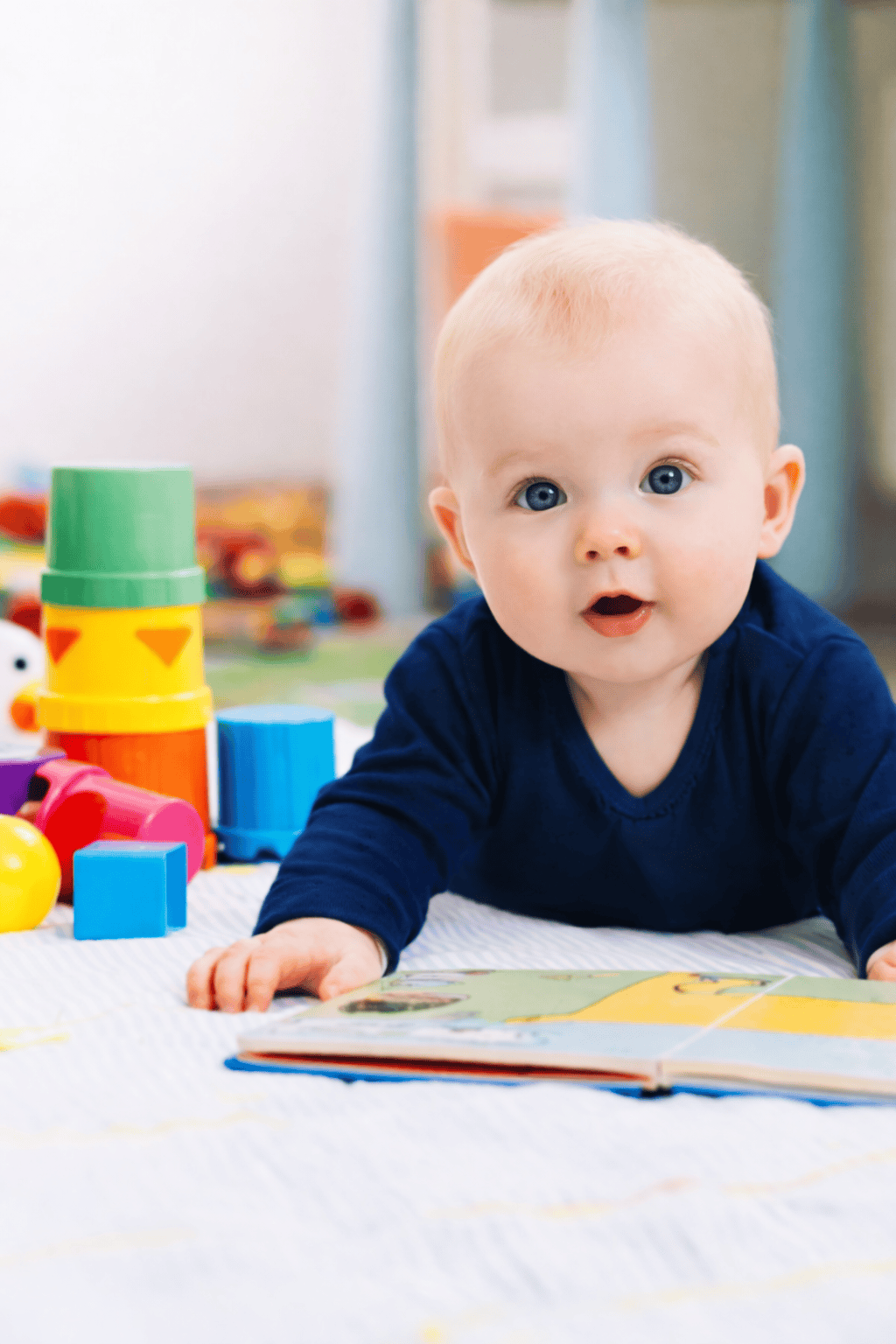
Tummy time is more than just a daily exercise for your baby – it’s a foundation for key developmental milestones.
By infusing sensory play into tummy time, you can make it a fun, engaging adventure that supports your baby’s growth at every stage.
From those early days when holding their head up is a triumph, to the wiggles and scoots that signal crawling is near, each phase of development offers new opportunities for sensory-rich play.
In this post, I’ll explore tummy time sensory play ideas categorized by milestone stages (from newborn to crawler), along with supportive tips to ensure you and your little one enjoy every minute of it.
Why Tummy Time Matters for Baby’s Development
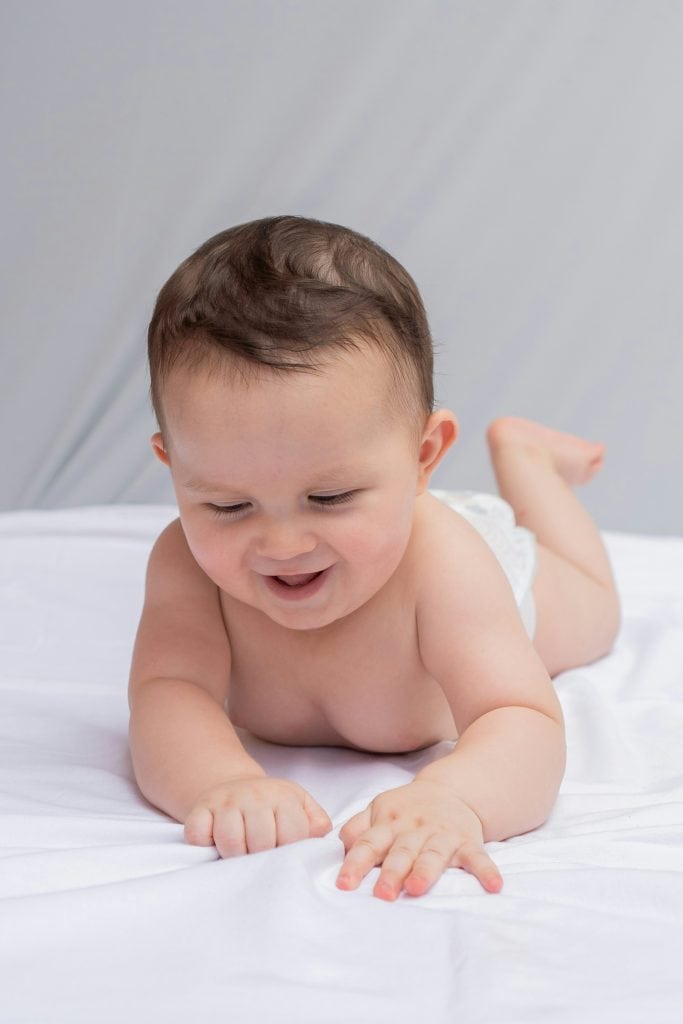
Tummy time is one of your baby’s first workouts – and it comes with big benefits. When babies spend time on their bellies, they’re busy building the neck, shoulder, and upper body strength needed for major motor milestones like rolling over, sitting up, crawling, and eventually walking.
In fact, what starts as wobbly head lifts in the newborn stage gradually transforms into mini push-ups, reaching for toys, and pivoting around to explore – all building blocks for later mobility. Regular tummy time also helps prevent flat spots on the head and promotes healthy muscle development.
Equally important, tummy time helps develop coordination and visual skills. Lying on their tummy gives babies a new perspective on the world, encouraging them to practice focusing and tracking sights and sounds around them.
You might notice your little one following a toy with their eyes or turning toward your voice during tummy time. This simple play position is actually wiring their brain for better visual tracking and hand-eye coordination down the road.
And as their strength and confidence grow, those few minutes of tummy time will stretch into longer periods of play – there’s really no such thing as too much tummy time once your baby enjoys it!
Adding sensory play – like the ideas in my expert-approved sensory activities for babies – helps babies stay engaged and builds even more early developmental skills.
How Sensory Play Enhances Tummy Time
In the early weeks, many babies aren’t big fans of tummy time – and who can blame them? It’s hard work! That’s where sensory play comes in. By adding engaging sights, sounds, textures, and even smells to tummy time, you can transform it into a stimulating play session rather than a chore.
Babies naturally crave exposure to different sensory experiences, so mixing in colorful visuals, interesting sounds, and fun textures can capture their interest. A crinkly fabric, a gentle rattle, or your smiling face in front of them can turn “ugh, tummy time” into an exciting little adventure.
Combining tummy time with sensory play not only keeps your baby entertained longer, but also boosts their development. Varied sensory input helps babies learn to track moving objects, focus their eyes, and respond to sounds – skills they’ll use as they grow.
You can also explore must-try sensory activities for pre-schoolers to see how these same principles evolve as kids get older.
Sensory Tummy Time Play Ideas by Developmental Stage
Every baby develops at their own pace, but generally we can think of infant development in a few broad stages. Below, you’ll find tummy time sensory play ideas tailored to each stage – from the early days of head lifting to the cusp of crawling.
Each stage includes a glimpse of the milestones your baby is working toward and some fun ideas to make tummy time engaging at that level. Feel free to adjust based on your little one’s abilities and interests. The goal is to keep tummy time safe, positive, and packed with sensory fun!
If you love DIY sensory experiences, our DIY sensory activities for toddlers guide has extra inspiration.
Newborn to 3 Months: Getting Comfortable on Tummy (Head Control Stage)
In the first couple of months, your newborn is just learning to tolerate being on their tummy. At this stage, head control is the big milestone – your baby will go from barely lifting their head at all to holding it up briefly at a 45° angle or more as they approach 3 months old.
Early on, expect their movements to be small and a bit wobbly. By the end of month three, most babies can lift their head and upper chest while propped on their forearms during tummy time. They might also start to turn their head side to side and visually track a toy or your face for a few seconds.
Keep tummy time sessions short and sweet (just a few minutes at a time) and always supervise closely. It’s normal for newborns to fuss during tummy time – they’re using new muscles and it’s hard work! With gentle encouragement and some sensory tricks, they’ll gradually build strength and confidence.
At this age, babies can only manage short bursts of tummy time. They often keep their arms bent and mostly have their head down, only lifting it momentarily with great effort. By practicing a little each day, they’ll start to lift and turn their head more as their neck gets stronger.
Here are some sensory play ideas to help your newborn enjoy tummy time and meet those early milestones:
1. Skin-to-Skin Chest Snuggles
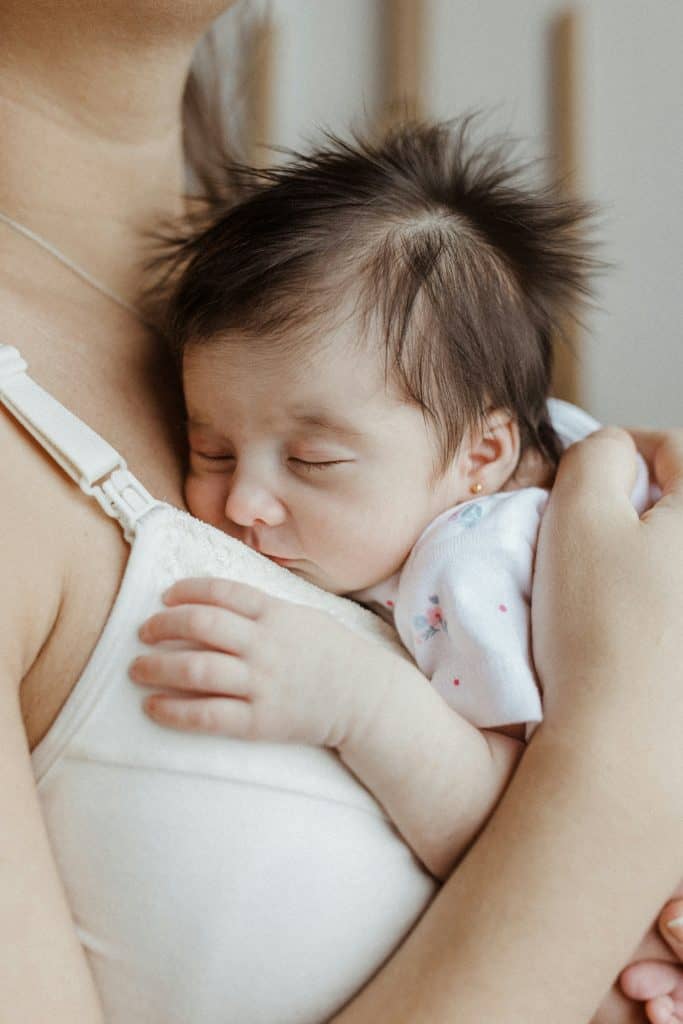
One of the best ways for newborns is on your chest while you recline.
Lay your baby tummy-down on you, so they feel your warmth, hear your heartbeat, and enjoy skin-to-skin contact.
This counts as tummy time and often keeps newborns calm and cozy since they’re close to you.
Gently talk or sing as they lift their head to look up at you.
2. High-Contrast Visuals
Newborn vision is still developing, and bold black-and-white patterns are easiest for them to see.
During tummy time, prop open a high-contrast book or place black-and-white picture cards about 8–12 inches from your baby’s face.
Those simple images will captivate their attention and encourage them to lift their head to stare at the intriguing patterns.
You can slowly move the image from side to side to encourage them to turn their head and practice visual tracking.
3. Get Down Eye-to-Eye
Your presence is the best stimulation! Get on the floor face-to-face with your baby during tummy time.
Lie on your tummy too, so you are eye-level, and talk gently or make silly faces.
Your baby will love gazing at your face and hearing your voice.
This interaction not only makes them happier on their tummy, but also helps develop their social and communication skills.
Try singing a favorite lullaby or speaking in an animated, sing-song voice – your newborn will find your voice soothing and may attempt to lift their head or turn toward you as they recognize your face and sound.
4. Tummy Time Roll or Pillow

If your baby is struggling or getting frustrated with tummy time on a flat surface, try giving them a little boost.
Place a rolled-up blanket or a small firm pillow under their chest (with arms forward over the roll) to raise their upper body at a slight angle.
This makes it easier for them to lift their head and takes some pressure off their arms.
You can do this on the floor or even across your lap. Always keep a hand nearby for support.
With this prop, many young babies will tolerate tummy time longer and get a better view of the world around them.
5. Gentle Toy Noise
Introduce a soft rattle or wear wrist rattles on your baby’s wrists during tummy time.
When they wiggle an arm, the rattle will make a sound – a little surprise that can delight them and reinforce cause-and-effect.
You can also shake a tiny rattle or bell gently to one side of your baby’s head (not too close to avoid startling) to encourage them to turn and look.
This provides auditory stimulation and rewards their attempts to move their head.
Always use soft, baby-safe noise makers and observe how your baby reacts – if they seem overwhelmed, use gentler sounds or just stick to your calming voice.
For more inspiration with household items, check out our exciting sensory bin filler ideas.
3–6 Months: Building Strength and Starting to Roll (Upper Body Stage)
Around 3 to 6 months, babies really start to find their groove in tummy time. You’ll notice your baby pushing up higher on their arms, lifting their chest off the ground, and holding their head steady at a 90° angle to look around by about 4–5 months.
Those once-wobbly neck muscles are much stronger now! Many babies learn to roll over during this stage – often from tummy to back around 4–5 months, and back to tummy by 5–6 months.
They may pivot a bit or rock side-to-side as a prelude to rolling. Your baby is also gaining better hand control, which means they’ll start reaching for toys in front of them during tummy time (and maybe face-planting in the process – it’s all part of learning!).
This is a great age to introduce more interactive play because babies are curious and eager to engage. They’re preparing for bigger milestones like sitting up and crawling, so strengthening those back, arm, and core muscles through play is key.
With their new strength, babies in this phase can play longer on their tummy and truly enjoy the view.
Tummy time becomes less about just tolerating the position and more about exploration. Keep a few favorite toys within reach to encourage practice with grabbing and maybe even motivated rolling. Always supervise closely, since your baby might surprise you by suddenly rolling over.
Here are some fun sensory play ideas for the 3–6 month stage:
1. Magic Mirror & Activity Mat
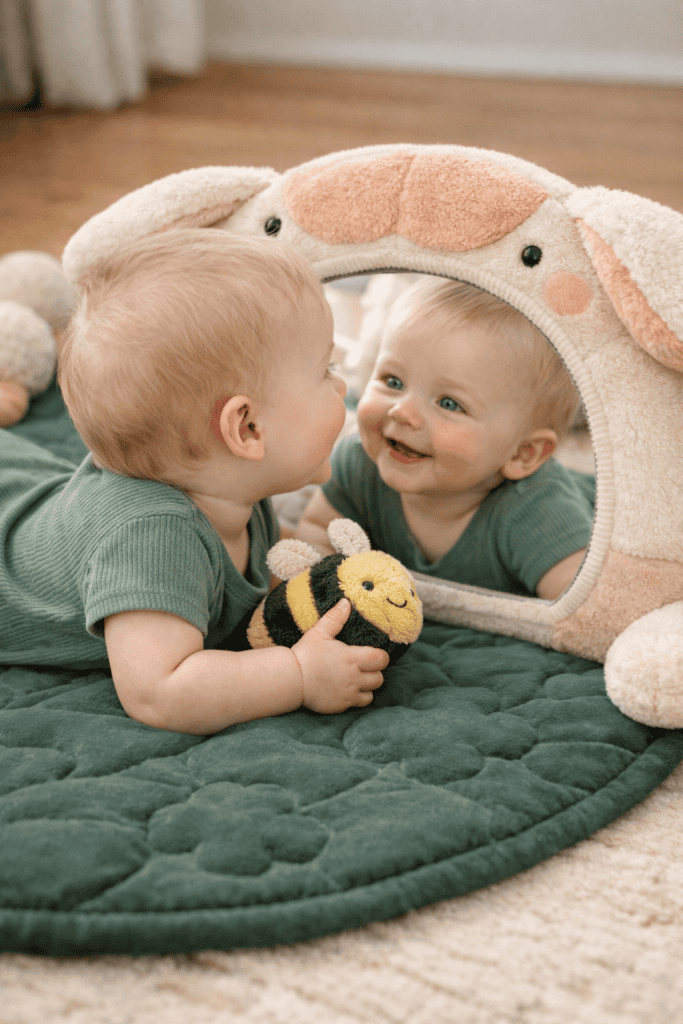
At around 3–4 months, babies love seeing faces – including their own! Place a sturdy, baby-safe mirror on the floor in front of your baby during tummy time. Many little ones will light up when they catch a glimpse of that baby in the mirror (they don’t yet realize it’s them, but it’s fascinating nonetheless).
A mirror provides great visual stimulation and can entice your baby to lift their head nice and high to get a better look. You can pair this with an activity mat or play gym if you have one – by this age, your baby will start batting at the hanging toys or responding to the crinkly fabrics and peekaboo flaps on the mat.
The combination of bright colors, lights, or sounds on an activity mat and the reflection in the mirror can keep your baby engaged. If you don’t have a play mat, no worries: arrange a few interesting toys and the mirror on a soft blanket. The key is giving them something fun to focus on beyond the plain floor.
2. Tummy Time Sensory Bag
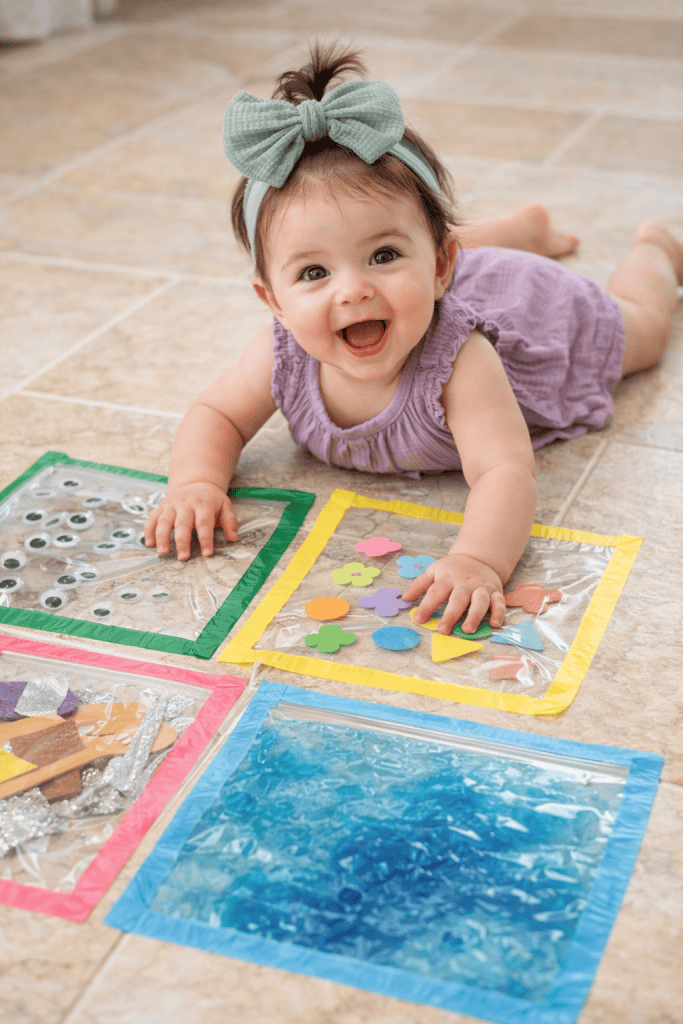
Take sensory play up a notch by introducing a sensory water mat or DIY sensory bag. You can buy baby water mats that are essentially sealed pads filled with water and floating toys – babies can press and pat at the squishy surface and watch the objects move.
Or make your own tummy time sensory bag: fill a strong zip-lock bag with a little water and add items like shiny sequins or large glitter, or even just a few ice cubes. (Double-bag it and tape it to the floor to be safe.)
Your baby will love the cool feel and the intriguing movement of the water and glitter when they push on it. Other textures to try in a sealed bag: hair gel (for a different feel) or paint (for messy-looking, but contained “finger painting”).
Always closely supervise this play and ensure the bag stays sealed. The mix of textures and temperatures will provide a whole new sensory dimension to tummy time, encouraging your baby to press up and poke at the bag.
3. Peek-a-Boo Games
Your baby’s social awareness is blossoming now, and peek-a-boo is a hit around this age. While your baby is on their tummy, get down in front of them and play peek-a-boo – cover your face with your hands or a light cloth, then reveal it with a smile.
The surprise factor often makes babies giggle. This classic game isn’t just fun; it actually helps them start understanding object permanence (the idea that things still exist even when hidden) and gives them a reason to lift their head and look for your face each time.
Around 5–6 months, babies really start to enjoy this routine. You can also hide a toy under a cloth and let them see you reveal it, or pop up from different sides of them to encourage head turning.
Each “boo!” might get them to push up on their arms a little more. Your animated voice and facial expressions add an auditory and visual sensory bonus to the game.
4. Bubble Motivation

If you’re looking for a novel sensory element, try bubbles! Gently blow bubbles so they float down in your baby’s view during tummy time. The floating, shimmering bubbles often captivate babies – they might widen their eyes, reach out a hand, or even give an excited kick.
Position yourself so that the bubbles drift just above your baby; you want them to see the bubbles and maybe attempt to touch them. This can encourage them to lift their head higher and extend their arms.
It’s also a delightful way to introduce visual tracking, as they watch the bubbles dance and then disappear. Always ensure none land on your baby’s face (blow gently and from a distance) and be ready to wipe away any bubble solution that pops near them.
The goal is a gentle, magical visual experience that makes tummy time feel like playtime in a mini bubble wonderland.
5. Just Out of Reach
By the latter part of this stage, many babies are gearing up to roll and even inch along on their tummies. You can encourage this mobility with a little strategic placement of toys.
During tummy time, place a favorite toy just slightly out of your baby’s comfortable reach – maybe a few inches beyond where their hands naturally rest. Make sure they see it, and cheer them on as they try to get it.
Your baby might end up doing an airplane pose (lifting both arms and legs), pivoting in a circle, or even accidentally scooting a bit trying to grab the toy. If they manage to reach it or roll to it, celebrate! If not, you can help by gently nudging the toy closer when they make a big effort, so they feel the reward.
This “just out of reach” game gives them a reason to practice weight shifting, reaching, and rolling – all big physical and cognitive challenges. Plus, the moment they finally get the toy is a confidence booster (“I did it!”).
Be sure to use a safe object that won’t frustrate them too much; soft balls or a crinkly stuffed animal work well, as they’re easy to grab and interesting to play with once in hand.
6–9 Months: Moving and Exploring (Pivoting & Crawling Prep Stage)
By 6 to 9 months, your baby is likely a tummy time pro and may not even need your prompting to roll onto their tummy to play.
At this stage, babies are far more mobile: many can pivot in a circle on their belly, scoot themselves forward or backward (commando-crawling on their tummies), and easily reach and grab toys around them.
Tummy time has transitioned into actual play time on the floor, and it’s exciting to watch. Around 6-7 months, babies often push up on straight arms and may start getting their knees under them, rocking back and forth – a sign that crawling is on the horizon.
Some babies will be crawling (on hands and knees) by the end of this stage, while others might stick to belly crawling (“army crawling”) for a bit longer – both are okay.
They also can usually roll both ways with ease now, and may even do plank positions where they straighten arms and lift their belly briefly (building those core muscles!). By 9 months, many babies can transition from lying on tummy to sitting up on their own as well.
At this point, tummy time is often self-directed – your baby might prefer being on their tummy because it lets them move and explore freely. You’ve reached the stage where they are truly turning into little explorers, investigating everything within reach (time to double-check baby-proofing!).
Continue to supervise closely, especially as they become more mobile and determined to reach that tempting object across the room. To keep them engaged and help them practice new movements, you can introduce play ideas that make use of their growing strength and curiosity:
Older babies often push up on straight arms and pivot around to reach toys, as shown above. By 6–7 months, many can support themselves on hands and knees, and may start belly-crawling to explore their surroundings. Tummy time has become a lively play session full of wiggles and scoots!
1. Toy Circle Challenge
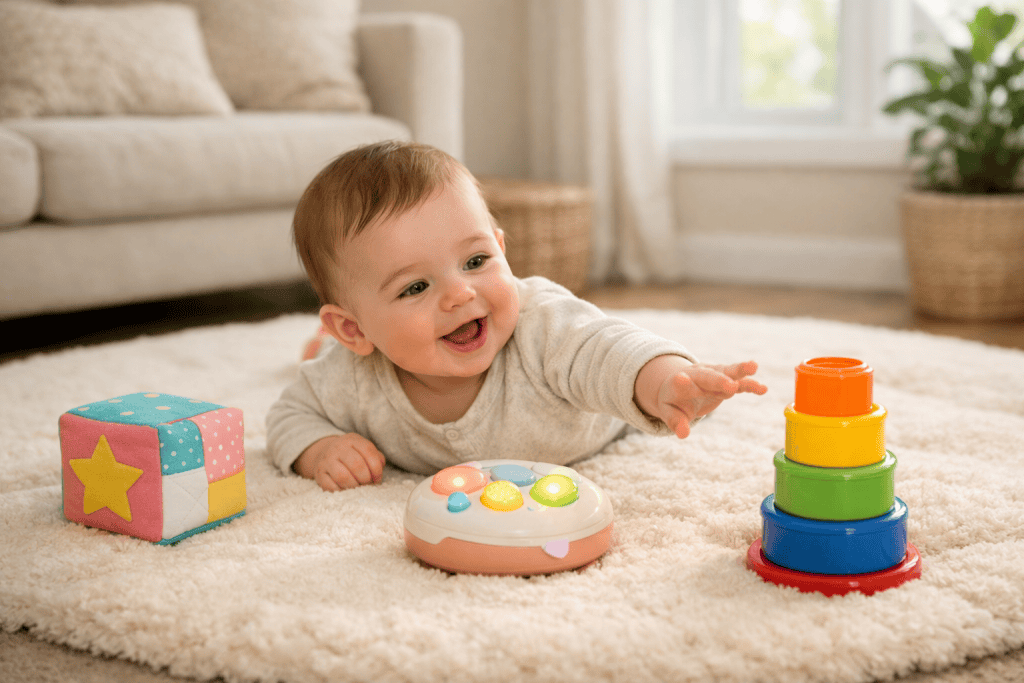
Now that your baby can pivot and turn, try creating a “toy circle” around them. Place several favorite toys in a half-circle just out of their immediate reach while they’re on their tummy.
For example, set a soft block to their left, a stacking cup to their right, and a musical toy in the middle. Make sure each toy is far enough that they need to pivot or scoot a bit to grab it, but not so far that they give up.
This arrangement encourages your baby to twist, turn, and pivot in a full circle over time to get to all the toys. It’s a fantastic exercise for strengthening oblique muscles and improving coordination (plus babies seem to enjoy the “treasure hunt” of moving from toy to toy).
As they master reaching the nearby toys, you can gradually move toys a little farther out to motivate more movement. Just keep a soft mat or carpet underneath for comfort as they inch along.
2. Chase the Rolling Toy
Tap into your baby’s new desire to move by using a rolling object for them to chase. A lightweight ball works perfectly. During tummy time, show them a colorful ball, then gently roll it a short distance away.
Many babies will instinctively try to go after it – they might belly crawl, scoot, or roll their way toward the ball. You can also use a wobbly toy (like a roly-poly tumbler that rocks but stays upright) just out of reach; give it a little push so it wobbles and grabs their attention.
The motion and sound will entice your baby to move toward it, and because such toys don’t roll away completely, there’s a satisfying payoff when they manage to reach it. This game is great for encouraging those first attempts at crawling.
Celebrate when they get the toy, then repeat! Just be careful not to let the ball or toy roll too far too fast, which could frustrate your baby – keep it attainable so they stay motivated.
3. New Scents and Textures
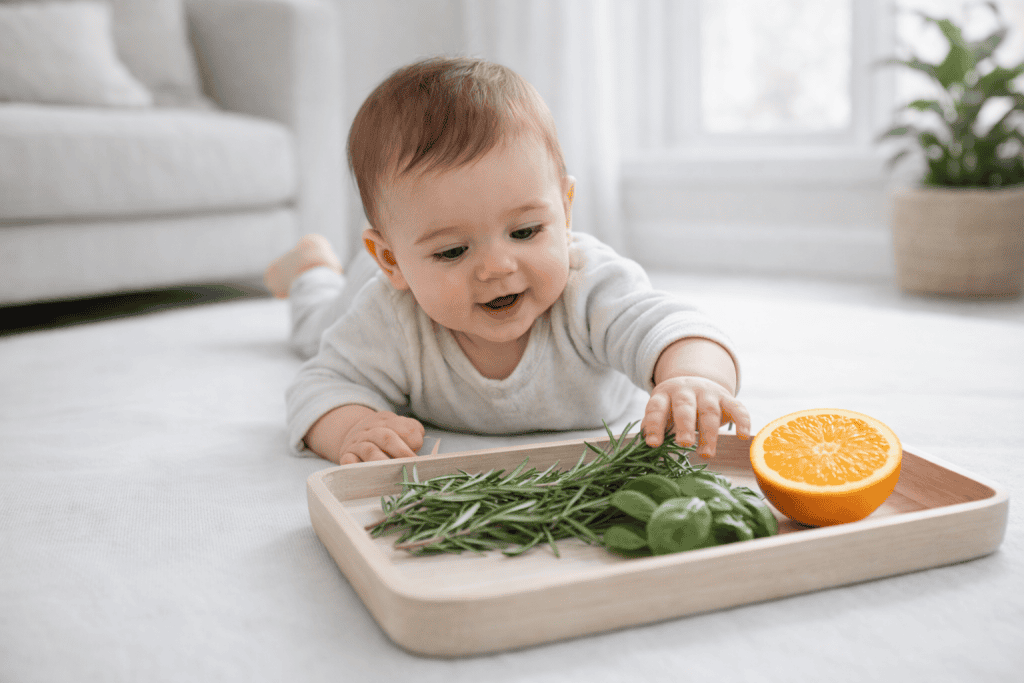
Stimulate your baby’s lesser-used senses (like smell) during tummy time. One idea is to present some fresh herbs or citrus peels on a tray or shallow container for your baby to explore under your supervision.
Scents like rosemary, basil, or a slice of orange can be very intriguing. Place the tray within their reach during tummy time and let them grab at the herbs – they’ll experience new textures (the feathery leaves) and new smells.
Talk to them about it: “Do you smell the rosemary? Doesn’t it smell interesting?” Always watch closely to ensure they don’t try to eat anything chokable; a quick sniff and crinkle is all we need.
Another sensory idea: make a tummy time touch-and-feel board with various fabrics (a piece of satin, a scrap of carpet, a square of crinkly cellophane taped securely) and let them reach out and feel the different textures as they pivot around.
Exposing your baby to safe new smells and textures expands their sensory world and keeps them happily engaged on their tummy.
4. Cool Sensations

As babies become more active, they also love discovering cause and effect with their hands. A fun supervised activity is using temperature and texture in a sensory bag. Fill a sturdy zip-sealed plastic bag with ice cubes (just a few) and seal it tightly.
Tape the bag to the floor during tummy time and watch your baby curiously pat and push the slippery, cold ice bag. They’ll feel the chill through the plastic and see the ice move and melt. Describe it for them: “Oooh, that’s cold! See how the ice slides when you touch it?”
This is a unique sensory experience – always check that the bag isn’t leaking and that their skin doesn’t get too cold. If ice is too chilly for their liking, you can try a similar idea with warm (not hot) water for contrast.
The goal is to introduce the concept of temperature and the sensation of something moving under their touch, which can be fascinating at this age. Just remember to remove the bag as soon as tummy time is done (and never leave them unattended with it).
5. Safe Floor Exploration
By now, your baby might prefer leading their own tummy time play, and that’s a good thing! Encourage free exploration in a baby-proofed area. Lay out a few interesting (and safe) household objects in addition to toys.
For instance, a wooden spoon, a silicone spatula, or a crinkly paper ball can captivate them as much as store-bought toys. Let your baby decide which object to investigate, and give them time to figure it out.
They might spend minutes turning a wooden spoon in their hand or scratching at the crinkly paper to hear the sound. This kind of self-directed sensory play builds their independence and creativity.
Make sure the objects have no sharp edges or small parts, and always supervise (they’re still likely to mouth everything). You’ll be surprised how something as simple as an empty water bottle with some dry beans sealed inside can become the toy of the day.
Free play on their tummy allows them to practice moving, pivoting, and maybe transitioning into a sit – all on their own timeline, with you cheering from the sidelines.
9–12 Months: On the Move – Crawlers and Beyond (Advanced Stage)
By 9 to 12 months, many babies have achieved the milestone of crawling (some on hands-and-knees, others might stick to tummy crawling or scooting on their bums – there’s a wide range of normal).
Once a baby can consistently get themselves in and out of tummy position and move at will, formal “tummy time” sessions aren’t really needed the way they were earlier. Your baby will naturally spend a lot of time on their tummy as they crawl and play.
In fact, experts say once your baby can get into a sitting position on their own or has started crawling, you can stop doing dedicated tummy time “exercises” – they’re doing it themselves! Of course, that doesn’t mean you should stop offering opportunities for floor play.
Continue to encourage plenty of floor exploration, because even as they start pulling up to stand or taking wobbly first steps, time on the floor (on tummy, crawling, or sitting) still strengthens their coordination and lets them practice new skills.
During this stage, your role shifts to creating a safe play environment full of sensory discoveries for your mobile baby. They might crawl from room to room if you let them!
Make sure your space is baby-proofed: secure furniture, block off stairs, and keep choking hazards out of reach. Now you can have fun setting up little challenges and sensory experiences that cater to their crawling and cruising abilities.
Remember that even though they’re more independent, supervision is still crucial, especially as they get faster and more curious.
Here are some play ideas to keep enriching their sensory development:
1. Texture Crawl Adventure
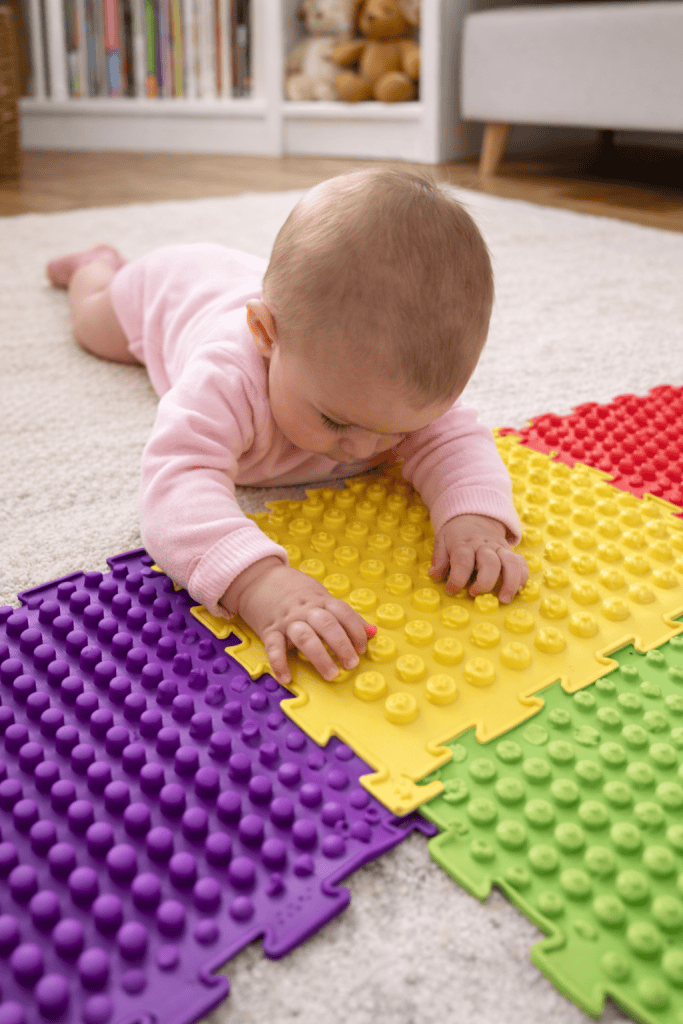
Create a mini obstacle course of textures for your crawling baby. Using items you have at home, set up a “runway” of different surfaces in a row and encourage your baby to crawl over them.
For example, you could lay down a doormat or welcome mat (rough texture), next to a fluffy bath towel (soft texture), next to a large piece of crinkly brown packing paper (noisy texture). Add a section of bubble wrap taped to the floor, and finish with a smooth yoga mat at the end.
Space them so they form a continuous path. Then let your baby crawl across. They will notice the changes – perhaps pausing to pat the crinkly paper (which makes an interesting sound) or curiously feeling the bumpiness of the bubble wrap.
Always supervise closely; if they try to mouth any of the materials, redirect them. This texture course gives them a full sensory workout (touching different textures, hearing different sounds as they move) and also helps with motor skills like transitioning between surfaces and navigating “obstacles.”
It’s a simple, creative way to make tummy/crawling time fresh again. Feel free to get creative with safe textures: a piece of fake grass, a cold cookie sheet, or a soft pillow could all be part of the fun.
2. Tunnel Time
If your baby is crawling, they might love the adventure of going through things. Set up a simple crawl tunnel for them. This could be a play tunnel if you have one, or even a large cardboard box with the ends open.
Inside, you can place a few sensory surprises – maybe some plush toys, or hang a ribbon or two from the top of the tunnel for them to brush past.
The confined space and slight darkness of a tunnel change the sensory environment, and many babies find it exciting (some might need a little coaxing at first – you can go to the other end of the tunnel and call them or peek through to encourage them through).
Crawling through a tunnel works on their gross motor skills and gives a new perspective (things sound and look different in an enclosed space). Celebrate when they emerge on the other side! You can also play a back-and-forth game through the tunnel, which often leads to lots of giggles.
3. Ball Chase Game
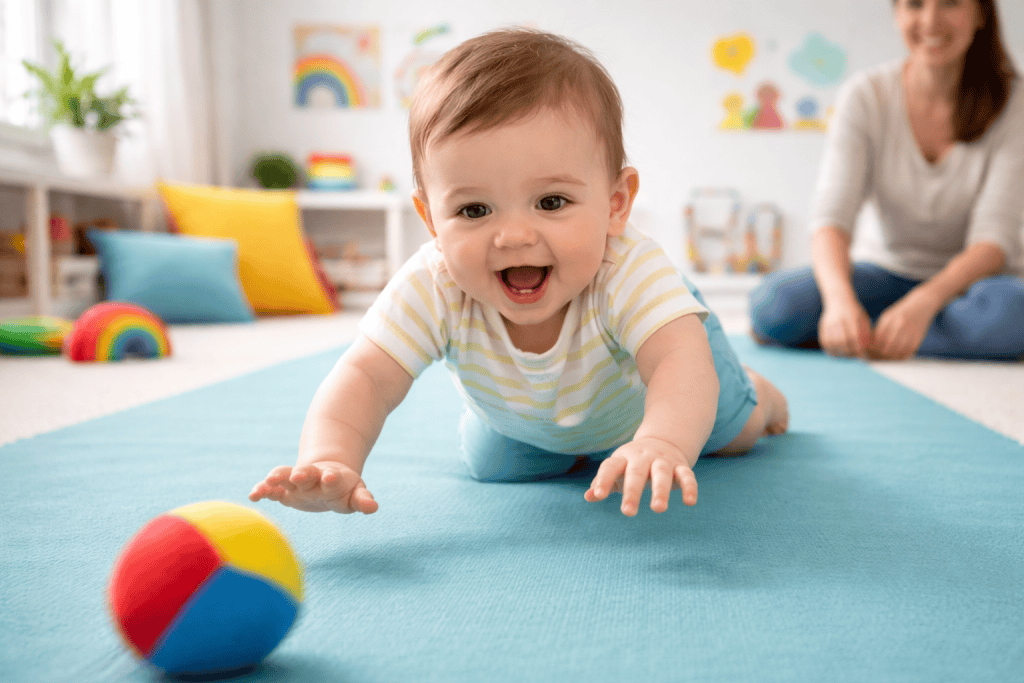
Now that your baby is faster and more coordinated, take the classic ball play up a notch. Sit on the floor and roll a soft ball across the room and encourage your baby to chase after it. Many 10-12 month olds delight in this “catch me if you can” game.
The smooth rolling ball provides visual tracking exercise and motivates them to crawl at full speed (you’ll be amazed how fast they can go!). When they reach the ball, you can show them how to push or roll it again, or trade roles and have them watch you crawl after the ball.
This game can also be done outside on grass for a change of scenery and texture under their hands/knees. It’s a wonderful way for them to practice coordination, adjust their speed and direction, and experience the joy of a little “mission” accomplished when they grab the ball.
Use a ball with some texture (like those sensory balls with soft spikes or ridges) to add tactile interest for their hands. As always, ensure the ball isn’t so small that it could pose a hazard; it should be big enough not to fit in the mouth (at this age, a ball at least 2 inches diameter or more is safest).
4. Outdoor Sensory Play
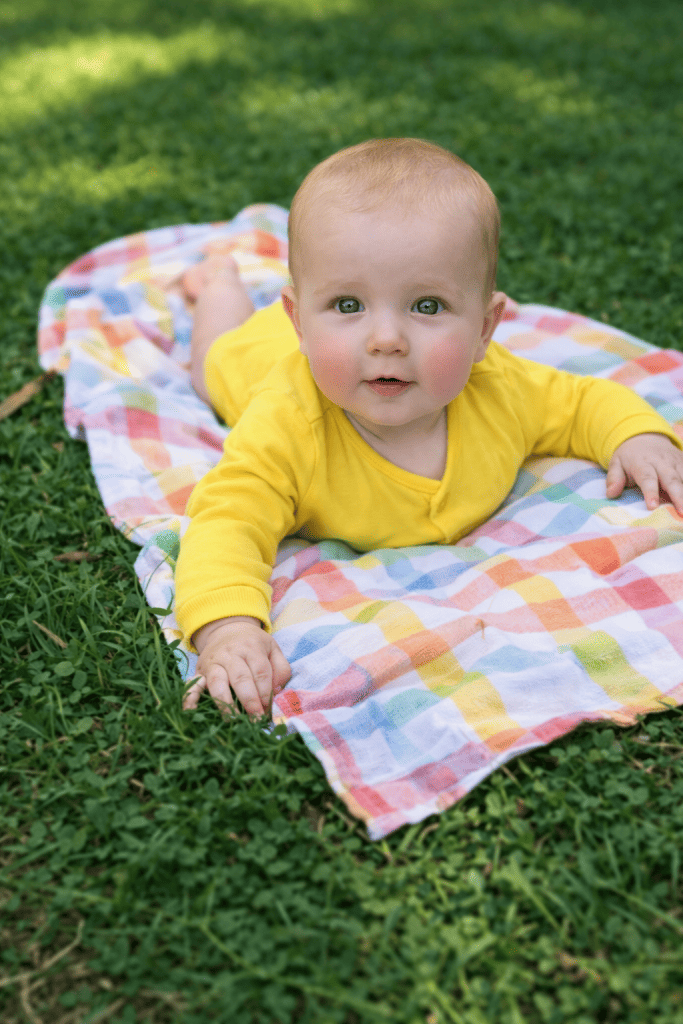
Weather permitting, take tummy time (or rather, crawl time) outdoors for new sensory experiences. A blanket on the grass can be a good start – your baby can feel the tickle of grass on their hands, hear outdoor sounds like birds chirping, and see leaves moving in the breeze.
You might let them have some tummy time at the park on a clean picnic blanket, with supervision, to watch older kids play – the sights and sounds are very stimulating (and it’s tummy time by another name).
For a more contained sensory activity, a sandbox or bin can be introduced around the end of this stage: for example, a shallow bin with dry rice or edible sand (crushed cereal) where they can sit and squish their fingers (closely watch to prevent eating).
Though not traditional tummy time, these sensory experiences still tap into the curiosity that tummy time helped develop. Always keep safety in mind – never leave your baby unattended outside, and be mindful of sun protection and not letting them put nature bits (like grass or rocks) into their mouth.
Outdoor play gives a rich multi-sensory boost: the feel of ground on their limbs, the ambient sounds, the sights of nature, and the expansive space to move in new ways.
By this stage, you’ve effectively graduated from “tummy time training”! Your baby has developed the muscles and skills tummy time was designed for and is using them in everyday play.
Continue to offer interesting sensory play opportunities as they move into toddlerhood – messy play, music and dancing, exploring different environments – it all builds on the foundation you set. And if you have another little one in the future, you’ll be ready with plenty of tummy time tricks from day one.
If you’re looking for more inspiration, check out our genius sensory play ideas for babies for creative twists beyond tummy time.
Make Tummy Time a Sensory Adventure Today
We’ve walked through each stage – from those first head lifts to the crawling stage – and seen how adding sensory twists can turn tummy time into a fun-filled learning experience. The key takeaway is that every bit of tummy time helps.
Day by day, you’ll see your baby grow stronger and more curious, reaching new milestones seemingly overnight. One week they’re struggling to raise that sweet wobbly head, and a few months later they’re zooming around the living room floor chasing a ball!
Remember, every baby develops on their own timeline. The stages and ages we outlined are general guidelines, not strict rules. So celebrate each achievement, no matter when it happens.
If your little one needs a bit more time in a stage, that’s perfectly okay – keep the play light and enjoyable, and they will get there in their own time. The sensory play ideas in this article are meant to spark your imagination.
Feel free to modify activities or come up with your own, based on what your baby loves. Some babies go crazy for crinkly noises, others fixate on faces or lights – follow your baby’s interests and you won’t go wrong.
And for more sensory inspiration as they grow, check out our full collection of magical Christmas sensory ideas for kids!
Now it’s your turn to put these ideas into action. Gather a few household items, set up a comfy play space, and enjoy some quality tummy-down play with your little one. Make it a part of your daily routine – those few minutes here and there add up to big developmental gains.
Most importantly, have fun with it! Your positive, encouraging presence is what makes your baby feel safe to explore and try new things. So lay down on the floor, cheer them on, and relish these moments of discovery together.
…
What tummy time sensory play ideas worked best for your baby? Do you have any creative twists of your own? Leave a comment below and share your stories or questions. By sharing, you might inspire another parent to try something new.
Happy playing, and enjoy watching your baby thrive one tummy time adventure at a time!
FAQs
When should I start tummy time with my baby?
You can start tummy time as early as the first days after birth. The American Academy of Pediatrics recommends beginning supervised tummy time as soon as your baby comes home from the hospital. Start with just 1 to 2 minutes at a time, using your chest or lap if that feels easier. Early tummy time helps babies get used to the position and begin building neck and upper body strength.
How often and how long should tummy time be?
In the early weeks, aim for short but frequent sessions. A few minutes several times a day works well for newborns. As your baby grows stronger, gradually increase the total amount each day. By around 3 months, many babies benefit from about one hour per day, broken into multiple sessions. Follow your baby’s cues and keep it part of your daily routine. If they get tired or fussy, take a break and try again later.
What can I do if my baby dislikes tummy time?
Many babies find tummy time challenging at first. If your baby fusses, keep sessions short and frequent rather than pushing for long stretches. Try tummy time after diaper changes, avoid doing it right after feeding, and stay close by singing or talking to them. Tummy time on your chest also counts and is often more comforting. Gentle support with a rolled towel under the chest can help. With consistency and encouragement, most babies become more comfortable over time.
Can tummy time be done on my chest or lap instead of the floor?
Yes. Tummy time does not have to be only on the floor, especially in the early months. Chest to chest tummy time, tummy time across your lap, or supported positions all help strengthen neck and shoulder muscles. As your baby gets stronger (around 2 to 3 months), include more floor based tummy time so they can practice pushing up and moving. Always supervise, no matter the position.
When can we stop doing dedicated tummy time?
Once your baby can crawl or move into a sitting position independently, formal tummy time is usually no longer necessary. At this stage, babies naturally spend plenty of time on their tummy while exploring and playing. Continue encouraging floor play, as it still supports coordination and strength. Tummy time may look different now, but its benefits carry forward into crawling, standing, and walking.