Easter is a time of joy and hope, and what better way to celebrate than with a fun scavenger hunt that points kids to the true meaning of Easter?
If you’re looking to keep the excitement of a traditional egg hunt while teaching children about Jesus’ resurrection, you’re in the right place.
A biblical Easter scavenger hunt blends fun and faith, helping kids understand the profound message of Christ’s resurrection through an engaging activity.
These activities are designed for children around ages 5-9, and most can be done indoors or outdoors – perfect for families at home, Sunday school classes, or church groups.
I’ll start with a list of 10 easy resurrection scavenger hunt ideas, then cover some tips, so gather your little ones, and let’s make Easter both meaningful and memorable!
10 Easy Resurrection Scavenger Hunt Activities for Kids
This list is one big section (so you can easily find all the ideas in one place), and each activity is an idea you can try.
Feel free to adapt them to your space and kiddos’ needs – whether you have a lively bunch of Sunday schoolers or just your own kids at home.
1. Classic Resurrection Eggs Hunt

One of the most popular faith-based Easter activities is the Resurrection Eggs Hunt.
You’ll need a set of 12 plastic eggs (number them 1 through 12). Inside each egg, place a small item that represents part of the Easter story, along with a simple verse or note explaining it.
For example, egg #1 might hold three dimes (to symbolize the 30 pieces of silver Judas received), egg #5 a toothpick cross (for the cross of Jesus), and egg #10 a stone (for the stone rolled away from the tomb).
The final egg (#12) is left empty, representing the empty tomb – a powerful surprise for kids when they open it. Hide the eggs around your home or yard and let the children find them. As they open each egg in order, read the corresponding scripture or explanation and briefly tell that part of the resurrection story.
This hunt turns a simple egg hunt into an interactive storytelling of Jesus’ death and resurrection. It keeps the focus on Jesus (instead of just candy) and brings the story to life in a tangible way.
Tip: For younger kids (5-6), you can simplify or paraphrase the notes, and for slightly older ones (7-9), let them read the verse if they’re able, or explain in their own words what the item might mean.
If your kids enjoy hands-on crafts, this activity pairs beautifully with some wholesome Easter crafts for extra festive fun.
2. Bible Verse Clue Hunt
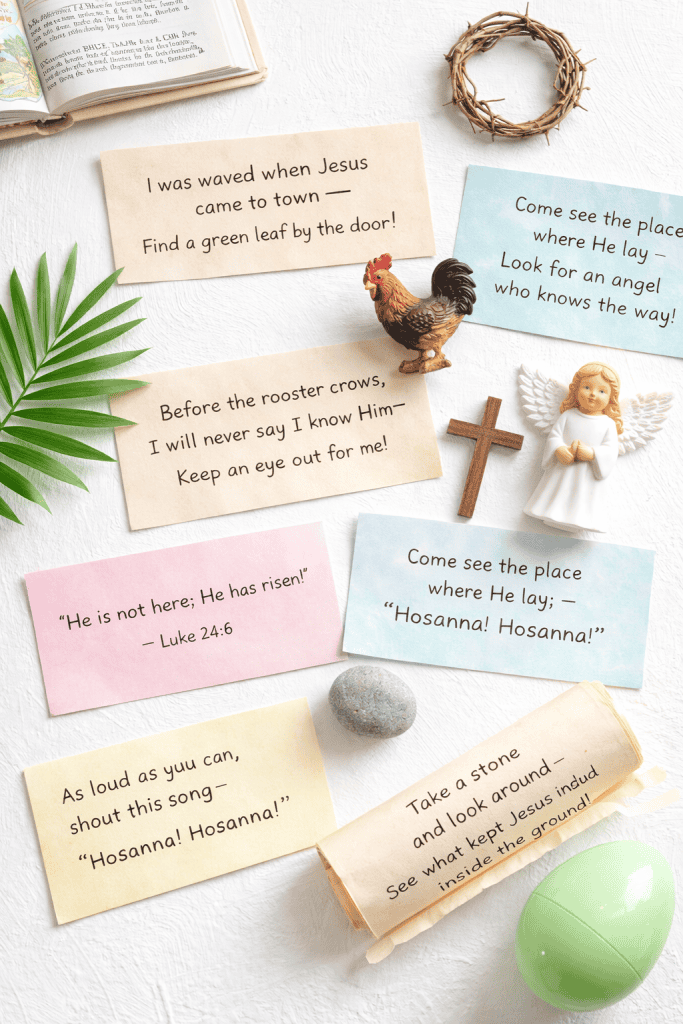
Turn your Easter scavenger hunt into a treasure hunt for the truth by using Bible verse clues. In this activity, each clue or riddle points to a location or object related to the resurrection story.
For example, a simple clue for younger kids might be: “I was waved when Jesus came to town – find a green leaf by the door!” (hinting at Palm Sunday and a leaf hidden near the front door).
Another clue could be: “They rolled me away on Easter day – look in the garden for something round and gray!” (hinting at the stone that was rolled away from the tomb, hidden in a garden or potted plant).
You can write short rhyming clues or use actual simplified Bible verses as hints. Tailor the difficulty to your kids’ age: for 5-7 year-olds, keep clues very clear and literal, and for 8-9 year-olds, you can make them a bit more riddle-like or use scripture references they can look up with your help.
Each clue should lead the children to find a specific item (like a cross, a nail, a little angel figurine, etc.) or the next clue, ultimately covering the main points of the resurrection story.
This not only makes them think about the story (“What happened with a rooster? Why might a rooster be near a clock?” – referencing Peter’s denial) but also gives a sense of adventure. When all clues are found, celebrate by briefly summarizing the whole story.
This Bible verse treasure hunt is great for slightly older kids in the range, but with help, even little ones can enjoy the thrill of following clues to discover the good news of Easter.
For a classroom or Sunday school version, try linking it naturally with these engaging Sunday school crafts to make the lesson even more interactive.
3. Easter Symbol Checklist Hunt
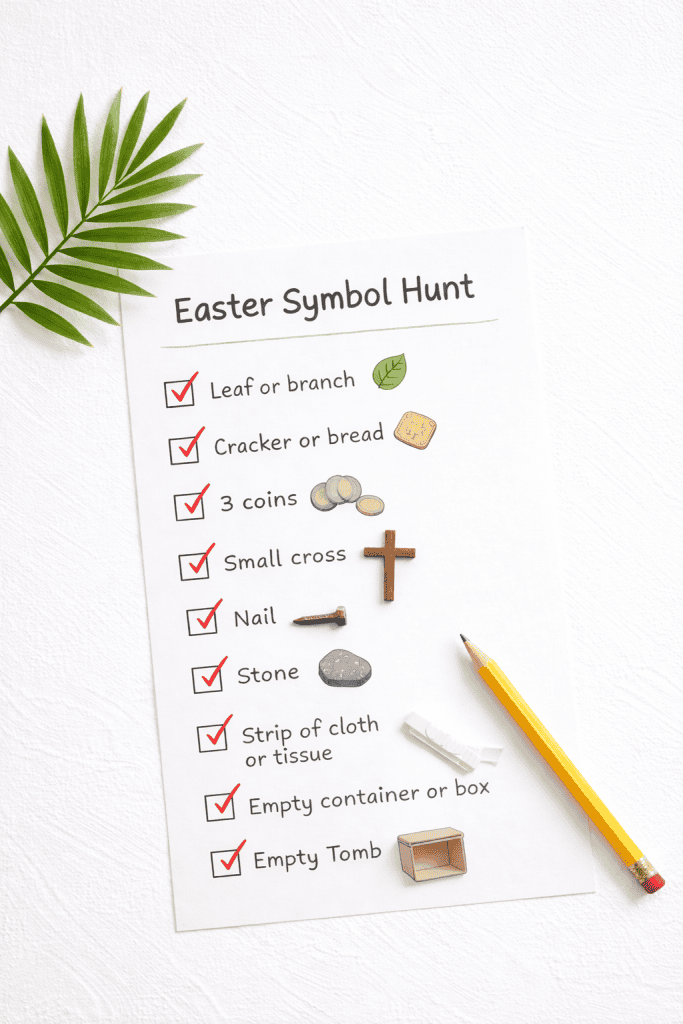
If you have a mix of ages or want a collaborative game, try an Easter symbol checklist hunt. This is super easy to set up and works indoors or outdoors. Create or print a simple list of resurrection story symbols for the kids to find.
For example, your checklist could include: a leaf or branch (for Palm Sunday), a cracker or piece of bread (Last Supper), three coins (Judas’s betrayal), a cross (crucifixion), a nail, a stone, a strip of cloth (linen from Jesus’ tomb), and something empty (to represent the empty tomb).
You can find a free printable for a biblical Easter scavenger hunt or make your own. Give each child (or team) the list and let them search around the house or yard for items that match.
They might find a real leaf outside for the palm branch, grab a cracker from the kitchen, a tissue for the linen cloth, etc. (Feel free to “plant” some items in advance if needed, especially if doing this at church or in a classroom.)
One mom suggests using “leaves for the palm branches, crackers for the bread, and tissues for the linen” as easy stand-ins. Once everyone has checked off their list, gather together. Now comes the meaningful part: talk about each item and what it represents in the Easter story.
For instance, “You found a cracker – that reminds us of the Last Supper Jesus shared with His disciples,” or “Here’s a stone – remember the stone that was rolled away from Jesus’ tomb?”
This checklist hunt is very flexible: you can do it inside if it’s rainy, or outside in a backyard or churchyard. It’s a wonderful way to get kids actively involved and spark conversations about why each symbol is important.
If your children love craft projects alongside their hunt, you might also explore memorable days of creation craft for related seasonal learning.
4. Empty Tomb Egg Hunt
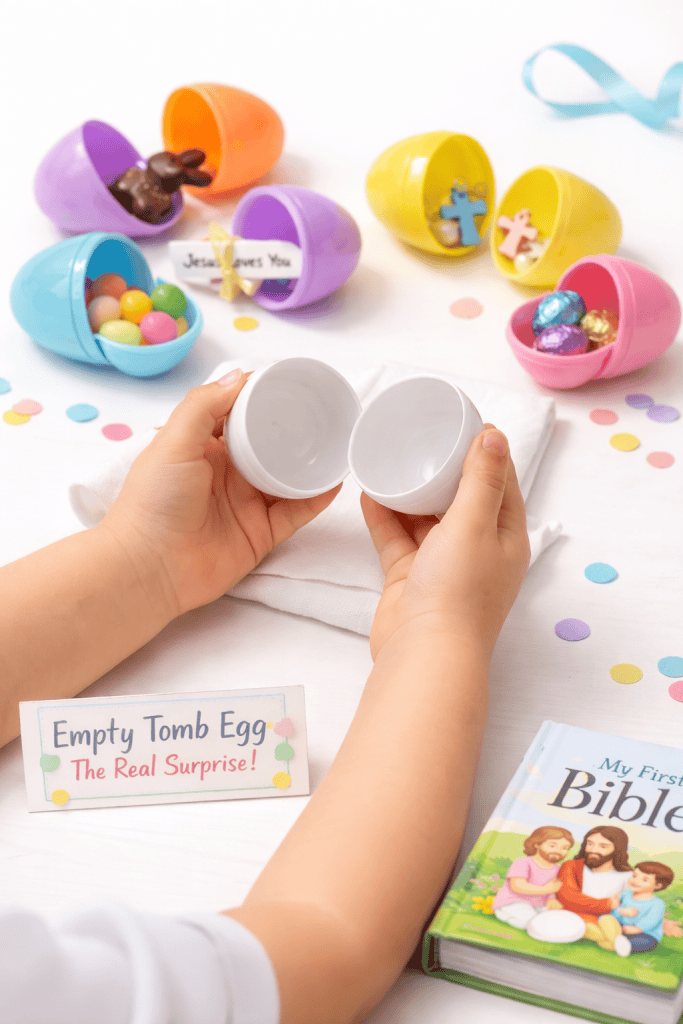
This idea puts a Christian twist on the classic Easter egg hunt and is perfect for young children. Prepare a batch of Easter eggs with little treats or messages inside except for one. Leave one egg completely empty – this will be your “special” egg.
Hide all the eggs as usual around the house or yard. When the hunt begins, tell the kids there’s a surprise egg among the rest. After the kids excitedly find all the eggs, have them open their eggs and see who got the empty egg.
At first, a child might be a little puzzled to discover an empty egg (and possibly a tad disappointed if they expected candy). But here’s your golden opportunity: explain that the empty egg is the most special egg of all because it represents Jesus’ empty tomb.
Just like that egg, Jesus’ tomb was found empty on Easter morning because He had risen! You can even have the child (or everyone) shout what the angel told the women: “He is not here; He is Risen!”.
Some families make a rule that whoever finds the empty egg gets to announce “Jesus is alive!” or wins a small extra prize – reinforcing that the resurrection is the real prize of Easter.
This simple activity keeps all the fun of a regular egg hunt but clearly connects to the resurrection message in a way even little ones can understand. And don’t forget to celebrate – the empty tomb is good news, after all!
5. Resurrection Story Trail
Turn your home or backyard into a mini Easter story trail. This scavenger hunt is set up as a series of stations or stops, each representing a key scene from the week of Jesus’ death and resurrection. Think of it like a guided treasure trail through the story.
You can use either different rooms of your house, different corners of a yard, or even just spots along a walking path outside. At each station, hide an item that symbolizes part of the story, along with a simple description or a quick clue to find the next station.
For example:
- Station 1: Palm Branches – place a green leaf or paper palm (maybe near your front door or a gate) to recall Palm Sunday when people welcomed Jesus.
- Station 2: The Last Supper – hide a cracker or plastic cup (maybe on the dining table) to represent Jesus sharing a meal with His disciples.
- Station 3: Praying in the Garden – perhaps hide a picture of praying hands or a flower (by some plants or a garden spot) to represent Jesus praying on the Mount of Olives.
- Station 4: The Cross – place a small cross or make one from sticks, perhaps at a central spot (living room or a tree outside) to mark Jesus’ crucifixion.
- Station 5: The Tomb – set up a little “tomb” using a box or cave-like spot, with a stone in front (you could drape a grey cloth over a box and use a ball or rock).
- Station 6: The Empty Tomb – inside that tomb or at the next spot, leave it empty or maybe with just folded “linen” cloths, showing Jesus has risen. You can adjust how many stations depending on your kids’ attention span.
Have the children go from one station to the next, either by following a clue you give (“Next, go to where we eat dinner…”) or even by following a string or yarn trail that winds through the house/yard, leading them to each surprise.
At each stop, pause and briefly explain what happened at that point in the Easter story. This makes the kids feel like they are “walking through” the story step by step. It’s interactive and hands-on – they’re finding objects and hearing the story in sequence.
By the end of the trail, you’ll have shared the entire resurrection story in a way that feels like an adventure rather than a lesson. This works wonderfully in a backyard on a nice day, but you can do an indoor version just as well (weaving through different rooms).
For extra inspiration for story-based crafts during the trail, check out Adam and Eve craft ideas for preschoolers.
6. “He Is Risen” Letter Scramble Hunt
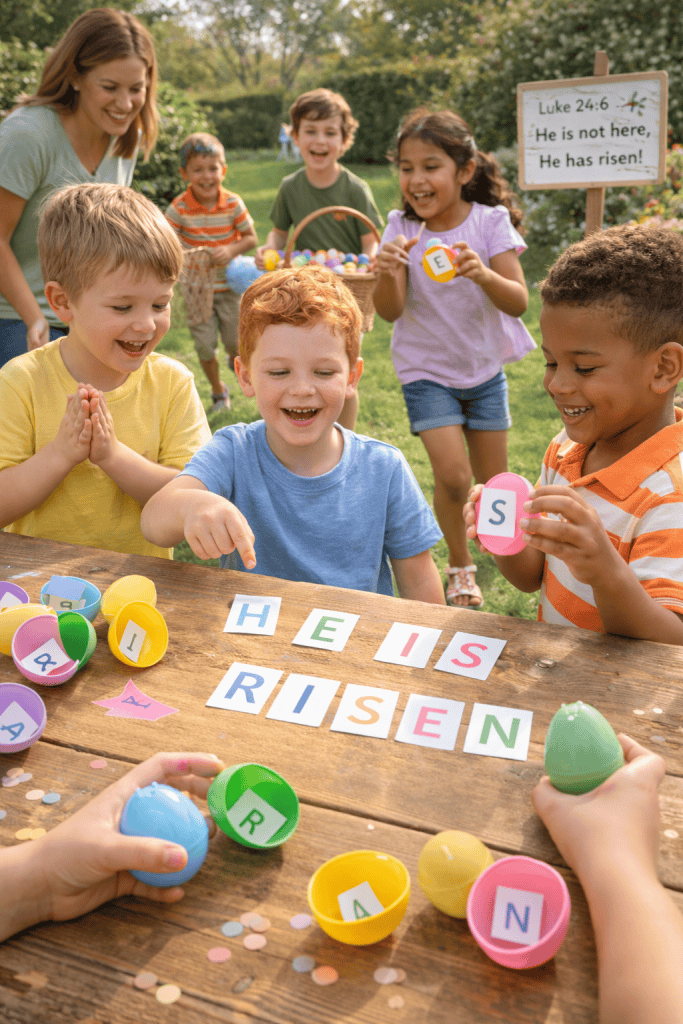
This activity is part scavenger hunt, part puzzle – and it really drives home the Easter message “He is Risen!” Start by printing out or writing the letters that spell “HE IS RISEN” (you can do this on paper and cut them out, or use letter cards).
Hide each letter inside a plastic Easter egg, or simply hide the paper letters themselves around the play area. Now send the kids out to find all the hidden letters. Once they’ve collected them, challenge them to unscramble the letters to reveal an Easter message.
You might need to give hints, especially for younger ones, like “It’s something the angel said at the tomb.” With a little teamwork, they’ll arrange the letters to spell HE IS RISEN. This is a fantastic way to reinforce the core of the resurrection story – that Jesus is alive.
It combines the thrill of an egg hunt with a word puzzle that makes kids think. If you want to make it easier for ages 5-6, you could limit it to a single word like “RISEN” or “JESUS”. There are even free printables available for this kind of activity.
One resource suggests using letter magnets or printable letters in eggs, and then helping your child spell out the phrase once all eggs are found. As the letters come together, watch your kids’ eyes light up when they recognize the phrase!
Afterward, take a moment to say the full sentence “He is not here, He has risen!” (Luke 24:6) and celebrate. This hunt can be done indoors or outdoors (just be careful none of the letters blow away if it’s windy outside!). It’s a simple yet powerful activity that literally spells out the good news of Easter.
7. Nature Hunt of Resurrection Symbols
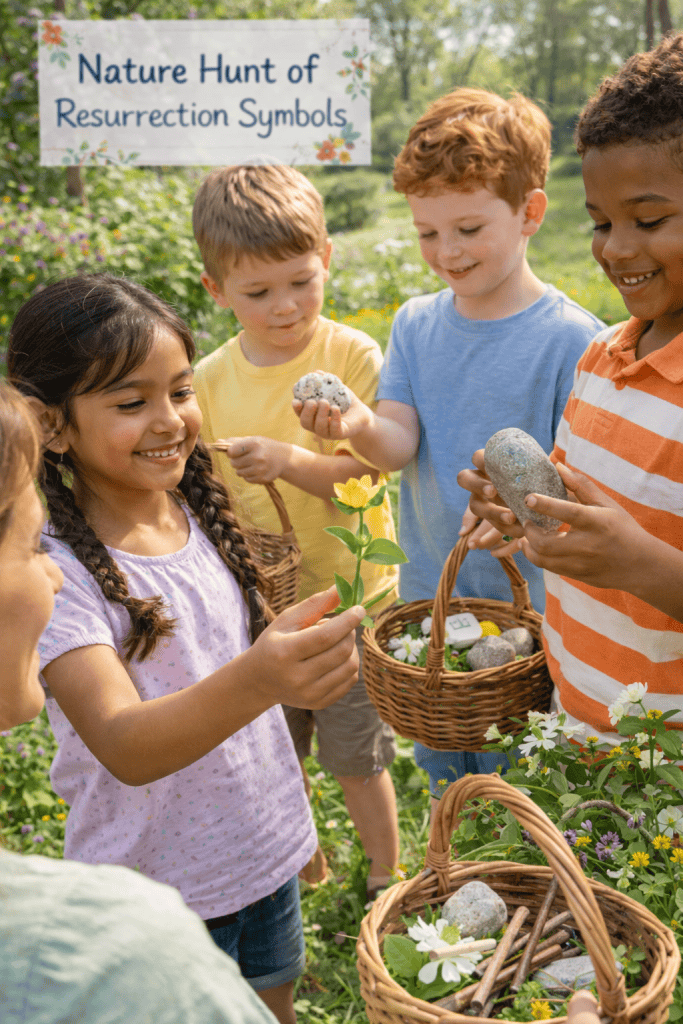
God’s creation is full of reminders of new life and hope. If you want to get the kids moving outside (or even looking out a window), try a nature scavenger hunt focused on resurrection symbols.
Create a short list of things in nature that can tie into the Easter story or the theme of new life.
For example: a rock (to represent the stone rolled away from Jesus’ tomb), a budding flower or fresh leaf (to represent new life and Jesus rising in springtime), something white like a small white flower or pebble (for the angels at the tomb or the idea of being made clean from sin), something green (symbolizing life and hope), and maybe three of something (like three small sticks or three seeds, to represent the three days Jesus spent in the tomb).
Head outside with the kids and have them find these items. You can give each child a basket or bag to collect their findings. If you’re in an area without a yard, you could even do this by looking out a window or taking a walk in a park – have the kids spot the items rather than collect if needed.
As they find each one, talk about how it connects to the Easter story. For instance, show the rock and ask, “What does this remind us of in the story?” When they recall the stone rolled away, you can excitedly affirm that.
A nature Easter hunt gets kids exploring and also appreciating the beauty of God’s creation at Easter. (One idea: you could start with empty eggs or baskets and have the kids fill them with the natural treasures they find – focusing not on candy, but on meaningful symbols.)
This activity is very flexible and can be a calm, reflective experience or a playful race, depending on your kids’ energy. Either way, it ends with a great conversation about how all creation seems to celebrate Jesus’ resurrection with us in the spring!
If your kids enjoy faith-based crafts around holidays, you can also explore these simple Passover crafts for kids for ideas that complement this hunt and teach about traditions in a fun, hands-on way.
8. Puzzle Piece Hunt (Easter Picture Puzzle)
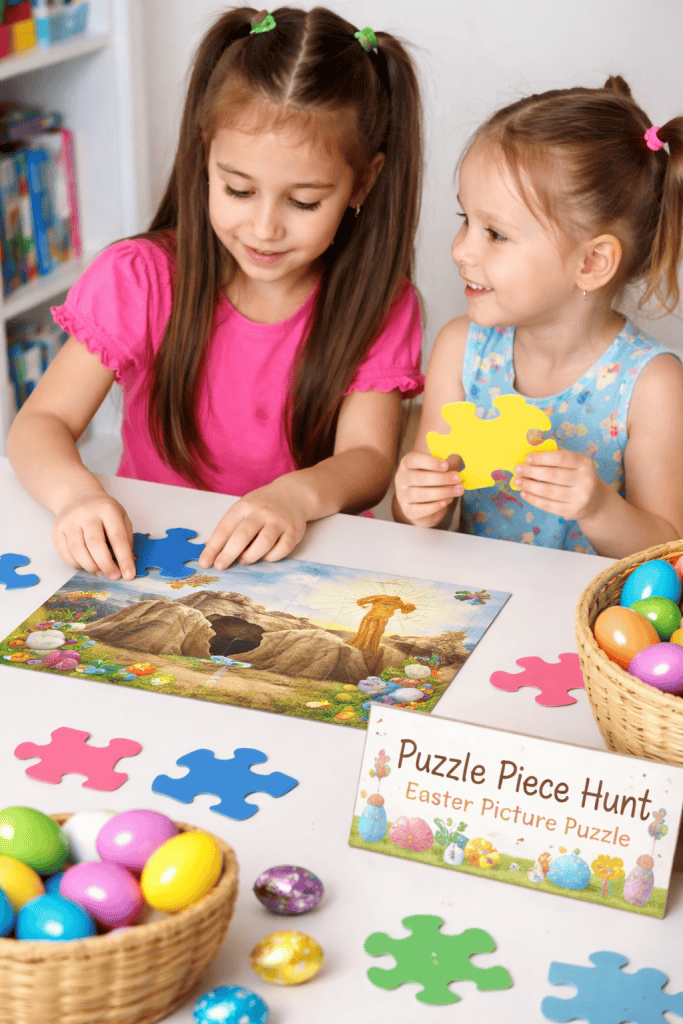
Kids love puzzles, so why not incorporate one into your Easter scavenger hunt? For this activity, you’ll need a simple Easter picture or message that you can cut into a puzzle.
You could draw a picture of an empty tomb with “He is Risen” on it, print an image of a cross or an Easter scene, or even write a short message like “Jesus Lives” in big letters and decorate it. Cut the picture or message into about 6-10 pieces (make the number of pieces age-appropriate; fewer for younger kids).
Hide each puzzle piece inside a plastic egg or in various spots around the room/yard. Now let the children go on a hunt to find all the pieces. (If you have multiple kids, you might color-code the puzzle pieces or eggs so each child or team finds their own set, or have them all work together on one puzzle.)
Once all pieces are found, it’s time to assemble the puzzle! Encourage the kids to work together to put the picture or message back together. As the Easter image is revealed piece by piece, talk about what it shows – maybe it’s the empty tomb, a cross, or the words “Jesus is alive.”
This visual reinforces the story in a way that’s especially great for visual and hands-on learners. It also teaches teamwork and patience. The puzzle hunt can be done indoors (easy to hide pieces under cushions, behind books, etc.) or outdoors (in eggs tucked around the garden).
And since there’s no candy required, it’s a nice no-sugar activity that still feels like a reward when the picture is complete.
To add a little extra, you could even frame or display the completed puzzle as an Easter decoration that the kids made happen! This activity shows how all the “pieces” of the Easter story fit together to reveal the big picture of God’s love.
9. Resurrection Garden Treasure Hunt

Here’s a creative activity that combines a scavenger hunt with a craft – making a mini “Resurrection Garden.” A resurrection garden is a small DIY project where you create a little garden scene representing Jesus’ tomb and the garden of resurrection morning.
How do we turn this into a hunt?
First, decide on a few components you’ll need for the garden: e.g. a small pot or shallow dish (as the base), some soil or potting dirt, a few small flowers or grass seeds, a medium-sized rock (to be the stone at the tomb entrance), a tiny pot or half of a coconut shell or even a small cup (to serve as the tomb), and twigs or pipe cleaners to form three little crosses.
Now, hide these items around the house or yard. (Keep the soil bag aside unless you want to get really adventurous hiding that!) Give the kids a list or verbal clues to find each item. For example, “You’ll need to find a rock about the size of your fist” or “Look for a small cup or bowl that could be a tomb.”
As they hunt, they might not know exactly what the final purpose is, which adds to the fun. Once all the “treasures” are collected, announce that you’re going to build a resurrection garden with what they found.
Help them arrange the soil in the dish, place the small container on its side as an empty tomb, set the rock to cover the opening (and then roll it away to show it’s empty), and stick the twigs in to make crosses on a hill.
You can have the kids sprinkle grass seed or plant a small flower to represent new life (if using fast-sprouting grass, it might even grow in a few days as a post-Easter reminder). This beautiful craft becomes a visual and tactile representation of the resurrection.
The hunt for the pieces makes it exciting and interactive, and the assembly gives a chance to talk about each part of the story – the crosses (Jesus died for us), the tomb (Jesus was buried), and the empty tomb with the stone rolled away (He is risen!).
Display the resurrection garden for the rest of the Easter season as a meaningful centerpiece. Even if you’re not particularly “crafty,” this is a simple project – and your kids will be proud that they gathered everything for it. (Plus, it fits right in if you love a little homestead or gardening vibe!)
10. Easter Story Action Egg Hunt
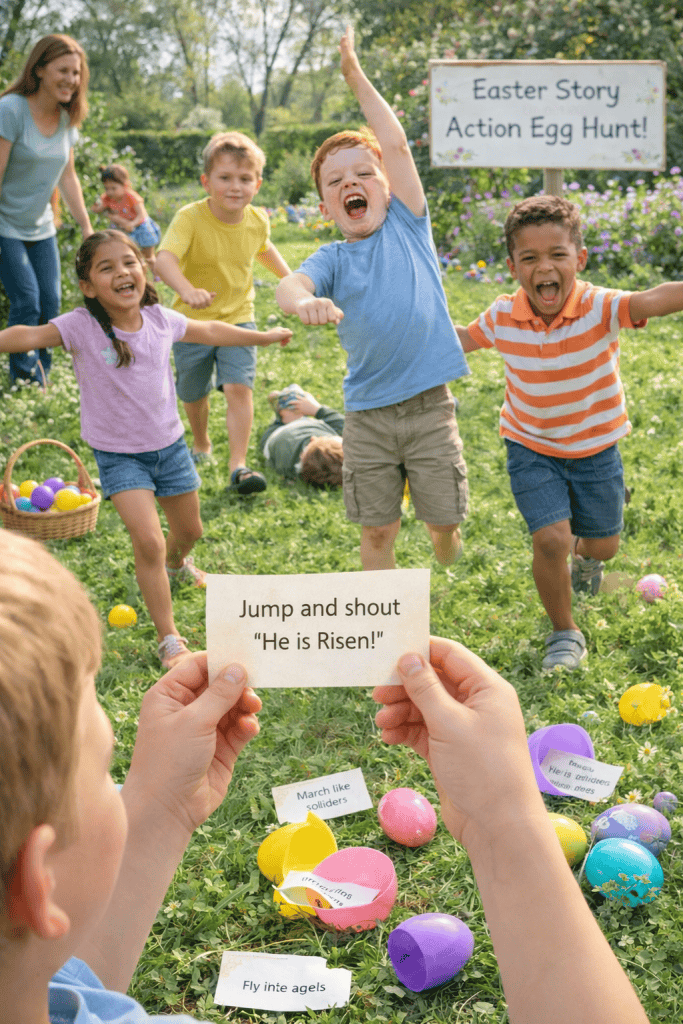
For active kids, an Easter story action hunt will be an absolute hit. This idea combines an egg hunt with fun physical challenges that relate to the Easter story, helping kids really act out what happened in a silly, memorable way.
Here’s how it works: Write down a series of simple actions or exercises on small slips of paper and put each into a plastic egg. Each action should tie into a piece of the story.
For example: “March in place like a soldier guarding Jesus’ tomb” (to remember the soldiers at the tomb), “Roll on the ground like the stone rolling away from the tomb”, “Fly like an angel who appeared when the tomb was empty”, “Do 3 jumping jacks because Jesus was in the tomb for 3 days”, or “Shout ‘He is Risen!’ and jump for joy because Jesus is alive.”
You can get creative and also sneak in some exercise (push-ups for Peter’s three denials, a little dance or spin for the joy of resurrection, etc.). Now, hide all the action-filled eggs around your space.
When a child finds an egg, they have to bring it back and open it, then everyone performs the action together. (If you have multiple kids, they’ll love taking turns being the “leader” who found the egg and gets to demonstrate the action.)
The kids will be giggling and moving – and without even realizing it, they’re reenacting key moments of the Easter story. This hunt is great for a group, as it gets everyone involved each time an egg is found. It works indoors or outdoors (just make sure you have a safe space to do the movements).
By the end, they will have essentially told the story through actions: from the somber moments (maybe kneel and pray to remember Jesus praying in the garden) to the victorious ones (cheer and celebrate that Jesus is risen).
It’s a fantastic way to burn off some energy and reinforce the story in a kinesthetic way. Don’t be surprised if the kids want to do the actions over and over – that’s a good thing, because they’ll remember why they’re doing them!
…
Now that we’ve covered ten different scavenger hunt ideas, you can choose one or mix a couple together to create your own unique Easter adventure. The key is that each of these activities uses simple symbols and interactive fun to highlight the core of Easter: Jesus’ resurrection.
Next, let’s look at some tips to ensure your scavenger hunts go smoothly and that the kids get the most out of them.
Simple Tips for a Successful Resurrection Scavenger Hunt
Before you launch into one of these scavenger hunt activities, a little planning and preparation will go a long way.
Here are some practical tips to make your resurrection scavenger hunt experience fun, meaningful, and stress-free:
- Prepare in Advance: Try to gather all the items, eggs, printables, or materials you’ll need ahead of time (at least the day before, if possible). Read through any clues or steps so you won’t be scrambling at the last minute. Set up the hunt area while the kids are asleep or distracted – one parent noted it only took about 30 minutes to set up their hunt the night before Easter. A little prep helps the event run smoothly.
- Keep It Age-Appropriate: Tailor the activity to your child’s age and understanding. For younger kids (5-6), use very simple clues or even picture cues, and place items in obvious spots. Older kids (8-9) might enjoy mild riddles or helping read Bible verses. You can also mix difficulty levels if you have a family of multiple ages – let the big kids help the little ones find things or read clues. The goal is for everyone to feel included and challenged just the right amount.
- Create Learning Moments: Remember that the scavenger hunt is not just about finding goodies, but about learning the Easter story. As the children find each item or clue, take a moment to discuss its significance. Ask open-ended questions like, “What do you think this stone could mean?” or “How do you think Mary felt when she found the tomb empty?” Engaging them in conversation helps the meaning sink in. After the hunt, it’s great to gather and recap the story, letting kids share what they learned or what excited them most.
- Make It Interactive: Kids learn best by doing, so encourage them to fully engage. You can have them act out scenes when appropriate (for example, wave the palm branch they found and shout “Hosanna!”, or pretend to be the angel saying “Don’t be afraid!”). Maybe sing a quick Easter song or two between stations, or have a short prayer of thanks at the end. Taking photos during the hunt is a fun way to capture memories – you could even create a little photo book later of your Easter adventure.
- Be Ready with Scripture: Since these activities are faith-focused, consider keeping a Bible or children’s Bible handy. You might read a verse that goes with an item (like Matthew 28:6 when they discover the empty tomb item). If kids are readers, let them try looking up a verse themselves – it makes them feel very grown up! Having the scripture reinforces that this isn’t just a story – it’s from the Bible and it’s why we celebrate Easter.
- Adapt to Your Space: Whether you’re in a small apartment, a big house, or outside in a yard or park, you can adapt the hunt. Indoors, utilize different rooms, furniture, and even high/low hiding spots for variety. In a yard, take advantage of natural hiding spots (behind trees, under benches). If outdoors, ensure items are weather-proof or have backups in case of wind. And always keep safety in mind – no hiding things in dangerous spots or where little ones might climb unsupervised.
- Include Everyone: If you’re doing this in a group (like a church or neighborhood gathering), plan for how all kids can participate. You might form teams or pairs (mix older and younger kids so they can help each other). Make sure there are enough items or clues so no one feels left out – sometimes having duplicate items for each kid to find works well (e.g. each child finds their own cross or their own empty egg). The more, the merrier, as long as everyone has a role.
- Keep It Light and Fun: While the message is serious in one sense, the tone for kids should be joyful and positive. Use a warm, friendly voice when guiding the activity. If a clue is too hard and kids get stuck, give an extra hint or two – the goal is not to stump them but to let them succeed and enjoy. If chaos ensues (it might, with excited kiddos!), that’s okay. Laugh, go with the flow, and gently steer them back on track. Remember, as one parent wisely said, “It’s not about the treasure at the end, but the experience along the way.” The memories you’re creating together will be the real treasure.
By following these tips, you’ll set the stage for a scavenger hunt that’s not only fun for the children but also deeply rewarding for you as a parent or teacher.
You’ll see those little eyes light up not just from finding an egg or object, but from connecting the dots about what Easter is truly about. And that is a priceless moment.
Let’s Celebrate Easter in a Meaningful Way!
Easter is such a special time for Christian families, and with these scavenger hunt activities, you can infuse your celebration with both joyful fun and faithful focus. Instead of just a candy grab, you’re giving your kids an unforgettable experience that brings the Bible to life.
Gather up some household items, maybe print a clue or two, and give one of these Resurrection Scavenger Hunts a try this Easter season. Whether you do it on Easter morning, at a church event, or as a fun family activity during Holy Week, you’re sure to create lasting memories.
We’d love to hear how it goes – what activity did you try, and what did your kids think? Did you come up with a creative twist of your own? Leave a comment below and share your experiences or any questions.
Let’s encourage each other as we all find new ways to celebrate that JESUS IS ALIVE!
Happy Easter, and happy hunting!
Get the FREE Fruit of the Spirit Tree Craft
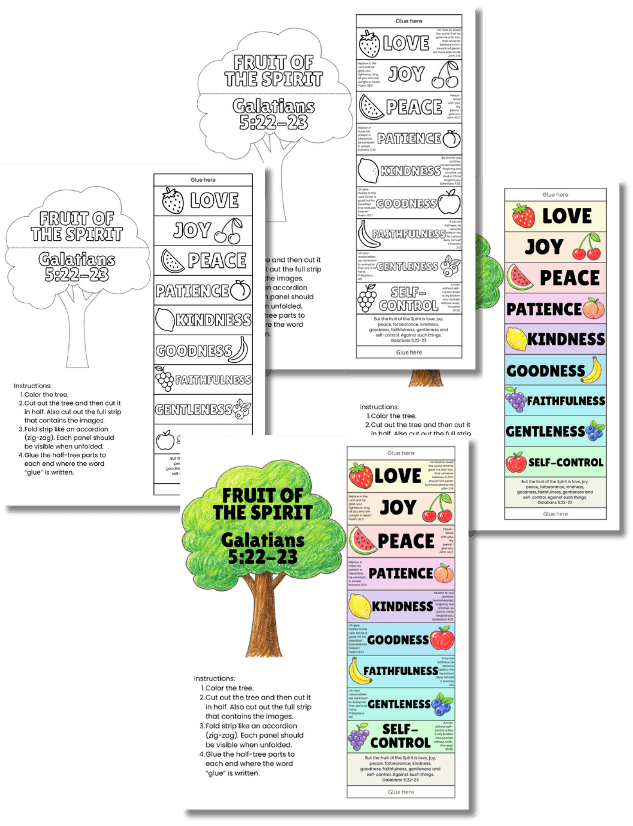
Bring the Fruit of the Spirit to life with this FREE Fruit of the Spirit Tree Craft—a fun, hands-on printable kids can build and display.
It features a 3D accordion-fold tree and comes in two versions (one with Bible verses for each fruit from Galatians 5:22–23, and one simplified for younger kids). This makes it easy for children to learn love, joy, peace, patience, kindness, goodness, faithfulness, gentleness, and self-control at their own pace.
Click below to grab the free tree craft and start creating together.
FAQs
What age group are these hunts best for?
These activities are ideal for kids ages 5-9 (kindergarten through upper elementary). Younger children can enjoy simplified versions with more visual clues, while older kids (10+) can handle trickier clues or competitions. Mixed-age groups work well if older kids help younger ones.
Can these hunts be done indoors?
Yes! Indoors or outdoors works. Hide items under cushions, behind curtains, on shelves, or in houseplants. For outdoor nature hunts, bring in leaves or rocks if stuck inside. Always consider safety and space, and adapt hiding spots to fit your venue.
What supplies are needed?
Most items are likely at home:
- Plastic eggs, small containers, or paper packets
- Household items like leaves, twigs, cloth, stones, small crosses
- Paper, pencil, or printer for clues and verses
- Bible or children’s Bible for scripture
Optional craft supplies if doing a resurrection garden or puzzles. Improvise when needed – creativity is encouraged.
How long does a hunt take?
Typically 10-30 minutes depending on the activity. Simple hunts take 10-15 minutes, more involved clue hunts 20-30 minutes. Add extra time if including crafts. Short, engaging hunts keep kids excited without tiring them.
Can these ideas be used in Sunday School or church events?
Yes, they’re great for group settings. Tips:
- Scale materials for multiple kids or teams
- Use stations or team rotations to avoid crowding
- Set clear rules and buddy younger kids with older ones
- Debrief afterward with Q&A or short discussion to reinforce the resurrection story