
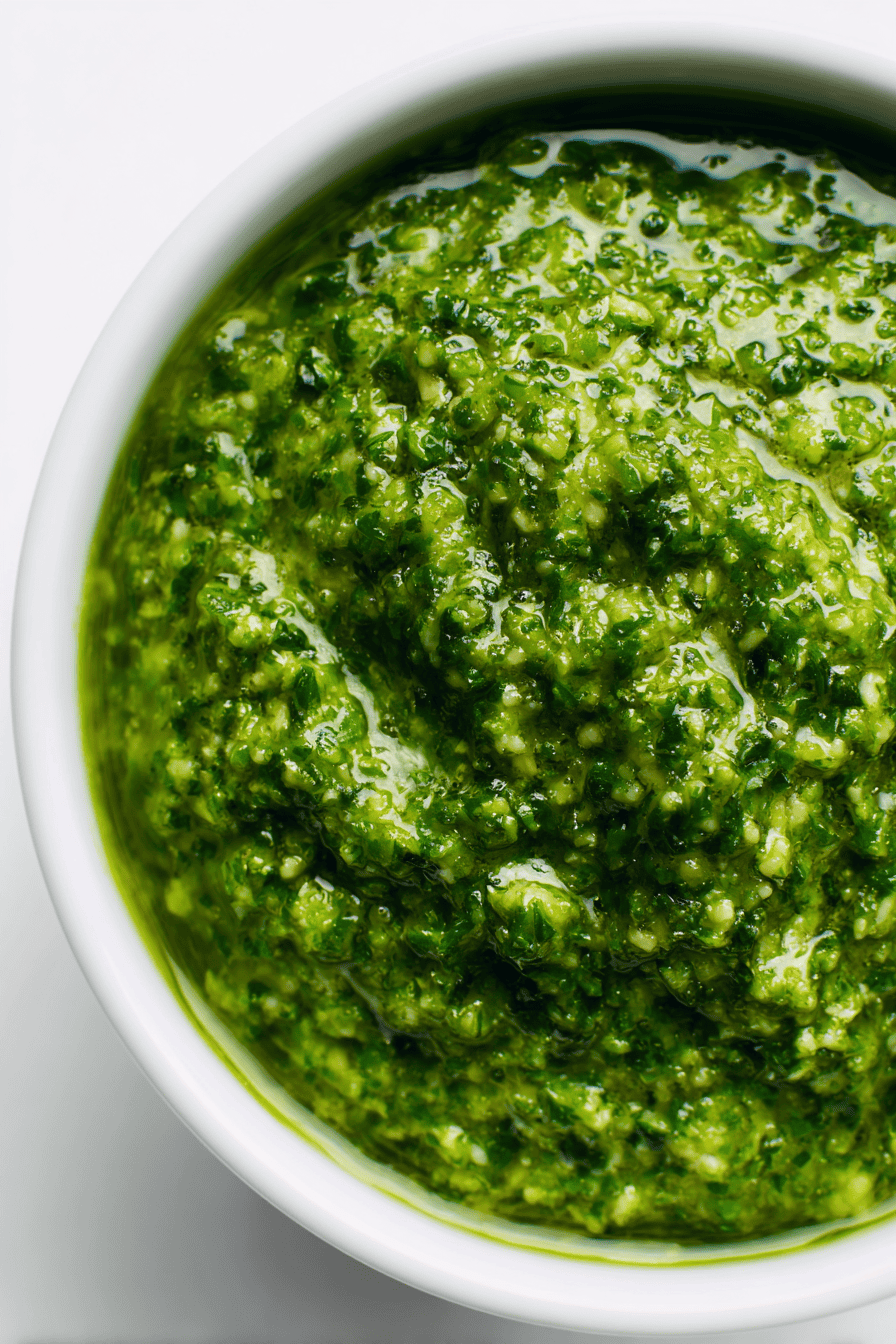
Fresh basil pesto is one of those rare recipes that delivers maximum flavor with minimal effort.
In just ten minutes, you can create a bright, aromatic sauce that instantly elevates pasta, sandwiches, and roasted vegetables.
The beauty of pesto lies in its simplicity – handfuls of fresh basil, a drizzle of good olive oil, and a few pantry staples blended into something greater than the sum of its parts.
Making it at home means you enjoy the freshest flavor possible while knowing exactly what goes into your food.
Once you learn how to make this quick basil pesto, you’ll want to keep a jar ready in the fridge for those moments when a meal needs an effortless boost.
Why Make Pesto at Home?

Homemade pesto delivers flavor that pre-packaged jars cannot match.
Fresh basil, good olive oil, and real Parmesan come together in a way that tastes bright and clean.
Preparing it yourself also means you decide exactly what goes in – whether that’s a preferred cheese, a certain nut, or a specific olive oil.
It’s cost-effective, too; a single bunch of basil and a small scoop of nuts stretch further than buying a ready-made jar.
Making pesto at home also encourages you to use what’s on hand, whether that’s basil from your own plant or a fresh bundle from a local market.
The result is practical, fresh, and ready in minutes.
And if you’re experimenting with whole grains at home, you might also like how to convert any recipe to freshly milled flour.
Recipe at a Glance
- Prep Time: 10 minutes
- Total Time: 10 minutes
- Skill Level: Beginner-friendly
- Yield: About 1 cup of pesto
This recipe comes together quickly and uses ingredients you likely already have in your kitchen.
In less than the time it takes to boil pasta, you’ll have a jar of pesto ready to enjoy – perfect for busy days when you still want real food on the table.
If homemade pizza nights are your thing, don’t miss my freshly milled pizza dough recipe.
Equipment You’ll Need
- Chopping board – for trimming and preparing the basil.
- Sharp knife – to quickly cut through stems or garlic.
- Blender or food processor – the key to getting a smooth, even texture.
- Measuring spoons – to keep the balance of flavors consistent.
Ingredients for Quick Basil Pesto

- 1 large bunch fresh basil leaves (tender stems included if freshly harvested)
- 10 g pine nuts (0.4 oz)
- 3 tbsp Parmigiano Reggiano (about 1 oz)
- 1 clove garlic
- Extra virgin olive oil (a few tablespoons, divided)
- Pinch of fine salt
7 Quick Steps to Make Basil Pesto
Making homemade basil pesto is straightforward when you follow a few simple steps.
Here is the process from preparing the basil to storing the finished sauce, so you’ll know exactly what to do at every stage.
1. Prepare the basil

If you’re harvesting basil from your own plant, trim a full bunch including the tender stems – this not only gives you plenty of leaves but also helps the plant grow back strong.
If you’re using store-bought basil, give the leaves a good rinse in a bowl of cool water to remove any dust or grit.
After rinsing, dry the leaves thoroughly. Lay them out on a clean towel, then press another towel gently on top to absorb excess moisture.
Dry basil leaves are important because water can dilute the flavor and change the texture of the pesto.
2. Blend the base
Start with the garlic and a couple of tablespoons of extra virgin olive oil in your blender or food processor.
Blend until the garlic is fully broken down and the oil looks creamy.
This step softens the sharp bite of raw garlic and creates a smooth foundation for the pesto.
3. Add the pine nuts
Next, add the pine nuts to the blender. Pulse several times until the nuts are incorporated and the mixture thickens slightly.
Pine nuts give the pesto its creamy texture and subtle nuttiness.
If you prefer a stronger nut flavor, let the blender run a bit longer, but avoid over-blending to keep the pesto light.
4. Incorporate the basil
Now add the basil leaves, a pinch of fine salt, and another two tablespoons of olive oil.
Blend for about 30 seconds. Stop and scrape down the sides of the blender as needed to make sure every leaf is worked in evenly.
The basil should break down quickly into a vibrant green sauce.
5. Fold in the cheese
Sprinkle in the Parmigiano Reggiano.
You can blend it for a smoother pesto or stir it in by hand if you like a little more texture.
The cheese balances the fresh basil with a salty, savory depth that makes pesto so satisfying.
6. Taste and adjust

Take a small spoonful and check the flavor.
If the pesto seems strong or overly salty, balance it by adding a few extra basil leaves or another drizzle of olive oil.
If it feels too thick, add a small splash of oil until it loosens.
This step is where you make the pesto truly your own.
7. Store for freshness
Transfer the finished pesto into a clean, airtight jar. Seal tightly and refrigerate.
It will keep well for several days, ready to stir into pasta, spread on bread, or use as a quick topping for vegetables and meats.
To help maintain its bright green color, drizzle a thin layer of olive oil on top before sealing.
If you enjoy simple DIY pantry projects, check out this homemade vanilla extract recipe next.
How to Store Your Basil Pesto

Fresh pesto is best enjoyed right away, but with a few simple steps you can keep it tasting bright and flavorful for days (or even months) after making it.
Here are the best storage methods to choose from:
Refrigeration
Transfer the pesto to a clean, airtight jar and keep it in the refrigerator.
It will stay fresh for about 4–5 days. To help preserve the vibrant green color, smooth the top and drizzle a thin layer of olive oil over the surface before sealing.
This protective oil layer reduces exposure to air and slows browning.
Freezing
If you’d like to keep pesto on hand longer, freezing works beautifully. Spoon the pesto into ice cube trays and freeze until solid.
Once frozen, pop the cubes out and store them in a freezer-safe bag or container.
This way, you can grab a cube or two whenever you need a quick flavor boost for pasta, soups, or roasted vegetables.
Frozen pesto will keep well for up to 3 months.
Quick Tip for Color
No matter how you store it, minimizing air contact is the key to keeping pesto green.
Adding a thin oil layer on top before sealing the jar or container will help preserve both flavor and color.
Troubleshooting Your Pesto
If your pesto doesn’t taste or look quite right, a quick adjustment usually solves it. Here are the most common fixes:
- Too thick → Add a drizzle of extra virgin olive oil and blend again. A splash of warm water also lightens the texture.
- Too salty → Blend in a few extra basil leaves or add a little more olive oil to balance the flavor.
- Too bitter → Toast the pine nuts lightly before blending, or brighten the flavor with a squeeze of lemon juice.
- Pale color → Pulse the basil only until combined (avoid over-blending) and always start with fresh, vibrant leaves. A thin oil layer on top helps preserve color when storing.
Serving Ideas for Basil Pesto

Basil pesto is one of the most versatile sauces you can keep in your kitchen.
Here are simple, practical ways to enjoy it:
- Toss with pasta or gnocchi – a quick weeknight meal that’s always satisfying.
- Spread on bread or sandwiches – adds freshness to toast, wraps, or grilled cheese.
- Swirl into soups or salad dressings – a spoonful brightens up brothy soups or vinaigrettes.
- Drizzle over roasted vegetables – pairs especially well with zucchini, potatoes, or carrots.
- Top grilled meats or fish – use as a finishing sauce for chicken, steak, or salmon.
If you love simple, from-scratch kitchen staples, you might also enjoy how to make pumpkin puree from scratch – another easy recipe that proves homemade really does taste better.
Try This Quick Basil Pesto Recipe Today
In just ten minutes, you can prepare a jar of basil pesto that brings fresh, bold flavor to everyday meals.
With simple ingredients and clear steps, this recipe is easy to master and flexible enough to adapt to your taste.
Whether you swirl it into pasta, spread it on bread, or spoon it over vegetables, homemade pesto is a reliable way to brighten the table.
Make a batch and see how it transforms your cooking this week.
And if you’re looking for treats without the sugar crash, you’ll love these unbelievably good sugar-free desserts.
Have you tried this recipe or added your own twist? Share your thoughts or favorite variations in the comments below.
FAQs
Can I make basil pesto without pine nuts?
Yes. You can easily swap pine nuts with walnuts, almonds, cashews, or sunflower seeds. Each nut gives the pesto a slightly different flavor, but all work well.
How long does homemade basil pesto last in the fridge?
Stored in an airtight jar and topped with a thin layer of olive oil, pesto will stay fresh for 4–5 days in the refrigerator.
Can I freeze basil pesto?
Absolutely. Freeze it in ice cube trays, then transfer the cubes to a freezer-safe bag. This way, you can use just what you need. Frozen pesto keeps well for up to 3 months.
Can I make pesto without cheese?
Yes. Simply leave out the Parmesan and replace it with nutritional yeast for a dairy-free version. This still gives the pesto a savory, “cheesy” flavor.
Why did my pesto turn brown?
Pesto darkens when exposed to air. To prevent this, drizzle a thin layer of olive oil over the surface before sealing the jar, and store it in the fridge promptly.