
Choosing to give birth at home is an intentional decision rooted in trust and preparation.
Part of that preparation is shaping the environment where labor will unfold.
The space around you influences how you feel, how you focus, and how you move through each stage of birth.
A well-prepared homebirth space simply needs to serve you with comfort, safety, and calm.
When the room supports your body and mind, you are better able to stay present and lean into the process with confidence.
In this article, I’ll offer practical ways to design a setting that works for you and your family.
From lighting and sound to personal touches and after-birth comfort, these ideas show how small details can create a steady and supportive atmosphere for welcoming new life.
If you want a complete guide to everything you need to know about homebirth, check out Ina May Gaskin’s homebirth approach.
How Environment Influences Labor and Birth

The environment you labor in directly shapes your experience.
Calm surroundings encourage your body to release oxytocin – the hormone that supports steady contractions and progress in birth.
Comfort in the space also allows your mind to settle, giving you the focus and energy needed to move through each stage.
Small, thoughtful choices (like adjusting the lighting, clearing space to move freely, or setting up your homebirth supplies) help transform an ordinary room into a supportive place for birth.
These details provide both practical ease and a sense of steadiness.
When you prepare your space with care, you are giving yourself one more layer of support.
It becomes a foundation you can lean on, so you feel safe and ready to welcome your baby into an atmosphere that reflects peace, strength, and trust.
To make sure nothing is overlooked, you might also find a natural birthing plan checklist helpful as you organize your homebirth.
My Personal Homebirth Preferences
Every homebirth space reflects the family who prepares it.
Some people feel most supported by music, soft lighting, or the scent of lavender in the air. Others prefer simplicity.
My own preferences leaned toward dark, dim light from unscented candles, quiet surroundings with no interruptions, and calming audio affirmations in the background.
Those affirmations helped ground me and reminded me to stay present and steady through each wave. If you’re looking for something faith-centered, these homebirth affirmations for Christians may offer a similar sense of peace and reassurance.
You might find that you want something similar, or your list will look completely different.
The point is to create a space that helps you feel safe, present, and supported.
10 Beautiful Homebirth Space Ideas
Every homebirth space ends up looking a little different – and that’s exactly how it should be.
What matters most is that it feels safe, comfortable, and calming for you.
With a few intentional touches, you can turn even the simplest room in your home into a place that helps you stay grounded and focused through labor.
Here are ten ideas I’ve found especially helpful to keep in mind while preparing your birth space.
1. Use Soft, Adjustable Lighting

Lighting makes an immediate difference in how a room feels.
During labor, harsh overhead lights can feel too sharp, so it helps to have gentler options ready.
A small lamp with a dimmer, a strand of string lights, or a few steady candles can soften the space and make it easier to stay calm.
At the same time, it’s practical to keep a flashlight or headlamp nearby so your midwife can see clearly if needed.
That way, you have light that supports you while still giving your birth team what they need.
If you’re looking to create a gentle, healthy environment throughout your home, these simple non-toxic bedroom swaps can make a big difference.
2. Set Up a Birth Ball Corner
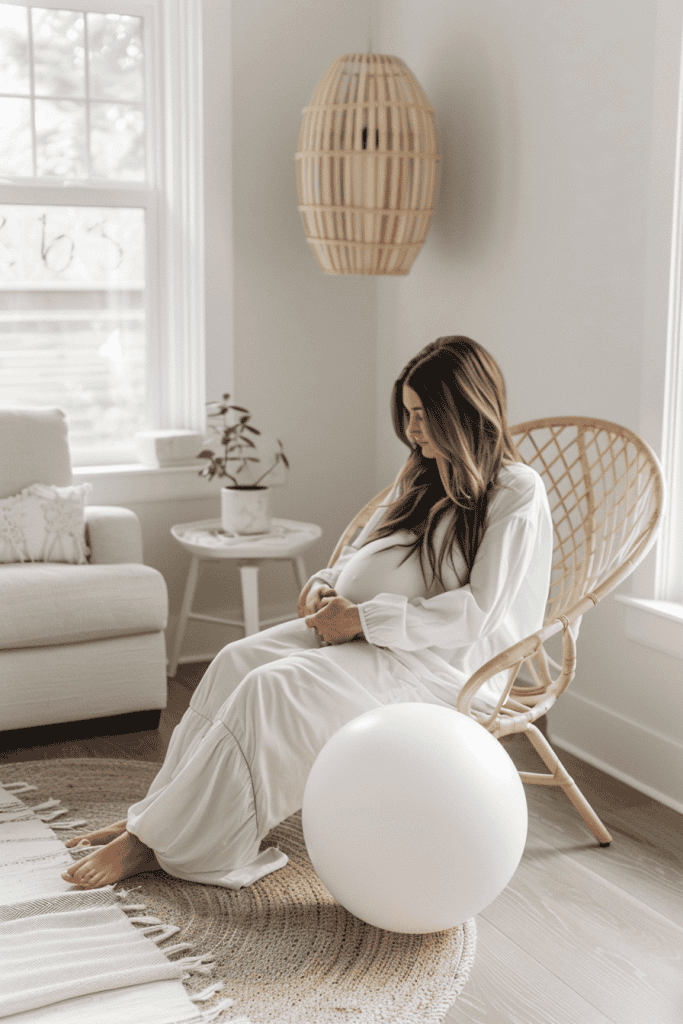
A birth ball is one of those simple tools that you’ll be glad you had.
It gives you the freedom to sway, lean forward, or gently bounce, which can all ease discomfort and help labor move along.
The easiest setup is to place it in a corner with a mat underneath and a chair or bed within arm’s reach for balance.
A couple of pillows or blankets nearby make it even more versatile – you can shift from active movement to resting without having to rearrange the whole space.
3. Play a Calming Birth Playlist

Sound shapes mood just as much as light does.
Some people like quiet, while others draw strength from steady music or spoken affirmations.
Preparing a playlist in advance saves you from decisions later, when your energy is better spent on labor itself.
A small speaker works well for filling the room, but headphones are worth having close too – they give you privacy if you want to tune in more personally.
The goal is to give yourself the flexibility to follow what feels steady in the moment.
4. Diffuse Gentle Aromas

Scents can set the tone of a space, but during labor they’re best kept simple.
A diffuser with a single drop or two of lavender or citrus is often enough.
If that feels too much, fresh flowers or even the clean glow of an unscented candle can create a sense of freshness.
What matters most is having options that you can adjust or set aside easily.
Labor has its own rhythm, and what feels grounding at the beginning may not feel the same hours later.
Keeping things light and flexible makes scent a quiet support instead of a distraction.
5. Keep Hydration and Snacks Within Reach

Labor takes energy, and the simplest way to stay steady is to keep drinks and light snacks close by.
A basket or tray with water, coconut water, or an electrolyte drink makes it easy to sip between contractions.
Adding a few simple snacks (like fruit, nuts, or crackers) ensures quick fuel without needing to leave the room.
This setup is also a thoughtful touch for your partner or birth team.
Everyone does better when they’re nourished and hydrated.
Preparing it in advance means no one has to scramble when focus belongs on the birth itself.
6. Prepare a Birth Kit Station

When supplies are organized, everyone can move with confidence.
A simple system (clear bins or baskets labeled with towels, pads, gloves, and other essentials) saves time and keeps the room calm.
Think of it as creating stations: one for linens, one for baby supplies, one for medical items.
Having everything within reach allows your midwife or support team to step in without asking where things are.
It also gives you peace of mind, knowing what you need is ready and waiting.
It just have to be practical, tidy, and easy to use.
For a ready-to-go guide, check out this practical homebirth supplies checklist to make sure nothing gets overlooked.
7. Add Personal Touches for Encouragement

A birth space feels more supportive when it reflects what matters to you.
Simple additions like affirmation cards, scripture verses, or family photos can be grounding reminders during labor.
These personal details don’t need to fill the room – just a few well-placed items can give you something steady to focus on when contractions feel strong.
It’s also worth considering how to shape privacy. A curtain pulled across a doorway or a room divider can make the space feel like a protected cocoon.
Those small adjustments help create an atmosphere that reminds you: this space belongs to your birth.
8. Plan a Water Birth Setup (if desired)

If you’re drawn to laboring or birthing in water, setting up a pool or tub in advance is key.
Check that the space has sturdy flooring, easy access to warm water, and enough room for your birth team to work comfortably around it.
Gather the essentials (hose, liner, towels, and a plan for cleanup) so everything flows smoothly when the time comes.
Even if you’re not sure whether you’ll use it, preparing the option can give you flexibility.
Sometimes the comfort of warm water becomes the tool you didn’t realize you’d need.
Having it ready allows you to decide in the moment, without adding extra work or distraction.
9. Create Space for Movement

Labor rarely stays in one position, and having room to move makes all the difference.
A clear, uncluttered floor gives you the freedom to walk, squat, or sway as your body leads you.
A yoga mat or sturdy chair nearby adds options for leaning or shifting positions when contractions change.
It can help to gather a few supportive tools in advance – like a rebozo for gentle support or a stool for squatting – so they’re ready when you need them.
The more freedom you have to move, the easier it is to find what feels steady and effective in the moment.
And if you’re looking for something fun to do while nesting, check out these adorable baby projects before birth to prepare your home and welcome your little one.
10. Prepare a Cozy Nest for After Birth
Once the work of labor is done, you’ll want a space that welcomes both you and your baby into rest.
A simple way to prepare is by layering fresh sheets on the bed (two sets with a waterproof pad in between) so your birth team can change them quickly if needed.
Keep warm blankets, a soft robe, and must-have newborn essentials close by so everything is within reach.
What matters is having comfort and warmth ready so you can settle in immediately, skin-to-skin with your baby, without leaving the room.
That first stretch of rest feels even sweeter when the space has already been prepared with care.
Tips for Flexibility During Labor
Labor has a way of asking for little tweaks along the way. The space you set up is simply a framework that can shift with your needs.
And that flexibility is what makes it truly supportive.
Here are a few ways to stay flexible as labor unfolds:
- Shift rooms if needed. You may plan to labor in one space but feel more comfortable in another. Follow where your body feels most steady.
- Adjust the lighting. A level of light that worked in early labor may need to be softened even more as contractions grow stronger.
- Change the sounds. Music, affirmations, or silence may each feel right at different stages – having options gives you freedom.
- Use the space differently. Move between walking, leaning, squatting, or resting. Keeping pathways clear makes this natural.
- Stay open to your instincts. The most valuable preparation is not a perfect setup, but a space that can shift with you.
Flexibility brings peace of mind.
When you allow yourself to adapt, your homebirth space becomes more than prepared – it becomes responsive to your needs in each moment.
Create Your Supportive Homebirth Space
Preparing your homebirth space is about shaping an environment that helps you feel steady, safe, and present.
Small, thoughtful details (like gentle lighting, organized supplies, or a cozy bed prepared for rest) add up to create a setting where your body and mind can work together.
As you plan, choose what feels most supportive for you and your family.
When the space reflects your needs, it becomes a foundation for strength, focus, and calm as you welcome new life into your home.
Which of these ideas feels most useful as you prepare your own homebirth space? Share your thoughts or your favorite tip in the comments below – I’d love to learn what’s working for you.
FAQs
How do I choose the best room for a homebirth?
Pick the room where you naturally feel most calm and comfortable. Many families choose a bedroom or living room with enough space to move freely. Look for easy access to a bathroom, sturdy flooring, and room for your birth team to work.
What supplies should I keep close during labor?
It helps to have water, light snacks, clean towels, a birth kit, and extra sheets within reach. Organizing them in labeled baskets or bins makes it simple for you and your support team to find what’s needed quickly.
Do I need special equipment for a homebirth space?
Not necessarily. A birth ball, a few waterproof pads, and basic supplies are often enough. If you plan for a water birth, a pool and liner are helpful. Beyond that, comfort items like music, pillows, or affirmations are personal additions.
How can I make my homebirth space feel more private?
Simple adjustments – like closing doors, hanging a curtain, or using a room divider – can create a cocoon-like atmosphere. Let your birth team know your preferences in advance so the space stays calm and uninterrupted.
What should I prepare for after the birth?
Layer clean sheets on the bed with a waterproof pad in between for easy changes. Keep blankets, a robe, and newborn supplies nearby. This way, you can settle in for rest and bonding right away without needing to leave the room.