Passover is a wonderful time to engage children with hands-on activities that bring the holiday’s story and symbols to life.
If you’re looking for fun and easy Passover crafts to keep little ones busy, you’re in the right place.
In this article, we’ve gathered Passover crafts for kids ages 5–10 that are simple, frugal, and meaningful.
These craft ideas use everyday materials (think paper plates, cardboard, and recyclables) and focus on Jewish symbolism, Passover traditions, and the Exodus story in a kid-friendly way.
From making their own Seder plates to crafting frog puppets, your children will love these creative ways to celebrate Passover at home.
(Families who enjoy hands-on holiday learning often find that seasonal crafts pair well with other faith-based projects, like my easy Christian valentine’s crafts, which also focus on simple materials and meaningful conversations with kids.)
Before we dive into the craft list, remember that even preschoolers can participate with a bit of help. Each project includes suggestions to adapt it for younger children, so no one is left out.
Why Passover Crafts Are Great for Kids
Incorporating crafts into your Passover preparations is an educational and meaningful part of celebrating the holiday.
Passover crafts for kids help them connect with the story and traditions on their level. Rather than learning through lectures or readings alone, children get a hands-on experience: they touch, build, and create symbols of the Exodus.
This makes the lessons of Passover tangible and memorable. For example, when a child paints their own Seder plate or hides the afikomen in a bag they decorated, they form a personal link to those rituals.
Crafts also encourage kids to ask questions and talk about the holiday (which is exactly what we want at Passover – the Seder is designed to prompt questions from children).
By making things like puppets or props, kids can actively participate in the Seder, turning it into an interactive experience rather than just a sit-and-listen event. Moreover, crafting together is quality family time.
Parents and kids can chat about the meaning behind each project – maybe telling the story of Moses as you construct a baby-in-the-basket craft, or reviewing the 10 Plagues as you make a frog.
It’s a chance to share family stories and memories of Passovers past, making the holiday truly a multi-generational experience. Finally, arts and crafts foster creativity and fine motor skills. Children take pride in their work, boosting their confidence.
When they see their artwork used during the Passover meal (like a placemat or Elijah’s cup they decorated), it instills a sense of accomplishment and belonging.
All in all, doing Jewish holiday crafts for kids around Passover makes the holiday more fun, engaging, and meaningful for the youngest participants – which is exactly in the spirit of this family-centered celebration.
10 Easy Passover Crafts for Kids
Let’s get started with our top ten Passover craft ideas that combine fun and tradition!
1. Paper Plate Seder Plate Craft
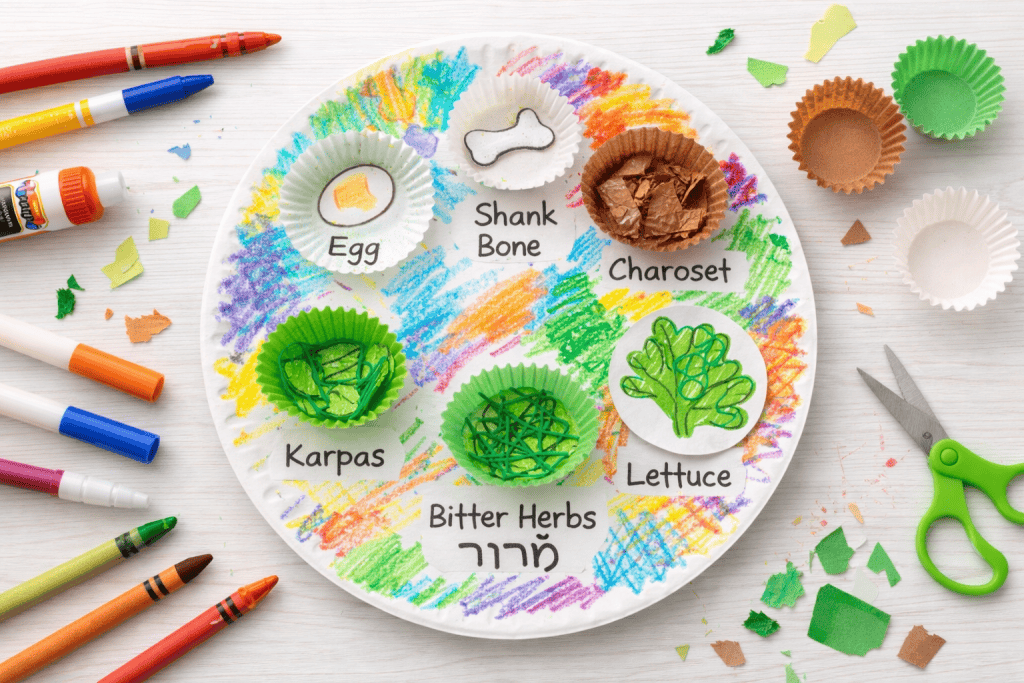
Kids can create their very own Seder plate with simple materials.
Nothing beats the pride of having a personal Seder plate that your child made themselves.
For this craft, take a sturdy paper plate (or a round cardboard piece) and have your child decorate it to resemble a Seder plate. They can paint it, color it, or glue on cupcake liners or bottle caps to represent the sections for each Passover symbol.
(Tip: Using small paper or plastic cups, egg carton pieces, or cupcake papers as the six sections works great.)
Label each section (in English or Hebrew) for the egg, shank bone, bitter herbs, charoset, karpas (parsley), and lettuce. As they craft, explain what each item means on the Seder plate.
This hands-on approach helps kids remember the symbols of Passover. Younger children can color pre-drawn pictures of the Seder plate items and glue them on, while older kids can practice writing the labels or drawing the foods themselves.
Come Seder night, let your child use or display their homemade Seder plate – they’ll be thrilled to show it off at the table!
If your children enjoy creating symbolic items like a seder plate, they may also love exploring biblical stories through hands-on projects such as our meaningful crafts that teach the 10 commandments, which similarly connect faith concepts to everyday actions.
2. Elijah’s Cup Decoration
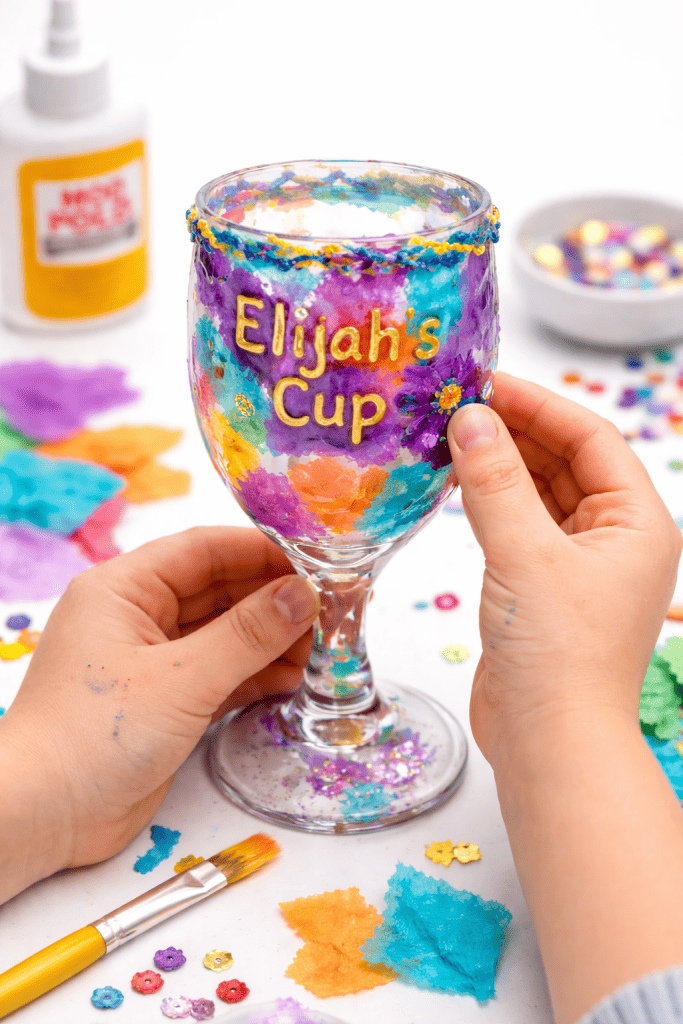
An Elijah’s Cup is the special goblet of wine (or grape juice) left on the Seder table for the prophet Elijah.
Kids will enjoy personalizing a beautiful Elijah’s Cup for your Passover table. Start with a plain, inexpensive wine glass or even a plastic goblet. Provide some craft paints, markers, or glue with bits of tissue paper, sequins, and foil.
A fun method is to tear colored tissue paper into small pieces and use diluted glue or Mod Podge to decoupage them onto the outside of the cup – this creates a stained-glass effect when it dries.
Another idea is wrapping the cup with colorful yarn or ribbon and adding sparkly gems or stickers. Make sure to keep the decorating to the outside of the cup (so it remains food-safe inside).
Even little ones can participate by sticking on pre-cut shapes or painting with supervision. Once done, you’ll have a one-of-a-kind Elijah’s Cup ready for the Seder.
This craft not only gets kids involved in Passover prep, it also teaches them about the tradition of welcoming Elijah at the Seder. They’ll beam with pride when they see their decorated cup at the table during the Passover celebration.
3. DIY Afikomen Bag
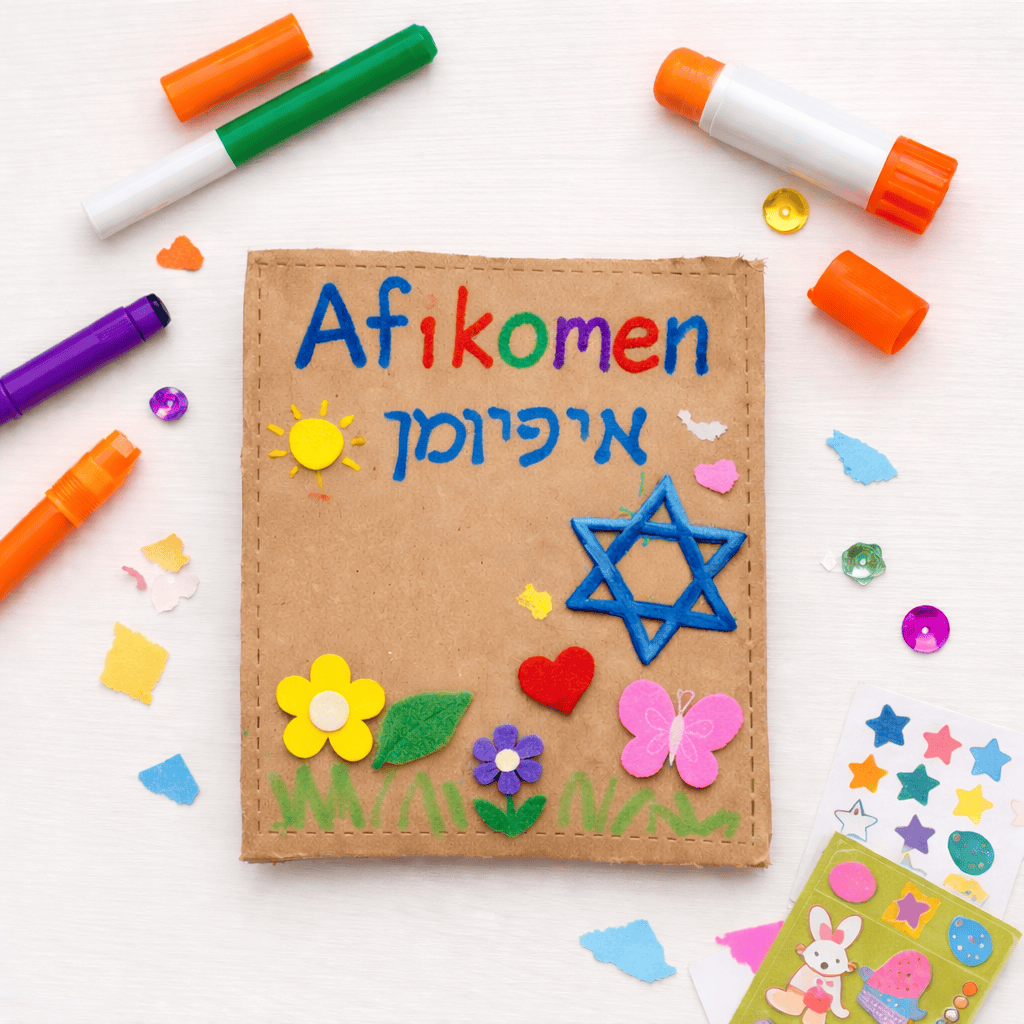
The afikomen hunt is a highly anticipated part of Passover for kids – after the meal, a piece of matzah (the afikomen) is hidden for children to find. To make this tradition even more special, have your child create their own afikomen bag.
You can use a simple cloth bag, a large envelope, or even sew two pieces of felt or fabric together to form a pouch. For a no-sew option, take a paper lunch bag or a clean grocery bag and cut it to the size of a matzah, then decorate it.
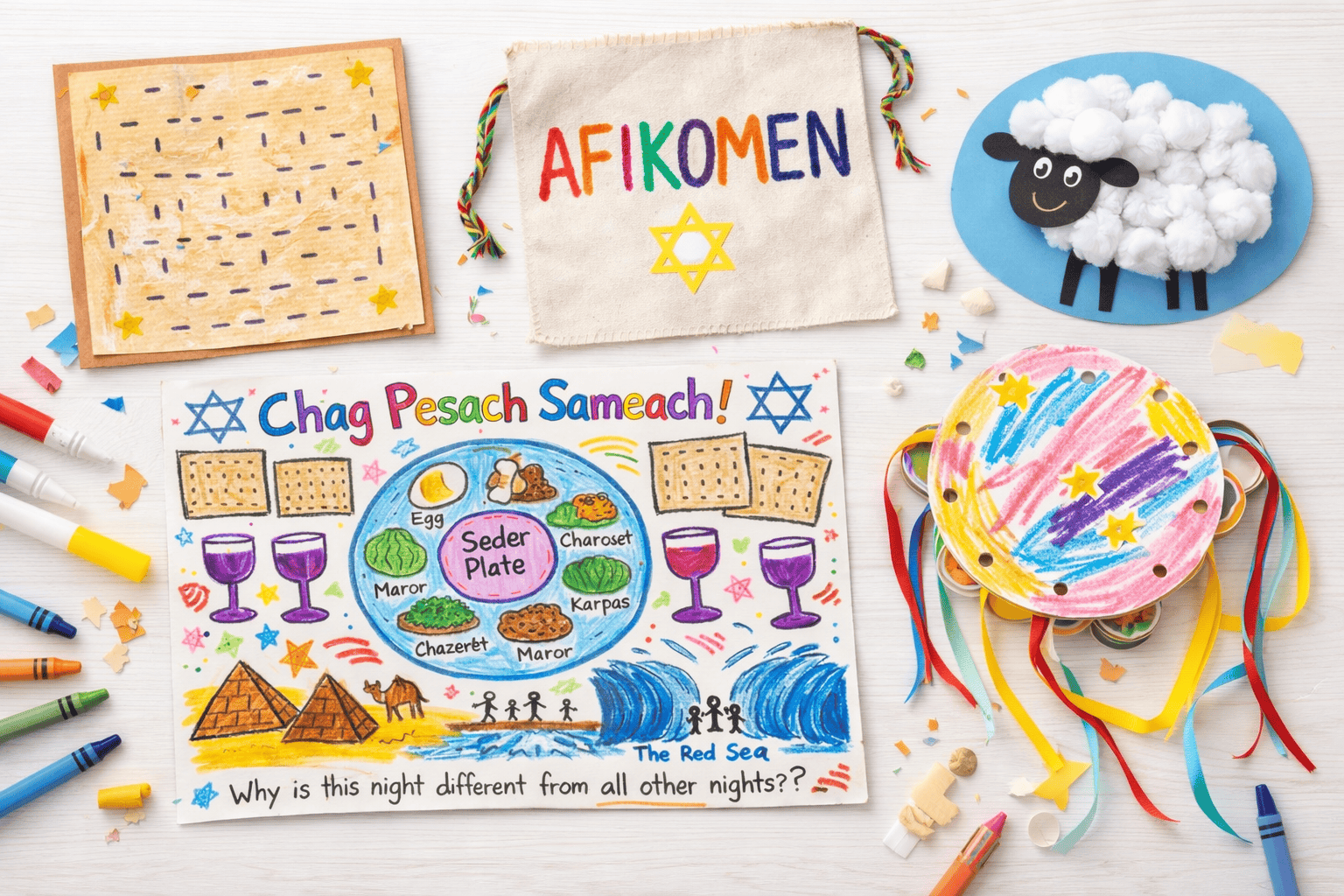
Kids can draw on it with markers, write “Afikomen” in English or Hebrew, and add Passover-themed decorations (like matzah patterns, Stars of David, or springtime motifs). Stickers, fabric scraps, or sequins can be glued on for extra flair.
Remind your child that this bag will hold the special piece of matzah that gets hidden – so their artwork will be part of the Seder game!
For younger kids, you might prepare the bag’s basic shape and let them handle the decorating with stickers or crayons. Older kids can try simple stitching around the edges of felt or use fabric paint for a lasting keepsake.
The finished afikomen bag will be an “essential feature” of the treasure hunt, ensuring the afikomen stays clean and safe until it’s found and eaten. This craft connects kids to the Passover story and keeps them excited for the afikomen search.
4. Toilet Paper Roll Frog
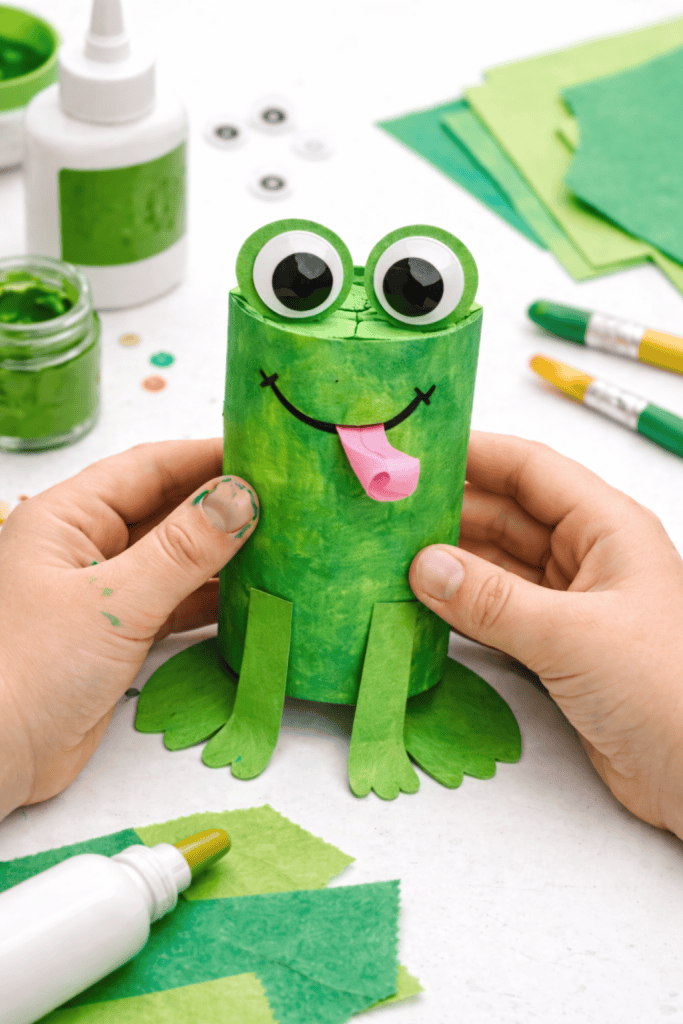
Frog crafts are a favorite for kids and bring the Plague of Frogs to life in a fun way.
One of the most kid-friendly Passover crafts is making a frog – a nod to the Second Plague in the Exodus story.
In fact, frog decorations and toys have become surprisingly common at modern Seders, adding some light-hearted fun to the retelling of the plagues.
To craft a frog, you can upcycle a toilet paper roll (homestead bonus: finally a use for those empty rolls!). Have your child paint the tube green (or any color – we’ve seen rainbow frogs too!).
Once the paint is dry, help them add eyes and legs: cut two half-circles from green paper for hind legs, and two strips for front legs. Glue the legs onto the tube.
For the eyes, you can glue on googly eyes or make paper eyes by cutting white circles (with smaller black circles for pupils). Attach the eyes to the top of the tube.
Draw or paint a big smile on the frog’s face, and even stick out a curled paper tongue if feeling creative. Younger kids will need help cutting the pieces, but they can definitely paint the frog or stick on the eyes.
Older kids can handle more of the cutting and assembly. Once complete, you have an adorable frog friend! During the Seder when you mention the plague of frogs, your child can hop their toilet paper roll frog around the table.
Some families even toss soft toy frogs or frog crafts to make this moment interactive.
This playful frog craft fits right in with other story-based bible activities, much like the animal-focused projects in amazing Noah’s ark crafts, where children learn through familiar creatures and imaginative play.
5. Parting of the Red Sea Scene
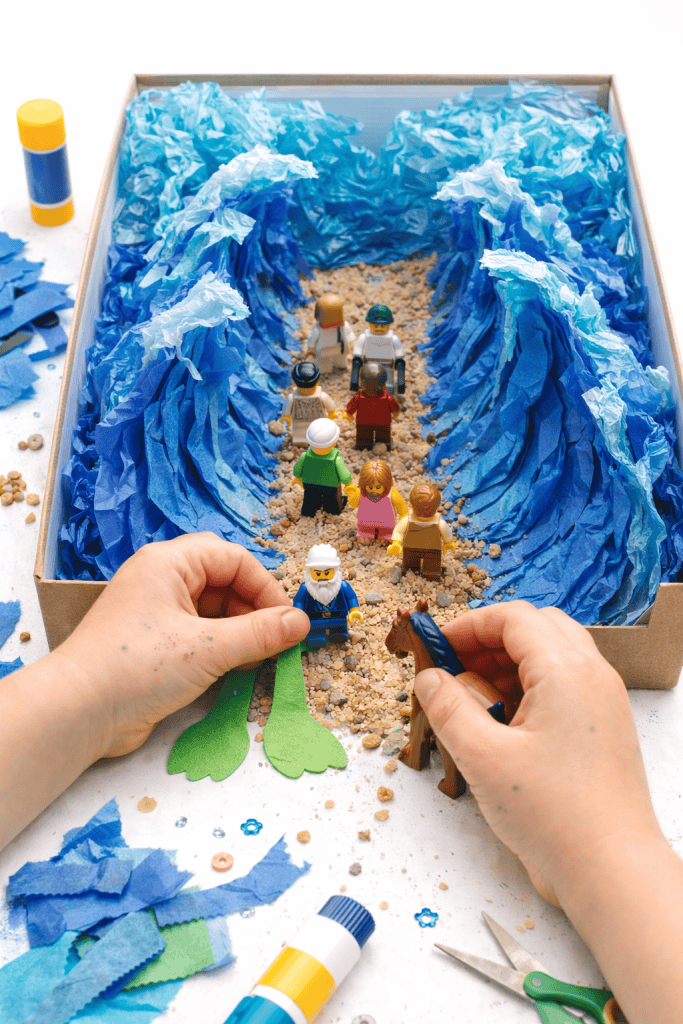
Help your kids recreate one of the most dramatic moments of the Exodus – the parting of the Red Sea. This craft can be as simple or elaborate as you like.
One easy method is using construction paper: Take a large sheet of paper as the base and have the kids glue strips of blue paper, tissue paper, or even waves cut from a cereal box painted blue, on each side to represent the walls of water.
Down the middle, leave a path of dry land (brown or yellow paper) where the Israelites walked. They can draw tiny people or use LEGO figures/action figures to stand in as the Israelites and Egyptians (building a little Exodus scene with blocks or toys is another fun approach).
For a 3D effect, consider using a shoebox to make a mini diorama: line the bottom with sand or brown paper, and create water on each side by attaching blue cellophane or plastic wrap waves that stand up.
Add in some toy animals or dolls to represent people crossing.
Little ones might simply swirl blue finger paint on two sides of a page and sprinkle sand in the middle; older kids can cut and arrange more detailed shapes or even incorporate dolls and action figures.
As your kids craft the Red Sea scene, talk about how the Israelites escaped slavery and gained freedom – a core theme of Passover. This visual storytelling reinforces the miracle of the Red Sea parting in a way kids will remember.
They’ll be excited to show their Passover craft and maybe use it to act out the story during your celebration.
6. Baby Moses Basket Craft
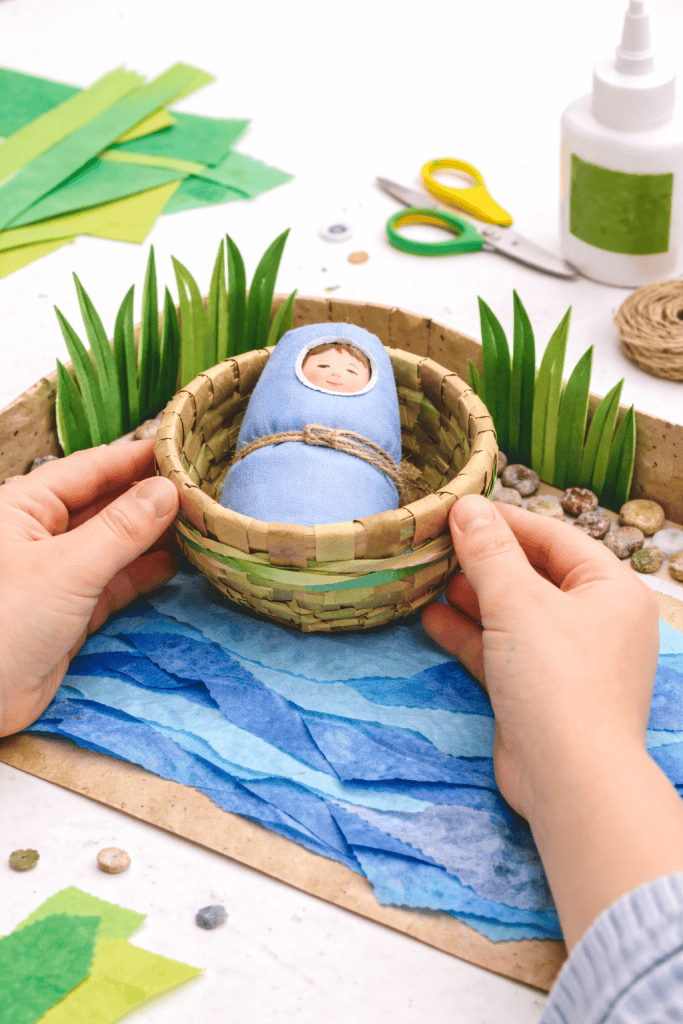
The story of Passover begins with baby Moses, so a craft around Moses in the basket is perfect for young children. To make a Baby Moses in a basket, you have a few options.
One simple way is to use a paper bowl or a leftover berry basket (the little green strawberry baskets) as the “reed basket.” Let your child decorate the outside of the bowl/basket with markers, ribbon, or by gluing on strips of paper to resemble weaving.
Next, create baby Moses: for an easy version, draw a baby on paper and cut it out (or use a clothespin or popsicle stick as the baby and wrap a small fabric scrap or tissue around it as a blanket).
You can even use a small doll or a Lego baby figure if you have one. Place “Moses” in the basket.
To complete the scene, your child can cut out blue strips of paper for the Nile river and green strips for reeds, then glue the basket onto a paper background.
If you have an old shoebox, you could also set the scene by decorating the inside as the river and banks, and then the basket can be removable.
This craft offers a great chance to talk about how baby Moses was saved and later grew up to lead his people to freedom.
Younger kids will enjoy cuddling the little “baby” and moving the basket around, even if they need help with the cutting and gluing.
Older kids can get more detailed, maybe drawing Pharaoh’s daughter or Miriam watching over Moses from afar.
Crafts that highlight key biblical figures, like baby Moses, are especially meaningful for kids who enjoy character-driven stories – similar to the lessons explored in hands-on crafts to teach children about Jesus’ disciples.
7. Miriam’s Tambourine (Paper Plate Drum)
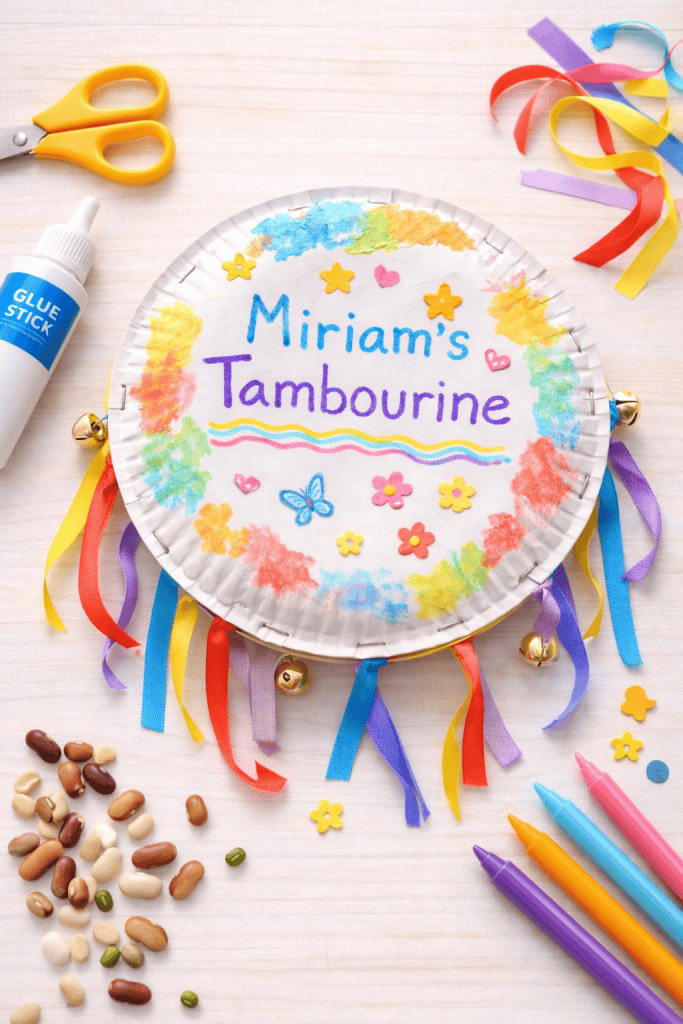
After the Israelites crossed the Red Sea to freedom, Miriam (Moses’ sister) led the women in song and dance with tambourines. Recreating Miriam’s timbrel is a joyful craft that lets kids make some music of their own!
All you need are two paper plates (or two sturdy paper bowls), some dried beans or pasta, and staples or tape. Place a handful of beans on one plate, then put the other plate on top, face-to-face, to form a closed circle.
Staple or tape the plates together along the rim so the beans are sealed inside – voila, you have a paper plate tambourine. Let the kids decorate both sides of the plates before or after assembling: they can color them, paint them, or glue on ribbons.
For a fancier touch, punch holes around the edge and tie ribbon streamers all around, or attach jingle bells if you have them.
Younger children can do the shaking and sticker-decorating, while an adult handles the stapler; older kids can do more of the assembly themselves.
This tambourine craft connects directly to the celebration of freedom – you can encourage your kids to shake their homemade instruments when you sing “Miriam’s Song” or during the chorus of “Dayenu” at the Seder.
In fact, having little drums or tambourines for crossing the Red Sea is a tried-and-true way to make the story interactive.
Music and movement make faith stories come alive, just as they do in joyful Christmas Christian crafts, where singing, celebrating, and storytelling are part of the creative experience.
8. Passover Seder Pillowcase Decoration
During the Passover Seder, we recline on pillows as a symbol of freedom and luxury – after all, in ancient times slaves didn’t get to relax on cushions! This custom of reclining is why you might see pillows on the chairs at Seder.
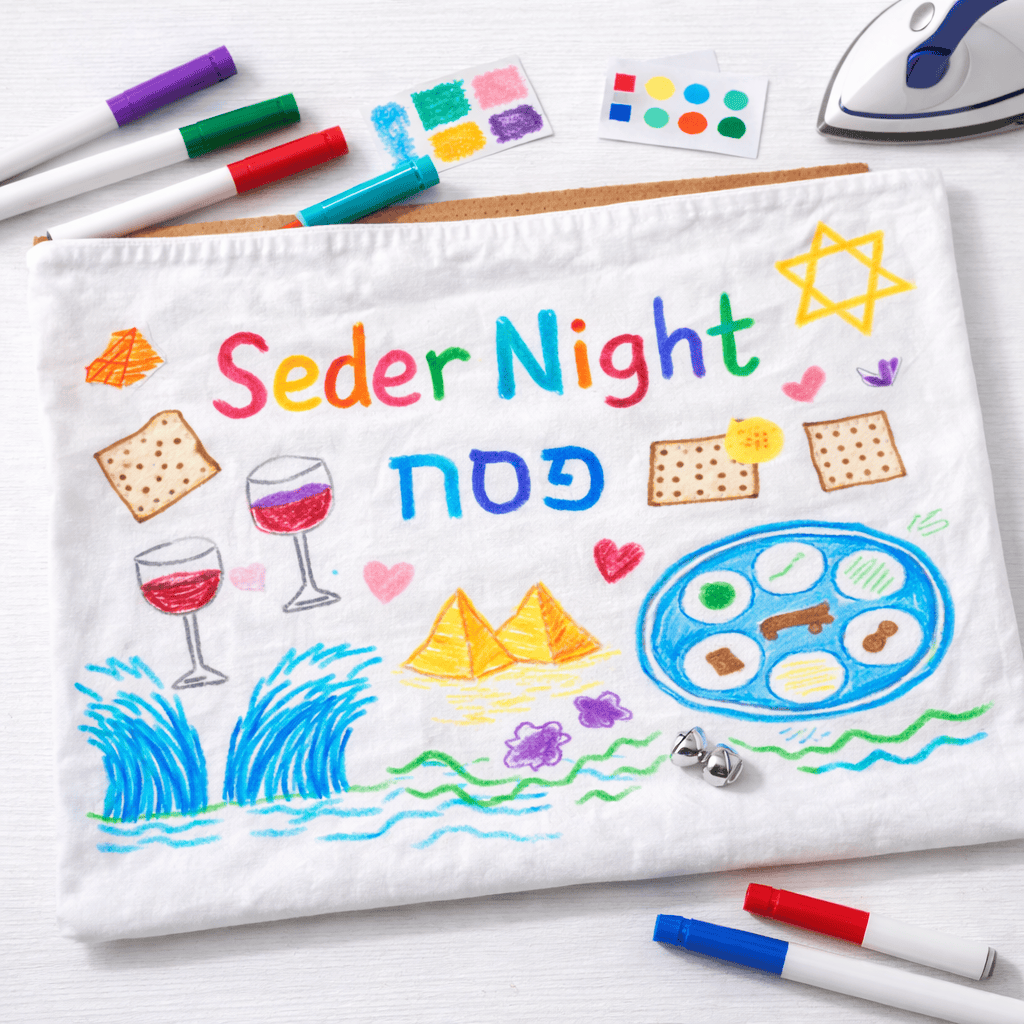
A creative project for kids is to make their own Seder pillowcase to use at the meal. Start with a plain pillowcase (an old white or light-colored one works well).
Insert a piece of cardboard inside it (so markers or paint won’t bleed through to the other side).
Now let your child decorate the pillowcase with Passover themes: they might draw the Hebrew words for “Seder Night” or “Pesach,” sketch scenes like matzah and wine cups, or depict part of the Exodus story.
Fabric markers or fabric crayons are ideal, but if you don’t have those, regular permanent markers can work (just be sure to set the color with heat if using fabric pens, per the instructions).
If you prefer not to freehand, you can help your child trace letters or shapes by drawing lightly in pencil first.
This craft is great for all ages – younger kids can do simple handprints or scribbles in Passover colors, and older kids can get artistic with more complex drawings.
Every year, your child can bring out their special pillow to recline on, adding a personal touch to the Seder. It becomes a lovely tradition: some families make new pillowcases each year, creating a collection of artwork that shows the child’s growth.
Plus, this project reinforces the idea of freedom in a tangible way – your little one literally rests on their own creation as a free person at the Seder.
9. Passover Placemat Art
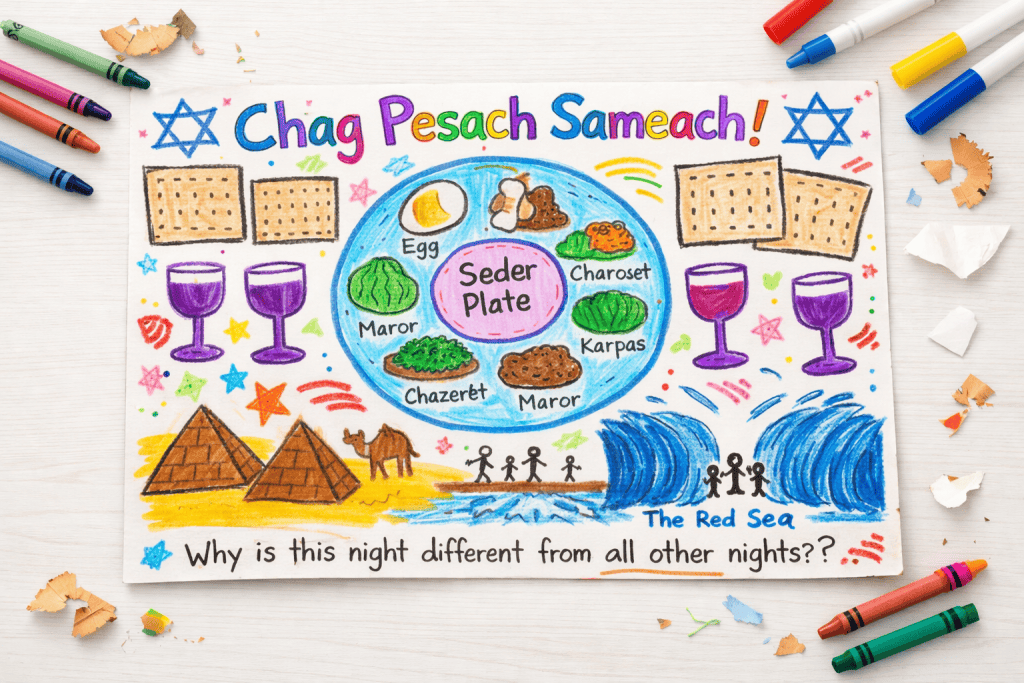
Invite your kids to jazz up the Seder table with their own Passover placemats. This craft lets them contribute to the table setting and express what they’ve learned about the holiday.
Take a large sheet of construction paper or poster board cut to placemat size (approx. 12×18 inches). Have your child fill it with Passover-themed art.
They could draw the Seder plate and its foods, the Exodus scenes, write the Four Questions, or simply color lots of Jewish symbols like Stars of David, menorahs (for broader Jewish holiday spirit), or the words “Chag Pesach Sameach” (Happy Passover) in bubble letters.
Another fun idea is a collage placemat: provide old magazines or printed images and let kids cut out pictures related to spring, lambs, frogs, or family gatherings and glue them on.
You can also include a personal touch, like the child’s name or favorite part of Passover.
Once the artwork is done, laminate the paper if possible (using clear contact paper or a laminating sheet) so that the placemat can be wiped clean and used during the meal.
If you don’t have laminating materials, even wide clear tape over the artwork can protect it from spills. Younger children might do handprint art (for example, paint their hand and stamp it to make a lamb or a frog shape) and older kids can practice writing in Hebrew or detailing the scenes.
These homemade placemats not only brighten up your table, but they also make the child feel valued and involved at the Seder.
Plus, it’s a Passover craft idea that can double as a keepsake – you might save their placemat and see how their drawings evolve year after year.
10. Passover Story Puppets
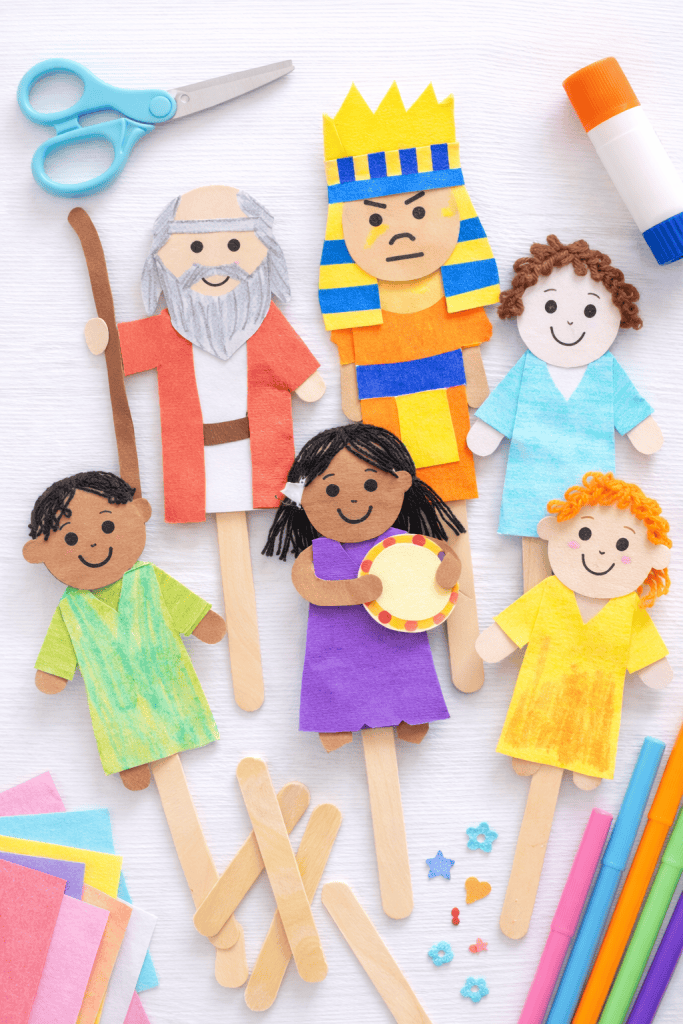
Turn the Passover story into a playful puppet show! Making Passover story puppets is a fantastic craft that encourages imaginative play and helps kids remember the sequence of events.
There are many characters and elements to choose from: Moses, Pharaoh, Miriam, Aaron, maybe a few plague representations (frogs, locusts, etc.), or even Pharaoh’s crown and Moses’s staff as props.
To keep it simple, use brown paper lunch bags or printable paper cut-outs glued onto popsicle sticks. For paper bag puppets: when the bag is upside down, the flap is the puppet’s mouth.
Your child can draw a face on the bag or cut out paper pieces to make features and costumes (for example, Pharaoh could have a crown or Nemes headpiece drawn on, and Moses might have a cotton-ball beard and a robe).
If you prefer stick puppets, have the kids draw characters on cardstock, cut them out, and tape each to a craft stick. You could also print coloring page figures of the Exodus story, let the kids color them, then attach to sticks.
Once the puppets are ready, encourage the children to reenact the story of Passover in their own words. They can “let Moses say: Let my people go!” and have Pharaoh puppet reply “No, no, no!” – leading to the plagues and the eventual freedom.
This craft is very adaptable: preschoolers might color pre-drawn characters, while older kids can design and cut out their own.
Not only do the puppets serve as a craft project, they become Passover activities for children when used for an impromptu puppet show.
During the Seder, you can hand the puppets to the kids and let them chime in during the storytelling or the singing of Dayenu. It’s a delightful way to make the ancient story fresh and engaging for young minds.
Easy Tips for Crafting with Kids
Crafting with kids can be a joy if you keep a few practical tips in mind.
Here are some pointers to ensure your Passover craft sessions run smoothly for both preschoolers and older children:
- Prepare and supervise: Set up a crafting area with all the materials ready. Cover the table with newspaper or a plastic cloth for easy cleanup, especially if you’re painting or using glue. Always supervise young kids during crafts – not only for safety (scissors, hot glue, etc.), but also to guide them through steps and keep them engaged.
- Adapt to age and ability: Remember that the same craft can be made simpler or more complex depending on a child’s age. For little ones (around 3-5 years, even though our target is 5–10, younger siblings might join in), focus on parts they can do safely – like painting, sticking stickers, tearing paper – and do the prep work for them (cutting shapes in advance, using non-toxic washable supplies). This is how you make Passover crafts for preschoolers accessible. For older kids (8-10 years), challenge them with more responsibility: let them do the tracing, cutting with safety scissors, writing labels, or assembling pieces with only a bit of help. They’ll appreciate the trust and learn new skills.
- Emphasize process over perfection: Kids’ crafts are meant to be made by kids – they won’t look store-bought, and that’s okay (even preferable!). Praise their creativity and effort rather than a perfect outcome. If the frog has one eye bigger than the other or the Seder plate’s sections are a bit crooked, it’s still fantastic because they made it. Encourage them to add their personal flair. This keeps crafting fun and stress-free.
- Keep it brief and fun: Most children have limited attention spans. It’s perfectly fine if a craft is done in short bursts or over multiple sessions. If you see them getting restless, you can pause and continue later. Also, infuse fun into the process – play some Passover songs in the background, or turn the craft into a game (e.g., “Let’s see how many frogs we can make in 20 minutes!” or “You be the master painter, I’ll be your assistant.”).
- Safety and mess management: Use child-safe, non-toxic supplies. For paints and glues, washable versions save a lot of headache during cleanup. Have wipes or a damp cloth handy for sticky fingers. If you’re using any small items (beans, sequins), watch out for younger kids who might put things in their mouths – craft time might double as taste-testing time if you’re not careful! For any potentially hazardous steps (like using a stapler for the tambourine or a hot glue gun for securing pieces), it’s best an adult handles those while the child observes or helps in a minor way.
By following these tips, crafting will be a pleasant experience for you and the kids. It’s all about planning a little, going with the flow, and keeping the focus on enjoying the creative journey.
The goal is happy kids and meaningful crafts – not a picture-perfect Pinterest creation (though you might end up with something pretty awesome!). And remember, the mess is temporary but the memories you make will last a lifetime.
If you’re crafting with a group or in a classroom setting, many of the same strategies used in easy Sunday school crafts on a budget – such as preparing materials ahead of time and keeping projects flexible – work beautifully for Passover crafts too.
Frugal Passover Crafting: Use What You Have
One of the best parts of these Passover craft ideas is that they don’t require fancy or expensive supplies. In the spirit of homesteading and DIY creativity, you can use everyday household items and recycled materials for almost all of the crafts.
This not only saves money, it also teaches kids the value of reusing and making the most of what’s available – a great lesson in self-sufficiency and environmental consciousness.
Look around your home for craft supplies before buying anything. Here are some frugal material tips that tie into our crafts above:
- Paper goods: Plain paper plates and paper cups are super versatile (we used them for the Seder plate craft, Elijah’s cup, and tambourine). If you have a stack of paper plates in the pantry, put them to use. Cardboard from shipping boxes or cereal boxes can be cut into shapes (for signs, puppet backings, or a sturdy base for placemats). Even a round cake board or piece of corrugated cardboard can become a durable Seder plate base.
- Recyclables: Toilet paper rolls and paper towel rolls are crafting gold. We turned a TP roll into a frog, and you could similarly make binoculars for “spying out” the afikomen or mini scrolls for the Ten Commandments. Empty jars or clear plastic bottles can be made into swirl bottles representing the Red Sea (fill with water, a drop of blue food coloring, and glitter) or used as holders for props. Don’t toss that egg carton either – egg cartons can be cut up into cups to hold paint or glue, or even used as mini baskets (each cup could cradle a small “baby Moses” figure, for instance). The possibilities are endless when you start seeing “trash” as craft materials.
- Nature and homestead finds: If you live on a homestead or have a yard, incorporate natural materials. Twigs can become mini staffs for Moses or a frame for a doorpost sign. Flowers and leaves can be glued onto placemats for decoration (perhaps representing spring and new life, themes of Passover). You might even use herbs from your garden – like rosemary or parsley – to decorate a craft or include in a sensory way (they smell great and tie into the seder foods, e.g. karpas). Just ensure any plant materials you use are safe and non-allergenic.
- Basic craft staples: Things like crayons, markers, glue sticks, safety scissors, and construction paper are probably already in your craft drawer. If not, they are inexpensive and worth having on hand. A set of watercolor paints or tempera paints can go a long way for multiple projects. And don’t forget the power of leftover bits – that drawer of random ribbons, buttons, scraps of fabric, etc., can be treasure for kids to use in decorating their crafts (the Free Kids Crafts team even recommends using “bits and pieces of craft materials left over from other projects” for Elijah’s cup).
- Improvise and substitute: Don’t have an item a craft calls for? Get creative. No felt for the afikomen bag? Use an old pillowcase or T-shirt fabric. No googly eyes for the frog? Draw eyes on paper and cut them out, or use buttons. No popsicle sticks for puppets? Slices of cardboard or plastic utensils can work as puppet handles. The goal is easy Passover crafts – they should not require you to run to a specialty store. Use what’s on hand and adapt as needed.
By crafting with repurposed materials, you’re not only saving money, but also imparting a great value to your kids about resourcefulness. It fits perfectly with a homestead mindset – making do with what we have and being creative.
Plus, when children see that their frog was once a toilet paper tube or their Seder plate was a cardboard piece from a delivery box, it gives them a sense of accomplishment in turning the ordinary into something extraordinary.
Frugal crafting is fun, eco-friendly, and budget-wise – a win-win-win for Passover prep!
Using recycled and household items mirrors the philosophy behind our DIY new year’s crafts for kids, which encourage reflection, creativity, and fresh beginnings without expensive supplies.
Celebrate Passover Creatively with Your Kids
Passover is all about passing down the story of freedom to the next generation, and what better way to do that than through creative, hands-on activities?
These 10 simple Passover crafts for kids prove that celebrating the holiday can be interactive, educational, and downright fun.
As you celebrate this Passover, encourage your kids to use their creations – let them proudly display the Seder plate they painted, shake the tambourine during songs, or cuddle the Moses basket they made when you tell that part of the story.
These moments will stick with them far longer than just listening passively.
Plus, you’ll be building family memories and perhaps even new annual traditions (who knows, your homemade Jewish holiday crafts for kids might become a beloved part of your Seder for years to come).
So gather up those craft supplies and get creative! You’ll find that when kids dive into crafting, they also dive into learning – and all the important symbols and stories of Passover start to come alive for them.
Here’s to a joyous, crafty, and meaningful Passover for you and your family.
…
Try out these crafts with your kids and watch their faces light up. And when you do, we’d love to hear about it.
What was your child’s favorite Passover craft, or do you have your own crafty ideas to add? Let us know in the comments below – let’s share the inspiration and keep the fun going!
Chag Pesach Sameach! (Happy Passover)
Get the FREE Fruit of the Spirit Tree Craft
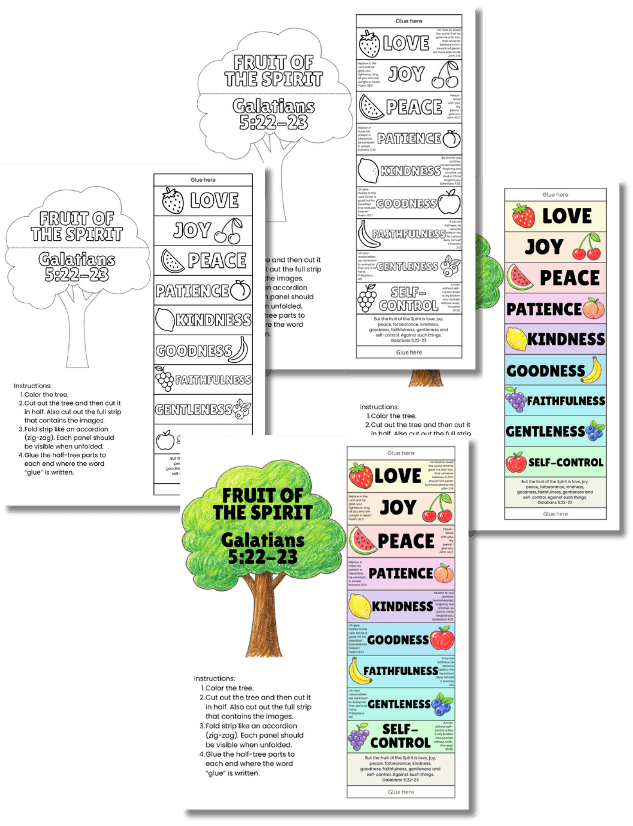
Bring the Fruit of the Spirit to life with this FREE Fruit of the Spirit Tree Craft—a fun, hands-on printable kids can build and display.
It features a 3D accordion-fold tree and comes in two versions (one with Bible verses for each fruit from Galatians 5:22–23, and one simplified for younger kids). This makes it easy for children to learn love, joy, peace, patience, kindness, goodness, faithfulness, gentleness, and self-control at their own pace.
Click below to grab the free tree craft and start creating together.
FAQs
How can I adapt these Passover crafts for preschoolers or younger children?
For preschoolers (ages 3–4), the key is simplicity and sensory fun. Focus on painting, coloring, and gluing, while adults handle cutting, labeling, or tricky steps. For example, a child can decorate a Seder plate with paint and pre-cut pictures instead of writing labels. Prepare materials ahead of time so kids can jump right into the fun parts. Use child-safe supplies, work in short sessions, and don’t worry about perfection – the process matters more than the result.
How can we use these crafts during the Passover Seder?
Using crafts during the Seder helps children become active participants instead of passive listeners. Display their handmade Seder plates, Elijah’s cups, or placemats at the table. Use afikomen bags for hiding matzah, puppets for acting out the story, and frog crafts during the Ten Plagues. Musical crafts like Miriam’s tambourine add excitement during songs. These moments keep kids engaged and reinforce learning through pride and participation.
Do I need to buy special materials for these crafts?
No special materials are required – most crafts use everyday household or recycled items. Paper plates, toilet paper rolls, cardboard, crayons, glue, and markers are usually enough. If you don’t have specific supplies like googly eyes or fabric paint, simple substitutes work just fine. The goal is to keep crafts affordable, accessible, and creative while teaching kids resourcefulness.
When is the best time to do Passover crafts with kids?
The best time is before Passover or early in the holiday, when children are learning about the story and building excitement. Spreading crafts out over several days works better than doing them all at once. Crafts that will be used at the Seder should be completed in advance, while others can be saved for chol hamoed. If your family observes Yom Tov restrictions, plan crafts accordingly.