Winter opens up a fresh season of outdoor play.
Playing outside in the cold offers unique sensory adventures and learning opportunities for young children.
Toddlers and early-elementary kids (about 2–7 years old) can delight in snow, ice, and winter wildlife with simple activities that require little prep and use items you already have.
With warm layers and a dash of creativity, your family can explore nature’s winter wonderland right in the backyard or local park.
Below are ten unforgettable outdoor winter nature play ideas – each designed to be beginner-friendly, low-prep, and tons of fun!
The Powerful Benefits of Winter Outdoor Play
Playing outside in winter offers a host of benefits for young children. Kids get fresh air and sunlight, which supports vitamin D production and boosts mood.
Outdoor winter play also develops physical skills like balance, coordination, and strength, while encouraging problem-solving and creativity as they navigate snow, ice, and natural obstacles.
Other perks include:
- Sensory exploration: feeling snow, crunching ice, spotting frost patterns
- Emotional growth: resilience, independence, and confidence
- Connection to nature: observing wildlife, seasonal changes, and natural materials
- Family bonding: shared adventures and memorable experiences
Even short outdoor sessions can enrich a child’s day, turning cold weather into a playground of discovery!
For days when venturing outside isn’t possible, check out our cozy winter indoor sensory play ideas for fun, hands-on activities indoors.
10 Easy Outdoor Winter Nature Play Activities for Kids
These easy outdoor nature play ideas make it simple for kids to have fun, stay active, and connect with the natural world.
1. Snow Painting with Colorful Water
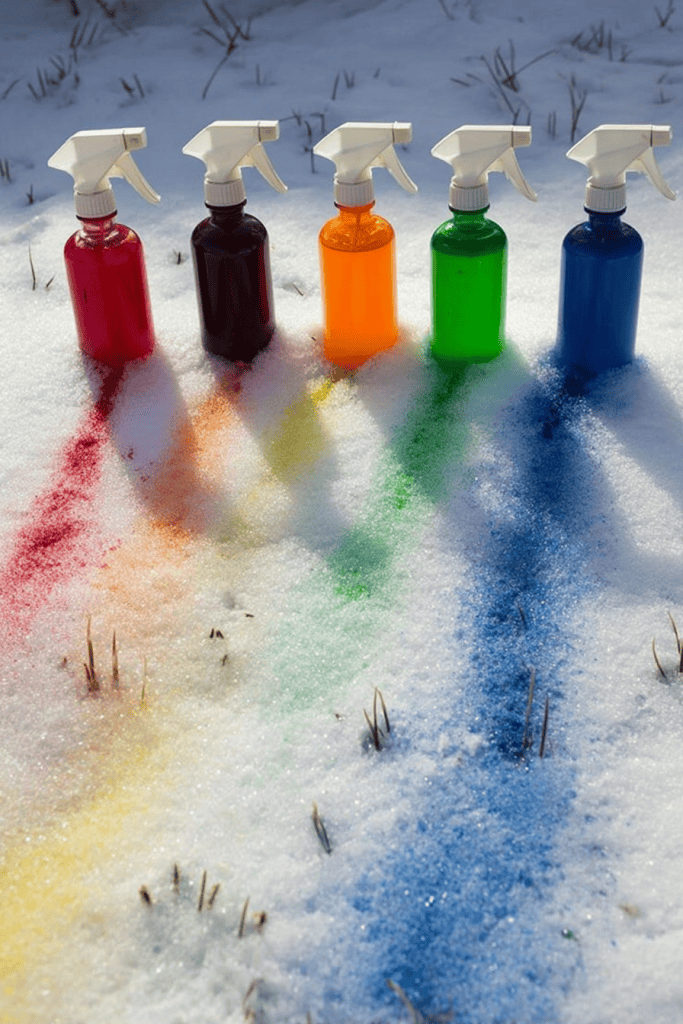
Who says you need a paintbrush to make art? For this activity, all you need is water and food coloring (or even old liquid watercolor paints) to turn fresh snow into a canvas.
Fill spray bottles, squirt bottles, or even a turkey baster with tinted water and let the kids “paint” the snow. They can create rainbow designs on the ground or even decorate a snowman with bright colors.
This open-ended art activity encourages creativity and color mixing – toddlers will giggle as they see red and blue water make purple on the snow.
It’s entirely safe and low-prep (just mix water + coloring), and if you don’t have snow on the ground, you can freeze a layer of snow or shaved ice on a tray for an at-home “snow canvas.”
Remember to bundle up and use cold-safe containers (no thin glass that could crack). The experience is magical: when the sun shines on the painted snow, the colors sparkle brilliantly. It’s a wonderful way to get kids exploring art and nature on a winter day.
2. Pinecone Bird Feeders for Feathered Friends
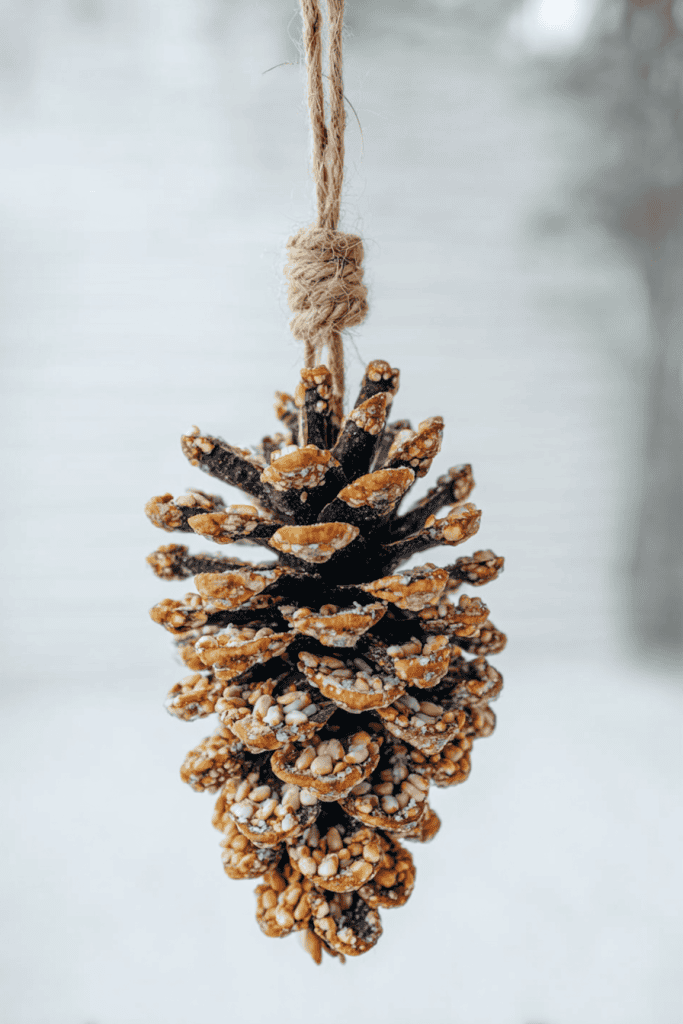
Winter is a tough time for birds to find food, so involve your kids in helping backyard wildlife with this classic nature craft. Pinecone bird feeders are simple: take a pine cone (the bigger, the better for little hands) and tie a string to the top.
Have your child smear peanut butter (or sun butter for allergies) all over the pinecone and into its openings, then roll it in birdseed on a tray. Within minutes, you have a natural, DIY bird feeder to hang on a tree branch.
This activity is virtually free if you have pinecones around (check under evergreen trees at the park) and some pantry supplies. Hang up the feeders within view of a window and enjoy some bird-watching!
Kids will learn empathy for animals as they help birds find food during the cold months when resources are scarce. It’s also great fine motor practice for toddlers (patting on peanut butter is delightfully sticky business).
Tip: After hanging the feeder, check on it daily to see which birds visit – you might spot chickadees, sparrows, or even bright red cardinals depending on your region. This simple project combines crafting, nature learning, and caring – a win-win-win!
For cold winter days, make sure your kids stay warm while crafting outdoors by following our guide on how to layer clothes for winter.
3. Frozen Ice Sun Catchers (Nature Ornaments)
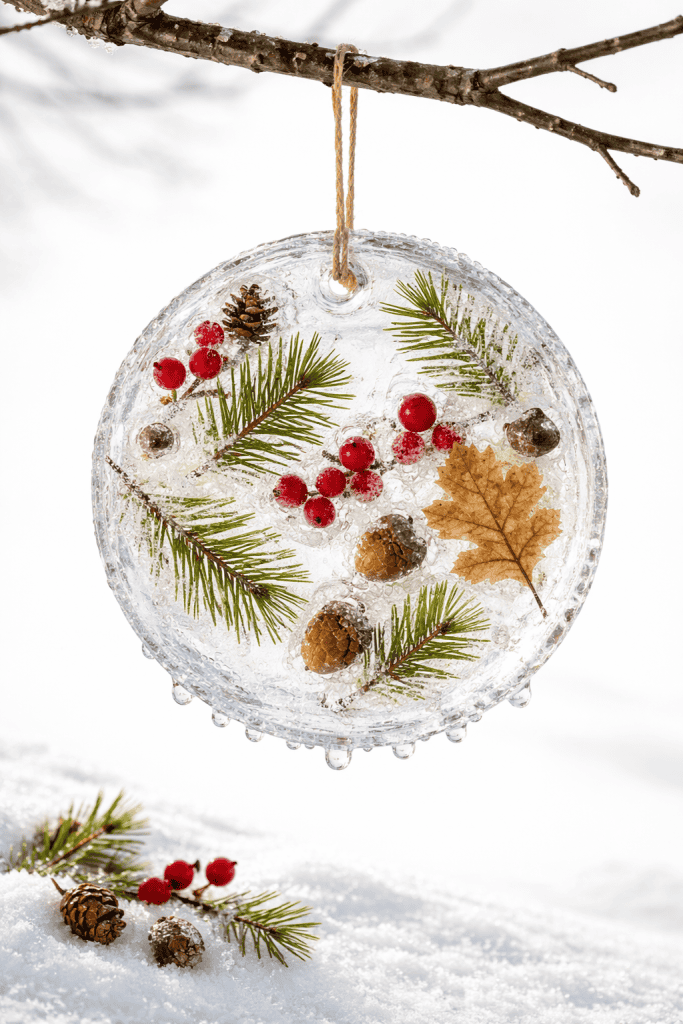
Turn bits of nature into beautiful ice sun catchers that glitter in the winter sun. This activity lets kids collect natural treasures and then freeze them into icy ornaments.
To start, have your child gather small items from around the yard: pine needles, leaves, berries, acorns, seed pods – any little “treasures” that catch their eye. Next, fill a shallow plastic container or pie pan with about an inch of water.
Arrange the nature items in the water (kids love making patterns or faces) and add a loop of string or ribbon hanging into the water (this will freeze into the ice as the hanger). Leave the container outside overnight if it’s below freezing, or pop it into your freezer.
By morning, the water will have frozen solid, trapping the natural objects inside. Pop out the disk of ice, and you have a nature-made sun catcher to hang on a tree or porch. Each sun catcher is unique – like a frozen collage of your child’s walk – and looks stunning when sunlight shines through it. Even if you don’t have snow, freezing weather or a freezer is all you need.
This activity is super low-cost and minimal prep: “fill with natural treasures, add water, freeze.”
Kids enjoy the process of both collecting items and unveiling the frozen result. No two sun catchers are alike, and they’ll last as long as the temperature stays cold. It’s a great way to decorate the yard in winter and appreciate nature’s beauty up close.
4. Winter Nature Scavenger Hunt
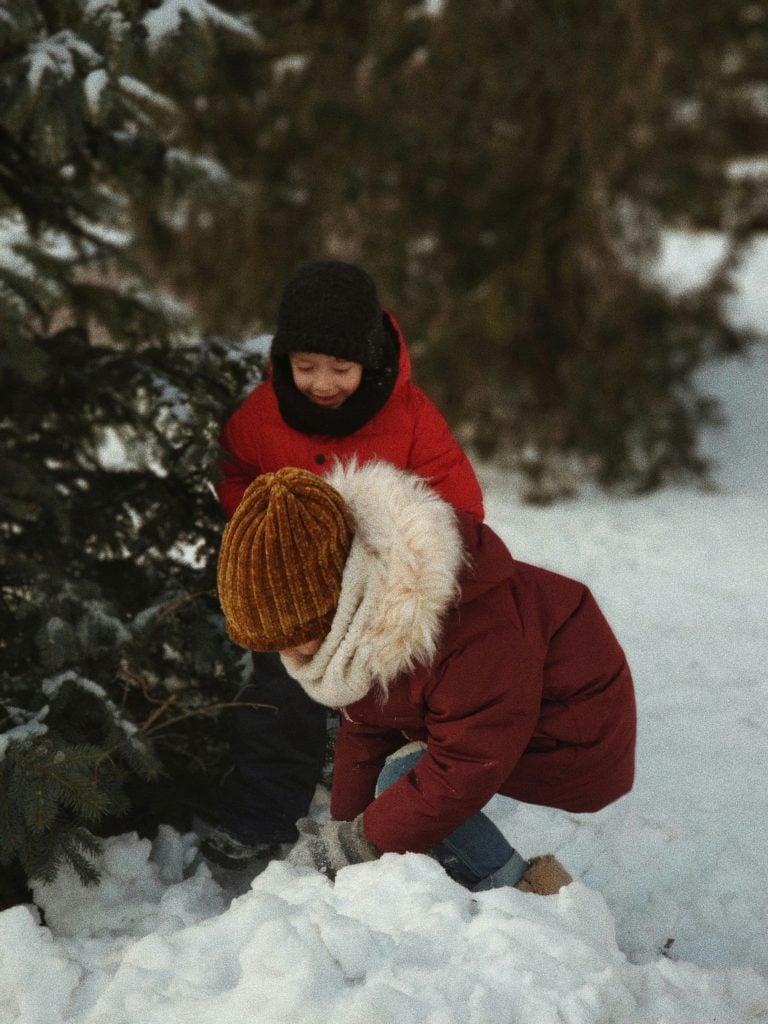
When kids need a little motivation to head outside on a chilly day, a nature scavenger hunt works wonders. Make a simple checklist (with words or pictures for pre-readers) of wintery things to find.
For example: a pinecone, an animal track, something green, a piece of bark, an icicle, a smooth rock, berries on a bush, a bird in a tree, something that feels rough, something that feels smooth. You can adjust the list based on whether you have snow or just dry cold weather.
Give each child a bag or basket to collect some of the items (or just to tick them off a list). Then head out to your backyard or a local trail and start the hunt! Kids this age love the thrill of searching for “treasure.” It turns an ordinary walk into an adventure mission.
In fact, parents often find that children who might normally complain about a walk will happily trot along if they’re on the lookout for nature’s clues. If there’s snow, look for animal footprints or bird feathers as special finds. If there’s no snow, you might hunt for mud puddles or moss instead.
The beauty of a scavenger hunt is that it’s flexible and free – you can do it multiple times with different items. It also helps kids slow down and observe details (like tiny leaf buds or lichen on a branch) which builds their attention and curiosity.
After the hunt, you can warm up inside with hot cocoa and have your child share their favorite find. This simple activity packs in fun, learning, and exercise, all in one chilly outing.
For tips on dressing your little ones for fall and winter adventures, check out minimalist toddler capsule wardrobe for fall & winter.
5. Animal Track Detective Game
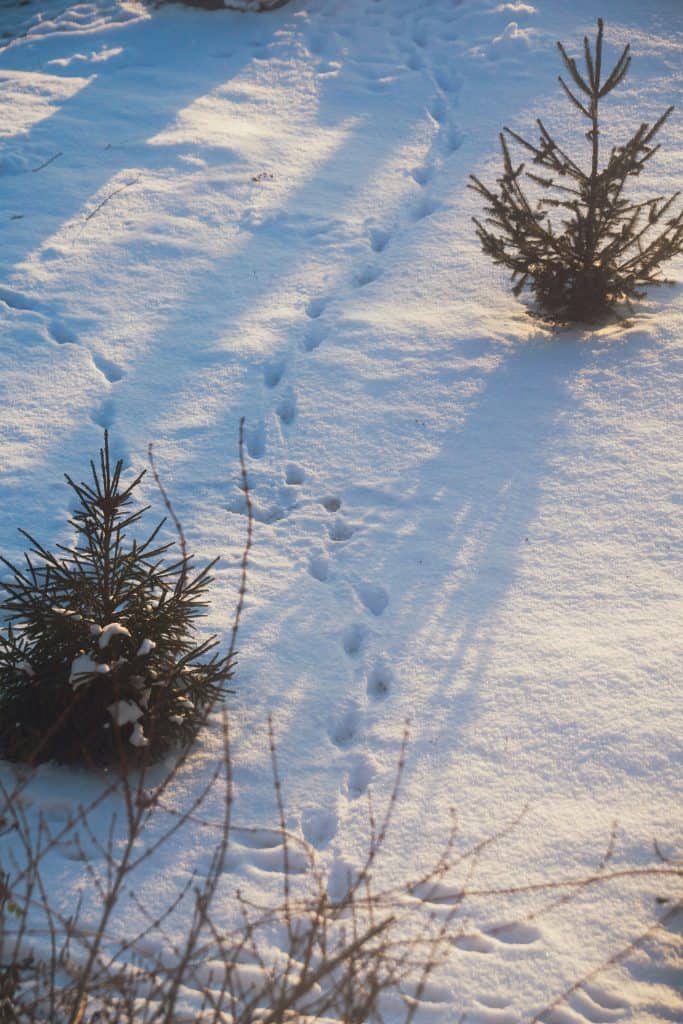
Become nature detectives by searching for animal tracks in your winter landscape. Kids are naturally fascinated by animal footprints – it’s like reading secret messages left in the snow or mud. After a fresh snow, bundle up and head outside to see what tracks you can find.
Ask your child: “What do you think made this track? How many toes do you see? Was it running or walking?” Turn it into a guessing game. Even toddlers love following a set of tracks to see where they go. If there’s no snow, you can still look for tracks in soft mud or wet sand.
Following footprints not only adds excitement to a walk but also teaches kids about local wildlife and their habits. This detective adventure sparks curiosity and can easily fill an afternoon with wonder – all with zero equipment needed except warm clothes and keen eyes.
6. Snow Kitchen and Nature “Soup”
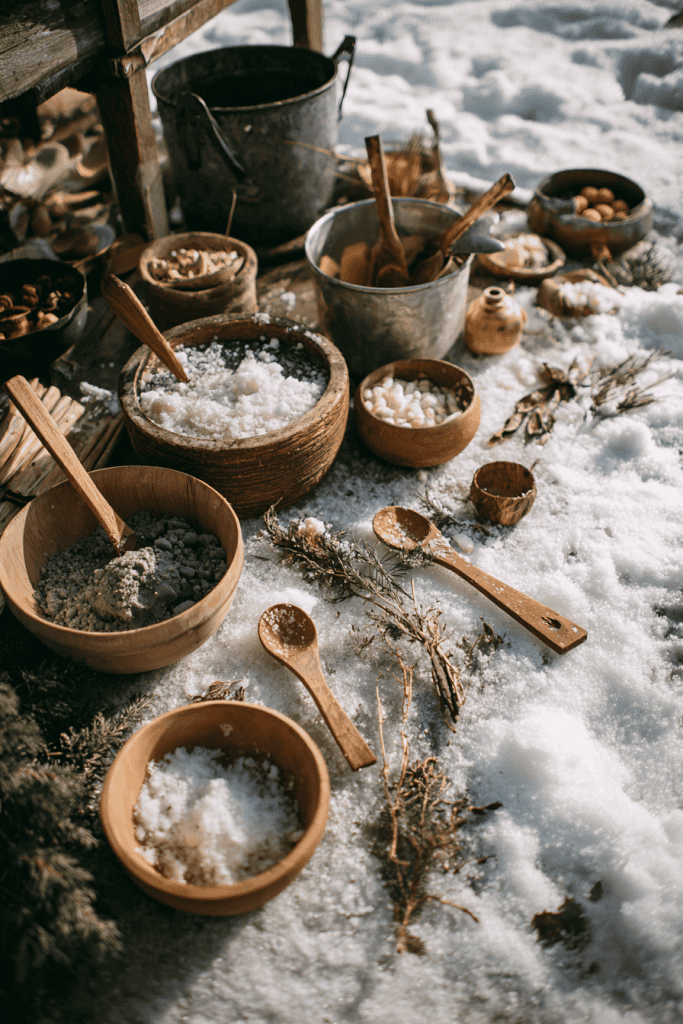
Outdoor pretend play gets even more interesting with snow and natural “ingredients”! Set up a snow kitchen for your child: gather a few old pots, pans, large bowls, spoons, and let them use snow (or cold water) plus whatever nature finds are around to cook up a make-believe feast.
Kids might mix pine needles, dried leaves, berries, and bits of bark into a big bucket of snow to create “nature soup.” They’ll stir, scoop, and “serve” bowls of this magical soup to family members or even to imaginary forest friends.
The beauty is that there’s no right or wrong way – some kids will focus on mixing and transferring, while others will launch into full restaurant pretend-play. The snow kitchen requires minimal prep – just repurpose some kitchen tools and head outdoors.
Overall, this activity encourages imagination, teamwork, and sensory exploration of natural textures.
You can also find more creative winter ideas in fun winter Sunday school crafts for kids.
7. Mini Snow Creatures and Winter Building
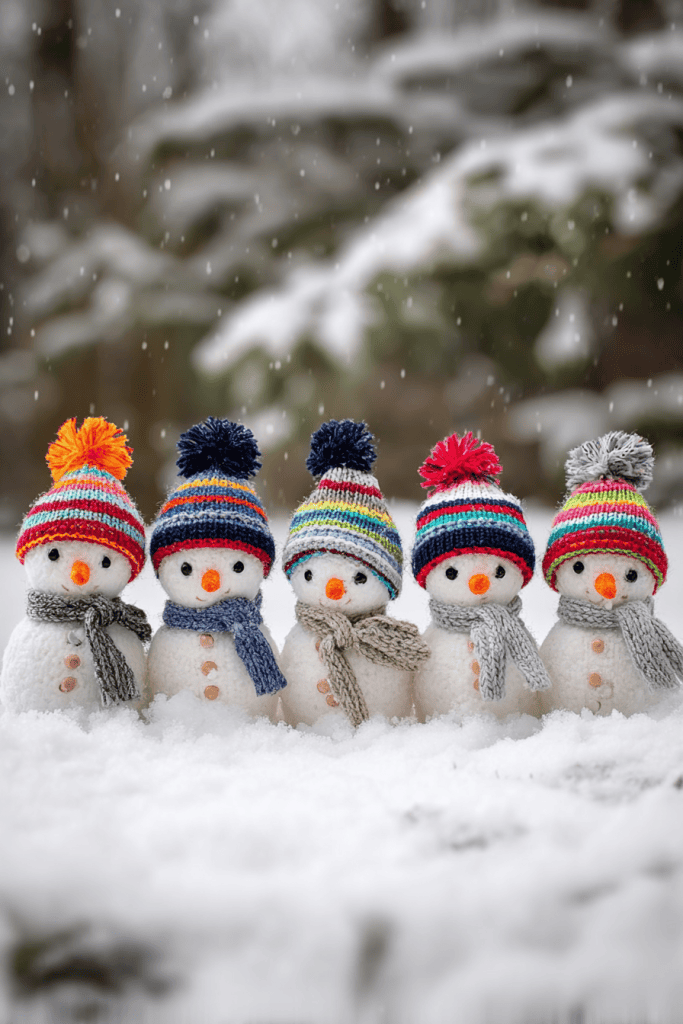
Building a giant snowman is a classic, but have you ever tried making a family of mini snowmen? Give them an old cookie sheet or tray as a base and have them form mini snowballs to stack into tiny snowmen.
They can decorate these mini creations with whatever’s on hand: little pebbles or sunflower seeds for eyes, a baby carrot or twig for a nose, and small sticks for arms. Make a whole village of snow-people or even snow animals – the imagination has no limit.
If there’s enough snow on the ground, another idea is to build a “snow fort” or maze: shovel or stomp pathways through the snow that your toddler can follow like a little maze. Even a small wall of snow can feel like a fort to a preschooler.
The key is providing a few simple props and letting kids lead the building process. They’ll practice problem-solving and enjoy tactile, hands-on fun with natural materials.
8. Colored Ice Block Buildings (Ice Castle Challenge)
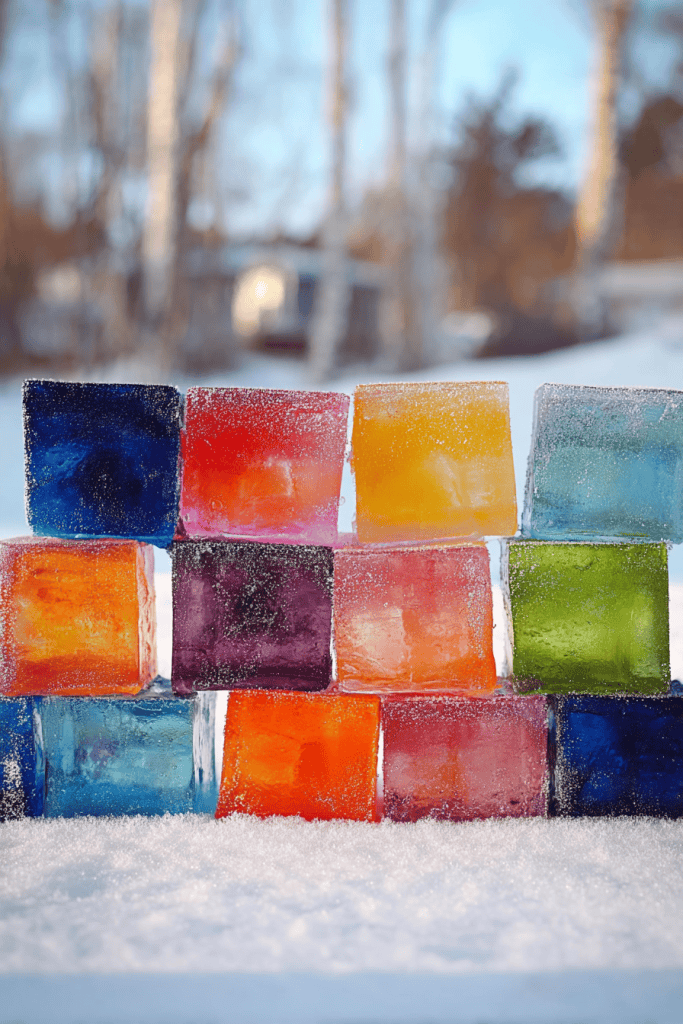
Here’s a truly unforgettable winter project: building a colorful ice castle. Freeze water with food coloring to make ice blocks, then stack them outside like LEGO bricks. Freeze the containers overnight, either outside (if below freezing) or in your freezer.
Once solid, pop out the brilliantly colored ice blocks. Kids can arrange the ice blocks to create towers, walls, or any structure. If it’s cold enough, the blocks will stick together with a little water as glue.
Even preschoolers can manage stacking the blocks, and older kids might get very intricate with their designs. This activity combines art, science, and engineering. For added fun, try a nighttime twist: shine a flashlight or place a tea light behind the ice castle in the evening – the colored ice will glow!
Since little hands can get chilly while building, winter is the perfect time to check out our DIY natural moisturizer to keep skin cozy and protected after outdoor play.
9. Magic Frozen Bubbles Experiment
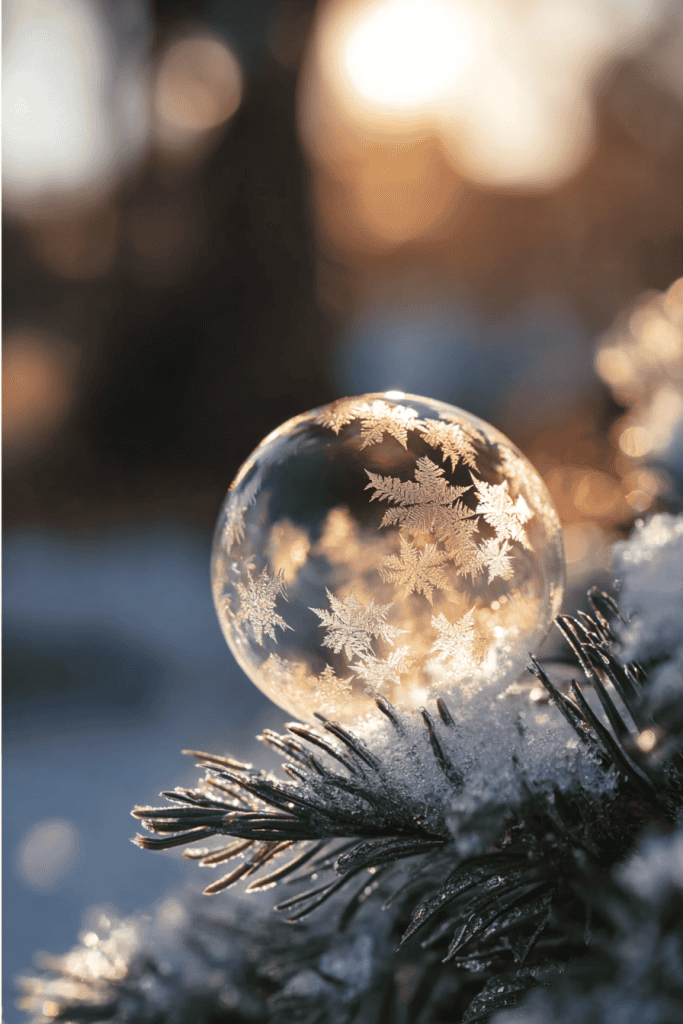
Watching a soap bubble freeze into ice is pure winter magic and an awesome mini science experiment for kids. On a day when temperatures are well below freezing, bundle up and head outside with some bubble solution and wands.
Have your child blow bubbles into the cold air and observe what happens when the bubbles land on the snow. They’ll be amazed to see a normally fragile bubble turn into a glass-like orb. Make it a game: who can catch a bubble on the wand and watch it freeze?
This activity is very low-prep and provides a chance to talk about science: the water in the bubble is freezing, forming ice crystals. Overall, frozen bubbles turn a normal day into a winter wonderland science show.
10. Erupting Snow Volcanoes
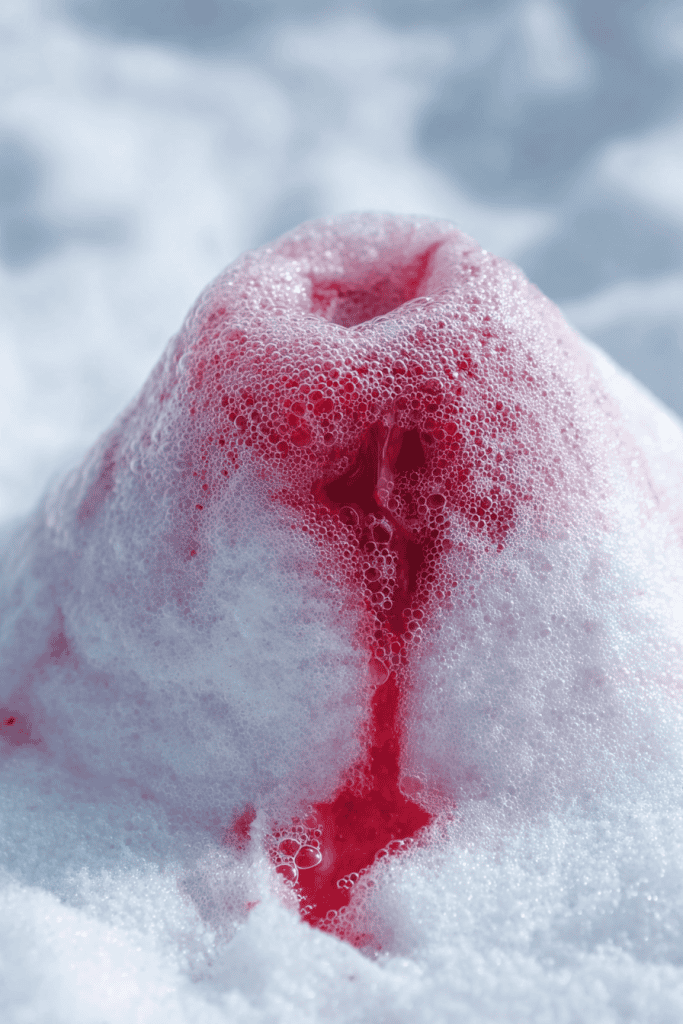
Creating a snow volcano is an exciting way to mix play and a dash of science.
Gather a small plastic cup or bottle and pack snow around it to form a volcano shape. Have your child help load the “volcano” with baking soda, dish soap, and a few drops of food coloring. Stand back and pour in vinegar!
The chemical reaction will cause fizzy, colorful “lava” to overflow and run down the snow volcano’s sides. Kids absolutely love this and will likely ask to do it again. If you don’t have snow, you can do the same experiment with a dirt or sand pile, or even on a tray inside.
This activity is a wonderful way to get kids excited about chemistry and cause-and-effect.
And while the snow melts, you can plan ahead for cozy indoor fun with best Montessori Christmas gifts for babies and toddlers to keep the learning and play going all winter.
Get Outside This Winter!
Winter nature play is all about embracing the season and finding joy in what’s readily available – snow, ice, sticks, pinecones, and a big imagination.
Remember to dress warmly in layers and adjust the play time to your child’s comfort, but don’t shy away from going out – as long as it’s reasonably safe, the benefits of outdoor play far outweigh staying cooped up indoors.
Plus, as a parent you’ll be making priceless memories with your little ones – imagine the giggles of your toddler painting a snowman blue, or the pride of your five-year-old when a bird visits the feeder they made.
Those moments are truly unforgettable. So this winter, grab your coats, step outside, and try one (or all!) of these nature play ideas. With a spirit of adventure and a little creativity, the coldest days can turn into the most cherished family playdays.
Stay warm, have fun, and happy winter exploring!
FAQs
How should I dress my toddler or preschooler for outdoor winter play?
Dress in layers: a moisture-wicking base, a warm middle layer, and a waterproof/windproof outer layer. Add mittens, a hat covering the ears, and insulated boots. One extra layer than an adult is a good guide. Check comfort indoors first, then monitor hands, feet, and face outside. Layering lets you adjust if they get too warm or cold.
What if we don’t have snow? Can we still do these activities?
Yes! Many activities adapt to snow-free winter. Try scavenger hunts for leaves, acorns, or birds. Snow volcanoes can be dirt or sand. Snow painting becomes chalk or water on frosty surfaces. Ice activities can use frozen blocks or sun catchers from your freezer. Use whatever nature is available – sticks, rocks, pinecones – to make outdoor play fun.
How cold is too cold, and how long can kids stay outside?
Above freezing (32°F / 0°C) = comfortable for longer play with breaks. 20–32°F (-6 to 0°C) = shorter sessions, 20–30 min with warm-ups. Below 20°F (-6°C) = very limited outings, 15–20 min max. Watch for shivering or cold extremities. Keep kids moving and hydrated, and adjust based on comfort and wind chill.
My child resists going outside. How can I get them excited?
Make it fun and purposeful: treasure hunts, science experiments, or “missions.” Let them help choose hats, snacks, or gear. Start with short outings, invite friends, and add warm rewards like hot cocoa. Turn dressing into a game, be enthusiastic, and validate feelings. Once outside, engaging activities help them warm up and enjoy themselves.
Why is winter outdoor play worth it?
Fresh air and sunlight boost vitamin D and mood. Outdoor play develops motor skills, creativity, problem-solving, and resilience. Kids learn to adapt to slippery surfaces or wet snow. Winter play promotes better sleep, energy release, and memorable experiences like snow angels or frozen bubbles. Safety first (warm clothes, monitor conditions), but winter adventures are healthy and fun.