
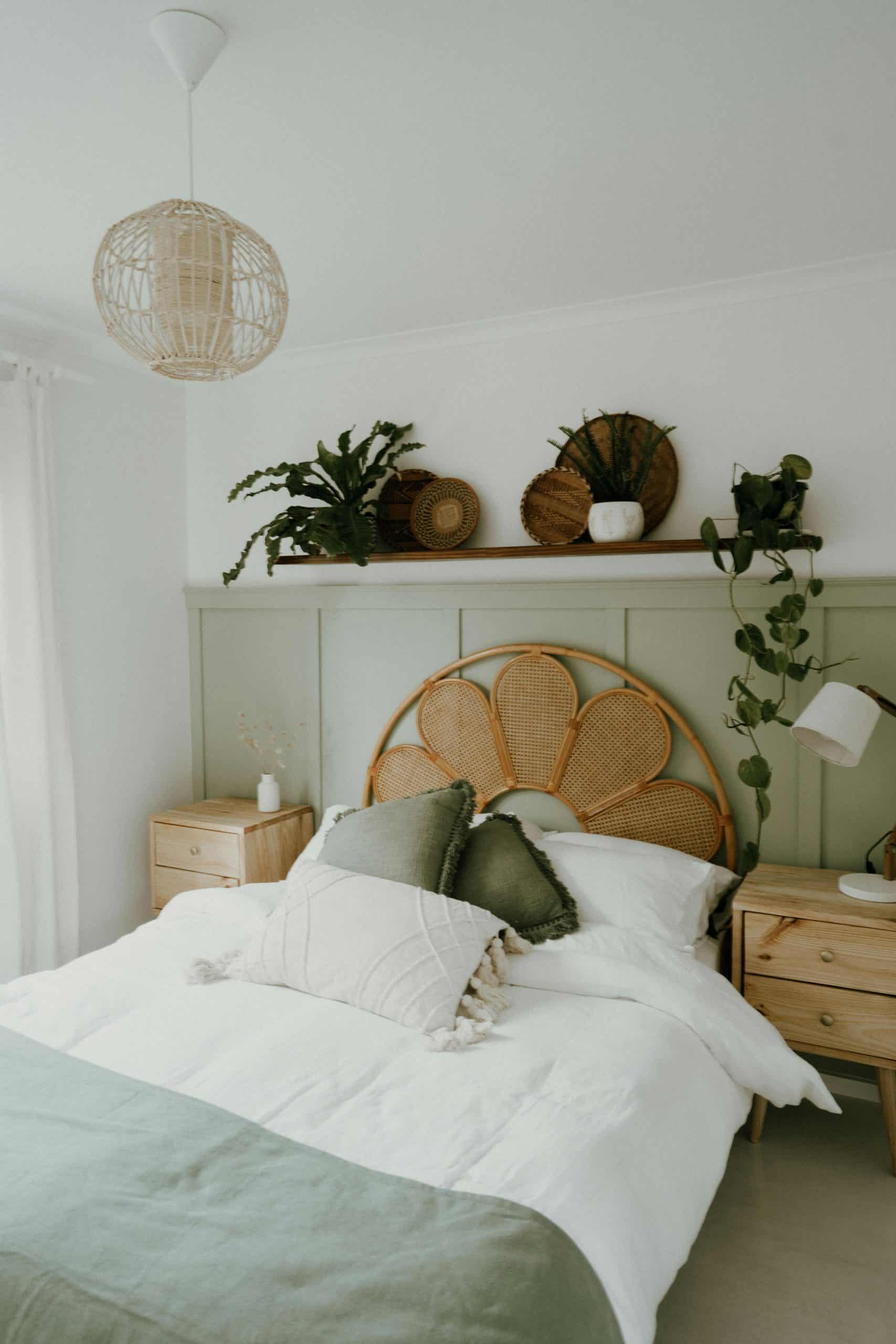
If you’re on a journey to a healthier, more non-toxic home, you’re in good company.
I’ve always been drawn to organic, natural, and low-toxic living, and over the years I’ve found small swaps that make a surprisingly big difference.
In this post, I’ll share those life-changing tips with you!
We’ll explore why a non-toxic bedroom is so important, and how simple swaps like cotton sheets, real sheepskin rugs, jute mats, linen curtains, and even old-school light bulbs can make a huge difference.
By the end, you’ll see how creating a low-tox home is about thoughtful changes that lead to better sleep, cleaner air, and peace of mind.
Disclosure: Some of the links in this post may earn me a small commission if you choose to make a purchase, at no extra cost to you. Thank you for supporting my work!
The Hidden Toxins in Your Bedroom
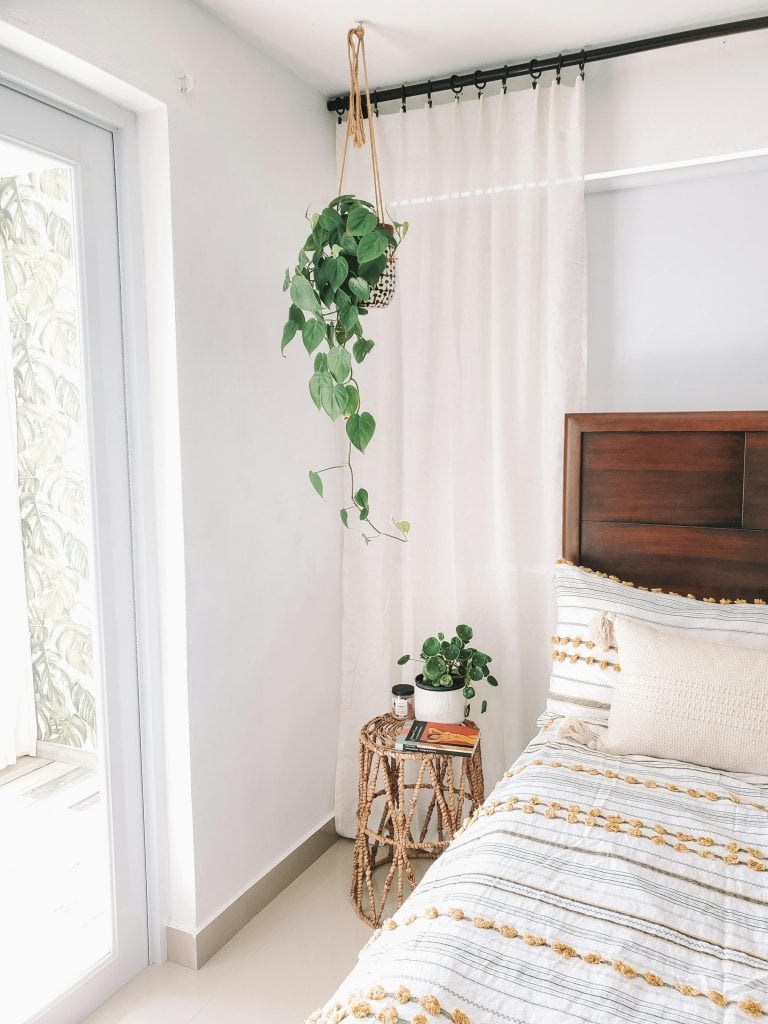
Our bedrooms are supposed to be the safest, coziest rooms in the house… but they’re often where a lot of hidden toxins quietly pile up.
When you think about it, it makes sense: we spend about a third of our lives in bed, and around 90% of our time indoors overall.
Studies show that indoor air can be 2–5 times more polluted than outdoor air, sometimes even higher.
So whatever is off-gassing, shedding, or floating around in your bedroom air is something you’re breathing for hours every single night.
Let’s peek behind the cozy pillows and fluffy throws and talk about what might really be lurking there.
1. “Sleeping in Plastic”
For most of us, the bed is the biggest toxin source in the bedroom.
Think of all the soft surfaces on your bed: sheets, pillowcases, blankets, duvet inserts, mattress toppers.
If they’re made from polyester or other synthetic fibers, they’re essentially a form of plastic.
Polyester is created from petrochemicals and processed with a cocktail of solvents and catalysts like antimony (a toxic metalloid); traces of these can remain in the finished fabric.
A few hidden issues with synthetic bedding:
- Poor breathability and more night sweats – Plastic-based fibers don’t breathe well, so they trap heat and moisture next to your skin. That “hot, sticky” feeling or waking up damp? Very often, that’s your polyester bedding, not your hormones.
- Skin irritation – Polyester and the dyes/finishes used on it can act as irritants. People with sensitive skin, eczema, or dermatitis often find synthetics make them itchier and redder compared to natural fibers like cotton or linen.
- Microplastics in your space – Every time you wash synthetic sheets or blankets, they shed microplastics – tiny plastic fibers that wash into waterways and can eventually end up in our food and even our bodies. A single laundry load of synthetics can release hundreds of thousands of microfibers.
Then there’s the mattress itself.
Many conventional mattresses and foam toppers are made from polyurethane foam and treated with flame retardants and other additives.
These chemicals slowly migrate out of the foam and accumulate in household dust as “semi-volatile organic compounds” (SVOCs).
Some flame retardants and plasticizers (like certain phthalates) are linked to hormone disruption, developmental effects in children, and other long-term health concerns.
So when you and your kids snuggle into bed at night, you’re not just surrounded by softness – you may also be surrounded by plastic fibers, microplastics, and off-gassing chemicals.
2. The Air You Breathe
Your bedroom air may look clean, but there’s often a lot going on at the microscopic level.
Many everyday items release volatile organic compounds (VOCs) – gases that evaporate into the air at room temperature.
Common indoor VOCs include formaldehyde, benzene, toluene, and others. They’re found in:
- Pressed-wood furniture & closets (think particleboard dressers, MDF headboards) that can off-gas formaldehyde
- Paints and finishes on walls, trim, doors, and furniture
- Adhesives and finishes on engineered flooring and laminates
- Certain cleaning products and disinfectant sprays
Short-term exposure to VOCs can cause headaches, eye/throat irritation, dizziness, and nausea; long-term exposure has been associated with damage to the liver, kidneys, and nervous system, and some VOCs are classified as carcinogens.
Then there are the synthetic fragrances – plug-in air fresheners, room sprays, strongly scented laundry detergents, and even some scented candles.
Those cozy “fresh linen” or “lavender vanilla” scents are often made with complex mixtures of fragrance chemicals and phthalates, used to make the scent last longer.
Phthalates are known endocrine disruptors; they can interfere with hormones and have been linked in studies to reproductive issues, metabolic problems, and thyroid disruption.
Fun (not-so-fun) fact: when you spray or plug in an air freshener, you’re not just covering up odors – you’re actually adding VOCs and phthalates into your bedroom air, where you then inhale them for hours while you sleep.
3. Carpets, Rugs, and Dust
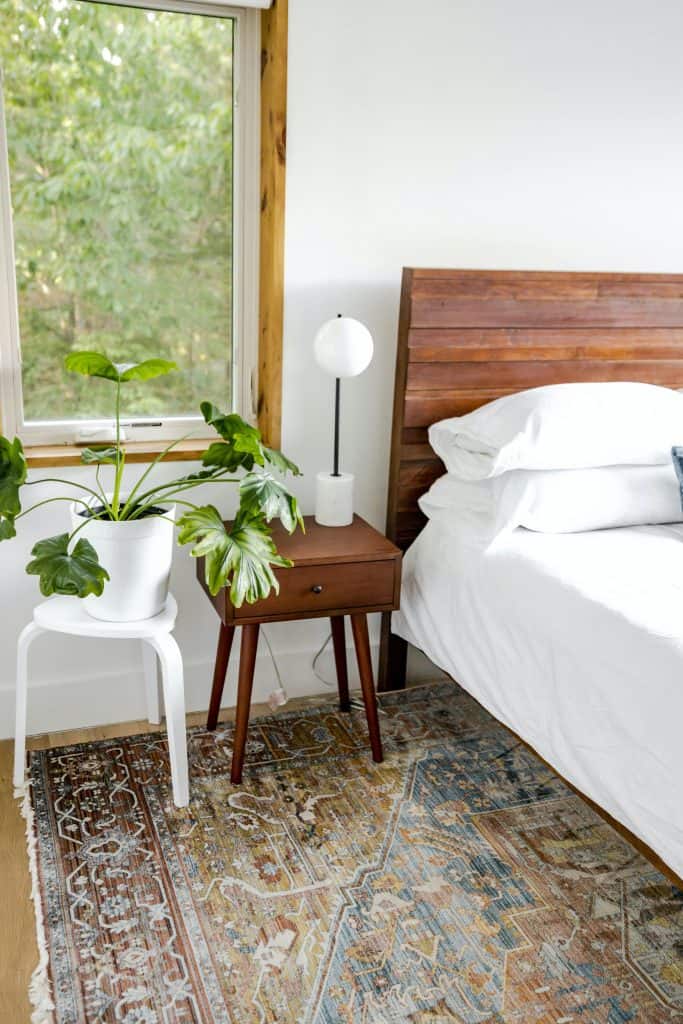
That cozy carpet or big upholstered headboard often act like sponges for chemicals and allergens.
Wall-to-wall carpets and many synthetic rugs can:
- Be made of nylon, polyester, or polypropylene (all plastics)
- Be treated with stain repellents, flame retardants, and antimicrobial coatings
- Use foam pads and adhesives that off-gas VOCs and SVOCs
Over time, these chemicals plus everyday pollutants (like outdoor pollution that rides in on shoes, or residues from cleaning products) end up in household dust. Dust is where researchers often find accumulated flame retardants, phthalates, and other semi-volatile chemicals.
Every time you walk across the rug, make the bed, or your toddler wrestles on the floor, that dust gets stirred back into the air and breathed in. Kids are especially vulnerable: they spend more time close to the floor, have developing bodies, and tend to put hands and toys in their mouths.
4. Blue Light & Nighttime Stressors
Not a “toxin” in the chemical sense, but still a hidden disruptor: light.
Bright, cool-white LEDs and screen light (phones, tablets, TVs) in the bedroom are rich in blue light, which tells your brain it’s daytime. Blue light at night can suppress melatonin, the hormone that signals sleep, and throw off your circadian rhythm.
So that super-bright overhead LED or late-night doom-scrolling doesn’t just make it harder to fall asleep – it’s also a form of environmental stress that your body has to fight against, night after night.
…
Taken one by one, each of these things – polyester sheets, a foam mattress, a plug-in air freshener – might not sound like the end of the world.
But together, they create a constant, low-level exposure that your body has to deal with every single night.
And remember, we’re all spending most of our time indoors, with indoor pollutant levels often higher than outdoors
The goal here is to help you see what’s invisible, so you can start making gentle, doable changes – swapping plastic-heavy bedding for natural fibers, trading synthetic fragrances for fresh air and plants, choosing rugs and curtains made from real, breathable materials.
And that’s exactly what the next section is all about: simple, non-toxic bedroom swaps that turn your space from a silent stressor into a truly healing sanctuary.
8 Swaps to Make Your Bedroom Low-Toxic
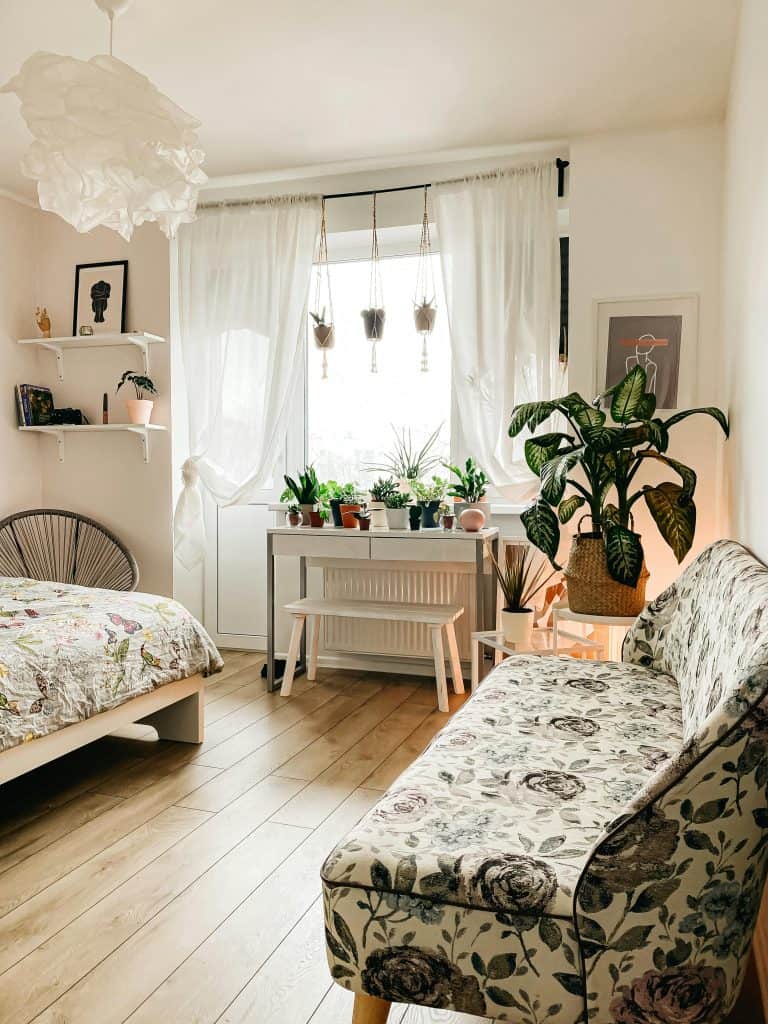
Now that we’ve peeled back the curtain on what’s really hiding in our bedrooms, let’s talk about solutions.
A healthier bedroom is often just a few thoughtful swaps away – the bedding that touches your skin, the air you breathe while you sleep, and the surfaces your kids crawl and play on all day.
These are the exact swaps we’ve made in our own home, and they’ve completely changed how we sleep and feel.
Swap #1: Replace Polyester Blankets With a Natural Down Duvet
Polyester seems harmless because it’s soft and fluffy, but it comes with some hidden downsides. It doesn’t breathe the way natural materials do, so instead of regulating your temperature, it traps heat and moisture against your skin.
That’s why polyester blankets often make you feel sweaty, clammy, or “sticky,” even if the room is cold. And because it’s a petroleum-based plastic, polyester can shed microfibers and even off-gas small amounts of chemical residues over time.
Basically, the more polyester you sleep in, the more you create a warm, humid environment where your skin can’t breathe – and your body ends up working harder just to stay comfortable.

- Baffle Box Construction: Baffle walls create maximum loft and prevent shifting.
- 260 Thread Count: Tightly woven fabric keeps down from escaping.
- 100% Cotton: Soft, breathable cotton shell for better airflow.
- Corner Loops: Loops on all four corners to secure your duvet cover.
- White Goose Down: High-quality, bright white fill for superior comfort.
- 575+ Fill Power: Provides excellent insulation and long-lasting loft.
- Guaranteed Quality: Backed by a 20-year warranty against defects.
Back when we lived in New York, my husband and I kept our bedroom cold at night. What we did was pile on one, two, three, four blankets on top of us. But the funny thing is… polyester never actually kept us warm. We would even throw blankets on top of ourselves.
We were using a bunch of polyester blankets. Basically, everything was polyester. Our sheets, our pillows. We were just sleeping in plastic. And I wanted to move out of that.
Once we finally switched to a natural Canadian down duvet insert, everything changed. Instead of layering heavy synthetic blankets, we swapped them all for ONE breathable, fluffy, airy-down duvet plus organic sheets and a duvet cover. That’s it.
And suddenly, we were warm… comfortably warm. Our bed didn’t feel suffocating anymore. And the difference in how lightly we slept and how much more naturally our bodies regulated temperature was unbelievable.
The switch from polyester to natural down removed so much unnecessary bulk, plastic, and trapped moisture from our bedroom. It feels like our bed can finally breathe – and so can we.
Benefits of the Natural Down Duvet:
- Superior insulation + natural warmth without weight – Down feathers trap air in tiny pockets, giving excellent insulation that keeps you warm without heavy bulk. That means you get cozy warmth even on cold nights, without having to pile on multiple blankets.
- Better breathability and temperature regulation – Unlike polyester, down lets air circulate more naturally, which helps your body regulate temperature. This reduces the “hot and sweaty” nights you often get under synthetic comforters.
- Luxurious comfort and softness – Down tends to feel really plush, lofty, and “cloud-like,” giving you that cozy, hotel-bed kind of comfort that synthetics often fail to match.
- Long-lasting and durable – A good-quality down duvet (with proper care) can maintain its loft and insulating properties over many years, making it an investment rather than a disposable item.
- Reduced synthetic/ plastic exposure – Because the filling is natural (down feathers), you avoid exposure to plastic fibers, microplastics, and potential off-gassing from synthetic materials – all common issues with polyester bedding.
- Lightweight warmth for cold climates or chilly nights – Especially useful if, like you, you keep your bedroom cool at night. A down duvet gives warmth without the heaviness or clumsiness of multiple synthetic blankets piled on.
- Better sleep comfort overall – Because of the natural loft, breathability, and warmth balance, down bedding often leads to more restful sleep – fewer sweaty nights, less tossing and turning, and a more comfortable sleep environment for you and your family.
- More sustainable (if cared for and ethically sourced) – Down is a natural material. When you choose a well-made down insert and avoid fast-fashion synthetic bedding, you’re opting for a product that can last for many years, reducing frequent throw-away cycles associated with cheap polyester bedding.
Swap #2: Replace Synthetic Sheets With Organic Cotton Percale Sheets

- 100% Organic Cotton: Lightweight percale weave for a cool, crisp feel. Softens with every wash for natural comfort without synthetics.
- Patented True Grip: Fitted sheet with strong elastic up to 18″ deep and “Smart Head/Foot Tag” for easy bed-making. Stays in place all night.
- Crisp & Cooling Percale: Breathable, naturally wrinkled texture. Ideal for hot sleepers and long-lasting durability.
- King Size Set: Includes 1 fitted sheet (78″ x 80″), 1 flat sheet (108″ x 102″), and 2 pillowcases (20″ x 40″). Perfect fit for king beds.
- Eco-Friendly & GOTS-Certified: Safe for sensitive skin, naturally breathable, durable, and sustainable bedding choice.
I’ll say this as clearly as possible:
This is my absolute favorite sheet ever. EVER.
I love them so much that I bought them for my kids, and eventually each of my children will have their own set. They’re that good.
These sheets feel luxurious, crisp, high-end, and unbelievably soft. Think of the beds at the nicest hotels – that cool, fresh, smooth feeling when you slide in? That’s what percale cotton gives you. It’s that subtle luxury that’s simple but elevated.
Once you sleep on real organic cotton percale, you will never want to go back to polyester again.
Yes, the price tag leans mid-range. But it’s absolutely worth it. Organic long-staple cotton is extremely durable, and if you care for these sheets, they will last you a very long time. That makes them an investment, not another “buy again next year” item.
And the best part: No synthetic fibers. No chemical finishes. Just breathable, natural, organic cotton against your skin all night.
Benefits of Switching to Cotton Sheets:
- Breathability & Comfort: Cotton allows air circulation, keeping you cooler in hot weather and cozy when it’s cool. No more waking up sweating – it’s a breathable fabric that helps regulate your body temp.
- Moisture-Wicking: Cotton fibers naturally absorb and release moisture. Night sweats are much less of an issue, as cotton sheets wick away sweat and dry quickly, so you stay comfortable.
- Gentle & Hypoallergenic: Great for sensitive skin, cotton is soft and typically free of the chemical irritants found in polyester. High-quality cotton (especially organic) has no harsh dyes or finishes, reducing the chance of allergic reactions.
- Fewer Toxins: With cotton, you avoid many of the VOCs and toxic treatments that come with synthetics. No worry of petrochemical off-gassing in the middle of the night. Organic cotton, in particular, is grown without pesticides and processed without formaldehyde, making it a top choice for a non-toxic bedroom.
- Durability & Easy Care: A good set of cotton sheets can last for years. They can be machine-washed repeatedly (actually getting softer with each wash) and don’t pill as easily. They’re sturdy and get that lovely lived-in softness over time.
Personal tip: If you’re making the switch, look for 100% organic cotton sheets or linen-cotton blends from reputable brands like the one I recommended. Certifications like GOTS (Global Organic Textile Standard) ensure the fabric meets strict non-toxic processing standards.
This way you can sleep soundly (literally!) knowing your bedding is truly non-toxic. Our bed is now decked with organic cotton sheets and I can’t imagine going back to polyester. The difference in air quality and comfort is noticeable.
Swap #3: Replace Plastic-Blend Duvet Covers With Quince’s Organic Airy Gauze Duvet Cover Set
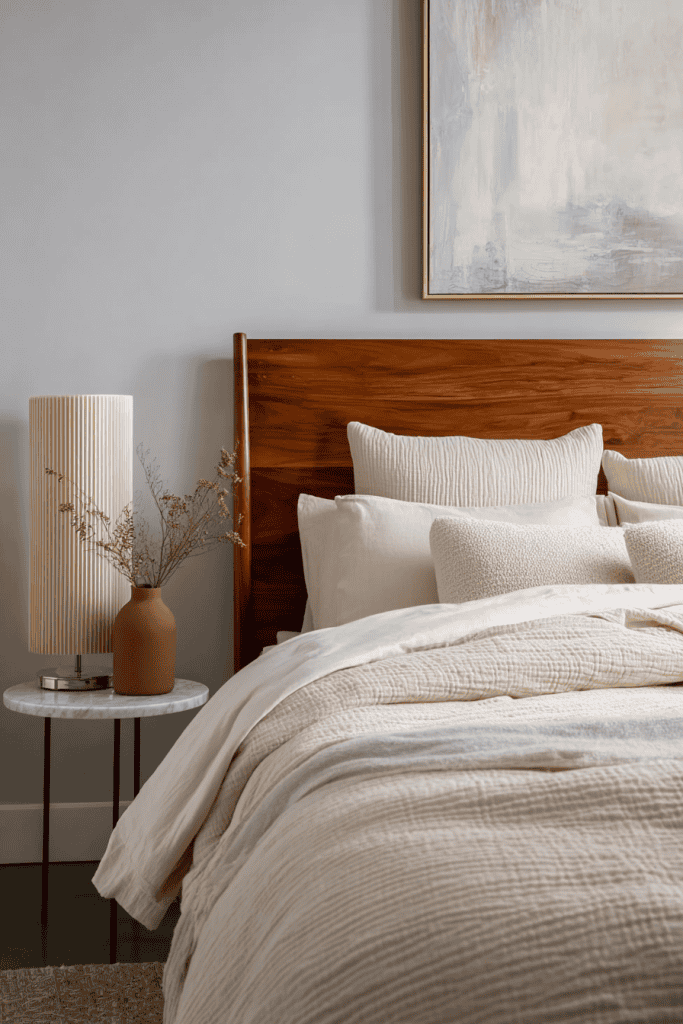
Duvet covers are one of those things we don’t think about much – you buy whatever looks nice, whatever matches your sheets, whatever fits the budget.
But when you think about it, your duvet cover is right up against your face, your chest, your skin – and if it’s made from polyester or blended synthetic fibers, that means hours of nightly contact with plastic-based materials and any chemical finishes they were processed with.
Synthetic duvet covers often come with wrinkle-resistant or stain-resistant coatings, and those can include chemicals you don’t necessarily want pressed against your skin for eight hours a night.
And beyond that, they simply don’t breathe. They trap heat, trap moisture, and create that “stuffy bed” feeling.
Switching to the Organic Airy Gauze Duvet Cover Set from Quince was like breathing new life into our bed.
This is the duvet cover we use right now, and it has been such a beautiful upgrade in every way. I chose the undyed, natural cotton color, which means even fewer chemical processes and a soft, earthy, calming aesthetic.
The first thing you notice is that it feels like you’re sleeping on a cloud.
The four layers of organic cotton gauze are incredibly fluffy, airy, and soft – pre-washed for that already-lived-in feel. It’s woven from the finest 100% organic long-staple cotton, which is what gives it that high-quality buttery softness and the strength to last.
Everything about this duvet cover is thoughtfully made. It’s STANDARD 100 by OEKO-TEX® certified, meaning it’s tested against a long list of harmful substances and made without the pesticides, dyes, or finishes you’d want to avoid.
Even the packaging is a reusable self-fabric bag, which I love because it cuts down on plastic.
And one more thing I appreciate: the factory uses renewable energy, recycles 95% of their water, and even upcycles fabric scraps into new fibers. It feels good knowing this swap isn’t just healthier for our home – it’s gentler on the planet, too.
The only caution is keep it away from pets. Organic gauze is soft and airy, but claws can snag it.
Benefits of the Better Swap:
- Four layers of breathable organic cotton gauze keep your bed cool and cloud-soft
- Free from synthetic fibers and harsh chemical finishes
- OEKO-TEX® certified and made from the highest-quality long-staple cotton
- Sustainably produced with renewable energy and water recycling
- Natural, undyed cotton is gentle on skin and ideal for a low-tox bedroom
- Thoughtful construction: corner ties, button closure, envelope shams
- Packaged without plastic, in a reusable cotton bag
If Swap #1 made our bed warmer and more comfortable, Swap #3 made it feel luxurious – soft, breathable, and refreshingly natural. It’s one of those upgrades you feel every single night.
Swap #4: Replace Polyester Carpets With a Natural Sheepskin Rug
Polyester carpets and faux “sheepskin” rugs might look soft and fluffy at first glance, but they’re still made of plastic fibers.
And that comes with a handful of issues: they don’t breathe, they trap dust, they off-gas, and they tend to feel warm, sweaty, and almost sticky when you lie on them for too long.
Synthetic rugs also shed microplastics over time, which get into your air, dust, and ultimately your lungs and home environment.

- Super Soft: Silky, luxurious sheepskin rug that complements all home decors.
- Adjusts to Seasons: Stays cool in summer and warm in winter for year-round comfort.
- 100% Sheepskin Fur: Made from authentic New Zealand sheepskin fibers.
- Suede Backing: Non-slip surface ideal for bedrooms, living rooms, or any space.
- Soft & Fluffy: Plush texture for ultimate indoor comfort underfoot.
Switching to real sheepskin rugs was one of the most comforting upgrades we’ve ever made. I have them everywhere and my toddlers lay down, rub up against it, and just play, wrestle on it, you name it
Each of my kids has, or will have, their own sheepskin rug. Two of them already sleep on one regularly, and my future baby will have a sheepskin waiting for them too.
They’re not just soft – they’re functional. Real sheepskin naturally regulates temperature, keeping little bodies warm in winter but cool in summer. No synthetic rug can do that.
And when you lie on a real sheepskin, you can genuinely feel the difference in comfort. If you ever take a nap on one, you quickly understand why people use sheepskin for pressure relief and natural support.
Aside from comfort, choosing a natural sheepskin means choosing a rug that won’t off-gas plastic chemicals or trap the same level of dust and allergens found in synthetic fibers.
Benefits of a Real Sheepskin Rug (vs. Synthetic):
- Natural Comfort: Unbeatably soft and plush texture. The wool fibers provide cushioned support and cozy warmth. It’s like stepping onto a warm cloud – pure bliss for your feet.
- Temperature Regulation: Wool’s hollow fibers insulate in winter and breathe in summer, helping keep you warm when it’s cold and cool when it’s hot. No synthetic rug can adapt to seasons like that.
- Odor-Resistant & Hypoallergenic: Thanks to natural lanolin, real sheepskin repels odors and inhibits dust mites and bacteria. It’s a great choice for allergy sufferers or anyone sensitive to household dust.
- Durability: A genuine sheepskin rug will last for years. The fibers are resilient and don’t shed or detach the way faux fur does. It can handle daily use (even rough-and-tumble play from kids or pets) without falling apart.
- Non-Toxic & Eco-Friendly: Sheepskin is a byproduct of food livestock in many cases, so it’s part of a natural cycle. It biodegrades at end of life (unlike a polyester rug). And it doesn’t contain the toxic fire retardants or glues that some synthetic rugs have. No plasticky chemical smell – just a mild, natural wool scent.
If you love the look of a fluffy rug but want to avoid both toxins and ethical concerns, look for sheepskins that are ethically sourced (some brands use sheepskins that would otherwise be waste from sheep farmers).
There are also wool pile rugs on natural cotton backing as an alternative. But in terms of pure natural luxury, a real sheepskin is hard to beat.
Swap #5: Replace Synthetic Area Rugs With a 100% Natural Jute Rug
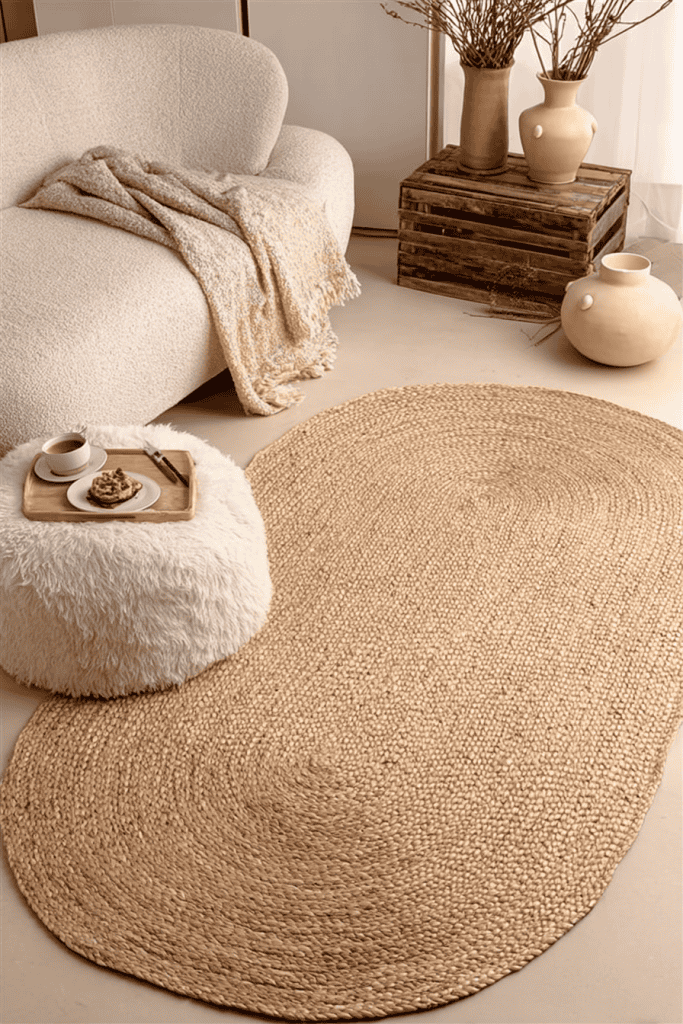
Synthetic area rugs (especially polypropylene, nylon, or polyester) come with a long list of hidden issues.
Most of them are made from petroleum-based plastics, which means they can off-gas VOCs (that “new rug smell”), shed microplastics, and collect dust far more than natural fibers.
The backings and adhesives used on synthetic rugs can also contain chemicals you don’t necessarily want settling into the air you breathe every day. And over time, synthetic rugs tend to flatten, pill, trap odors, and lose their shape.

- Add stylish addition to any room in your home with our handmade natural area rug.
- Feel cozy and relaxed with this natural fiber, eco friendly and solid vintage rug.
- Perfect for use as a area rug in your living room, bedroom, or any other high-traffic area of your home.
- These rug is hand woven or hand braided so each rug is unique in sense of pattern and design. Slight difference in size.
Swapping to a 100% natural jute rug was one of the easiest, most grounding upgrades we made – and visually, it adds instant warmth to a room. Jute is a plant-based fiber, completely biodegradable, and naturally textured in a way that just feels organic and calm.
This particular rug is handmade from pure jute fibers, which gives it that solid, vintage-inspired look that fits beautifully into any room.
What I love most is how cozy and relaxed a jute rug makes a space feel. There’s this earthy, almost spa-like calm that comes from using natural fibers in your home – and jute has that presence.
It’s also a great option for high-traffic areas like living rooms, bedrooms, or hallways because it’s naturally strong and durable. Ours has held up beautifully to kids, foot traffic, and everyday life.
And because each rug is handwoven or hand-braided, they all have their own unique pattern and personality. No two pieces look exactly the same, which adds character and charm instead of that mass-produced, overly perfect look of synthetic rugs.
Top Benefits of Jute Rugs:
- Chemical-Free & Low VOC: No toxic glues or finishes – just pure plant fiber. Jute rugs don’t off-gas nasty chemicals, keeping your indoor air cleaner (great for a non-toxic bedroom or any room).
- Eco-Friendly: Jute is sustainable, rapidly renewable, and biodegrades at end of life. Its cultivation even helps the environment by absorbing CO₂ and requiring little water or pesticides. You get style and a smaller carbon footprint.
- Durable & Low Maintenance: Ideal for high-traffic areas – jute’s strong fibers hold up under foot. Many are reversible for extended use. They hide dirt well and only need simple care (vacuum, shake, spot-clean).
- Family/Pet-Friendly: No harmful chemicals for kids to inhale during playtime. Jute’s textured surface is tough against claws and toys, and it doesn’t produce static that would attract pet hair or dust.
- Naturally Beautiful: Brings an earthy, calming aesthetic to your home. The neutral color and rich texture of jute can complement any design scheme, adding coziness and warmth to your space.
In short, jute rugs offer big benefits over synthetic carpets – you avoid the “high-toxic” aspects (like VOC emissions and forever chemicals) and gain a natural, sustainable feature for your home.
And as a bonus, it feels good to support eco-friendly materials.
Swap #6: Replace Synthetic Curtains or Throws With Breathable Linen
Curtains are another unsuspected source of household toxins.
I hadn’t thought much about mine until I learned that many conventional drapes are made of polyester or treated cotton with loads of chemicals (flame retardants, wrinkle-resistant treatments, PVC coatings for blackout lining, etc.).
If you’ve ever opened a new shower curtain or polyester drapery and been hit with a strong chemical odor – that’s the stuff we’re talking about. Those chemicals can release into your home for months, contributing to indoor air pollution. Not cool, right?

- Premium Material: 100% French flax linen for refined elegance in your home.
- Tailored Size: 52″ W x 63″ L, crafted with attention to detail for a perfect fit.
- Flexible Hang: Multiple hanging options: Back Tab, Rod Pocket, or Hook Ring/Drapery Pins.
- Impeccable Look: Softly filters sunlight, offers privacy while maintaining a natural view.
- Easy Care & Includes: One unlined panel per box, machine washable (30℃/89°F), optional ironing, 3″ rod pocket, 4″ bottom hem.
That’s why I love the simple switch we made to a 100% linen curtains.
I swapped out heavy synthetic curtains for simple flax linen ones, and the difference was immediate: the room smelled fresher, felt airier, and even looked more serene with that soft, flowy linen texture.
Why Choose Linen Curtains (over Synthetic):
- Chemical-Safe Home: Linen curtains are generally free of the toxic coatings that polyester or vinyl curtains have. No flame retardants, no heavy-duty pesticides, no VOC-releasing plastics – just pure flax fiber, especially if you buy organic or OEKO-Tex certified. This means better indoor air quality and fewer irritants for your family.
- Breathable & Comfortable: They allow air flow and prevent stuffiness, while also filtering light and insulating heat/cold. This can improve your comfort and even save a bit on energy (less need for blasting AC or heating when your curtains help regulate temp naturally).
- Durable & Long-Lasting: Linen’s strength means your curtains won’t need replacement for a long time, reducing waste. They resist static cling and don’t trap dust like synthetics, staying fresh longer. With care, they can last many years (and they’ll get softer and more beautiful with age).
- Eco-Friendly & Biodegradable: Made from a renewable crop with lower water and pesticide use, linen is a sustainable choice. At end of life, the fabric will biodegrade rather than sit in a landfill leaching chemicals. It’s a low-tox home win and a win for the planet.
- Timeless Aesthetic: Linen curtains bring natural beauty to your space – a soft, neutral texture that enhances any decor style. They create a light, airy atmosphere and let you avoid ugly plastic blinds or synthetic drapes. Instead, you get an elegant, toxin-free window treatment that elevates your room.
Little changes like this really do create a healthier sanctuary at home.
Swap #7: Replace Plug-In Air Fresheners With Snake Plants
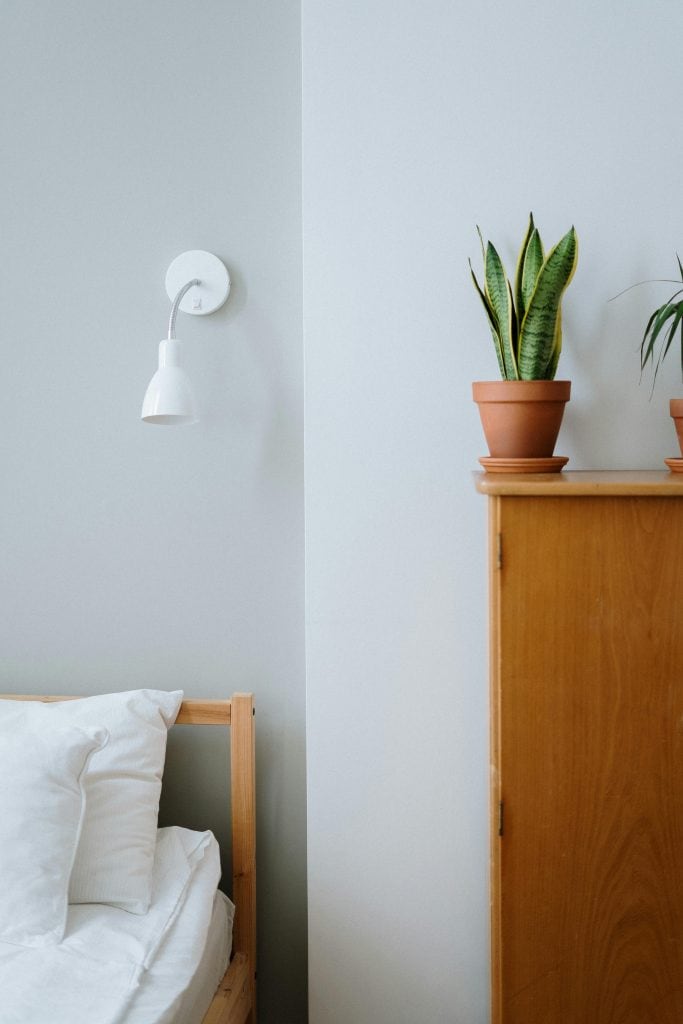
Plug-in air fresheners, sprays, candles, and scent diffusers might make a room smell clean, but most of them actually release synthetic fragrance chemicals and VOCs into the air – things like phthalates, solvents, and artificial fragrance compounds.
These chemicals can linger in the air, settle into dust, and get inhaled for hours while you sleep. For a low-toxic bedroom, the last thing you want is a “freshener” that’s actually adding pollutants.

- Representative Pictures: All listings include accurate photos of what you’ll receive.
- Fully Rooted Plant: Comes in a 4″ pot, ready to grow in your home.
- Enhance Your Environment: Adds natural beauty and greenery to any space.
- California Tropicals: High-quality, vibrant plants sourced locally.
- Perfect Gift: Ideal for any occasion, bringing life and charm to homes.
That’s why I switched to snake plants, and honestly, it’s one of the easiest, lowest-effort swaps you can make.
Snake plants are natural air purifiers – they help clean the air rather than cover odors up with fragrance. I keep one in every room, and especially in bedrooms, because they thrive on neglect and quietly support cleaner, healthier air.
I love them because they’re approachable even if you don’t have a green thumb. They don’t require much light, rarely need watering, and keep doing their thing in the background. Instead of breathing in artificial scents all night, you’re letting the room breathe naturally.
A snake plant:
- Filters common indoor pollutants like benzene, formaldehyde, xylene, toluene, and trichloroethylene (found in things like furniture, cleaning products, paints, and plastics).
- Releases oxygen at night, making it especially nice for bedrooms.
- Traps dust and airborne particles on its thick leaves, which you can simply wipe off.
- Requires almost no care – it’s one of the most low-maintenance houseplants out there.
Is one plant going to fix all your air quality issues? Not by itself, but as part of a low-tox home strategy (along with ventilation, natural materials, and reducing chemical sources), snake plants are such a lovely, living ally – without plugging anything into the wall.
Swap #8: Replace LED/Cool-White Bulbs With Warm Incandescent Bulbs

- Vintage Style Edison Bulbs: Amber-colored bulbs with soft yellow light, perfect for warm, cozy settings like bedrooms and living rooms.
- Easy to Install & Features: A19 bulbs with E26 base, 240lm (dimmable), 2100K amber glass, 60W, CRI 80, compatible with most fixtures.
- Safe Packaging: Includes pearl cotton protection for safe shipping; full compensation if damaged during transport.
- Application Scenarios: Ideal for home or commercial decoration, indoors or outdoors—pendant lights, wall sconces, kitchens, restaurants, and bedrooms.
- After-Sale Service: High-quality support for any issues like package breakage or functionality concerns; satisfaction guaranteed.
Okay, this one surprises a lot of people: we made a conscious decision to switch many of our lights back to incandescent light bulbs.
Wait, aren’t those the old-fashioned, energy-guzzling bulbs we’re all supposed to phase out? Well, yes – incandescent (and their halogen cousins) are the classic bulbs with the filament that glows.
Most people have moved to LEDs or fluorescent bulbs for efficiency. We did too, for a while, but then I started learning about the effects of lighting on health.
And I realized that when it comes to creating a low-toxic, natural living environment, those “inefficient” bulbs might actually be the healthiest choice for us, especially in areas like the bedroom and evening lighting.
Let me explain why we’ve embraced incandescents (with a few LED exceptions where it makes sense):
- No Harsh Blue Light at Night: Incandescent bulbs emit a warm, yellowish light (around 2700K, like candle or firelight). LEDs, unless labeled “warm” or amber, often still have a blue spike. Blue light at night can suppress melatonin, making it harder to sleep. We experienced this firsthand: my kids were wired at bedtime under LED lights, and we parents struggled to wind down. Switching to incandescents (or very warm alternatives) in the evenings helped us feel naturally sleepy. Research even warns that too much blue light at night can disrupt circadian rhythms and affect sleep and metabolism.
- No Flicker = No Headaches: Many LEDs and all fluorescents flicker at high frequency, often imperceptible to the eye but noticeable to the brain. Flicker can trigger headaches, eye strain, fatigue, or migraines. Swapping an LED desk lamp for an incandescent reduced headaches noticeably. Incandescent provide steady, natural light – no flicker, just like sunlight or firelight. For anyone spending hours under artificial light, especially kids, this is a simple low-toxic living upgrade.
- Full Spectrum & High CRI: Incandescents output a full spectrum of light (deep reds through visible spectrum, plus near-infrared), similar to firelight, and have a perfect CRI of 100. Colors look true and vibrant, rooms feel cozier, and eyes strain less.
- Less Electronic Pollution: Incandescents are simple: filament and glass. No dirty electricity or EMF interference, unlike some LEDs with cheap drivers. I like knowing our bedroom is low-chemical and low-electronic-noise.
- No Hazardous Materials: Unlike CFLs (mercury) or some LEDs (lead/arsenic), incandescents are just glass, metal, ceramic, and tungsten. Breakage is simple (no toxic cleanup) and disposal is easy.
- Cost & Energy: Yes, incandescents use more electricity and don’t last as long. But for bedrooms, evening lamps, or nurseries, the comfort and health benefits outweigh energy costs. We use dimmers, lower wattages, and some carefully chosen amber LEDs for practicality. In winter, the heat from incandescents even helps warm our space a bit.
I have to say, going back to softer incandescent lighting has made our home atmosphere so much more peaceful.
So yes – call us retro, but incandescent bulbs are a staple in our low-tox toolkit now. Sometimes the old ways have merit, and for us this is one of them.
(As always, handle bulbs safely – incandescents get hot, so keep them away from curtains or kids’ reach, and consider LED night lights where a light might be on all night, but choose warm/red ones. We use a red LED nightlight in the hallway so we don’t trip, but it emits no blue and is super dim.)
The True Cost of High-Toxic vs. Low-Toxic Living
Making these swaps (bedding, rugs, curtains, lights, and more) did require some investment and effort. I won’t lie: it’s not as cheap as sticking with all synthetics and doing nothing.
But here’s a perspective I want to share, now that I’m on the other side of a lot of these changes: the cost of NOT switching to a low-tox home can be far greater, in terms of health and quality of life.
Living in a “high-toxic” environment (meaning a home filled with lots of off-gassing plastics, chemical cleaners, synthetic fragrances, etc.) might save you a few bucks upfront, but it can quietly chip away at your well-being.
There’s also the mental “cost” of clutter and cheap stuff that doesn’t last. High-toxic environments often go hand-in-hand with a disposable lifestyle: think fast furniture made of particleboard that off-gasses and falls apart, cheap rugs, piles of plastic toys.
We gradually opted for minimalism with quality – fewer but better items, often secondhand solid wood or high-quality natural pieces. This has saved us money in the long run (we’re not re-buying stuff constantly) and reduced decision fatigue (a calmer home with less “stuff” is mentally freeing).
One Step at a Time
If you’re just starting out on this journey, my advice is: take it one step at a time and don’t feel you have to do it all at once.
Maybe start with the bedroom (since we spend so many hours sleeping – making that non-toxic can yield big benefits).
Get some organic cotton sheets or an air purifier or swap your pillow. Or start with what concerns you most – if your child has allergies, focus on dust control and natural fibers; if you have headaches, look at lighting and fragrances.
Each small change makes a difference.
Celebrate those wins. It encourages you to keep going.
…
I hope you found this journey through my home helpful and encouraging. Non-toxic living is a big topic, but taken room by room, product by product, it’s totally doable – and even enjoyable. We’re healthier and happier for it, and I hope the same for you!
If you have questions or want to share your own experiences, feel free to chat with me. We’re all learning and growing on this low-tox path together, one step (and one fun fact) at a time.
Stay well and happy homemaking!
FAQs
1. How long does it take to transition to a low-toxic bedroom?
You can start seeing and feeling changes right away.
A low-toxic bedroom doesn’t need to be a big, overwhelming makeover. Most people transition gradually — one swap at a time. Even something as simple as switching your sheets or changing your light bulbs can make an immediate difference in comfort and air quality. Over time, each small change compounds and creates a calmer, cleaner space.
2. Is switching to natural materials more expensive?
Sometimes yes – but they last longer and perform better.
Natural materials like organic cotton, linen, jute, down, and wool often have a higher upfront cost than polyester or synthetic options. But they’re far more durable, breathable, and long-lasting. Instead of rebuying flimsy synthetic products every year, natural textiles can last for years — even decades — making them more cost-effective in the long run.
3. Do I have to replace everything at once to see benefits?
Not at all – even one or two swaps make a meaningful impact.
A low-toxic environment is built gradually. You might start with sheets, then replace your duvet, then slowly introduce better lighting or rugs. The goal isn’t perfection – it’s progress. Every single swap reduces your exposure to synthetics and improves your sleep quality, airflow, and comfort.
4. What’s the biggest low-tox swap I should start with first?
Start with what touches your body the most: bedding.
Your sheets, duvet cover, blankets, and pillows have the closest, most consistent contact with your skin. They also affect your temperature, sweat, airflow, and overall sleep quality. Bedding swaps (especially sheets and duvet inserts) tend to make the biggest and fastest difference.
5. Are natural rugs harder to care for than synthetic rugs?
Actually, no – many natural rugs are easier to maintain.
Jute rugs, sheepskin rugs, and cotton rugs are surprisingly low-maintenance.
- Jute: just needs vacuuming; spot-clean spills.
- Sheepskin: brush and shake out regularly; occasional gentle cleaning.
- Cotton: often machine washable or easy to spot clean.
Natural fibers don’t trap as much dust or odor as synthetic rugs, so they typically stay fresher, longer, without needing heavy chemical cleaners.