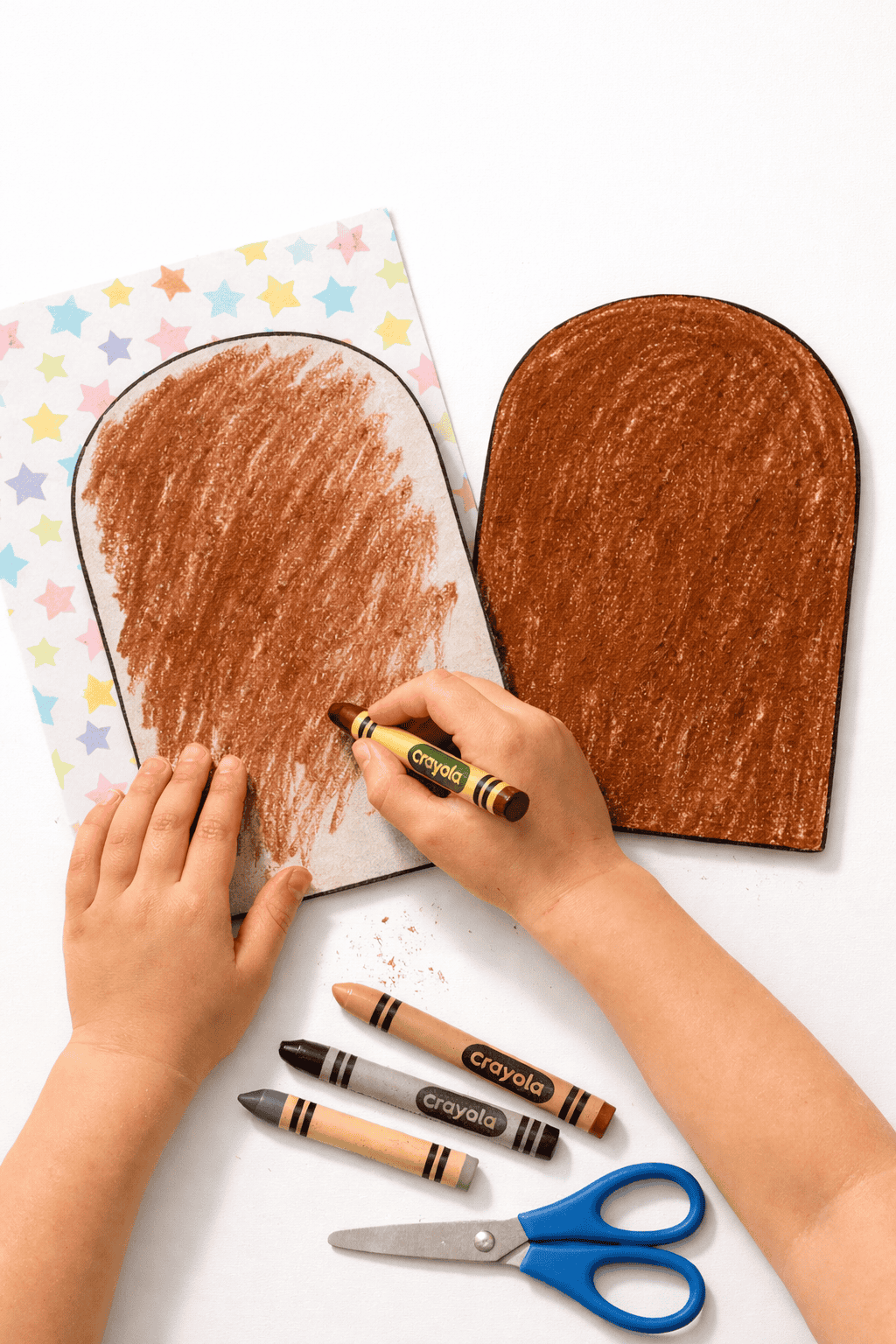
Teaching the 10 Commandments works best when kids can slow down, use their hands, and connect the lesson to something they’ve made themselves.
Crafts make that possible. They turn big ideas into simple moments of creativity and help children remember what they’re learning long after class is over.
Below you’ll find five meaningful craft ideas that make the 10 Commandments feel clear, approachable, and fun.
They’re easy to set up, kid friendly, and perfect for Sunday school, homeschool, or family Bible time.
Each project gives you a chance to talk, guide, and help kids understand why these commandments still matter today.
Crafting Supports Faith Learning at Home
Hands-on work strengthens understanding in a way that feels steady and approachable for children.
When they cut, color, fold, or assemble a project, they anchor each commandment in something they can see and touch.
This connection creates positive engagement and helps the message stay with them long after the craft is complete.
Crafting also invites a pace that encourages thoughtful conversation.
As you work together, you naturally talk about what each commandment means and how it guides daily choices.
These small, shared moments build clarity and confidence, turning ordinary materials into meaningful tools for faith formation.
5 Hands-On Projects That Bring the Commandments to Life
Hands-on projects make the 10 Commandments fun and easy to remember.
Below are five simple activities that help kids create, explore, and understand these important lessons.
1. Ten Commandments Popsicle Stick Wall Hanging
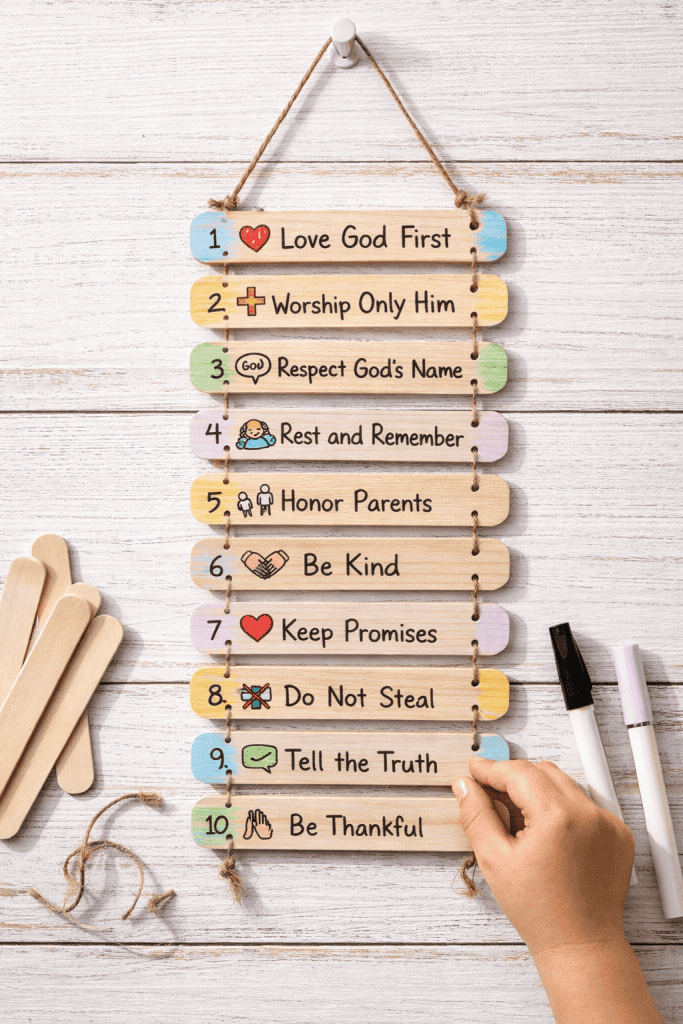
This wall hanging turns simple craft sticks into a meaningful visual display.
Each stick represents one commandment, creating a tidy, approachable guide children can look at each day.
Materials:
- Popsicle sticks
- Twine or yarn
- Markers or paint pens
- Glue
- Hole punch or small craft knife (for adult use)
Steps:
- Tie a simple loop at the top so it can hang on a wall or bulletin board.
- Line up ten popsicle sticks in a vertical row or create a horizontal ladder-style layout.
- Label each stick with the commandment number or a clear symbol.
- Let children decorate each stick with color or small drawings that match the message.
- Punch or carefully cut small holes at the top and bottom of each stick.
- Use twine to connect the sticks, creating one long hanging piece.
Looking for more ways to make learning active and fun? Try these interactive games that teach the 10 commandments.
2. Ten Commandments Stick Puppets Sorting Craft
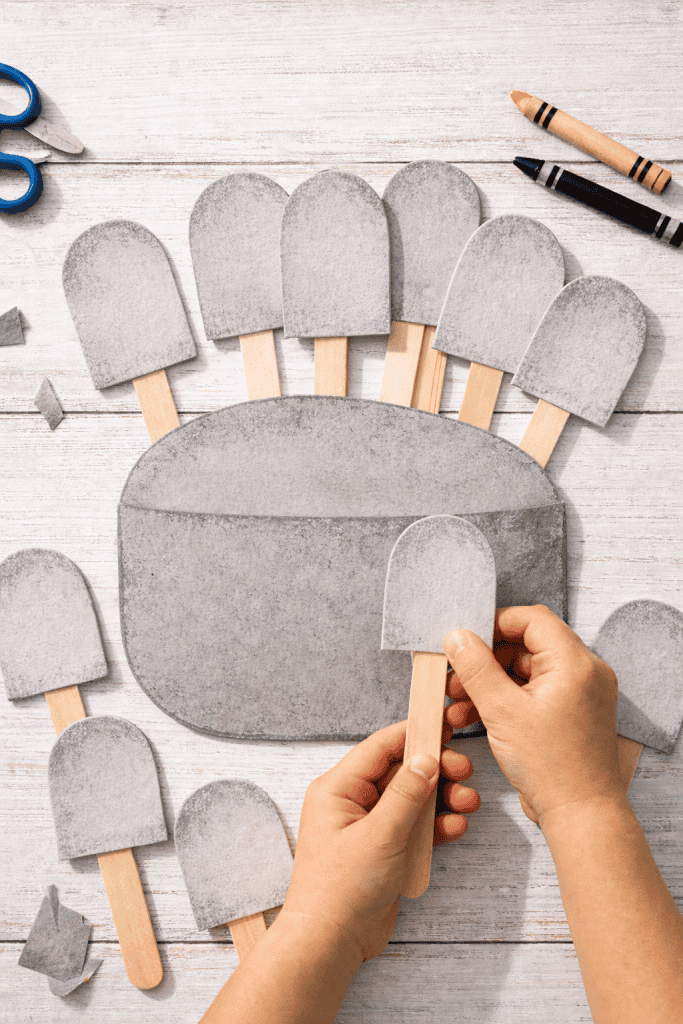
Children create small popsicle-stick “tablets” to match and sort into a larger tablet pocket.
This hands-on activity helps them remember each commandment through play and repetition.
Materials:
- Printable tablet pieces or hand-drawn mini tablets
- Popsicle sticks
- Markers or crayons
- Scissors
- Glue or tape
- Large sheet of gray or white paper (for the “stone tablet” pocket)
Steps:
- Print or draw ten small stone-shaped tablets – one for each commandment.
- Color and label each tablet with simple words or symbols that represent the commandment.
- Glue or tape each tablet onto a popsicle stick to turn it into a puppet.
- Create a large stone-tablet “pocket” by cutting out a rounded shape and gluing a bottom panel to form an opening.
- Decorate the big tablet and label it “Ten Commandments.”
- Have children sort their popsicle-stick puppets into the correct order by placing them inside the large pocket.
- Use the puppets for review, storytelling, or simple reenactments to reinforce learning.
Want more hands-on ways to spark curiosity and faith in kids? Try engaging Sunday school crafts that spark faith.
3. “Honor Your Father and Mother” Craft
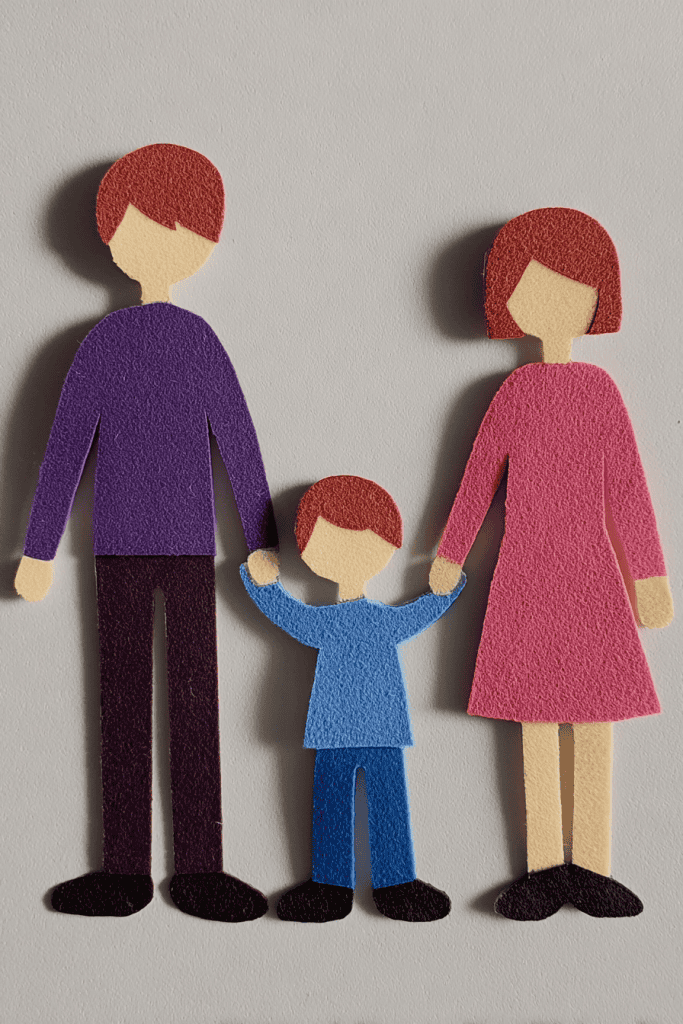
Children create a simple family scene using paper cutouts to illustrate the commandment to honor and respect their parents.
The visual reinforces the importance of family love, kindness, and obedience.
Materials:
- Colored paper or foam sheets
- Scissors
- Glue
- Markers or crayons (optional for extra details)
Steps:
- Display the finished picture as a reminder of the importance of honoring and respecting parents.
- Cut out simple shapes to form a mother, father, and child (or use pre-printed templates).
- Arrange the family figures on a sheet of paper so the child is holding hands with both parents.
- Glue the pieces in place to create a unified family scene.
- Add the words “Honor Your Father and Mother” at the top or bottom of the page.
- Encourage children to personalize their craft by adding clothing details, faces, or a background scene.
Looking for hands-on ideas to engage boys in faith-filled learning? Try creative Sunday school crafts for boys that inspire learning.
4. 3D Ten Commandments Folding Craft
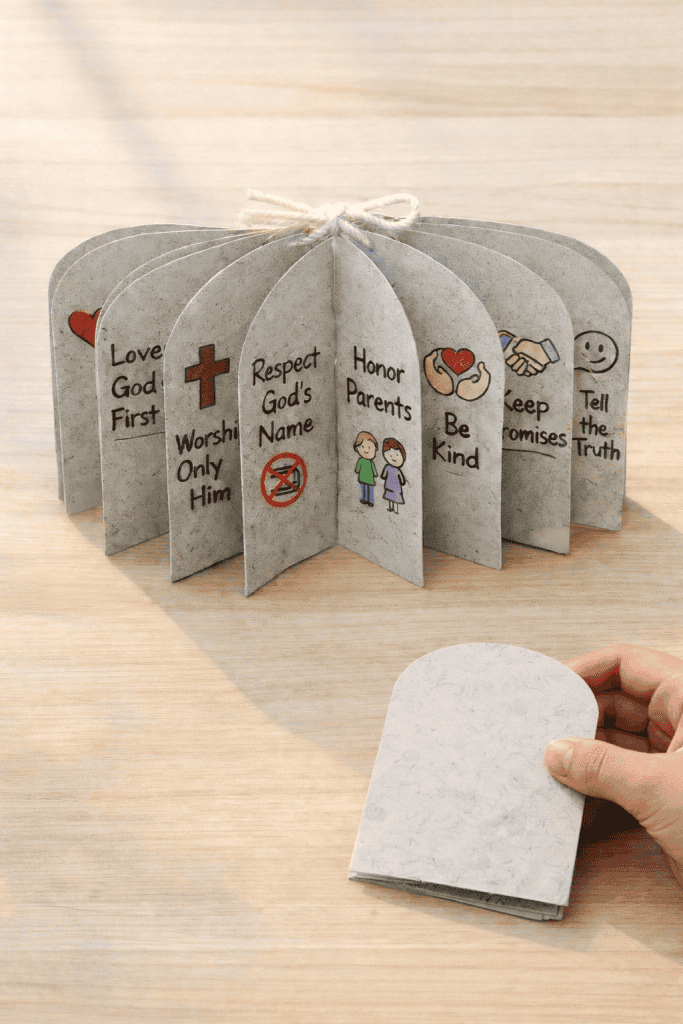
Children create a stand-up, foldable tablet displaying each of the Ten Commandments.
The layered, 3D design makes the commandments more engaging and helps kids review them one by one.
Materials:
- Printable 3D Ten Commandments template (or hand-drawn tablet shapes)
- Crayons or markers
- Scissors
- Hole punch
- Yarn or string
Steps:
- Print or draw several stone-shaped tablet pieces – one for each commandment.
- Have children color the pictures and decorate the verse or commandment on each page.
- Cut out all the tablet shapes along the outline.
- Fold each tablet gently down the center line to create the 3D effect.
- Punch a hole at the top of each piece.
- Stack all the folded tablets in order and thread yarn or string through the holes to bind them together.
- Spread out the folded pages so the craft can stand upright like a small display.
- Use the finished 3D booklet to review each commandment or retell the story of Moses receiving the tablets.
If you are looking for hands-on activities connected to a Bible story? Check out these engaging walls of Jericho craft ideas.
5. Moses and the Ten Commandments Pastel Art Project

This gentle art project invites children to explore the moment Moses received the tablets through soft color and simple shapes.
Pastels allow for blending and texture, giving the scene a calm, expressive quality while keeping the focus on the meaning of the commandments.
Materials:
- Chalk pastels or soft pastels
- Thick drawing paper
- Pencil for sketching
- Paper towel or tissue for blending
- Optional: fixative spray (for adult use)
Steps:
- Lightly sketch Moses, the tablets, or a simple mountain scene.
- Apply pastel colors with broad strokes, encouraging children to blend gently for soft edges.
- Add highlights or deeper tones to bring attention to the tablets.
- Blend again as needed to keep the artwork smooth and steady.
- Adults may set the drawing with a fixative spray to protect the colors.
Want to add some festive, faith-filled fun to your holiday season? Check out joyful Christmas Christian crafts for kids for creative projects that bring the story of Christmas to life.
How to Use These Crafts Throughout the Year
These projects fit naturally into steady family rhythms.
You can introduce one craft at a time, choosing the one that matches your child’s age, interest, or current area of focus.
Some families enjoy pairing a craft with a weekly Bible reading, while others use them as quiet activities during slower afternoons.
If you want more Bible-related craft ideas, you can check out these inspiring God’s promises crafts for simple, meaningful faith projects at home.
As the seasons shift, these pieces become gentle reminders to revisit the commandments together.
A wall hanging in a hallway, a folding booklet on a bookshelf, or a lift-the-flap page tucked into a binder can spark simple, positive conversations.
Each craft encourages children to absorb Scripture through repetition, touch, and clear visual cues – practices that build lasting understanding over time.
If you try one of these crafts, I would love to hear how it supported learning in your home.
Share your experience or your child’s favorite project in the comments below!
Get the FREE Fruit of the Spirit Tree Craft
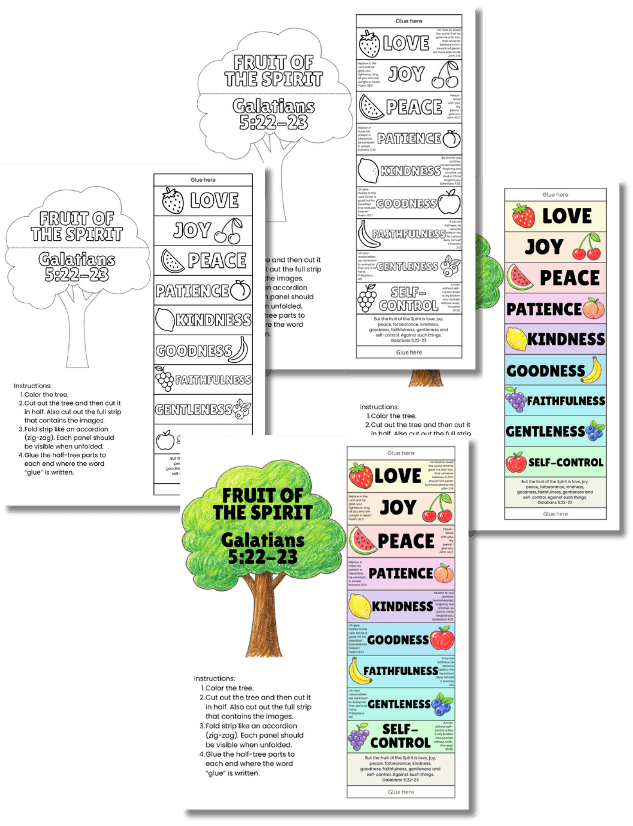
Bring the Fruit of the Spirit to life with this FREE Fruit of the Spirit Tree Craft—a fun, hands-on printable kids can build and display.
It features a 3D accordion-fold tree and comes in two versions (one with Bible verses for each fruit from Galatians 5:22–23, and one simplified for younger kids). This makes it easy for children to learn love, joy, peace, patience, kindness, goodness, faithfulness, gentleness, and self-control at their own pace.
Click below to grab the free tree craft and start creating together.
FAQs
1. What age range works best for these Ten Commandments crafts?
Most of these projects work well for ages four and up. Younger children may need extra support with tracing, cutting, and writing, while older children can add more detailed drawings or reflections.
2. How long does each craft usually take to complete?
Most projects can be finished in 15–30 minutes, though children may enjoy spending more time decorating or reviewing the commandments as they work.
3. Can these crafts be used in Sunday school or homeschool co-ops?
Yes. Every project is easy to prep in groups and uses materials that are simple to gather. They adapt well to multi-age settings.
4. What’s the best way to store the finished crafts?
Wall hangings and booklets can be kept on display, while smaller pieces can be placed in a binder or portfolio. Keeping them together helps children revisit the commandments throughout the year.
5. How can I help my child remember the commandments after completing the craft?
Use short daily prompts: point to the wall hanging, lift a flap, or open the folding booklet. These small, steady moments encourage strong recall and positive familiarity.