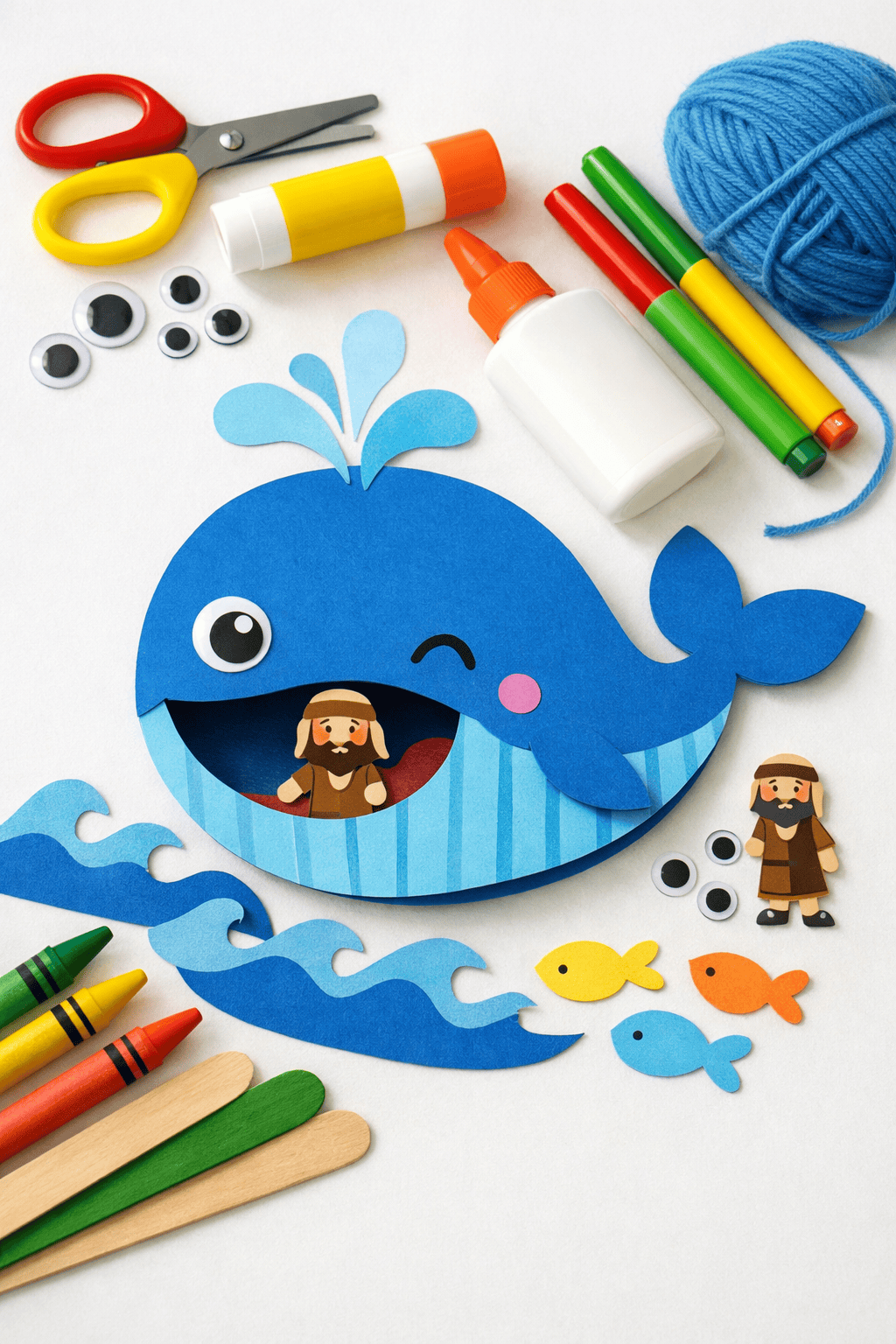
Some Bible stories just stay with you. Jonah and the whale is one of them – it’s dramatic, a little wild, and packed with a message that kids and grown-ups alike can carry with them for life.
Whether you’re planning a Sunday school lesson, a rainy afternoon at home, or a faith-based homeschool unit, Bible crafts for kids like these Jonah and the whale projects are an incredibly powerful way to make the story feel real, tangible, and wonderfully fun.
So grab your scissors, gather your supplies, and let’s dive in – because these Jonah and the whale crafts are as meaningful as they are fun.
Why Jonah and the Whale Is Such a Powerful Story to Craft Around
At its heart, the story of Jonah is about grace, second chances, and trusting God even when things feel wildly out of control. Those are themes that resonate at every age – from the toddler who’s learning to trust a parent’s guidance to the grown-up navigating uncertainty in everyday life.
When children engage with this story through craft, they’re not just making something pretty. They’re processing big spiritual ideas through their hands, and that kind of embodied learning sticks in a way that passive listening simply can’t match.
Jonah and the whale also lends itself to some of the most visually dramatic craft opportunities in all of scripture – deep ocean colors, a massive creature, a tiny man, a storm, a city. The imagery is rich and naturally inspiring, which makes it an absolute joy to work with creatively.
Looking for more stories to craft around? The Noah’s Ark crafts roundup is another fan favorite that kids return to again and again – and it pairs beautifully with Jonah for an ocean-and-animals themed unit study.
10 Jonah and the Whale Crafts Kids Will Absolutely Love
Whether your little ones are toddlers or tweens, there’s something on this list for every age and ability. These crafts use simple, affordable materials and deliver a whole lot of joy – and a whole lot of faith.
1. Paper Plate Whale with a Pocket for Jonah
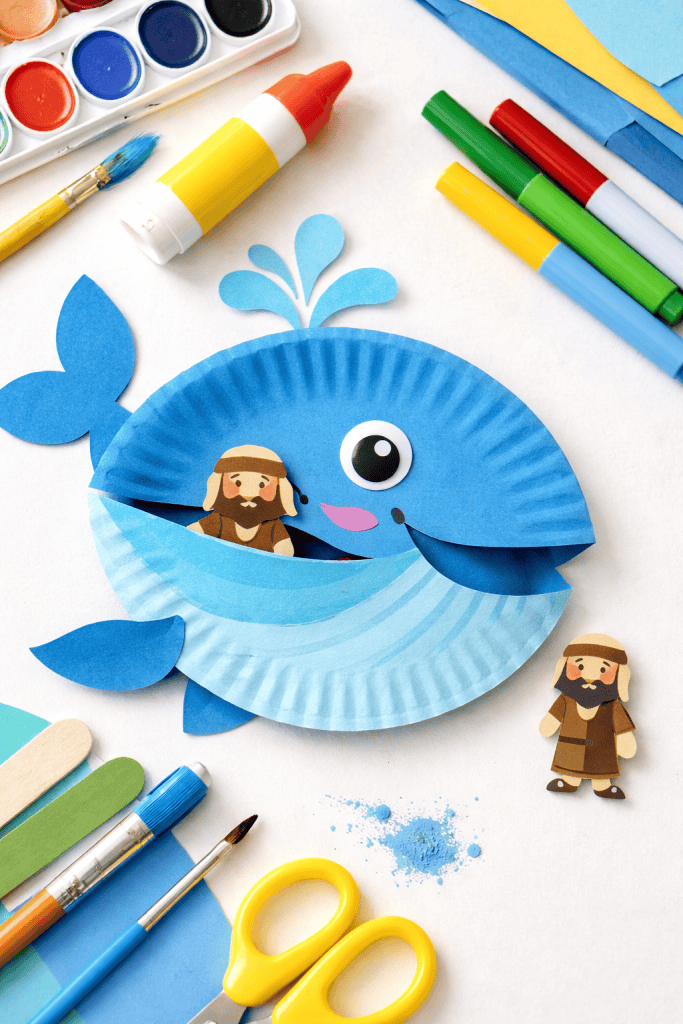
This one is an absolute classic, and for good reason – it’s simple, it’s satisfying, and kids absolutely love it. You’ll fold a paper plate in half to create the whale’s body, paint it blue or teal, and then add a little paper Jonah figure that slides right inside.
The “swallowing” motion makes kids giggle every single time, and the interaction helps them truly internalize the story. Add googly eyes and a cut-out paper tail and you’ve got a craft that looks adorable on the fridge too.
2. Sock Puppet Whale for Storytelling
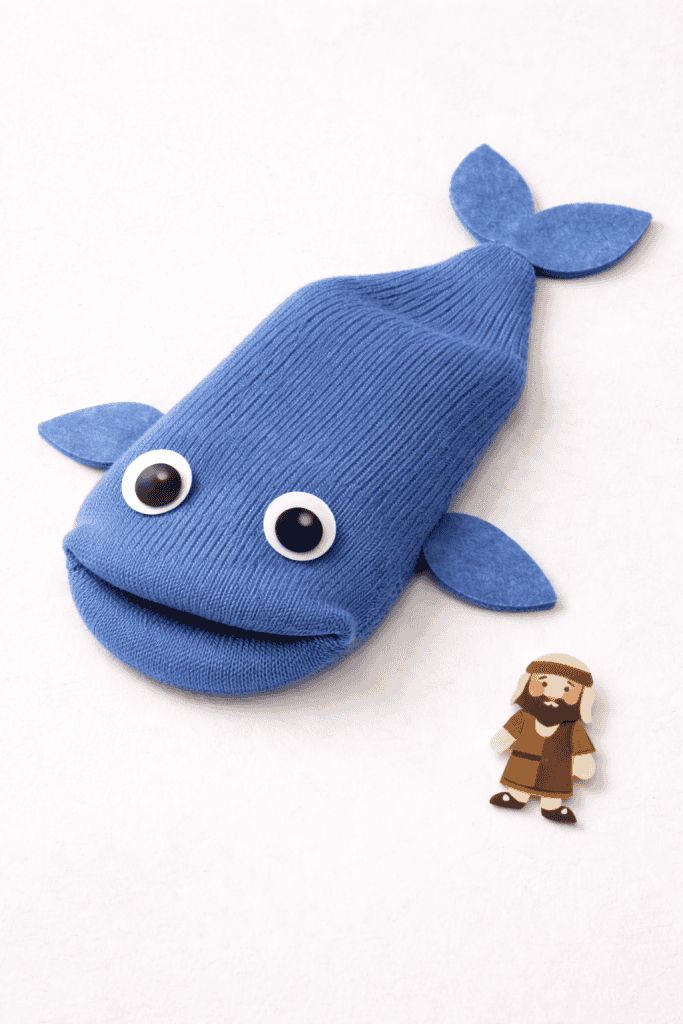
Got an old blue or gray sock hanging around? Don’t throw it out – it’s about to become the star of a Bible story reenactment. A sock puppet whale is one of those crafts that morphs seamlessly into imaginative play.
Kids can use felt, hot glue (with adult help), and googly eyes to bring their whale to life, and then act out the entire story of Jonah right on their little hand. If you love crafts that spark creative play, check out these felt craft ideas for kids for even more sock puppet and storytelling inspiration.
3. Jonah in the Whale Sensory Bin
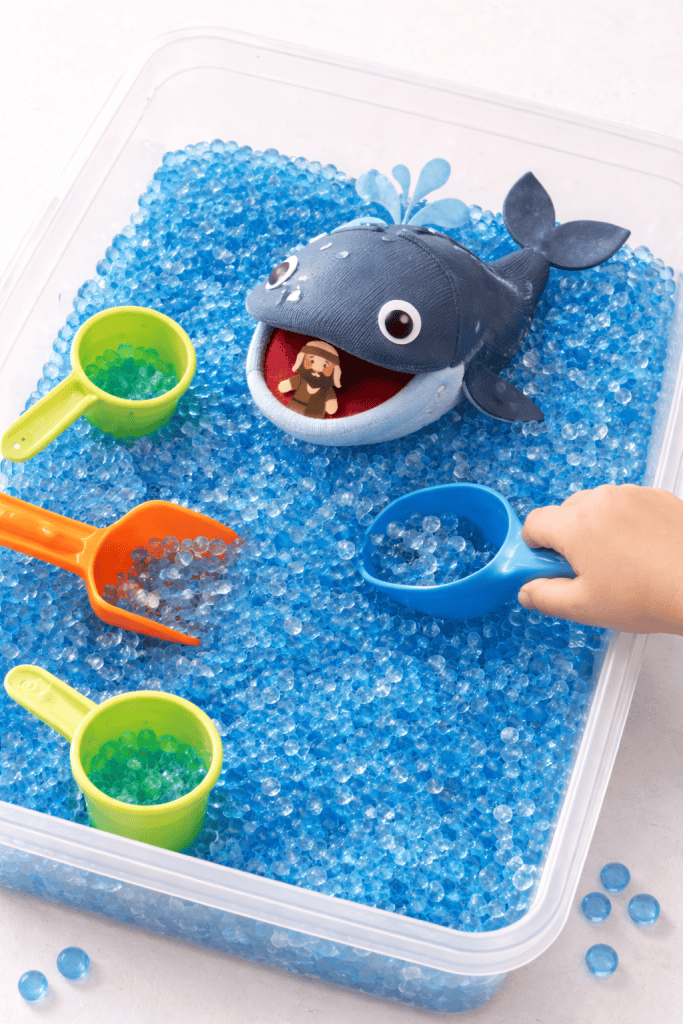
For the littlest learners, a sensory bin is an incredible way to engage multiple senses while exploring a Bible story. Fill a bin with blue water beads or shredded blue paper, tuck in a plastic whale toy, and include small figures to represent Jonah.
Let toddlers scoop, pour, and play while you narrate the story. It’s hands-on, mess-manageable, and deeply engaging for young minds. Pair this with Sunday school crafts for toddlers for a full lesson experience.
4. Watercolor Underwater Scene with Jonah
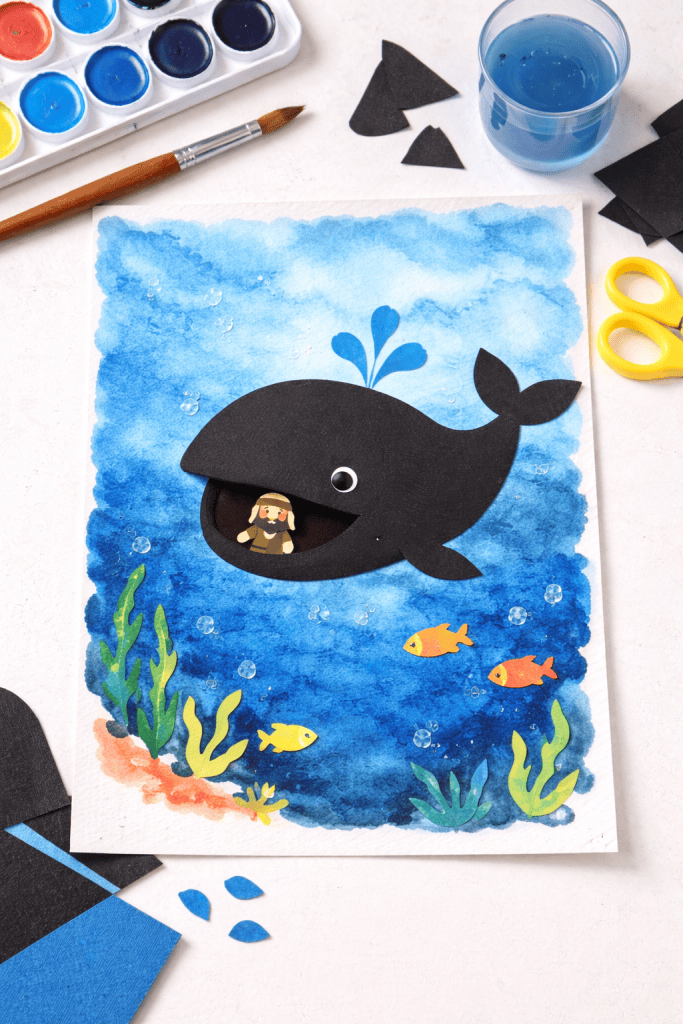
This one is beautiful – and surprisingly easy. Have kids use watercolors to paint a deep blue ocean scene, then add a big whale shape and a small Jonah silhouette using black construction paper cutouts.
The watercolor wash creates a gorgeous layered effect, and the bold black cutouts pop beautifully against it.
This is a wonderful craft for older kids who can handle a paintbrush with a little more intention, and the final product is stunning enough to frame. It pairs perfectly with a lesson on faith and trust – themes that run deep through Jonah’s story.
5. Toilet Paper Roll Whale
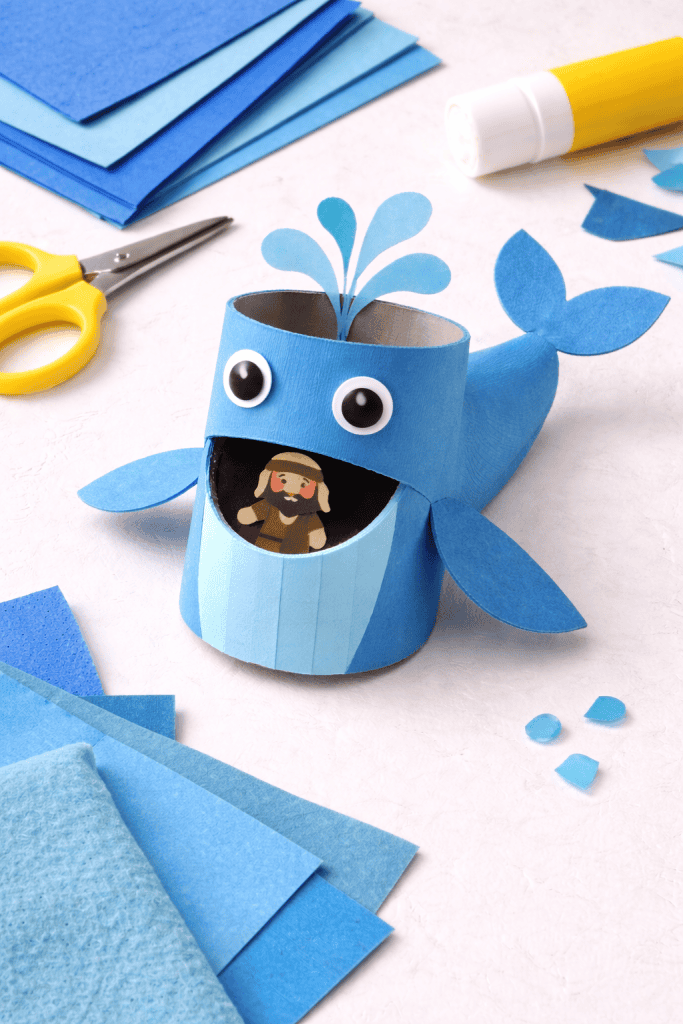
Here’s your reminder to save those empty toilet paper rolls! Painted blue and adorned with a cut-out paper tail, fins, and a big friendly mouth, toilet paper roll whales are surprisingly adorable and take less than 30 minutes to make.
You can even roll up a tiny Jonah figure out of paper and slide him right inside the tube. This is a great craft for a budget-friendly Sunday school setting – and if you’re looking to keep costs down across the board, this post on Sunday school crafts on a budget is a must-read.
6. Jonah and the Whale Coloring and Story Sequencing Activity
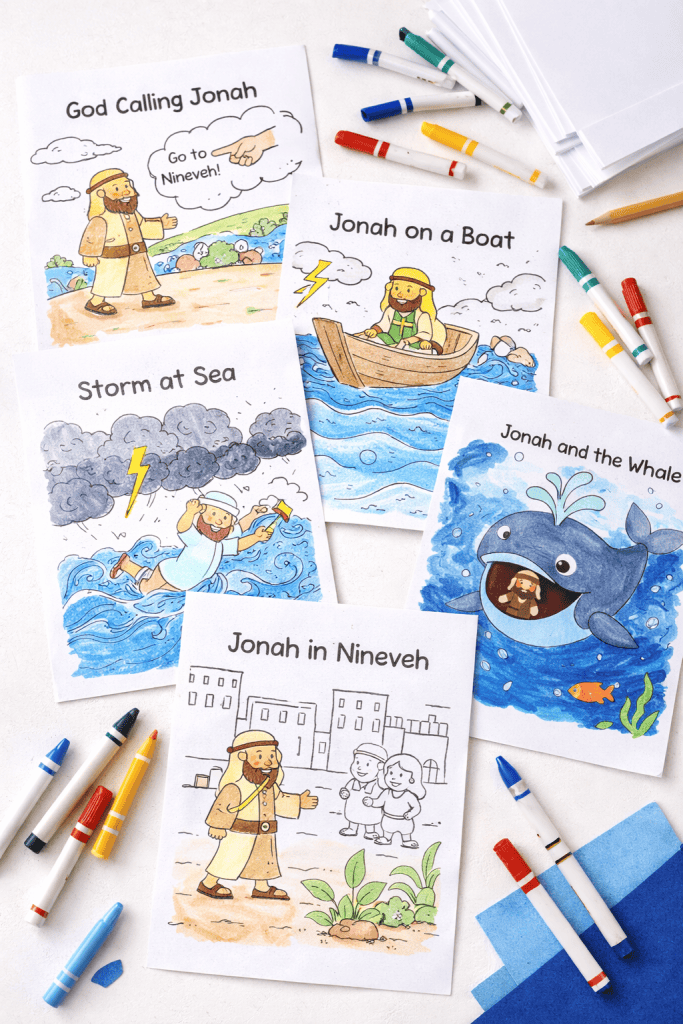
This is less of a traditional “craft” and more of a meaningful activity – which is sometimes exactly what you need. Print out a series of story scenes from Jonah’s journey: God calling Jonah, Jonah on the boat, the storm, the whale, and Jonah preaching in Nineveh.
Let kids color each scene and then arrange them in order. This teaches narrative sequencing, storytelling skills, and Bible literacy all at once. It’s wonderful for homeschool settings and pairs beautifully with other engaging Sunday school crafts that reinforce Bible comprehension.
7. Clay or Salt Dough Whale Sculpture
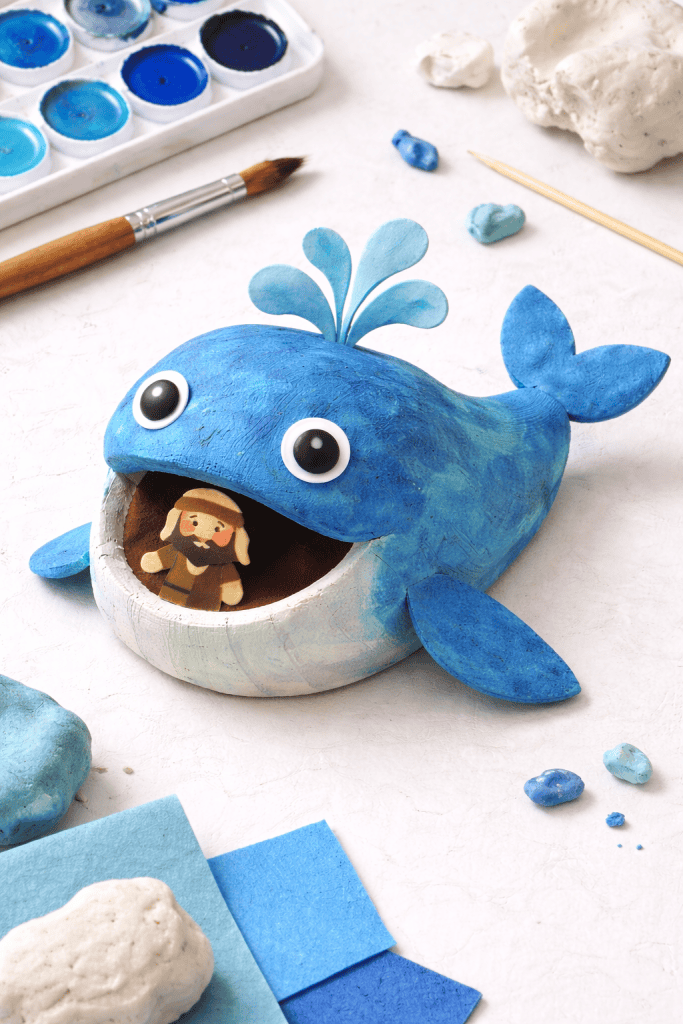
For kids who love working with their hands in a tactile, three-dimensional way, sculpting a whale out of air-dry clay or homemade salt dough is a deeply satisfying project. Shape the whale, press in a little Jonah figure, let it dry, and then paint it in ocean blues, greens, and teals.
It becomes a keepsake – something kids can hold onto and tell the story with for years. This craft works beautifully as part of a broader Bible study unit and feels special enough to display on a shelf at home.
8. Paper Bag Whale Puppet
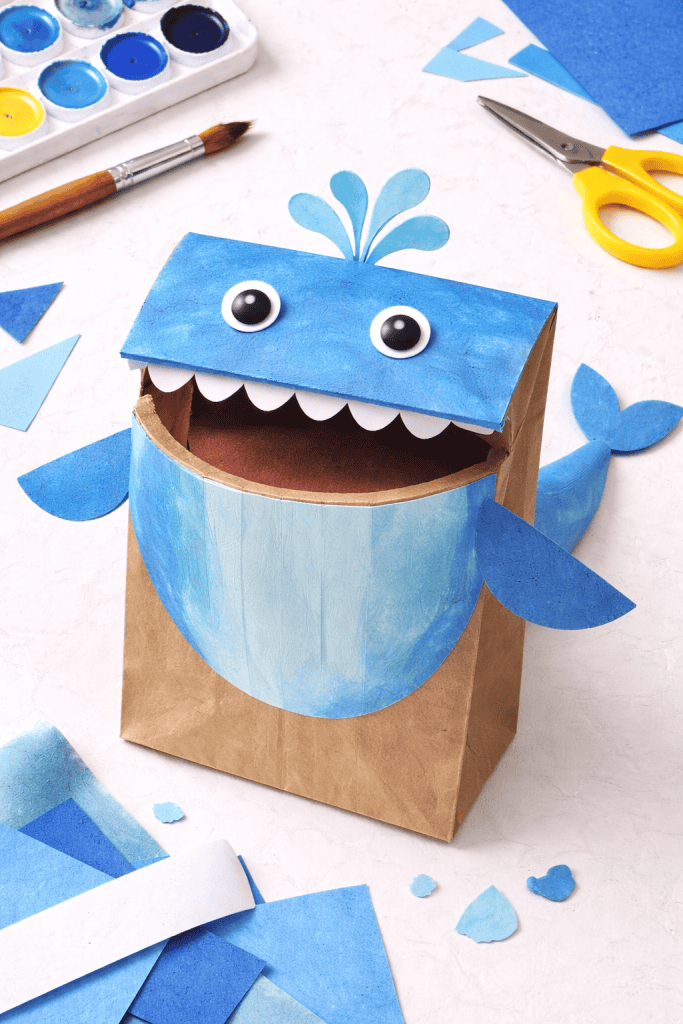
Paper bag puppets are a staple in craft-loving households, and the whale version is no exception. Use a standard brown lunch bag, paint or color it blue, and add teeth, eyes, and fins with construction paper.
Kids can slip their hand inside to make the whale “talk” and then act out the story. It’s a quick craft that leads to extended playtime – which means extended learning.
This is also a lovely option for Sunday school boys who enjoy puppet play. You’ll find even more ideas in this roundup of Sunday school crafts for boys that keep energy high and engagement even higher.
9. Jonah and the Whale Accordion Book
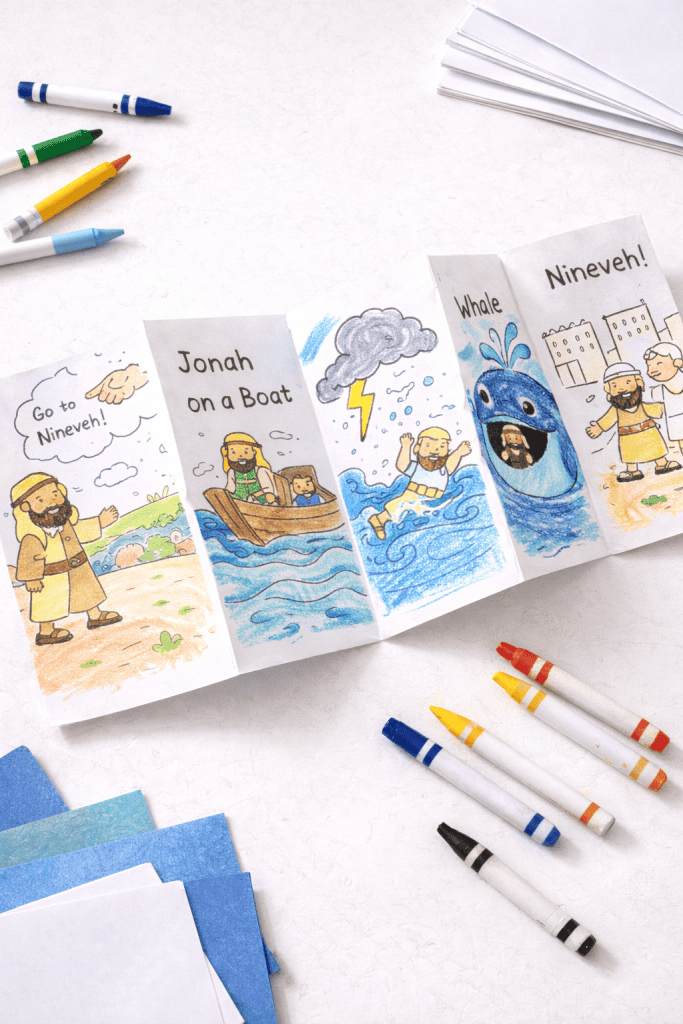
This craft doubles as a storybook – how sweet is that? Kids fold a long strip of paper accordion-style, then illustrate each fold with a different scene from Jonah’s story. When they unfold it, they have a complete, handmade retelling of the entire narrative.
This is a wonderful project for slightly older kids who can both draw and write, and it’s a beautiful keepsake to share with family. It also reinforces Bible literacy in a gentle, creative way – similar to the days of creation crafts for kids that use visual storytelling to make scripture come alive.
10. Jonah and the Whale Mosaic Using Torn Paper
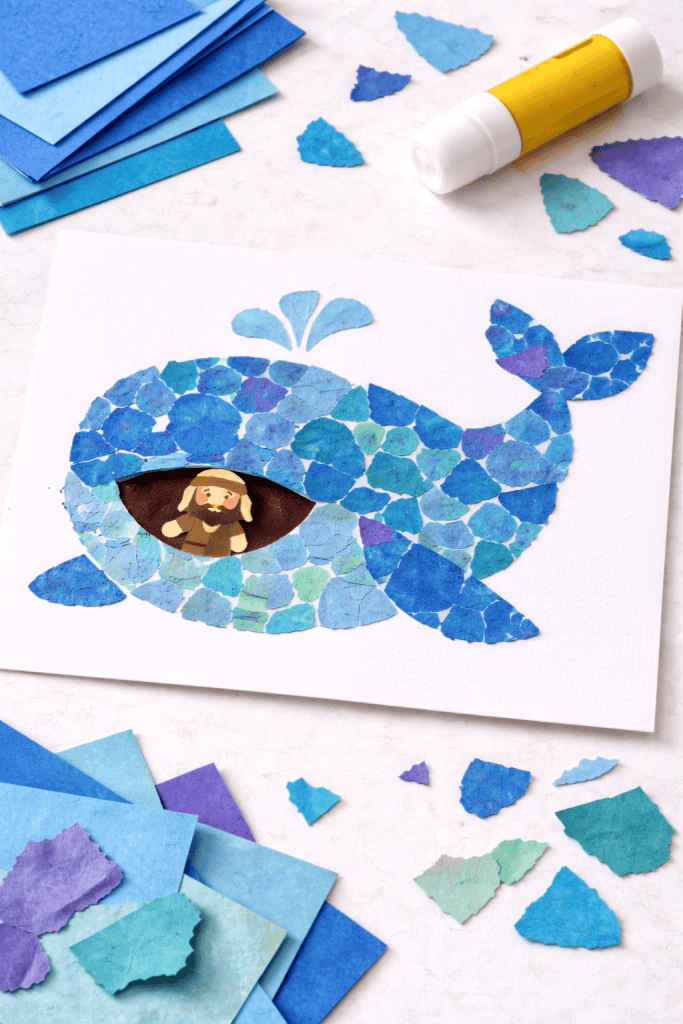
This one takes a little patience, but the payoff is absolutely gorgeous. Kids tear small pieces of blue, green, teal, and purple paper and glue them onto a whale outline drawn on cardstock – mosaic style. The result is a stunning, textured piece of art that captures the depths of the ocean beautifully.
Add a little Jonah figure in the whale’s belly for an extra storytelling touch. This craft is particularly wonderful for older kids and makes an impressive display piece for the classroom wall or hallway.
Simple Tips for Making the Most of Your Jonah Craft Time
A little preparation goes a long way when it comes to crafting with kids, especially in a group setting like a Sunday school class or homeschool co-op. Here are a few things that make the whole experience smoother and more meaningful.
- Read the story first – or tell it in your own words. Before little hands touch any supplies, take five minutes to set the stage. You don’t need a full theological lecture; just tell the story with enthusiasm and let kids ask questions. That natural curiosity makes the craft feel purposeful rather than just fun busywork.
- Have your materials prepped and ready. Cut out shapes ahead of time for younger kids, pre-paint bases if needed, and lay everything out in an organized way. The smoother the setup, the more time kids spend actually making – and learning. If you’re managing a group, this post on Sunday school crafts on a budget has some great tips for prepping in bulk without spending a fortune.
- Narrate while you craft. As kids work, weave in little snippets of the story: “Why do you think Jonah tried to run away? What would you have done?” These gentle conversational prompts turn craft time into discipleship time, and kids often share the most beautiful, unexpected insights when their hands are busy.
- Celebrate imperfection. A lopsided whale with too much glitter is still a Jonah and the whale craft – and it’s made with love.
Pairing Jonah Crafts with Other Bible Story Activities
One craft is wonderful, but a whole unit study? That’s where the real fun begins. If you’re building out a broader Bible story curriculum for your family or classroom, Jonah and the whale pairs naturally with several other stories and themes.
The theme of obedience and courage connects Jonah beautifully to the story of the Walls of Jericho – another story where God asks His people to trust an unlikely plan. The Walls of Jericho crafts for kids are a wonderful companion to your Jonah unit and keep the storytelling momentum going strong.
The ocean setting of Jonah’s story also makes it a natural fit alongside Noah’s Ark, which shares themes of faith, obedience, and God’s provision. And if you’re exploring the broader story of God’s promises to His people, the God’s promises crafts for kids roundup offers some beautiful, meaningful projects that tie the whole narrative together.
You might also consider weaving in some meaningful 10 Commandments crafts into your faith-based craft rotation – they make for a rich, layered exploration of scripture across many different Bible stories and themes.
Start Crafting Your Way Through Scripture Today
There is no wrong way to bring the Bible to life through craft. Whether you’re a seasoned Sunday school teacher with a supply closet full of art materials, or a mama at the kitchen table with a few paper plates and some crayons, these Jonah and the whale crafts meet you right where you are.
They’re accessible, meaningful, and – most importantly – they work. Kids remember what they make with their hands, and when those hands are making something rooted in scripture, the impact runs deep.
Which of these Jonah and the whale crafts are you most excited to try? Drop a comment below and let me know! I’d love to hear how your little ones respond to bringing this incredible story to life with their own two hands.
And if you try one of these crafts, share how it went – your experience might just inspire another family to dive in too.
Looking for an easy, meaningful way to talk about Jesus’ love with toddlers and young children?
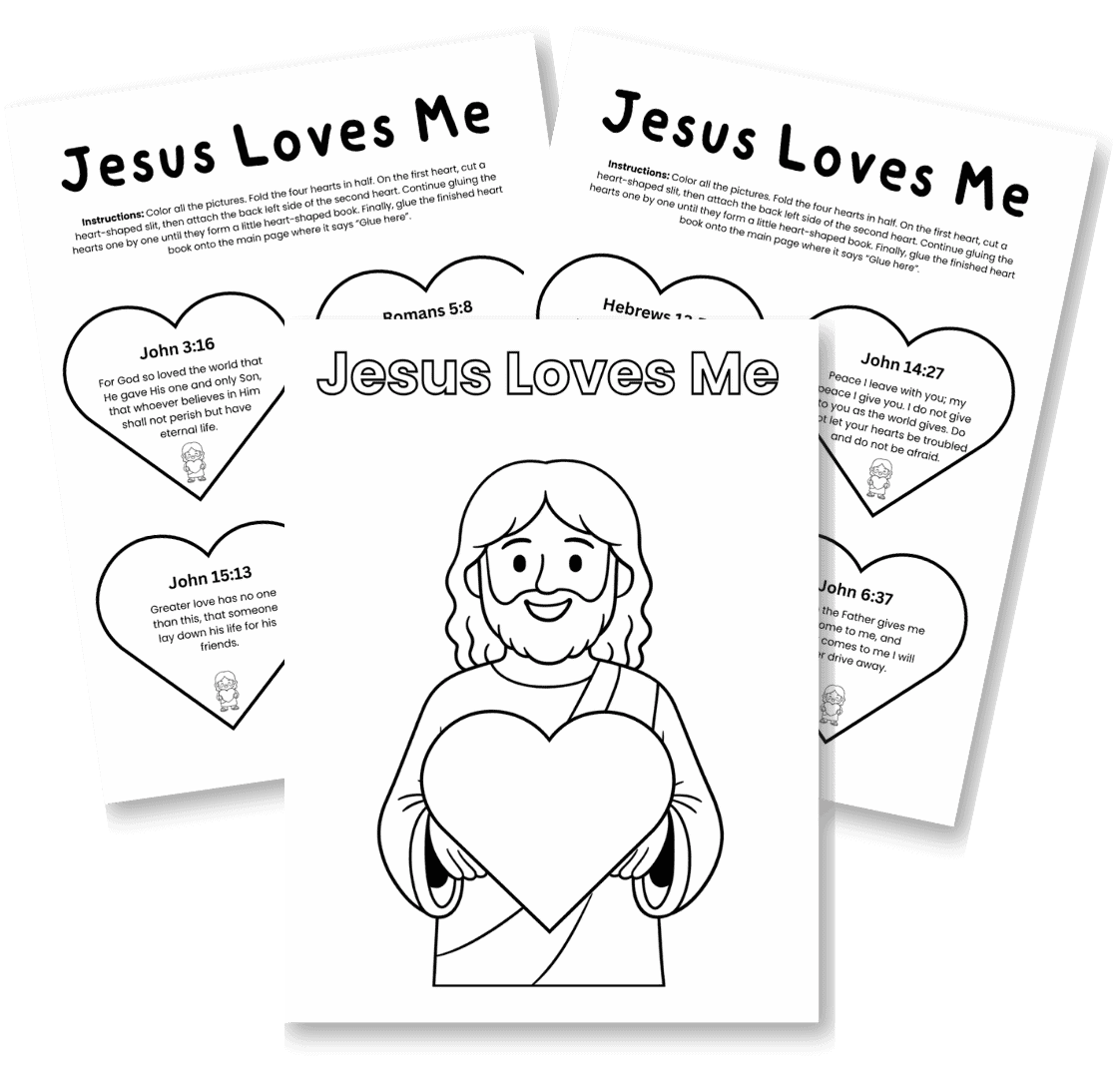
This FREE Jesus Loves Me Printable uses a “What does the Bible say?” approach with familiar verses, simple language, and hands-on fun.
Kids can see, color, and come back to Scripture—helping the truth of Jesus’ love stick.
Click below to grab the printables and use them at home or in Sunday School.
Frequently Asked Questions
What age group are Jonah and the whale crafts best suited for?
Jonah and the whale crafts can be adapted for a wide range of ages. Toddlers and preschoolers thrive with sensory bins and simple paper plate crafts with pre-cut shapes. School-age kids (roughly 5–10) enjoy more involved projects like accordion books, watercolor scenes, and puppet-making.
Older kids and tweens can tackle clay sculptures, mosaics, and detailed storybook illustrations. The key is adjusting the level of fine motor skill required and the amount of adult assistance offered at each stage.
Can these crafts be used for a homeschool curriculum, not just Sunday school?
Absolutely – and they work beautifully in a homeschool setting. Jonah and the whale crafts can cover multiple subjects at once: Bible literacy and theology, fine arts and creative expression, narrative sequencing and language arts, and even ocean science if you incorporate some learning about real whales alongside the story.
Homeschooling families who love a literature-to-craft approach will find these projects especially rewarding as part of a broader character or faith-based unit study.
How do I keep crafts meaningful instead of just “busy work”?
The difference between a craft that truly teaches and one that simply occupies time often comes down to the conversation happening while kids create. Before you start, tell the story with enthusiasm and ask kids what they already know.
While crafting, weave in thoughtful questions: “How do you think Jonah felt inside the whale? Have you ever felt like you wanted to run away from something?” After finishing, have kids explain their craft to someone else – this retelling cements the lesson beautifully.
The craft itself is just the vehicle; the conversation is where the real learning lives.
What if I don’t have many craft supplies on hand?
You’d be surprised how much you can do with the basics. A paper plate, a marker, some crayons, and a little glue can produce a gorgeous Jonah and the whale craft with zero trip to the craft store. Toilet paper rolls, old socks, newspaper, and scrap paper are all fair game.
The most meaningful crafts are rarely the most expensive ones – they’re the ones made with whatever was nearby and a whole lot of imagination and love. If you’re working with a group on a tight budget, Sunday school crafts on a budget is a great resource for maximizing impact with minimal spend.
Are there ways to extend the Jonah craft into a multi-day activity?
Yes, and it’s a wonderful idea! Day one could focus on reading and discussing the story. Day two could involve the main craft – a puppet, a watercolor scene, or a clay sculpture. Day three might be a performance or storytelling session where kids use their crafts to retell Jonah’s journey to the family or class.
You could even add a journaling component for older kids, where they reflect on a time they felt like Jonah – called to something scary, or given a second chance. Spreading the project across several days deepens engagement and gives the story time to really settle in children’s hearts.