
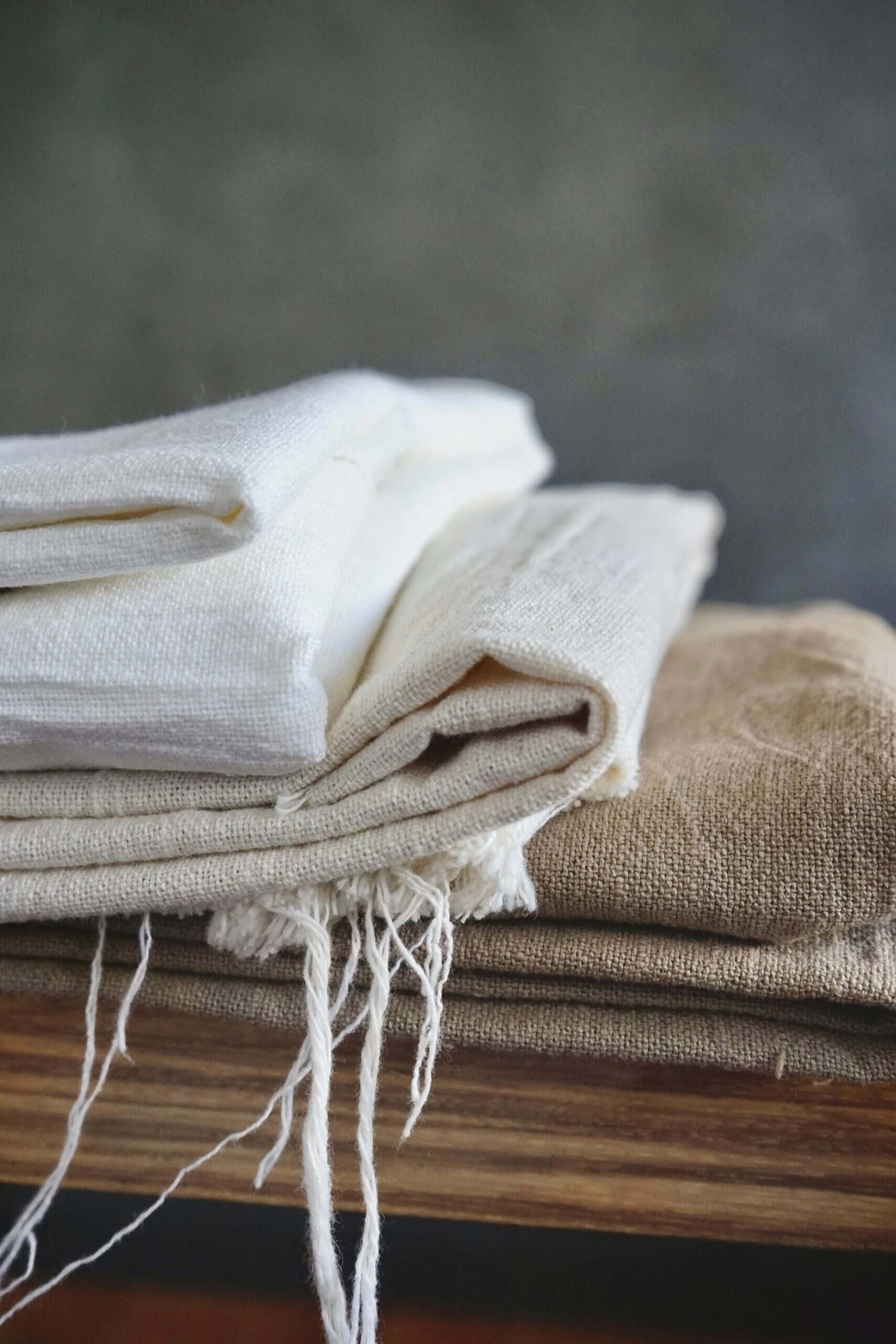
Linen is such a beautiful fabric – soft, natural, and it truly lasts.
It’s one of those materials that feels good against the skin and holds up through years of wear and washing.
Made from flax, it’s breathable, odor resistant, and works in every season.
The challenge is that linen fabric is expensive – but there are budget-friendly ways to bring linen into your home and sewing projects.
In this article, I will walk you through the options I’ve found most practical (from upcycling duvets to keeping an eye out for secondhand treasures) so you can get the fabric you love and make it go a long way.
Why I Love Linen (and Why You Might Too)
There are so many reasons I keep coming back to linen.
It’s breathable, which keeps me cool in the summer and surprisingly when layered right it can keep me cozy in cooler months.
It’s odor resistant, so clothes and bedding feel fresher for longer.
Linen works in every season, which means I don’t have to switch fabrics as the weather changes.
One of the things that really stands out to me is its longevity – unlike many fabrics that wear out quickly, linen softens with use and lasts for years.
And there’s this healing quality that makes it feel good against the skin and calming at the end of a long day.
All of these benefits make it worth seeking out – even if it means putting a little extra effort into finding affordable options.
If you’re just starting to explore linen for garments, I also share a broader guide on how to find fabric for sewing clothes on a budget, because good linen doesn’t have to mean overspending.
The Most Affordable Option: Linen Duvets
One of the best-kept secrets for affordable linen is to skip the fabric store and head straight for the bedding aisle.
Linen duvets are an incredible source of fabric that you can upcycle into just about anything – dresses, pants, shirts, or home projects like pillow covers.
Why choose a duvet instead of buying fabric by the yard?
The answer is simple: more fabric for your money, versatile colors, and ready-to-use quality.
A full or queen-size duvet from Quince costs around $139, which works out to about 10 to 12 yards of fabric.
That’s a lot more than you’d get per yard at a traditional fabric store, and the duvets usually come in calming, versatile colors like soft whites, muted greens, and earthy tones.
They’re made from 100% European linen, already soft and pre-washed – no stiff, scratchy feel to fight through.
Yes, you get an upfront investment, but one duvet can stretch across multiple projects, giving you incredible value.
If you’re planning to sew garments from it, I recommend reviewing how to choose, pre-wash, cut and press linen fabric before you start. Linen behaves beautifully, but it does have its quirks.
Here’s how I approach it:
- Affordability – You get way more fabric for your dollar compared to buying by the yard.
- Color options – Neutral, calming tones make it easy to repurpose into anything, from home projects to clothing.
- Less waste, more use – Sheets or duvets give you large, continuous pieces, reducing scraps and leftover bits.
The only tip I’d add here is this: have a plan before you buy.
Consider what you’re going to make with that one duvet – maybe curtains and a few napkins, or a dress and an apron.
Before cutting into it, I always follow my must-do steps before cutting your fabric. It saves mistakes and stretches your yardage further.
My Go-To Places to Find Linen Online
Aside from in-person thrifting, I’ve had some surprising luck online. I keep an eye on Facebook Marketplace when I have a few minutes to scroll.
People list all kinds of linen items there, especially when they’re moving or downsizing, and you can usually snag things for a fraction of what they’d cost new.
I also check Goodwill Online now and then. They do get linen pieces, but I’ve learned to double-check the shipping cost first since it can eat up the savings if you’re not careful.
eBay, though, is probably my favorite. I’ve scored vintage linen sheets and tablecloths there that are still in great condition. It takes a little patience to sift through listings, but every so often, you hit the jackpot.
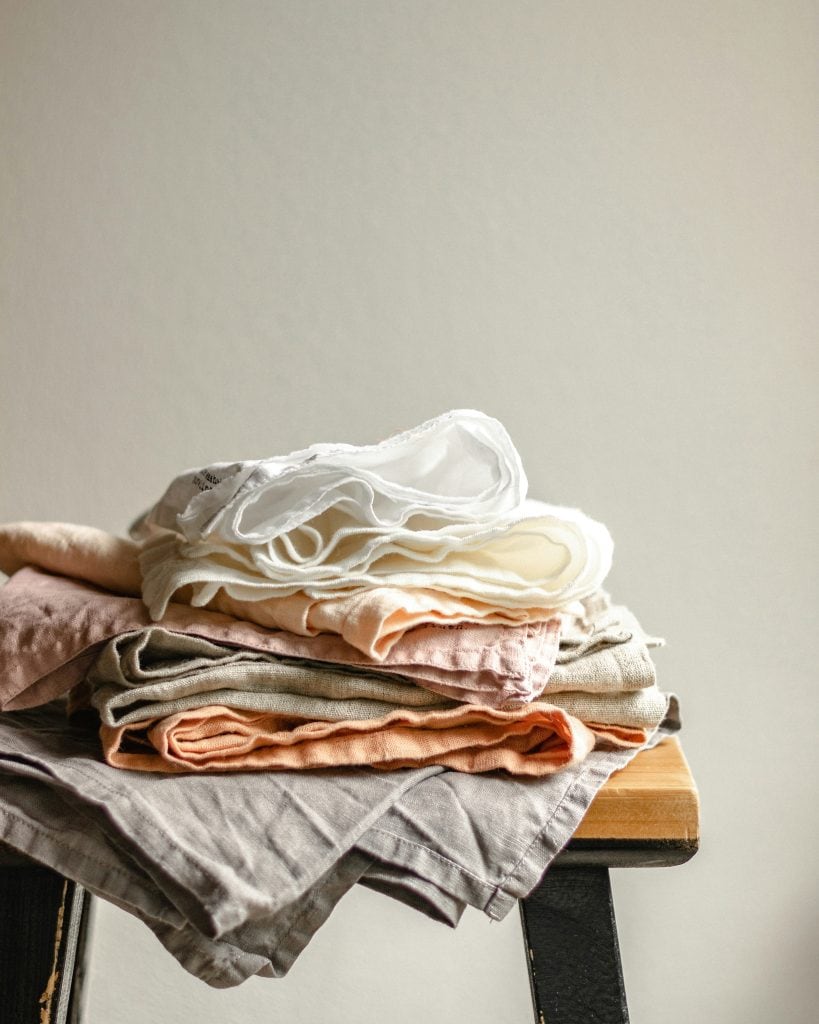
Don’t overlook linen sheets when you’re thrifting.
They’re already soft from years of washing, and they can be repurposed into everything from curtains to napkins if you don’t want to use them on the bed.
Other Affordable Sources of Linen
Duvet covers are highly recommended, but they’re not the only option.
If you’re patient (and a little resourceful), there are a few other places you can find quality linen without paying premium prices.
1. Thrift Stores & Secondhand Shops
This is where you can sometimes hit the jackpot. People donate high-quality linens simply because the color went out of style or they got new bedding.
Look for natural, muted shades (beige, white, soft gray) because those are easier to repurpose.
And don’t be scared off by a stain in the corner. You’re cutting and sewing anyway, so you can easily work around it.
If you’re unsure whether something is truly linen, a simple burn test for natural fabrics can confirm it quickly.
2. IKEA
IKEA is surprisingly good for affordable linen, especially their duvet covers and sheet sets.
The fabric is sturdy, the colors are neutral and versatile, and the yardage you get for the price is generous.
If you have an IKEA nearby, check their linen section regularly – sometimes seasonal colors appear that can be great for unique projects.
Even if you don’t live near a store, their website often ships linens directly to your home.
3. Online Marketplaces (like Facebook Marketplace or eBay)
Online marketplaces are a fantastic option for scoring linen from sellers who barely used it or are looking to declutter.
Pointers for shopping online:
- Look for full sets – sometimes you can get a duvet plus pillowcases, giving you multiple projects’ worth of fabric.
- Always ask if it’s 100% linen. Some listings mix linen with cotton or synthetic fibers.
- Compare prices, including shipping, to make sure you’re actually getting a deal.
4. Estate Sales or Garage Sales
This takes a little more digging, but estate sales can turn up beautiful old European linens.
These are the kinds of pieces that last forever and soften beautifully with age.
Tips for estate sales:
- Arrive early for the best selection.
- Ask about the material – many older linens are 100% flax linen.
- Bring a tape measure to check yardage on the spot.
5. Amazon (for Smaller Quantities)
If you just want a smaller amount of linen without committing to a full duvet, Amazon can be a great option.
You can buy a single flat sheet – though the color selection is more limited, it’s still a practical choice.
For example, one flat green sheet costs around $65. Based on a standard 54-inch wide sheet, you’ll get about 4 to 4.5 yards of fabric.
That works out to roughly $16.50 per yard, which is a reasonable deal for high-quality linen.
Even with a single sheet, you can make a Betty dress and still have leftovers for a child’s outfit, a quilt patch, or a few pillowcases.
It’s a great way to start small and see how linen works in your projects without spending too much upfront.
So these sources can yield high-quality linen at a fraction of the retail price, giving you plenty of fabric to experiment with for clothing, home décor, or sewing projects.
How to Identify 100% Linen Fabric vs. Blends
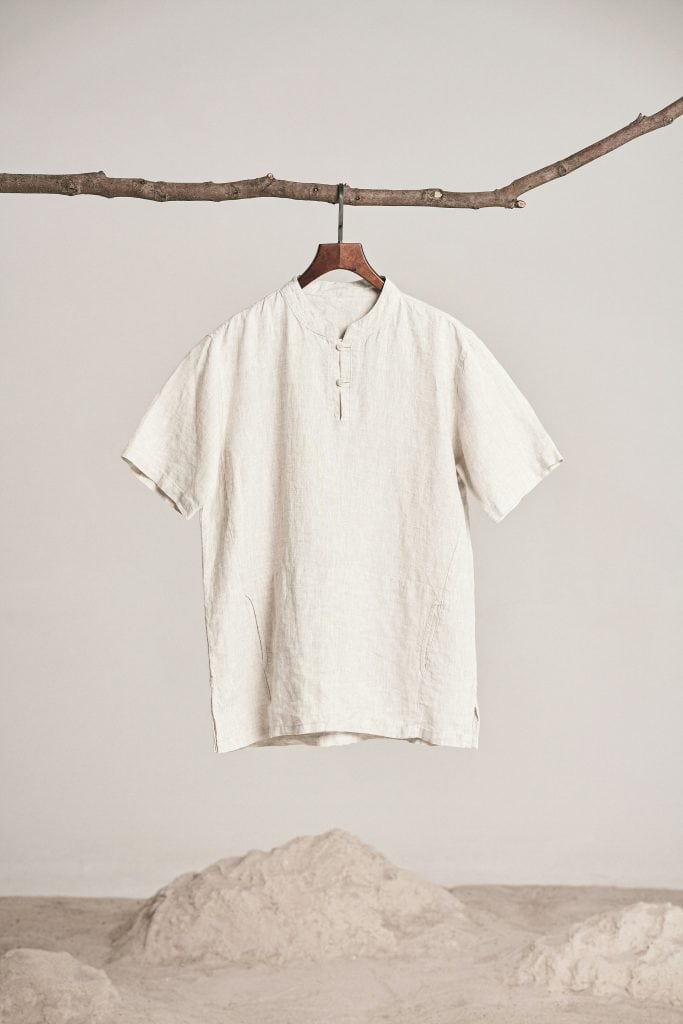
When you’re shopping for linen, especially on a budget, it’s important to make sure you’re getting the real thing. Here’s how I check every time:
1. Always Look at the Label
Check the fiber content carefully.
Some fabrics are marketed as “linen blend,” which usually means only a percentage is true linen, with the rest being cotton, rayon, or polyester.
For sewing projects that you want to hold up and age well, 100% linen is the best investment.
Blends can still work, but they won’t have the same durability, breathability, or natural softness as pure flax linen.
If you’re unsure how to interpret percentages or textile terminology, my guide on how to read fabric labels breaks it down simply.
2. Check the Percentage Ratios
Even if it’s labeled as linen, I always double-check the percentage ratios.
True linen will be 100% flax; anything less is a blend.
This is a simple step that saves you from ending up with fabric that won’t behave the way you want it to in your projects.
3. The Wrinkle Test
Linen wrinkles easily – that’s part of its charm. Grab a small section and scrunch it in your hand.
If it stays perfectly smooth, it probably has synthetic fibers in it.
4. Look at the Weave
Linen threads are slightly irregular, with tiny thick and thin variations called slubs. A perfectly even weave is usually a sign of cotton or synthetic fibers.
5. The Touch Test
True linen feels crisp and cool at first, then softens beautifully with each wash. Blends often feel slicker or artificially smooth.
6. The Burn Test (Optional)
If you have a small scrap to spare, carefully burn a thread. Real linen smells like burning paper and turns to fine ash.
Synthetic fibers smell like plastic and form a hard bead.
These checks are quick, practical ways to make sure your linen will last, feel good against your skin, and stand up to years of projects.
Build Your Linen Collection Wisely
With a little digging, you can score beautiful, breathable fabric at prices that won’t make you wince.
From affordable fabric shops and thrift store finds to repurposed curtains and sneaky IKEA scores, the options are wide open.
Start small (maybe a couple of napkins or a pillowcase) and see how linen feels in your everyday life.
You’ll probably find yourself reaching for it more and more once you realize how durable, comfortable, and timeless it really is.
Have you ever found a surprisingly good linen deal? Drop your story in the comments – I know other readers (and me!) would love the tips.
FAQs
How much linen fabric do I actually need for common sewing projects?
It depends on what you’re making, but here’s a rough guide to help you plan:
- Simple dress: 2.5 to 3.5 yards
- Wide-leg pants: 2 to 3 yards
- Button-down shirt: 1.5 to 2.5 yards
- Napkins (set of 4): 1 to 1.5 yards
- Pillow covers: 1 to 2 yards
If you’re buying a duvet cover (which can give you 10+ yards), sketch out a plan first. You might be able to make a dress, a top, and still have enough for kitchen linens.
Planning ahead helps you avoid scraps sitting unused in a drawer.
Should I pre-wash linen before sewing with it?
Yes. Always.
Linen naturally shrinks, especially the first time it’s washed. Even pre-washed linen bedding can shrink a bit more.
Wash and dry it the same way you plan to care for the finished item. This prevents surprises later (like a dress suddenly feeling too snug after one wash).
It also softens the fabric, making it easier and more enjoyable to sew.
Is heavier or lighter weight linen better for clothing?
It depends on the project.
- Lightweight linen (3–5 oz): Great for blouses, summer dresses, and layering pieces
- Midweight linen (5–7 oz): Ideal for pants, skirts, aprons, and everyday dresses
- Heavyweight linen (7 oz+): Best for jackets, structured pieces, or home décor
Most duvet covers and sheets fall into the midweight range, which makes them versatile for both clothing and home projects.
If you’re just starting out, midweight is usually the safest and most practical choice.
What should I do if the linen I thrifted has stains?
Since you’ll be cutting the fabric anyway, many stains can simply be worked around. For larger pieces:
- Try soaking in oxygen bleach
- Lay fabric in sunlight (natural bleaching effect)
- Use lemon juice and sun for light discoloration
And remember, small imperfections can disappear completely once the piece is sewn.
If the stain is near an edge, it might not even make it into your final pattern layout.
How do I care for linen so it lasts for years?
The good news is linen is low-maintenance.
- Wash in cool or warm water
- Use mild detergent
- Skip heavy fabric softeners
- Tumble dry low or line dry
Linen actually gets softer with every wash, which is part of why it feels better over time instead of wearing out.
If you embrace a few natural wrinkles (which honestly add character), you’ll find linen becomes one of the easiest fabrics to live with long term.