
Looking for a natural moisturizer that your skin will truly love?
Homemade tallow lotion is a simple, non-toxic way to nourish and protect your skin without synthetic ingredients.
Rich in vitamins and healthy fats, it absorbs beautifully and leaves skin soft, hydrated, and comfortable.
This beginner-friendly recipe uses just a few simple ingredients and works well for dry hands, rough elbows, and everyday moisture.
If you love natural living and ingredient-honest skincare, this lotion is worth making.
What Is Tallow and Why Use It?
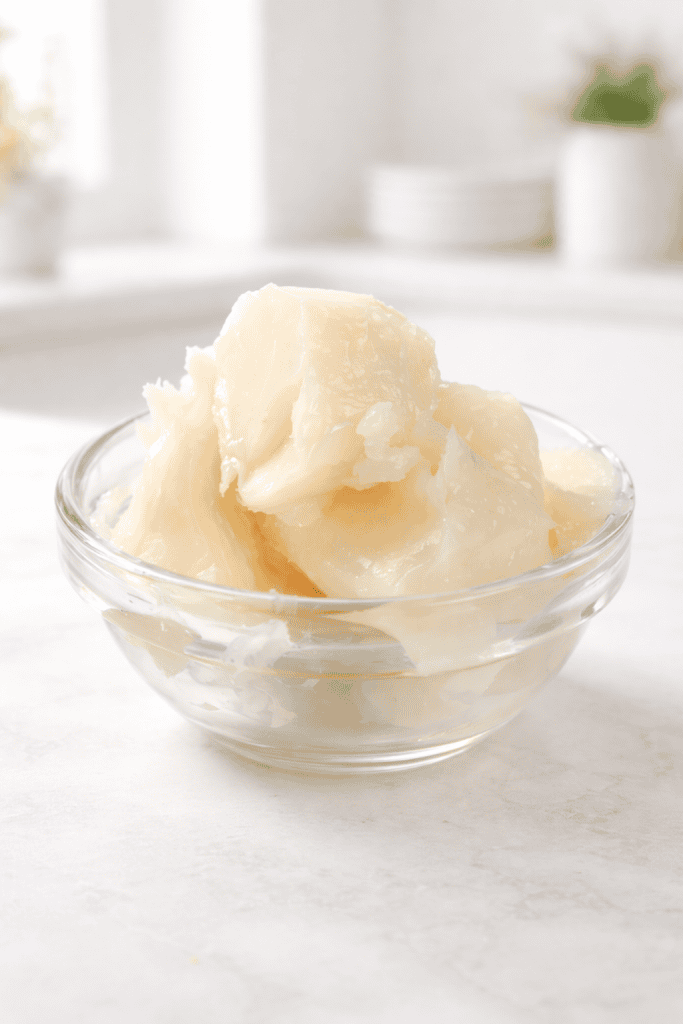
Tallow is simply rendered beef fat. When beef fat (especially the hard “suet” from around the kidneys) is gently melted and strained, it becomes a creamy white, shelf-stable fat that can be used on the skin.
Grass-fed, pasture-raised tallow is best: cows on grass produce tallow with a more balanced fatty acid profile and higher nutrient content. (In other words, grass-fed tallow is richer in skin-loving nutrients.)
If you’re starting from scratch, this guide on how to make tallow from beef fat walks through the process step by step.
Natural Moisturizer
Tallow’s composition closely mimics human skin oil (sebum). It’s high in triglycerides like oleic acid, forming a breathable barrier on your skin that seals in moisture. As a result, tallow locks in hydration for hours at a time, unlike many water-based lotions that evaporate quickly.
This makes it ideal for replenishing very dry skin. In fact, one dermatologist notes that “for patients with super dry skin, [tallow] could be helpful” as an “extreme moisturizer”.
Vitamins and Nourishment
Grass-fed tallow naturally contains fat-soluble vitamins and antioxidants that support skin health and regeneration:
- Vitamin A – promotes cell turnover and prevents flakiness
- Vitamin D – supports skin structure and immune function
- Vitamin E – antioxidant protection against environmental damage
- Vitamin B12 – supports overall skin health
These nutrients encourage collagen production and help rebuild the skin barrier. In short, tallow isn’t just “plain fat” – it’s a nutrient-rich moisturizer that works in harmony with your skin.
If you love tallow for skincare, you might also enjoy my beef tallow face cream recipe, designed for gentle facial hydration.
Soothing and Traditional
Tallow also carries slight anti-inflammatory and antimicrobial benefits. (In traditional medicine, animal fats have been used to calm irritated skin and heal wounds.)
A 2024 review of studies found that tallow’s fatty acids help support the skin and may relieve conditions like eczema or psoriasis.
Because it’s free of artificial fragrances or stabilizers, pure tallow is often well-tolerated by sensitive skin. As one dermatologist points out, tallow is “biocompatible” with our skin – it blends naturally into the barrier and is less likely to cause irritation than many synthetic products.
No Harmful Additives
Unlike many store-bought creams, pure tallow contains no parabens, petrochemicals or synthetic fragrances. It’s just beef fat (and whatever natural oils you mix in). This minimal ingredient list appeals to anyone seeking non-toxic skincare.
On the homestead, this fits naturally into a clean, low-waste lifestyle.
Did you know? Cows’ fat yields more than just tallow. Grass-fed beef provides conjugated linoleic acid (CLA) and omega-3s (in healthy ratios) that get incorporated into the tallow. When you use grass-fed tallow on your skin, you’re using a byproduct that otherwise might go to waste, turning it into an eco-friendly moisturizer.
Ingredients for The Best Homemade Tallow Lotion Recipe
This recipe yields approximately 8 ounces of finished tallow lotion with a smooth, fluid texture that absorbs evenly and feels comfortable for daily use.
| Ingredient | Measurement | Purpose |
|---|---|---|
| Rendered grass-fed tallow | ¼ cup (60 g) | Forms the nourishing base while remaining light enough for a lotion texture |
| Liquid oil (olive, jojoba, or sweet almond) | 2 tablespoons (30 ml) | Softens the tallow and improves spreadability |
| Distilled water or herbal infusion | ½ cup (120 ml) | Creates a smooth, lotion-style consistency |
| Natural emulsifier (plant-based emulsifying wax) | 1 tablespoon (about 10 g) | Keeps oil and water blended into a stable lotion |
| Vitamin E oil (optional) | ½ teaspoon | Supports the oils and helps maintain freshness |
| Essential oils (optional) | 10–15 drops total | Adds a light, clean scent |
| Broad-spectrum preservative (Geogard 221, Leucidal, or Optiphen) | 0.5–1% (per manufacturer instructions) | Safe room-temperature storage |
Because this recipe contains water, a preservative is required for room-temperature storage.
Step-by-Step: The Best Homemade Tallow Lotion Recipe
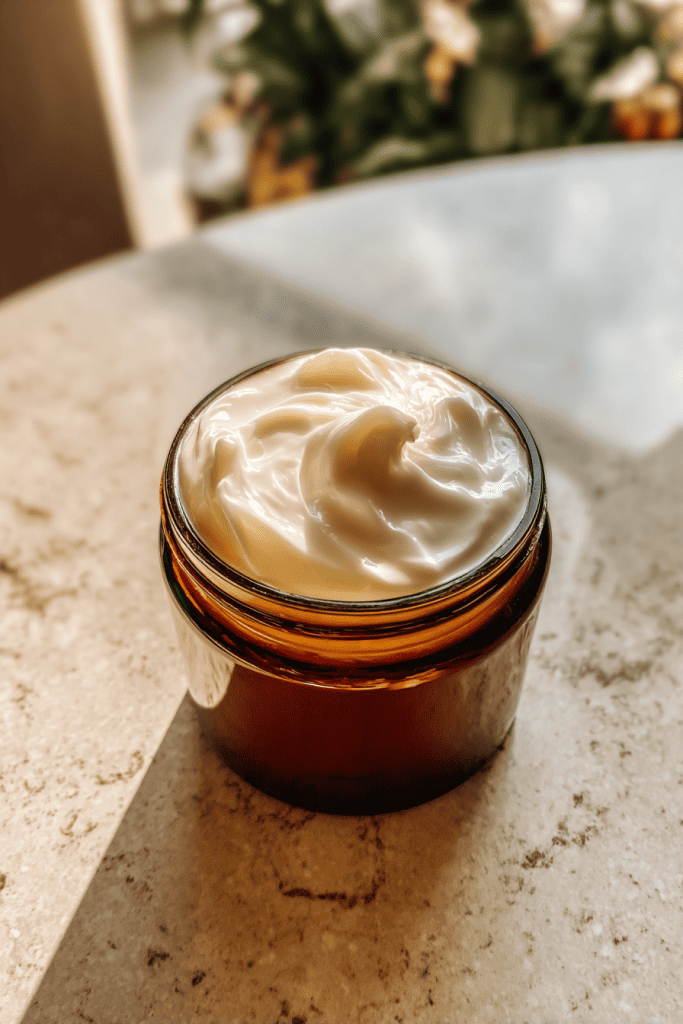
You’re making a real lotion here, so the goal is simple: get the oil phase and water phase to truly blend and stay blended.
Step 1: Set yourself up for an easy batch
Before you heat anything, get everything in place:
- your double boiler
- a heat-safe jar or measuring cup for the water
- a heat-safe bowl or jar for the oils
- immersion blender
- your final container (jar or pump bottle)
This is one of those recipes that feels extra smooth when you’re not scrambling mid-way. Clean tools also help your lotion stay fresh and pleasant.
Step 2: Melt the “oil phase” until it’s fully smooth
In the top of your double boiler, add:
- tallow
- liquid oil
- emulsifying wax
Warm it gently. You’re not rushing it – you’re letting everything melt into one glossy, uniform mixture. Stir occasionally.
What you’re looking for is this: no wax beads, no cloudy streaks, no little bits floating around.
When it looks consistently silky, you’re ready.
Step 3: Warm the “water phase” so it matches
In a separate container, warm your distilled water (or herbal infusion).
Here’s the reason: if you pour cool water into warm oils, the mixture can struggle to hold together.
When both are warm, they blend more willingly and create that true lotion texture.
You don’t need a thermometer to do this well. Aim for “comfortably hot” for both phases – warm and steamy, not boiling.
Step 4: Pour the water into the oils slowly, then blend
Now the fun part.
Slowly pour the warm water into your melted oil mixture. As you pour, start blending with your immersion blender.
Blend for about 30–60 seconds, and you’ll see it change:
- it turns opaque
- it looks creamier
- it starts to thicken slightly
That shift is your sign that the emulsion is forming – meaning the oils and water are becoming one stable mixture instead of separating.
Step 5: Let it cool a bit, then blend again for a smooth finish
After that first blend, give it a few minutes to cool. As it cools, the lotion naturally thickens.
Now blend again for another 15–30 seconds.
This second blend improves the feel – more refined, more even, more “store-bought texture,” while still clearly homemade and ingredient-honest.
If you want the most polished result, you can repeat this one more time as it continues cooling.
Think of it like this: you’re helping the lotion set in a unified way, so it stays creamy and consistent.
Step 6: Add vitamin E, essential oils, and preservative when it’s warm, not hot
Once the lotion is still warm but no longer hot to the touch, add:
- vitamin E oil
- essential oils (if using)
- Broad-spectrum preservative according to instructions
Then blend briefly – just long enough to distribute everything evenly.
This step ensures oils stay fresh, scent remains clean, and the lotion is safe at room temperature.
Step 7: Pour into your container and let it set fully
Pour your lotion into a clean jar or pump bottle.
Leave it uncovered for a short while as it finishes cooling, then cap it once it’s fully set.
Over the next hour or so, it settles into its final texture: creamy, light, and easy to apply.
If you want more inspiration for tallow-based skincare, see my hydrating tallow lotion bars recipe or ultra-nourishing tallow lip balm recipe.
How to Adjust the Recipe for Your Skin
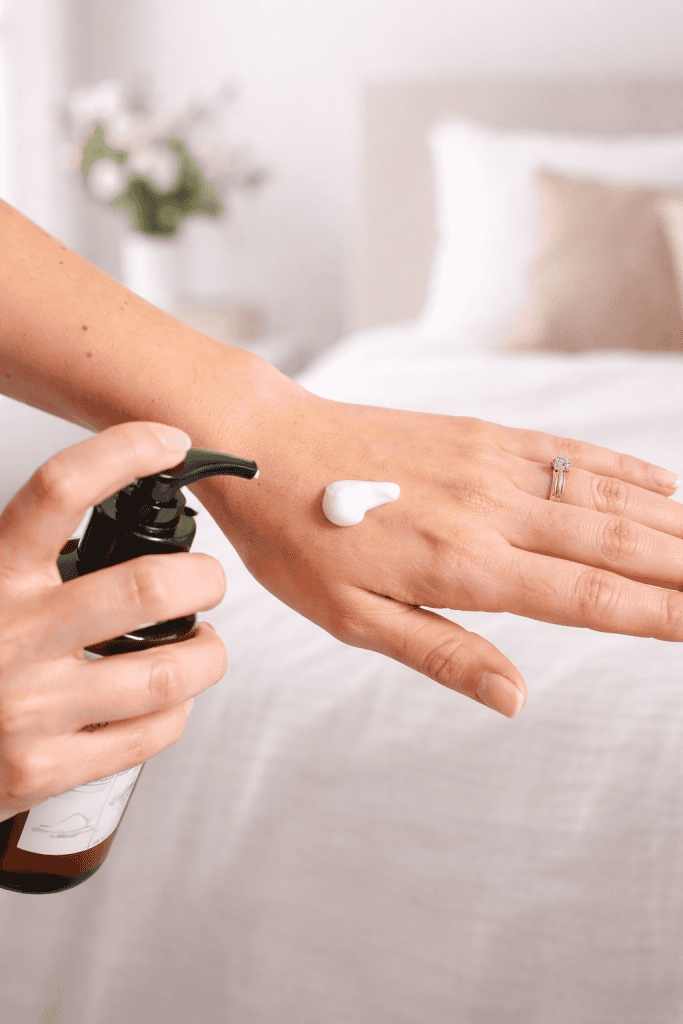
This recipe is meant to work with you, not lock you into one exact version. Once you’ve made it once, small adjustments become intuitive.
You’re not changing the foundation – just tuning the feel so it fits your skin and daily routine a little better.
If you want a lighter, faster-absorbing lotion
If you prefer a lotion that feels especially light on the skin, you can slightly reduce the amount of tallow and replace that amount with a liquid oil.
The lotion stays smooth and stable, but it spreads more easily and sinks in a bit faster.
This is a good adjustment if you like using lotion during the day or in warmer weather, when you want comfort without a heavier feel.
If you want a richer, more supportive feel
For skin that’s washed often or exposed to wind and weather, increasing the tallow just a little can make a noticeable difference.
The lotion feels fuller and more supportive, while still keeping that true lotion texture.
Choosing a liquid oil that feels right to you
The liquid oil you choose affects how the lotion feels more than anything else.
- Jojoba oil gives a very balanced, neutral feel.
- Olive oil feels slightly more substantial and works well in dry environments.
- Sweet almond oil adds softness and glide.
All of them blend well with tallow, so this choice is about preference, not performance.
Making simple seasonal adjustments
As the seasons shift, your skin often tells you what it needs.
In warmer months, a lighter blend usually feels best. In cooler months, a bit more body feels supportive and steady.
These adjustments don’t need to be precise.
You’ll feel the difference as you use the lotion, and that feedback guides the next batch naturally.
For more tallow-based products, check out my whipped tallow body butter recipe.
How to Store and Use Your Tallow Lotion
Once your lotion is finished, a little care goes a long way in keeping it pleasant and consistent to use.
Because this is a real, water-based lotion made at home, storage and handling matter but they’re easy to manage.
Choosing the right container
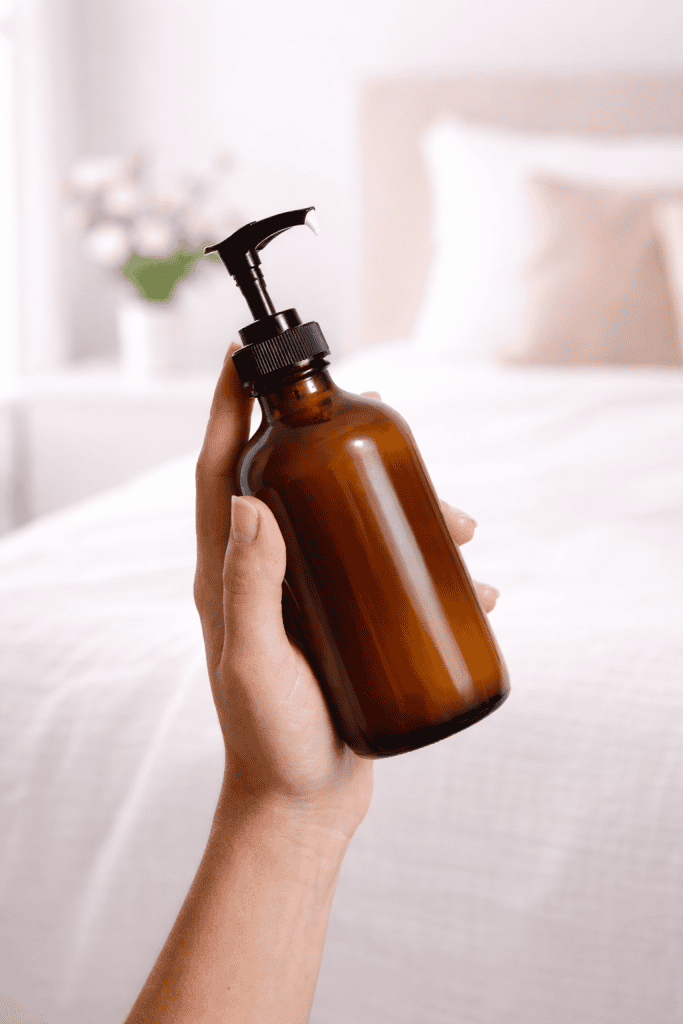
Pump bottles or squeeze bottles work especially well for tallow lotion.
They limit how much air and moisture come into contact with the product and make daily use simple.
If you prefer a jar, use clean hands or a small spatula each time.
Clean containers help the lotion stay fresh and maintain its smooth texture.
Where to keep your lotion
Store your tallow lotion in a cool, dry place away from direct sunlight. A bathroom cabinet or bedroom drawer works well.
Consistent temperatures help the lotion keep its structure and feel the same from first use to last.
If your home is especially warm, storing it in a cooler room can help preserve the texture.
How long it keeps
- With preservative: up to 3 to 4 months at room temperature
- Without preservative: refrigerate and use within 2 to 3 weeks
Store in a cool, dry place away from direct sunlight.
Pump bottles help reduce contamination, but jars work well if clean hands or a spatula are used.
How to apply for everyday comfort
A small amount goes a long way. Warm the lotion briefly between your hands, then apply it to clean skin using smooth, even motions.
It works especially well after washing or bathing, when skin is ready to absorb moisture.
This lotion fits easily into daily routines – hands, arms, legs, and anywhere skin appreciates steady support.
Using it consistently
The real benefit comes from regular use. Keeping the lotion where you’ll reach for it naturally makes consistency easy.
Over time, it becomes a simple, reliable part of caring for your skin at home.
Get Started on Your Tallow Skincare Routine!
With this homemade tallow lotion recipe, you’ll have a rich, soothing, and truly non-toxic moisturizer for the whole family.
Because the ingredients are so simple, you can feel confident about what’s touching your skin.
Gather some grass-fed tallow and give this recipe a try. You might be surprised how soft and nourished your skin feels after a few uses.
Remember, the key is consistency and caring for the product (small jars, clean tools, proper storage).
If you make this tallow lotion (or any variation), please comment down below with your feedback or any questions.
Happy healing and happy homesteading!
FAQs
Can I make this tallow lotion without essential oils?
Yes. Essential oils are completely optional. The lotion performs just as well without them, and many people prefer it unscented for everyday use.
Can I use this lotion on my face?
This lotion can be used on the face in small amounts. Start with a light application and observe how your skin responds. Adjust the texture if you prefer a lighter feel.
What type of emulsifying wax works best?
A plant-based emulsifying wax designed for lotions works well. Olivem 1000 or a standard emulsifying wax NF both support a stable, smooth blend.
Can I double the recipe?
Yes, this recipe doubles easily. Keep the same ratios and work in batches you can use comfortably within the recommended time frame.
Why did my lotion thicken more after cooling?
That’s expected. Tallow firms slightly as it cools, which gives the lotion its final creamy texture. The feel settles fully after it reaches room temperature.