
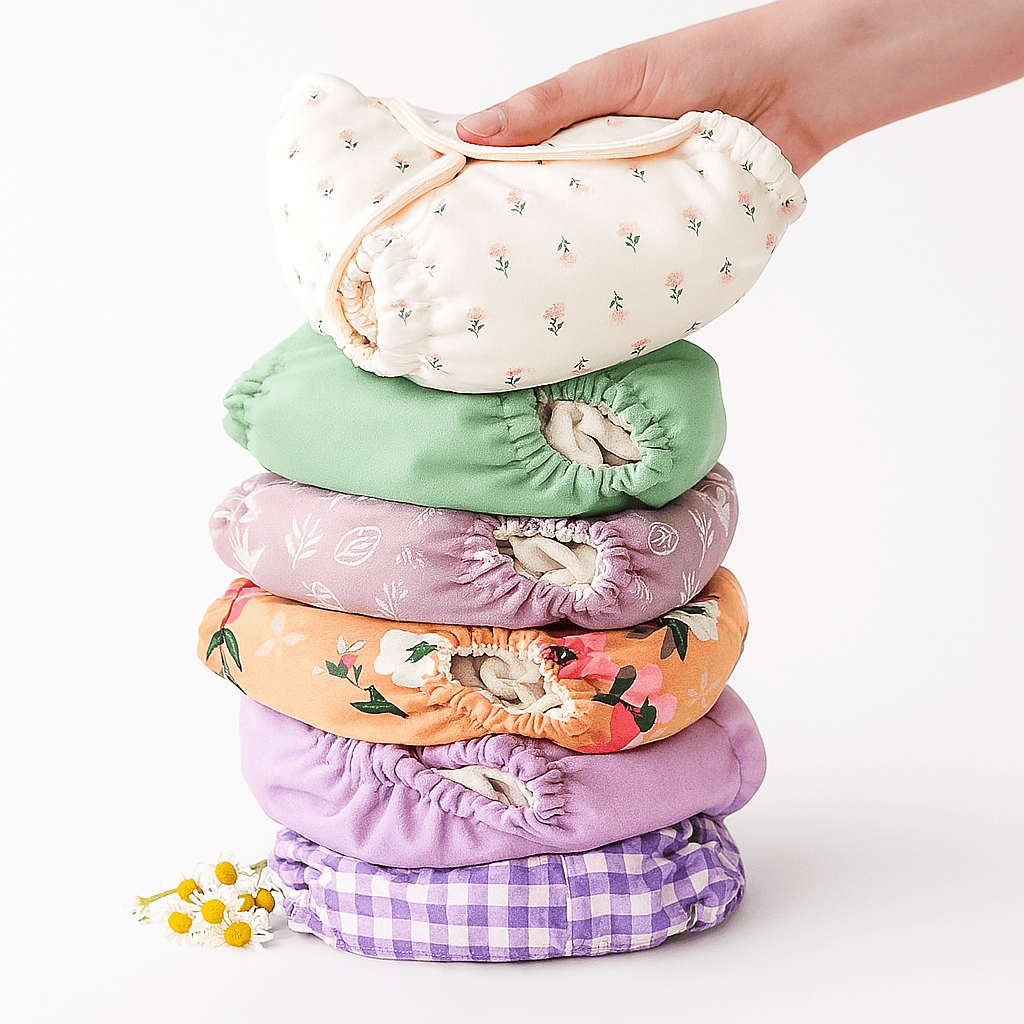
As a mom, I am always looking for ways to save money and somehow protect the environment for the future of our kids, and one of the best ways to do both is by using cloth diapers instead of disposable ones.
While some, especially first-time parents, may be hesitant to switch to cloth diapers, I am here to tell you that it’s not as difficult as it may seem.
In this ultimate guide, I’ll cover everything you need to know about cloth diapering, including the types of cloth diapers available, how to choose the right one for your baby, how to fit them properly, and how to clean and maintain them.
What Are Cloth Diapers?
Cloth diapers are reusable, washable diapers made from natural or synthetic fibers.
They come in various styles and materials to suit every baby’s needs. While some may think cloth diapers are old-fashioned or inconvenient, I have found them to be an easy and effective way to save money and reduce waste.
Why Choose Cloth Diapers?
There are many reasons to choose cloth diapers over disposable ones.
Environmental benefits
The first one is they’re better for the environment. Some estimate shows that babies often use 2500-3000 pcs of disposable diaper in their first year of life. (that’s a lot of garbage)
Aside from that, disposable diapers take hundreds of years to decompose, filling up landfills and polluting our planet.
While cloth diapers, on the other hand, can be washed and reused over and over again, significantly reducing waste.
Cost savings in the long run
Cloth diapers are also more cost-effective in the long run.
While the initial investment may be higher than disposable diapers, you’ll save money over time by not having to buy new diapers every week.
I personally choose cloth diapers because, let’s be real, it’s cost-saving in the long run.
Especially in my case, since my husband and I plan on having multiple children. And we really don’t want to kind of just throw money away. (and that’s what it feels like when you buy disposable)
You buy it, you get rid of it, and then you’ll buy some more. Whereas using cloth diapers it’s definitely an initial investment. But it’s worth it in the long run, especially if you want more than one child.
You can keep the cloth diapers until the next child comes around; you can reuse them, and you don’t really have to think twice about it.
Baby Friendly

Cloth diapers are also better for your baby’s health.
Disposable diapers usually contain pollutants like polychlorodibenzo-p-dioxins (PCDDs), organically active compounds of polyacrylates, or phthalates. xylene and toluene, and ethylene benzene. That can irritate your baby’s skin, causing rashes and other skin problems.
On the other hand, cloth diapers are made from natural materials such as cotton, bamboo, hemp, wool, and microfiber that are gentle on your baby’s skin, ensuring maximum comfort.
As a natural and holistic person, I understand the importance of using health-friendly products daily.
From my cosmetics to my suede, I always try to reduce any potential harm or toxicity that may affect my health.
By choosing cloth diapers, I am happy to know that my baby is not exposed to the harmful chemicals that are present in disposable diapers, which is a plus for me.
So, not only am I doing my bit for the environment, but I am also taking care of my baby’s health in the most natural way possible.
Easily Customizable and Has Aesthetic Appeal
Finally, cloth diapers are easily customizable and have an aesthetic appeal that disposable diapers simply can’t match.
With a wide variety of colors and patterns available in the market, you can definitely choose a diaper that fits your baby’s personality and style.
There are times or situations when disposable diapers would be beneficial.
Personally, I decided for my first baby that I wasn’t going to use cloth diapering during the newborn stage, like the first month.
Mostly because I didn’t want to be postpartum and deal with the baby for the first time and then have to learn how to cloth diapers and deal with Meconium (that I had to deal with early on), especially as a first-time mom. I don’t recommend it.
Just get a couple of newborn-size diapers for the first couple of weeks, and kind of use that a little bit to be more stress-free.
Also, when we were traveling, like when we traveled to California, I didn’t want to bring all my cloth diaper covers and inserts, which take up too much space to travel across the country with.
So, in those situations (and they are a little bit rare to us), I do then purchase disposable diapers because of convenient reasons.
Several Types of Cloth Diapers
There are several types of cloth diapers available, each with its own advantages and disadvantages.
1. Pre-folds and flats
The most basic types of cloth diapers are pre-folds and flats. They consist of a rectangular piece of cloth that is folded and secured with a diaper cover.
Pre-folds are made of multiple layers of cotton, bamboo, or hemp and can be folded in various ways to fit the baby’s size.
Flats are a single layer of fabric that can be folded in many ways to fit the baby’s size.
These types are the most versatile kinds of cloth diapers and can be used for babies of any size.
I have a whole pack of them. I don’t generally use them, but I do use them once or twice and only in cases of emergencies.
What I do is I use a prefold on my baby, and I put underwear to kind of secure it on her a little bit better. And that’s when I don’t have any diaper covers left (which doesn’t usually happen because I have enough), and I need to put something on her.
I also use them on occasions overnight as extra padding because she’s a heavy wetter at night, and that helps us. That’s why I’m thankful for having even just a pack of these around.
2. Fitted diapers
Fitted diapers have elastic at the legs and waist and are designed to fit the baby’s shape. They usually come with snap or Velcro closures, making them easy to put on and take off.
These cloth diapers often come in different sizes and materials, such as cotton, hemp, bamboo, and wool.
3. Pocket diapers
These are the types of cloth diapers that have a pocket, which you can use to insert an absorbent pad.
They have elastic at the legs and waist and come with snap or Velcro closures. These cloth diapers are easy to use and can be adjusted to fit the baby’s size.
They come in different sizes and materials, like microfiber, hemp, bamboo, and cotton.
When I started using cloth diapers, I went for Kanga Care Rumparooz, which was recommended by a famous and well-trusted blogger.
However, after using them for a few months, I wasn’t entirely satisfied.
They were made of polyester and had a plasticky feel. As my baby grew older, I noticed that they were leaving marks around her waist and thigh, which wasn’t comfortable for her or for me.
Additionally, they sagged at the bottom, even when they weren’t wet. I found myself constantly adjusting the snaps, which got quite annoying.
That’s when I came across Nora’s Nursery. Their diaper covers are lined with fabric, which is much gentler on a baby’s skin.
Even the outside waterproof lining is soft and not plasticky like the Rumparooz. The covers fit more snugly on my baby and don’t leave any marks.
Plus, they come with a cute little wet bag, which is super handy when traveling. And the colors are really pretty!
I’ve never had any leaks with Nora’s Nursery covers. Instead of using the pockets, I make my own wide inserts and lay them on top of the covers. This way, they don’t move around, and I don’t have to worry about blowouts or leaks.
If you’re interested, I recommend following my guide.
Finally, I like to reuse diaper covers as much as possible and minimize washing (unless they’re soiled with urine or poop). I’ll just give them a quick wipe-down and use them again.
4. All-in-one diapers
Now, let’s go to one of the most convenient types of cloth diapers, the All-in-one diapers.
All-in-one consists of a single unit that is easy to put on and take off, and they come with two kinds of layers: one is absorbent, and the other one is waterproof, which eliminates the need for a separate cover.
These type of cloth diaper comes in different sizes and are made from cotton, bamboo, hemp, and microfiber.
5. All-in-two or hybrid diapers
Finally, all-in-two, most commonly known as hybrid diapers, combines the convenience of all-in-one diapers with the flexibility of a pocket diaper.
They usually come in with a waterproof cover and a snap-in insert. These inserts can be changed without having to change the entire diaper.
You can get them in different sizes, and they are made from cotton, bamboo, hemp, and microfiber.
I recommend having a variety, especially for first-time moms.
There are some companies where you can custom order some diaper covers, and they ship them out to you, and you ship them back, and they send clean ones back, so you don’t need to wash them.
You can do that before committing to cloth diapers.
Or you can invest in a couple of different cloth diapers and find what you like best first for you and your baby, just to play around and see what works.
Just like me, I thought that rumparooz was great until my baby started to move around. But now, knowing things from experience, I will stick to pocket diapers because of the comfort level for her.
Materials Used in Cloth Diapers
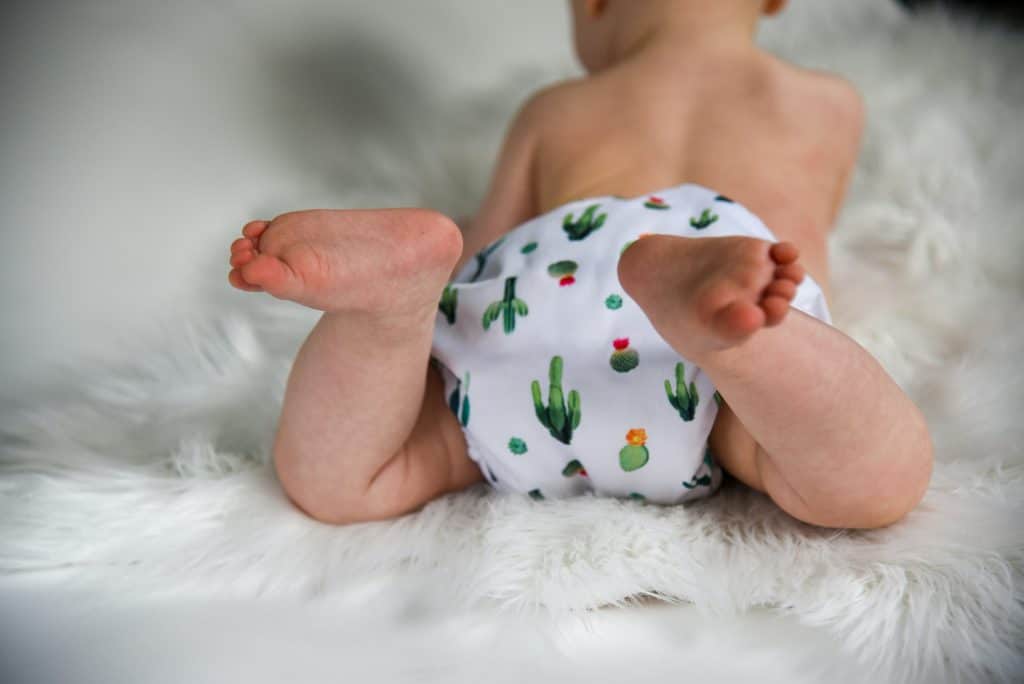
Cloth diapers are made from various materials such as cotton, bamboo, hemp, wool, and microfiber. Each of these materials has its own benefits and drawbacks.
Cotton
Cotton is one of the most common materials used in cloth diapers. It’s soft, easy to care for, and durable, making it capable of lasting even after multiple washings.
However, since cotton is less absorbent, cloth diapers that are made from it need to be changed more often, which can result in fewer diaper rashes, and even with extra liners, cloth diapers may not stay dry all night.
Bamboo
Now, let’s move on to one of the most popular materials, bamboo. Cloth diapers that are made from bamboo are ultra-soft and naturally antimicrobial. They are also highly absorbent and great for heavy wetters.
But, using cloth diapers that are made from bamboo also has its drawbacks. One of these is it takes a lot before they dry out because of their high absorbency. This will give you a hard time when you’re using the inserts frequently or if you’re living in humid areas.
Aside from the fact that it takes a long time before they dry out. Bamboo cloth diapers are also prone to shrinking, especially if you wash and dry them improperly.
This can be a disadvantage since most parents who use cloth diapers plan to keep them for a long time, and they are much more expensive than other materials.
Hemp
Aside from bamboo, another material that is highly absorbent and great for heavy wetters is hemp.
These cloth diapers are made from all-natural fibers, making them naturally microbial and can resist mold and mildew.
However, the disadvantage of hemp is it absorbs fluids slowly compared to other materials, and when they are, they need to be washed a few times before they become absorbent.
Wool
Lastly is the wool. This material is naturally breathable and great for regulating temperature, especially during summer.
Wool is also naturally antimicrobial and can resist odors, making it a great cloth diaper for your baby during nighttime.
Additionally, since wool is naturally resistant, odor-resistant, and crease-resistant, they don’t require frequent washing. This simply means that maintaining wool is a little bit easier and environmentally friendly as well.
Microfiber
Finally, microfiber is a synthetic material (typically made from polyester, polyamides, and polypropylene blend) that is highly absorbent.
They are the most cheap compared to other materials, and typically, they come with 3-5 layers.
But, since nothing is perfect, microfiber also has its disadvantages, one of which is they are prone to compression leaks.
This usually happens when a baby is wearing tight clothes or if they start sitting.
Another disadvantage of using microfiber is you can’t directly put it in a spot where it touches the skin of your baby because it can cause irritation.
This is because microfiber is highly absorbent, and when you place it directly on the skin, it tends to pull moisture out of your baby’s skin, which can lead to redness or skin rashes.
That’s why I don’t recommend it, since it can lead to rashes, and I don’t personally use it on my baby.
What I use instead is microfleece for diaper inserts; they are soft and lightweight, and my baby’s fine with them.
How Many Cloth Diapers Do I Need?
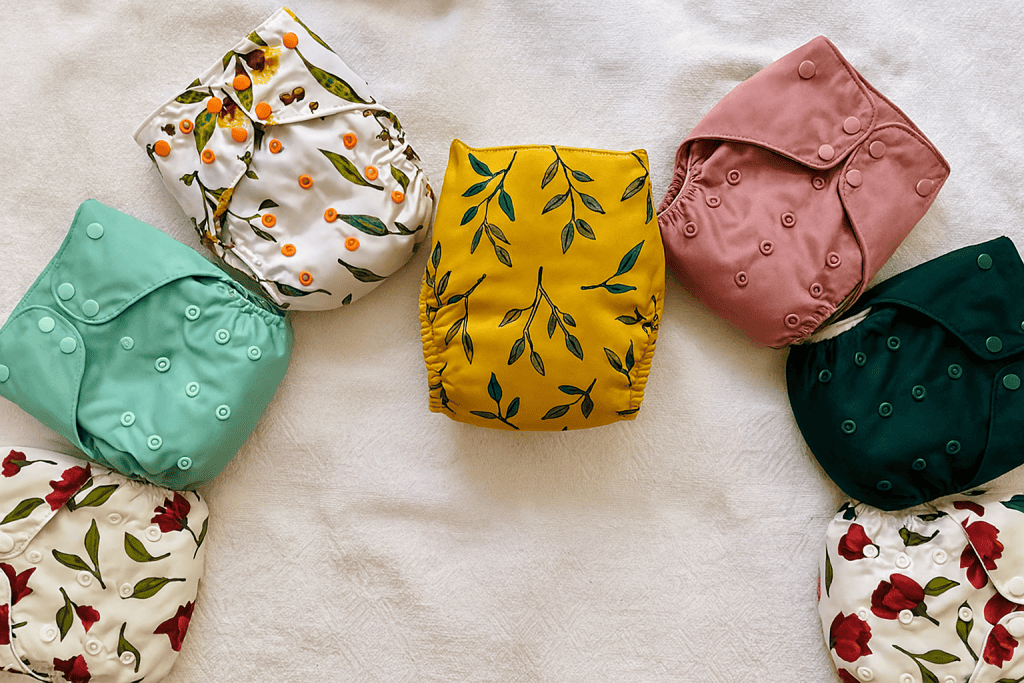
When it comes to how many cloth diapers you need, it depends on your baby’s age and how often you want to do laundry.
Babies usually go through 10 to 12 diapers per day, while toddlers generally go through six to eight, and kids (especially if they are potty trained) usually only need up to four diapers daily.
I recommend having at least 20 to 24 cloth diapers in your stash to make a comfortable rotation and ensure that something is available whenever your baby needs it.
Essential Accessories for Cloth Diapering
To make cloth diapering easier, there are several essential accessories you’ll need to have on hand.
1. Cloth wipes
The first accessories that you will need are cloth wipes. They are a great alternative to disposable wipes.
And you can easily wash them and reuse them if needed, significantly reducing waste and saving you a lot of money in the long run.
I personally make my own cloth wipe solution. I basically make washcloths, and it works out for me.
2. Diaper Pail
A diaper pail is a tool for storing dirty diapers until laundry day.
It provides a convenient and hygienic way to store used diapers until they can be appropriately disposed of or washed.
I recommend using a good-quality diaper pail with a lid and a washable liner, which can help keep the nursery or the changing area clean and odor-free.
However, you can still go without one and use a container or a bag where things won’t make it through.
3. Wet bags and pail liners
Now, If you love traveling (whether you are going on a short trip or a long journey) and you often bring your baby with you. You would definitely need wet bags and pail liners to keep your baby’s diaper organized while you’re away from home.
Just make sure that the kind you choose doesn’t make it through.
These accessories provide a convenient and practical solution for storing dirty diapers until they can be washed or disposed of properly.
These products also come in different sizes and materials, such as (PUL) Polyurethane Laminate, a waterproof laminated polyester fabric, making it easy for parents to choose the one that best suits their needs and preferences.
4. Diaper sprayer
Aside from wet bags and pail liners, The diaper sprayer is an essential accessory that you will need, especially if you’re a first-time parent.
A diaper sprayer is a convenient and hygienic way to remove poop from cloth diapers before washing. It helps save time and effort by eliminating the need for manual cleaning.
You can attach the sprayer to the toilet, and it produces a strong jet of water that quickly removes any solid waste, making diaper changes a much cleaner and more pleasant experience for parents.
We, personally, are thinking of using a bidet, just like many other people use that method.
However, we do have a water hose accessible right outside, and it’s high-pressure enough to take care of poppy situations. But the bidet can facilitate the situation so much.
That’s why we’re considering it in the future.
5. Cloth diaper-safe rash creams
Using cloth diapers is a great way to reduce waste and save money in the long run. However, it is important to use the right kind of rash cream to prevent and treat diaper rash without damaging the cloth diapers.
Cloth diaper-safe rash creams are formulated without petroleum, zinc oxide, natural oils like coconut oil or sunflower oil, and other harsh ingredients that can cause stain buildup and reduce the absorbency of the diapers.
By using cloth diaper-safe rash creams, you can ensure that your baby’s skin remains healthy and that their cloth diapers last longer.
6. Diaper covers (diaper inserts for certain types of diapers)
Lastly, the diaper covers. The diaper covers are an essential accessory for some cloth diapers like pre-folds and flats. They help prevent leaks and provide an additional layer of waterproof protection.
Without diaper covers, your cloth diapers will not be as effective in containing moisture, leading to discomfort for the baby and extra clean-up for parents.
Cleaning and Maintenance
Establishing a washing routine is essential to keep your cloth diapers clean and hygienic.
By consistently following it, you can keep your cloth diapers in top condition and provide your baby with a comfortable and healthy diapering experience.
Washing The Cloth Diapers
Before washing the cloth diapers, I recommend pre-washing the cloth diapers first to help remove the urine and bacteria to make the main washing more effective.
The first thing that you need to do is remove the solid waste in the cloth diaper.
Just shake it off a little bit into the toilet or rinse it using a diaper sprayer while holding the diaper under running water.
What I personally do is if the diaper cover is not wet or poopy, I don’t change it. But if the diaper insert is wet, I just take that and stick it in the diaper pail.
However, when you’re baby is exclusively breastfed, especially for the first couple of months, you don’t have to wipe off the poof. You can instead put that in the washer, and since the poop is water soluble, it is just going to wash away.
But once the baby eats solid, you don’t want to stick the poop in the washer anymore because it isn’t water-soluble at that point, and you will have a situation in your hands.
Some people have extra steps, but I stick my dirty diaper covers and insert them into the diaper pail. And wait until it’s full (maybe 2-3 days) before I wash them.
Also, I don’t wash them twice, and I don’t find it necessary since they smell clean and look clean already.
Line Drying vs. Machine Drying
When drying cloth diapers, you have two main options: line drying or machine drying.
Line drying is the most energy-efficient and gentle on diapers, preserving their elasticity and waterproofing.
However, it’s not always practical due to weather conditions or space constraints, especially if you live in an apartment in the city.
Machine drying is faster and more convenient but should be done on a low or medium heat setting to avoid damaging the diapers.
Personally, I just hang dry (lined dry) under the direct sunlight, and that’s it. But I still do machine drying sometimes if I need the diapers right away, but mostly, I just line dry.
Stripping Diapers When Necessary
Stripping is a process used to remove the buildup of detergent, fabric softener, or diaper creams from the cloth diapers.
This should be done carefully, as it can be harsh on the fabrics. It involves a series of hot washes with detergent to help remove the buildup.
Tips to Prevent Stains and Odors
To prevent stains, rinse diapers promptly after use and expose them to direct sunlight during line drying when possible.
I recommend also washing them thoroughly and adding an essential oil like lemon to help remove the stains.
Regularly cleaning your diaper pail and washing machine also helps prevent lingering smells.
Overcoming Common Challenges

Dealing with leaks, managing nighttime diapering, traveling with cloth diapers, and preventing stains are all common challenges when using cloth diapers.
Dealing with leaks
Several factors, including a lack of absorbency, poor fit, or the need for a diaper change, can cause leaks.
To ensure a snug fit, it’s essential to adjust the diaper around the waist and thighs.
Additionally, for heavy wetters or overnight use, you can use extra inserts to provide additional absorbency.
If you’re still experiencing leaks, you can consider customized liners, like I did, to ensure they fit perfectly to your baby and avoid the frustration and mess of blowouts and leaks.
Managing nighttime diapering
When it comes to nighttime diapering, it’s essential to have a different strategy in place.
Consider using cloth diapers that have higher absorbency or adding extra layers to prevent any mishaps during the night.
Always ensure that you put the diaper correctly before bedtime to avoid leaks.
As a parent of a heavy wetter, what I do is I always double the diaper inserts during the night, which saves me from having to change her and allows her to sleep soundly.
I just make sure to change her before bed and after waking up.
If you face a similar situation, you can double the inserts to avoid inconveniences for you and your baby.
This tip has worked wonders for me, and I’m confident it will work fine for you, too.
Traveling with cloth diapers
Based on my experience, I highly recommend taking more than what you think you need, especially when traveling.
When we visited New York in the past, this is just what I did. I just brought them in road baskets, which allowed me to carry everything with ease.
It’s always better to be safe than sorry, especially when it comes to traveling. You never know what situations you may encounter, so it’s always wise to be prepared for any eventuality.
Having extra supplies on hand can save you a lot of trouble and inconvenience in case of an emergency.
Addressing skepticism from family or friends
When making important decisions, it’s not uncommon to encounter skepticism or even opposition from our family or friends.
Some people think it is too difficult, people have a lot of opinions, but I think that informing family and friends, and then just making your own decisions, really knowing the reasons why you do and what you do is going to help you answer some of your skeptical family member or friends.
Just being informed will give you confidence, and it might even give you the influence to help educate people that if they do have the ability to do this, they might go on board also.
Cost Analysis
While disposable diapers are initially cheaper than cloth diapers, in the long run, you can save more money by choosing cloth diapers.
Initial Investment vs. Long-Term Savings
The initial cost for a complete set of cloth diapers can range from $390 to $1,250, depending on the types and brands chosen.
This upfront investment may seem steep, but it’s essential to consider the long-term savings.
Unlike disposable diapers, which are continually purchased over the years, cloth diapers can be washed and reused multiple times.
Comparison with Disposable Diapers Over Time
Disposable diapers are undeniably more convenient than cloth diapers, but this convenience comes at a cost.
The average parent spends about $870 per year on disposable diapers. Over a child’s diaper-wearing years, this can add up to a significant amount of money.
On the other hand, the initial investment in cloth diapers, while potentially large, could lead to savings over time.
If the upfront cost of cloth diapers is compared over the same period that disposables are used, the cost per month can be significantly lower.
Additionally, you can use cloth diapers for your future children, further increasing the savings.
Overall, while cloth diapers require a larger initial investment, they can offer significant cost savings over time.
Making the Switch
Transitioning from disposables to cloth diapers can be daunting at first, but with a little bit of planning, it’s an easy and rewarding change to make.
For me, switching from disposable to cloth diapers was an easy decision.
As soon as my newborn ran out of the newborn disposable sizes, I knew I wanted the transition. I had already done much research and had everything I needed, so the switch wasn’t a big deal.
I found that cloth diapering was the best choice for my family, and I’m happy with my decision.
My advice for transitioning from disposables to cloth diapers is to do as much research as possible, be prepared, and don’t be hard on yourself when challenges arise.
Slowly transition to a new way, but remain committed to it. And gradually build your diaper stash.
You can also join cloth diapering communities, either locally or online, which can provide invaluable support, tips, and encouragement from experienced cloth diapering parents.
Now, You Have Everything You Need To Know About Cloth Diapering
Cloth diapering is a practical and eco-friendly option for new parents. With various types and materials available, cloth diapers are customizable and fit any baby’s needs.
With proper care and maintenance, cloth diapers can last for years, saving you money and reducing waste.
So, if you’re looking for a way to save money, protect the environment, and keep your baby healthy and happy. Why not choose cloth diapering?
If you have questions or concerns, feel free to leave them in the comment below.