
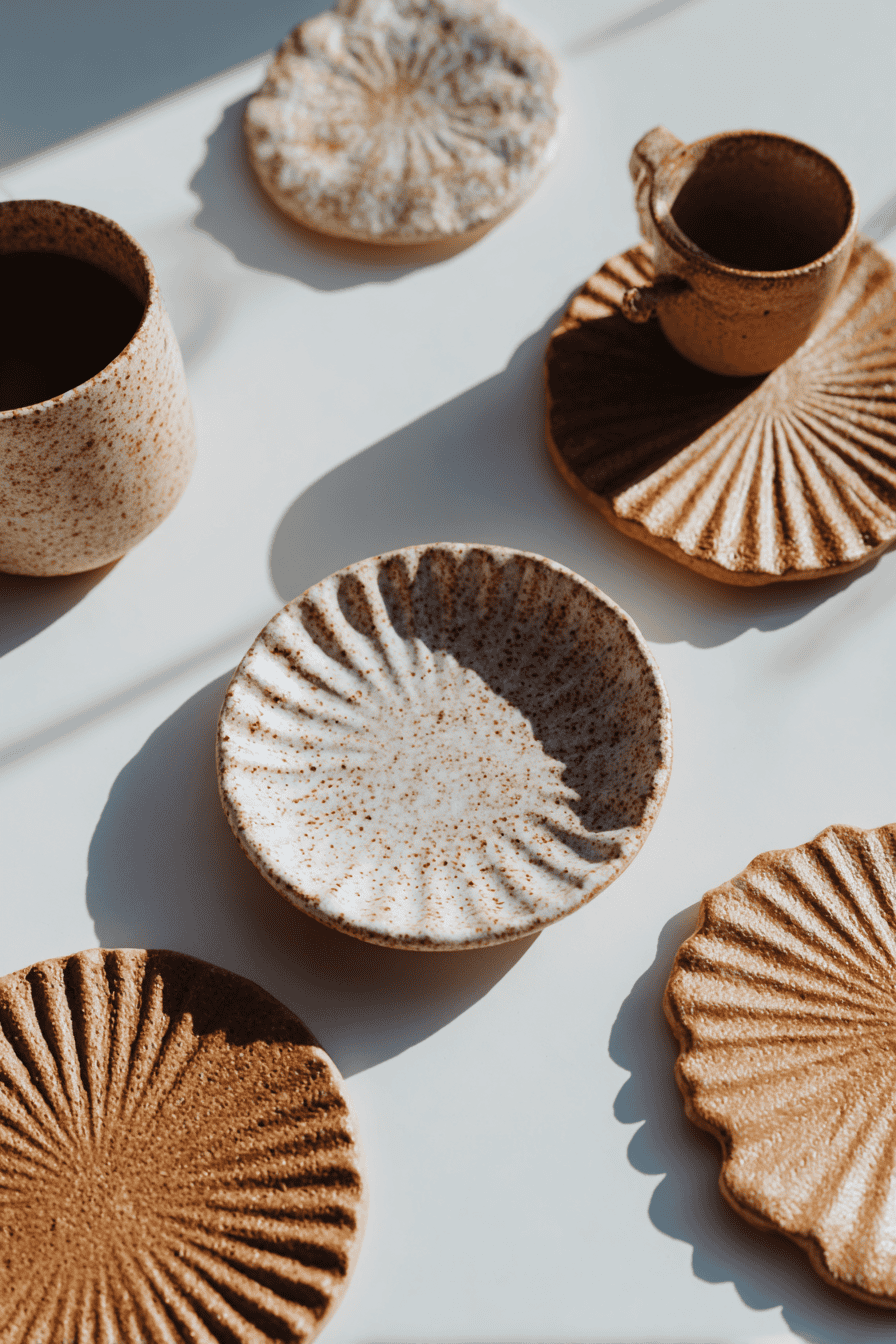
Clay has a quiet strength that makes it one of the most approachable materials for crafting.
It responds to your hands, holds its shape, and transforms into objects that serve both beauty and function.
If you’ve been wanting to add more handmade charm to your home, make thoughtful gifts, or just try a fun project with family, clay is a perfect place to start.
In this list, I’ve gathered 20 clay craft ideas that are easy enough for beginners but still leave plenty of room to get creative.
Grab a bit of clay, a few simple tools, and let’s see what you can make.
Why Clay Crafts Are Worth Trying
Clay stands out as a material that is both adaptable and approachable.
It can be shaped into everyday essentials, decorative accents, or small keepsakes – all with a sense of ease.
You can start anywhere; even air-dry and oven-bake clays are widely available and simple to use.
Working with clay also supports a practical mindset. A small project can provide something useful for the kitchen, the garden, or a gift shelf.
At the same time, clay invites creativity – each piece carries the maker’s hand in a way that feels personal and distinct.
There are many kinds of clay to explore.
- Air-dry clay is excellent for quick projects and lightweight items.
- Polymer clay offers bright colors and durability, perfect for smaller crafts.
- Traditional pottery clay brings the option of long-lasting, functional wares once fired.
Choosing the right clay simply depends on your project and purpose.
With clay, you’ll find projects that are manageable to start and deeply satisfying to complete.
If you’re looking for more seasonal inspiration, don’t miss these best fall craft ideas for kids.
20 Must-Try Clay Crafts Ideas for Kids and Adults
A clear, well-made clay piece brings quiet confidence to any home.
The ideas below invite hands-on making with pleasing results – useful, beautiful, and ready for daily life.
1) Clay Coasters
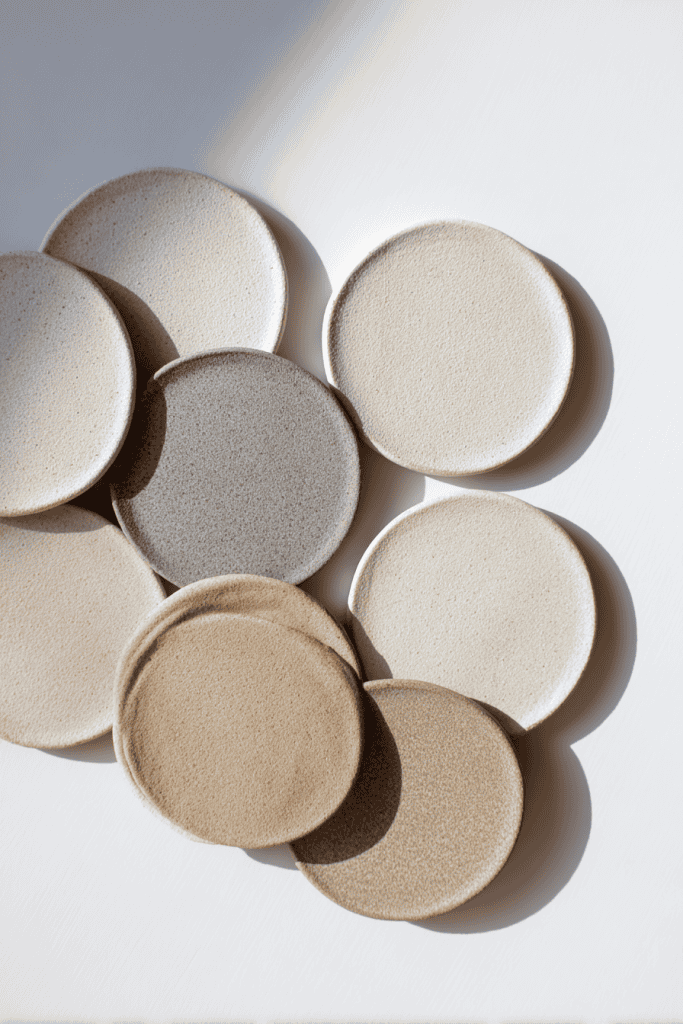
Coasters are one of the simplest clay projects, yet they add a handmade charm to everyday moments like morning coffee or evening tea.
Start by rolling the clay evenly to about 6–8 mm thick, then cut out circles or soft-edged squares with a biscuit cutter.
For texture, press in natural details – linen fabric, dried citrus, or sprigs of herbs all leave beautiful imprints.
Once dried or fired, seal the surface for water resistance and attach a thin cork backing for stability.
Try mixing plain, marbled, and speckled designs for a set that feels both varied and cohesive.
2) Handmade Mugs or Cups
From morning coffee to evening tea, a handmade mug can become part of your daily rhythm.
Choose a stoneware body and build by coil or slab for a cup that warms the palm and pours steadily.
Form the handle with an easy “pull” technique for a comfortable curve, then add a small thumb rest for balance.
Refine the lip with a gentle bevel so every sip feels composed.
Food-safe glazes (satin white, warm oatmeal, or iron speckle) finish the piece with quiet beauty.
3) Clay Spoon Rest
Every kitchen benefits from simple tools that make cooking smoother.
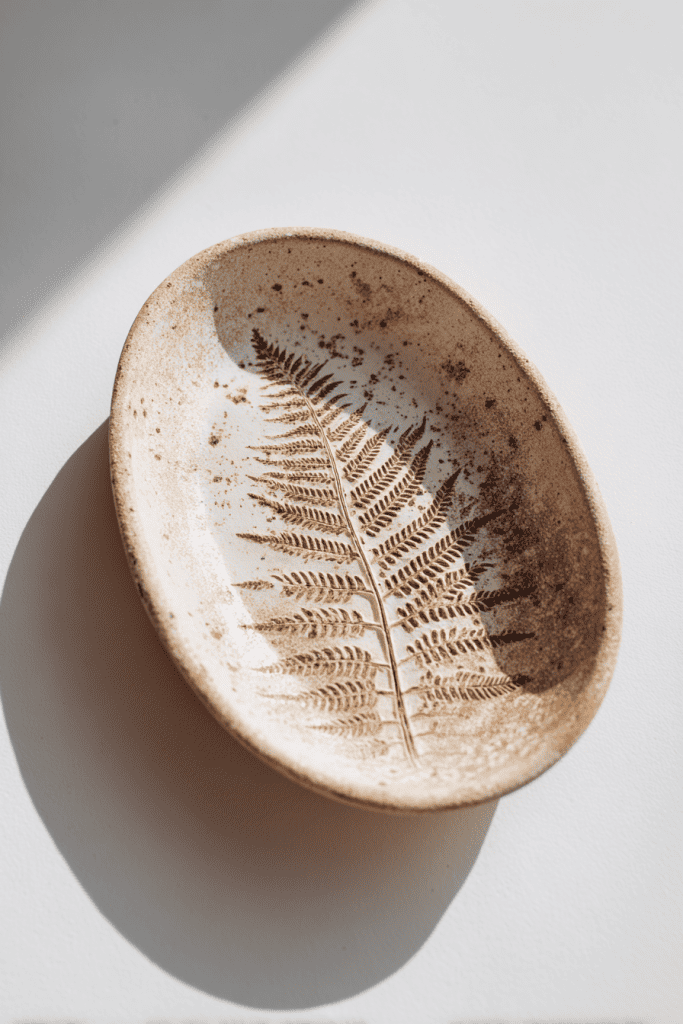
A clay spoon rest offers exactly that – a graceful oval that protects the stovetop and gives utensils a natural landing spot.
Start with a palm-sized pinch bowl, press it into an oval, and lift a shallow ridge on one side to cradle a spoon.
For character, add a fern or leaf impression, then smooth the rim with a damp sponge for a clean line.
A sealed matte surface or satin glaze ensures easy cleaning.
4) Clay Storage Jars or Canisters
Once you’ve made smaller pieces, try a project with more presence.
Clay jars and canisters keep tea, salt, or spices organized while bringing calm order to open shelves.
Hand-build a cylinder and form a snug lid that rests on an inner ledge.
Add stamped labels – “herbs,” “tea,” “seeds” – so each piece is both decorative and practical.
A simple glaze scheme (soft cream with a narrow colored band) makes the set look harmonious as a collection.
5) Clay Trivets
After coasters and spoon rests, the natural next step is a piece that handles more weight and heat.
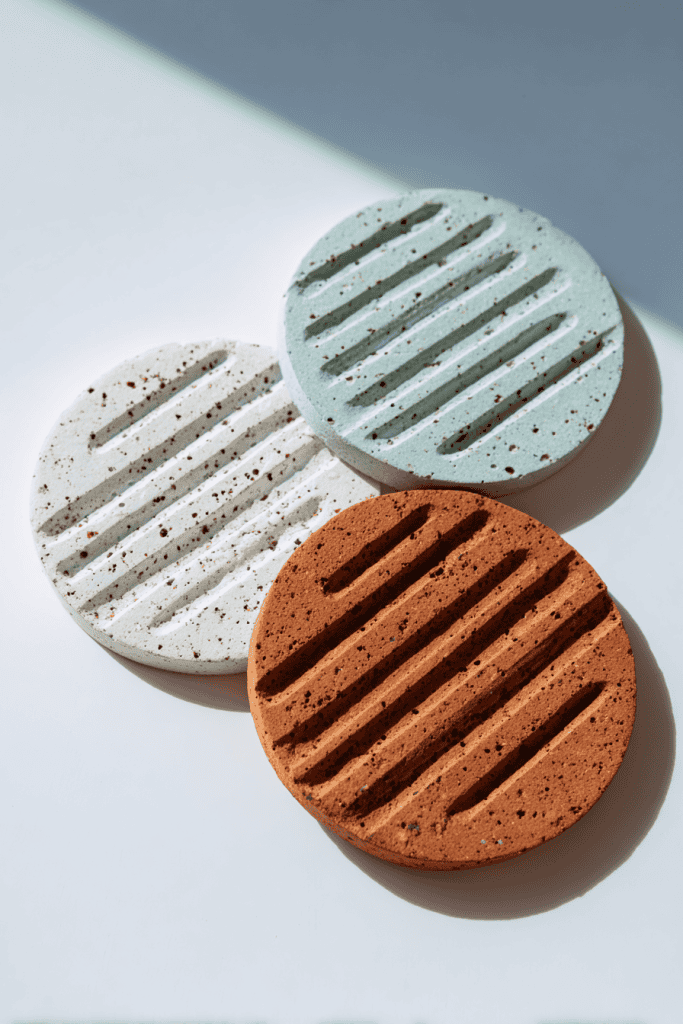
A clay trivet is both protective and handsome on the dining table.
Roll clay into a sturdy disk about 10 mm thick, then carve geometric grooves or press in botanical patterns for ventilation.
Add three or four small cork pads underneath to lift it slightly off the surface.
A simple satin glaze or even a bare burnished finish allows the pattern to stand out while providing reliable heat resistance.
6) Clay Plant Markers
Gardens thrive on good labeling, and clay plant markers are a solution that lasts through rain and sun.
Cut slim rectangles of clay and shape one end into a tapered stake.
While the clay is still damp, press in the plant name with a letter stamp or carve it neatly with a stylus.
Once dried and sealed, these markers resist fading far longer than wood or ink.
Choose a consistent style so your garden rows look ordered and easy to read at a glance.
7) Clay Pots or Mini Planters
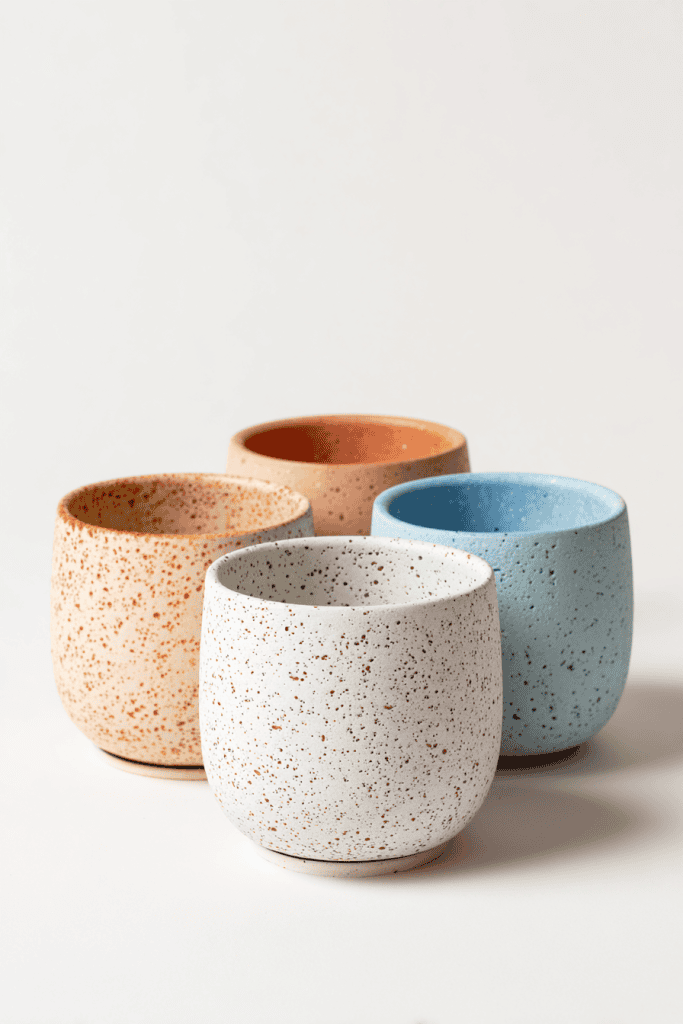
For small herbs on the windowsill or succulents on a shelf, handmade clay pots bring a touch of grounded charm.
Coil or pinch-build cylinders, smoothing the walls to an even thickness.
Press textures into the exterior (basket weave, linen cloth, or even netting) for subtle surface interest.
Add a drainage hole at the base before drying.
A set of three or four planters in different sizes makes a versatile grouping for both indoor and outdoor spaces.
If you’re planning crafts around the seasons or family gatherings, you may also enjoy these wholesome Easter craft ideas for kids, which pair beautifully with simple clay projects.
8) Clay Wind Chimes
Clay also carries sound beautifully, making it an inspiring choice for wind chimes.
Roll small slabs and cut into circles, ovals, or leaf shapes, then pierce clean holes near the top.
After firing or drying, string them with natural twine, spacing the pieces so they touch lightly in the breeze.
The result is a soft, earthy sound that complements the garden without overwhelming it.
A cluster of muted colors (terracotta, soft gray, and ivory) keeps the look refined.
9) Clay Bird Feeders
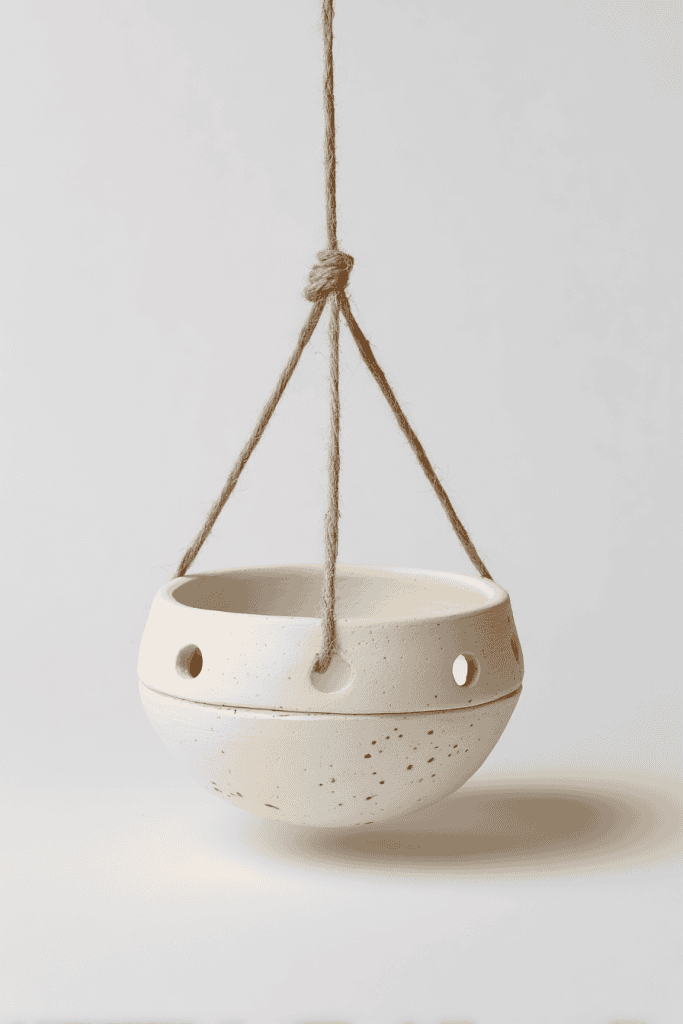
From planters and wind chimes, it’s a short step to inviting more life into the garden.
A clay bird feeder is sturdy, weather-friendly, and attractive to visiting songbirds.
Shape a shallow bowl and attach three evenly spaced holes around the rim for hanging with rope or twine.
For extra stability, add a small drainage hole in the center so rainwater doesn’t collect.
Whether suspended from a branch or tucked under a porch, the feeder becomes both useful and quietly beautiful.
10) Clay Stepping Stones with Imprints
Clay underfoot brings a sense of craft to pathways and garden beds.
Press large slabs into shallow wooden molds or frames, smoothing the surface before decorating.
Children’s handprints, pressed leaves, or simple geometric stamps add a personal layer.
Once hardened and sealed, these stepping stones guide the way through the garden while preserving memory in their patterns.
They serve as practical surfaces that also carry the imprint of family and place.
11) Clay Candle Holders
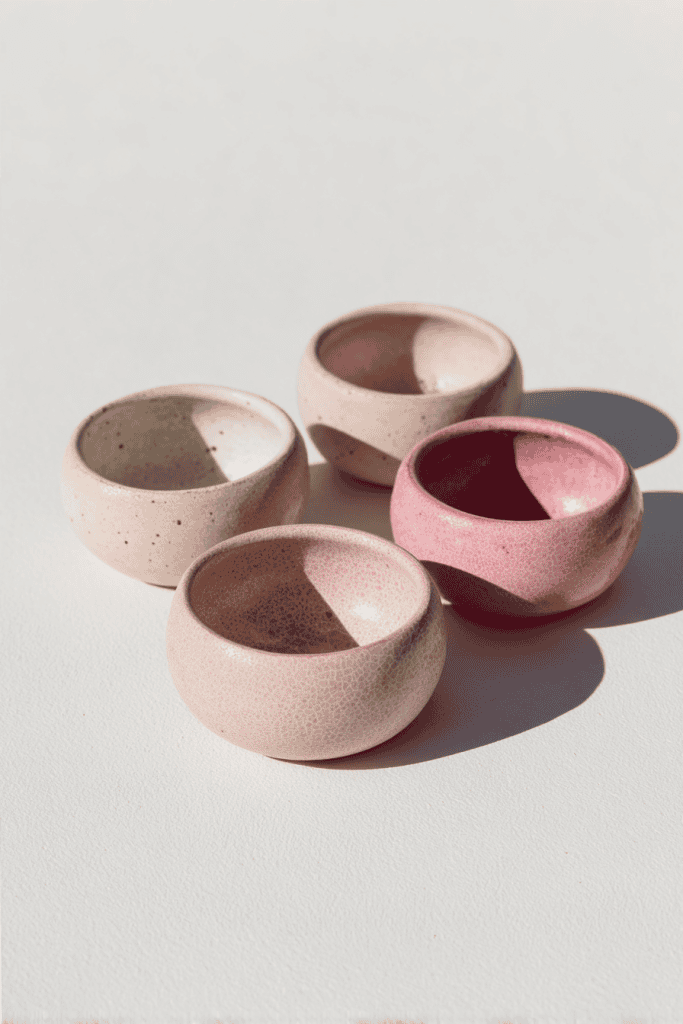
Shifting indoors again, candle holders are one of the most versatile clay crafts to explore.
From tall taper holders to shallow tealight cups, each piece offers endless shaping possibilities.
Roll a small coil and spiral it into a sturdy base, or build a simple column with a carved recess at the top.
Finish with matte black for modern simplicity, or leave unglazed terracotta for warmth.
Grouping several candle holders together instantly creates a centerpiece that feels intentional yet handmade.
12) Clay Bowls or Trays
Few items are as multipurpose as a shallow bowl or tray.
These pieces catch keys at the entryway, hold jewelry on a dresser, or serve snacks at the table.
Build by pinching or pressing clay into shallow forms, then refine the rim for a smooth, clean finish.
For added interest, carve subtle grooves inside the bowl or press a textile for texture.
A clear or neutral glaze keeps the piece versatile, allowing it to suit any room in the home.
13) Clay Wall Hangings
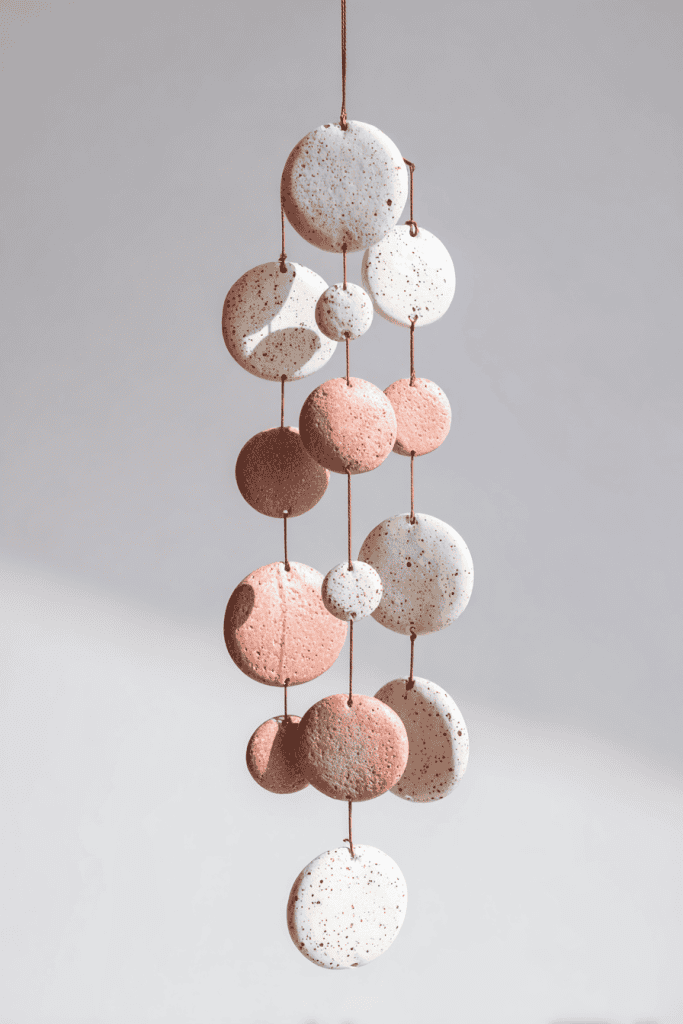
Clay isn’t limited to tableware or vessels – it can become art for vertical spaces as well.
Roll out a thin slab and cut geometric pieces, organic leaf forms, or abstract shapes.
Smooth the edges, pierce holes for stringing, and assemble with twine or leather cord.
The result can be a minimal single panel or a cascading mobile.
Neutral tones keep it subtle, while painted accents introduce contrast.
Wall hangings made from clay add dimension without clutter.
14) Clay Picture Frames
A handmade frame emphasizes the value of the image it holds.
Build the base from a slab cut to size, then attach rolled strips of clay to form borders.
Press in texture (a woven cloth, a row of seed impressions, or carved lines) for detail that feels intentional rather than busy.
Once dried and sealed, insert glass and a backing panel.
Displayed on a desk or shelf, a clay frame carries the weight of permanence and care.
15) Clay Beads for Jewelry
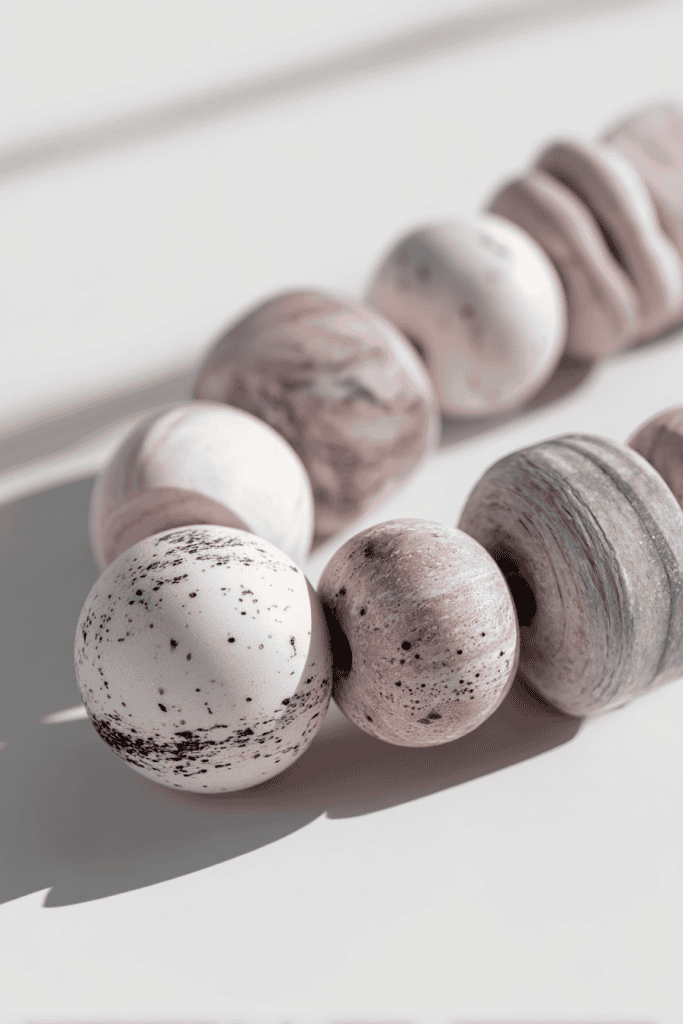
When shaped with precision, clay beads become versatile components for necklaces, bracelets, or keychains.
Roll small spheres or cylinders, pierce evenly with a skewer, and let them dry completely.
Experiment with surface design – marbling two clay colors, pressing faint patterns, or painting clean stripes after sealing.
The result is a set of lightweight beads that look cohesive together yet remain unique from piece to piece.
If you enjoy tactile crafts like this, you may also like these beginner-friendly sewing projects, which offer the same hands-on satisfaction.
16) Clay Ornaments
Seasonal décor benefits from pieces that can be remade year after year.
Clay ornaments provide that durability while still being customizable.
Roll a thin slab, cut shapes with cookie cutters or a craft knife, and add a clean hole for ribbon.
Before the clay sets, imprint lace, greenery, or stamps for added character.
These ornaments store easily and maintain their charm for many seasons, whether hung on a tree, in a window, or as part of a garland.
They also work beautifully for themed crafts like easy Christian Valentine’s crafts or faith-based seasonal projects.
17) Clay Magnets
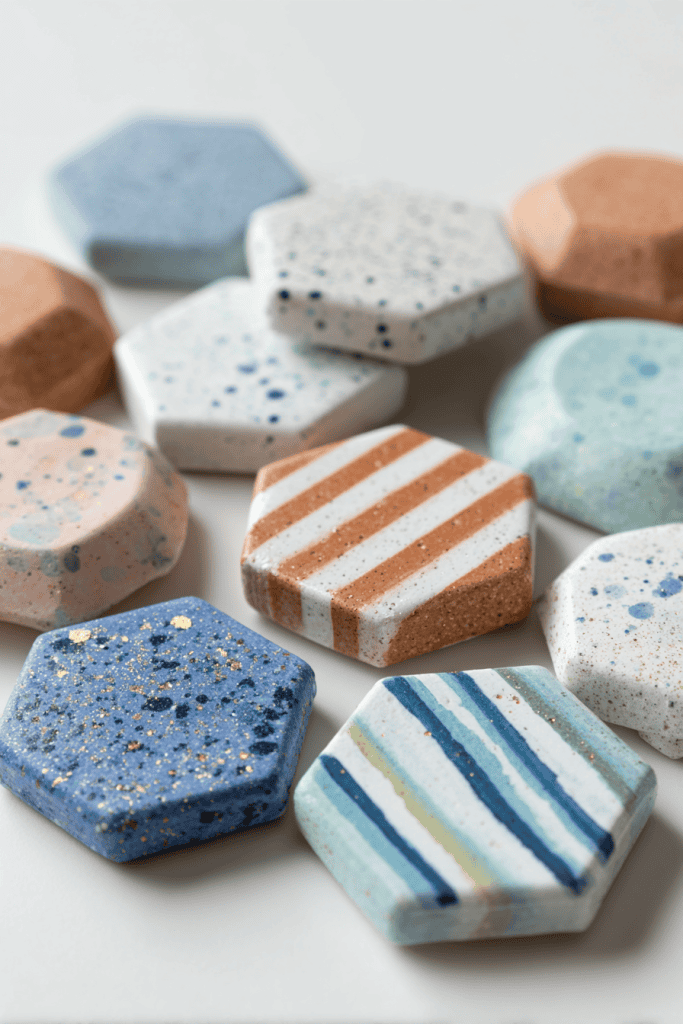
Small but endlessly useful, clay magnets are a clever way to bring personality to the refrigerator or a message board.
Roll or cut tiny shapes – circles, hexagons, or miniature fruits and flowers.
Once dried, paint with acrylics or glaze for color.
Affix a strong magnet to the back using industrial adhesive, and you have a set that’s both practical and cheerful.
Because they’re quick to make, clay magnets are excellent for experimenting with design ideas.
18) Clay Stamps
Clay itself can create tools for other projects.
Form blocks or handles, then carve simple motifs (lines, dots, leaves, or geometric patterns) into the surface.
Once hardened, these stamps work beautifully on fabric, paper, or even bread dough.
A set of handmade clay stamps turns repetitive tasks into a creative process, offering endless patterns with minimal effort.
19) Clay Animals or Figures
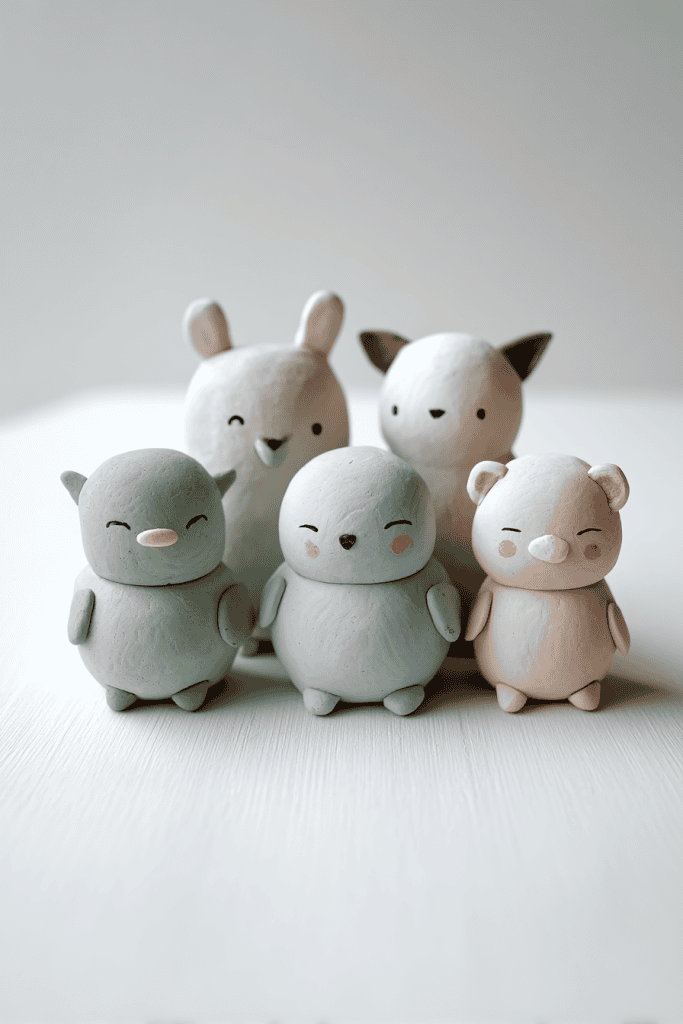
For those who enjoy sculpting, small clay figures bring out imagination in a tactile way.
Begin with basic forms (an owl, a turtle, or a simple human figure) focusing on proportion and smooth shaping rather than fine detail.
These figures can become toys, shelf accents, or even garden companions.
Each one carries a distinct personality, shaped entirely by the maker’s hand.
20) Clay Puzzle Pieces
Clay also lends itself to interactive projects like puzzles.
Roll a slab, cut out shapes that interlock, and let them dry completely.
Sand the edges lightly so the pieces slide together smoothly.
These can be simple geometric puzzles for children or decorative sets for adults.
They combine craft with play, reminding us that handmade items can also encourage learning and problem-solving.
Tips for Success with Clay Crafts
A good project begins with the right approach. Clay is forgiving, but a few simple habits make the process smoother and the results more satisfying.
- Pick the right clay. Air-dry for quick crafts, polymer for color and strength, pottery clay for lasting pieces.
- Use simple tools. Rolling pin, knife, sponge, and a few shaping tools are enough. Everyday items like leaves or fabric make great textures.
- Mind moisture. A damp sponge smooths edges. Too much water weakens clay. Cover in progress pieces to prevent cracks.
- Finish well. Sand edges after drying. Seal, glaze, or oil to protect surfaces and highlight details.
- Stay consistent. Keep coils and slabs even. Balanced thickness prevents warping and gives a polished look.
These small habits make clay work easier and results more satisfying.
If you’re looking for something festive and kid-friendly, check out this DIY New Year’s craft for kids for easy projects that still feel special.
Start Your Clay Project Today
Clay is a material that rewards curiosity and patience.
With simple tools and a bit of practice, it becomes the foundation for pieces that are useful, creative, and personal.
Each project – whether a small magnet or a full set of planters – carries your touch and brings handmade character into everyday spaces.
If one of these projects inspired you, try it this week and see where it leads. And if you’ve already made something with clay, feel free to share your experience in the comments below – it may spark someone else’s next project.
FAQs
1. What type of clay is best for beginners?
Air-dry clay is often easiest to start with since it requires no kiln or special tools. It’s ideal for small household projects and decorative items.
2. How can I prevent clay from cracking while drying?
Keep thickness consistent, avoid excess water, and let pieces dry slowly under a light cover like plastic wrap. This allows moisture to leave evenly.
3. Do I need to seal clay crafts?
Yes, sealing helps protect the surface. Use food-safe glazes for kitchenware, or clear varnish, wax, or oil for decorative pieces.
4. Can clay crafts be painted?
Absolutely. Acrylic paint works well on air-dry or polymer clay. Traditional pottery pieces can be glazed before firing for lasting color.
5. How long do clay projects usually last?
With the right clay and finish, handmade pieces can last for years. Polymer and fired pottery are especially durable, while air-dry clay is best for light use or display.