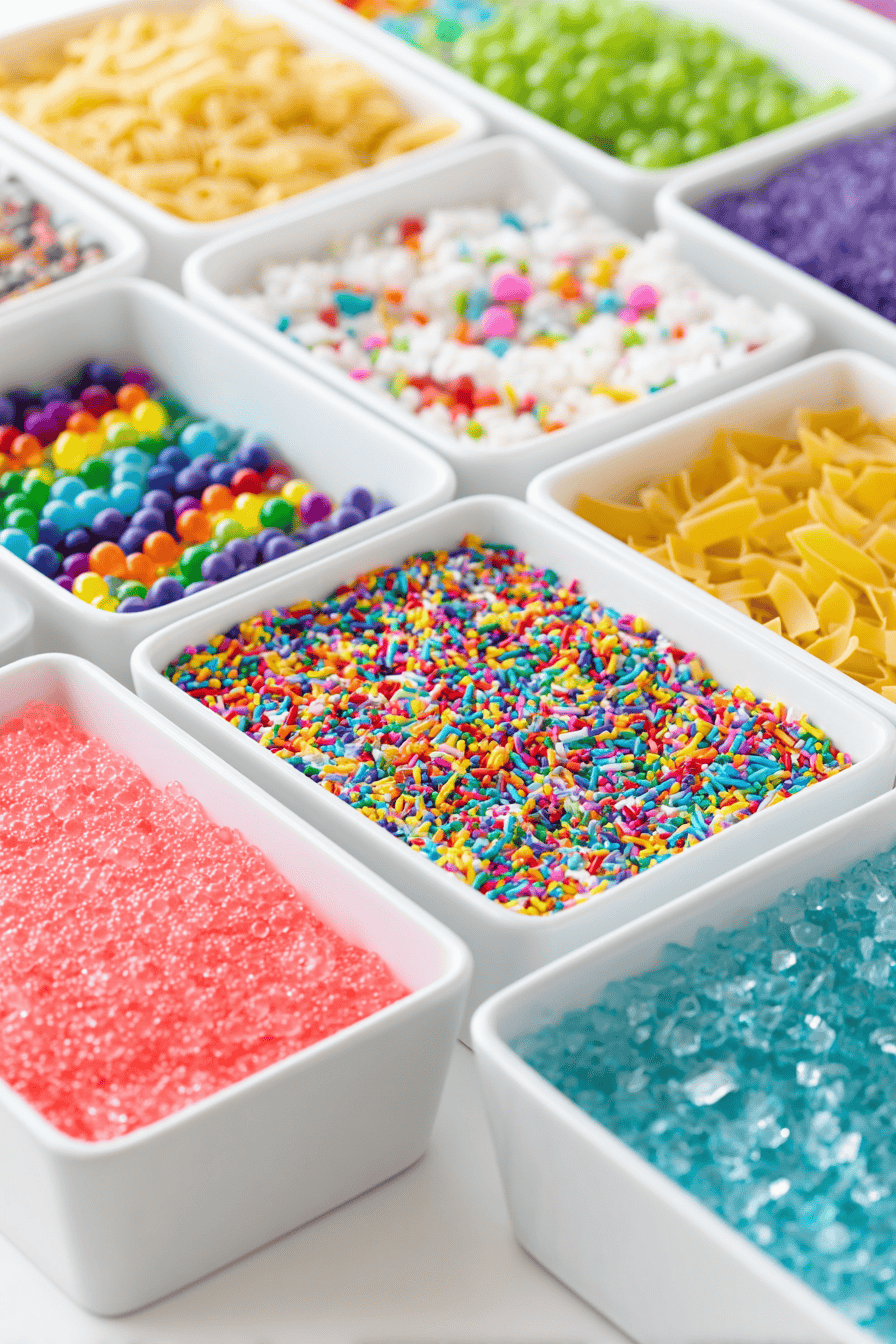
Sensory bins are a simple way to invite toddlers into meaningful play.
With just a container and a thoughtful filler, children can scoop, pour, sift, and explore textures that build fine motor skills and spark curiosity.
These hands-on experiences encourage focus, imagination, and calm engagement – all while using materials you likely already have at home.
The beauty of sensory play is its flexibility. You can rotate fillers, add small tools, or pair bins with a theme, making each setup fresh and engaging.
Below you’ll find 15 exciting sensory bin filler ideas that are safe, practical, and enjoyable for toddlers.
Each one is easy to prepare and offers opportunities for discovery right at home.
15 Exciting Sensory Bin Filler Ideas for Toddlers
The fillers you choose shape the experience, whether it’s the smooth feel of grains or the soft touch of fabric.
If you’re exploring sensory play beyond bins, you may also enjoy tummy time sensory play ideas that support early movement and exploration.
Below are 15 carefully chosen fillers, each bringing its own kind of discovery to toddler play.
1. Rice

Rice is a classic filler that offers endless possibilities.
Its tiny grains flow smoothly between fingers, teaching toddlers about volume, movement, and cause-and-effect.
You can leave it plain for a natural look or dye it with food coloring to create bright, cheerful play themes.
Add a few cups and spoons, and toddlers will happily scoop, pour, and transfer rice again and again, strengthening their hand-eye coordination.
If your child is younger or just beginning sensory play, check out these genius sensory play ideas for babies for simple, age-appropriate setups.
2. Dry Beans

Dry beans bring a heavier, more tactile feel compared to rice.
Toddlers enjoy the satisfying sound beans make as they fall into containers, and the larger size makes them easier to grasp and sort.
Mixing different colors or varieties (like kidney beans, black beans, and lentils) adds visual interest and encourages pattern recognition.
The weight of the beans also gives children a grounded sense of texture and resistance.
3. Pasta Shapes

Pasta comes in so many shapes (shells, spirals, tubes, or bows) that it doubles as both a filler and a learning tool.
Toddlers can compare shapes, line them up, or string them onto yarn for an added fine motor challenge.
The hollow pasta can be used with scoops or even as tiny tunnels for marbles or beads in supervised play.
It’s a versatile option that encourages both imaginative and skill-building activities.
4. Oats

Oats create a softer, calming sensory experience compared to grains like rice or beans.
The fine, slightly flaky texture feels gentle in the hands, which can help toddlers slow down and focus.
You can use rolled oats for a cozy, “snowy” effect or steel-cut oats for a bit more texture.
Oats also pair well with scoops, animal figurines, or small construction toys, inviting pretend play alongside sensory exploration.
Oats are especially soothing during colder months.
If you’re looking for calm, seasonal setups, check out these cozy winter indoor sensory play ideas for gentle, indoor play inspiration.
5. Sand

Sand is a timeless filler that encourages digging, pouring, and building.
Toddlers can practice scooping with shovels, pressing shapes with molds, or simply running their fingers through it.
It teaches concepts like weight and density while offering an earthy, grounding feel.
For indoor play, a small amount of play sand in a bin is enough to capture that beach-like experience without the need for a large outdoor space.
6. Pebbles or Rocks

Smooth pebbles or small rocks bring a unique weight and texture that other fillers don’t.
Toddlers enjoy the clinking sounds when pebbles hit each other or drop into a container, which adds an auditory layer to play.
Sorting by size, stacking, or creating little “paths” are simple ways children can interact with this filler.
Choosing polished or naturally smooth stones ensures the bin remains safe and pleasant to handle.
7. Pinecones or Acorns

Pinecones and acorns bring an earthy, seasonal touch to sensory bins.
Their natural shapes and textures give toddlers a chance to feel ridges, curves, and smooth shells.
Pinecones can be paired with scoops for collecting or used in pretend play, while acorns offer an easy size for sorting.
These materials spark curiosity about nature and can be collected during a walk, making the activity part of a larger learning experience.
8. Dried Corn Kernels

Bright, glossy dried corn kernels make for a cheerful filler that’s both lightweight and eye-catching.
The golden color invites play on its own, but the texture also adds an enjoyable crunch when scooped or poured.
Toddlers can practice filling small cups or burying toys for a “treasure hunt” experience.
Corn kernels store well, so you can reuse them for seasonal bins or rotate them throughout the year.
9. Cotton Balls or Pom-Poms

Soft and light, cotton balls and pom-poms give toddlers a gentle sensory experience.
They can be sorted by color, picked up with tongs for fine motor practice, or simply squeezed in the hand for a soothing texture.
Pom-poms add a burst of color, while plain cotton balls can be used in pretend snow or cloud-themed bins.
Their light weight also makes them ideal for simple transfer games with spoons or cups.
Soft fillers like these work beautifully in guided activities.
If you want more structured ideas, check out these DIY sensory activities for toddlers that are easy to set up at home.
10. Felt Scraps

Felt scraps add a sustainable and colorful option to sensory play.
The soft yet slightly textured fabric invites toddlers to rub, fold, and layer pieces together.
Because felt holds its shape, children can build small structures, line up “paths,” or sort scraps by size and color.
Using leftover fabric from sewing projects makes this filler both resourceful and creative.
11. Feathers

Feathers bring a light, airy texture that encourages gentle handling.
Toddlers can explore the softness against their skin, practice blowing them across the bin, or sort them by size and color.
The delicate feel encourages slow, mindful play, which can be especially calming.
Pairing feathers with a fan or simply letting children wave them through the air adds movement and variety to the experience.
12. Water Beads (Non-Toxic)

Water beads provide a unique squishy texture that’s unlike any other filler.
Once hydrated, they’re bouncy, slippery, and slightly translucent, sparking both visual and tactile curiosity.
Toddlers love scooping them, transferring them into containers, or watching them roll across surfaces.
Choosing biodegradable, non-toxic beads ensures the play remains safe and eco-friendly while still offering this fascinating sensory element.
13. Shredded Paper

Shredded paper is lightweight, crinkly, and full of sound and movement.
Toddlers love running their hands through the strips, pulling them apart, and burying small toys within the pile.
It’s an eco-friendly choice if you reuse old mail or packaging, and you can even dye the paper to match seasonal themes.
The mix of texture and sound adds a lively layer of discovery to play.
14. Buttons or Beads (With Supervision)

Buttons and beads introduce a rich variety of shapes, colors, and textures.
Toddlers can sort by size, line them up, or drop them into containers for practice with precision and coordination.
Because they are small pieces, these fillers are best used with close supervision and for children past the mouthing stage.
Their visual appeal and versatility make them a strong option for fine motor practice and pattern play.
15. Ice Cubes or Snow

Bringing in a temperature element (like ice cubes or snow) adds a whole new sensory dimension.
The coolness engages touch in a fresh way, while the melting process introduces science concepts like change and time.
Toddlers can watch the cubes shrink, scoop slushy textures, or even add a few drops of food coloring for simple experiments.
This filler is temporary, but its novelty makes it especially engaging.
Temperature-based play is especially engaging when done thoughtfully.
If you’re curious about age-appropriate sensory guidance, check out this expert-approved sensory play for babies resource for added confidence.
How to Elevate the Play
A sensory bin becomes even more engaging when you add simple layers of variety.
The fillers are the foundation, but small touches can open new ways to explore. Here are a few ideas to take play further:
Add Tools and Utensils
Everyday items like spoons, cups, funnels, or small scoops introduce new challenges and encourage fine motor skills.
Toddlers practice pouring, transferring, and balancing while discovering how tools change the way materials move.
Rotate Fillers Regularly
Keep a small collection of fillers and bring out one or two at a time.
Rotating them maintains interest and creates novelty without needing to buy or prepare new items constantly.
Even familiar fillers feel fresh when they appear after a short break.
Mix Materials Thoughtfully
Combining two or more fillers invites curiosity.
Rice with buttons, oats with feathers, or pebbles with cotton balls offer contrasting textures that spark new kinds of play.
These pairings teach children to compare and experiment in a hands-on way.
Introduce Themes
Seasonal or interest-based themes (like “farm,” “construction,” or “ocean”) give toddlers a story framework.
Add small figurines or natural objects to tie the filler into the theme and encourage imaginative play alongside sensory exploration.
If you’re building a sensory routine rather than a one-off activity, you might also enjoy DIY sensory activities for toddlers that grow with your child.
Tips for a Smooth Experience
A little preparation goes a long way in making sensory play easy to manage and enjoyable for everyone.
These simple strategies help keep the activity flowing smoothly:
- Pick fillers by age – larger pieces for younger toddlers, smaller ones for older toddlers (with supervision).
- Use a defined container – a shallow bin or tray keeps materials in one place.
- Set up on a mat – makes cleanup simple and quick.
- Keep tools nearby – scoops, cups, and containers encourage play.
- Store for reuse – label jars or bags for easy rotation.
- Model at first – show simple actions, then let your toddler explore.
Bring Sensory Play to Life Today
The ideas in this list are flexible and easy to adapt – you can start with what you already have at home and build from there.
With just one filler and a simple container, you can create meaningful opportunities for your toddler to explore, learn, and focus.
The key is consistency: rotate fillers, mix textures, and invite your toddler to join you in discovering new ways to play.
Which filler are you excited to try first? Share your thoughts in the comments below – I’d love to hear your ideas and see how sensory play looks in your home.
FAQs
1. What age is best for sensory bins?
Sensory bins can be introduced as early as 12–18 months, depending on your child’s readiness. Start with larger fillers (like pasta or pom-poms) and always supervise play.
2. How long should toddlers play with a sensory bin?
Most toddlers engage for 10–20 minutes at a time. Over time, the duration often increases as they develop focus and explore more deeply.
3. Can sensory bins be reused?
Yes – most fillers like rice, beans, or pasta can be stored in jars or bags and rotated. Some fillers, like ice or snow, are temporary but offer fresh novelty.
4. How do I keep sensory bins safe?
Choose age-appropriate fillers, supervise closely, and avoid small pieces if your toddler still mouths objects. A defined play space also keeps things safe and manageable.
5. What tools should I add to a sensory bin?
Simple items like spoons, cups, funnels, scoops, or small containers are enough. Rotate tools occasionally to keep play engaging without adding clutter.