
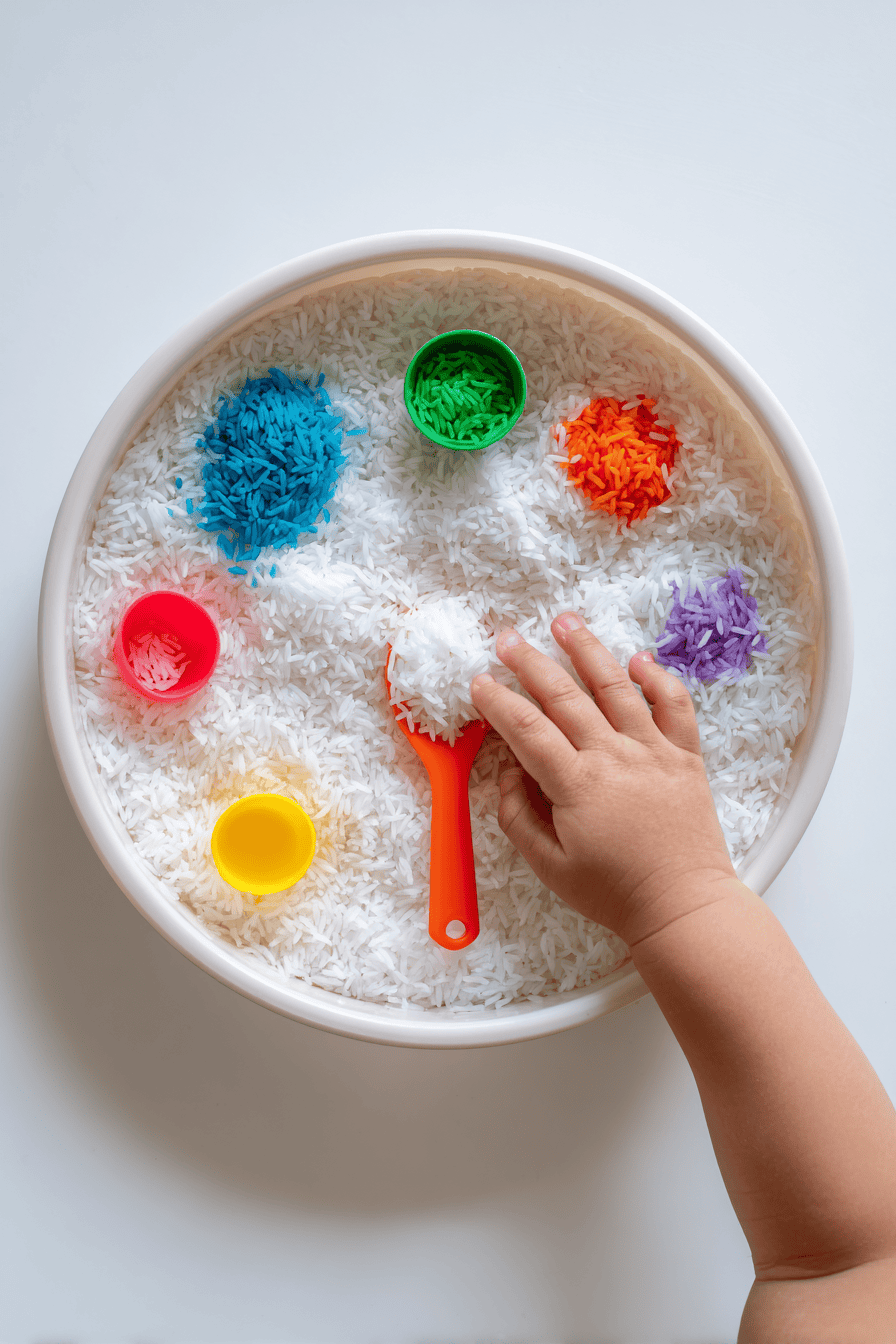
Toddlers explore the world with their whole bodies.
Every squeeze of playdough, splash of water, or shake of a rattle opens up textures, sounds, and patterns that shape how they understand life around them.
Sensory play strengthens fine motor skills, expands language, and builds focus while giving little ones the excitement of discovery.
Getting started is wonderfully simple.
With everyday items already at home, you can create engaging activities that spark curiosity, encourage independence, and grow confidence.
In this article, we’ll explore 15 DIY sensory activities for toddlers – practical, enjoyable, and thoughtfully designed to support development while keeping playtime fresh and fun.
Why Sensory Play Matters
Toddlers are natural explorers. They learn best by doing – touching, tasting, smelling, listening, and moving.
Sensory play brings all of those experiences together in ways that fuel both joy and growth.
When a toddler stirs water with a spoon or presses soft dough between their fingers, they’re not just playing.
They are building neural pathways that strengthen problem-solving, coordination, and memory.
These small, hands-on moments prepare the brain for more complex learning later on.
Sensory activities also support language growth. As children feel rough, smooth, squishy, or sticky textures, they connect those sensations with new words.
The more words they collect, the more clearly they can express themselves.
For even younger children, many of these same benefits begin early.
Simple tummy time sensory play ideas can support awareness and coordination long before toddlers are on the move.
Equally important, sensory play encourages focus and calm engagement.
Toddlers often become deeply absorbed in exploring textures, sounds, and patterns – learning to sustain attention in a natural way.
Over time, this ability to focus translates into confidence in everyday tasks and a stronger sense of independence.
Practical Tips Before You Begin
A little preparation goes a long way in making sensory play successful. These tips keep activities simple, safe, and engaging for both you and your toddler.
- Start with what you have. Most sensory activities can be set up with household items – rice, spoons, towels, or water. No need for special supplies.
- Keep materials safe and age-appropriate. Choose items that are large enough to avoid swallowing risks and always supervise while your toddler explores.
- Offer variety. Rotate textures, colors, sounds, and movements so play stays fresh. Shifting between dry, wet, soft, and crunchy materials gives toddlers a wider range of experiences.
- Choose the right space. A kitchen floor, patio, or grassy backyard makes clean-up easier. For smaller spaces, a tray or shallow bin keeps activities contained.
- Follow your toddler’s lead. Some children may prefer pouring and scooping, while others are drawn to sounds or movement. Let their curiosity guide the pace and focus.
These same principles apply across ages. If you’re also caring for younger children, many of these setups can be adapted from expert-approved sensory activities for babies with just a few adjustments.
By keeping these principles in mind, you set the stage for sensory play that feels relaxed, meaningful, and fun.
15 DIY Sensory Activities for Toddlers
Meaningful sensory play can be wonderfully simple.
These activities are practical, easy to set up, and designed to spark curiosity.
Each one uses everyday materials in creative ways that nurture focus, independence, and joyful exploration.
1. Rainbow Rice Bin
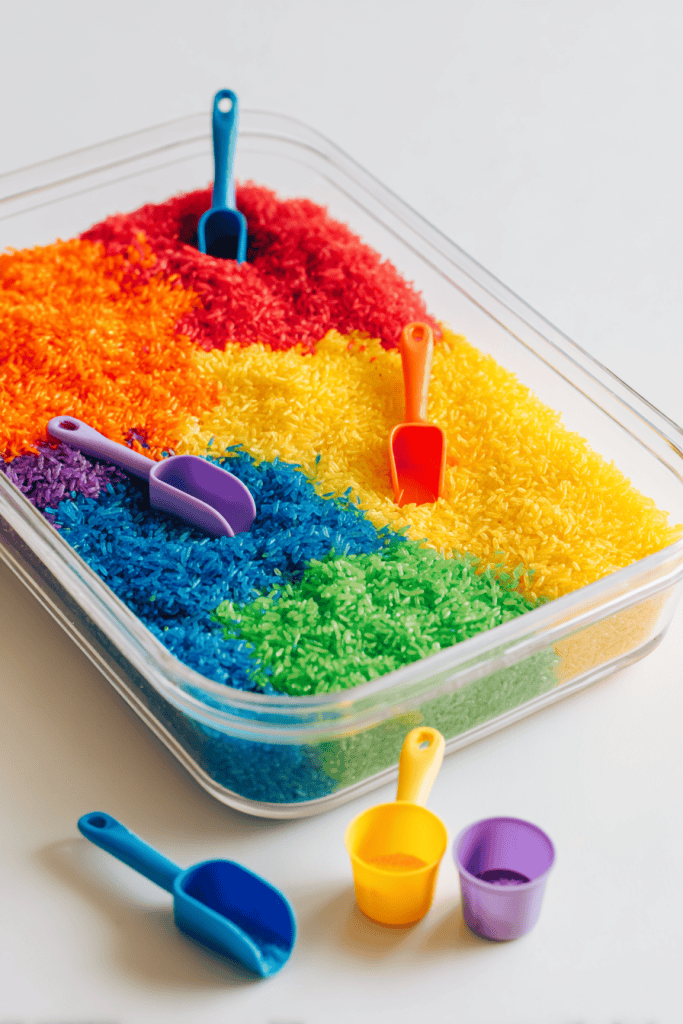
Colorful rice is an inviting sensory base that toddlers can scoop, pour, and sort.
To make it, mix uncooked rice with a few drops of food coloring and a teaspoon of vinegar in a sealed bag, then spread it out to dry.
Pour the dried rice into a shallow bin and add scoops, spoons, or small containers.
This activity builds hand–eye coordination, strengthens fine motor control, and encourages early math skills through measuring and sorting.
If you enjoy sensory bins, you may also like these exciting sensory bin filler ideas for toddlers to keep play feeling fresh.
2. Water Play Station
Water has a natural calming effect, making it one of the most effective sensory tools.
Fill a shallow tub with water and provide cups, funnels, and sponges for pouring and squeezing.
Add floating items like corks or plastic lids to explore sinking and floating.
Toddlers develop problem-solving skills as they experiment with volume, cause and effect, and movement.
It’s also an easy way to introduce language about “full,” “empty,” “heavy,” and “light.”
3. Homemade Playdough
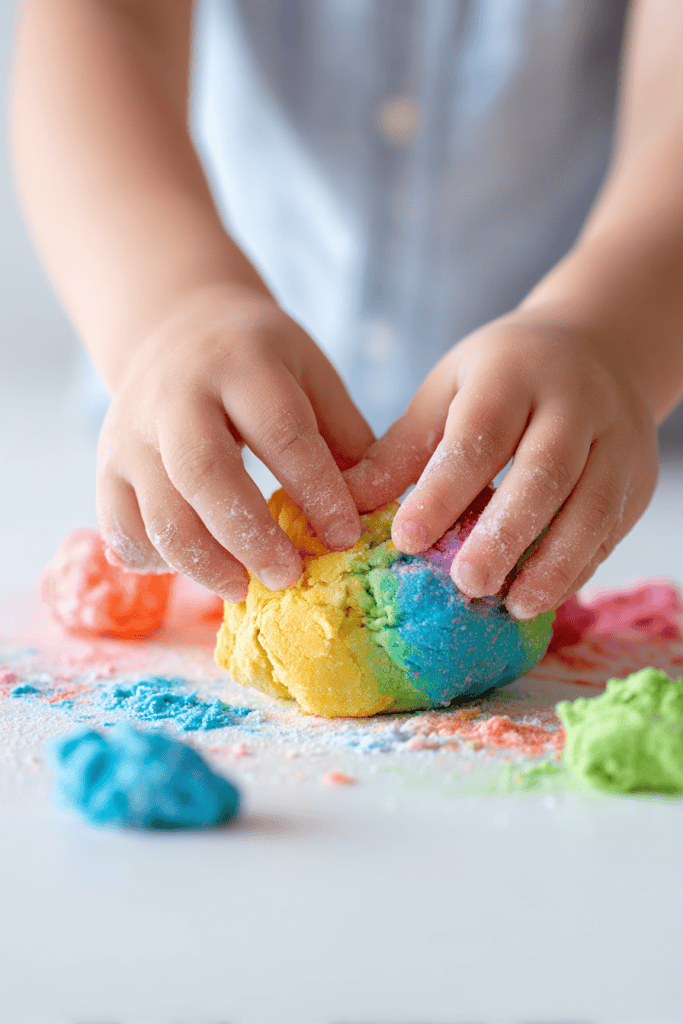
Playdough invites endless exploration through rolling, pinching, cutting, and shaping.
You can make a simple batch at home with flour, salt, water, oil, and cream of tartar.
Adding natural food coloring or a few drops of lavender or lemon essential oil (used sparingly) makes the dough even more engaging.
This activity strengthens hand muscles, prepares toddlers for writing later on, and supports creativity as they experiment with shapes and textures.
4. Nature Basket
A simple walk outdoors can provide a full collection of sensory treasures.
Gather safe items like pinecones, smooth stones, leaves, or seed pods, and place them in a basket for your toddler to explore.
Encourage them to notice textures – rough, smooth, bumpy – and colors or shapes.
This activity strengthens observation skills, connects children to the natural world, and builds vocabulary as you name and describe each item together.
5. Bubble Wrap Stomp
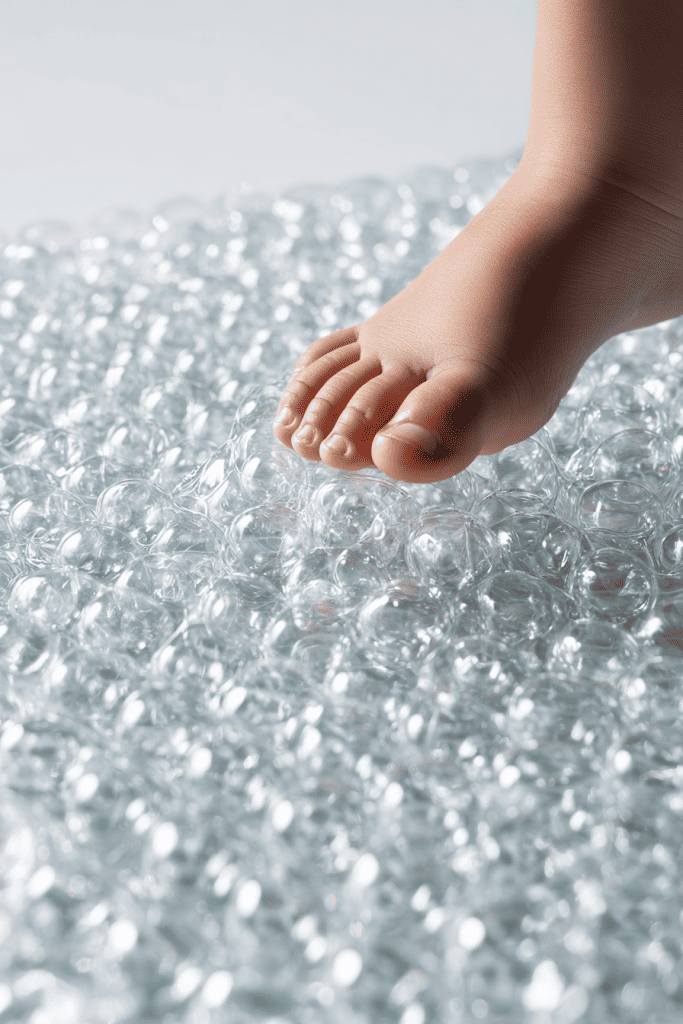
Lay a sheet of bubble wrap on the floor and invite your toddler to step, press, or jump on it.
The popping sound paired with the bumpy texture makes for an exciting full-body sensory experience.
Beyond the fun, this activity improves balance, coordination, and body awareness.
It’s especially engaging for energetic toddlers who enjoy activities that combine sound, movement, and texture.
6. Scooping & Pouring Beans
Fill a shallow bin with dried beans, lentils, or pasta and provide scoops, cups, or ladles.
Toddlers can practice transferring materials from one container to another, experimenting with volume and control.
The repetitive motion builds fine motor strength, patience, and focus.
For added learning, introduce concepts like “full,” “half,” or “empty” as they measure and pour.
7. Frozen Toy Rescue
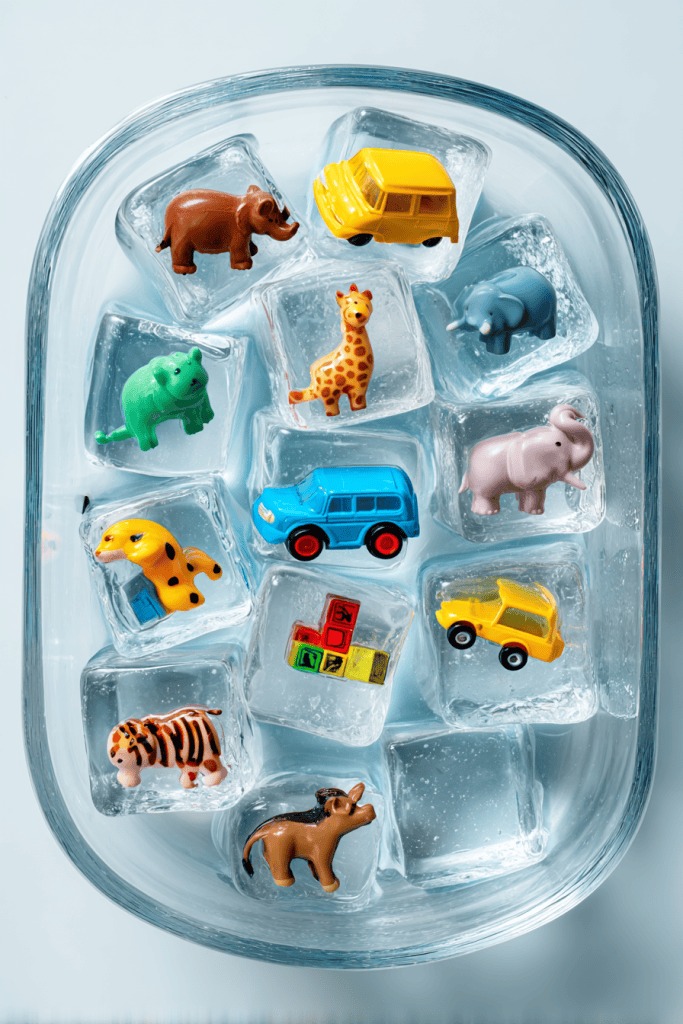
Place small plastic toys inside an ice cube tray, fill with water, and freeze.
Once solid, give your toddler a bowl of warm water, child-safe tools (like spoons or droppers), and let them “rescue” the toys.
This activity introduces concepts of melting, temperature, and cause-and-effect.
It also strengthens patience and fine motor skills as they chip, pour, and experiment with different ways to release the treasures.
8. Texture Path
Create a simple path on the floor using items with different textures – towels, yoga mats, rugs, cardboard, and even grass patches if outdoors.
Invite your toddler to walk barefoot across the path, noticing how each surface feels under their feet.
This activity enhances body awareness, balance, and sensory processing while giving them a playful way to explore contrasts like soft, rough, smooth, and squishy.
9. Cloud Dough
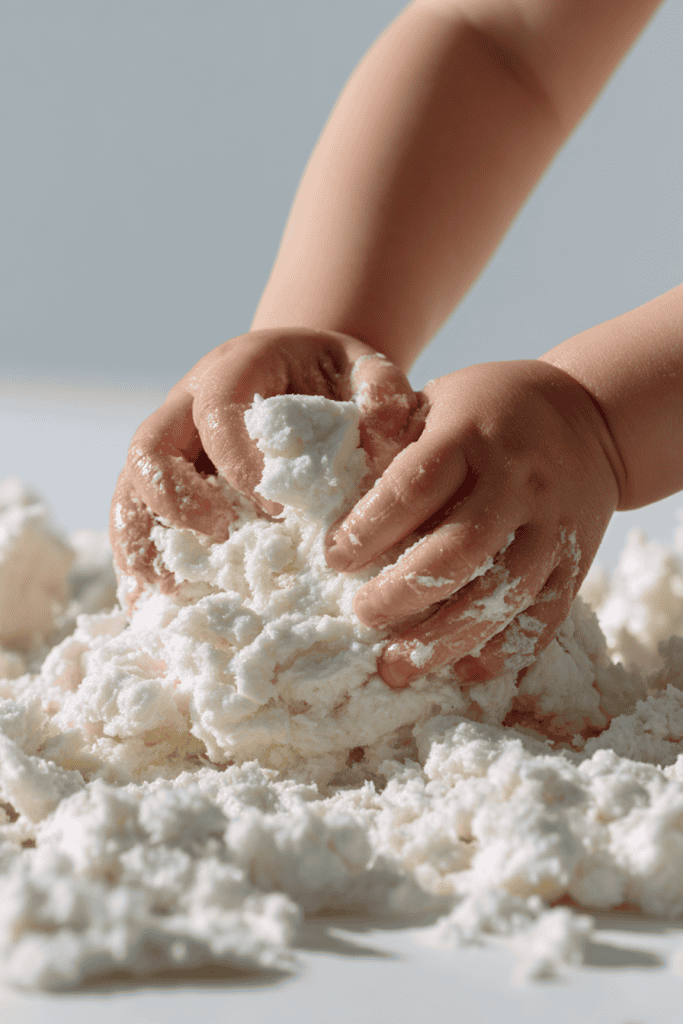
Mix 8 parts flour with 1 part oil (such as vegetable or baby oil) to create a soft, moldable material called cloud dough.
It’s silky to the touch yet holds its shape when pressed, making it a favorite for toddlers who enjoy scooping and building.
Cloud dough develops hand strength, encourages creativity, and introduces early science concepts like mixtures and consistency.
Store it in an airtight container to reuse.
10. Sound Bottles
Fill clear plastic bottles with different materials – rice, beans, beads, buttons, or small bells.
Seal the lids securely with tape or glue. Each bottle creates a unique sound when shaken, giving toddlers a chance to compare tones, rhythms, and volumes.
This activity sharpens listening skills, introduces early concepts of cause-and-effect, and encourages self-expression as children experiment with making music.
Many of these sound-based ideas can also be adapted from genius sensory play ideas for babies as children grow.
11. Sticky Wall Collage
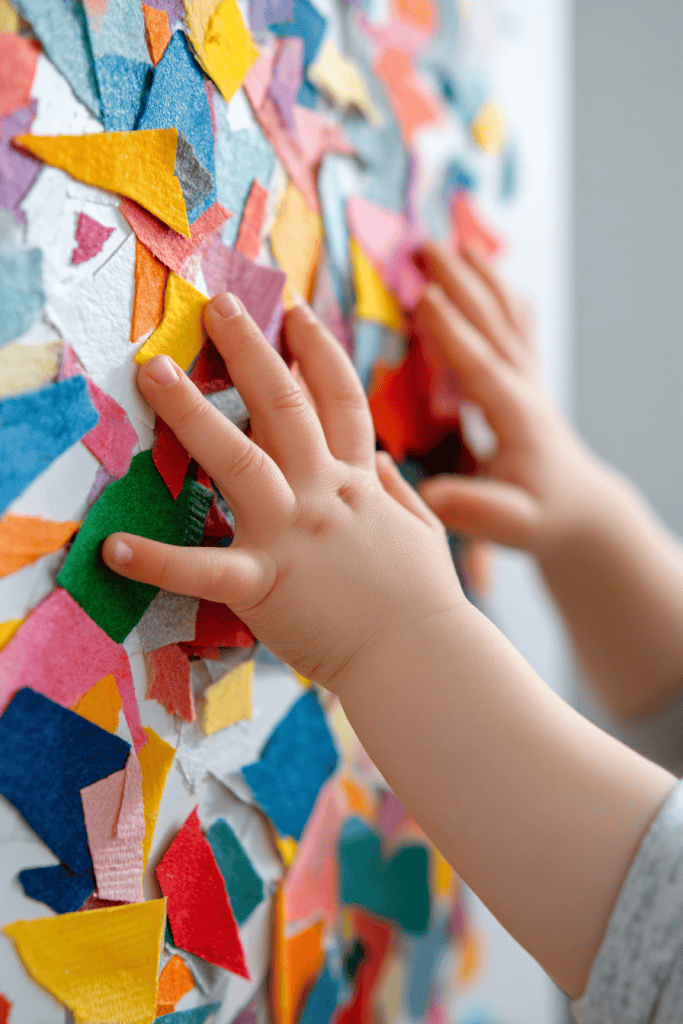
Tape a large sheet of clear contact paper to the wall, sticky side facing out.
Offer lightweight items like yarn pieces, fabric scraps, feathers, or paper cutouts for your toddler to press onto the surface.
The simple motion of sticking and peeling supports fine motor strength, while the variety of textures promotes sensory exploration.
It’s also a creative outlet – toddlers can design patterns or collages in their own playful way.
12. Pom-Pom Push
Cut holes of varying sizes into the lid of a cardboard box or plastic container.
Provide colorful pom-poms for your toddler to push through the openings.
The action of matching pom-poms to holes strengthens hand–eye coordination, problem-solving, and persistence.
For added learning, introduce color sorting or counting as they drop pom-poms in and out.
This activity is compact and easy to repeat, making it a great choice for quiet play.
13. Simple Mud Kitchen
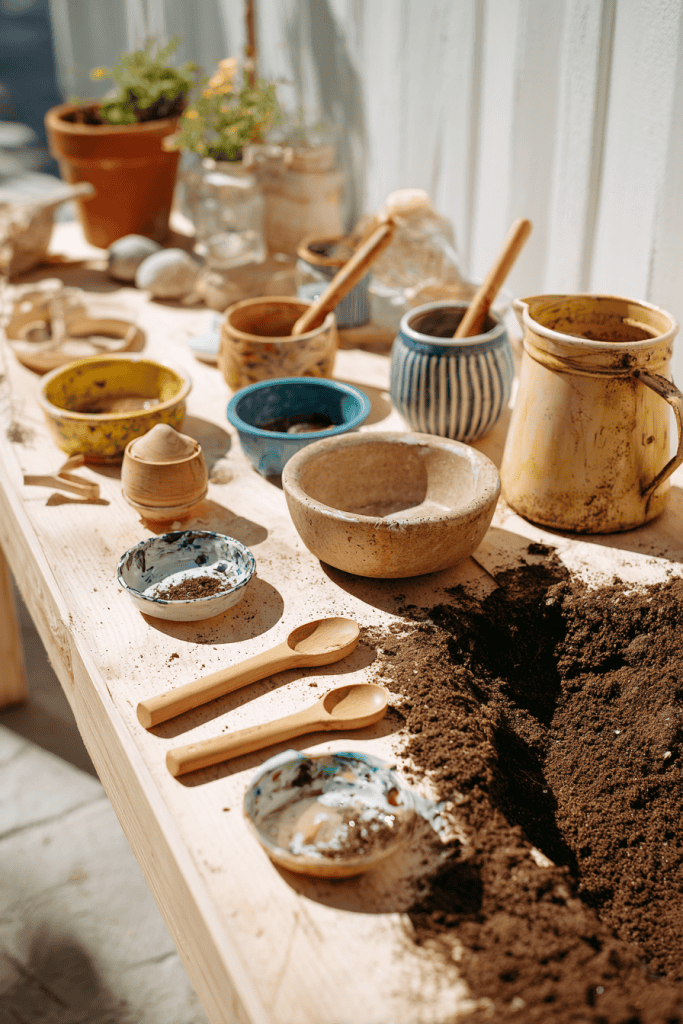
Set up a small outdoor play area with soil, water, and a few old utensils or containers.
Invite your toddler to mix, stir, and “cook” with mud, leaves, or stones.
This open-ended activity encourages creativity and role play while engaging multiple senses – texture, smell, and sight.
It also builds problem-solving skills as toddlers discover how water changes the consistency of soil and how different tools can be used for mixing or pouring.
Seasonal twists make this especially fun.
Around the holidays, many families enjoy rotating in Christmas sensory activities to engage kids for a festive change of pace.
14. Scarf Pull Box
Take a tissue box or small cardboard container and cut holes just wide enough for fabric scarves or ribbons to fit through.
Place several scarves inside and leave ends poking out of the holes.
Toddlers delight in pulling them through, one after another, strengthening grip and coordination.
The bright colors and flowing movement of the scarves also provide visual stimulation and keep the activity engaging.
15. Herbal Water Sensory Bin

Fill a shallow bin with water and add fresh herbs such as mint, rosemary, or lavender, along with slices of citrus fruit.
Provide cups or spoons for scooping and stirring. The combination of scents, textures, and floating pieces creates a calming multi-sensory experience.
This activity not only builds motor skills but also introduces toddlers to natural aromas, encouraging curiosity about plants and the natural world.
As toddlers grow, many of these ideas naturally transition into must-try sensory activities for preschoolers, extending their usefulness well beyond the toddler years.
Keeping It Engaging
Toddlers thrive on variety and gentle challenges.
Once you’ve introduced a few sensory activities, the key is to keep play fresh without needing to reinvent everything each time.
- Rotate activities regularly. Offer one or two each day, then swap them out every few days. Returning to a familiar setup after a short break often renews your toddler’s interest.
- Encourage open-ended play. Allow your child to take the lead – whether they want to pour water back and forth endlessly or line up pom-poms in neat rows. Following their curiosity builds confidence and strengthens independence.
- Adapt to seasons and spaces. A mud kitchen may be perfect for warm days outdoors, while a scarf pull box works well on a rainy afternoon indoors. Adjusting activities to your environment keeps play practical and stress-free.
- Invite others to join. When siblings or friends take part, toddlers naturally learn about cooperation, sharing, and turn-taking. Group play also adds new energy and ideas to familiar activities.
By rotating, adapting, and encouraging exploration, sensory play stays engaging – and continues to nurture skills that grow well beyond toddlerhood.
Looking for even more inspiration? You can also check out my list of fun sensory activity ideas that work for toddlers!
Start Simple, Play Often
Sensory play can be both easy and enriching.
With just a few everyday items, you can create activities that spark curiosity, strengthen skills, and add joy to your toddler’s daily rhythm.
Starting small and rotating activities offers your child meaningful opportunities to explore, learn, and grow with confidence.
Have you tried any of these ideas – or do you have a favorite sensory activity in your home? I’d love to hear about it.
Feel free to share in the comments below so other parents can gather inspiration too!
FAQs
1. How often should I set up sensory play for my toddler?
A few times a week is a great start. Short, regular sessions of 10–20 minutes can be just as effective as long ones. Watch your toddler’s interest—some will happily engage daily, while others may prefer breaks in between.
2. What age is best to begin sensory activities?
Sensory play can begin in infancy with safe, age-appropriate setups (like exploring soft fabrics). For toddlers, around 12–18 months is an ideal time to start structured sensory activities, since they’re mobile, curious, and eager to explore.
3. How do I keep things safe during sensory play?
Choose large, non-choking materials, avoid sharp objects, and always supervise. If your toddler still mouths items, opt for taste-safe bases like cooked pasta, edible playdough, or plain water.
4. How can I make clean-up easier?
Contain activities in trays, bins, or shallow tubs. A plastic tablecloth or an old sheet underneath helps catch spills. For outdoor play, hose down the area when finished – it’s quick and simple.
5. What if my toddler loses interest quickly?
Keep sessions short and light. Rotate activities so they feel new, or offer a fresh twist – add spoons to a rice bin or herbs to a water tub. Following your child’s lead ensures play stays engaging without pressure.